


















HelloNote Onboarding & Implementation: Training, Data Migration and Support
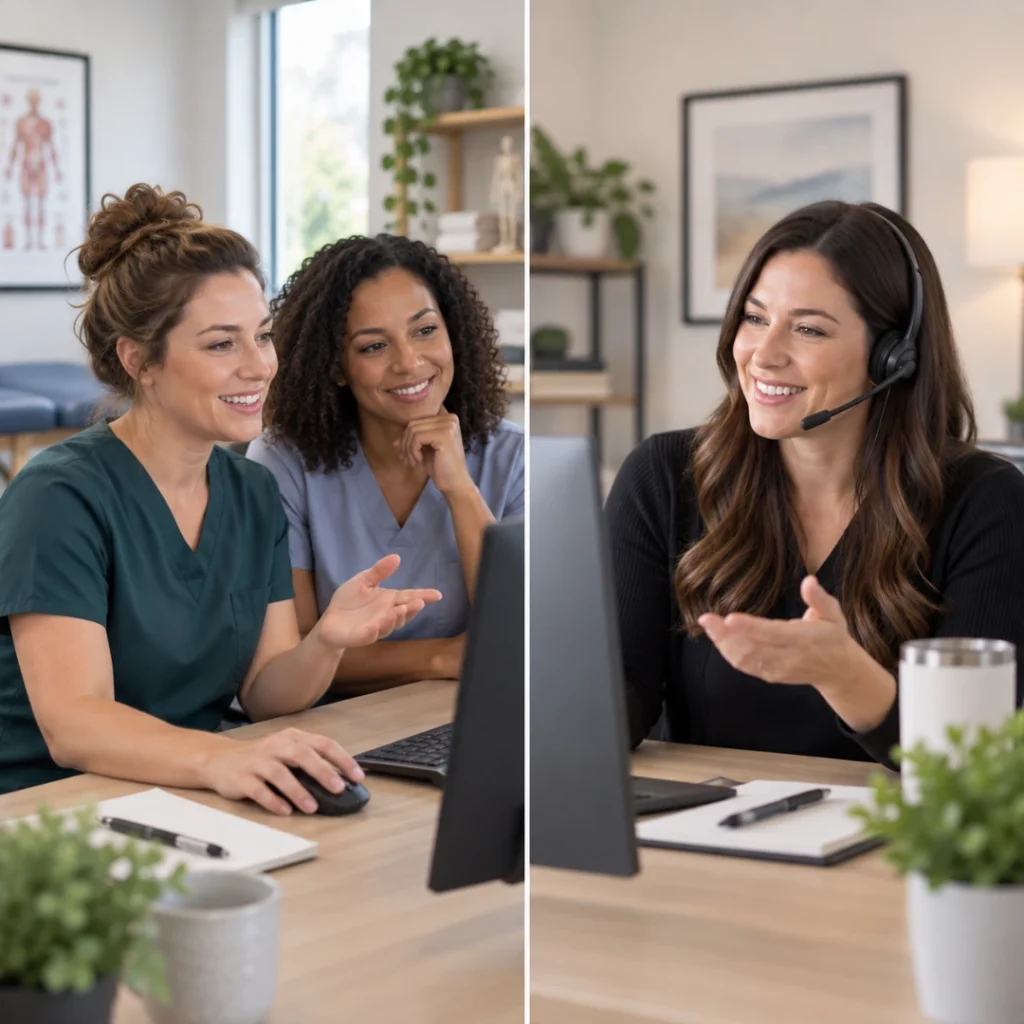
Switching EMR systems affects more than clinical documentation. Scheduling, patient intake, billing, historical records, staff responsibilities, and front-desk workflows all have to move together. HelloNote approaches EMR implementation as a guided transition rather than a software download.
A dedicated onboarding specialist works with the practice through configuration, migration, training, and go-live. For therapy practices, the process can include provider and facility setup, PT/OT/SLP documentation template configuration, patient data migration, workflow mapping, and role-specific training for clinical, administrative, and billing teams.
What Is HelloNote Onboarding and EMR Implementation?
What does HelloNote onboarding include, and how long does EMR implementation take?
HelloNote onboarding is a structured, four-phase EMR implementation process for PT, OT, and SLP practices. It includes guided account configuration, secure patient data migration, role-based staff and billing training, and go-live support. Most practices complete implementation within approximately 2 to 4 weeks, depending on data volume and setup complexity.
Table of Contents
Key Takeaways
- The Medicare 8-minute rule lets you bill one unit of a timed CPT code when you provide at least 8 minutes of direct, one-on-one treatment.
- Units are based on the total timed minutes in the visit: 8–22 minutes = 1 unit, 23–37 = 2 units, 38–52 = 3 units, then 1 more unit for every 15 minutes.
- When you perform several timed codes, give units to the codes with the most minutes first, then assign any remaining unit to the service with the most leftover minutes.
- Untimed (service-based) codes, such as evaluations, don’t count toward your timed minutes.
- Medicare and many Medicaid plans use the 8-minute rule. Some commercial payers count each code separately (the “rule of eights”), so check each payer’s policy.
- Document the timed minutes for each code to support every unit you bill.
What Does the HelloNote Onboarding Process Look Like?
The HelloNote onboarding process is organized into four phases. Each phase addresses a different part of therapy EMR implementation, moving the practice from initial discovery and account setup through data migration, staff training, and full go-live.
Phase 1: Discovery and Account Setup
The first phase focuses on understanding the practice and preparing the account. HelloNote works with the clinic to identify the information, users, and workflows that need to be configured before migration and training begin.
- Practice and facility information
- Provider information, including NPIs
- Tax IDs and facility locations
- Current front-desk and intake workflows
- Clinical documentation needs for PT, OT, and SLP services
- Billing and administrative workflow requirements
Phase 2: Configuration and Data Migration
During configuration, the onboarding team prepares HelloNote around the practice. This can include provider and location setup, documentation template customization, digital intake workflow mapping, and migration of eligible patient data from the previous EMR.
- Setup of NPIs, tax IDs, and facility locations
- Configuration of practice-specific PT, OT, and SLP evaluation templates
- Alignment of digital intake forms with front-desk operations
- Import of patient demographics and compatible historical records
- Validation of migrated information before it is used in billing workflows
Phase 3: Staff Training
Role-based EMR training helps each team member focus on the workflows most relevant to their responsibilities before go-live.
- Clinical users: evaluations, SOAP notes, documentation, and treatment-related workflows
- Administrative users: scheduling, intake, patient information, and front-desk workflows
- Billing teams: Revenue Cycle Management training covering claim scrubbing, clearinghouse integration, and ERA posting
Phase 4: Go-Live and Ongoing Support
At go-live, the practice begins using HelloNote for active workflows with focused transition support available for questions and troubleshooting. Support does not end after implementation. Clinics continue to have access to HelloNote support channels and learning resources as their workflows evolve.
How Is Patient Data Migrated to HelloNote?
Patient data migration is often one of the biggest concerns when switching to a new EMR. HelloNote uses a secure migration process to transition eligible data from legacy systems while helping the practice validate the information that will support its new clinical and billing workflows.
The exact migration scope depends on the source system and the compatibility of the available records. The onboarding process helps the practice understand what can be migrated and what may need to be retained or handled separately.
| Migration Component | Description |
|---|---|
|
Demographics |
Patient names, dates of birth, insurance information, and contact details. |
|
Clinical Records |
Historical PDF notes and evaluation summaries, where compatible. |
|
Security |
Transfers occur through encrypted, HIPAA-compliant channels. |
|
Validation |
Migrated patient demographics are reviewed to help prevent billing issues caused by incorrect or incomplete data. |
What HelloNote Training and Support Are Available?
HelloNote training and support continue beyond initial account setup. Practices can use multiple support channels depending on the urgency and type of question, while role-based training helps different staff groups learn the workflows they will use most often.
- Live assistance: Phone and live chat support for urgent troubleshooting during business hours.
- Asynchronous support: Email and ticketing for non-urgent questions, feature requests, and setup adjustments.
- On-demand learning: A knowledge base with video tutorials and documentation guides that staff can revisit as needed.
- US-based support: Clinicians and practice teams can work with specialists familiar with the domestic healthcare landscape.
What Is the Typical HelloNote Implementation Timeline?
| Phase | Typical Timing | Primary Focus |
|---|---|---|
|
Discovery |
Week 1 |
Needs assessment and account provisioning |
|
Configuration |
Week 2 |
Template customization and data import |
|
Staff Training |
Week 3 |
Role-specific webinars and hands-on practice |
|
Go-Live |
Week 4 |
Full system utilization with focused transition support |
What Should Your Practice Prepare Before HelloNote Onboarding?
Preparing key information before onboarding can help the implementation team configure the system efficiently and reduce avoidable back-and-forth during setup and migration.
- Provider names and NPIs
- Tax IDs and facility information
- Practice locations
- Existing clinical documentation or evaluation templates that need to be reflected in HelloNote
- Patient demographic and historical data that may be included in migration
- Information about current intake, front-desk, billing, and clinical workflows
- A list of staff members who need clinical, administrative, or billing training
Why Guided EMR Implementation Matters When Switching Systems
Switching to a new EMR changes more than where clinicians write notes. It can affect scheduling, intake, patient records, documentation, billing, claims, and staff responsibilities. A coordinated implementation process helps those workflows move together instead of leaving each department to solve the transition separately.
HelloNote combines configuration, secure EMR data migration, role-based training, and go-live support so the practice is not left to figure out the system alone. By go-live, the goal is to have the core system configuration in place and staff trained on the workflows relevant to their roles.
HelloNote EMR Onboarding for PT, OT, and SLP Practices
Therapy practices can have different documentation, scheduling, billing, and intake needs depending on the disciplines they provide. HelloNote onboarding accounts for these practice-specific workflows by configuring items such as PT, OT, and SLP evaluation templates, facility details, digital intake processes, and billing setup before go-live.
For practices switching from another EMR, the combination of secure migration and guided configuration helps support continuity while the team learns the new platform. After implementation, the practice continues to have access to support channels and on-demand learning resources for ongoing questions.
Frequently Asked Questions
Is there an extra cost for HelloNote onboarding and training?
Standard onboarding is typically included in the setup process. Premium, high-touch training packages may also be available for large multi-site organizations.
Can my billing team receive specialized training?
Yes. HelloNote offers specific Revenue Cycle Management training focused on claim scrubbing, clearinghouse integration, and ERA posting.
Is HelloNote's support based in the United States?
Yes. HelloNote provides US-based support so clinicians and staff can work with specialists familiar with the domestic healthcare landscape.
Can we customize our documentation templates during onboarding?
Yes. Live onboarding can include configuration of SOAP notes, evaluations, and other documentation templates so they better match the practice's clinical workflows.
Can I customize documentation templates for SOAP notes and evals?
Yes. HelloNote provides a library of customizable templates for SOAP notes, initial evaluations, and plans of care. Therapists can tailor these to their specific workflow, using "auto-populate" features to carry over data from previous visits and save hours on paperwork.
What happens if we need help after the go-live phase?
Practices retain access to support channels, including phone, email, chat, and the self-service knowledge base, after implementation.
How long does HelloNote onboarding take?
Most practices can expect EMR implementation to take approximately 2 to 4 weeks, depending on the volume of data being migrated and the complexity of the practice setup.
Can historical patient records be migrated?
HelloNote can migrate patient demographics and compatible historical records, including PDF notes and evaluation summaries where supported by the source data and migration process.
Does HelloNote provide training for different staff roles?
Yes. Training can be role-specific so clinicians, administrators, and billing teams can focus on the workflows they will use most often.
What should a therapy practice prepare before switching EMRs?
Practices should prepare provider and facility details, NPIs, tax IDs, staff lists, documentation templates, patient data for migration, and information about current clinical, administrative, intake, and billing workflows.
Ready to Plan Your HelloNote Transition?
A successful EMR transition depends on more than turning on new software. Configuration, data migration, staff training, and ongoing support all play a role in helping a therapy practice move into a new system with confidence.
If your PT, OT, or SLP practice is evaluating HelloNote, schedule a demo to see the platform and discuss what onboarding, migration, training, and implementation could look like for your team.
No credit card required • HIPAA Compliant • PT, OT & SLP