




















You've found a hidden discount!

HN Unlock Layer 1
HN Unlock Layer 2
HN Unlock Layer 3
HN Unlock Layer 4
HN Unlock Layer 5
  • 00Hours
  • 00Minutes
  • 00Seconds

UnitedHealthcare Cuts Prior Authorization for Therapy: What PT, OT, and SLP Practices Need to Know

Physical therapist standing in a bright clinic after completing prior authorization documentation and therapy notes.

UnitedHealthcare announced on May 5, 2026 that it will eliminate prior authorization requirements for 30% of services that currently require insurer approval — including certain outpatient therapies and chiropractic care — with full implementation by end of 2026. This is the largest single prior authorization reduction by any major U.S. insurer and directly affects PT, OT, SLP, and chiropractic practices with UHC-insured patients.
What does UnitedHealthcare’s 2026 prior authorization change mean for PT, OT, SLP, and chiropractic practices?

UnitedHealthcare is cutting prior authorization requirements for 30% of services that currently require approval, including certain outpatient therapy and chiropractic services, with implementation expected by the end of 2026. For PT, OT, SLP, and chiropractic practices, this may reduce front desk authorization work and help patients start care faster. However, the change does not remove the need for strong documentation, medical necessity support, functional goals, and audit-ready notes for every visit.

Bottom line:

Prior authorization may be reduced, but documentation quality still protects the claim.

Table of Contents

Key Takeaways

    • UnitedHealthcare will eliminate prior authorization requirements for 30% of services currently requiring approval, with full implementation by end of 2026.
    • The cuts explicitly include certain outpatient therapies and chiropractic care — making this directly relevant to PT, OT, SLP, and DC practices nationwide.
    • This change affects approximately 50 million UHC members across commercial, Medicare Advantage, and employer-sponsored plans.
    • Removing prior authorization does not remove documentation requirements. Therapists still need to prove medical necessity on every note.
    • HelloNote’s documentation templates support clean, denial-proof notes whether or not a service requires prior auth.

On May 5, 2026, UnitedHealthcare — the largest health insurer in the United States — announced it will eliminate prior authorization requirements for 30% of services that currently require advance approval. The changes will take effect by the end of 2026 and will affect approximately 50 million members across commercial, Medicare Advantage, and employer-sponsored plans.

For physical therapists, occupational therapists, speech-language pathologists, and chiropractors, one line in the announcement stands out: the cuts include “certain outpatient therapies and chiropractic care.” This is not a hospital story or a surgical specialty story. This one lands directly in your practice.

In this post, we break down exactly what UnitedHealthcare changed, what it means for your day-to-day workflow, what does not change, and how to make sure your practice is ready before these changes take effect.

What UnitedHealthcare's Prior Authorization Cut Actually Means

Prior authorization reform in brief: UnitedHealthcare will eliminate prior authorization requirements for 30% of services that currently require advance insurer approval, including certain outpatient therapies and chiropractic care, with full implementation by end of 2026.

UnitedHealthcare’s May 5, 2026 announcement is the largest single reduction in prior authorization requirements by any major U.S. insurer. The company will publish a full list of affected services at UHCProvider.com before the changes take effect.

To understand the scope: prior authorization is currently required for only about 2% of UHC medical services. Of those, approximately 92% are approved within 24 hours. The 30% cut applies to that 2% — a meaningful reduction in administrative burden for providers, not a complete elimination of the process.

The announcement builds on related moves UnitedHealthcare made in early 2026: exempting rural care providers from prior authorization in April, joining an industry effort to standardize electronic prior authorization submission (with 70% of its prior authorizations moving to a standardized process by year-end), and a broader industry pledge from insurers including Aetna, Cigna, Elevance, Humana, and Centene.

A 2024 AMA survey found that physicians and their staff spend an average of 13 hours per week completing prior authorization requests, and 93% of physicians reported care delays while waiting for insurer approvals. This reform directly addresses that burden.

What Changes for PT, OT, SLP, and Chiropractic Practices

What this means for therapy practices in brief: Certain outpatient therapies and chiropractic care are explicitly included in UnitedHealthcare’s prior authorization reduction — meaning therapy practices with UHC-insured patients may see reduced administrative burden for some services by end of 2026.

The specific services confirmed include select outpatient surgeries, diagnostic tests like echocardiograms, and certain outpatient therapies and chiropractic care. The complete list of affected CPT codes will be published at UHCProvider.com before the changes take effect.

What is already clear: therapy and chiropractic services are explicitly named. That is a significant shift for practices that have historically spent staff time managing prior auth requests for routine outpatient care.

What this could mean in practice:

    • Fewer phone calls and portal submissions to obtain authorization for qualifying therapy services
    • Faster start-to-treatment timelines for UHC-insured patients — no waiting for approval before beginning a plan of care
    • Less staff time spent on authorization follow-up and appeals for included service types
    • Reduced authorization-related claim denials for services that no longer require advance approval.

For chiropractic practices specifically, chiropractic care has historically been one of the more heavily prior-authorized therapy categories. Being explicitly included in the reduction signals a meaningful policy shift for DC practices treating UHC members.

For PT, OT, and SLP practices, the impact depends on which specific CPT codes are included when UHC publishes the complete list. Practices should monitor UHCProvider.com and sign up for UHC provider communications now.

Looking up more cpt codes?

See 97110, 97530, and 50+ therapy procedure codes – with billing guidance and documentation tips in one place.

What Does NOT Change — Documentation Is Still Your First Line of Defense

What stays the same in brief: Removing prior authorization requirements does not remove the requirement to document medical necessity. Therapists still need thorough, functional, goal-linked documentation on every note — because payers can still audit, deny retrospectively, and request records at any time.

This is the most important section in this post, and the one most likely to get overlooked in coverage of this news.

Prior authorization is a pre-treatment checkpoint. Documentation is a different layer — the permanent record that proves every service you billed was medically necessary, clinically appropriate, and delivered as documented. Those two things operate independently.

Removing the pre-treatment checkpoint does not remove the audit risk. If anything, eliminating prior authorization can shift the review process from pre-service to post-service — meaning payers may look more carefully at claims and documentation after services are rendered.

What this means for your practice:

    • Medical necessity documentation requirements are not changing
    • Functional goal documentation is still required for every note
    • Plans of care still need to establish and support medically necessary care
    • Payers can still conduct retrospective audits and request records
    • Claim denials based on documentation deficiencies will still occur for services that were never prior-auth’d to begin with.

Every note still needs to clearly link the intervention to a functional outcome, document skilled service, and support medical necessity — whether or not that visit required advance authorization.

Prior authorization reform reduces administrative burden before treatment. It does not reduce the documentation burden after treatment. Those are two different compliance layers, and only one of them is changing.

Split-screen image showing a cluttered paper-based therapy documentation process beside a clean digital therapy EMR workflow with a laptop and checkmark.

How to Prepare Your Practice Before the End of 2026

How to prepare in brief: Therapy practices with UHC-insured patients should monitor UHCProvider.com for the full list of affected service codes, update front desk intake workflows to reflect the changes, and ensure documentation quality is strong enough to withstand a post-service audit.

These are the steps therapy practice owners and office managers should take between now and the end of 2026:

Step 1 — Get on UnitedHealthcare's provider communication list

UHC will publish the full list of affected CPT codes at UHCProvider.com before the changes take effect. Make sure someone at your practice is monitoring that page and signed up for UHC provider alerts. Knowing exactly which services no longer require auth prevents both unnecessary authorization requests and potential billing mistakes.

Step 2 — Audit your current prior auth workflow for UHC patients

Map out which services you currently prior-authorize for UHC-insured patients. When the full code list is published, compare it against your current workflow. Build a clear internal reference: these codes no longer need auth, these still do.

Step 3 — Update your front desk and intake processes

Your front desk team is likely trained to request authorization for certain services as part of intake. When changes take effect, that process needs to be updated — so staff are not submitting unnecessary auth requests for services that no longer require them, and not accidentally skipping auth for services that still do.

Step 4 — Do a documentation quality check now

Use the time between now and year-end to audit your current documentation quality. Are your notes consistently linking interventions to functional goals? Are your plans of care establishing and supporting medical necessity? Are your therapists documenting skilled service clearly on every note?

Step 5 — Watch for similar changes from other insurers

UnitedHealthcare is not the only insurer moving in this direction. Aetna, Cigna, Elevance, Humana, and Centene have all made related pledges as part of the broader AHIP industry reform initiative. Changes at other payers may follow a similar timeline and may include similar therapy service categories.

Have questions about how prior authorization changes affect your billing?

HelloNote’s team is built by therapists who’ve navigated every version of this. Start free and see how we handle documentation and billing for PT, OT, SLP, and Chiro.

No credit card required • HIPAA Compliant • PT, OT & SLP

How HelloNote Helps Therapy Practices Navigate Prior Auth Changes

Prior authorization reform changes what happens before your patient walks in the door. It does not change what has to happen in your notes after they leave.

The documentation standard that protects your practice — whether prior authorization was required or not — is the same: functional goals, skilled service, medical necessity clearly supported in every note. That is what auditors look for. That is what payers look for when they review claims retrospectively.

HelloNote is built around that documentation standard. Here is what that looks like in practice when prior auth requirements change:


    • Structured note templates prompt therapists to link every intervention to a functional goal before sign-off — the same documentation pattern that passes audits whether or not a service was pre-authorized
    • Built-in eligibility verification helps your front desk confirm coverage details for UHC patients in real time — so when prior auth requirements change, you are working from current coverage data, not assumptions
    • Billing integration connects your documentation directly to claims — so when a service no longer requires prior auth, the billing workflow adapts without creating a gap between what was documented and what was billed
    • PT, OT, SLP, and chiropractic-specific templates mean the documentation fields your therapists fill in are relevant to the exact services being affected by this policy change

Prior auth reform is good news for therapy practices and their patients. Less administrative friction before treatment means faster access to care and less staff time on the phone. HelloNote handles the documentation and billing side of what happens after — so the removal of a pre-treatment checkpoint does not create a post-treatment compliance gap.

Frequently Asked Questions About UnitedHealthcare Prior Authorization Changes for Therapy

What did UnitedHealthcare change about prior authorization for therapy?

UnitedHealthcare announced on May 5, 2026 that it will eliminate prior authorization requirements for 30% of services that currently require advance approval, including certain outpatient therapies and chiropractic care, with full implementation by end of 2026. The complete list of affected CPT codes will be published at UHCProvider.com before the changes take effect. This applies to UHC members across commercial, Medicare Advantage, and employer-sponsored plans.

Does this UnitedHealthcare prior authorization change affect physical therapy, occupational therapy, or speech therapy?

Yes — UnitedHealthcare's announcement explicitly includes certain outpatient therapies in the list of services being removed from prior authorization requirements. The full list of affected therapy CPT codes will be published at UHCProvider.com before the changes take effect in 2026. PT, OT, SLP, and chiropractic practices with UHC-insured patients should monitor that page for the full details.

When do UnitedHealthcare's prior authorization changes take effect for therapy services?

UnitedHealthcare stated that the prior authorization changes will be fully implemented by the end of 2026. The full list of affected services will be published at UHCProvider.com before the changes take effect, giving providers advance notice to update their workflows.

Does removing prior authorization mean I no longer need to document medical necessity?

No — removing prior authorization requirements does not change documentation requirements. Prior authorization is a pre-service approval process. Medical necessity documentation is a separate and ongoing requirement that supports every billed service, regardless of whether it was pre-authorized. Payers can still audit claims and request records retrospectively, so thorough functional documentation remains essential on every note.

What should my therapy practice do to prepare for UnitedHealthcare's prior authorization changes?

For services removed from prior authorization requirements, denials based on failure to obtain prior authorization will no longer occur — but documentation-based denials can still happen. A service that no longer requires prior auth can still be denied if the documentation does not support medical necessity, does not demonstrate skilled care, or does not link the intervention to a functional outcome. The prior auth barrier is removed; the documentation standard is not.

Will UnitedHealthcare's prior authorization changes reduce claim denials for therapy?

While HelloNote does not offer a traditional time-limited free trial, we offer something better: a Free Forever EMR plan. This plan is specifically designed for startup practices and solo clinicians who need a professional, HIPAA-compliant system without the upfront cost. Limitations: The free plan is limited to 2 active patients and provides email-only support. It is the perfect "sandbox" to build your practice before you scale.

Are other insurance companies also cutting prior authorization for therapy services?

Yes — UnitedHealthcare is part of a broader industry reform effort. Other major insurers including Aetna, Cigna, Elevance Health, Humana, and Centene have made related commitments to reduce prior authorization requirements as part of an initiative coordinated through AHIP. The scope and timeline of changes vary by insurer.

READY TO STREAMLINE YOUR CLINIC?

See How HelloNote Handles All of This in One Platform

Managing staff hours, compliance, inventory, and financial reports — all inside one HIPAA-compliant EMR built for PT, OT, and SLP clinics.

No credit card required · HIPAA Compliant · PT, OT & SLP

Medicare Eligibility Verification Failed? The HETS Enrollment Requirement Explained

What is the HETS Enrollment Requirement for Medicare Eligibility Verification?

Beginning May 11, 2026, CMS requires providers and suppliers to maintain active HETS EDI enrollment when Medicare eligibility verification requests are submitted through vendors, clearinghouses, or EMR platforms. Providers without active enrollment may experience rejected Medicare eligibility checks, failed 270/271 eligibility transactions, or AAA Error Code 41. Each NPI submitted through HETS by a vendor or clearinghouse must have its own active enrollment linked to the correct submitter ID. Definition sourced from the Centers for Medicare and Medicaid Services HETS Companion Guide.

Key Takeaways

    • CMS transitioned to a new HETS trading partner management system on May 11, 2026
    • Providers using third-party vendors must link those vendors to their NPI for HETS access
    • AAA Error Code ‘41’ may indicate there is no current valid relationship between the NPI and the third-party vendor
    • Vendors and clearinghouses can support the process, but providers are responsible for completing the required enrollment or attestation
    • Therapy practices may see delays in scheduling, intake, benefits verification, and billing workflows if Medicare eligibility checks fail
    • HelloNote users should verify their clearinghouse relationship, vendor UID, and HETS enrollment status as soon as possible

Table of Contents

For many healthcare providers, Medicare eligibility verification failures appeared suddenly.

Front desk teams could not verify Medicare benefits. Billing teams began seeing rejected eligibility responses. Therapists preparing for evaluations discovered that coverage checks were failing inside their EMR or practice management software.

In many cases, the issue was not caused by an EMR outage. It was tied to CMS enforcement of the new HETS EDI enrollment requirement that became mandatory on May 11, 2026. CMS had previously warned that providers and suppliers without completed EDI enrollment could lose access to HETS data by spring 2026.

This guide explains what changed, why Medicare eligibility checks may be

HelloNote eligibility screen showing Authorization Access restrictions error during Medicare HETS eligibility verification failure

Why Medicare Eligibility Verification Suddenly Failed

CMS moved to a new HETS trading partner management system on May 11, 2026. As part of that transition, providers must maintain active HETS EDI enrollment tied to their NPI and approved vendor or clearinghouse relationships.

Previously, many providers relied on EMR vendors, billing software platforms, clearinghouses, and revenue cycle vendors to submit Medicare eligibility verification requests behind the scenes. Because the process often worked without direct provider action, many organizations assumed no separate enrollment was needed. Now, if the provider NPI is not actively linked to the correct vendor or clearinghouse, Medicare eligibility requests may be rejected.

For PT, OT, SLP, chiropractic, and other outpatient practices, this can quickly affect scheduling, intake, benefits verification, authorizations, and reimbursement timelines.

What Is HETS?

HETS stands for the HIPAA Eligibility Transaction System. CMS uses HETS to allow providers, suppliers, vendors, and clearinghouses to verify Medicare beneficiary eligibility electronically through HIPAA 270/271 eligibility transactions. The CMS HETS Companion Guide explains that HETS operates through a real-time request and response model, where a valid 270 request can return Medicare beneficiary eligibility data in a 271 response.

Healthcare organizations use HETS to help verify active Medicare coverage, beneficiary eligibility, deductible and coinsurance information, Medicare coverage details, eligibility before patient appointments, and information needed to reduce eligibility-related claim issues.

For therapy practices, HETS often works in the background through the EMR or clearinghouse. Front desk teams may not realize HETS is involved until eligibility checks stop working.

Why CMS Changed the Enrollment Rules

CMS has framed the HETS EDI enrollment requirement around stronger oversight of Medicare eligibility data access. The CMS HETS Companion Guide notes that Medicare beneficiary eligibility data is restricted under the Privacy Act and HIPAA, and that providers using healthcare vendors or clearinghouses must complete a valid HETS EDI enrollment or attestation.

The practical goal is to make sure that when a third-party vendor or clearinghouse checks Medicare eligibility, CMS can validate that the vendor is authorized to do so for that provider NPI. That means the provider-vendor relationship must be active, current, and properly linked.

What Changed on May 11, 2026

Beginning May 11, 2026, providers must maintain active HETS EDI enrollment. Each NPI submitted through HETS by a vendor or clearinghouse must have active enrollment. Vendors and clearinghouses must be linked to the provider NPI using the correct unique ID. Eligibility requests without an active enrollment may be rejected.

In practical terms, some practices are discovering that their software vendor or clearinghouse historically handled Medicare eligibility checks, but the provider organization itself still needed to complete HETS enrollment or attestation.

Important: CMS states that without active enrollment, HETS will reject the eligibility request. Multi-location therapy organizations may see inconsistent results if some NPIs were enrolled and others were not.

What does AAA Error Code 41 mean in Medicare eligibility verification?

AAA Error Code 41 is a Medicare HETS eligibility rejection that occurs when CMS cannot validate an active relationship between the provider NPI and the HETS Submitter ID used by the vendor or clearinghouse. It means the NPI may be valid, the vendor may be valid, but CMS does not see a valid active connection between them. That missing connection stops Medicare eligibility verification from working.

In plain language: the NPI may be valid, the vendor may be valid, but CMS does not see a valid active connection between them. That missing connection can stop Medicare eligibility verification from working.

Common Signs Your HETS Enrollment May Be Missing

Your organization may need to verify HETS enrollment if:

    • Medicare eligibility checks suddenly stopped working
    • Eligibility requests return AAA Error Code 41
    • Your clearinghouse requested provider attestation
    • Your vendor sent notices about HETS enrollment
    • Eligibility works for some NPIs but not others
    • You recently changed vendors, clearinghouses, or billing systems
    • Front desk staff can no longer verify Medicare coverage in real time

READY TO STREAMLINE YOUR CLINIC?

See How HelloNote Handles All of This in One Platform

Managing staff hours, compliance, inventory, and financial reports — all inside one HIPAA-compliant EMR built for PT, OT, and SLP clinics.

No credit card required · HIPAA Compliant · PT, OT & SLP

What Therapy Practices Should Do Right Now

If Medicare eligibility verification suddenly stopped working, start with the steps below.

Step 1 — Contact Your Software Vendor or EMR Support Team

Ask your vendor: Was HETS enrollment completed for our organization? Which clearinghouse is submitting Medicare eligibility transactions? What HETS Submitter Unique ID should we use? Which NPIs are currently linked? Are any NPIs missing enrollment or attestation?

CMS instructs providers to work with vendors or clearinghouses to identify the relationships supporting their beneficiary eligibility EDI transactions and obtain the vendor or clearinghouse unique ID.

Step 2 — Verify the Clearinghouse Relationship

Many therapy EMRs and billing platforms use clearinghouses to submit Medicare eligibility requests. Confirm: the correct NPI is being used, the clearinghouse relationship is active, the enrollment references the correct vendor or clearinghouse unique ID, the relationship effective date is correct, and any terminated vendor relationships are updated.

CMS allows more than one vendor or clearinghouse ID to be linked, and additional IDs can be added when needed.

Step 3 — Contact the Correct Medicare Administrative Contractor

CMS explains that providers request HETS access through the same EDI enrollment process used by Medicare Administrative Contractors and CEDI. Providers must create a HETS EDI enrollment with one MAC for which they have an electronic claims EDI enrollment.

Examples of MAC/CEDI organizations include: CEDI, National Government Services, Noridian, Novitas, First Coast Service Options, Palmetto GBA, and WPS. The exact MAC depends on your jurisdiction and Medicare enrollment setup.

Step 4 — Complete Enrollment or Attestation

When enrolling, CMS states that providers may need information such as: authorized signer name, email address, PTAN, individual or group NPI used to bill Medicare claims electronically, vendor or clearinghouse relationship effective date, and termination date if applicable.

CMS also notes that if a provider signed up for electronic claims submission using a group provider number, the same group number must be used for HETS EDI enrollment.

Step 5 — Prepare Front Desk and Billing Teams

Eligibility disruptions can slow scheduling, patient intake, benefits verification, financial responsibility estimates, same-day evaluations, and claim preparation.

Temporary internal adjustments may include manual Medicare portal lookups, additional time for appointment confirmation, a front desk verification checklist, secondary eligibility review before treatment, and clear communication with patients when eligibility cannot be confirmed immediately.

Front desk staff manually verifying Medicare eligibility through MAC portal and EMR system during HETS enrollment disruption

Temporary Medicare Eligibility Workarounds

While enrollment is pending, practices may need to verify Medicare eligibility manually through their Medicare Administrative Contractor’s secure internet portal. CMS states that providers who opt not to enroll may still check eligibility through their MAC’s secure internet portal.

Manual verification is slower because staff may need to search each patient individually, confirm Medicare details manually, document deductible or coverage information separately, re-enter information into the EMR or billing system, and perform secondary checks before submitting claims. For high-volume therapy clinics, this can create scheduling delays and billing bottlenecks.

How This Affects Therapy Practices

Therapy practices depend heavily on eligibility verification because treatment often begins quickly after referral, evaluation, or patient inquiry. When Medicare eligibility verification fails, the impact is not limited to billing. It can affect the entire front-office workflow.

Common operational problems include: delayed evaluations, unclear patient responsibility estimates, more phone calls between front desk and billing teams, manual checks before treatment, higher risk of claim delays, staff frustration from duplicate work, and slower onboarding for Medicare patients.

For PT, OT, and SLP clinics, the front desk is often the first point of failure when eligibility tools stop working. If staff cannot confirm Medicare eligibility quickly, the clinic may delay scheduling decisions, intake completion, or billing preparation.

How HelloNote Helps Therapy Practices Reduce Eligibility Delays

HelloNote helps therapy practices organize the operational workflows around scheduling, documentation, billing, and patient intake. While HETS enrollment itself must be handled through the proper CMS/MAC process, a structured EMR can help clinics respond more effectively when eligibility disruptions happen.

HelloNote supports therapy practices by helping teams:

    • Keep scheduling, intake, and documentation connected in one platform
    • Reduce manual handoffs between front desk and billing staff
    • Maintain organized patient records with eligibility status visible at intake
    • Support cleaner documentation before billing to reduce downstream delays
    • Centralize clinic workflows so eligibility issues do not cascade into documentation errors
    • Improve visibility across administrative and clinical teams during disruptions

For Medicare-based therapy clinics, eligibility verification is only one part of the revenue cycle. The larger goal is to reduce avoidable delays from intake through documentation and billing. HelloNote’s eligibility checker helps practices verify patient coverage before appointments — reducing the manual front desk work that HETS disruptions create. See hellonote.com/eligibility-checker/

Frequently Asked Questions

Why did Medicare eligibility verification suddenly stop working?

Medicare eligibility verification may stop working if a provider does not have active HETS EDI enrollment linked to the vendor or clearinghouse submitting eligibility requests. CMS began requiring active enrollment for each NPI submitted through HETS by vendors or clearinghouses on May 11, 2026.

What is HETS enrollment?

HETS enrollment is the process CMS uses to authorize providers, vendors, and clearinghouses to electronically access Medicare beneficiary eligibility information through HETS EDI transactions.

What does AAA Error Code 41 mean?

AAA Error Code 41 means there is no valid, active HETS EDI enrollment between the provider NPI and the HETS Submitter ID used by the vendor or clearinghouse. CMS states that the Original Medicare provider or supplier must create the attestation.

Can providers still complete HETS enrollment?

Yes. Providers should follow the CMS HETS EDI enrollment process and work with their vendor, clearinghouse, and MAC to complete enrollment and link the correct vendor or clearinghouse ID.

Does this affect physical therapy clinics?

Yes. Physical therapy, occupational therapy, speech therapy, chiropractic, behavioral health, and other outpatient healthcare organizations may be affected if they use Medicare eligibility verification through vendors, clearinghouses, or EMR systems.

Are commercial insurance eligibility checks affected?

This specific HETS enrollment requirement applies to Medicare eligibility transactions submitted through CMS HETS. Commercial insurance eligibility checks are handled through different payer and clearinghouse processes.

Who must complete the HETS attestation?

The provider or supplier must complete the required HETS EDI enrollment or attestation. Vendors and clearinghouses can provide the unique ID and support the process, but the provider relationship must be properly enrolled and validated.

Can providers manually verify Medicare eligibility temporarily?

Yes. CMS states that providers may still check eligibility through their Medicare Administrative Contractor's secure internet portal if they do not enroll or while resolving access issues.


Can providers manually verify Medicare eligibility temporarily?

Yes. CMS states that providers may still check eligibility through their Medicare Administrative Contractor's secure internet portal if they do not enroll or while resolving access issues.

Final Thoughts

The sudden increase in Medicare eligibility verification failures is not necessarily caused by EMR downtime or clearinghouse outages. For many providers, the issue is tied to CMS enforcement of the HETS EDI enrollment requirement that became mandatory on May 11, 2026.

The most important step is to confirm whether each Medicare billing NPI is actively enrolled and properly linked to the correct vendor or clearinghouse ID. For therapy practices, this is also a reminder that billing workflows depend on more than claim submission. Eligibility, intake, documentation, and front desk communication all need to work together.

HelloNote helps PT, OT, and SLP practices keep those workflows organized so teams can spend less time chasing disconnected information and more time running a clear, efficient clinic.

Looking up for cpt & Icd codes guide?

See 97110, 97530, and 50+ therapy procedure codes – with billing guidance and documentation tips in one place.

AI Scribe for Physical Therapists: Beyond Saving Time

What Are the Real Benefits of AI Scribe for Therapists?

The biggest benefits of AI scribe for therapists are improved clinical presence, more complete documentation, reduced cognitive fatigue, fewer after-hours notes, and better billing accuracy. Instead of reconstructing sessions from memory at the end of the day, AI scribe captures the clinical encounter in real time so therapists can stay focused on the patient while generating more consistent documentation.

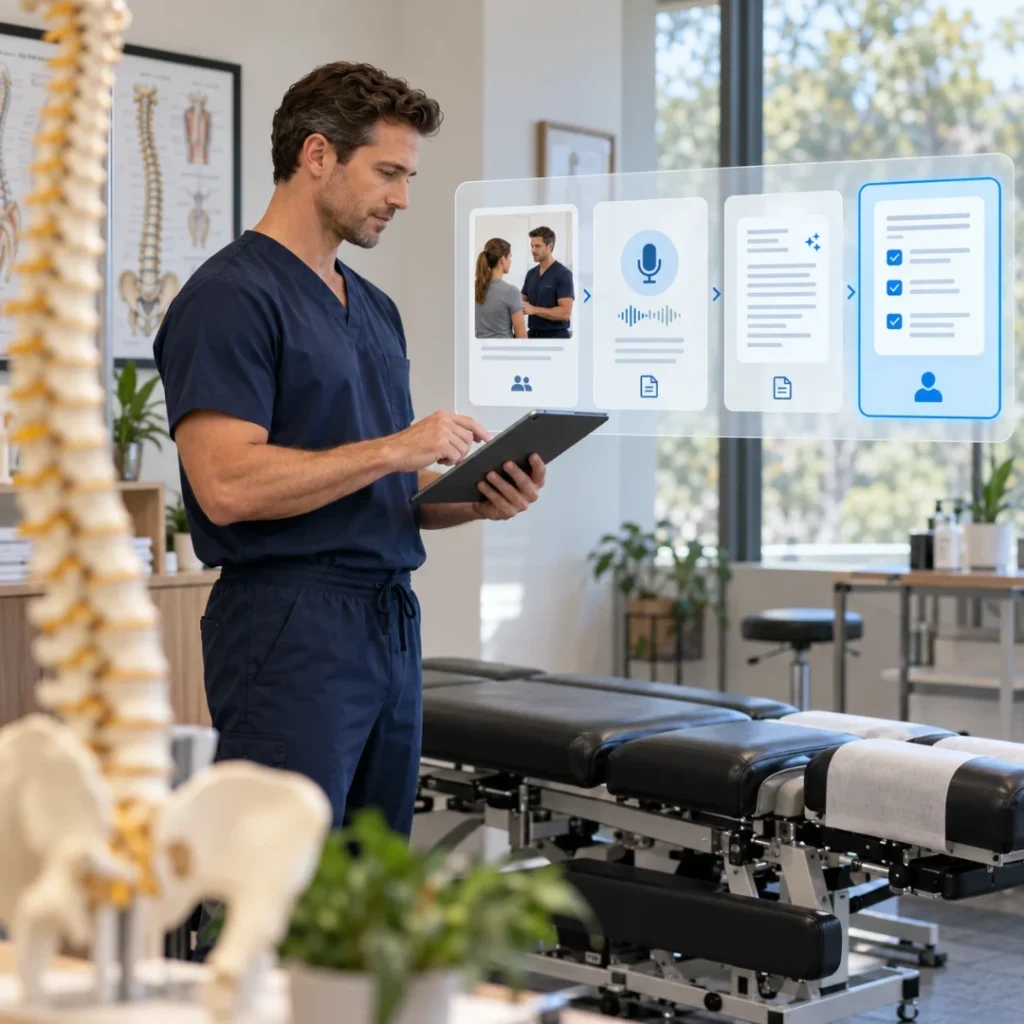
AI scribe for physical therapists recording a patient interview session in a modern therapy clinic using a tablet

Table of Contents

Key Takeaways

    • The most underreported benefit of AI scribe is not speed – it is the return of full clinical presence during patient sessions.
    • Therapists using AI scribe report lower end-of-day cognitive fatigue, not just shorter charting sessions – the mental load of parallel documentation tracking disappears.
    • HelloNote AI Scribe gives clinicians the specific benefit of context-aware drafts – the note already knows the patient, the case, and the payer before the session starts.

What Clinicians Actually Lose Every Day Before AI Scribe

We want to start this post differently than every other AI scribe benefits article you have read. Not with what therapists gain. With what they lose.

We had a patient a few years back – bilateral shoulder dysfunction, complex history, a lot of layers to track. Midway through the evaluation, while she was explaining how her symptoms had changed since her last flare, our therapist caught herself doing something she had trained herself not to do: mentally filing details for the note instead of fully listening to the patient. Onset timeline. Bilateral vs unilateral presentation. The exact phrase the patient used about reaching across her body. Two tracks running simultaneously – one clinical, one documentary. The patient was still talking. Our therapist was still nodding. But part of her attention had already left the room.

That split is so normalized in therapy practice that most clinicians do not notice it anymore. It is just how documentation works. You treat and you file. You listen and you catalog. You stay present and you prepare the reconstruction. And at the end of the day, when the last patient has left and the notes still need to be finished, you find out how much of that mental filing actually held.

AI scribe does not just save documentation time. It closes the split. And everything that follows in this post is a consequence of that one change.

The Presence Benefit - Being Fully in the Room

Clinical presence – the quality of being fully attentive and engaged with the patient – is not just a therapeutic nice-to-have. It is a clinical instrument. A therapist who is fully present catches the wince the patient tries to suppress. Hears the hesitation before they describe their pain level. Notices the compensatory movement pattern that only appears when the patient forgets they are being observed. These are diagnostic signals that a divided attention misses.

The Parallel Processing Tax

Every experienced therapist has developed some version of parallel processing – the ability to treat and mentally document simultaneously. It is a skill born of necessity, not preference. And like all divided attention states, it has a cost. The cost is paid in clinical granularity – the small observations that fall through the gap between the track that is treating and the track that is filing.

When AI scribe takes over the documentation track entirely, clinicians consistently report noticing more during sessions. Not because their clinical skills improved. Because the cognitive bandwidth that was split between treating and documenting is now fully allocated to treating. That is the presence benefit, and it shows up in note quality, patient rapport, and clinical outcome in ways that are hard to quantify but easy to recognize once you have experienced it.

What Patients Notice Too

Patients are perceptive. A therapist who is writing between patient responses, mentally composing sentences while asking the next question, or glancing at a template while listening to a symptom description communicates something about the quality of attention in the room. Patients may not name it, but they feel it. AI scribe removes the competing demand on the clinician’s attention so that the patient gets the version of their therapist who is entirely there.

Looking for cpt and icd codes guide?

See 97110, 97530, and 50+ therapy procedure codes – with billing guidance and documentation tips in one place.

The Quality Benefit - Notes Written From the Session, Not From Memory

Documentation quality in therapy is not just about compliance – it is about clinical communication, audit protection, and the continuity of care across providers and payers. A note written from memory two hours after a session is structurally different from a note generated from the actual session conversation. Both can be accurate. But they are not equally complete.

Memory Is Selective. Transcripts Are Not.

Human memory prioritizes significance. When a therapist reconstructs a session from memory, they document what stood out – the measurable findings, the primary complaints, the clinical decisions. What frequently gets compressed or omitted is the clinical context: the specific language the patient used, the sequence in which symptoms were reported, the observation that was noted but not immediately acted on. These details matter in an audit. They matter when a different clinician sees the patient. They matter when a payer reviewer is deciding whether continued treatment is medically necessary.

Consistency Across the Caseload

Documentation quality in manual charting is inversely correlated with patient volume and end-of-day fatigue. The tenth note of the day is almost always less complete than the first. AI scribe removes that variable. Every session generates a transcript of equal completeness. Every draft note starts from the same quality of source material regardless of whether the patient was seen at 8am or 5pm. For practices trying to maintain documentation standards across a busy caseload, that consistency is a meaningful clinical benefit.

The Burnout Benefit - Removing the Hidden Cognitive Load

Clinician burnout in therapy is well-documented. What is less well-understood is the specific mechanism by which documentation contributes to it. It is not simply the hours spent charting – though those matter. It is the sustained dual-processing demand that documentation imposes across an entire clinical day.

The Cognitive Cost of Parallel Documentation Tracking

Every session a therapist conducts without AI scribe involves some degree of parallel cognitive processing – treating in the foreground, filing for documentation in the background. By the end of a ten-patient day, the therapist has not only treated ten patients. They have also maintained ten parallel documentation tracks simultaneously, each requiring active mental management throughout the session and reconstruction afterward. That sustained load is a significant contributor to the end-of-day exhaustion that precedes burnout.

A 2025 UCLA Health study found that AI scribe use was associated with meaningful reductions in clinician burnout scores. The mechanism is not mysterious: when the documentation track is handled by the AI, the mental load of the clinical day decreases even when the patient volume stays the same. Therapists who have used AI scribe consistently report feeling less depleted at the end of the day – not because they treated fewer patients, but because each session required less of them cognitively.

Getting the Evening Back

After-hours documentation is one of the most cited contributors to therapy burnout. A therapist who finishes clinic at 5pm and spends until 7pm finishing notes has not had a workday that ended at 5pm. AI scribe does not just compress the documentation time within clinic hours. For many practices, it eliminates the after-hours documentation requirement entirely. The note that used to be written at 9pm on the couch is now a reviewed and finalized draft by 5:15.

AI scribe for physical therapists integrated inside an EMR platform with focus on the AI Scribe button during patient documentation workflow

The Billing Accuracy Benefit - Capturing What Actually Happened

Documentation accuracy has a direct financial dimension that is easy to underestimate. Undertimed units, missing laterality, vague functional goal language, and unsupported skilled care rationale are all documentation quality failures that cost practices money – either through claim denials, audit repayments, or the silent revenue loss of consistent underbilling.

AI scribe captures session time in real time. It captures the specific interventions as they are described during the session. It captures the clinical reasoning the therapist articulates out loud. When that captured content is used to generate the draft note, the documentation reflects what actually happened with a fidelity that manual post-session charting rarely achieves consistently. For practices using HelloNote AI Scribe with integrated CPT code suggestions, the billing accuracy benefit extends to code selection – with the AI reading the drafted note and suggesting the most appropriate codes based on what was documented.

How HelloNote AI Scribe Delivers These Benefits in Practice

The benefits described in this post are not hypothetical. They are the outcomes of a documentation workflow that starts with the session itself rather than a blank screen. Here is how HelloNote AI Scribe delivers them specifically.

    • Full clinical presence – AI Scribe handles documentation capture during the session so the therapist’s full attention stays on the patient, not split between treating and filing.
    • Session-accurate drafts – the note is built from a transcript of the actual encounter, not reconstructed from memory, producing more complete and consistent documentation across the entire caseload.
    • Reduced end-of-day cognitive load – the parallel documentation tracking that contributes to clinician fatigue across the day is removed from the therapist’s cognitive demand.
    • After-hours documentation reduction – draft notes are available for review immediately after the session, eliminating the primary driver of after-hours charting for most practices.
    • Billing accuracy support – integrated CPT code suggestions based on documented note content help practices capture all billable units accurately from every session.

READY TO STREAMLINE YOUR CLINIC?

See How HelloNote Handles All of This in One Platform

Managing staff hours, compliance, inventory, and financial reports — all inside one HIPAA-compliant EMR built for PT, OT, and SLP clinics.

No credit card required · HIPAA Compliant · PT, OT & SLP

Frequently Asked Questions About AI Sribe.

What are the main benefits of AI scribe for physical therapists?

The primary benefits of AI scribe for physical therapists are improved clinical presence during sessions, more complete and consistent documentation, reduced end-of-day cognitive fatigue, elimination of after-hours charting, and improved billing accuracy through real-time session capture. The presence benefit - therapists being fully attentive rather than mentally filing for notes - is often reported as the most significant change in clinical practice.

Does AI scribe improve documentation quality or just speed?

Both, but quality improvement is often the more significant benefit. Because AI scribe generates notes from a transcript of the actual session rather than from memory reconstruction, the resulting documentation is typically more complete, more consistent across the caseload, and more accurate in capturing clinical details that would otherwise be compressed or omitted in manual charting.

Can AI scribe help reduce therapist burnout?

Yes. A 2025 UCLA Health study found meaningful reductions in clinician burnout associated with AI scribe use. The mechanism involves removing the sustained cognitive demand of parallel documentation tracking across the clinical day and eliminating the after-hours documentation that is one of the most cited burnout contributors in therapy practice.

How does AI scribe improve billing accuracy for therapy practices?

AI scribe captures session content in real time, including the specific interventions performed, time allocations, and clinical reasoning articulated during the session. This produces documentation that more accurately reflects what happened than manual post-session charting, reducing undertimed units, missing laterality, and vague clinical language that lead to claim denials and audit exposure.

What is the difference between AI scribe benefits for OT vs PT vs SLP?

The core benefits apply across all therapy disciplines, but the clinical presence and documentation quality benefits manifest differently by discipline. For OTs, improved presence means better observation of functional performance and occupational behavior. For PTs, it means more complete capture of movement analysis and functional mobility data. For SLPs, it means more accurate documentation of communication and swallowing observations that are difficult to reconstruct from memory.

Best EMR for Cash-Based Physical Therapy: The 2026 Operational Guide

Table of Contents

In 2026, the cash-pay physical therapy model is no longer a niche experiment—it’s becoming the preferred model for clinicians seeking greater clinical autonomy and stronger margins.

By removing insurance billing complexity, cash-based clinics simplify operations and improve patient relationships. But that shift also changes what you need from your EMR.

Traditional insurance-focused EMRs prioritize claim scrubbing, ICD-10 validation, and payer workflows. A cash-pay practice needs something different. Your EMR should function less like a billing machine and more like the operational engine of your clinic, supporting patient acquisition, retention, and efficient documentation.

HelloNote physical therapy EMR dashboard displayed on a tablet with a connected keyboard, sitting next to a wireless payment terminal and a 'Cash-Based PT Guide' on a modern clinic desk.

What Cash-Based Clinics Actually Need from an EMR

When a patient pays directly for care, their expectations shift. They are not just patients—they are consumers of healthcare. That means the experience your clinic provides matters just as much as the clinical outcome.

1. Frictionless Patient Onboarding

In a cash-based model, the first impression often happens online. Patients expect to book appointments easily, complete forms from their phone, and interact with your clinic without administrative friction.

The Shift to Self-Service Scheduling

Industry data in 2026 shows that more than half of cash-pay therapy appointments are booked after business hours. If patients cannot book instantly, they will often move on to the next clinic.

Mobile-First Intake Forms

Asking patients to download, print, and scan paperwork feels outdated. Digital intake that flows directly into the patient’s chart removes this barrier and improves both convenience and documentation accuracy.

2. The Invisible Payment Workflow

One of the biggest operational differences in cash-based practices is how payments are handled. Modern systems remove friction through secure card-on-file workflows and automated billing.

Performance Membership Models

Platforms such as HelloNote allow clinics to automatically charge for visits or recurring memberships. This supports the increasingly common performance membership model, where patients pay a monthly fee for continued access to care.

One-Click Superbill Generation

For patients who wish to use their out-of-network benefits, generating a professional superbill with CPT codes in one click saves both the therapist and patient valuable time.

3. Documentation at the Speed of Care

Cash-based clinicians prioritize EMR platforms that allow them to complete documentation quickly. Custom templates, macros, and streamlined note structures help reduce the time spent on charting.

AI-Assisted Documentation Tools

A major development in 2026 is the integration of AI scribes. These allow therapists to narrate findings or capture portions of the clinical interaction, generating structured SOAP note drafts automatically.

HelloNote Hippo-Scribe AI documentation tool for physical therapy SOAP notes

As seen in the HippoScribe interface (above), therapists can now simply start a recording to capture the clinical encounter, letting the AI handle the heavy lifting of drafting the SOAP note while the clinician stays focused on the patient.

4. The Role of Patient Retention

For cash-based practices, Patient Lifetime Value (PLV) is the most important business metric. Without insurance referrals, clinics must focus more intentionally on keeping patients engaged.

Automated Follow-Up Reminders

If a patient hasn’t scheduled a follow-up, automated reminders can help bring them back before they disengage from treatment.

The Therapist’s Insight: The Efficiency Dividend

One pattern consistently appears among successful cash-based practice owners: They don’t just charge higher rates; they operate more efficiently.

Every extra minute spent navigating a complicated EMR is a minute that could have been spent treating a patient, building referral relationships, or strengthening the clinic brand. A practical rule many therapists use is the “Three-Click Test”: You should be able to move from the schedule to a clinical note to a payment screen in three clicks or fewer.

The Bottom Line

Cash-based physical therapy is growing because it allows clinicians to focus on outcomes rather than insurance processes. But the success of that model depends heavily on the tools that support your workflow.

In 2026, patients are not only paying for therapy—they are paying for convenience, clarity, and a smooth clinical experience. Choosing the right EMR helps ensure your clinic can deliver exactly that.

Frequently Asked Questions

Do cash-based physical therapists still need an EMR?

Yes. Even without insurance billing, an EMR is required for HIPAA-compliant documentation and the professional generation of superbills.

How does AI-assisted documentation work for PTs in 2026?

Modern EMRs like HelloNote integrate AI scribes that can listen to a session or a therapist’s narrated summary to draft a structured SOAP note. This allows therapists to focus on the patient rather than the screen, significantly reducing “pajama time” (charting at home).

What is the "Three-Click Test" for EMR efficiency?

It is a usability standard: a clinician should be able to navigate from the calendar to a patient’s clinical note and then to the billing/payment screen in three clicks or fewer. This minimizes administrative fatigue and keeps the focus on patient care.

Can a cash-based EMR handle patient memberships or packages?

Yes. Specialized EMRs allow you to set up recurring membership billing or pre-paid packages. This “Performance Membership” model is a key trend in 2026 for maintaining steady clinic revenue and long-term patient engagement.

How do my patients get reimbursed if I am a cash-pay provider?

The EMR generates a “Superbill”—a detailed receipt containing the necessary ICD-10 and CPT codes. The patient then submits this document to their insurance provider to seek out-of-network reimbursement directly, removing the billing burden from your clinic.

Avoid These 5 SOAP Note Mistakes to Improve Clinical Defensibility in 2026

Table of Contents

High-quality SOAP notes are the foundation of clinical defense and reimbursement. In 2026, the most common documentation mistakes include vague subjective reporting, non-standard objective data, and over-reliance on unverified AI output. By applying the “Red Thread” principle and SMART planning, therapists can improve clinical defensibility and reduce administrative burnout.

Understanding the SOAP Note Structure

A SOAP note organizes patient information into four structured, logical sections that create a clear narrative of the patient’s condition and recovery:

    • Subjective (S): The patient’s report of symptoms, limitations, or progress.

    • Objective (O): Measurable clinical findings (strength, ROM, functional tests, vitals).

    • Assessment (A): The clinician’s interpretation of findings and clinical reasoning.

    • Plan (P): Future treatment strategy, interventions, and follow-ups.

5 Common SOAP Note Mistakes (and How to Fix Them)

A physical therapist using HelloNote software to complete a clinical SOAP note on a tablet in a modern rehabilitation clinic.

Mistake #1: Surface-Level Subjective Documentation

The Problem: Vague statements like “Patient feels better today” lack the clinical depth to support medical necessity. 2026 Best Practice: Use specific patient statements and validated Outcome Measures (PROMs).

    • Example: “Patient reports reduced stiffness getting out of bed and states, ‘I can now carry grocery bags without the sharp pulling sensation in my shoulder.’ QuickDASH score improved from moderate to mild impairment.”

Mistake #2: Missing or Non-Standard Objective Data

The Problem: Using non-measurable phrases like “WNL,” “Strength improved,” or “Mobility better.” 2026 Best Practice: Use standardized, reproducible metrics such as TUG tests, Five Times Sit-to-Stand, or hand grip dynamometry.

    • Example: “Timed Up and Go completed in 11.4 seconds with improved stability compared to prior visit. Lumbar flexion measured via inclinometer shows increased movement without symptom reproduction.”

Mistake #3: Diagnostic Leaps in the Assessment

The Problem: Restating the diagnosis without explaining the why behind your clinical reasoning. 2026 Best Practice: Follow the “Red Thread” principle—connect your subjective report to your objective findings to justify your assessment.

    • Example: “Patient reports improved tolerance for overhead reaching (S). Observation during resisted external rotation shows improved motor control and reduced guarding (O). Findings are consistent with recovery from rotator cuff tendinopathy.”

Mistake #4: The AI Documentation Oversight

The Problem: Signing AI-generated notes that contain inaccuracies, such as incorrect laterality, auto-populated vitals, or tests not actually performed. 2026 Best Practice: Treat AI as an assistant, not an author. Always verify laterality (left vs. right) and ensure clinical negations are correct (e.g., “denies numbness”).

Mistake #5: Vague Treatment Plans

The Problem: Plans stating “Continue treatment” or “Exercises as tolerated” fail to demonstrate skilled care. 2026 Best Practice: Use SMART planning (Specific, Measurable, Actionable, Relevant, Time-bound).

    • Example: “Introduce resisted hip abduction with loop band to address lateral hip weakness. Provide instruction on step-down mechanics for stair negotiation. Reassess dynamic balance using single-leg stance during next visit.”

How Technology Supports Modern Documentation

Modern platforms like HelloNote provide structured documentation templates that guide therapists through the SOAP process. These systems help clinicians:

    • Maintain consistent note structure.

    • Document timed procedures correctly for billing.

    • Track outcome measures automatically over time.

    • Ensure the “Red Thread” logic is present in every note.

Frequently Asked Questions

Q1. Why is the "Red Thread" principle important for SOAP note audits?

The “Red Thread” principle ensures that every clinical decision is traceable. If an auditor cannot clearly link a patient’s complaint to your clinical reasoning and treatment plan, the session may be denied as “not medically necessary.”

Q2. How can I verify the accuracy of AI-generated notes effectively?

Always perform a “Targeted Audit” on every AI note: check the laterality (left/right side), ensure the vitals match your clinical notes, and double-check any “denied pain” statements against your physical examination.

Q3. What is the benefit of SMART planning in therapy documentation?

SMART planning transforms your documentation from a generic description into a measurable, clinical roadmap. It provides clear evidence of “skilled care,” which is essential for justifying continued treatment to payers.

Q4. Can structured templates reduce my charting time?

Yes. By using a template that forces structured input, you reduce the time spent deciding how to write a note, allowing you to focus on what the clinical findings actually mean.

Q5. Should I include PROMs in every patient encounter?

While not every single encounter requires a full PROM, consistent use throughout a plan of care is the gold standard for tracking objective progress and justifying continued services.

The Definitive Guide to Massage Therapy Software: 2026 Reviews & Comparison

Table of Contents

In 2026, massage therapy practices operate in a very different environment than they did just a few years ago. What once required a simple appointment calendar now demands a full digital system that manages scheduling, charting, payments, and patient communication.

With the global massage therapy market projected to reach $164 billion by 2034, clinics that invest in the right technology are seeing significant gains in efficiency and patient experience.

The best massage therapy software today does more than organize appointments. It helps practitioners streamline documentation, automate billing, and manage their entire practice without the administrative burden that traditionally comes with healthcare operations.

At-a-Glance: Top Massage Therapy Software in 2026

Software 

Best For 

Starting Price 

Key Advantage 

HelloNote 

Clinical & multidisciplinary practices 

$49 or Free 

Built for clinical massage practices that need SOAP notes, billing, and HIPAA-compliant workflows 

ClinicSense 

Solo therapists & small clinics 

~$39/mo 

Excellent automation and ease of use 

Jane 

Multidisciplinary clinics 

~$54/mo 

Advanced charting tools and shared clinical templates 

GlossGenius 

Brand-focused solo therapists 

~$24/mo 

Elegant client-facing booking experience 

Noterro 

Insurance-heavy practices 

~$30/mo 

Voice-to-chart documentation tools 

MassageBook 

Independent therapists 

~$20/mo 

Built-in client discovery marketplace 

Fresha 

Budget-focused practices 

Free* 

Large global booking marketplace 

Mindbody 

Large wellness centers 

~$129/mo 

Advanced marketing and business analytics 

Zenoti 

Multi-location spa chains 

~$400/mo 

AI-driven operational automation 

Boulevard 

Premium studios 

~$158/mo 

Precision scheduling system 

Square 

Retail-heavy practices 

Free* 

Strong payment processing hardware 

Acuity 

Simple booking systems 

~$20/mo 

Flexible appointment scheduling 

A sleek digital tablet on a desk displaying a dashboard for the Top 12 Massage Therapy Software solutions of 2026, showing practice management analytics and clinic efficiency tools.

1. HelloNote: Built for Clinical Massage Practices

Unlike platforms built primarily for spa-style services or front-desk booking, HelloNote is designed for massage therapists who need a more clinical, structured, and compliant way to run their practice.

That difference matters. Many massage therapy businesses eventually outgrow software that only handles appointments and reminders. Once documentation, billing, patient records, and compliance become part of daily operations, they need a system built for healthcare workflows rather than just convenience.

HelloNote stands out because it brings those pieces together in one place. It gives massage therapists the tools to document care clearly, manage billing more efficiently, and operate with the kind of structure that is especially valuable in medical massage, rehab-focused settings, and multidisciplinary clinics.

For massage therapists who collaborate with physical therapists, chiropractors, occupational therapists, or other healthcare providers, this level of clinical support can be a major advantage.

Key strengths include:

    • SOAP note documentation tools

    • Integrated billing and payment processing

    • HIPAA-compliant charting and data security

    • Scheduling tools designed for healthcare practices

    • Reporting features for practice analytics

Ideal for: Medical massage therapists, multidisciplinary clinics, and therapists who require clinical documentation tools.

2. ClinicSense: The Automation Specialist

ClinicSense is widely known for helping therapists reduce administrative workload. Users report major reductions in manual office tasks due to automated reminders, intake forms, and scheduling tools. One of the most notable recent features is No-Show Guard, which allows clinics to require deposits or cards-on-file for clients with a history of missed appointments.

Ideal for: Therapists who want software that quietly handles most administrative tasks.

3. Jane: For Multidisciplinary Clinics

Jane is popular among clinics where massage therapists work alongside other healthcare providers. Its charting system allows clinicians to use Smart Phrases, short codes that automatically expand into full documentation paragraphs. This significantly reduces documentation time while maintaining detailed clinical notes.

Ideal for: Clinics where massage therapy is integrated with rehabilitation services.

4. Noterro: Voice-Driven Documentation

Noterro, previously known as SOAP Vault, focuses heavily on documentation efficiency. Its voice-to-chart technology allows therapists to dictate notes immediately after sessions, which the system then organizes into structured SOAP notes. This feature appeals to therapists who prefer speaking over typing.

Ideal for: Insurance billing practices, therapists with high documentation volume, and clinics seeking faster note completion.

5. GlossGenius: Designed for Brand-Driven Businesses

GlossGenius is known for its sleek client experience. The platform emphasizes beautiful booking interfaces and customizable intake forms that adjust questions depending on the service being booked. For therapists building a strong personal brand or luxury studio experience, this can be a powerful advantage.

6. MassageBook: A Built-In Client Marketplace

MassageBook is unique because it doubles as both software and a discovery platform. Therapists using the system can appear in a public directory where clients search for massage providers in their area. This helps new therapists build a client base quickly.

7. Enterprise Platforms: Mindbody and Zenoti

For larger wellness centers and multi-location businesses, enterprise systems like Mindbody and Zenoti provide advanced analytics and marketing capabilities. Mindbody focuses heavily on client acquisition through its marketplace app, while Zenoti specializes in operational efficiency through predictive scheduling and revenue management tools.

These platforms are best suited for wellness franchises, multi-location spa chains, and businesses with large administrative teams.

What to Look for in Massage Therapy Software in 2026

The best software solutions now share several core features:

    • AI-Assisted Documentation: Modern systems increasingly help generate clinical documentation automatically.

    • Invisible Payments: Card-on-file payments allow clients to leave after a session while payment is processed automatically.

    • Cross-Platform Accessibility: Therapists expect to run their business from smartphones, tablets, or desktops without losing functionality.

Frequently Asked Questions

Q1. How much does massage therapy software cost in 2026?

Solo practitioners typically pay $20–$70 per month for essential features. Mid-tier solutions for small clinics cost $70–$150/month, while enterprise systems for multi-location operations can range from $300 to $700+ per month. Always factor in payment processing fees, which are typically 2.29–2.9% per transaction.

Q2. Is HIPAA-compliant software required for massage therapists?

Technically, HIPAA compliance is only mandatory if you are billing insurance or working within a medical setting (handling Protected Health Information). However, in 2026, most professional massage practices treat HIPAA-compliant software as the minimum standard to ensure patient trust and protect against data breach liability.

Q3. How does data migration work when switching to new software?

Data migration is the process of transferring your client history, contact details, and appointment records from your old system to your new one. Most modern platforms, especially those designed for clinical practices like HelloNote, offer professional migration services that map your old data into the new system’s fields, ensuring your records remain intact.

Q4. Can massage therapy software actually reduce no-shows?

Yes. Modern platforms use multiple layers of protection: automated SMS and email reminders sent 24–48 hours before appointments, card-on-file policies that allow you to charge deposits or cancellation fees, and waitlist management that automatically fills canceled slots. Users often report a 30–40% reduction in no-shows after implementing these tools.

Q5. What is the difference between simple "booking apps" and "practice management" software?

Booking apps are focused on scheduling and simple reminders. Practice management software—like HelloNote—provides a complete digital home for your business. It adds medical-grade SOAP note documentation, integrated insurance billing (CPT/ICD-10 coding), inventory management, and deep business analytics. If you are serious about growing a clinical practice, a management platform is essential.

Final Thoughts

The right software can dramatically improve how a massage therapy practice operates. The goal is not simply to schedule appointments—it is to create a system that reduces administrative work so therapists can focus on patient care. Most platforms offer free trials, making it worthwhile to test several systems before committing.

Streamlining Your Chiropractic Practice: Google’s “Blue Button” + HelloNote

Table of Contents

The 2026 Patient Capture Secret: Over 40% of online medical bookings occur between 7:00 PM and 7:00 AM. If your front desk is closed and you don’t have a direct “Book Now” button on Google, you are losing nearly half of your potential new patient volume.

A 1080x1080 high-fidelity visual of a person's hand tapping the bright blue 'Book Online' button on a mobile Google Business Profile for a chiropractic clinic, integrated with the HelloNote patient scheduling portal.

Why the "Blue Button" is the Modern Front Desk

In 2026, the patient journey almost always begins with a mobile search. When a patient with acute low back pain finds your clinic on Google Maps, the “Blue Button” represents the fastest path to relief. By integrating HelloNote’s unique Patient Portal URL directly into your Google Business Profile, you capture the patient at the peak of their intent—no phone tag required.

Step-by-Step Integration Guide

Connecting your HelloNote schedule to Google takes less than five minutes and requires zero coding knowledge:

  1. Retrieve Your Link: Log into HelloNote, navigate to Settings > Patient Portal, and copy your unique Online Scheduling URL.
  2. Access Google Business: Log into your Google Business Profile.
  3. Update Appointment Link: Click on “Edit Profile” and find the “Booking” or “Appointments Link” field.
  4. Paste & Verify: Paste your HelloNote URL and save.
  5. Test the Flow: Open Google Maps on your phone, find your clinic, and click the blue button to ensure it directs correctly to your HelloNote portal.

The Chiropractic Advantage: Real-Time Flow

For a high-volume chiropractic practice, every manual task removed from the front desk is a win for the bottom line.

Real-Time Availability & Intake

The HelloNote portal only shows the slots you want to fill, preventing double-bookings. Furthermore, patients can fill out their health history and sign consent forms digitally before they even arrive for their first adjustment.

AI Scribe Synergy

Once the patient arrives via your Google booking, use the HelloNote AI Scribe to document the session. The AI understands specific chiropractic terminology, such as:

    • “T5-T6 subluxation”

    • “Diversified technique”

    • “Activator adjustment”

    • “Cervical muscle strain”

It drafts your SOAP note in real-time while you perform the adjustment, ensuring your documentation is audit-ready before the patient leaves the table.

Comparison: Manual vs. Automated Booking

FeatureManual Phone BookingGoogle “Blue Button” + HelloNote
AvailabilityOffice hours only.24/7 (Always Open)
Data EntryManual staff entry; typos common.Direct patient entry into EMR.
No-Show RateHigh (without manual calls).Low (Automated SMS/Email reminders).
Staff FocusTied to the phone.Focused on patient care.

The Therapist’s Insight: The After-Hours Goldmine

My lived-experience tip: Don’t just set it and forget it. Use HelloNote’s Referral Source Tracking to see exactly how many new patients are coming from the “Google Button.”

Pro Tip: If your “Blue Button” volume is high on weekends, consider opening up specific “New Patient Evaluation” blocks on Monday mornings. This ensures weekend searchers are seen while their motivation (and pain level) is highest.

Frequently Asked Questions

Q1. Does Google charge a fee for using the "Book Online" button?

No. When you use your own HelloNote Patient Portal URL, Google does not charge a per-booking fee. You are simply adding a direct link to your own software, bypassing third-party “Reserve with Google” middleman fees.

Q2. Will online bookings cause double-bookings in my HelloNote calendar?

No. HelloNote’s scheduling engine features Real-Time Sync. When a patient books through the Google-linked portal, that slot is instantly blocked out across all your devices, ensuring your front desk and practitioners see the same availability.

Q3. Can I choose which "Visit Types" are available for online booking?

Yes. Within HelloNote’s Portal Settings, you can toggle which services appear. For example, you may want to allow “New Patient Exams” and “Routine Adjustments” to be booked online while keeping “Complex Re-evaluations” for phone scheduling only.

Q4. What happens to the patient's data once they book through Google?

Because the “Blue Button” links directly to your HIPAA-compliant HelloNote portal, the data never stays on Google. All health history and contact information are encrypted and sent directly into your HelloNote EMR, where a new patient shell is automatically created.

Q5. Does the AI Scribe work for different chiropractic techniques?

Yes. The HelloNote AI Scribe is trained on diverse chiropractic terminology. Whether you utilize Thompson Drop, Gonstead, or Webster techniques, the AI recognizes the verbal cues and accurately categorizes them into the “Objective” and “Plan” sections of your SOAP notes.

How Long Does Physical Therapy Take to Work? Your 2026 Recovery Timeline Guide

Table of Contents

Most patients experience measurable pain reduction and mobility improvements within 2 to 4 weeks of consistent physical therapy. However, meaningful functional recovery—the kind that restores strength, stability, and durability—typically requires 6 to 12 weeks for most orthopedic injuries and 3 to 6 months for post-surgical rehabilitation.

The Biology of Recovery: Understanding Tissue “Speed Limits”

A three-part clinical infographic showing the physical therapy recovery timeline: starting with pain reduction in weeks 1-2, moving to strength and stability in weeks 3-6, and achieving long-term durability with HelloNote tracking at 3+ months.

Recovery is governed by physiology, not motivation. The key variable is vascularity (blood supply). Tissues with rich blood flow heal faster; tissues with limited blood supply require longer remodeling phases.

Muscle (2–4 Weeks)

    • Highly vascular: Rapid cellular turnover.

    • Responds quickly: Progressive loading helps muscle strains feel better within weeks—but strengthening must continue beyond pain resolution.

Tendons & Ligaments (6–12 Weeks)

    • Limited blood supply: Heal through mechanotransduction (graded loading stimulates collagen repair).

    • The Risk: This is where most patients quit too early. Pain often decreases by week 4, but structural remodeling continues for months.

Cartilage (12+ Weeks)

No direct blood supply: Relies on joint compression and decompression for nutrient exchange. Therapy focuses on load management and symptom control, not true structural regeneration.

The Remodeling Reality in 2026

Research continues to confirm: Pain reduction ≠ full healing. Peak tensile strength of injured tissue may take up to 1–2 years. The most common cause of re-injury in 2026 remains: Stopping therapy once pain is gone.

2026 Recovery Timeline Estimates by Condition

Injury TypeInitial ReliefFunctional ProgressFull Recovery
Muscle Strain3–7 Days2–3 Weeks4–6 Weeks
Ligament Sprain1–2 Weeks3–4 Weeks6–12 Weeks
Post-Surgical (TKA/THA)1–3 Weeks6–12 Weeks3–6 Months
Chronic Low Back Pain2–4 Weeks8–12 WeeksOngoing Mgmt

The Therapist’s Insight: The “Two-Week Rule”

Week 2 is pivotal. Patients either feel better and think they are cured, or they don’t feel 100% and doubt the process. I use the first two weeks to calm inflammation and restore mobility, but I clearly explain: “Weeks 1–2 calm things down. Weeks 3–6 build things up.”

Objective Progress Changes Behavior

Subjective pain fluctuates, but objective metrics do not.

Using HelloNote’s outcome tracking, therapists can document range-of-motion improvements, track strength gains, and record functional outcome score changes (e.g., Oswestry, DASH, LEFS). When a patient sees improved gait symmetry or lower disability scores, they remain engaged. Data reduces dropout.

Red Flags: When Recovery Plateaus

If a patient plateaus for more than 3 weeks, it is a clinical signal. In 2026, therapists look beyond the joint:

    • Evaluate sleep quality and protein intake (~1.2g/kg).

    • Assess systemic inflammation and psychosocial stressors.

    • Check exercise dosing errors.

When Should Diagnosis Be Reassessed?

If there is zero improvement in 3 weeks, or increasing neurological symptoms, it may require advanced imaging, physician referral, or multidisciplinary care.

Insurance & Documentation in 2026

Medicare and other payers require documented proof of “significant functional progress,” typically reassessed every 10 visits. HelloNote supports this through:

    • Automated Outcome Measures: Calculates scores tied to medical necessity.

    • Trend Analytics: Visualizes trajectory to justify continued care.

    • HEP Adherence Logs: Links patient compliance to outcomes.

Frequently Asked Questions

Q1. Why does my friend heal faster than I do?

Recovery depends on age, biological baseline, fitness, and comorbidities. Comparison is rarely clinically relevant.

Q2. Does more PT make recovery faster?

Not necessarily. Tissues require 24–48 hours between heavy loading sessions. Overtraining can restart the inflammatory phase and delay progress.

Q3. What if I don’t feel better after a month?

Lack of change is data—not failure. It requires a diagnosis review, loading strategy modification, or referral consideration.

Q4. Is it safe to just do exercises I find online instead of seeing a PT?

No. Generic exercises online are not tailored to your specific biomechanical needs or tissue healing phase. Performing the wrong exercise at the wrong time can lead to compensation patterns or re-injury. A professional physical therapist ensures your loading strategy matches your body’s current biological recovery phase, which is critical for long-term durability.

Q5. Does insurance cover physical therapy until I am 100% back to normal?

Insurance coverage is typically tied to “medical necessity” and functional progress rather than a specific end-date or total symptom resolution. Payers expect documented improvements in function. If progress stalls, coverage may be reviewed. HelloNote helps therapists maintain the rigorous documentation required to justify continued care based on objective functional data.

Understanding the Palliative Performance Scale (PPS): A Clinical Guide

Table of Contents

The Palliative Performance Scale (PPS) is a validated functional assessment tool that measures five key domains—ambulation, activity level and evidence of disease, self-care, oral intake, and level of consciousness—to evaluate patients in palliative and end-of-life care settings. Developed in 1996 by Fern Anderson and Michael Downing at Victoria Hospice, the PPS was created as a modification of the Karnofsky Performance Scale (KPS) to better capture the functional declines specific to palliative care populations.

The Origin and Purpose of the PPS Scale

The PPS was introduced to address the limitations of existing prognostic tools. Instruments like the KPS often fail to account for the rapid fluctuations in oral intake or consciousness that occur once a patient becomes bedridden.

Unlike tools that rely heavily on a specific diagnosis, the PPS is function focused. By assessing the patient’s ability to perform activities of daily living—such as mobility, personal hygiene, and eating—the PPS allows clinicians to capture the real-world condition of the patient, which is essential for determining prognosis and treatment intensity.

A clinician using a tablet to review a Palliative Performance Scale (PPS) chart, illustrating functional decline trajectories and hospice eligibility thresholds.

The Five Functional Domains of the PPS Scale

The PPS measures five functional domains, with each level ranging from 0% to 100% in 10% increments.

Ambulation Domain

This domain categorizes mobility from “Full” (no restrictions) to “Totally bed bound” (unable to get out of bed or perform self-care).

Activity Level and Evidence of Disease Domain

This measures both daily routines (work, hobbies) and the physical evidence of disease. For example, in congestive heart failure, “extensive” disease refers to multiple hospitalizations despite optimal medical management.

Self-Care Domain

This tracks the level of assistance required, ranging from “Full independence” to “Total care,” where the patient requires assistance for all aspects of daily living.

Oral Intake Domain

This ranges from “Normal” eating habits to “Mouth care only,” indicating no oral intake at all.

Level of Consciousness Domain

This evaluates cognition and alertness, ranging from “Full” orientation to “Drowsy or comatose,” where the patient shows no response to external stimuli.

How to Use the PPS Scale in Clinical Practice

The PPS is completed by reading left to right, finding the best horizontal fit for the patient.

    • Step-by-Step: Start with ambulation, move across the domains, and apply leftward dominance when columns conflict.

    • Clinical Judgment: Always select the best overall fit. PPS scores are only valid in 10% increments; a score of 45% is not valid—you must use your judgment to determine if 40% or 50% is more accurate.

Determining Hospice Eligibility with PPS in 2026

PPS scores remain a gold standard for hospice referral.

    • Oncology: 70% or below.

    • Non-Cancer (e.g., Dementia, Heart Failure): 50% or below.

Functional Decline and Utilization Signals

Clinicians should track PPS trajectories over time. A patient with a PPS trending below 70% combined with weight loss or multiple emergency department visits in the last 90 days suggests that survival beyond six months is unlikely.

Distinguishing Eligibility from Readiness

Eligibility is regulatory (Medicare six-month prognosis), while readiness is clinical and relational. Often, a patient meets the eligibility criteria but lacks the family support or personal readiness to transition to comfort care.

    • Readiness Cues: Patient-reported statements like, “I am tired of the hospital,” or “I want to be at home.”

Common Misinterpretations

    • PPS is not a clock: It tracks functional need, not a specific expiration date.

    • Function does not equal comfort: A patient with a higher PPS can still suffer from severe, uncontrolled pain.

    • Decline patterns vary: The same score has different implications for a cancer patient versus a patient with dementia.

Clinical Applications Beyond Hospice

    • Interdisciplinary Collaboration: Provides a shared language across teams.

    • Workload Assessment: Helps determine if a patient needs increased home health aide hours or continuous home care.

    • Treatment Planning: Informs mental health therapists whether to focus on insight-oriented therapy or comfort and legacy work.

How Practice Management Systems Support Documentation

Integrated practice management systems (like HelloNote) allow clinicians to document PPS scores, track decline trajectories, and generate reports that support hospice eligibility, significantly reducing administrative burden.

Frequently Asked Questions

Q1. Does a low PPS score mean death is imminent?

No. PPS is a functional indicator of dependency, not a survival guarantee. Prognosis should always be communicated as a range.

Q2. Why is "leftward dominance" important in the PPS?

It prioritizes the most stable indicators of decline, such as ambulation, ensuring clinicians do not over-score a patient based on less significant, fluctuating symptoms.

Q3. What is the difference between hospice eligibility and patient readiness?

Eligibility is defined by medical prognosis (six months or less), while readiness involves the patient and family’s emotional and physical capacity to accept a comfort-oriented plan.

Q4. How can therapists use PPS scores for treatment planning?

PPS scores help therapists adjust the intensity of their care. A very low PPS score suggests a shift toward palliative comfort, legacy work, and family support, rather than aggressive rehabilitative therapy.

Document the trajectory rather than a single number. Linking objective PPS scores with specific clinical milestones—such as “FAST 7D with recurrent aspiration”—builds a stronger, more defensible clinical record.

The High-Performance Pediatric PT: Why HelloNote is the Leading Choice for Mobility Documentation

Table of Contents

In the world of pediatric physical therapy, your “office” is rarely a desk. It is a foam wedge, a climbing wall, or a set of parallel bars. You are documenting while a child is in motion, and in that high-energy environment, a slow, “click-heavy” EMR isn’t just a nuisance—it’s a clinical liability.

For years, pediatric physical therapists (PTs) have been forced to use “adult-first” systems that treat a child like a small adult. HelloNote was built to break that cycle. By focusing on technical speed, automated pediatric testing, and high-compliance billing, we’ve created the ultimate workspace for the modern pediatric therapist.

Pediatric physical therapist using HelloNote software on a tablet to track a child's progress during therapy.

1. How Does HelloNote Accelerate Pediatric PT Documentation?

When you’re tracking a child’s gait or documenting their response to a new orthotic, you cannot afford a “spinning wheel” on your tablet. Our engineering team has optimized HelloNote for Interaction to Next Paint (INP).

This technical metric ensures that every tap, swipe, and note entry happens instantaneously. While other “legacy” EMRs suffer from JavaScript bloat that causes lag, HelloNote is lightweight and responsive.

    • The Bottom Line: You spend less time waiting for screens to load and more time facilitating the next milestone.

2. How Does HelloNote Automate Standardized Testing?

Standardized tests like the BOT-2 (Bruininks-Oseretsky Test of Motor Proficiency) and the Peabody (PDMS-2) are the backbone of your evaluations. Yet, the manual math required to calculate standard scores and percentiles is a major cause of administrative burnout.

The HelloNote Solution:

    • Instant Scoring: Input raw data directly into our specialized pediatric templates. HelloNote automatically calculates scores, percentiles, and age-equivalents.

    • Visual Progress Tracking: We provide a visual graph of the results. This allows you to show parents exactly where their child sits on the developmental bell curve, making the case for continued therapy clear and objective.

3. How Does HelloNote Solve the Equipment Justification Nightmare?

Justifying Durable Medical Equipment (DME)—like custom wheelchairs, standers, or AFOs—is one of the most time-consuming tasks a PT faces. A single missing measurement can lead to a Medicaid denial.

The HelloNote Solution:

    • The Letter of Medical Necessity (LMN) Generator: Our pediatric PT module includes dedicated fields for equipment specs. Once you input the anatomical and functional justifications, HelloNote can generate a professional LMN directly from your clinical data.

    • Orthotic Integrity Logs: Track the fit, skin integrity, and adjustments of orthotics over time in a dedicated log, ensuring your documentation is audit-proof and medically necessary.

4. How Can You Bridge the Gap Between Medicaid and IEP Compliance?

Many pediatric clinics struggle with the “Documentation Split”—writing one note for medical insurance and another for school-based IEP (Individualized Education Program) compliance.

The HelloNote Solution:

    • Unified Goals: HelloNote allows you to bridge the gap. Our system ensures your documentation satisfies the high threshold of “medical necessity” for private payers while remaining compliant with educational reporting requirements.

    • Automatic Modifier Logic: Our billing engine automatically assigns the GP modifier to your claims based on your NPI, ensuring that your multi-disciplinary claims are never denied for simple clerical errors.

Frequently Asked Questions

Q1. Why is HelloNote faster for pediatric PT than generic EMRs?

HelloNote is optimized for mobile-first responsiveness (INP). We’ve eliminated the heavy code that slows down legacy systems, allowing PTs to document on tablets in real-time during high-energy gross motor sessions.

Q2. Does HelloNote automatically score the BOT-2 and Peabody (PDMS-2)?

Yes. Our specialized pediatric evaluation templates feature built-in calculators that convert raw scores into standard scores and percentiles instantly, eliminating manual math and entry errors.

Q3. How does the LMN generator simplify wheelchair and orthotic billing?

By pulling measurements and functional justifications directly from your clinical notes into a professional template, HelloNote reduces the time it takes to create a Letter of Medical Necessity for insurance approval.

Q4. Can I manage school-based IEP goals alongside private billing?

Absolutely. HelloNote’s flexible goal-tracking system allows you to document progress toward educational milestones while maintaining the medical narrative required for Medicaid and private insurance reimbursement.

Q5. How does the HelloNote Parent Portal improve clinical outcomes?

Through our secure Parent Portal, you can send video-based exercises and milestone updates. Parents can see their child’s progress graphs, which increases follow-through and improves clinical outcomes.

The Verdict: Is Your Current EMR Holding You Back?

If you are still using a system that feels “clunky,” “slow,” or “generic,” you aren’t just losing time—you’re losing clinical focus. Join the thousands of physical therapists who have switched to a platform that understands the unique pulse of a pediatric clinic.

Schedule Your Pediatric-Specific PT Demo Now

You've found a hidden discount!

  • 00Hours
  • 00Minutes
  • 00Seconds