


















You've found a hidden discount!

HN Unlock Layer 1
HN Unlock Layer 2
HN Unlock Layer 3
HN Unlock Layer 4
HN Unlock Layer 5
  • 00Hours
  • 00Minutes
  • 00Seconds

Category: business strategy

Digital Healthcare Marketing: How Social Media Shapes the Success of Therapy Clinics 

Therapy clinic content planning workspace with YouTube analytics, social media content, local visibility notes, and clinic marketing materials for healthcare digital marketing.

Healthcare digital marketing can help PT, OT, and SLP clinics become easier to find, easier to trust, and easier to choose. Patients now compare therapy practices online before they call. They look at reviews, websites, social media, videos, and local search results to decide whether a clinic feels credible and approachable.

The strongest strategy is not to post everywhere. It is to choose the right channels, share useful patient education, protect patient privacy, and connect marketing with a smooth clinic experience once someone books.

What is healthcare digital marketing for therapy clinics?

Healthcare digital marketing for therapy clinics is the use of online channels such as websites, local SEO, social media, video content, email, patient reviews, and educational resources to help clinics connect with patients, build trust, and support long-term practice growth.

Why Healthcare Digital Marketing Matters for Therapy Clinics

A good marketing plan helps patients answer three questions quickly: Can this clinic help me? Can I trust this team? How do I take the next step? For therapy practices, that means content should be educational, local, and clear. A parent looking for pediatric OT, an adult recovering from injury, or a caregiver searching for speech therapy does not want generic ads. They want helpful guidance and confidence that the clinic understands their needs.

Quick Platform Guide for PT, OT, and SLP Clinics

Platform Best for Content That Works Watch Our For
YouTube
Patient education and long-term search visibility
Condition explainers, safe general exercise tips, clinic walkthroughs, FAQs
Avoid personalized medical advice in public videos
LinkedIn
Referral relationships and recruiting
Provider updates, referral partner education, hiring posts, clinic news
Keep content professional and useful
Facebook
Local awareness and community engagement
Clinic updates, events, patient education, local posts
Groups need moderation and privacy boundaries
Instagram
Brand awareness and visual storytelling
Reels, staff intros, simple education graphics, clinic culture
Do not rely only on trends or promotions
TikTok
Short education and younger audiences
Myth-busting, quick tips, approachable therapy explanations
Do not oversimplify care or make broad claims
Google Business Profile
Local SEO and patient trust
Accurate hours, services, photos, reviews, posts
Ask for honest reviews without pressure or incentives

Build Trust With Patient Education

The best healthcare digital marketing does more than announce services. It teaches. PT clinics can explain recovery timelines, pain myths, balance training, or post-surgery rehab. OT clinics can share caregiver-friendly education around daily living skills, sensory support, hand therapy, or pediatric routines. SLP clinics can explain speech milestones, swallowing support, language development, or what to expect during an evaluation.

Use Social Media With a Clear Purpose

Social media marketing for therapy practices should have a simple plan. Use YouTube for deeper education, LinkedIn for professional credibility, Facebook for community visibility, Instagram for approachable clinic branding, and TikTok only when the team can keep short-form content accurate and professional. A small clinic can start with two channels instead of trying to manage five.

Make Reviews and Local SEO Part of the Strategy

Many patients search for therapy services locally. That makes local SEO for therapy clinics essential. Keep the clinic name, address, phone number, hours, services, and website links accurate across key listings. Encourage honest patient reviews, but avoid offering incentives, writing reviews for patients, or only asking selected patients for positive feedback.

Keep Healthcare Marketing Compliant

Therapy clinics should be careful with testimonials, patient stories, photos, videos, before-and-after examples, comments, and private messages. Do not share patient-identifying information without proper written authorization. Keep public content educational and avoid giving personal medical advice in comments or direct messages. Compliance should protect trust, not block helpful marketing.

Simple Weekly Content Mix

    • One educational post that answers a common patient question.
    • One local or clinic-culture post that makes the practice feel approachable.
    • One trust-building post, such as a provider introduction, service explanation, or review reminder.
    • One conversion-focused post that invites readers to call, book, or learn more.

How HelloNote Supports Therapy Practice Growth

Marketing can bring more people to the clinic, but growth depends on what happens next. HelloNote helps PT, OT, SLP, and Chiro practices manage scheduling, documentation, billing workflows, patient information, and reporting in one organized EMR. When operations are easier to manage, the team has more time to focus on the patient experience that supports reviews, referrals, and repeat trust.

Want more patients to find and trust your clinic?

HelloNote helps PT, OT, and SLP practices stay organized after marketing brings patients in, from scheduling and documentation to billing, follow-ups, and patient management.

No credit card required • HIPAA Compliant • PT, OT & SLP

Frequently Asked Questions

What is healthcare digital marketing?

Healthcare digital marketing is the use of websites, search engines, social media, reviews, email, and video content to promote healthcare services, educate patients, and build trust online.

How can therapy clinics use healthcare digital marketing?

Therapy clinics can use healthcare digital marketing to improve local SEO, share patient education, build referral relationships, collect reviews ethically, and make it easier for patients to choose the clinic.

What social media platform is best for therapy clinics?

The best platform depends on the goal. YouTube is useful for patient education, LinkedIn for referral relationships, Facebook for community visibility, Instagram for brand awareness, and TikTok for short educational content.

Do Google reviews help therapy clinics attract patients?

Google reviews can support trust and local visibility when patients compare therapy clinics. Clinics should ask for honest feedback in a neutral way and avoid incentives or pressure.

How can therapy clinics stay HIPAA compliant on social media?

Therapy clinics can stay compliant by avoiding patient-identifying details, using written authorization when required, keeping public content educational, and not giving personal medical advice in comments or messages.

What content should PT, OT, and SLP clinics post?

PT, OT, and SLP clinics can post general education, service explainers, condition FAQs, provider introductions, clinic updates, community involvement, and simple next steps for booking care.

How does HelloNote help after marketing brings in patients?

HelloNote helps therapy practices manage scheduling, documentation, billing workflows, patient information, and reporting, which supports a more organized patient experience.

Final Thoughts

Healthcare digital marketing works best when it feels useful, local, and trustworthy. For PT, OT, and SLP clinics, the goal is not to chase every trend. The goal is to answer real patient questions, show the clinic’s value, protect privacy, and make the next step easy. When strong marketing is paired with organized operations, therapy practices are better positioned to earn trust and grow sustainably.


Pediatric Therapy Practice Income Ideas: 5 Ways to Add Revenue Without Losing Focus on Care

Pediatric therapy practice income ideas shown through a therapist helping a child during a therapy activity in a bright clinic playroom, representing kids camps, developmental screenings, caregiver workshops, and pediatric therapy services.

Pediatric therapy practice income ideas should do more than add services to the calendar. The best ideas create value for children and families while helping the practice use its team, space, technology, and clinical expertise more effectively.

For pediatric speech therapy, occupational therapy, and physical therapy practices, growth does not always mean adding more one-on-one visits. Some clinics can expand revenue through structured camps, caregiver education, screenings, assistive technology consulting, or telehealth services that match the needs of their community.

This article covers five practical income ideas for pediatric therapy practices and how to manage them without creating unnecessary administrative work.

What are good pediatric therapy practice growth ideas?

Good pediatric therapy practice growth ideas include kids’ camps, caregiver workshops, developmental screenings, assistive technology consulting, and telehealth services. These services can help pediatric PT, OT, and SLP practices create additional revenue while still supporting children, families, and care goals.

Key Takeaways

    • Target physicians whose patient populations align with your therapy services.
    • Clearly communicate what conditions and patient needs your practice addresses.
    • Make the referral and scheduling process easy.
    • Build relationships with office staff as well as physicians.
    • Follow up appropriately after receiving referrals.
    • Stay visible without constantly asking for patients.
    • Track physician referral sources to see which relationships are working.

Table of Contents

1. Kids Camps for Pediatric Therapy Practices

Kids camps can help pediatric therapy practices create structured group programs around sensory skills, motor development, social interaction, balance, coordination, communication, or school readiness.

These programs can be offered during summer breaks, school holidays, or after-school hours. A focused camp can also introduce families to the practice before they commit to ongoing services.

    • Sensory skills and outdoor exploration
    • Fine motor and school readiness camp
    • Balance, coordination, and fitness camp
    • Social communication group
    • Handwriting or pre-writing skills camp

The key is to keep the camp focused. A pediatric therapy camp should have a clear goal, defined age range, staffing plan, schedule, consent process, and documentation workflow.

2. Assistive Technology Consulting for Schools and Homes

Assistive technology consulting can be a strong service line for pediatric practices that support children with communication, mobility, sensory, learning, or participation needs.

The World Health Organization describes assistive technology as products and related systems that help maintain or improve functioning in areas such as cognition, communication, hearing, mobility, self-care, and vision. For pediatric therapy practices, this creates an opportunity to support families and schools with practical recommendations.

    • Home or classroom environment review
    • AAC or communication support recommendations
    • Seating, positioning, or ergonomic suggestions
    • Parent and teacher training
    • Follow-up consultations to review progress

3. Posture and Developmental Screenings

Screenings can help pediatric therapy practices build community visibility while identifying children who may benefit from further evaluation. A screening should be positioned as an early check, not a diagnosis.

Common screening topics may include posture, gross motor skills, fine motor readiness, handwriting concerns, balance, coordination, sensory concerns, or speech and language red flags. Screenings can be offered through schools, community events, parent groups, daycare centers, or local pediatric partnerships.

4. Caregiver Workshops

Caregiver workshops allow therapy practices to support parents between visits. These workshops can be offered in person or virtually and can focus on practical strategies families can use at home.

    • Sensory regulation strategies
    • Motor development activities
    • Speech and language support at home
    • School readiness skills
    • Behavior and routine support
    • Home exercise program carryover

Caregiver workshops can also reduce repeated questions during sessions because parents receive structured education in a group setting.

5. Telehealth Services for Pediatric Therapy

Telehealth can help pediatric therapy practices serve families who face travel, scheduling, distance, or access barriers. It may work especially well for caregiver coaching, follow-up visits, home program review, consultations, and certain speech or behavioral support sessions.

Telehealth.HHS.gov provides provider resources for telehealth workflow planning, patient preparation, billing, policy, licensure, and legal considerations. Before offering telehealth, practices should confirm payer rules, state requirements, documentation standards, consent requirements, and clinical appropriateness.

Why does practice management software matter when adding new pediatric therapy services?

When a pediatric therapy practice adds camps, workshops, screenings, consulting, or telehealth, the clinic needs a system to manage scheduling, documentation, billing, patient communication, and reporting. Without a connected workflow, new services can create more administrative work than revenue.

How HelloNote Helps Manage New Service Lines

Adding new services can create more revenue, but it can also create more scheduling, documentation, communication, and billing work.

HelloNote helps pediatric therapy practices manage these workflows in one system. Practices can schedule camps, workshops, consultations, screenings, and telehealth appointments while keeping patient records, documentation, reminders, billing, and reporting connected.

Growing your pediatric therapy practice?

HelloNote helps PT, OT, SLP, and pediatric therapy teams manage scheduling, documentation, billing, and patient communication in one connected platform.

No credit card required • HIPAA Compliant • PT, OT & SLP

Frequently Asked Questions

What are good income ideas for pediatric therapy practices?

Good income ideas include kids camps, caregiver workshops, developmental screenings, assistive technology consulting, and telehealth services.

Can pediatric therapy practices offer group programs?

Yes, when group programs are properly planned around staffing, consent, age range, goals, documentation, and billing considerations.

Are caregiver workshops useful for pediatric therapy practices?

Yes. Caregiver workshops can help parents support therapy goals at home and can create an additional education-based service line.

Can telehealth work for pediatric therapy?

Telehealth may work for certain pediatric therapy services, especially caregiver coaching, follow-ups, consultations, and home program review, depending on payer rules, state requirements, and clinical appropriateness.

How can a pediatric therapy practice increase revenue without adding more full-time providers?

A pediatric therapy practice can increase revenue by offering structured services that do not depend only on one-on-one treatment sessions. Examples include kids camps, caregiver workshops, developmental screenings, telehealth consultations, and assistive technology consulting. These services allow the practice to use existing clinical expertise, staff capacity, and community relationships more efficiently.

What are the best services to add to a pediatric therapy practice?

The best services to add depend on the practice’s specialty, staffing, patient population, and local demand. Pediatric therapy practices may consider adding sensory skills camps, school readiness programs, caregiver education, posture and developmental screenings, telehealth follow-ups, or school and home-based assistive technology consulting.

Final Thoughts

Pediatric therapy practice growth should be intentional. The goal is not to add every possible service. The goal is to choose services that match the practice’s clinical strengths, community needs, staffing capacity, and operational workflow.

Kids camps, assistive technology consulting, screenings, caregiver workshops, and telehealth can all support growth when they are planned carefully. With the right systems in place, these services can help pediatric practices serve families better while building more sustainable revenue streams.

From SOAP Note to Paid Claim: Automating the Rehab Therapy Revenue Cycle

Table of Contents

Most billing friction in rehab therapy happens in the “dead space” between a finalized note and a submitted claim. HelloNote eliminates this gap with a closed-loop system that automates CPT coding, secure Fiserv payments, and real-time compliance—ensuring your practice is fully reimbursed for every unit of care delivered without the manual grunt work.

The Anatomy of a Modern Revenue Cycle

In a traditional rehab clinic, the revenue cycle is often treated as a series of disconnected events. The therapist documents, the front desk collects, and the biller submits. When these steps happen in silos, “friction” occurs.

HelloNote transforms this into a closed-loop system. The moment you finalize a SOAP note, the clinical data (ICD-10 and CPT codes) flows directly into the billing engine.

The Mechanics of Automation

  • Direct-to-Claim Sync: Your clinical findings automatically populate the claim form, eliminating data re-entry.

  • Real-Time Authorization Tracking: The system monitors visit counts and unit limits in the background, alerting you before you provide unbillable care.

  • Batch Superbill Generation: For pediatric or high-volume clinics, you can generate comprehensive receipts for entire families in two clicks.

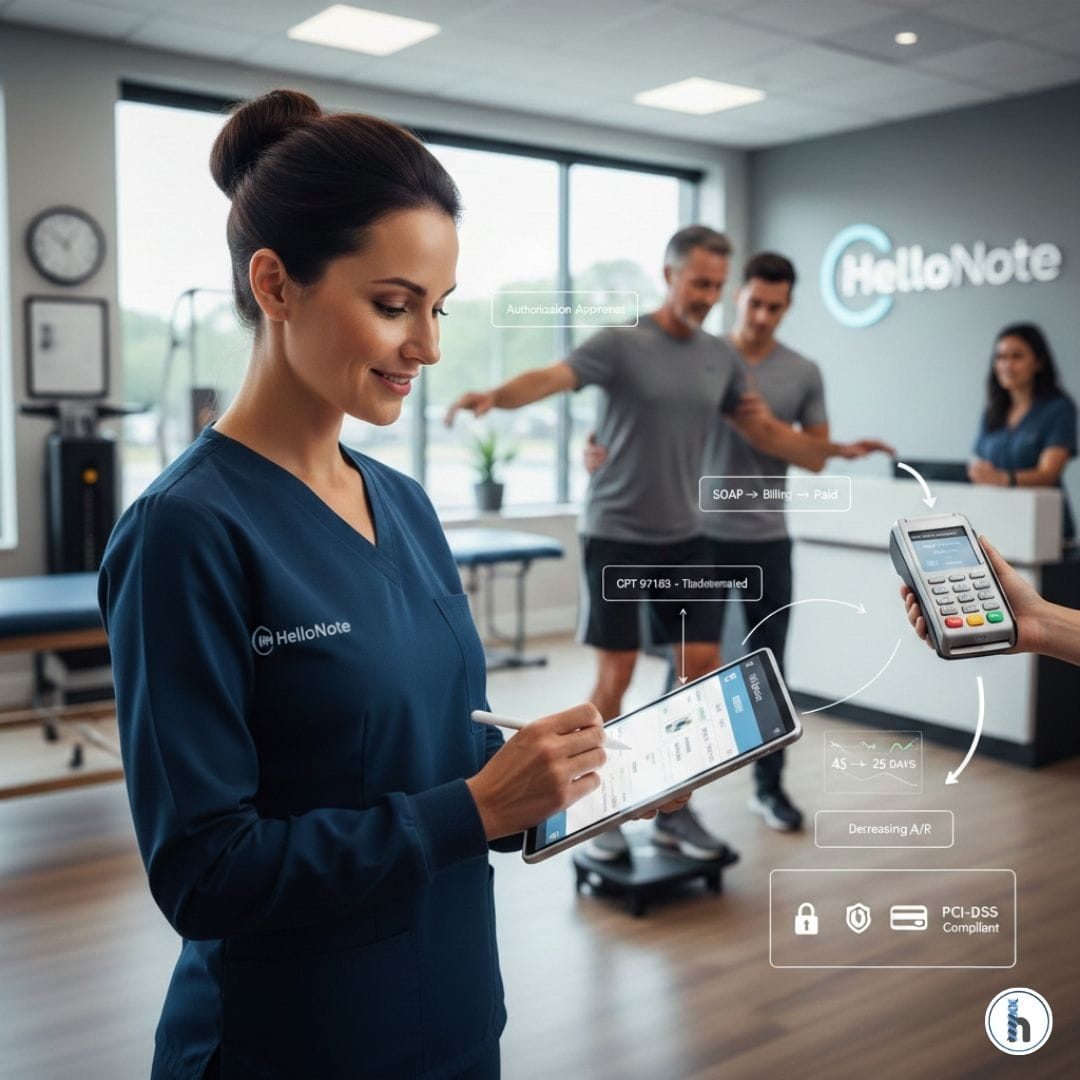
Female physical therapist in blue scrubs using HelloNote tablet to automate SOAP notes and CPT billing in a modern clinic with integrated payment terminals.

Compliance on Autopilot: The 8-Minute Rule

Medicare billing for timed codes is a math-heavy burden. Manually calculating remainders and unit totals is not just slow—it’s an audit risk.

Solving the Calculation Burden

HelloNote’s Automated 8-Minute Rule Calculator does the heavy lifting for you. It sums the total timed minutes across your therapeutic exercises (97110) and manual therapy (97140), then applies the Medicare-standard division to ensure you bill the maximum compliant units.

Why Automated Totals Matter for Audits

Automated calculations provide a standardized “paper trail” that proves medical necessity and billing accuracy, significantly reducing the stress of a CMS audit by removing human calculation error.

Accelerating Cash Flow with HelloNote & Fiserv

The “awkward co-pay conversation” at the front desk can erode the patient-provider relationship. By integrating Fiserv (CardPointe) directly into HelloNote, you move from a “debt collection” model to a “point-of-service” model.

The HelloNote-Fiserv Advantage

  • Secure Card-on-File: Store patient cards with PCI-compliant tokenization so you can run co-pays automatically.

  • Clover Flex Integration: Use portable, “tap-to-pay” hardware for mobile PT or home health visits.

  • Email Payment Links: Send secure links for outstanding balances, allowing patients to pay from their phones.

Comparison: Manual vs. Automated RCM

FeatureManual / Legacy WorkflowHelloNote Automated Workflow
Claim Preparation10–15 min per patient< 30 seconds (Auto-sync)
Authorization CheckManual spreadsheet trackingReal-time automated alerts
8-Minute RuleMental math / Audit riskSystem-enforced compliance
Payment CollectionPaper invoices / Delayed mailInstant Card-on-File / Email Links
Days in A/R45+ days25–30 days

Frequently Asked Questions

Q1. Does RCM automation replace my billing staff?

No. Automation is designed to empower your staff. By handling repetitive tasks like data entry and eligibility checks, your team can focus on high-value work like appealing complex denials and improving patient financial counseling.

Q2. How does HelloNote handle families with multiple children in OT?

Using the Visits and Receipts tab, you can select multiple dates of service across different family members and “Batch Print” a single, comprehensive superbill. This is a massive time-saver for pediatric practices.

Q3. Can I track authorizations by units instead of just visits?

Absolutely. Many payers authorize by total minutes or units. HelloNote allows you to toggle your Patient Authorization Report to track exactly how many units are remaining, preventing you from over-treating or under-billing.

Q4. How secure is the Card-on-File feature?

Extremely. Through our integration with Fiserv, we use P2PE (Point-to-Point Encryption) and tokenization. This means sensitive card data never touches your local servers, significantly reducing your PCI compliance burden.

Q5. Is the credit card hardware portable for mobile therapists?

Yes. With Clover Flex, home health or mobile PT providers can accept chip, swipe, or tap payments at the point of care. All transaction data syncs back to the HelloNote ledger in real-time.

Final Thoughts: Protecting the Clinical Hour

Your revenue cycle shouldn’t distract you from patient care. By automating the “grunt work” of RCM, you protect your time and your clinic’s bottom line.

The Hidden SEO Benefits of Blogging for PT, OT, and SLP Clinics

Overlapping glowing digital panels showing a blog website with multiple 'Blog Post' sections, visually representing the structured content crucial for SEO for Therapy Clinics and improving search rankings.

Introduction

For physical therapy, occupational therapy, and speech-language pathology clinics, having a strong online presence is essential for attracting new patients and maintaining credibility in a competitive market. While most clinic owners recognize the value of a well-designed website, fewer understand how regular blogging can significantly enhance search engine optimization (SEO), helping their practice appear higher in search results. This is particularly true for SEO for Therapy Clinics.

A blog is more than just an informational resource; it is a powerful tool that improves search rankings, increases website traffic, and builds trust with both patients and referral sources. When done consistently, blogging helps clinics rank for relevant search terms, establish authority in their field, and engage with potential patients before they even step through the door.

This article explores the hidden SEO benefits of blogging for PT, OT, and SLP clinics and explains how consistent, high-quality content can transform a therapy practice’s online visibility and reputation. For example, understanding how blogging helps PT clinics rank is crucial.

Improving Search Rankings Through Fresh and Relevant Content

Search engines like Google prioritize websites that consistently publish fresh content. Static websites that rarely update their pages can fall behind in search rankings, making it harder for potential patients to find them. Regular blogging signals to search engines that a website is active, relevant, and valuable to users.

Writing blog posts that focus on common patient concerns, therapy techniques, and industry advancements keeps content current while increasing the number of indexed pages on a website. The more high-quality content a site has, the greater its chances of ranking for relevant keywords that potential patients are searching for, helping improve search rankings for therapy clinic websites.

How Blogging Improves Search Rankings

    • Keyword Optimization: Blogging with targeted keywords (e.g., “occupational therapy for stroke recovery”) helps Google recognize your expertise, boosting your Physical Therapy SEO, Occupational Therapy SEO, and Speech Therapy SEO efforts.

    • Long-Tail Keyword Targeting: Instead of competing for broad terms (e.g., “physical therapy”), rank easier with specific phrases like “best exercises for rotator cuff injuries.” This is key for attracting new patients with clinic blog content.

    • Increased Dwell Time: High-quality, engaging content keeps visitors on your site longer, which boosts SEO performance.

Attracting New Patients by Answering Their Questions

Most potential patients begin their journey by searching for answers to their health concerns online. They may type queries like “How do I know if I need physical therapy?” or “Best exercises for speech delay in toddlers.”

A blog that addresses these questions positions the clinic as a reliable source of information. Instead of relying solely on referral networks, a therapy practice can attract new patients with clinic blog content directly from search engines by providing valuable insights that align with what people are actively searching for.

Types of Blog Posts That Attract New Patients

  • Educational Posts: Writing about common therapy conditions, treatments, and recovery techniques educates potential patients while reinforcing the clinic’s expertise. Example topics include:

      • The difference between physical therapy and chiropractic care

      • How speech therapy helps children with articulation disorders

      • What to expect in an occupational therapy evaluation

  • Step-by-Step Guides and Exercise Recommendations: Many patients search for at-home therapy techniques. Providing safe and professional guidance through blog posts can help them while also encouraging them to seek professional services. Example topics include:

      • Five exercises to improve balance after a stroke

      • Tips for managing chronic back pain with physical therapy

      • How parents can support their child’s speech therapy progress at home

  • Patient Success Stories: Sharing real-life examples of therapy success builds trust with potential patients. When people see authentic stories of improvement, they are more likely to book an appointment.

  • Frequently Asked Questions: Addressing common questions about therapy helps remove barriers that might prevent a patient from seeking treatment. Example topics include:

      • Does insurance cover occupational therapy?

      • How long does it take to recover from knee surgery with PT?

      • When should a child start speech therapy?

By creating blog posts tailored to patient concerns, clinics not only attract visitors but also convert them into patients by demonstrating expertise and offering clear solutions.

Enhancing Website Credibility and Authority

A well-maintained blog boosts a clinic’s credibility by positioning the practice as an industry leader. When patients see a website that regularly publishes informative, research-backed content, they are more likely to trust the expertise of the therapists, crucial for effective SEO for Therapy Clinics.

How Blogging Builds Trust and Authority

    • Demonstrating Professional Expertise: Regularly publishing fact-based, insightful articles reassures potential patients that the clinic is knowledgeable and up-to-date with the latest therapy advancements. This is particularly important for content marketing for PT OT SLP practices.

    • Encouraging Referrals from Healthcare Providers: Physicians and other healthcare professionals often look for trusted therapy providers to recommend to their patients. A blog showcasing professional knowledge and successful case studies can encourage more referrals from doctors, case managers, and specialists.

    • Earning Backlinks from Reputable Websites: When a clinic publishes high-quality content, other websites, including medical blogs and health organizations, may link to it as a resource. These backlinks improve SEO by boosting the website’s authority and ranking.

    • Social Proof Through Engagement: When patients engage with blog content by commenting, sharing, or asking questions, it reinforces the credibility of the clinic. Social proof in the form of blog engagement, social media shares, and testimonials strengthens the reputation of the practice.

Maximizing the SEO Benefits of Blogging

To fully leverage blogging for SEO for Therapy Clinics, therapy clinics should follow best practices to ensure their content remains relevant and effective.

    • Consistency Matters: Search engines prioritize websites that update content regularly. A blog that publishes one to two high-quality posts per month remains fresh and signals activity to Google.

    • Content Must Be Optimized for SEO: Including relevant keywords naturally, using clear headings, and adding meta descriptions and alt text for images improve the blog’s discoverability and help improve search rankings for therapy clinic websites.

    • Mobile-Friendly and Fast-Loading Pages: Most patients access health information from their smartphones. Blogs must be mobile-responsive and load quickly to prevent visitors from leaving before reading the content.

    • Internal Linking to Service Pages: Each blog post should include links to relevant service pages to encourage readers to explore treatment options and schedule appointments. For example, a post on “Speech Therapy for Stuttering” should link to the clinic’s speech therapy services page for easy navigation.

Conclusion

Blogging is a powerful yet often overlooked strategy for improving search rankings, attracting new patients with clinic blog strategies, and enhancing the credibility of therapy clinics. By consistently publishing well-researched, patient-focused content, PT, OT, and SLP clinics can build a strong online presence that drives more traffic, increases engagement, and converts visitors into loyal patients. Understanding the benefits of blogging for SLP practice and how blogging helps PT clinics rank is key to this success.

Beyond SEO benefits, blogging also strengthens relationships with referral sources, provides valuable patient education, and positions therapists as industry leaders. In an era where digital visibility directly impacts business success, maintaining an active and informative blog is one of the best investments a therapy clinic can make for its overall SEO for Therapy Clinics.

More Than Muscle Deep: The Science of Massage Therapy and Its Untapped Potential in Rehabilitation and Mental Well Being

Conceptual image showing therapist applying gentle touch to relaxed patient, visualizing the nervous system benefits of **massage therapy in rehabilitation** via glowing pathways.

Addressing the Whole Patient in Rehabilitation

As physical, occupational, and speech therapists, we’re dedicated to helping patients regain function, mobility, and communication. While we target physical recovery from injuries, surgeries, or health conditions, we often see progress complicated by factors beyond the primary diagnosis. Persistent pain fueled by stress, functional limits increased by anxiety, or recovery stalls linked to mood or sleep issues are common challenges. Recognizing this powerful mind-body connection is vital, suggesting that exploring complementary approaches could significantly enhance our effectiveness.

Understanding the science behind massage therapy in rehabilitation reveals it’s far more than just a tool for relaxation or muscle soreness relief. It possesses a robust scientific foundation demonstrating profound effects on the nervous system and mental state. For rehabilitation professionals and clinic administrators, grasping this science isn’t just academically interesting; it unlocks potential pathways to better patient outcomes, increased engagement, and a more holistic, effective approach to care. This article delves into the mechanisms behind massage therapy and explores its valuable, often underutilized, role in supporting the mental well being of the patients we serve within the rehabilitation context.

The Neurophysiological Symphony: How Massage Influences the Nervous System

The power of skilled touch extends far beyond superficial relaxation. Massage therapy directly influences the autonomic nervous system (ANS), orchestrating a shift away from the sympathetic “fight or flight” state towards the parasympathetic “rest and digest” state. This shift is critical for patients navigating the stresses of recovery and pain. Here’s how:

Stress Hormone Reduction

This is key to understanding how massage reduces cortisol rehabilitation. Research consistently shows that massage therapy decreases levels of cortisol, the body’s primary stress hormone. Chronically elevated cortisol contributes to inflammation, heightened pain perception, muscle tension, impaired tissue healing, and sleep disturbances—all significant barriers in rehabilitation. Lowering cortisol via massage creates a physiological environment more conducive to healing and recovery within the rehabilitation journey.

Boosting “Feel Good” Neurotransmitters

Massage stimulates the release of serotonin and dopamine. Serotonin plays a vital role in mood regulation, anxiety reduction, and promoting feelings of calm. Dopamine is associated with pleasure, motivation, and reward. Increased levels can improve a patient’s mood, outlook, and motivation to participate actively in their therapy program.

Endorphin Release

Massage encourages the production of endorphins, the body’s natural opioids. These neurochemicals act as potent analgesics (pain relievers) and mood elevators, contributing to both physical comfort and emotional uplift.

Vagal Nerve Stimulation

Techniques involving moderate pressure, common in many massage styles, have been shown to increase vagal tone. The vagus nerve is a major component of the parasympathetic nervous system. Enhanced vagal activity promotes relaxation, slows heart rate, reduces inflammation, and improves emotional regulation.

Understanding these mechanisms helps us appreciate that massage isn’t just a passive relaxation technique; it’s an active intervention influencing the neurochemical landscape in ways that directly support therapeutic goals, making it a strong consideration for massage therapy in rehabilitation.

Clinical Relevance for Rehabilitation Populations

The benefits of nervous system regulation via massage have direct applications for common challenges faced by patients in PT, OT, and SLP settings:

Chronic Pain Management

For patients experiencing conditions like chronic low back pain, fibromyalgia, or arthritis, massage for pain management rehab can be particularly beneficial:

    • Massage can help downregulate the nervous system, addressing central sensitization.

    • It aids in reducing persistent muscle guarding and tension.

    • It can decrease the perception of pain.

    • It potentially improves tolerance for therapeutic exercise. Effective massage for pain management rehab requires skilled application tailored to the patient’s condition.

Post-Surgical Recovery

Beyond standard PT/OT scar tissue and swelling management:

    • Massage can alleviate surgery-related anxiety and stress.

    • It may improve sleep quality, which is crucial for healing.

    • It helps address compensatory muscle tension developed before or after surgery.

Neurological Rehabilitation

For patients recovering from stroke, TBI, or managing conditions like MS or Parkinson’s:

    • Appropriate massage techniques can help modulate muscle tone and reduce spasticity.

    • It can assist in reducing associated anxiety.

    • It may improve sensory feedback and body awareness.

    • It can enhance body image and acceptance. Considering massage therapy in rehabilitation for neurological conditions requires specific training and precautions.

Stress Related Musculoskeletal Complaints

Many patients present with conditions exacerbated by stress, such as tension headaches, temporomandibular joint (TMJ) dysfunction, or postural strain. Massage can directly address the involved musculature while simultaneously mitigating the underlying stress contributing to the symptoms.

Mental Health Comorbidities

Anxiety and depression frequently accompany physical impairments. While massage is not a standalone treatment for these conditions, it can be a powerful adjunct, improving mood, reducing somatic symptoms of anxiety, and enhancing receptiveness to both rehabilitation and mental health interventions.

The Therapeutic Value of Intentional Touch

In a healthcare system often characterized by brief interactions and technological interventions, the simple power of human touch can be profoundly therapeutic. Skilled, intentional touch provided during massage therapy offers:

Proprioceptive Input and Body Awareness

Massage provides rich sensory information, helping patients reconnect with their bodies, improve proprioception (sense of body position), and enhance interoception (sense of internal state), which can be particularly valuable after injury or neurological events.

Non Verbal Communication of Safety

For patients feeling vulnerable, in pain, or anxious, therapeutic touch within a safe, professional context can communicate care, empathy, and safety, helping to calm the nervous system at a fundamental level.

Trauma Informed Potential

Recognizing that many patients may have histories of trauma (medical or otherwise), trauma informed massage approaches prioritize patient control, communication, and nervous system regulation, offering a gentle way to re establish a sense of safety within one’s own body.

Considering Different Massage Modalities

While various techniques exist, some are particularly relevant when considering mental well being and massage therapy in rehabilitation:

    • Swedish Massage: Often the foundation, utilizing long, flowing strokes, kneading, and gentle tapping to promote general relaxation, improve circulation, reduce muscle tension, and lower stress levels. Excellent for overall nervous system calming.

    • Myofascial Release (MFR): Focuses on releasing restrictions within the connective tissue (fascia). While often used by PTs/OTs for specific physical limitations, LMTs trained in MFR can address widespread fascial tension that contributes to pain, postural strain, and feelings of physical restriction linked to stress.

    • Craniosacral Therapy (CST): A very gentle technique focused on subtle manipulations of the skull, spine, and pelvis to influence the craniosacral system and promote deep relaxation and nervous system balance. Often sought for stress, headaches, and trauma related issues.

    • Lymphatic Drainage: A gentle technique to support the lymphatic system, relevant post surgery or injury to reduce swelling, but also has calming effects on the nervous system.

    • Neuromuscular Therapy (NMT) / Trigger Point Therapy: Focuses on releasing specific points of muscle hypersensitivity (trigger points) that can refer pain and contribute to chronic tension patterns often exacerbated by stress.

The choice of modality often depends on the patient’s specific needs, preferences, and the therapist’s training.

Integrating Massage into the Rehabilitation Ecosystem

How can rehabilitation clinics effectively leverage the benefits of massage therapy?

Develop Referral Networks

Build relationships with qualified, licensed massage therapists (LMTs) in your community who understand rehabilitation principles and ideally have experience with relevant patient populations (e.g., oncology massage, neuro massage, orthopedic massage). Clear communication about patient goals is key.

Consider In House Services

Some larger clinics or wellness centers may employ LMTs directly. This allows for closer collaboration and seamless integration into patient care plans, but requires careful consideration of space, scheduling, and management. This model optimizes the use of massage therapy in rehabilitation settings.

Patient Education

Inform patients about the potential benefits of massage as a complement to their primary rehabilitation therapy, particularly for managing stress, pain (where massage for pain management rehab is relevant), and improving overall well being related to their recovery.

Scope Awareness

Clearly differentiate between the manual therapy techniques performed by PTs/OTs within their scope (often focused on specific joint/tissue mobilization for functional goals) and the broader relaxation, stress reduction, and systemic effects often targeted by LMTs.

Efficient Documentation and Coordination: The HelloNote Advantage

Whether referring out or employing LMTs, managing information and coordinating care efficiently is crucial. This is where a versatile Electronic Medical Record (EMR) system like HelloNote becomes invaluable:

    • Tracking Referrals: Easily document referrals made to LMTs, including the reason for referral and communication sent, maintaining a comprehensive patient record.

    • Integrated Documentation (for In House LMTs): If employing LMTs, HelloNote can provide customizable templates (e.g., SOAP notes tailored for massage) allowing them to document sessions within the same patient chart, facilitating easy review by the primary rehab therapist.

    • Monitoring Patient Response: Rehab therapists can use HelloNote to document patient reported feedback on massage interventions and objectively track changes in pain levels, range of motion, functional scores, or goal achievement that may correlate with the addition of massage therapy.

    • Secure Inter provider Communication: Utilize secure messaging features within HelloNote to communicate (with patient consent) relevant information or progress updates between the rehab therapist and the LMT, ensuring continuity of care.

    • Goal Alignment: Document how adjunctive massage therapy supports specific rehabilitation goals (e.g., “Patient receiving weekly massage to manage stress and muscle tension, supporting improved participation in therapeutic exercise program”).

HelloNote helps streamline these processes, ensuring that integrating massage therapy enhances, rather than complicates, clinical workflow and supports quality patient care.

Discover how HelloNote’s features support integrated care models in your clinic.

How Therapists on Social Media Can Grow Their Practice Ethically and Avoid Burnout 

Discover how therapists on social media can balance ethical engagement, prevent burnout, and create sustainable content strategies. This guide explores best practices for maintaining professional boundaries, leveraging automation tools, and optimizing social media presence while protecting mental well-being. Learn how to use social media effectively without it overwhelming your practice.

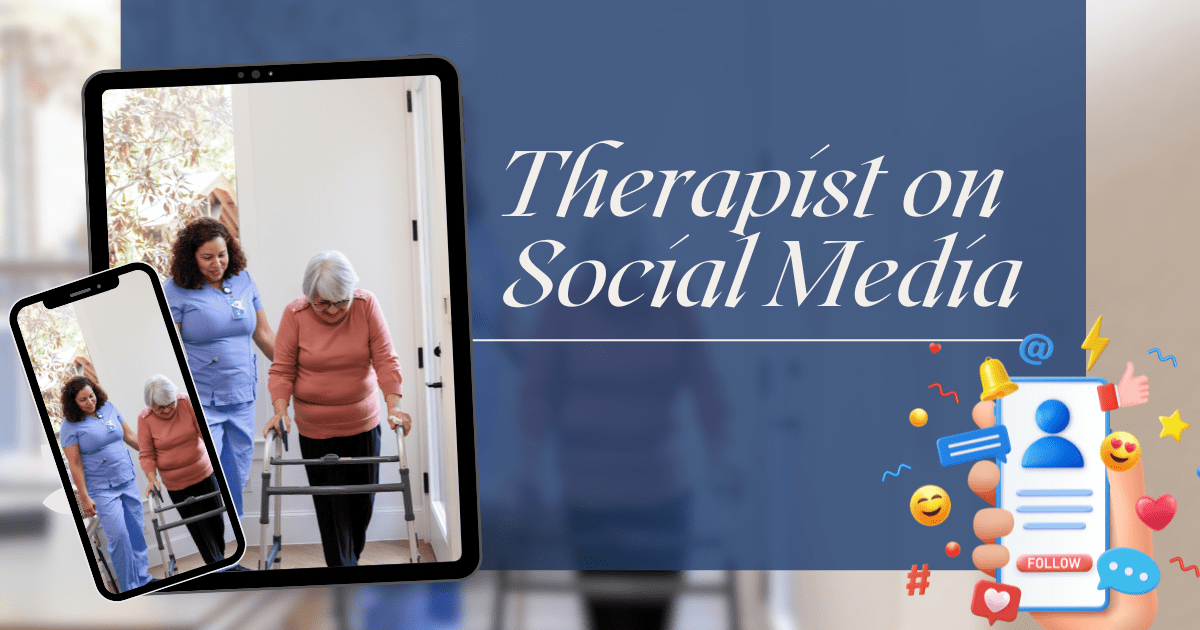
A therapists on social media assisting an elderly patient with a walker, displayed on a tablet and smartphone screen, with social media icons representing online engagement.

Introduction 

Social media offers therapists a way to share knowledge, connect with clients, and establish credibility. While it can be a powerful tool for growing a practice, it also comes with ethical concerns, the risk of burnout, and the challenge of maintaining boundaries. 

Therapists on social media must balance providing value with protecting their well-being. Ethical considerations like patient confidentiality and professional boundaries must be a priority, while at the same time, therapists need to ensure that social media does not interfere with their mental health and personal time. This article explores how therapists can engage on social media responsibly and sustainably. 

Ethical Considerations for Therapists on Social Media

HIPAA Compliance and Patient Confidentiality 

Therapists on social media cannot share any information that could identify a client. Even general case studies should be presented carefully to avoid breaching privacy. 

    • Never post client details, including names, session notes, or personal health information. 
    • Avoid discussing specific client cases, even if names are removed, unless consent has been given. 
    • Be mindful of what is shared in public comments and direct messages. If a follower asks for specific advice, guide them to schedule a professional session instead of responding publicly. 

Maintaining Professional Boundaries 

While social media allows therapists to be more accessible, clear boundaries must be set to separate personal and professional lives. 

    • Do not engage in therapy discussions via direct messages or public comments. 
    • Use disclaimers on educational content, stating that the information provided is general and not a substitute for professional advice. 
    • Keep interactions professional, even when responding to personal questions from followers. 

Therapists on social media must also be mindful of dual relationships. Engaging with clients on social media in a casual or personal way can create ethical challenges and blur the professional line. 

Avoiding Burnout: Protecting Mental Health While Staying Active Online

Setting Boundaries for Social Media Use 

Many therapists find social media exhausting because it demands constant attention. Balancing content creation with clinical responsibilities can become overwhelming, leading to stress and burnout. 

    • Designate specific times for social media engagement instead of checking notifications throughout the day. 
    • Set limits on how often content is posted to avoid the pressure of maintaining an unrealistic schedule. 
    • Avoid comparing engagement or follower counts to others in the field, as this can create unnecessary stress. 
    • Take breaks from social media when needed. If engagement starts feeling overwhelming, stepping back for a few days or weeks can help reset energy and focus. 

Separating Personal and Professional Social Media Use 

To prevent social media from interfering with personal time, therapists should create clear divisions between professional and personal accounts. 

    • Use a dedicated account for therapy-related content to keep professional interactions separate. 
    • Avoid personal discussions on professional pages. If friends or family engage on therapy-related posts, guide them to personal conversations offline. 
    • Set expectations with clients about social media interactions, making it clear that direct messages or comments will not replace formal therapy sessions. 

Sustainable Content Creation for Therapists

Planning Content in Advance 

Consistently posting on social media does not mean therapists need to spend hours creating new content daily. A sustainable content strategy helps maintain engagement without leading to exhaustion. 

    • Batch-create content in one sitting instead of posting on the fly. 
    • Rotate content themes to avoid running out of ideas. For example, therapists can post educational content one day, engagement questions another day, and practical tips later in the week. 

Focusing on Quality Over Quantity 

Therapists on social media do not need to post daily to be effective. A well-thought-out post once or twice a week is more valuable than rushed, frequent updates. 

    • Share posts that educate or inspire instead of posting just for the sake of staying visible. 
    • Avoid overwhelming followers with excessive information. Keep messages clear and to the point. 
    • Use interactive content like polls, Q&A sessions, or short videos to engage audiences without requiring long-form writing. 

Automation and Delegation: Managing Social Media Efficiently

Using Scheduling Tools 

To reduce the time spent managing social media, therapists can use tools to automate posts and delegate tasks where possible

    • Platforms like Buffer, Hootsuite, and Meta Business Suite allow users to schedule posts in advance. 
    • Planning content for a week or a month at a time can free up mental space and reduce daily posting stress. 
    • Automated responses for frequently asked questions can help manage direct messages professionally. 

Choosing the Right Social Media Scheduling Tool 

    • Buffer – Best for solo therapists or small clinics needing a simple, cost-effective scheduling tool. It supports key platforms like Facebook, Instagram, and LinkedIn but lacks advanced analytics. 
    • Hootsuite – Ideal for larger therapy practices managing multiple accounts. It offers in-depth analytics, social listening, and team collaboration but comes at a higher price. 
    • Meta Business Suite – The best free option for those focused on Facebook and Instagram. It includes ad management but lacks support for platforms like LinkedIn or Twitter. 

For simplicity and affordability, choose Buffer. For advanced analytics and team features, go with Hootsuite. If your focus is only on Facebook and Instagram, Meta Business Suite is the best free option. 

Delegating Social Media Tasks 

Therapists who have a growing audience may consider outsourcing some social media responsibilities. 

    • Hiring a virtual assistant or social media manager can help with content scheduling, engagement tracking, and responding to general inquiries. 
    • Collaborating with content creators or graphic designers can make posts visually appealing without adding extra work. 

Conclusion

Therapists on social media can use these platforms to educate, engage, and grow their practice while maintaining ethical standards and protecting their well-being. By setting boundaries, creating content sustainably, and using automation tools, therapists can stay active online without feeling overwhelmed. 

Social media should be an extension of a therapist’s professional presence, not a source of stress. A balanced approach ensures that therapists can maintain their online engagement while focusing on their practice and personal well-being. 

How to Turn Engagement into Conversion for Therapists?

Struggling to turn social media engagement into actual clients? Learn how to achieve engagement into conversion with proven strategies. This guide explores how therapists can create compelling content, nurture leads, and implement ethical marketing tactics to transform online interactions into real appointments. Discover the power of engagement into conversion through lead magnets, social proof, and targeted ads while maintaining professional boundaries. Whether you’re building trust with potential clients or retaining existing ones, these techniques will help grow your practice effectively.

Understanding Engagement into Conversion for Therapists

Social media is a powerful tool for therapists and clinic owners, but the real challenge lies in engagement into conversion—transforming followers into actual clients. Many therapy practices struggle to bridge the gap between social media engagement and bookings. The key is to provide valuable content, strategically capture leads, and create an easy transition from online interactions to real-life appointments. 

Beyond gaining new clients, engagement into conversion also plays a role in client retention. By keeping existing clients engaged with educational content, therapists can reinforce their therapy journey and build long-term trust. This article explores how therapists can ethically and effectively boost engagement to turn social media followers into loyal clients while maintaining professional boundaries. 

Step 1: Creating Content That Drives Engagement into Conversion

The most effective engagement into conversion strategies involve creating content that speaks directly to your audience’s needs. It should not only attract new clients but also encourage existing ones to remain engaged in their therapy process. 

1. Identifying Audience Pain Points for Better Engagement into Conversion

Understanding your audience’s struggles helps craft content that resonates and leads to higher engagement and followers, Ask yourself: 

    • What common challenges do your clients face? (e.g., post-surgery recovery, chronic pain, speech development delays) 
    • What questions do they frequently ask during therapy sessions? 
    • How can your content support ongoing therapy and reinforce the importance of continued care? 

Example: If your clinic specializes in post-surgical rehabilitation, create content like “Three Exercises to Improve Mobility After Knee Surgery” or “Why Consistency is Key in Physical Therapy Recovery.” 

2. Posting Actionable and Value-Packed Content

Content that provides immediate value increases engagement by encouraging shares and client inquiries. Effective formats include: 

    • Quick Therapy Tips – Short exercises, pain relief techniques, or stretches. 
    • Before-and-After Stories – With consent, share progress updates from real patients. 
    • Myth vs. Fact Posts – Debunk common therapy misconceptions. 
    • Q&A Sessions – Address frequently asked therapy-related questions. 
    • Behind-the-Scenes Content – Introduce therapists and show your clinic’s environment. 

By consistently offering useful content, you enhance engagement into conversion, turning passive followers into active clients. 

3. Leveraging Storytelling for Higher Engagement into Conversion

Storytelling builds emotional connections and drives engagement into conversion. Sharing real-life success stories (with patient consent) can inspire new clients to book an appointment and encourage existing ones to stay committed to their therapy. 

Example Post: 

“Meet Lisa. She suffered from chronic shoulder pain for five years. After eight weeks of therapy, she regained full mobility and returned to her favorite activities pain-free!” 

Step 2: Using Lead Magnets to Strengthen Engagement into Conversion

A lead magnet is a free resource that provides value in exchange for a follower’s contact information. This allows you to build an email list and nurture relationships over time, increasing engagement into conversion. 

1. Examples of Lead Magnets That Drive Engagement into Conversion

    • Downloadable Guides: “5 Stretches for Lower Back Pain Relief” or “How to Improve Speech Clarity at Home.” 
    • Mini Video Training: Short tutorials demonstrating therapy techniques. 
    • Exclusive Webinars: Live Q&A sessions or workshops. 
    • Email Newsletters: Ongoing therapy tips, special promotions, and clinic updates. 

For better engagement into conversion, follow up with emails that reinforce the importance of consistency in therapy. 

Example: 

Subject: “Keeping Your Progress on Track – A Quick Tip!” 
Body: “We loved seeing your progress in therapy! Here’s a simple home exercise to maintain your results. Need more guidance? Let’s book your next session!” 

2. Promoting Lead Magnets for Maximum Engagement into Conversion

    • Post links to free guides in your bio and captions. 
    • Use Instagram and Facebook Stories to highlight downloadable content. 
    • Run Facebook or Instagram ads targeting potential clients who might need therapy. 

Step 3: Converting Engagement into Bookings While Maintaining Ethics

Converting social media engagement into actual bookings should be done ethically and within professional guidelines. 

1. Setting Boundaries for Ethical Engagement into Conversion

    • Do not offer personalized medical advice in comments or direct messages. 
    • Use disclaimers: “This content is for educational purposes only and does not replace professional therapy.” 
    • If someone asks for specific help, direct them to book a consultation instead of giving informal advice. 

2. Offering a Seamless Booking Process

A hassle-free booking process improves engagement into conversion and reduces drop-offs. 

    • Include a booking link in your social media bios and posts. 
    • Use automated DMs that send booking links when someone inquires about services. 

3. Utilizing Social Proof for Stronger Engagement into Conversion

Social proof, such as testimonials and reviews, helps convert engagement into trust and bookings. 

Example Post: 

“Before therapy, Jake struggled with severe back pain. After six weeks of targeted exercises, he’s back to his normal routine pain-free. Don’t let pain control your life—book an appointment today!” 

Step 4: Running Paid Ads for Better Engagement into Conversion

If you want to boost engagement into conversion beyond organic reach, paid advertising on platforms like Facebook and Instagram is highly effective. 

1. Best Platforms for Therapy Clinic Ads

    • Facebook & Instagram Ads: Target potential local clients searching for therapy. 
    • Google Ads: Helps clinics appear at the top when someone searches for “physical therapy near me.” 
    • LinkedIn Ads: Great for reaching professionals needing therapy for workplace injuries. 

2. Crafting Ads That Improve Engagement into Conversion

    • Identify the Problem: “Struggling with chronic neck pain?” 
    • Offer a Solution: “Our therapy techniques can help restore movement and reduce pain.” 
    • Call to Action: “Book a free consultation today!” 

Final Takeaways: Mastering Engagement into Conversion for Therapists

To successfully achieve engagement into conversion, therapists must: 

    • Create content that educates, builds trust, and motivates action. 
    • Use lead magnets to capture contact details and nurture relationships. 
    • Ethically guide followers toward booking therapy sessions. 
    • Offer a seamless, hassle-free booking process. 
    • Leverage testimonials and success stories to retain current clients. 
    • Run targeted social media ads to reach potential clients. 

By implementing these strategies, engagement into conversion becomes a natural and effective process. Start optimizing your social media today and watch your therapy practice grow! 


TikTok Strategies for Therapists: Engaging Younger Audiences and Growing Your Practice 

Unlock the potential of TikTok for your therapy practice with proven TikTok strategies for therapists. Learn how to create engaging content, connect with younger audiences, and establish your expertise in the mental health space. Discover tips for optimizing your profile, leveraging trending sounds, and using storytelling to build trust and attract new clients. Whether you’re new to TikTok or looking to refine your approach, these strategies will help you grow your online presence and expand your practice effectively.

A digital graphic featuring the TikTok logo with neon blue and red outlines on a dark background, accompanied by the text "TikTok Strategies for Therapists: Engaging Younger Audiences and Growing Your Practice.

Introduction 

TikTok has transformed how younger generations consume content, making it a valuable platform for therapists to engage with Gen Z and Millennials. By leveraging short-form videos, therapists can educate, destigmatize mental health, and build a trusted online presence. However, success on TikTok requires a balance between engagement and ethical considerations. 

In this guide, we’ll explore the best TikTok strategies for therapists, helping you grow your presence while maintaining professional integrity.

Why TikTok is a Game-Changer for Therapists

Engaging a Digital-First Generation 

Gen Z and Millennials turn to TikTok not just for entertainment but also for education and social awareness. The platform’s highly personalized algorithm prioritizes engaging and valuable content, making it easier for therapists to reach potential clients. 

TikTok’s Algorithm Expands Reach 

Unlike platforms where reach depends on follower count, TikTok’s algorithm boosts content based on engagement, shares, and watch time. Even new accounts can gain significant exposure if their content resonates with viewers. 

Key features that help tiktok strategies for therapists expand their reach include: 

    • The For You Page (FYP), which customizes content for each user. 
    • Hashtags and trending audio, which increase discoverability. 
    • Duets and stitches, which encourage interaction and collaboration. 

Destigmatizing Therapy and Mental Health 

Many young people hesitate to seek therapy due to stigma or misconceptions. TikTok allows therapists to: 

    • Normalize therapy by sharing relatable experiences. 
    • Debunk mental health myths in a digestible format. 
    • Break down barriers to seeking professional help by making therapy approachable.  

Effective TikTok Strategies for Therapists 

Creating Educational and Engaging Content 

Therapists can use trending sounds, text overlays, and storytelling techniques to make their content engaging while still being informative. 

Popular content ideas include: 

    • Myth vs. Fact Videos – Addressing misconceptions about therapy. 
    • Mini Therapy Tips – Offering quick strategies for managing anxiety, stress, or pain. 
    • Behind-the-Scenes Content – Providing insight into a therapist’s daily routine (while maintaining HIPAA compliance). 
    • Q&A Style Videos – Answering frequently asked therapy-related questions. 
    • Mental Health Challenges & Encouragement – Motivating young audiences to prioritize their well-being. 

Leveraging Trends to Make Therapy Approachable 

TikTok thrives on trends, challenges, and viral audio clips. Therapists can incorporate these elements while staying true to their expertise. 

For example, a speech therapist can use a trending sound to demonstrate articulation exercises in an engaging way. 

Using Storytelling to Build Trust 

Storytelling makes content relatable and memorable. Therapists can share: 

    • General case studies (without breaching confidentiality). 
    • Personal insights on the therapy process. 
    • Hypothetical client scenarios to illustrate common concerns. 

For example, a mental health therapist could post a “Day in the Life of a Therapist” video to showcase therapy’s impact in a non-intimidating way. 

Encouraging Audience Interaction 

Strong social media engagement is key to effective TikTok strategies for therapists.

Therapists can:

    • Responding to comments. 
    • Creating Duet or Stitch videos to react to or expand on another user’s content. 
    • Asking thought-provoking questions to encourage discussion. 

For example, if a follower asks, “How do I know if I need therapy?”, a therapist can create a video response explaining common signs.

The Role of Clickbait in Engagement

Clickbait techniques can boost engagement, but therapists must use them ethically. 

Using intriguing hooks like “You’ve been breathing wrong your whole life—here’s why!” can capture attention while still delivering valuable content. 

However, misleading claims should be avoided. Instead, balance curiosity-driven content with accurate, professional insights. 

Ethical Considerations for Therapists on TikTok

Avoid Providing Direct Clinical Advice 

Therapists should educate rather than diagnose or provide individualized therapy advice. Best practices include: 

    • Using disclaimers that content is for educational purposes only. 
    • Encouraging viewers to seek professional help when needed. 

Example: Instead of saying, “DM me for therapy advice!”, say, “If you’re struggling, reach out to a licensed therapist for personalized support.” 

Maintain Patient Confidentiality (HIPAA Compliance

Therapists must never disclose identifiable patient information. Instead, they can: 

    • Use generalized case studies. 
    • Share educational insights without referencing specific clients. 

Be Mindful of Misinformation and Oversimplification 

TikTok thrives on quick, digestible content, but therapy is complex. Oversimplification can mislead viewers. 

Instead of saying, “This one tip will cure your anxiety!”, therapists should say, “This exercise can help manage anxiety, but therapy may be necessary for long-term relief.” 

Set Professional Boundaries 

TikTok’s casual nature can blur professional lines. Therapists should: 

    • Maintain a friendly yet professional tone. 
    • Avoid personal DMs with followers asking for medical advice. 

The Impact of TikTok on Therapy Awareness

With strong TikTok strategies for therapists, professionals can:

    • Make therapy more accessible. 
    • Educate younger audiences on mental health. 
    • Combat misinformation with expert insights. 

By following ethical guidelines and leveraging TikTok’s engagement-driven format, therapists can grow their practice while positively impacting mental health awareness. 

Conclusion

TikTok offers therapists a unique opportunity to engage with younger audiences and normalize therapy. By following ethical guidelines and leveraging engaging content strategies, therapists can expand their reach, build trust, and make a lasting impact in mental health awareness. Strong social media engagement is key to sustaining growth and ensuring content reaches those who need it most.

Social Media Engagement for Therapists: Educating, Engaging, and Growing a Practice 

Boost social media engagement for therapists by leveraging platform-specific strategies, ethical content creation, and audience-focused interactions. Learn how to educate, connect with potential clients, and grow your practice through engaging posts, video content, and professional networking. Discover best practices for maintaining HIPAA compliance, building trust, and optimizing your online presence to attract more patients while strengthening your brand as a therapy professional.

Introduction 

Social media has become an essential tool for therapists looking to connect with their audience, establish expertise, and grow their practice. As a therapist, an effective social media presence can help you enhance social media engagement, educate the public, interact with potential clients, and expand your professional reach. 

From sharing therapy tips and patient success stories to hosting live Q&A sessions and networking with peers, social media engagement for therapists provides numerous opportunities to position themselves as trusted authorities. This article explores how therapists can leverage social media effectively while also highlighting platform-specific strategies, ethical considerations, and content creation best practices. 

Why Social Media Engagement Matters for Therapists

Social media is more than just a marketing tool; it is a way to educate, inspire, and connect with people who need your expertise. Here’s why social media engagement for therapists is valuable: 

    • Educating the Public – Provide evidence-based therapy insights, dispel myths, and share rehabilitation exercises to promote patient awareness. 
    • Engaging with Clients and Peers – Answer therapy-related questions, participate in professional discussions, and build relationships within the healthcare community. 
    • Growing Your Practice – Increase visibility, attract new clients, and enhance credibility through consistent online engagement. 

Choosing the Right Social Media Platform for Engagement

Each social media platform offers unique benefits for therapists. Selecting the right one depends on your content style, target audience, and engagement goals. 

  1. Instagram: Visual Storytelling and Engagement

Best for: Sharing therapy exercises, patient success stories (with consent), and short educational videos. 

    • Use Instagram Reels to demonstrate exercises and therapy techniques. 
    • Post infographics and carousels with practical tips. 
    • Engage through Instagram Stories with polls, Q&As, and behind-the-scenes content. 
  1. Facebook: Community Building and Patient Interaction

Best for: Creating groups, hosting live discussions, and sharing long-form posts. 

    • Join or create Facebook Groups to connect with peers and potential clients. 
    • Host live Q&A sessions to answer therapy-related questions. 
    • Post informative articles and patient-friendly content to establish trust. 
  1. LinkedIn: Professional Networking and Thought Leadership

Best for: Connecting with other therapists, healthcare professionals, and referral sources. 

    • Share case studies, research articles, and industry insights. 
    • Engage with other professionals through comments and discussions. 
    • Position yourself as a thought leader by writing LinkedIn articles on therapy trends. 
  1. TikTok: Quick and Engaging Educational Content

Best for: Short, engaging, and creative therapy-related videos. 

    • Demonstrate quick therapy tips with trending sounds. 
    • Bust therapy myths using fun and informative clips. 
    • Show behind-the-scenes clips from your clinic to humanize your practice. 
  1. YouTube: In-Depth Educational Content

Best for: Creating detailed therapy tutorials and informational videos. 

    • Upload exercise demonstration videos for at-home therapy. 
    • Share interviews and expert discussions on therapy-related topics. 
    • Provide in-depth explanations of therapy techniques and best practices. 

Content Creation Tips to Boost Social Media Engagement

  1. Focus on Education and Value
    • Provide actionable advice – share simple exercises, therapy strategies, or FAQs. 
    • Explain complex topics in easy-to-understand language. 
    • Create visual guides like infographics or short-form videos. 
  1. Maintain Ethical and Legal Standards
    • Protect patient privacy – avoid sharing personal health information (HIPAA compliance). 
    • Use disclaimers – clarify that your content is educational and does not replace professional medical advice. 
    • Maintain professionalism – keep personal opinions and controversial topics separate from therapy discussions. 
  1. Stay Consistent with Posting
    • Post regularly to keep your audience engaged. 
    • Use scheduling tools like Later, Buffer, or Hootsuite to plan content in advance. 
    • Follow platform trends to ensure your content remains relevant. 
  1. Engage with Your Audience
    • Respond to comments and direct messages to build trust. 
    • Encourage discussions by asking questions in your posts. 
    • Collaborate with other professionals for cross-promotion opportunities. 

Ethical Considerations for Therapists Using Social Media

While social media is a powerful tool, therapists must navigate it responsibly to maintain professionalism and patient trust. 

    • Confidentiality – Never share identifiable patient information without explicit consent. 
    • Professional Boundaries – Avoid providing direct medical advice or online therapy unless licensed to do so. 
    • Evidence-Based Content – Only share verified, research-backed therapy information. 

The American Physical Therapy Association (APTA), American Occupational Therapy Association (AOTA), and American Speech-Language-Hearing Association (ASHA) offer guidelines for ethical online behavior. Staying informed on these regulations is essential when engaging with audiences on social platforms. 

Building a Community and Growing Social Media Engagement

A strong social media presence can increase referrals and credibility in the therapy field. Here are some strategies to grow your audience: 

  1. Use Hashtags to Increase Visibility
    • For PTs: #PhysicalTherapy #RehabExercises #InjuryRecovery 
    • For OTs: #OccupationalTherapy #PediatricOT #ADLTraining 
    • For SLPs: #SpeechTherapy #SLPCommunity #CommunicationMatters 
  1. Collaborate with Other Professionals
    • Engage in cross-promotions with local healthcare providers. 
  1. Share Success Stories (with Patient Consent)
    • Post testimonials and progress stories to build trust. 
    • Show before-and-after results (without violating privacy). 
  1. Leverage Paid Advertising (Optional)
    • Use Facebook and Instagram ads to promote services to a targeted audience. 
    • Invest in Google Ads for local therapy searches. 

How HelloNote EMR Supports Social Media Growth for Therapists

A successful social media presence requires efficient practice management. HelloNote EMR can help by: 

    • Freeing up more time for marketing efforts through automated documentation and scheduling. 
    • Providing insights into patient engagement, helping therapists tailor content based on client needs. 
    • Offering telehealth integration for therapists looking to expand their online therapy services. 

Want to spend less time on paperwork and more time growing your practice? Book a free demo of HelloNote EMR today! 

Talent Acquisition in Therapy Practices: Proven Strategies for Hiring and Retaining Top Therapists 

Struggling with talent acquisition in therapy practices? Discover effective hiring strategies, retention techniques, and ways to build a strong therapy team. Learn how to attract top PTs, OTs, and SLPs, streamline onboarding, and reduce turnover. Enhance your practice’s efficiency and therapist satisfaction with the right approach. Read now

A therapy practice hiring manager interviewing a smiling candidate, with a resume on a clipboard. The text overlay highlights "Talent Acquisition in Therapy Practices" with a focus on hiring and retaining top therapists.

Introduction 

Talent acquisition in therapy practices is crucial factor in maintaining high-quality patient care and operational efficiency. However, finding and retaining qualified therapists and support staff remains one of the biggest challenges in physical therapy, occupational therapy, and speech-language pathology. With rising demand, competitive hiring markets, and limited talent pools, therapy practices must adopt strategic hiring and retention approaches to build a committed team. 

In this guide, we will explore effective talent acquisition strategies for therapy practices, including recruitment techniques, retention solutions, and ways to strengthen your clinic’s workforce. 

The Importance of Strong Talent Acquisition in Therapy Practices

Having the right team in place impacts patient care, clinic efficiency, and overall business success. A well-staffed therapy practice can: 

    • Improve patient outcomes with skilled therapists delivering high-quality care. 
    • Enhance patient satisfaction and retention by ensuring continuity of care. 
    • Strengthen clinic reputation, attracting more referrals and clients. 

Challenges in Therapy Staffing and Recruitment

Limited Talent Pool 

    • Rural and underserved areas often struggle to attract skilled therapists. 

Competitive Hiring Market 

    • Larger healthcare systems and hospitals offer higher salaries and better benefits than private therapy practices. 
    • New graduates prioritize hospital jobs due to financial incentives. 

Employee Turnover 

    • Therapists may leave for better salaries, flexible schedules, or improved work-life balance. 

Licensing and Credentialing Delays 

    • Lengthy state licensing, credentialing, and Medicare enrollment processes create hiring gaps. 

Talent Acquisition Strategies for Therapy Practices

Build a Strong Employer Brand 

To attract top talent, therapy practices must position themselves as desirable workplaces by: 

    • Sharing testimonials from current staff to highlight a supportive environment. 
    • Maintaining a professional online presence on LinkedIn, job boards, and industry websites. 

Expand Recruitment Channels 

Beyond traditional job postings, consider: 

    • Partnering with universities and PT/OT/SLP programs to recruit new graduates. 
    • Attending job fairs and industry events to network with potential hires. 
    • Offering referral bonuses to incentivize current employees to recommend top talent. 

Streamline Hiring and Onboarding 

A slow hiring process increases the risk of losing candidates. Improve efficiency by: 

    • Automating application reviews with HR software. 
    • Conducting virtual interviews to reduce scheduling delays. 
    • Pre-credentialing candidates by assisting them with licensing and Medicare enrollment early. 
    • Providing a structured onboarding program for a seamless transition. 

Offer Competitive Compensation and Benefits 

While salary matters, other benefits can make your practice stand out: 

    • Flexible work schedules (telehealth options, four-day workweeks). 
    • Sign-on bonuses or tuition reimbursement for continuing education. 
    • Career advancement opportunities, such as mentorship or leadership training. 

Retention Strategies: Keeping Your Best Employees

Foster a Positive Workplace Culture 

    • Recognize and reward employee achievements. 
    • Maintain an open-door policy where staff feel heard and valued. 

Support Career Growth and Development 

    • Provide ongoing training and certifications for professional advancement. 
    • Offer leadership roles and promotion opportunities. 
    • Support specialization training (e.g., pediatric therapy, neurological rehab) to keep staff engaged. 

Prevent Burnout 

    • Allow for mental health days and flexible scheduling. 
    • Provide staff support through peer mentoring and team-building activities. 

Competitive Retention Incentives 

    • Offer annual performance bonuses to reward long-term commitment. 
    • Conduct regular employee satisfaction surveys and act on feedback. 

How HelloNote EMR Supports Talent Acquisition in Therapy Practices

Technology plays a crucial role in managing staffing and reducing administrative burdens. HelloNote EMR helps therapy practices by: 

    • Automating scheduling to optimize therapist workloads and reduce burnout. 
    • Simplifying documentation so therapists spend more time on patient care. 
    • Tracking employee performance and progress to ensure professional development. 
    • Providing telehealth solutions for flexible work arrangements. 

By integrating HelloNote EMR, therapy practices can enhance efficiency, improve staff satisfaction, and create a more organized work environment. 

Want to improve staff management and workflow? Book a free demo of HelloNote EMR today! 

Final Thoughts

Effective talent acquisition in therapy practice is critical for long-term success. By implementing proactive recruitment strategies, fostering a positive workplace culture, and offering competitive compensation, therapy clinics can reduce turnover and build a skilled, motivated team. 

With the right tools, like HelloNote EMR, practices can enhance efficiency, support employee satisfaction, and create an environment where therapists thrive. 

You've found a hidden discount!

  • 00Hours
  • 00Minutes
  • 00Seconds