You've found a hidden discount!

HN Unlock Layer 1
HN Unlock Layer 2
HN Unlock Layer 3
HN Unlock Layer 4
HN Unlock Layer 5
  • 00Hours
  • 00Minutes
  • 00Seconds

Category: billing

Utah Recognizes Physical Therapists as Primary Care Providers

Utah has officially made history by becoming the first state in the U.S. to formally recognize physical therapists as primary care providers for neuromusculoskeletal conditions. With the passage of this groundbreaking legislation, physical therapists in Utah are now empowered to provide care as the first point of contact for patients suffering from conditions affecting the muscles, bones, and nervous system. This policy shift is a result of persistent advocacy efforts led by APTA Utah and marks a transformative moment in healthcare delivery.

What the New Law Means

Traditionally, patients needed a referral from a physician to receive physical therapy services under insurance. While direct access laws have existed in various forms across all 50 states, Utah’s legislation goes further by giving PTs official designation as primary care providers”within their defined scope of practice. Specifically, this applies to the evaluation, diagnosis, and management of neuromusculoskeletal disorders.

This policy change removes barriers to care, allowing physical therapists to function more autonomously, triage patients effectively, and deliver timely interventions without administrative delays. For patients, this translates into faster recovery, reduced costs, and streamlined care. It also carries significant implications for physical therapy reimbursement under various insurance plans.

Utah State Capitol building, associated with APTA Utah's advocacy for the physical therapist primary care provider law.

A Win for Patients and Providers

One of the most immediate impacts of this change is improved access to care. Musculoskeletal disorders such as low back pain, neck pain, and joint dysfunctions are among the most common reasons individuals seek medical attention. Empowering PTs to act as the initial point of contact for these conditions helps alleviate pressure on primary care physicians and emergency departments.

Patients will benefit from:

    • Utilize their full training and licensure
    • Manage patients more efficiently
    • Increase their value within interdisciplinary care teams

Why Utah?

Utah has long been a state that prioritizes innovation in healthcare. With a robust population of physical therapists and a legislative environment open to scope of practice reform, Utah was well-positioned to become the first state to enact such a policy.

APTA Utah played a pivotal role in securing this legislative win. The organization engaged in sustained lobbying efforts, met with lawmakers, and provided educational materials demonstrating the clinical and economic value of direct PT access. This collaboration between the profession and policymakers exemplifies what’s possible when advocacy is rooted in evidence and public need.

The Scope of Primary Care for PTs

It is important to note that this primary care designation does not mean PTs are now responsible for general medical care. Instead, they are recognized as primary care providers specifically for patients with neuromusculoskeletal issues.

This includes:

    • Conducting comprehensive evaluations
    • Ordering and interpreting appropriate diagnostic imaging (where allowed)
    • Developing and implementing treatment plans
    • Referring patients to other providers when conditions fall outside their scope

This model mirrors how primary care physicians manage care, with the key distinction that PTs focus specifically on the neuromusculoskeletal system.

Safeguards and Collaboration

As with any scope expansion, ensuring patient safety remains paramount. The legislation includes safeguards requiring PTs to refer patients to appropriate medical providers when symptoms indicate a non-musculoskeletal cause or if red flags arise during examination.

Furthermore, the policy encourages collaborative care. Physical therapists will continue to work closely with physicians, nurse practitioners, and specialists to ensure patients receive comprehensive care.

Comparisons with Other States

While Utah is the first state to take this step, the trend is likely to spread. Many states already allow direct access to PT services for a certain number of visits or days without a referral. However, these laws often come with limitations, such as requiring prior physician evaluation for complex cases or restricting billing rights.

Utah’s legislation goes a step further by explicitly defining PTs as primary care providers within a specific clinical domain. This provides clarity for insurers, licensing boards, and patients, and it may serve as a blueprint for similar laws in other jurisdictions.

Reimbursement and Billing Implications

A crucial question for many therapy professionals is: How does Utah PT primary care affect reimbursement? One of the most significant implications of designating PTs as primary care providers is the potential impact on physical therapy reimbursement structures.

Insurers will now need to adapt their policies to recognize PTs as primary care providers for eligible conditions. Navigating changes in physical therapy reimbursement will be vital for clinics.

This change may influence:

The onus will be on both providers and payers to navigate this transition in a way that maintains compliance while ensuring patient care remains uninterrupted and fair physical therapy reimbursement is achieved.

Happy physical therapists embracing their expanded roles as primary care providers.

Implications for Education and Training

As PTs take on more autonomous roles, academic programs and continuing education providers will need to evolve accordingly. Training must increasingly focus on differential diagnosis, clinical reasoning, and primary care principles.

This shift may include:

    • Expanded coursework in medical screening and pharmacology
    • Increased clinical residencies focused on first-contact care
    • Training on interprofessional communication and care coordination

By investing in these areas, the profession can ensure that PTs are fully prepared for their expanding roles as primary care providers in their specific domain.

A Role for Technology and EMR Integration

Managing increased autonomy also means managing more clinical data and ensuring compliance with state and federal guidelines, including those related to physical therapy reimbursement. Here is where advanced EMR platforms like HelloNote play a critical role.

HelloNote provides physical therapy clinics with a comprehensive platform that supports the entire care continuum, from initial intake through discharge. As PTs in Utah and potentially other states step into primary care roles, HelloNote can facilitate:

This level of integration not only supports regulatory compliance but also enhances patient outcomes by ensuring continuity and accuracy in care.

What Comes Next

Utah’s legislation is a watershed moment for physical therapy, but the journey is far from over. Implementation will require coordination between regulatory bodies, payers, providers, and educational institutions. Ongoing research and data collection will be necessary to measure the impact of this policy on access, costs, outcomes, and physical therapy reimbursement models.

Physical therapists across the country should view this development as an invitation to engage more deeply in advocacy (following the example set by APTA Utah), professional development, and interprofessional collaboration

Conclusion

Utah’s recognition of physical therapists as primary care providers for neuromusculoskeletal conditions sets a new standard for the profession. This bold step affirms the critical role of PTs in managing musculoskeletal health, increases access to care, and lays the groundwork for similar reforms nationwide. Successfully navigating the changes, particularly around physical therapy reimbursement, will be key.

With the right tools, training, and collaboration, physical therapists are well-positioned to meet the evolving needs of the healthcare system, and platforms like HelloNote will be essential partners in supporting this expanded scope of care.

Best EMR Software for Regulatory Compliance: Keeping Healthcare Practices Ahead

Looking for the best EMR software for regulatory compliance? Ensure your practice stays ahead with a system that offers HIPAA-compliant security, automated billing accuracy, seamless interoperability, and real-time updates for evolving healthcare regulations. Learn how the right EMR can help you protect patient data, reduce claim denials, and streamline compliance efforts effortlessly.

A laptop displaying an EMR dashboard with compliance analytics sits beside a stack of books labeled "Compliance," "Transparency," "Policies," "Standards," and "Requirements," representing the essential factors in choosing the best EMR software for regulatory compliance.

The healthcare industry operates in a highly regulated environment, where compliance with evolving laws and standards is not just a recommendation, it’s a necessity. Electronic Medical Record systems play a crucial role in ensuring that healthcare providers meet these regulations, but keeping them updated, secure, and compliant requires continuous monitoring and proactive updates

From HIPAA privacy laws to Medicare documentation requirements, failing to comply with healthcare regulations can lead to financial penalties, security breaches, and loss of patient trust. In this article, we’ll explore why regulatory compliance in EMRs is essential, discuss the most critical updates providers must monitor, and highlight how healthcare organizations can ensure their EMR systems remain up to date. 

Why Regulatory Compliance Matters in EMR Systems

An EMR system is more than just a digital filing cabinet for patient records, it is an essential tool for managing compliance, documentation, and data security. With regulations constantly evolving, healthcare providers must ensure that their EMRs are updated to meet: 

    • Data security requirements – Protecting patient health information (PHI) under HIPAA and other privacy laws. 
    • Billing and coding updates – Aligning with Medicare, Medicaid, and private insurer requirements to avoid claim denials. 
    • Quality reporting standards – Meeting value-based care models such as MIPS (Merit-Based Incentive Payment System). 
    • Interoperability and data-sharing rules – Ensuring seamless exchange of patient records under the 21st Century Cures Act. 

Without regular EMR updates, providers risk compliance violations, legal repercussions, and operational inefficiencies that could impact both patient care and financial stability. 

Key Regulatory Compliance Areas for EMR Systems

1. HIPAA & Patient Data Security 

The Health Insurance Portability and Accountability Act (HIPAA) mandates strict safeguards for electronic patient records, ensuring that EMRs protect sensitive data from breaches, unauthorized access, and cyber threats. 

EMRs Must Support: 

    • End-to-end encryption for data transmission and storage. 
    • User access controls to prevent unauthorized data exposure. 
    • Audit logs and security tracking for HIPAA compliance audits. 
    • Automatic backups and disaster recovery to prevent data loss. 

Recent Update: The HHS Office for Civil Rights (OCR) has proposed stricter patient access rules, requiring EMRs to facilitate easier sharing of records while maintaining security compliance. 

2. Medicare & Medicaid Compliance 

EMRs must align with Medicare and Medicaid guidelines to ensure that providers can properly document patient encounters, submit claims accurately, and receive timely reimbursements. 

EMRs Must Support: 

    • FHIR (Fast Healthcare Interoperability Resources) APIs for Data-Sharing 

A standardized framework enabling real-time exchange of patient data with hospitals, labs, and insurance networks. 

Example: A primary care physician refers a patient to a physical therapist. With FHIR-enabled EMRs, the therapist can instantly access the patient’s medical history, test results, and imaging scans. 

    • Patient Access to Records via Secure Portals 

Compliance with HIPAA and the Cures Act by providing patients direct access to their health records. 

Example: A physical therapy patient recovering from a knee injury can log into their HelloNote patient portal to review rehabilitation exercises, progress notes, and upcoming session details. 

    • Compliance with the Trusted Exchange Framework and Common Agreement (TEFCA) 

Ensuring healthcare providers can securely access and share patient records across different facilities. 

Example: A patient undergoing chronic pain management sees multiple specialists. A TEFCA-compliant EMR ensures all providers have access to the same updated treatment records. 

Recent Update: Medicare’s 2025 reimbursement models emphasize value-based payments, requiring EMRs to track patient outcomes and quality measures rather than just service volume. 

3. The 21st Century Cures Act & Interoperability 

Interoperability—the ability of different healthcare systems to securely share patient information—is a key regulatory focus. The 21st Century Cures Act mandates that EMRs allow seamless data exchange while preventing information blocking. 

EMRs Must Support: 

    • FHIR (Fast Healthcare Interoperability Resources) APIs for Data-Sharing 

Enhancing communication between EMRs and healthcare platforms to improve care coordination. 

    • Patient Access to Records via Secure Portals 

Allowing patients to view treatment history, schedule appointments, and securely communicate with providers. 

    • Compliance with TEFCA 

Standardizing health data exchange to improve efficiency and patient safety. 

Recent Update: In 2025, non-compliant EMR vendors will face penalties for restricting data-sharing or limiting patient access to health records. 

4. Compliance with Telehealth & Remote Care Regulations 

With the rise of telehealth, EMRs must now support secure virtual care features that comply with state and federal laws. 

EMRs Must Support: 

    • HIPAA-compliant video conferencing and secure patient messaging. 
    • Telehealth reimbursement tracking for Medicare & private insurers. 
    • Digital consent forms for remote patient interactions. 

Recent Update: Medicare’s 2025 Telehealth Expansion will continue allowing remote physical therapy, occupational therapy, and speech-language pathology services, requiring EMRs to have telehealth documentation support. 

How Healthcare Organizations Can Ensure EMR Compliance

    • Choose an EMR with Built-In Compliance Updates 

Opt for an EMR that automatically updates for regulatory changes. 

Use cloud-based EMRs that don’t require manual software updates or IT maintenance. 

    • Conduct Regular Compliance Audits 

Review EMR security settings to ensure HIPAA compliance. 

Monitor billing accuracy to prevent claim denials. 

Check interoperability capabilities to avoid violations. 

    • Train Staff on New Regulations 

Schedule compliance training sessions for staff. 

Assign a compliance officer or EMR administrator to oversee regulatory adherence. 

    • Utilize Vendor Support for Compliance Guidance 

Work with an EMR vendor that provides regular compliance updates and customer support. 

Request training on new regulatory features to ensure proper usage. 

How HelloNote Ensures Compliance for Therapy Practices

At HelloNote, we prioritize compliance and regulatory updates so that therapy providers can focus on patient care rather than administrative burdens. 

    • Automatic Updates for Healthcare Regulations – Keeping documentation, billing, and security settings up to date. 
    • HIPAA-Compliant Security Features – Encrypted data storage, role-based user access, and audit tracking. 
    • Seamless Interoperability – FHIR API compatibility for secure data-sharing. 
    • Telehealth Documentation Support – Secure video conferencing and telehealth billing tools built for therapy professionals. 

Looking for an EMR that keeps you ahead of compliance updates? Book a Free Demo of HelloNote Today! 

The Future of EMR Compliance

As healthcare regulations evolve, EMRs must continuously adapt to ensure compliance, security, and efficiency. Providers who invest in compliance-focused EMR systems will be better equipped to reduce legal risks, maximize reimbursements, and improve patient outcomes. 

By staying proactive with compliance audits, training, and EMR updates, healthcare providers can navigate the complex regulatory landscape with confidence, all while delivering top-quality patient care. 

How Auto ERA Transforms Payment Posting for Therapy Clinics 

Table of Contents

Payment posting is one of the most time-consuming and error-prone steps in the billing cycle for therapy practices. Between deciphering payer remittance advice, matching payments to claims, and correcting small discrepancies, billing teams often spend hours on work that adds no clinical value.

This is where Auto ERA makes a real difference.

Instead of manually reviewing electronic remittance advice and entering payments line by line, Auto ERA allows eligible payments to post automatically inside your EMR improving speed, accuracy, and financial visibility without increasing staff workload.

For PT, OT, SLP, and chiropractic clinics managing high claim volume, this automation is no longer a “nice to have.” It’s a practical safeguard against billing backlogs and revenue leakage.

What Is Auto ERA?

Modern EMR billing dashboard showing automated insurance payments, claims confirmation, and payment posting across desktop and tablet screens in a therapy clinic workspace.

Auto ERA refers to the automated posting of Electronic Remittance Advice (ERA) directly into your EMR system.

When insurance payments are received electronically, the ERA contains detailed information about:

    • Allowed amounts

    • Adjustments

    • Patient responsibility

    • Denials or partial payments

With Auto ERA enabled, the EMR reads this data and applies payments to the correct claims automatically without manual entry.

Why Manual ERA Posting Creates Problems for Therapy Clinics

Many clinics still rely on manual processes for payment posting, even when ERAs are already available electronically. This approach introduces several risks:

    • Increased posting errors from manual data entry

    • Delayed reconciliation, especially during high-volume weeks

    • Missed underpayments that go unnoticed

    • Billing staff burnout from repetitive, low-value work

Over time, these issues impact cash flow, reporting accuracy, and compliance readiness.

The Operational Benefits for Therapy Practices

When Auto ERA is built into an EMR workflow, clinics typically see improvements across multiple areas:

Faster Payment Posting

Payments are reflected in the system sooner, improving real-time financial visibility.

Cleaner Reporting

Accurate posting leads to more reliable A/R, write-off, and revenue reports.

Better Use of Staff Time

Billing teams spend less time on repetitive tasks and more time resolving denials or following up on unpaid claims

Reduced Backlogs

ERA files are processed as they arrive, preventing week-long posting delays.

How Auto ERA Fits Into a Modern EMR Workflow

Auto ERA works best when it is fully integrated into the EMR not layered on as a separate billing tool.

In a well-designed system like HelloNote:

    • ERA files are imported automatically

    • Eligible payments post without manual review

    • Exceptions are clearly flagged for staff attention

    • Payment history remains fully auditable

This creates a billing workflow that is faster, cleaner, and easier to manage as a clinic grows.

Compliance and Audit Considerations

Accurate payment posting is not just about speed it also supports compliance.

Automated ERA posting helps clinics:

    • Maintain consistent adjustment logic

    • Preserve clear audit trails

    • Reduce discrepancies between claims, payments, and reports

For practices working with Medicare, Medicaid, and commercial payers, this consistency reduces audit risk and documentation stress.

Is Auto ERA Right for Every Clinic?

Auto ERA is most valuable for clinics that:

    • Process a steady volume of insurance claims

    • Work with multiple payers

    • Have limited billing staff capacity

    • Want clearer financial reporting without adding headcount

Even smaller practices benefit as soon as claim volume increases beyond what manual posting can reasonably support.

Q1. What does Auto ERA mean in medical billing?

Auto ERA refers to the automated posting of electronic remittance advice into an EMR, allowing insurance payments and adjustments to apply without manual entry.

Q2. Does Auto ERA replace billing staff?

No. It reduces repetitive data entry while allowing billing staff to focus on exceptions, denials, and follow-ups that require human judgment.

Q3. Is Auto ERA safe for insurance compliance?

Yes, when implemented correctly. Automated posting maintains audit trails and consistency, which can improve compliance accuracy.

Q4. Can Auto ERA handle partial payments or denials?

Most systems flag exceptions rather than auto-posting them, ensuring staff review is still required where needed.

Q5. Do small therapy practices benefit from Auto ERA?

Yes. Even small clinics save time and reduce errors as claim volume increases, especially when working with multiple payers.

Final Thoughts

Billing efficiency directly impacts a clinic’s financial health. While documentation and scheduling often get the most attention, payment posting is where small inefficiencies quietly add up.

Auto ERA helps therapy clinics reduce billing friction, improve accuracy, and gain clearer control over revenue without sacrificing oversight or compliance.

When paired with an EMR designed for therapy workflows, automation becomes a practical advantage rather than a risky shortcut.

Medicare Cost in 2025: What Patients and Providers Need to Know 

Medicare costs are rising in 2025, impacting premiums, deductibles, and out-of-pocket expenses for patients and providers. This article explores key updates to Medicare costs, including higher Part B premiums, increased Part A deductibles, and IRMAA adjustments for higher-income beneficiaries. Learn how these changes affect patient care, provider reimbursement, and healthcare operations. Discover strategies to navigate rising Medicare costs, such as optimizing billing processes, educating patients on coverage options, and adopting value-based care models. Stay ahead of Medicare cost changes to ensure financial stability and quality care in 2025.

A healthcare provider reviewing Medicare cost updates on a computer, analyzing changes in premiums and deductibles for 2025.

For millions of Americans relying on Medicare, changes in premiums, deductibles, and out-of-pocket expenses can significantly impact their financial well-being. As we move into 2025, Medicare costs are set to increase across various parts of the program. Understanding these adjustments is essential for both beneficiaries and healthcare providers to navigate the shifting landscape of healthcare reimbursement and service delivery. 

This article explores the Medicare cost increases in 2025, why they are happening, and what patients and providers can do to manage these rising expenses effectively. 

Medicare Part B: Higher Premiums and Deductibles

Medicare Part B covers physician services, outpatient care, durable medical equipment, and preventive services. In 2025, Medicare costs for Part B—including the standard monthly premium and the annual deductible—will increase. 

Key Changes for 2025: 

  • Standard Monthly Premium: $185.00 (up from $174.70 in 2024) 
  • Annual Deductible: $257 (up from $240 in 2024) 

The rise in Medicare costs for Part B is driven by higher utilization of healthcare services and increased medical expenses, including physician services and diagnostic tests. 

Impact on Patients: 

  • Beneficiaries will face higher monthly premiums, increasing their financial burden. 
  • A higher deductible means patients must pay more out-of-pocket before Medicare begins covering their services. 
  • Those with Medigap policies should review their plans to understand how these Medicare cost increases may affect supplemental coverage. 

Impact on Providers: 

  • Providers may experience more billing inquiries and financial counseling needs as patients adjust to higher Medicare costs. 
  • Some patients may delay or forgo necessary outpatient care due to cost concerns, which could lead to more severe health conditions later. 
  • Reimbursement rates for Medicare services may need to align with these changes, requiring providers to closely monitor their billing processes. 

Medicare Part A: Rising Costs for Hospital Stays

Medicare Part A covers inpatient hospital stays, skilled nursing facility care, hospice, and some home health services. While most beneficiaries do not pay a premium for Part A, Medicare costs for deductibles and coinsurance are increasing in 2025. 

Key Changes for 2025: 

  • Inpatient Hospital Deductible: $1,676 per benefit period (up from $1,632 in 2024) 
  • Coinsurance Costs: 
  • Days 1-60: $0 per day (covered in full after the deductible) 
  • Days 61-90: $419 per day (up from $408 in 2024) 
  • Lifetime Reserve Days (91+): $838 per day (up from $816 in 2024) 
  • Skilled Nursing Facility (Days 21-100): $209.50 per day (up from $204 in 2024) 

Impact on Patients: 

  • Higher inpatient hospital deductibles increase upfront Medicare costs for hospital admissions. 
  • Extended hospital stays beyond 60 days will incur higher daily coinsurance rates. 
  • Skilled nursing facility care will be more expensive after the first 20 days, requiring additional out-of-pocket payments. 

Impact on Providers: 

  • Hospitals and skilled nursing facilities may face higher risks of uncompensated care due to patients’ inability to afford rising Medicare costs. 
  • Providers may see more patients shifting to Medicare Advantage plans to manage these expenses, potentially altering patient demographics. 
  • Administrative challenges may arise from billing disputes and financial hardship appeals. 

Higher-Income Beneficiaries Face Greater Medicare Costs

2025 IRMAA Brackets for Part B Premiums

Individual Income

Joint Income

Monthly Part B Premium

Up to $106,000

Up to $212,000

$185.00 (standard rate)

106,001−106,001−133,000

212,001−212,001−266,000

$259.00

133,001−133,001−167,000

266,001−266,001−334,000

$370.00

167,001−167,001−200,000

334,001−334,001−400,000

$480.90

200,001−200,001−500,000

400,001−400,001−750,000

$591.90

Above $500,000

Above $750,000

$628.90

Impact on Providers: 

  • Higher-income patients may reconsider elective procedures or specialty care due to increased Medicare costs. 
  • Prescription trends may shift as patients explore alternative medication options to lower Part D expenses. 
  • Concierge or private-pay models may grow in popularity as higher-income patients opt out of traditional Medicare. 

How Providers Can Navigate Rising Medicare Costs

Healthcare providers must proactively adapt to these Medicare cost increases to sustain operations and maintain patient care quality. 

  1. Educate Patients on Coverage Options:

Help patients explore Medicare Advantage, Medigap, and Part D plans to manage their out-of-pocket Medicare costs. 

  1. Optimize Billing and Reimbursement Processes:

Ensure coding and reimbursement practices align with Medicare cost changes to minimize claim denials. 

  1. Focus on Value-Based Care Models:

Implement preventive care strategies to reduce costly interventions and hospital readmissions. 

  1. Expand Financial Assistance Programs:

Provide sliding-scale payment plans for patients facing challenges with rising Medicare costs. 

  1. Advocate for Policy Adjustments:

Work with Medicare advocacy groups to address reimbursement rates and ensure fair policies. 

FAQs About Medicare Cost Increases in 2025

  1. Why are Medicare costs increasing in 2025?

Medicare costs are rising due to higher utilization of healthcare services, increased medical expenses, and inflation.

  1. How can I reduce my Medicare costs?

Consider enrolling in a Medicare Advantage plan, reviewing Medigap policies, or exploring financial assistance programs.

  1. What is IRMAA, and how does it affect me?

IRMAA is an income-based surcharge on Medicare Part B and Part D premiums for higher-income beneficiaries. In 2025, these surcharges will increase.

  1. How can providers prepare for Medicare cost changes?

Providers should optimize billing processes, educate patients, and focus on value-based care models.

Final Thoughts: Preparing for Medicare Cost Increases in 2025

The rise in Medicare costs for 2025 will significantly affect both patients and providers. By staying informed and implementing proactive financial and operational strategies, healthcare practices can adapt to these changes while continuing to provide high-quality care. 

If you’re a healthcare provider, now is the time to assess your Medicare patient population, adjust your financial policies, and prepare for the impact of rising Medicare costs. Understanding these changes will help ensure sustainability and effective service delivery in the evolving healthcare landscape. 


You Can’t Afford to Miss: Key Medicare 8-Minute Rule 2025 Updates

Stay up to date with the latest Medicare 8-Minute Rule 2025 updates. This article covers essential changes in billing, documentation, and compliance that impact therapy practices. Learn how to navigate these updates, ensure accurate billing, and stay audit-proof with expert tips and tools like HelloNote.

Desk with phone displaying Medicare 8-Minute Rules, notes, and laptop showing therapy documentation

The Medicare 8-minute rule has been a cornerstone in therapy billing, ensuring that therapists are reimbursed for the time spent with patients. As of 2025, Medicare has issued clarifications that impact how therapists document, bill, and manage their therapy sessions. These updates aim to improve transparency, reduce errors, and ensure compliance with the ever-evolving regulatory landscape. Understanding these changes is crucial for therapy clinics to stay compliant and avoid denied claims. 

Key Changes in the 2025 Medicare 8-Minute Rule

1. Clarifications on Group and Concurrent Therapy Billing 

The 2025 updates bring more clarity to billing for group and concurrent therapy sessions. Here’s how the changes affect therapists: 

    • Concurrent Therapy: When treating two patients simultaneously under separate care plans, therapists must now document each patient’s session separately. This means differentiating concurrent care time to avoid billing mistakes. 
    • Group Therapy: For group therapy sessions, it is now necessary to document the time spent on individual needs within the group. This ensures that patients are receiving the appropriate level of attention and that the services are reimbursed fairly. 

How HelloNote Helps: HelloNote’s automated timers and customized templates help therapists accurately track and document both concurrent and group therapy time, making it easier to comply with these new requirements. 

2. Enhanced Reporting and Documentation Requirements 

The 2025 updates require more detailed documentation for every therapy session. Therapists are expected to break down the time spent on: 

    • Direct patient care (billable) 
    • Rest periods or patient breaks (non-billable) 
    • Non-clinical activities, such as patient education or administrative tasks 

For example: 

    • 10 minutes: Manual therapy (97140) 
    • 15 minutes: Therapeutic exercise (97110) 
    • 5 minutes: Patient rest (non-billable) 

This level of detail helps ensure compliance and reduces the likelihood of audits. 

How HelloNote Helps: With HelloNote’s structured templates, therapists can easily document time allocations and meet Medicare’s reporting standards without the risk of oversight. 

3. Updated Rules for Therapy Assistants (PTAs and OTAs) 

Medicare’s 2025 updates emphasize the importance of clear documentation when therapy assistants (PTAs and OTAs) are involved in patient care. Therapists must now: 

    • Clearly document the time and tasks completed by assistants during a session. 
    • Apply modifiers like CQ (for PTA) and CO (for OTA) to indicate assistant involvement. 
    • Account for reduced reimbursement rates (85% of the standard rate) for services provided by assistants. 

How HelloNote Helps: HelloNote’s modifier integration automatically suggests and applies the correct modifiers, reducing the risk of denied claims or payment reductions. 

Impact of the 2025 Updates on Therapy Practices

These updates significantly impact the administrative workload for therapy practices. Therapists and clinic owners must allocate more time and resources to ensure compliance with Medicare’s new documentation and billing requirements. Without the right tools, this could lead to increased administrative burdens and costly mistakes. 

Solution: By using an EMR system like HelloNote, therapy clinics can streamline documentation processes, reduce errors, and stay compliant with Medicare’s regulations. 

Practical Steps to Stay Compliant with the 2025 Updates 

1. Refine Your Documentation Practices 

Therapists should: 

    • Include detailed time breakdowns for each service. 
    • Use clear language to justify the medical necessity of interventions. 
    • Ensure the roles of all providers (therapists, PTAs, OTAs) are clearly documented. 

How HelloNote Helps: Preloaded templates and customizable fields help therapists meet all reporting standards efficiently. 

2. Train Your Team 

Ensure your staff understands the 2025 updates and how they impact documentation and billing practices. Regular training sessions will help improve accuracy across the practice. 

How HelloNote Helps: The platform offers training materials and expert support to ensure your team stays up to date on regulatory changes. 

3. Leverage Advanced EMR Technology 

Adopt an EMR system designed specifically for therapy practices. Look for systems that automate time tracking, documentation, and billing processes, so your team can focus more on patient care. 

HelloNote Features

    • Automated time tracking for group and concurrent therapy sessions. 
    • Built-in prompts for compliance with PTA/OTA billing. 
    • Real-time audit alerts to catch errors before submission. 

4. Conduct Regular Audits 

Regular audits help identify discrepancies before they result in denied claims. It’s essential to have a system that highlights potential errors quickly. 

How HelloNote Helps: HelloNote offers built-in audit reports that allow you to quickly identify documentation errors and inconsistencies to maintain compliance. 

Looking Ahead: Preparing for Future Changes

The 2025 updates reflect Medicare’s growing emphasis on accountability and transparency in therapy billing. These updates are part of a broader initiative to improve the quality and accuracy of therapy services. Therapists and clinic owners should stay proactive by investing in the right technology to streamline workflows and ensure compliance with future regulatory changes. 

How HelloNote Helps: By using an advanced EMR system like HelloNote, therapy clinics can be confident they’re equipped to handle upcoming regulatory changes while maintaining the highest standards of patient care. 

Conclusion

The 2025 updates to the Medicare 8-minute rule bring significant clarifications that therapists must incorporate into their billing and documentation practices. By using tools like HelloNote, therapy clinics can navigate these updates more efficiently and reduce the risk of compliance issues. The key to success is accurate, detailed documentation, and by streamlining these processes with the right technology, therapists can continue to focus on delivering excellent patient care. 

New Caregiver Training Codes 2025: Essential Tips for Therapists and Billing Success

Comprehensive 2025 guide on caregiver training codes (G0541, G0542, G0543) featuring Medicare compliance tips, practical teaching strategies, and simplified billing processes for effective caregiver support and accurate documentation.

Two caregivers supporting each other during a training session, symbolizing teamwork and skill development aligned with caregiver training codes

Caregiver training plays a crucial role in patient care, equipping caregivers with the necessary skills to assist their loved ones. Healthcare professionals and therapists are responsible for ensuring caregivers are adequately trained while maintaining proper documentation and accurate billing. The new caregiver training codes introduced in 2025 provide an additional layer of clarity and structure, ensuring that services are reimbursed appropriately. Understanding these codes is essential for seamless service delivery and timely reimbursements. 

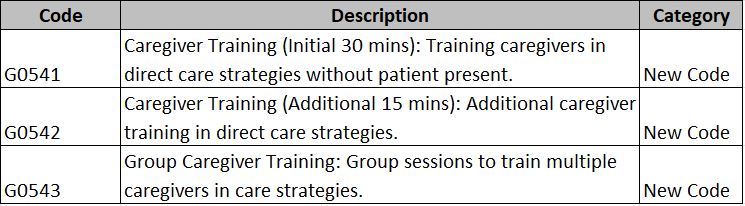
NEW Caregiver Training Code Table

New additional 2025 caregiver training codes

Understanding the New Caregiver Training Codes

Understanding the New Caregiver Training Codes 

The HCPCS codes (G0541, G0542, G0543) introduced in 2025 focus on caregiver training and direct care strategies. Unlike CPT codes (97550, 97551, 97552), these new codes aim to better document services under Medicare guidelines without replacing existing codes. Instead, they serve as additional tools for structuring caregiver education sessions. 

G0541: The first 30 minutes of caregiver training, focusing on essential skills like infection control, wound care, and ensuring patient safety at home. 

G0542: Covers each additional 15-minute increment for longer sessions that require extended training on complex caregiving techniques. 

G0543: Designed for group sessions, allowing multiple caregivers to participate in training together, fostering shared learning and support. 

The Importance of Caregiver Training

Quality caregiver training leads to better patient outcomes. Caregivers who receive proper instruction are better prepared to handle day-to-day patient care, preventing unnecessary hospitalizations and reducing the risk of injury. Training sessions may cover a range of essential skills, including: 

    • Safe transfer and mobility techniques 
    • Managing challenging behaviors in patients with cognitive impairments 
    • Wound care and infection prevention 
    • Medication management 
    • Creating a safe home environment 

Providing caregivers with this knowledge helps them feel more confident and reduces stress associated with caregiving. 

Medicare Guidelines for Caregiver Training

To qualify for Medicare reimbursement, caregiver training must meet specific standards. These include: 

    • The caregiver training session must be separate from the patient and conducted without the patient present. 
    • Training must be directly related to the patient’s care plan and documented accordingly. 
    • The service must be medically necessary, with clear justifications for its inclusion in the patient’s care regimen. 

Example: If a caregiver is learning how to safely lift and transfer a patient with mobility issues, documentation should include why this training is crucial for reducing falls and preventing injuries. 

Best Practices for Teaching Caregivers

Since caregivers come from diverse backgrounds with varying levels of experience, training should be structured in a way that is engaging and practical. 

    • Hands-On Demonstrations: Show caregivers step-by-step how to perform essential tasks rather than just explaining them. 
    • Interactive Learning: Incorporate videos, role-playing scenarios, and Q&A sessions to enhance retention. 
    • Personalized Instruction: Adapt training sessions based on the specific needs of the patient and caregiver. 
    • Reinforcement Strategies: Offer follow-up sessions to assess progress and address any gaps in understanding. 
    • Encourage Peer Learning: In group training sessions (G0543), caregivers can share experiences and strategies with each other, making the learning process more collaborative. 

Billing for Caregiver Training Services

Proper billing ensures healthcare providers are compensated for the training they deliver. To bill accurately

Select the Appropriate Code: 

    1. Use G0541 for the first 30-minute session. 
    2. Apply G0542 for each additional 15 minutes. 
    3. Choose G0543 for group training sessions. 

Example: If a caregiver receives 45 minutes of one-on-one training, the claim should include G0541 for the first 30 minutes and G0542 for the additional 15 minutes. 

Ensure Detailed Documentation: 

    1. Specify the skills taught and their relevance to the patient’s care plan. 
    2. Outline the caregiver’s progress and competency in performing the skills. 
    3. Justify why the training was medically necessary. 

Example: If a caregiver is trained on preventing pressure sores in a bedridden patient, documentation should include how this aligns with the patient’s risk factors and overall care objectives. 

Leverage Technology for Efficiency: 

    1. Use electronic medical record (EMR) platforms like HelloNote to streamline billing and documentation. 
    2. Utilize pre-filled templates to ensure consistency and reduce errors. 
    3. Conduct real-time eligibility checks to prevent claim denials. 
  1.  

Example: If Medicare eligibility for caregiver training services is close to exceeding limits, an automated alert can notify the provider, allowing for proactive planning. 

Ensuring Long-Term Success for Caregivers

Training should not be a one-time event. Ongoing education, refresher courses, and access to resources can help caregivers maintain their skills and adapt to their patient’s changing needs. Healthcare providers can implement: 

  • Regular Check-Ins: Follow up with caregivers to offer guidance and reassurance. 
    • Online Learning Modules: Provide virtual resources caregivers can access at their convenience. 
    • Support Groups: Connect caregivers with others in similar situations for shared learning and emotional support. 
    • Advanced Training Sessions: Offer deeper insights into specialized care techniques, such as dementia care or assistive device usage. 

Conclusion

The introduction of G0541, G0542, and G0543 enhances the way caregiver training is documented and billed. By understanding how to use these codes effectively, healthcare providers can ensure caregivers receive proper education while maintaining compliance with Medicare guidelines. Proper training leads to better patient outcomes, reduced hospitalizations, and a more confident caregiving experience. 

Healthcare professionals should continue to explore ways to improve caregiver training through innovative teaching methods, digital tools like HelloNote EMR, and structured follow-up programs. HelloNote’s robust features simplify the documentation process for caregiver training, making it easier to track and bill for these services. By integrating HelloNote into daily practice, healthcare providers can create a seamless support system that empowers caregivers and ultimately benefits the patients they serve.

Caregiver Training Essentials: A Guide to Billing and Education

A complete guide on caregiver training essentials, covering billing and education to enhance workflows and patient care | HelloNote EMR.

Starting a career in caregiving comes with the responsibility of not only assisting patients but also providing support and guidance to their caregivers. Understanding and effectively utilizing caregiver training codes is fundamental to ensuring proper care while maintaining compliance for billing. This guide aims to illuminate the path for beginners entering the caregiver business.

caregiver teacher guiding new caregivers to be well equipment with it comes to their professions,

Understanding Caregiver Training Codes:

Clarification of Codes 97550, 97551, 97552

97550 (Initial 30-minute Training): This code initiates caregiver education, covering the basics without the patient present. It’s an essential starting point, focusing on strategies to enhance a patient’s daily functional performance.

97551 (Additional 15-minute Sessions): Following the initial training, this code extends sessions by 15 minutes. It’s a tool for gradual, in-depth learning, best applied when exploring more advanced techniques beyond the initial training.

97552 (Group Caregiver Training): Tailored for beginners, this code facilitates group learning. Multiple sets of caregivers receive instruction together, creating a collaborative environment for shared experiences and strategies to enhance caregiving skills.

These codes follow the mid–point rule, that is, you must provide at least 16 minutes of caregiver training services to bill 97550. After the first 30 minutes accounted for by 97550, you must provide at least 8 minutes of additional training to bill 97551.


Insights into Medicare’s Stipulations

Close-up of Medicare documents detailing critical guidelines and requirements for caregiver training and compliance.

Understanding Medicare’s guidelines is vital for caregivers:

Intent Behind Coverage: Medicare recognizes caregiver behavior management training as a crucial component of patient care. This acknowledgment aligns with recent healthcare directives emphasizing the significance of comprehensive caregiver support in the overall treatment plan.

• Compliance Requirements: To ensure proper reimbursement and billing accuracy, caregiver training must align with Medicare’s specific approval criteria. These criteria outline the conditions and standards that caregiver training sessions need to meet for compliance with Medicare guidelines.

Real-World Example: If you’re providing behavior management training for a caregiver of a patient with dementia, it’s important to make sure the service aligns with Medicare’s behavior management guidelines for reimbursement.

Effective Teaching Methods for Caregivers (Practical Strategies for Instruction)

A group of caregivers gathered in a training session, engaging in collaborative activities to enhance their caregiving skills and teamwork.

For caregivers to deliver optimal support, these approaches are beneficial:

• Engaging Education: Use interactive methods like video demos and verbal instructions.

Basics of Video and Live Demonstrations: Beginners benefit from foundational methods like video demonstrations and live guidance. These approaches provide a visual and interactive learning experience, making it easier for novice caregivers to grasp essential caregiving techniques.

• Enhanced Patient Care: Educate caregivers to elevate the patient’s home environment and safety.

Foundational Skills Building: Novice caregivers concentrate on building foundational caregiving skills. These include basic safety practices, effective communication techniques, and fundamental problem-solving approaches. The emphasis is on establishing a solid skill set to provide essential patient care.

Example: Use a live demonstration to show caregivers how to safely lift a patient out of bed, emphasizing proper body mechanics to prevent injury.

Simplified Billing Guidelines (Tips for Accurate Billing)

A caregiver sitting at a desk using a computer, actively engaging with the HelloNote EMR system to manage training modules and patient records.

Precision in billing is crucial; follow these simplified guidelines:

Norm Adherence: Adherence to billing norms implies following the established standards and guidelines set forth by the billing authorities or insurance providers. In the context of caregiver training, this involves accurately reporting the services provided during training sessions. Each caregiver training code (97550, 97551, 97552) has specific criteria and conditions for billing, and it’s crucial to adhere to these norms to avoid discrepancies or potential issues during the billing process.

Adhering to billing norms is essential for maintaining transparency, accuracy, and compliance in the billing process. It ensures that the services provided are appropriately documented and billed, reducing the risk of claim denials or audits.

Example: If a caregiver training session includes both the initial 30-minute training (97550) and an additional 15-minute session (97551), it’s vital to accurately reflect these details in the billing documentation to align with the specific requirements of each code.

• Streamlined Methods: Streamlined methods refer to adopting simplified and efficient approaches to the billing process. In caregiver training, this involves employing clear and straightforward techniques to document and submit billing information. It may include using user-friendly software, templates, or systems that facilitate easy and accurate billing without unnecessary complexities.

Streamlined billing methods enhance efficiency, reduce the likelihood of errors, and save time for both caregivers and administrative staff. It contributes to a smoother workflow and ensures that billing procedures do not become cumbersome, especially for those new to the caregiver business.

Example: Utilizing a specialized therapy practice management software like HelloNote can be considered a streamlined method. HelloNote is designed to simplify billing processes, providing users with intuitive interfaces and features that make billing for caregiver training sessions more straightforward and less time-consuming.

In summary, beginner caregivers must grasp the significance of proper training and billing accuracy. Adhering to Medicare guidelines, employing effective teaching methods, and mastering billing procedures are essential components of successful caregiver training, made seamless for HelloNote users.

Ready to streamline caregiver training with HelloNote? Experience efficient billing and comprehensive documentation. Try HelloNote today – no setup fees or contracts!

Here is the Updated Caregiver Training Codes 2025: Essential Tips for Therapists and Billing Success.

You've found a hidden discount!

  • 00Hours
  • 00Minutes
  • 00Seconds