



















Adult Speech Therapy: A Guide to Aphasia, Swallowing & More

Adult speech therapy includes far more than helping someone speak more clearly.
Speech-language pathologists working with adults may evaluate and treat language, motor speech, cognitive-communication, voice, and swallowing disorders resulting from stroke, traumatic brain injury, neurological disease, head and neck conditions, dementia, surgery, and other medical conditions.
For rehabilitation clinics, adult SLP care can also involve complex documentation, interdisciplinary coordination, goal tracking, payer requirements, and ongoing communication with patients and care partners.
This guide reviews the major areas of adult speech-language pathology and the practical clinical workflows rehab practices need to manage.
What Is Adult Speech Therapy?
Adult speech therapy is the evaluation and treatment of communication, cognitive-communication, motor speech, voice, and swallowing disorders in adults by a speech-language pathologist. Treatment is individualized around the patient’s diagnosis, functional needs, communication goals, safety, and participation in daily life.
Adult SLP services may focus on restoring impaired skills, teaching compensatory strategies, maintaining function in progressive conditions, educating care partners, or combining several of these approaches.
Medicare Part B covers medically necessary outpatient speech-language pathology services, including services intended to regain, strengthen, maintain, or slow the decline of communication, cognitive, and swallowing function when coverage requirements are met.
Table of Contents
Key Takeaways
- The goal is to give patients a clear path from Google to a scheduling request.
- The Google booking link should point to the practice website page where the HelloNote Schedule Widget is embedded.
- HelloNote’s current setup path is Settings > Schedule Widget, not Settings > Patient Portal.
- Current HelloNote guidance says Schedule Widget requests are added to the Waitlist for review.
What Conditions Do Adult Speech-Language Pathologists Treat?
Aphasia
Aphasia is an acquired language disorder caused by damage to the brain’s language network.
- Speaking
- Word retrieval
- Understanding spoken language
- Reading
- Writing
- Functional conversation
Stroke is a common cause, although aphasia can also occur following traumatic brain injury, brain tumors, surgery, infection, or neurodegenerative disease.
ASHA emphasizes that aphasia treatment should be individualized to the person’s communication needs, goals, environment, and care-partner support. Treatment may include restorative language work, compensatory strategies, communication-partner training, AAC, or a combination of approaches.
Dysarthria
Dysarthria is a motor speech disorder caused by impaired control of the muscles used for speech.
- Articulation
- Speech rate
- Respiratory support
- Resonance
- Loudness
- Prosody
- Overall intelligibility
Dysarthria may occur with conditions such as stroke, Parkinson’s disease, traumatic brain injury, multiple sclerosis, ALS, and other neurological disorders.
One important distinction is that dysarthria affects speech production, while aphasia affects language. A person may also have both conditions at the same time.
Acquired Apraxia of Speech
Acquired apraxia of speech is a neurological motor speech disorder involving impaired planning or programming of speech movements.
It is different from dysarthria because the primary problem is not simply muscle weakness or incoordination.
Adults with apraxia of speech may have difficulty consistently producing speech sounds, sequencing movements for speech, or maintaining natural rhythm and prosody.
Apraxia frequently occurs alongside aphasia or dysarthria, so differential diagnosis is an important part of the SLP evaluation. Treatment is selected according to the patient’s severity, communication needs, goals, co-occurring conditions, and ability to use compensatory strategies or AAC.
Cognitive-Communication Disorders
Adult SLPs may also treat communication difficulties related to cognition. These problems are common following traumatic brain injury and can also occur with stroke, dementia, and other neurological conditions.
- Attention
- Memory
- Executive function
- Problem solving
- Organization
- Social communication
- Awareness and self-monitoring
For example, a patient may have clear speech and intact basic language but struggle to organize information, remember instructions, maintain a conversation topic, or complete complex daily tasks.
ASHA identifies SLPs as important members of the interdisciplinary team for cognitive-communication problems associated with conditions such as TBI and dementia.
Dysphagia
Dysphagia refers to difficulty swallowing.
Adult dysphagia may involve the oral, pharyngeal, esophageal, or gastroesophageal phases of swallowing and can have serious consequences such as malnutrition, dehydration, choking, respiratory complications, and reduced quality of life.
SLPs play a central role in evaluating and managing oral and pharyngeal swallowing disorders. Depending on the patient’s presentation, assessment may include a clinical swallowing evaluation and, when indicated, instrumental assessment such as a videofluoroscopic swallowing study or FEES.
Treatment may include rehabilitative exercises, compensatory strategies, environmental changes, patient and caregiver education, or modification of food and liquid presentation.
There is no single swallowing strategy that is appropriate for every patient. Management should be selected on a case-by-case basis according to the underlying physiology, medical condition, goals, risks, and patient preferences.
Voice Disorders
SLPs may also evaluate and treat adults with voice disorders.
Adult voice problems can be structural, neurological, functional, related to surgery or medical treatment, or associated with vocal misuse or inefficient voice production.
Examples include vocal fold paralysis, vocal tremor, muscle tension dysphonia, age-related voice changes, and other causes of dysphonia. Treatment depends on the diagnosis and may involve collaboration with otolaryngology or other medical specialists.
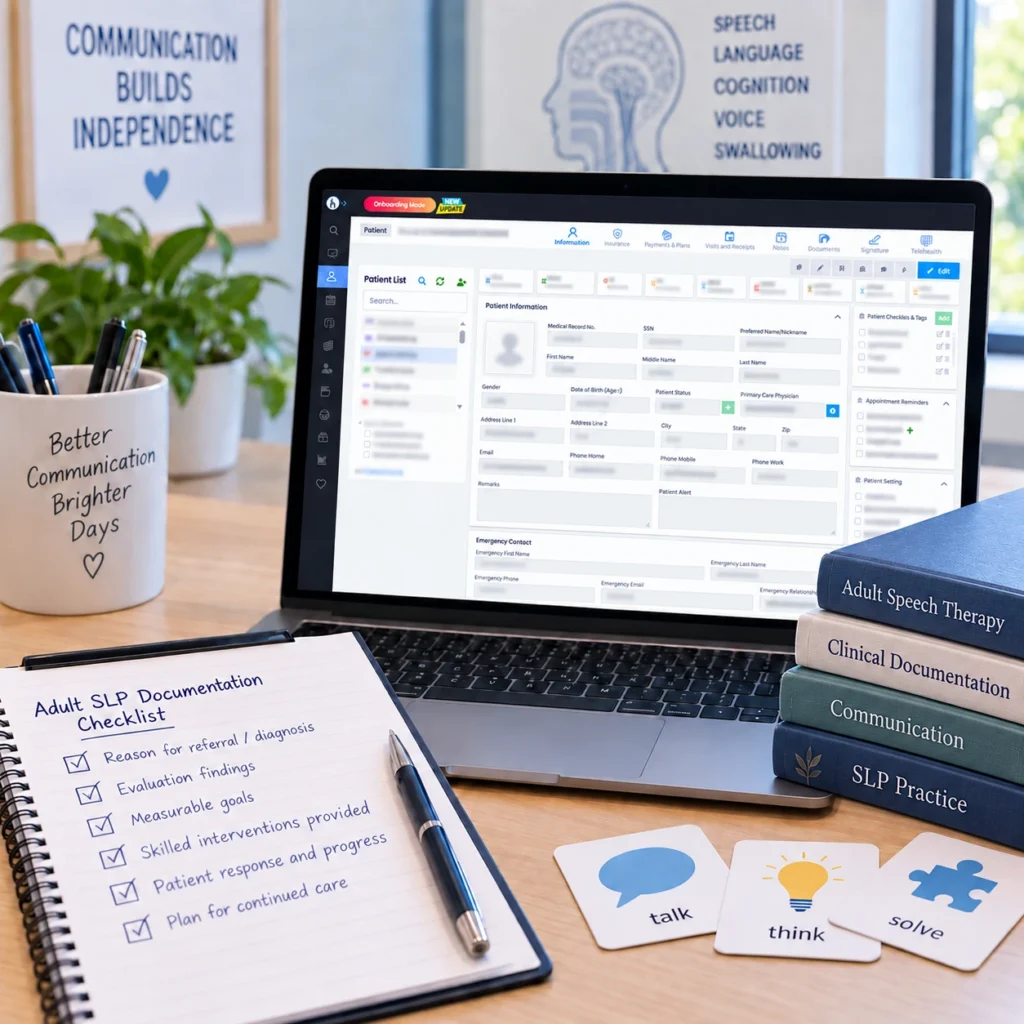
Adult Speech Therapy Documentation: What Should the Record Show?
For outpatient rehabilitation, the medical record should support both the skilled service and its medical necessity.
CMS documentation guidance for outpatient therapy includes evaluation and plan-of-care information, treatment notes, progress documentation, certifications when required, and discharge documentation. The record should also support the services and codes reported.
A strong adult SLP evaluation should answer three practical questions: What is impaired? How is that impairment affecting the person’s daily life? Which skilled SLP services are appropriate to address the problem? |
Treatment Should Focus on Function, Not Just Test Performance
Adult rehabilitation is strongest when treatment connects impairment-level work to meaningful function.
- Aphasia treatment may address word retrieval so the patient can participate more effectively in conversations.
- Motor speech therapy may target intelligibility so the patient can communicate needs in the community.
- Cognitive-communication treatment may focus on memory strategies that help the patient manage appointments, medications, or work responsibilities.
- Swallowing treatment may aim to improve safety, efficiency, nutrition, or independence during meals.
This functional connection is also important for documentation. A note should show not only what task was performed, but why the task required the skills of an SLP and how it relates to the patient’s goals.
Adult Speech Therapy Documentation: What Should the Record Show?
For outpatient rehabilitation, the medical record should support both the skilled service and its medical necessity.
CMS documentation guidance for outpatient therapy includes evaluation and plan-of-care information, treatment notes, progress documentation, certifications when required, and discharge documentation. The record should also support the services and codes reported.
For an adult SLP visit, useful documentation typically connects: diagnosis or impairment → skilled intervention → measurable goal → patient response → next clinical decision.
For example, rather than documenting only “Naming exercises completed,” a stronger note might explain that the patient completed structured word-retrieval tasks to improve functional expression during conversation, describe the cueing required, record accuracy or response, and indicate whether the level of support changed.
The goal is not longer documentation. It is documentation that makes the clinical reasoning easy to understand.
Adult Speech Therapy and Medicare in 2026
Medicare continues to cover medically necessary outpatient speech-language pathology services when applicable requirements are met.
There is no annual dollar limit on medically necessary outpatient SLP services, although Medicare therapy billing and documentation rules still apply.
CMS also clarified SLP qualification policy in May 2026 for Part B outpatient therapy services. CMS now explicitly defers to applicable state licensure requirements, including certain provisional or temporary licensure pathways where allowed under state law, for the specified Part B settings covered by the clarification.
For rehab practices, this makes it important to verify provider qualifications, state licensure, payer requirements, current therapy codes, documentation rules, and the specific setting in which services are delivered.
Why Interdisciplinary Coordination Matters
Adult SLP care frequently intersects with PT, OT, nursing, physicians, dietitians, neuropsychology, respiratory therapy, and other disciplines.
A stroke patient, for example, may simultaneously have mobility limitations, upper-extremity impairment, aphasia, dysphagia, and cognitive changes.
A coordinated team can help align mobility goals, communication strategies, positioning, self-care tasks, caregiver education, swallowing safety, and discharge planning. The SLP’s role remains distinct, but communication across disciplines can make the overall rehabilitation plan more coherent.
What Should Rehab Clinics Look for in an EMR for Adult SLP Care?
Adult SLP documentation can become fragmented when evaluation findings, goals, treatment notes, scheduling, billing, and interdisciplinary information live in separate systems.
For an SLP or multidisciplinary rehab clinic, useful EMR capabilities include:
- Customizable therapy documentation
- Goal management
- Progress tracking
- Scheduling
- Billing workflows
- Secure patient records
- Telehealth where appropriate
- Reporting
- Patient communication tools
The purpose of the technology is not to make clinical decisions for the SLP. It is to keep the information needed for care and practice operations organized around the same patient record.
How HelloNote Supports Speech Therapy Practices
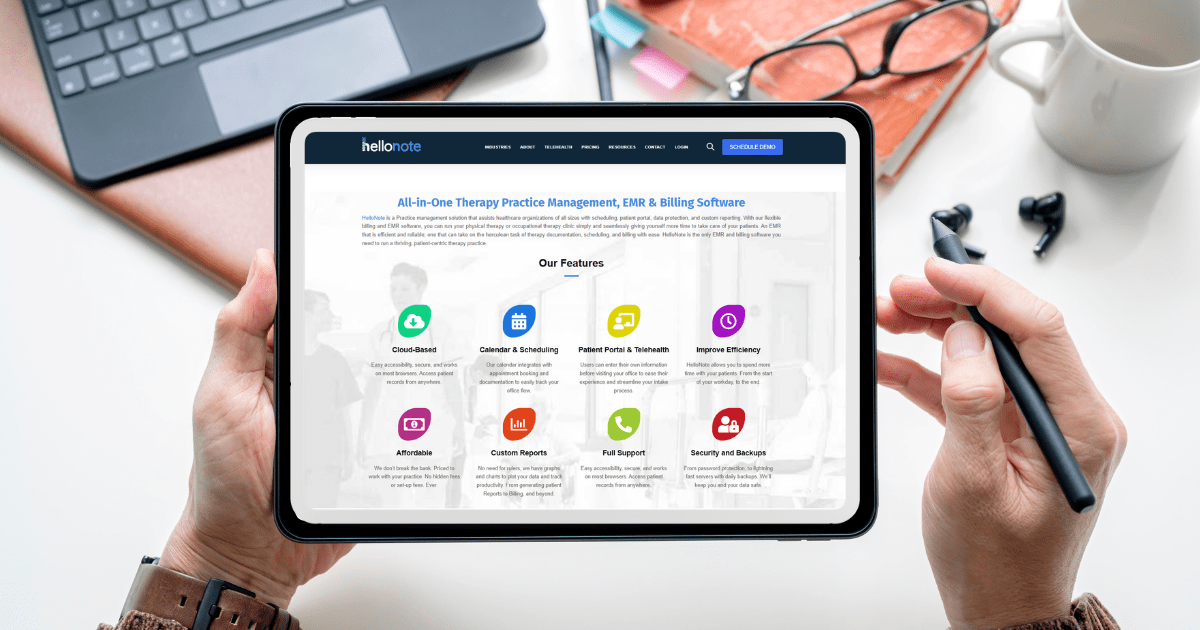
HelloNote is designed for therapy practices, including speech-language pathology.
Current HelloNote workflows support customizable documentation, treatment goals, scheduling, billing, telehealth, patient engagement, reporting, and practice management. HelloNote’s goal tools allow therapists to create, search, and apply treatment goals directly within clinical documentation.
For adult SLP clinics, that can help keep evaluations, treatment goals, visit documentation, progress, billing, and scheduling connected within the same workflow.
Keep Adult SLP Care and Practice Workflows Connected
Adult speech-language pathology can involve complex clinical care without requiring a complex administrative workflow.
See how HelloNote supports documentation, goal tracking, scheduling, billing, and practice management for speech-language pathology clinics.
No credit card required • HIPAA Compliant • PT, OT & SLP
Frequently Asked Questions
What conditions are treated in adult speech therapy?
Adult speech therapy may address aphasia, dysarthria, acquired apraxia of speech, cognitive-communication disorders, dysphagia, voice disorders, and other communication or swallowing problems associated with neurological, medical, or structural conditions.
What is the difference between aphasia and dysarthria?
Aphasia is a language disorder that can affect speaking, understanding, reading, and writing. Dysarthria is a motor speech disorder affecting the physical production and clarity of speech. A patient can have both disorders at the same time.
Can speech therapy help adults after a stroke?
Yes. Depending on the patient’s needs, an SLP may address language, motor speech, cognitive-communication, swallowing, voice, or AAC following stroke. The treatment plan is based on individual assessment findings and functional goals.
Do SLPs treat swallowing disorders in adults?
Yes. SLPs are central members of the team evaluating and managing oral and pharyngeal dysphagia. Assessment and treatment are individualized based on swallowing physiology, medical status, risks, goals, and patient preferences.
Does Medicare cover adult speech therapy?
Medicare Part B covers medically necessary outpatient speech-language pathology services when coverage requirements are met. These services may address communication, cognition, swallowing, maintenance of function, or slowing decline.
What should an EMR for an adult speech therapy clinic include?
A therapy-focused EMR should support evaluations, treatment goals, visit notes, progress tracking, scheduling, billing, reporting, secure records, and other workflows commonly used by SLP practices.
Final Thoughts
Adult speech therapy is not one type of treatment.
It may involve language rehabilitation after stroke, motor speech treatment, cognitive-communication support, swallowing management, voice care, communication-partner training, AAC, or long-term support for progressive neurological conditions.
What ties these services together is the need for individualized assessment, functional goals, skilled clinical reasoning, and documentation that clearly reflects the patient’s needs and response to care.
For rehab clinics, the operational goal is similar: keep the clinical record, goals, scheduling, billing, and team communication connected so SLPs can spend more of their time on patient care.