



















You've found a hidden discount!

HN Unlock Layer 1
HN Unlock Layer 2
HN Unlock Layer 3
HN Unlock Layer 4
HN Unlock Layer 5
  • 00Hours
  • 00Minutes
  • 00Seconds

Category: billing

What Should a Therapy Superbill Include? Requirements and Examples

Therapy superbill with billing details, calculator, receipts, and rehabilitation equipment representing therapy superbill requirements

A superbill can help cash-based and out-of-network therapy patients submit information to their insurance plan for possible reimbursement.

But simply handing a patient a receipt is not always enough.

Insurance plans commonly require an itemized bill containing specific patient, provider, diagnosis, procedure, date-of-service, and charge information before they can process an out-of-network claim. Requirements can vary by payer and plan, so practices should avoid treating every superbill as a universal form.

For a broader explanation of how superbills work in a cash-based therapy practice, see our Superbill for Therapy Guide.

What Information Should a Therapy Superbill Include?

A therapy superbill should generally include patient information, provider details, dates of service, diagnosis codes, procedure codes, charges, and other information the patient’s insurer may need to evaluate an out-of-network claim.

The exact requirements vary by insurance plan. Some insurers also require the patient to complete a separate member claim form and attach the itemized bill or superbill.

Table of Contents

Key Takeaways

    • Target physicians whose patient populations align with your therapy services.
    • Clearly communicate what conditions and patient needs your practice addresses.
    • Make the referral and scheduling process easy.
    • Build relationships with office staff as well as physicians.
    • Follow up appropriately after receiving referrals.
    • Stay visible without constantly asking for patients.
    • Track physician referral sources to see which relationships are working.

1. Patient Information

The insurer needs to identify who received the service.

A therapy superbill commonly includes:

    • Patient’s full name
    • Date of birth
    • Address
    • Other identifying information when required by the payer

The patient’s insurance member information may be entered separately on the payer’s claim form rather than directly on the superbill.

The practice should avoid placing unnecessary information on the document when it is not needed for the patient’s claim.

2. Provider and Practice Information

The superbill should make it clear who provided the service.

Depending on the payer, relevant information may include:

    • Provider name
    • Professional credentials
    • Practice name
    • Practice address
    • Phone number
    • National Provider Identifier (NPI)
    • Tax identification number
    • Provider license information when required

For example, current out-of-network claim instructions from Cigna and UnitedHealthcare’s Surest plan identify provider name, address, tax ID, and related provider identifiers among the information that may be needed with an itemized claim.

3. Date of Service

Each service should be associated with the correct date of service.

This becomes especially important when a superbill includes several therapy visits.

Rather than listing one total amount with no explanation, the document should clearly connect each service and charge to the date on which it was provided.

4. Diagnosis Codes

The superbill commonly includes the ICD-10 diagnosis code or codes associated with the therapy services.

The diagnosis information should match the patient’s clinical record and the services being reported.

Diagnosis codes help the insurer understand the condition associated with the treatment, but the presence of a diagnosis code does not by itself establish coverage or guarantee reimbursement.

5. CPT or HCPCS Procedure Codes

The superbill should identify the services performed using the applicable CPT or HCPCS codes when required.

For a therapy practice, these might include codes associated with therapeutic exercise, therapeutic activities, manual therapy, evaluations, or other services actually provided.

The code reported should correspond to the documented service.

A superbill should not be used to add a code simply because it may improve the patient’s chance of reimbursement.

For current therapy coding guidance, practices should verify the applicable CPT, Medicare, and payer requirements.

6. Charges for Each Service

A payer may need to see the charge associated with each service, rather than only the total amount paid.

For example:

Date

Service

Charge

08/05/2026

Therapy service

$___

08/05/2026

Therapy service

$___

08/12/2026

Therapy service

$___

The actual superbill would normally identify the relevant procedure codes as well.

Cigna’s current member claim instructions specifically require the charge for each service as part of the itemized bill.

7. Payment Information

For cash-based practices, it can also be useful for the document to accurately reflect:

    • Total charges
    • Amount paid
    • Remaining patient responsibility, when applicable
    • Payment date or receipt information

Some insurers may request proof of payment during claim review, although requirements vary. For example, Surest notes that proof of payment may be requested to substantiate a claim.

A receipt and a superbill are therefore related but not necessarily interchangeable.

A receipt primarily documents payment.

A superbill provides the clinical and billing detail that may be needed for an out-of-network claim.

Looking up more cpt codes?

See 97110, 97530, and 50+ therapy procedure codes – with billing guidance and documentation tips in one place.

Example of a Therapy Superbill Structure

A simplified therapy superbill might be organized like this:

Patient

Patient name
Date of birth
Contact information

Provider

Therapist name and credentials
Practice name
Practice address
NPI
Tax ID, when applicable

Services

Date of service
ICD-10 diagnosis code
CPT or HCPCS code
Units, when applicable
Charge for each service

Payment

Total charges
Amount paid

The exact layout is less important than making sure the information required by the patient’s insurer is accurate and easy to identify.

Common Superbill Mistakes to Avoid

Treating a Receipt as a Complete Superbill

A credit-card receipt may show how much the patient paid but not include the clinical and provider information an insurer needs.

Missing Provider Information

NPI, tax identification number, credentials, or provider address may be required depending on the payer.

Using Information That Does Not Match the Clinical Record

The superbill, treatment documentation, CPT codes, diagnosis information, and dates of service should tell the same story.

Promising Reimbursement

A superbill supports the patient’s submission. It does not determine whether the patient’s plan covers the service or how much the insurer will reimburse.

A better way to explain it to patients is:

We can provide an itemized superbill with the information your insurer may request for an out-of-network claim. Your insurance plan will determine whether the service is covered and whether reimbursement is available.

Do All Insurance Companies Require the Same Superbill Information?

No.

There is no single superbill format that guarantees acceptance by every insurance plan.

For example, Cigna directs members submitting certain out-of-network claims themselves to send both a completed claim form and an itemized bill. Its itemized-bill requirements include patient information, date of service, procedure code, charge, provider information, tax ID, and diagnosis code.

Other plans can have different submission instructions.

For that reason, practices can provide a well-organized superbill, but patients should still verify:

    • Whether their plan has out-of-network benefits
    • Whether a member claim form is required
    • Where and how the claim should be submitted
    • Filing deadlines
    • Whether additional documentation is required

How HelloNote Supports Superbill Workflows

Creating superbills becomes easier when the information needed for the document is already connected to the patient’s visit.

In HelloNote, users can access a patient’s Visits and Receipts, select the applicable date of service, and generate a Superbill from the available print templates. HelloNote also supports patient receipts and invoices from the same workflow.

That can reduce the need to manually recreate billing documents each time a patient asks for one.

The practice is still responsible for making sure the information in the record is accurate and appropriate for the patient’s situation.

Make Superbills Easier for Your Cash-Based Practice

Keep visit information, documentation, receipts, and patient billing documents connected in one therapy-focused system.

No credit card required • HIPAA Compliant • PT, OT & SLP

Frequently Asked Questions

What information should be on a therapy superbill?

A therapy superbill commonly includes the patient’s identifying information, provider and practice information, dates of service, diagnosis codes, CPT or HCPCS procedure codes, charges, and other information required by the patient’s insurer.

Is a superbill the same as a receipt?

No. A receipt primarily documents payment, while a superbill typically includes additional provider, diagnosis, procedure, and service information that may be needed to submit an out-of-network insurance claim.

Does a superbill guarantee insurance reimbursement?

No. A superbill provides information that may support an out-of-network claim, but the patient’s insurance plan determines coverage, allowed amounts, deductibles, coinsurance, exclusions, and reimbursement.

Does a superbill need an NPI number?

Many insurers request provider identification information such as an NPI when processing an itemized out-of-network claim, but requirements can vary by payer and plan.

Does a superbill need CPT and ICD-10 codes?

Insurers commonly require procedure and diagnosis information when evaluating medical claims. Practices should use codes that accurately correspond to the documented services and patient record.

Can HelloNote generate a superbill?

Yes. HelloNote currently allows users to generate a superbill from the patient’s Visits and Receipts workflow by selecting the applicable visit and choosing the Superbill print template.

Final Thoughts

A useful therapy superbill should make the patient’s visit easy for an insurer to understand.

That generally means clearly identifying:

who received the service → who provided it → what service was performed → why it was provided → when it occurred → what was charged

The goal is not to create the longest possible document.

It is to provide accurate, organized billing information while making it clear that the patient’s insurer ultimately decides whether an out-of-network claim is eligible for reimbursement.

For a complete discussion of superbills, cash-based therapy, patient reimbursement, and workflow considerations, see our Superbill for Therapy Guide.

Disclaimer:

This article is for educational purposes only and does not constitute coding, billing, reimbursement, legal, or compliance advice. Insurance requirements and plan benefits vary. Therapy practices and patients should verify current payer requirements before submitting claims.

CPT 97110 Documentation Examples for Therapeutic Exercise

Physical therapist documenting a patient performing therapeutic exercise for CPT 97110

Documenting therapeutic exercise should do more than show that a patient completed a list of exercises.

For CPT 97110, the note should help explain what was performed, why skilled therapy was needed, what impairment was being addressed, and how the intervention connects to the patient’s functional goals.

This guide provides practical CPT 97110 documentation examples for physical and occupational therapists, along with common mistakes that can make therapeutic exercise documentation harder to support.

What Should CPT 97110 Documentation Include?

CPT 97110 documentation should identify the therapeutic exercise performed, treatment parameters, skilled therapist involvement, the impairment being addressed, functional relevance, treatment time, patient response, and any progression or modification made during the session.

CPT 97110 is used for direct one-on-one therapeutic exercise intended to develop strength, endurance, range of motion, or flexibility.

For a complete explanation of the code, timed-unit rules, Medicare considerations, and billing requirements, see our CPT 97110 Billing, Documentation & Denial Prevention Guide.

Table of Contents

Key Takeaways

    • Target physicians whose patient populations align with your therapy services.
    • Clearly communicate what conditions and patient needs your practice addresses.
    • Make the referral and scheduling process easy.
    • Build relationships with office staff as well as physicians.
    • Follow up appropriately after receiving referrals.
    • Stay visible without constantly asking for patients.
    • Track physician referral sources to see which relationships are working.

What Should Be Included in a CPT 97110 Note?

A strong therapeutic exercise note usually answers several basic questions.

What exercise was performed?

Be specific enough that another clinician can understand what occurred.

Instead of:

Lower-extremity strengthening performed.

Consider:

Resisted knee extension performed for quadriceps strengthening.

What were the treatment parameters?

Depending on the intervention, relevant details may include:

    • Sets and repetitions
    • Resistance
    • Duration
    • Position
    • Range of motion
    • Assistance level
    • Exercise progression

You do not need to overload every note with unnecessary detail. Include the information that helps explain the skilled service provided.

What did the therapist do?

This is one of the most important parts of the documentation.

Examples of skilled intervention may include:

    • Verbal or tactile cueing
    • Correcting movement patterns
    • Progressing resistance
    • Modifying the exercise
    • Monitoring safety
    • Adjusting positioning
    • Assessing patient response
    • Changing the intervention based on pain, fatigue, or performance

Simply documenting that a patient exercised may not clearly demonstrate why therapist expertise was required.

CPT 97110 Documentation Examples

Example 1: Shoulder Strengthening

Weak documentation:

Patient performed shoulder strengthening exercises.

Stronger documentation:

Patient completed resisted shoulder flexion, 3 sets of 10 with 2 lb resistance, to improve shoulder strength required for overhead dressing. Verbal cueing provided to reduce compensatory trunk movement. Resistance progressed from 1 lb based on improved movement control.

Why it is stronger:

The note identifies the exercise, resistance, clinical target, functional purpose, skilled cueing, and progression.

Example 2: Knee Strengthening

Weak documentation:

Patient completed leg exercises.

Stronger documentation:

Patient performed resisted knee extension, 3 sets of 10, to address quadriceps weakness affecting stair negotiation. Therapist provided cueing for controlled eccentric movement and adjusted resistance based on fatigue during the final set.

This shows why the exercise was selected and what the therapist contributed.

Example 3: Range of Motion

Weak documentation:

Shoulder ROM performed.

Stronger documentation:

Patient completed active-assisted shoulder flexion exercises to improve restricted range needed for upper-body dressing. Therapist adjusted hand placement and movement range to reduce pain and maintain proper scapular mechanics.

Example 4: Endurance

Weak documentation:

Endurance exercises completed.

Stronger documentation:

Patient completed repeated lower-extremity therapeutic exercise to improve muscular endurance required for prolonged household mobility. Exercise duration was increased from the previous session based on improved tolerance, with rest intervals adjusted due to fatigue.

How Do You Show Skilled Therapy in CPT 97110 Documentation?

One of the easiest ways to strengthen a therapeutic exercise note is to document what required the therapist’s clinical judgment.

For example, compare:

Patient completed 3 sets of 10 shoulder exercises.

with:

Patient completed 3 sets of 10 resisted shoulder flexion exercises. Therapist reduced resistance during the final set after observing increased upper-trapezius compensation and provided verbal and tactile cueing to restore movement quality.

The second example demonstrates that the therapist did more than supervise exercise.

It shows:

assessment → clinical decision → modification → patient response

That clinical reasoning is often what separates a skilled therapy note from a simple exercise log.

Connect Therapeutic Exercise to Functional Goals

Documentation becomes clearer when the therapist explains why improving a specific impairment matters to the patient.

Instead of:

Quadriceps strengthening for weakness.

Consider:

Quadriceps strengthening to improve controlled stair ascent and sit-to-stand transfers.

Instead of:

Shoulder ROM exercises.

Consider:

Shoulder range-of-motion exercises to improve the patient’s ability to reach overhead during dressing and household tasks.

The goal is not to force a functional phrase into every sentence.

The goal is to make the relationship between the impairment, intervention, and functional goal easy to understand.

Therapy documentation form marked with red X symbols representing common CPT 97110 documentation mistakes

Common CPT 97110 Documentation Mistakes

Copying the Same Exercise List Every Visit

Repeated exercise lists without documented progression or patient response can make it difficult to understand how the treatment is changing.

Document meaningful changes when they occur.

Documenting Equipment Instead of Clinical Purpose

Writing:

Resistance band exercises performed.

does not explain why the exercise was medically or functionally relevant.

The equipment does not determine the CPT code. The purpose of the intervention matters.

Missing the Skilled Therapist Component

Document what the therapist assessed, corrected, progressed, modified, or monitored.

Failing to Connect the Exercise to Function

The note should help explain why strength, endurance, range of motion, or flexibility needs to improve for this particular patient.

Using Vague Patient-Response Language

Statements such as:

Patient tolerated treatment well.

may be appropriate as part of the note, but they provide limited clinical information by themselves.

When relevant, document what changed:

Patient completed increased resistance without increased pain and required fewer verbal cues for movement control.

When CPT 97110 May Not Be the Best Code

Not every exercise-based intervention automatically belongs under CPT 97110.

A service may better support another therapeutic procedure depending on its primary purpose.

For example:

CPT 97110 generally focuses on developing strength, endurance, range of motion, or flexibility.

CPT 97530 focuses on dynamic therapeutic activities intended to improve functional performance.

CPT 97112 focuses on neuromuscular re-education, including areas such as balance, coordination, proprioception, and movement control.

The movement itself may look similar across different treatments. The clinical purpose and skilled intervention help determine which code best represents the service.

For a deeper comparison, see our CPT 97110 guide and 97110 vs. 97530 guide.

Looking up more cpt codes?

See 97110, 97530, and 50+ therapy procedure codes – with billing guidance and documentation tips in one place.

CPT 97110 Documentation Checklist

Before completing a therapeutic exercise note, ask:

    • Did I identify the exercise performed?
    • Did I include relevant treatment parameters?
    • Did I explain what impairment was being addressed?
    • Did I show why skilled therapist involvement was necessary?
    • Did I connect the intervention to the patient’s functional needs?
    • Did I document the patient’s response?
    • Did I document meaningful progression or modification?
    • Does the documented treatment time support the services reported?

The goal is not longer documentation.

The goal is documentation that clearly explains the treatment.

How HelloNote Supports Therapy Documentation

Keeping therapeutic exercise documentation consistent becomes harder when clinicians have to manage goals, treatment details, CPT codes, timed services, and billing information across separate systems.

HelloNote brings therapy documentation and practice-management workflows together so clinicians can keep the patient record, treatment information, CPT workflow, and billing settings connected.

For practices managing timed therapy services such as CPT 97110, having those pieces in one workflow can reduce the amount of information clinicians and billing teams need to reconstruct later.

Make Therapy Documentation Easier to Manage

Your clinicians should be able to document why the treatment was skilled, while the system helps keep the clinical and billing workflow organized.

No credit card required • HIPAA Compliant • PT, OT & SLP

Frequently Asked Questions

What should CPT 97110 documentation include?

CPT 97110 documentation should identify the therapeutic exercise, relevant treatment parameters, skilled therapist intervention, the impairment being addressed, functional relevance, treatment time, patient response, and any clinically meaningful progression or modification.

Is listing exercises enough for CPT 97110?

Usually, an exercise list alone provides limited information about why skilled therapy was necessary. Documentation should also explain the therapist’s clinical involvement and the purpose of the intervention.

Do you need to document sets and repetitions for CPT 97110?

Sets and repetitions can provide useful treatment detail when relevant, but documentation should also explain the clinical purpose and skilled therapist involvement rather than relying only on exercise parameters.

What is the difference between CPT 97110 and 97530 documentations?

CPT 97110 documentation generally emphasizes therapeutic exercise aimed at strength, endurance, range of motion, or flexibility. CPT 97530 documentation should support dynamic therapeutic activities aimed at improving functional performance.

What are common CPT 97110 documentation mistakes?

Common mistakes include vague exercise descriptions, copying the same exercise list across visits, failing to document skilled therapist involvement, omitting the functional purpose of treatment, missing meaningful progression or patient response, and recording treatment time that does not clearly support the services reported.

How do you show skilled therapy in CPT 97110 documentation?

Common mistakes include vague exercise descriptions, copying the same exercise list across visits, failing to document skilled therapist involvement, omitting the functional purpose of treatment, missing meaningful progression or patient response, and recording treatment time that does not clearly support the services reported.

Superbill for Therapy: A Guide for Cash-Based Practices

Superbill for therapy displayed beside a laptop in a modern therapy clinic

Running a cash-based therapy practice gives you more control over pricing, payment policies, and how you deliver care. But even when your clinic does not bill insurance directly, patients may still ask whether they can use their out-of-network benefits.

That is where a superbill can help.

A properly prepared superbill gives patients an itemized record of the services they received so they can pursue reimbursement when their health plan includes eligible out-of-network benefits.

For PT, OT, SLP, chiropractic, and other therapy practices, the challenge is not simply knowing what a superbill is. The real question is how to provide accurate superbills without adding another repetitive administrative process to every patient visit.

What Is a Superbill for Therapy?

A therapy superbill is an itemized document that includes patient, provider, diagnosis, procedure, service, and charge information that may be used to support an out-of-network insurance claim.

Patients can submit the superbill to their insurance company, along with any other forms the plan requires, when seeking reimbursement for eligible out-of-network care.

A superbill does not guarantee reimbursement. Coverage and payment depend on the patient’s individual health plan, including out-of-network benefits, deductibles, coinsurance, allowed amounts, exclusions, and claim requirements.

Key Takeaways

    • Target physicians whose patient populations align with your therapy services.
    • Clearly communicate what conditions and patient needs your practice addresses.
    • Make the referral and scheduling process easy.
    • Build relationships with office staff as well as physicians.
    • Follow up appropriately after receiving referrals.
    • Stay visible without constantly asking for patients.
    • Track physician referral sources to see which relationships are working.

Table of Contents

How Do Superbills Work in a Cash-Based Therapy Practice?

In a cash-based practice, the patient typically pays the clinic directly according to the practice’s payment policy. If the patient’s insurance plan includes out-of-network benefits, the patient may then submit documentation to the insurer and request reimbursement.

A typical workflow looks like this:

  1. The patient receives therapy from the practice.
  2. The clinic collects payment according to its cash-pay policy.
  3. The practice generates a superbill for the applicable date or dates of service.
  4. The patient checks the insurance company’s claim-submission requirements.
  5. The patient submits the superbill along with any other required documents.
  6. The insurer processes the claim according to the patient’s health plan.
  7. The patient receives an Explanation of Benefits, or EOB, showing how the claim was processed.

This distinction is important for practice owners.

Providing a superbill does not necessarily mean your clinic is agreeing to manage the patient’s insurance claim. Your practice can provide accurate documentation while the patient remains responsible for verifying benefits and following their insurer’s submission process.

CMS defines an out-of-network provider as a provider who does not have a contract with the patient’s health plan. When a plan covers out-of-network services, patients will generally pay more than they would when using an in-network provider.

What Should a Therapy Superbill Include?

A complete superbill should clearly identify who received the service, who provided it, what services were delivered, why they were provided, when they occurred, and what was charged.

Exact requirements can vary by payer and plan, so clinics should avoid treating one template as universally accepted by every insurance company.

Provider Information

The provider section may include:

    • Therapist or rendering provider name
    • Professional credentials
    • Practice name
    • Practice address
    • Contact information
    • National Provider Identifier (NPI), when applicable
    • Tax identification information, when required by the payer

Accurate provider identification helps the insurer determine who rendered the service.

Patient Information

The superbill should contain enough information to identify the patient accurately, which commonly includes:

    • Full legal name
    • Date of birth
    • Address when required
    • Other identifying information required by the patient’s insurer

The information should match the patient’s records and, where applicable, the information associated with their insurance plan.

Date and Details of Service

The document should identify the date or dates when services were provided.

If multiple visits appear on one superbill, each applicable date of service should remain clear.

The document should identify the date or dates when services were provided.

If multiple visits appear on one superbill, each applicable date of service should remain clear.

CPT or HCPCS Codes

Procedure codes tell the insurer what services were performed.

The codes included on the superbill should reflect the services actually provided and documented in the clinical record.

For therapy practices, accurate coding matters even when the patient, rather than the clinic, is submitting the insurance claim.

ICD-10-CM Diagnosis Codes

Diagnosis codes describe the condition or conditions associated with the patient’s treatment.

Diagnosis and procedure information on the superbill should be consistent with the documentation in the patient’s chart.

Charges and Payment Information

Depending on the payer’s requirements, a superbill may show:

    • Charges for each service
    • Total charges
    • Amount paid by the patient
    • Outstanding balance, if applicable
    • Relevant payment information

Keeping this information consistent with the practice’s billing records reduces confusion when a patient submits the document.

Does a Superbill Guarantee Out-of-Network Reimbursement?

No. A superbill provides documentation for a claim, but the patient’s health plan determines whether reimbursement is available and how much may be paid.

This is one of the most important expectations to establish with patients.

A patient may have out-of-network coverage, but reimbursement can still depend on factors such as:

    • Whether the service is covered by the plan
    • Whether the provider type qualifies
    • The patient’s out-of-network deductible
    • Coinsurance
    • The insurer’s allowed amount
    • Referral or authorization requirements
    • Visit limits
    • Claim-filing deadlines
    • Whether additional forms are required

The clinic’s cash rate and the insurance company’s allowed amount are also not necessarily the same.

For example, if your practice charges $150 for a visit, that does not mean the insurer will calculate reimbursement using the full $150. The plan may apply its own allowed amount, deductible, coinsurance, or other benefit rules.

For that reason, avoid promising a patient:

“Your insurance will reimburse you.”

A more accurate explanation is:

“We can provide a superbill that you may submit for out-of-network benefits. Your insurance company will determine coverage and reimbursement according to your plan.”

This protects expectations on both sides.

Frequently Asked Questions About Therapy Superbills

What is a superbill for therapy?

A superbill for therapy is an itemized document containing patient, provider, service, diagnosis, procedure, and charge information that may support an out-of-network insurance claim.

Patients may need to submit the superbill with additional documents required by their insurer.

Can a cash-based physical therapist provide a superbill?

Yes. A cash-based physical therapist can provide patients with a superbill for services received.

The patient can then determine whether the services qualify for reimbursement under their individual out-of-network benefits.

Does a superbill guarantee insurance reimbursement?

No. A superbill does not guarantee that an insurance company will reimburse the patient.

Coverage and reimbursement depend on the patient's specific health plan, including out-of-network benefits, deductibles, coinsurance, allowed amounts, exclusions, and filing requirements.

What information should be included on a therapy superbill?

A therapy superbill commonly includes provider information, patient information, dates of service, CPT or HCPCS procedure codes, ICD-10-CM diagnosis codes, charges, and relevant payment information.

Additional information may be required depending on the payer and health plan.

Is a superbill the same as a receipt?

No. A receipt primarily shows that a payment occurred, while a superbill contains additional clinical and billing information that may be needed to support an insurance claim.

Depending on the circumstances, a patient may need one or both.

Is a superbill the same as an insurance claim?

No. The superbill provides information that can support a claim, but some insurance companies require the patient to complete a separate member claim form.

Patients should check their insurer's requirements before submitting the documentation.

Can an EMR generate therapy superbills?

Yes. A therapy EMR can use information associated with a patient's visit to simplify the superbill-generation process.

HelloNote allows users to generate superbills from the patient's Visits & Receipts section by selecting the relevant date of service and choosing the Superbill template.

Still creating superbills manually?

HelloNote helps cash-based PT, OT, SLP, and chiropractic practices generate superbills from patient visit information already in the EMR, so your team spends less time rebuilding billing documents.

No credit card required • HIPAA Compliant • PT, OT & SLP

Make Superbills Easier for Your Cash-Based Therapy Practice

Superbills can give patients a practical way to pursue eligible out-of-network benefits while allowing your practice to maintain a direct-payment model.

But the process works best when the information is accurate, expectations are clear, and your staff does not have to repeatedly recreate patient billing documents by hand.

If you are running a cash-based PT, OT, SLP, chiropractic, or rehabilitation practice, your EMR should support more than documentation alone. It should help connect the administrative steps surrounding each visit.

HelloNote brings patient records, documentation, scheduling, financial documents, and practice-management tools together in one therapy-focused system.

Proposed Pediatric SLP G-Code GSLPP: What Therapy Practices Should Know Before 2027

Pediatric speech-language therapist working with a child in a therapy room, representing the proposed pediatric SLP G-code GSLPP, CPT 92507 replacement, SLP billing codes 2027, and speech therapy documentation preparation.

The proposed pediatric SLP G-code GSLPP is one of the most important billing updates for pediatric speech-language pathology practices to watch before 2027. CMS included the proposed HCPCS G-code in the CY 2027 Medicare Physician Fee Schedule Proposed Rule, but the code is not final and should not be used unless CMS finalizes it and payers issue clear guidance. CMS issued the CY 2027 MPFS Proposed Rule on July 14, 2026, and is soliciting public comments before final policy changes take effect on or after January 1, 2027.

The proposal matters because speech-language pathology treatment coding is already changing. CPT code 92507 remains in effect through December 31, 2026. Beginning January 1, 2027, ASHA reports that CPT 92507 will be deleted and replaced by a new family of speech-language pathology treatment codes.

For pediatric SLP practices, the concern is practical. Many pediatric sessions are not neatly limited to one communication domain or a simple timed treatment structure. A child may need speech sound work, language support, AAC training, caregiver coaching, behavioral regulation support, and transition support in the same visit.

This article explains what CMS proposed, why GSLPP matters, how it relates to CPT 92507 and the new timed SLP treatment codes, and what pediatric SLP practices should do now while waiting for final guidance.

What is the proposed GSLPP code?

GSLPP is a proposed Medicare HCPCS G-code for pediatric speech-language pathology treatment. As proposed, it is intended for pediatric patients and would be reported once per patient per day if finalized. It is not final, and pediatric SLP practices should continue billing under current payer rules until official CMS, ASHA, Medicaid, and commercial payer guidance is released.

Key Takeaways

    • Target physicians whose patient populations align with your therapy services.
    • Clearly communicate what conditions and patient needs your practice addresses.
    • Make the referral and scheduling process easy.
    • Build relationships with office staff as well as physicians.
    • Follow up appropriately after receiving referrals.
    • Stay visible without constantly asking for patients.
    • Track physician referral sources to see which relationships are working.

Table of Contents

What CMS Proposed

CMS has proposed a new pediatric speech-language pathology HCPCS G-code currently referred to as GSLPP. The proposed code appears in the CY 2027 Medicare Physician Fee Schedule Proposed Rule, which means CMS is still gathering feedback before issuing the final rule.

As described in ASHA’s 2026 updates, CMS proposed GSLPP as a Medicare-specific HCPCS code for pediatric speech-language pathology treatment. ASHA has noted that it did not request this pediatric G-code and is carefully evaluating the proposal.

Why the “proposed” status matters

The most important point for therapy practices is that GSLPP is not final. Pediatric SLP practices should not change billing processes, payer policies, documentation templates, or claim submission workflows based only on the proposed rule.

Practical takeaway

Treat GSLPP as a code to monitor, not a code to use. Continue billing according to current payer rules until CMS finalizes the rule and payer-specific guidance is available.

Is GSLPP final?

No. GSLPP is not final. It is part of the CY 2027 Medicare Physician Fee Schedule Proposed Rule. CMS must issue a final rule, and pediatric SLP practices should wait for final CMS, ASHA, Medicaid, and payer guidance before changing billing workflows.

Why GSLPP Matters for Pediatric SLP Practices

The proposed pediatric G-code matters because pediatric SLP treatment does not always fit neatly into a simple timed structure or single treatment category.

A pediatric SLP session may include multiple areas of skilled intervention in the same visit. For example, a child may need support with articulation, expressive language, receptive language, AAC use, social communication, attention, regulation, and caregiver carryover. The treatment may shift based on the child’s participation, behavior, family priorities, or clinical response.

Pediatric SLP sessions often involve more than one treatment focus

Pediatric SLPs rarely work in a single isolated domain for the entire session. A child working on speech sound production may also need language modeling, caregiver coaching, visual supports, transitions, and communication repair strategies.

That makes pediatric speech therapy different from a clean one-category treatment model.

Caregiver education is often part of the treatment

Caregiver education can be central to pediatric SLP care. Parents and caregivers often need strategies they can use at home, school, daycare, or in the community. This education helps therapy carry over beyond the visit.

For many pediatric practices, caregiver training is not an extra task. It is part of how therapy becomes meaningful outside the treatment room.

How GSLPP Relates to CPT 92507

CPT code 92507 has long been used for individual treatment of speech, language, voice, communication, and auditory processing disorders. ASHA states that CPT 92507 remains in effect through December 31, 2026.

Beginning January 1, 2027, ASHA reports that CPT 92507 will be deleted and replaced by a new family of 10 speech-language pathology treatment codes. These new codes are expected to describe treatment by clinical focus and treatment time.

Important distinction: AMA CPT change vs. CMS GSLPP proposal

This is the area where therapy practices need to be careful.

The replacement of CPT 92507 comes from changes to the CPT code set. CMS’s proposed GSLPP code is separate. GSLPP is a proposed Medicare HCPCS G-code, not a finalized CPT replacement that every payer must automatically use.

Why this matters for billing teams

A pediatric SLP billing team should not assume that GSLPP replaces CPT 92507 across every payer. The final impact will depend on CMS finalization, Medicaid policy, commercial payer adoption, contract terms, clearinghouse updates, and payer-specific claim rules.

How GSLPP Differs From the New Timed SLP Codes

The new SLP treatment CPT codes are expected to divide treatment into more specific clinical categories and use a time-based structure. ASHA describes the new family as replacing CPT 92507 beginning January 1, 2027.

By contrast, GSLPP is being discussed as a pediatric-focused Medicare HCPCS G-code. According to the WebPT proposed rule summary, CMS described GSLPP as a code that could be billed only once per patient per day.

Why pediatric clinics should not assume payment impact yet

Because the rule is not final, practices should be careful with reimbursement assumptions. Proposed payment amounts may change. Coding edits may be clarified. Medicaid and commercial payer policies may vary.

Safer internal planning language

Instead of saying, “This code will replace pediatric speech billing,” use:
“GSLPP is a proposed Medicare HCPCS code that pediatric SLP practices should monitor before 2027.”

Preparing for possible 2027 SLP coding changes?

HelloNote helps pediatric therapy practices manage documentation, scheduling, billing, authorizations, and patient workflows in one connected system.

No credit card required • HIPAA Compliant • PT, OT & SLP

Proposed Telehealth Relevance

Another detail to monitor is the possible telehealth connection. The WebPT summary notes that CMS is proposing to add GSLPP to the Medicare Telehealth Services List.

This does not mean pediatric SLP practices should immediately change telehealth billing workflows. It means practices should watch the final rule and payer guidance closely.

Why this matters

Some pediatric SLP practices provide teletherapy, parent coaching, or hybrid services. If GSLPP is finalized and included in telehealth-related policy, practices will need clear guidance on when and how it applies.

Practical takeaway

Do not build telehealth workflows around GSLPP yet. Monitor CMS final rule language, ASHA updates, state Medicaid rules, and commercial payer bulletins before making changes.

What This Could Mean for Pediatric SLP Practices

For many pediatric SLP practices, the biggest question is not only whether GSLPP appears in a proposed Medicare rule. The bigger question is whether the payers that matter to the practice will adopt it.

Most pediatric SLP clinics do not rely primarily on Medicare. Many pediatric patients are covered by Medicaid, CHIP, commercial insurance, school-based funding arrangements, or private pay.

Medicaid programs and commercial insurers generally establish their own coverage and payment policies. They are not required to follow every Medicare payment rate or adopt every Medicare-specific coding policy.

Possible impact by payer mix

A pediatric outpatient rehab clinic with a large Medicaid population may see limited impact unless the state Medicaid program adopts the code. A clinic with commercial contracts may need to wait for payer bulletins, contract updates, and clearinghouse guidance before changing anything.

What owners and billers should ask

    • Which payers make up the largest share of our pediatric SLP claims?
    • Do those payers typically follow Medicare HCPCS policy?
    • Do we rely more on Medicaid, commercial insurance, or private pay?
    • Would our documentation support more specific treatment categories if required?
    • Are our templates flexible enough to adapt if coding rules change?

What Pediatric SLP Practices Should Do Now

The safest approach is to prepare without prematurely changing billing behavior. The proposal should be monitored, but current claims should continue to follow current payer rules until official implementation guidance is released.

What should pediatric SLP practices do now?

Pediatric SLP practices should continue billing under current payer rules, monitor CMS and ASHA updates, watch state Medicaid and commercial payer guidance, and prepare documentation workflows for possible 2027 changes. Practices should not assume GSLPP is final or that all payers will adopt it.

Preparation checklist

    • Continue billing under current payer rules until final guidance is issued.
    • Monitor CMS updates on the CY 2027 Medicare Physician Fee Schedule final rule.
    • Follow ASHA updates about CPT 92507, the new SLP treatment codes, and GSLPP.
    • Watch state Medicaid program announcements if the practice treats a large pediatric Medicaid population.
    • Review commercial payer bulletins and contract updates before changing claim workflows.
    • Identify which documentation templates may need updates if new codes become effective.
    • Train billing and front-desk teams only after final code guidance and payer rules are available.
    • Avoid relying on estimated reimbursement amounts until final payment policies are confirmed.

Documentation Areas to Watch

Even before final rules are published, pediatric SLP practices can use this time to review documentation quality. Whether a practice uses the new timed CPT codes, a finalized pediatric HCPCS G-code, or payer-specific policies, documentation should clearly support the service billed.

Documentation areas pediatric SLP teams should review

    • Patient age and eligibility for pediatric-specific coding, if applicable
    • Medical necessity for the session
    • Total visit time and direct treatment time when required by the code or payer
    • Primary treatment focus and communication domains addressed
    • Skilled interventions provided by the SLP
    • Caregiver education or communication partner training when part of the visit
    • Patient response to treatment and progress toward goals
    • Authorization status, payer requirements, and visit limits when relevant

Documentation goal

The goal is not to document more for the sake of documenting more. The goal is to make sure the note clearly explains what happened, why it was skilled, how it connects to the plan of care, and why the selected code fits the service provided.

How HelloNote Can Help Practices Prepare

Coding changes are easier to manage when documentation, scheduling, billing, authorizations, and patient records are connected. If those workflows live in separate systems, every code update creates more places for mistakes to happen.

HelloNote helps pediatric therapy practices organize the workflows that coding changes affect most. Documentation templates, scheduling, billing workflows, authorizations, patient communication, and reporting can stay connected inside one therapy-focused EMR.

Why connected workflows matter before 2027

For pediatric SLP practices preparing for possible 2027 coding changes, the most important operational question is not only which code will be used. It is whether the practice can update workflows clearly once final guidance is available.

[H4] HelloNote workflow areas that may help

    • Documentation templates
    • Scheduling
    • Authorizations
    • Billing workflows
    • Patient records
    • Reporting
    • Team communication
    • Workflow updates when payer rules change

Frequently Asked Questions

What is GSLPP?

GSLPP is a proposed Medicare HCPCS G-code for pediatric speech-language pathology treatment. As proposed, it is intended for pediatric patients and would be reported once per patient per day if finalized. The code is not final and should not be used unless CMS finalizes it and payer guidance supports it.

Is GSLPP final?

No. GSLPP is not final. It is part of the CY 2027 Medicare Physician Fee Schedule Proposed Rule. CMS is accepting comments before issuing the final rule.

Does GSLPP replace CPT code 92507?

Not directly for all payers. CPT code 92507 remains in effect through December 31, 2026. ASHA reports that 92507 will be replaced by a new family of SLP treatment CPT codes on January 1, 2027. GSLPP is a separate proposed Medicare HCPCS G-code, and payer adoption may vary.

When will CPT code 92507 change?

ASHA states that CPT code 92507 remains in effect through December 31, 2026, and that new speech-language pathology treatment codes are expected to become effective January 1, 2027

Who created the new SLP treatment codes?

The new SLP treatment CPT codes come through the CPT code process, while CMS is proposing payment policy and the separate pediatric HCPCS G-code GSLPP under the Medicare Physician Fee Schedule proposed rule.

Will Medicaid and commercial payers use GSLPP?

Not necessarily. Medicaid programs and commercial insurers set their own coverage and payment policies. Pediatric SLP practices should monitor state Medicaid guidance and commercial payer bulletins before assuming GSLPP will be accepted.

Could GSLPP apply to telehealth?

CMS has proposed adding GSLPP to the Medicare Telehealth Services List, according to the WebPT proposed rule summary. However, the rule is not final, and practices should wait for final CMS and payer guidance before changing telehealth billing workflows.

What should pediatric SLP practices do now?

Pediatric SLP practices should continue billing according to current payer rules, monitor CMS and ASHA updates, watch state Medicaid and commercial payer guidance, and prepare documentation and billing workflows for possible 2027 changes.

Should practices update EMR templates now?

Practices can review documentation templates now, but they should wait for final CMS, ASHA, Medicaid, and payer guidance before making major billing or claim workflow changes.

Final Thoughts

The proposed pediatric SLP G-code GSLPP is worth watching, but it should not create panic or premature workflow changes. The code is still proposed. CMS has not issued the final rule, and Medicaid and commercial payer adoption remains uncertain.

For pediatric SLP practices, the practical next step is preparation. Practices should understand the proposed change, monitor reliable sources, review documentation quality, and avoid changing billing behavior until final guidance is available.

The larger lesson is that coding changes are easier to manage when the practice has clear workflows. When documentation, scheduling, authorizations, billing, and reporting are connected, the practice is in a stronger position to respond when payer rules change.

Understanding the 8 Minute Rule: A Simple Guide for Therapy Billing and Compliance

Clock showing 8:00 in a therapy clinic representing the 8-minute rule for therapy billing

For therapists, the difference between 22 minutes and 23 minutes can change how many timed units are billable under Medicare.

That sounds simple until one visit includes therapeutic exercise, manual therapy, neuromuscular re-education, gait training, or several timed services at once. At that point, therapists need to know more than the basic “8 minutes equals one unit” rule.

The Medicare 8-minute rule determines the number of billable units for applicable therapy services reported in 15-minute increments. When multiple timed services are provided by the same therapy discipline on the same date of service, the total timed treatment minutes determine how many timed units may be billed. Those units must then be allocated to the individual CPT codes based on the actual minutes spent providing each service.

Understanding that process helps PT and OT practices document treatment time accurately, avoid preventable unit-calculation errors, and create billing records that support the services reported.

What Is the Medicare 8-Minute Rule?

The Medicare 8-minute rule determines how many units of applicable 15-minute timed therapy services may be billed based on the total timed treatment minutes provided.

Under the Medicare calculation, 8 to 22 minutes supports 1 timed unit, 23 to 37 minutes supports 2 units, and 38 to 52 minutes supports 3 units. When multiple timed CPT codes are performed, the therapist first determines the total number of billable units and then allocates those units according to the minutes spent on each service.

Key Takeaways

    • Target physicians whose patient populations align with your therapy services.
    • Clearly communicate what conditions and patient needs your practice addresses.
    • Make the referral and scheduling process easy.
    • Build relationships with office staff as well as physicians.
    • Follow up appropriately after receiving referrals.
    • Stay visible without constantly asking for patients.
    • Track physician referral sources to see which relationships are working.

Table of Contents

What Is the 8-Minute Rule in Therapy Billing?

The 8-minute rule is Medicare’s methodology for determining billable units for certain therapy services that are defined in 15-minute increments.

The rule matters because a therapist does not always have to provide a full 15 minutes to report one timed unit.

For example:

    • 7 minutes: 0 timed units
    • 8 minutes: 1 timed unit
    • 15 minutes: 1 timed unit
    • 22 minutes: 1 timed unit
    • 23 minutes: 2 timed units

But this is only the beginning of the calculation.

If several timed interventions occur during the same treatment session, Medicare does not simply apply the 8-minute threshold independently to each code and add the results together.

Instead, the therapist first totals the applicable timed treatment minutes for that therapy discipline on that date of service. That total determines the number of timed units available. The therapist then determines which CPT codes should receive those units based on the minutes associated with each service.

That second step is where many 8-minute-rule questions arise.

Medicare 8-Minute Rule Chart

The following chart shows the Medicare timed-unit thresholds:

Total Timed Treatment Minutes Billable Timed Units
0-7 minutes 0 units
8-22 minutes 1 unit
23-37 minutes 2 units
38-52 minutes 3 units
53-67 minutes 4 units
68-82 minutes 5 units
83-97 minutes 6 units
98-112 minutes 7 units
113-127 minutes 8 units

The pattern continues in 15-minute increments for longer treatment durations. CMS guidance states that when total timed treatment minutes are less than 8 minutes, the timed service or services should not be billed as a timed unit.

A Quick Way to Read the Chart

The thresholds occur at:

8, 23, 38, 53, 68, 83, 98, 113 minutes

Each additional 15 minutes after the first 8-minute threshold moves the treatment into the next unit range.

The chart tells you how many timed units are available.

It does not, by itself, tell you which CPT codes receive those units when multiple timed interventions were performed.

That requires the allocation step explained below.

Which Therapy CPT Codes Are Timed?

Timed codes have a time component built into the code description, commonly in 15-minute increments.

Examples frequently used in PT and OT include:

CPT CodeServiceTimed?
97110Therapeutic ExerciseYes
97112Neuromuscular Re-educationYes
97116Gait TrainingYes
97140Manual TherapyYes
97530Therapeutic ActivitiesYes
97535Self-Care/Home Management TrainingYes
97035UltrasoundYes

For applicable timed therapy services, clinicians should document the actual skilled treatment minutes associated with each service. CMS emphasizes that the medical record must support both the CPT codes and the number of units billed.

Not every therapy service is timed.

Evaluation and other untimed services follow their own code-specific billing rules and should not be included in the timed-minute calculation simply because they occurred during the same visit.

What Counts as Treatment Time Under the 8-Minute Rule?

For applicable timed services, count the skilled intra-service treatment time during which the qualified professional or auxiliary personnel is directly providing the timed service to the patient.

CMS distinguishes that time from periods when the patient is present in the clinic but is not actually receiving the skilled timed intervention.

Time That Can Count

Depending on the service being provided, timed treatment may include:

    • Direct skilled treatment
    • Skilled assessment that occurs as part of delivering the intervention
    • Direct one-on-one performance of the applicable timed therapy procedure

Time That Should Not Be Added to Timed Treatment Minutes

CMS guidance excludes time such as:

    • Waiting for treatment to begin
    • Waiting for equipment
    • Rest periods when treatment is not being provided
    • Toileting
    • Changing
    • Independent exercise
    • Unskilled supervision
    • Pre-service or post-service activities that are not part of the timed intervention

This is an important distinction.

A patient may be in the clinic for 60 minutes while having fewer than 60 timed treatment minutes.

Total visit duration is not automatically the same as total timed treatment minutes.

How Do You Calculate Units Using the 8-Minute Rule?

For a visit involving multiple timed CPT codes, use a consistent process.

Step 1: Record the Actual Minutes for Each Timed Service

Example:

    • CPT 97110 Therapeutic Exercise: 24 minutes
    • CPT 97112 Neuromuscular Re-education: 23 minutes

Do not automatically round either service to a 15-minute block.

Document the actual minutes provided.

Step 2: Add All Timed Treatment Minutes

24 + 23 = 47 timed minutes

Step 3: Use the Medicare Chart

47 minutes falls within:

38-52 minutes = 3 timed units

You now know the session supports 3 total timed units.

Step 4: Allocate Complete 15-Minute Blocks

Break the services down:

97110: 24 minutes
= one full 15-minute block + 9 remaining minutes

97112: 23 minutes
= one full 15-minute block + 8 remaining minutes

Each service contains at least one complete 15-minute block, so each receives at least one unit.

That accounts for 2 of the 3 available units.

Step 5: Allocate the Remaining Unit

Compare the remaining minutes:

    • 97110: 9 remaining minutes
    • 97112: 8 remaining minutes

The additional unit goes to the service with the greater remaining time.

Final allocation:

    • 97110: 2 units
    • 97112: 1 unit

CMS uses this same allocation approach when explaining multiple timed services.

Looking up more cpt codes?

See 97110, 97530, and 50+ therapy procedure codes – with billing guidance and documentation tips in one place.

8-Minute Rule Examples for Therapy Billing

Worked examples make the rule easier to apply than memorizing the chart alone.

Example 1: Two Timed Therapy Services

15 minutes Therapeutic Activities (97530)
10 minutes Therapeutic Exercise (97110)

Total timed treatment:

15 + 10 = 25 minutes

The Medicare chart allows:

23-37 minutes = 2 units

Allocation:

    • 97530 has one complete 15-minute block, so it receives 1 unit.
    • 97110 has the greatest remaining time, so it receives the second unit.

Billing result:

    • 97530: 1 unit
    • 97110: 1 unit

Example 2: One Unit Across Multiple Timed Services

12 minutes Manual Therapy (97140)
8 minutes Therapeutic Activities (97530)

Total timed treatment:

12 + 8 = 20 minutes

20 minutes supports:

1 timed unit

Neither service contains a complete 15-minute block, so compare the service minutes.

Manual therapy has the greater number of minutes.

Billing result:

    • 97140: 1 unit

The therapeutic-activity minutes should still be documented, even though the available timed-unit total does not permit a separate unit for that code.

The important point is that the unit is allocated according to the actual treatment time, not according to which CPT code has a higher reimbursement value. CMS requires timed units to be allocated according to the services and minutes provided.

Example 3: Equal Remaining Minutes

20 minutes Neuromuscular Re-education (97112)
20 minutes Therapeutic Exercise (97110)

Total:

40 timed minutes

40 minutes supports:

3 timed units

Each service contains:

15-minute block + 5 remaining minutes

Two units are therefore already assigned:

    • 97112: 1
    • 97110: 1

One unit remains.

Because each service has the same amount of remaining time, CMS guidance permits the additional unit to be assigned to either service in this specific tie situation.

The result may therefore be either:

    • 97112: 2 units + 97110: 1 unit

or

    • 97112: 1 unit + 97110: 2 units

The documentation still needs to support all services provided.

Example 4: A Timed and an Untimed Service

Suppose a visit includes:

10 minutes Therapeutic Exercise (97110)
plus an applicable untimed service

The untimed service does not add minutes to the timed-unit calculation.

The timed calculation remains:

10 timed minutes = 1 timed unit of 97110

The untimed service is billed according to its own code-specific requirements. CMS specifically separates untimed-service minutes from the total used to calculate timed units.

How Does the Remainder Rule Work?

The term “remainder” refers to the minutes left over after complete 15-minute blocks have been identified for each timed service.

Consider the CMS example:

24 minutes Neuromuscular Re-education (97112)
23 minutes Therapeutic Exercise (97110)

Total:

47 minutes = 3 timed units

Break each code into full blocks:

    • 97112 = 15 + 9 remaining
    • 97110 = 15 + 8 remaining

Each code earns one unit from its complete 15-minute block.

One unit remains.

Because 97112 has 9 remaining minutes compared with 8 for 97110, the third unit is allocated to 97112.

Final billing:

    • 97112: 2 units
    • 97110: 1 unit

This is why simply dividing the total visit time by 15 is not enough when multiple timed services are involved.

You need both:

the total timed minutes
and
the minutes associated with each CPT code.

Timed vs. Untimed Therapy Services: Why the Difference Matters

Timed and untimed services should not be treated the same way when calculating Medicare therapy units.

Timed services include a specific time interval in their code definition and use the applicable timed-unit calculation.

Untimed services do not use the 8-minute-rule calculation. CMS notes that these services are billed according to the number of times the service is performed, often once per day, subject to the requirements of the individual code and payer policy.

If a visit contains both timed and untimed services:

    • Document both.
    • Include only applicable timed-service minutes in the timed-unit calculation.
    • Do not add evaluation or other untimed minutes simply to reach another timed-unit threshold.

CMS provides examples showing that untimed evaluation or modality minutes remain part of total treatment time but are excluded from Timed Code Treatment Minutes when calculating the timed units.

Does Every Insurance Company Use the Medicare 8-Minute Rule?

No.

The 8-minute rule described in this guide is the Medicare methodology for applicable outpatient therapy services billed in 15-minute units.

A commercial insurer, Medicaid program, workers’ compensation plan, or other payer may have different billing policies.

Some payers may follow Medicare’s methodology. Others may apply different rules.

Do not assume that one timed-unit calculation applies to every payer.

Practices should verify the billing requirements for the patient’s specific payer and contract before applying Medicare’s methodology to non-Medicare claims.

This is also why having payer-specific billing rules in your practice workflow can be more useful than relying on therapists to remember which calculation applies to every patient.

Still Calculating 8-Minute Rule Units Manually?

HelloNote helps therapy practices apply the right billing rule at the case level, including Medicare’s 8-minute rule, while keeping treatment time, CPT codes, documentation, and billing connected in one workflow.

No credit card required • HIPAA Compliant • PT, OT & SLP

Frequently Asked Questions About the 8-Minute Rule

What is the 8-minute rule for physical therapy?

The Medicare 8-minute rule determines the number of billable units for applicable physical therapy services reported in 15-minute increments.

One timed unit begins at 8 minutes. Two units begin at 23 minutes, and three units begin at 38 minutes. When multiple timed services are provided, the total timed minutes determine the total units available.

How many units can you bill for 30 minutes of therapy?

Thirty total timed treatment minutes supports 2 timed units under Medicare's 8-minute-rule chart.

The 2-unit range is 23 through 37 timed minutes. When more than one timed service is provided, the two units must then be allocated according to the minutes associated with each CPT code.

How many units can you bill for 45 minutes of therapy?

Forty-five total timed treatment minutes supports 3 timed units under Medicare's 8-minute rule.

The 3-unit range is 38 through 52 timed minutes. The specific CPT codes receiving those units depend on how the 45 minutes were distributed among the timed services.

What happens if therapy lasts only 7 minutes?

Seven total timed treatment minutes does not support one timed unit under the Medicare 8-minute-rule calculation.

At least 8 timed minutes are required before one applicable 15-minute timed unit may be billed.

Do untimed CPT codes count toward the 8-minute rule?

No. Minutes associated with untimed services are not added to Timed Code Treatment Minutes when determining timed units.

Untimed services are reported according to their own code-specific and payer requirements.

Do all insurance companies follow the 8-minute rule?

No. Medicare uses the 8-minute-rule methodology for applicable timed therapy services, but other payers may use different billing rules.

Practices should verify the patient's payer policy rather than assuming Medicare's calculation applies universally.

How do you allocate units when multiple timed CPT codes are performed?

First determine the total billable units from the combined timed minutes, then allocate those units according to the minutes spent on each service.

Complete 15-minute blocks are allocated first. If another unit remains available, compare the remaining minutes and allocate that unit to the appropriate service with the greater remaining treatment time.

Can an EMR help apply the 8-minute rule?

Yes. A therapy-specific EMR can incorporate the applicable billing rule into the patient's case workflow rather than requiring therapists to rely entirely on manual calculations.

HelloNote currently provides a case-level 8-Minute Rule setting for Medicare billing and a separate AMA Billing setting.

Make Timed Therapy Billing Easier to Manage

The most important part of the 8-minute rule is not memorizing a table.

It is understanding the sequence:

Document the actual skilled treatment minutes.
Separate timed from untimed services.
Total the applicable timed minutes.
Determine the available units.
Allocate those units to the correct services.
Make sure the documentation supports what is billed.

That process becomes more important as a practice adds clinicians, patients, and payer types.

If your team is still manually checking timed-unit calculations across every Medicare visit, it may be time to look at whether your EMR is supporting the billing workflow or simply storing the final numbers.

Streamlining Billing Processes for Therapy Practices in 2026

HelloNote dashboard on a laptop in a therapy clinic workspace, representing streamlining billing processes for therapy practices, claim tracking, eligibility, reporting, and EMR billing workflows.

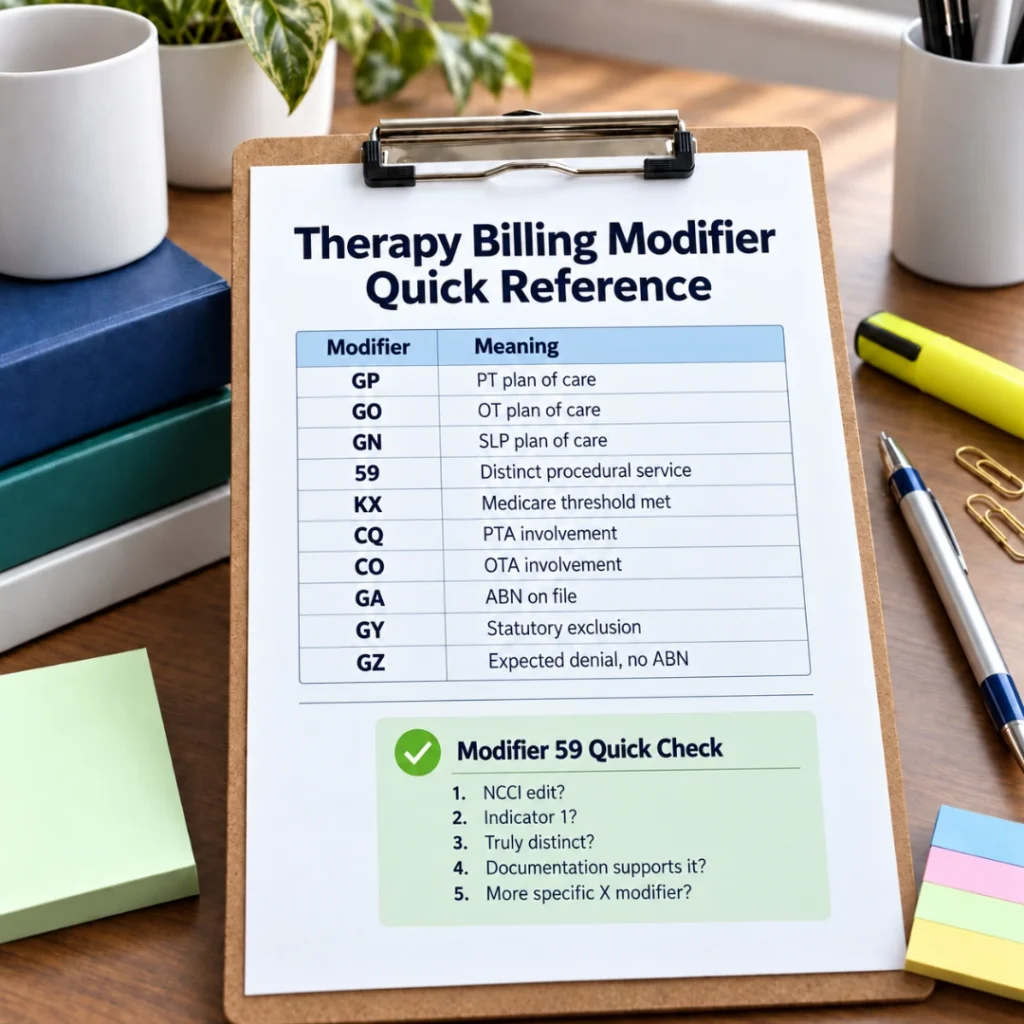
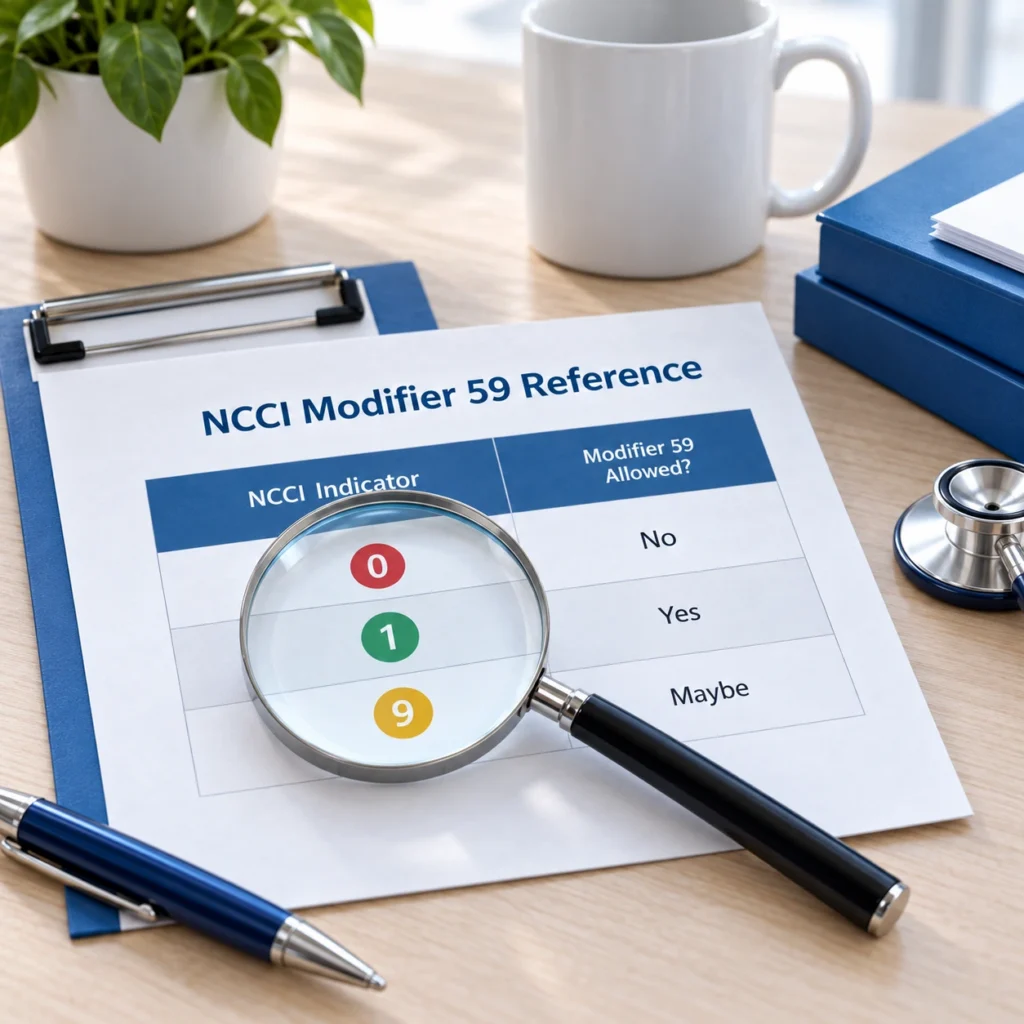
Billing is one of the biggest operational pressure points for therapy practices. For PT, OT, and SLP clinics, the problem is rarely just claim submission. Billing issues often begin earlier, when patient information is incomplete, eligibility is not verified, authorizations are missed, documentation does not support the service, or modifiers are not tracked correctly.

In 2026, streamlining billing processes means building a cleaner workflow from the first patient touchpoint to final payment. The goal is not only to submit claims faster. The real goal is to reduce preventable denials, improve billing visibility, protect cash flow, and help the team spend less time fixing avoidable billing problems.

A stronger billing workflow connects intake, eligibility, documentation, CPT coding, modifiers, claim submission, payment posting, denial review, and reporting. When those steps are disconnected, even a busy clinic with strong clinical care can lose time and revenue to administrative rework.

How can therapy practices streamline billing processes?

Therapy practices can streamline billing by verifying eligibility early, keeping documentation connected to CPT codes, tracking authorizations and modifiers, submitting cleaner claims, monitoring denials by root cause, and using an EMR that connects clinical and billing workflows.

Table of Contents

Key Takeaways

    • Target physicians whose patient populations align with your therapy services.
    • Clearly communicate what conditions and patient needs your practice addresses.
    • Make the referral and scheduling process easy.
    • Build relationships with office staff as well as physicians.
    • Follow up appropriately after receiving referrals.
    • Stay visible without constantly asking for patients.
    • Track physician referral sources to see which relationships are working.

Why Therapy Billing Gets Complicated

Therapy billing involves more than sending a claim to insurance. A clean claim depends on accurate demographics, active insurance coverage, authorization details, CPT codes, diagnosis codes, modifiers, treatment time, medical necessity, provider information, timely filing, and payer-specific rules.

If one part of that workflow breaks, the result may be a rejected claim, denied claim, delayed payment, or extra billing work. A rejection may happen before the payer processes the claim because of missing or invalid data. A denial usually happens after payer review and may require correction, appeal, or additional documentation.

For PT, OT, and SLP practices, common billing challenges include eligibility changes between visits, expired authorizations, missing modifiers, Medicare therapy thresholds, weak medical necessity language, inconsistent treatment time documentation, and poor visibility into unpaid claims.

Start With Eligibility and Patient Information

The billing process should begin before the visit. Eligibility verification helps the practice confirm whether coverage is active and whether the plan has limits, authorization rules, deductible responsibilities, copays, or visit restrictions that may affect care.

Eligibility checks do not guarantee payment, but they help reduce avoidable surprises. Practices should confirm patient demographics, subscriber details, payer information, plan type, visit limits, authorization requirements, and patient responsibility as early as possible.

This front-end step matters because many billing problems come from preventable intake errors. A wrong subscriber ID, outdated insurance card, missing authorization, or inactive plan can delay payment even when the therapy service itself was appropriate.

Connect Documentation to Billing

Clean billing depends on clear documentation. The therapy note should explain what service was provided, why it was medically necessary, how it connects to the plan of care, and how the patient responded. For timed therapy codes, the note should also support the time billed.

For Medicare therapy services, practices should also monitor modifier requirements. CMS lists the 2026 KX modifier threshold at $2,480 for PT and SLP services combined and $2,480 for OT services. CMS also states that services above the KX threshold require the KX modifier when continued therapy is medically necessary and supported by documentation.

Documentation and billing should not live in separate silos. A billing team should be able to see the service, CPT code, modifier, treatment time, provider, plan of care, and supporting note without chasing information across disconnected tools.

Looking up more cpt codes?

See 97110, 97530, and 50+ therapy procedure codes – with billing guidance and documentation tips in one place.

Use Electronic Billing and Claim Tracking

CMS describes electronic billing and EDI transactions as part of the electronic exchange of claims and related billing information. CMS also notes that clearinghouses and billing services may help providers submit or receive transactions from Medicare fee-for-service contractors.

For therapy practices, electronic billing is useful because it helps reduce manual submission work and improves claim visibility. However, electronic billing does not fix poor data, missing documentation, or incorrect code selection by itself.

A streamlined billing process should track each claim after submission. Teams should know whether a claim was accepted, rejected, denied, paid, partially paid, or still pending. Without claim tracking, practices may not notice recurring payer issues until cash flow slows down.

Reduce Denials by Fixing Root Causes

Denial prevention should be part of the billing workflow, not a cleanup project that happens after payment is delayed. Instead of only asking which claims were denied, practices should identify why the denials happened and where the workflow broke down.

Common root causes include inactive coverage, missing authorization, unsupported CPT codes, modifier errors, documentation gaps, timely filing issues, payer-specific edits, and patient responsibility confusion. Once the root cause is clear, the team can fix the process instead of correcting the same problem claim by claim.

A useful denial review process should group denials by payer, reason, provider, location, code, and workflow step. This makes it easier to see whether the issue is a training problem, documentation problem, payer rule problem, or front-office intake problem.

Build a Cleaner Therapy Billing Workflow

A practical billing workflow for therapy practices should include these steps:

    • Verify patient demographics and insurance information before the visit.
    • Check eligibility, benefits, copays, deductibles, visit limits, and authorization requirements.
    • Document the visit clearly, including medical necessity, skilled intervention, patient response, and treatment time when applicable.
    • Review CPT codes, diagnosis codes, modifiers, provider information, and payer-specific claim requirements.
    • Submit claims electronically through the appropriate billing or clearinghouse workflow.
    • Track claim status, rejections, denials, payments, adjustments, and patient responsibility.
    • Review denial trends and update workflows based on root causes.

What is the most important step in improving therapy billing?

The most important step is connecting documentation, eligibility, coding, modifiers, and claim follow-up in one consistent workflow. Faster claim submission helps, but cleaner front-end data and stronger documentation usually have a bigger impact on reducing avoidable billing rework.

How HelloNote Helps Streamline Therapy Billing

HelloNote helps therapy practices organize billing workflows by keeping documentation, scheduling, eligibility, CPT codes, modifiers, claims, patient information, and reporting connected.

With a connected EMR, teams can reduce duplicate entry, keep clinical notes closer to billing details, and improve visibility into what needs follow-up. This is especially helpful for PT, OT, SLP, and Chiro practices that need documentation, billing, scheduling, and reporting to work together.

HelloNote supports therapy practices with documentation workflows, billing organization, eligibility tracking, claim and payment visibility, CPT code and modifier support, reporting, and patient information management.

Make therapy billing easier from intake to payment.

HelloNote helps PT, OT, SLP, and Chiro practices connect documentation, eligibility, billing workflows, claim tracking, and reporting in one organized EMR.

No credit card required • HIPAA Compliant • PT, OT & SLP

Frequently Asked Questions

What does streamlining billing mean for a therapy practice?

Streamlining billing means creating a cleaner workflow from patient intake to final payment. It includes eligibility checks, accurate documentation, correct CPT coding, modifier tracking, claim submission, denial follow-up, and reporting.

What causes billing delays in therapy practices?

Billing delays are often caused by missing insurance information, eligibility issues, authorization gaps, coding errors, modifier mistakes, weak documentation, claim rejections, or slow denial follow-up.

How can therapy practices reduce claim denials?

Therapy practices can reduce claim denials by verifying eligibility early, documenting medical necessity clearly, using correct CPT codes and modifiers, tracking authorizations, and reviewing denial trends by payer and root cause.

Why is documentation important for therapy billing?

Documentation supports the claim. It should show what service was provided, why it was medically necessary, how it connects to the plan of care, and how time or modifiers were supported.

How does eligibility verification help therapy billing?

An EMR can improve billing workflows by connecting patient information, documentation, CPT codes, eligibility, claims, payments, and reporting in one system. This reduces manual work and gives teams better billing visibility.

How can an EMR improve therapy billing workflows?

An EMR can improve billing workflows by connecting patient information, documentation, CPT codes, eligibility, claims, payments, and reporting in one system. This reduces manual work and gives teams better billing visibility.

Final Thoughts

Streamlining billing processes for therapy practices in 2026 is about reducing preventable friction. The strongest billing workflows begin before the claim is submitted and continue until payment is fully resolved.

By improving eligibility checks, documentation, modifier tracking, claim follow-up, and denial management, therapy practices can reduce billing rework and protect cash flow.

HelloNote helps therapy practices keep clinical and billing workflows connected, so teams can spend less time chasing billing issues and more time supporting patient care.

Clearinghouse for Therapy Billing and Claims Management

Therapy office staff reviewing billing paperwork and claim tracking on a laptop, representing a clearinghouse for therapy billing, claim submission, and revenue cycle management for PT, OT, and SLP practices.

Billing can slow down even the most organized therapy practice. PT, OT, and SLP clinics often deal with payer rules, eligibility checks, authorizations, CPT codes, modifiers, claim edits, and payment follow-up.

A clearinghouse helps simplify one part of that process. It connects your practice, EMR, or billing system to insurance payers so claims can be submitted electronically, checked for basic errors, routed to the correct payer, and tracked more easily.

When connected with a therapy-focused EMR like HelloNote, clearinghouse workflows can help billing teams reduce avoidable rework, improve claim visibility, and keep documentation closer to the claim.

What is a clearinghouse for therapy billing?

A clearinghouse for therapy billing is a third-party service that helps PT, OT, and SLP practices submit electronic claims to insurance payers. It can format claims, check for missing or invalid information, route claims, return rejection messages, and help billing teams track claim activity.

Table of Contents

Key Takeaways

    • Target physicians whose patient populations align with your therapy services.
    • Clearly communicate what conditions and patient needs your practice addresses.
    • Make the referral and scheduling process easy.
    • Build relationships with office staff as well as physicians.
    • Follow up appropriately after receiving referrals.
    • Stay visible without constantly asking for patients.
    • Track physician referral sources to see which relationships are working.

What Is a Clearinghouse in Medical Billing?

A clearinghouse is an intermediary between a healthcare provider and insurance payers. In a therapy practice, it usually sits between the EMR or billing system and the payer network.

CMS describes Electronic Data Interchange, or EDI, as the automated transfer of data in a specific format between a provider and Medicare or another health plan. CMS also notes that this transfer may happen with the help of a clearinghouse or billing service.

For a therapy practice, the clearinghouse helps move claim information from your billing workflow to the payer in a structured electronic format. It does not replace clinical documentation, coding judgment, payer policy review, or medical necessity support.

Does a clearinghouse guarantee payment?

No. A clearinghouse can help reduce preventable claim errors and route claims to payers, but it does not guarantee payment. Claims may still be denied because of eligibility issues, authorization problems, documentation gaps, coding errors, medical necessity concerns, or payer-specific rules.

How a Clearinghouse Works

A typical clearinghouse workflow looks like this:

    • The therapist completes documentation in the EMR.
    • The billing team reviews patient, payer, provider, CPT, diagnosis, modifier, and authorization details.
    • The claim is created and sent electronically to the clearinghouse.
    • The clearinghouse checks the claim for basic formatting or required-field issues.
    • The claim is either accepted for forwarding or returned for correction.
    • The payer processes the claim and returns status, payment, denial, or remittance details, depending on the workflow.

This process helps billing teams find certain issues earlier instead of waiting for payer delays.

Key Clearinghouse Functions for Therapy Practices

Electronic Claim Submission

A clearinghouse helps practices submit claims electronically to multiple payers through a more centralized workflow.

Claim Formatting

Claims must follow specific electronic formats and data rules. A clearinghouse helps convert claim data into payer-ready formats, reducing technical submission issues.

Claim Scrubbing

Claim scrubbing checks for missing, invalid, or inconsistent information before a claim reaches the payer. This may include missing patient details, invalid subscriber information, missing provider data, missing diagnosis codes, or missing modifiers.

Rejection and Status Visibility

A clearinghouse may return rejection messages when a claim fails a required data check. This allows the billing team to correct and resubmit faster. Some clearinghouses also support claim status tracking and electronic remittance workflows.

Eligibility and Benefits Transactions

Some clearinghouses support eligibility and benefits transactions, depending on payer connections and setup. Eligibility checks help practices confirm coverage details, but they do not guarantee payment.

Common Clearinghouse Examples

Common clearinghouse or clearinghouse-related vendors include TriZetto Provider Solutions, Inovalon, Claim.MD, Availity, and Change Healthcare/Optum, depending on payer connections and practice needs.

The best fit depends on payer mix, EDI enrollment requirements, ERA/EFT setup, reporting needs, support quality, pricing, and EMR integration. Before naming a preferred partner, confirm which clearinghouses HelloNote currently supports.

What a Clearinghouse Can Help With

    • Electronic claim submission
    • Basic claim checks
    • Claim formatting
    • Claim routing
    • Rejection management
    • Claim status visibility
    • ERA workflows, depending on setup
    • Eligibility transactions, depending on setup

What a Clearinghouse Cannot Fully Fix

    • Poor clinical documentation
    • Incorrect CPT or diagnosis code selection
    • Missing medical necessity
    • Expired or missing authorization
    • Incorrect provider credentialing
    • Payer-specific coverage exclusions
    • Timely filing problems
    • Claims requiring clinical review or appeal

This is why a clearinghouse should be part of a complete billing workflow, not the entire billing strategy.

Therapy Billing Challenges a Clearinghouse Can Help With

Claim Rejections

A clearinghouse can catch some preventable issues before a claim reaches the payer. This helps reduce time spent correcting basic submission errors.

Payer-Specific Requirements

Different payers may require different claim details. A clearinghouse can help with formatting and routing, but practices should still verify payer-specific billing rules.

Therapy Thresholds and the KX Modifier

For Medicare outpatient therapy, the KX modifier is tied to annual therapy thresholds and documentation supporting medical necessity. CMS states that use of the KX modifier means the clinician attests that services at and above the therapy threshold are medically necessary and reasonable, with justification documented in the medical record.

A clearinghouse can help submit the modifier when it is entered correctly, but it does not determine whether the service is medically necessary. That support must come from the clinical documentation.

ERA and Payment Follow-Up

Electronic remittance workflows can help billing teams review payments, adjustments, denials, and patient responsibility more efficiently. This supports better revenue cycle visibility.

What is the difference between a clearinghouse rejection and a payer denial?

A clearinghouse rejection usually means the claim failed a technical or data check before payer adjudication. A payer denial means the payer processed the claim and did not pay it, or did not pay it as submitted. Rejections usually require correction and resubmission, while denials may require appeal, documentation, or payer follow-up.

How HelloNote Supports Clearinghouse Billing Workflows

HelloNote helps therapy practices connect clinical documentation, CPT codes, patient information, eligibility, billing workflows, and reporting in one EMR.

For PT, OT, and SLP practices, this matters because claims are only as strong as the information behind them. When documentation and billing live closer together, teams can reduce duplicate entry, improve claim visibility, and respond faster when something needs follow-up.

HelloNote can help organize patient demographics, insurance information, eligibility checks, therapy notes, CPT codes, diagnosis information, billing workflows, claim tracking, and reporting.

Confirm the current clearinghouse partners and available billing features before publishing this section.

Have questions about clearinghouses and therapy billing?

HelloNote helps PT, OT, SLP, and Chiro practices connect documentation, eligibility, CPT codes, billing workflows, and claim follow-up in one organized EMR.

No credit card required • HIPAA Compliant • PT, OT & SLP

How to Choose a Clearinghouse for Your Therapy Practice

When comparing clearinghouses, ask practical billing questions instead of focusing only on price.

    • Does it support your major payers?
    • Does it integrate with your EMR or billing system?
    • Does it support eligibility, claim status, ERA, and EFT workflows?
    • How are rejections returned and explained?
    • Are there payer-specific fees or enrollment steps?
    • What setup support is available?
    • What reporting tools are included?
    • How responsive is support when claims stall?

Frequently Asked Questions

What is a clearinghouse in therapy billing?

A clearinghouse in therapy billing is a third-party service that helps PT, OT, and SLP practices submit electronic claims to insurance payers. It can help format claims, check for missing information, route claims, return rejection messages, and support claim tracking.

Do therapy practices need a clearinghouse?

Many therapy practices use a clearinghouse because it simplifies electronic claims submission across multiple payers. It is especially useful for practices that manage insurance billing, eligibility checks, claim follow-up, and payer-specific requirements.

Does a clearinghouse reduce claim denials?

A clearinghouse can help reduce preventable claim errors and rejections, but it does not eliminate denials. Claims may still be denied because of coverage issues, authorization problems, coding errors, documentation gaps, or payer rules.

What is claim scrubbing?

Claim scrubbing is the process of checking a claim for missing, invalid, or inconsistent information before it is sent to the payer.

What is the difference between a rejection and a denial?

A rejection usually happens before payer adjudication because the claim failed a technical or data check. A denial usually happens after payer review and may require appeal, documentation, or payer follow-up.

Can a clearinghouse check patient eligibility?

Some clearinghouses support eligibility and benefits transactions, depending on payer connections and setup. Eligibility checks can help confirm coverage details, but they do not guarantee payment.

How does HelloNote help with clearinghouse billing workflows?

HelloNote helps therapy practices connect documentation, CPT codes, patient information, eligibility, billing workflows, and reporting so teams have better visibility into what supports cleaner claims and follow-up.

Final Thoughts

A clearinghouse can make therapy billing more organized, but it works best when paired with strong documentation, accurate coding, eligibility checks, authorization tracking, and active claim follow-up.

For PT, OT, and SLP practices, the goal is not just to submit claims faster. The goal is to create a billing workflow where the clinical record, claim details, payer requirements, and payment follow-up are easier to manage.

HelloNote helps therapy practices keep those pieces connected, giving clinical and billing teams a clearer way to manage revenue cycle workflows.

Clearinghouse Strategy for Therapy Practices: What PT, OT, and SLP Need to Know in 2026

Therapy practice owner in blue scrubs smiling while reviewing a successful billing dashboard on a tablet in a busy physical therapy clinic

What does a clearinghouse do for therapy billing and why does it matter?

The best clearinghouse for medical billing is an intermediary service that receives claims from your therapy EMR, formats them to meet each insurance payer’s specific requirements, scrubs them for errors, and transmits them securely via Electronic Data Interchange (EDI) to the insurance company. For physical therapy, occupational therapy, and speech-language pathology practices, the clearinghouse directly affects how fast claims are processed, how often they are rejected, and how quickly Electronic Remittance Advice (ERA) returns to your billing system. The wrong clearinghouse for your payer mix creates claim rejections and revenue delays that compound over time.

Key Takeaways

    • Target physicians whose patient populations align with your therapy services.
    • Clearly communicate what conditions and patient needs your practice addresses.
    • Make the referral and scheduling process easy.
    • Build relationships with office staff as well as physicians.
    • Follow up appropriately after receiving referrals.
    • Stay visible without constantly asking for patients.
    • Track physician referral sources to see which relationships are working.

For physical therapy, occupational therapy, and speech-language pathology practices, clearinghouse selection is one of the most consequential billing decisions you will make in 2026. A therapy billing clearinghouse is the infrastructure that carries your claims from HelloNote to insurance payers, and the performance of that infrastructure directly determines how fast you get paid, how often claims come back rejected, and how much administrative time your billing team spends chasing down errors.

HelloNote was built with a specific philosophy on this: your practice should never be locked into a single clearinghouse with poor performance. That is why HelloNote integrates with multiple clearinghouse partners and gives you the flexibility to choose and switch based on your payer mix. In 2026, with payer requirements continuing to shift and claim scrutiny higher than it has ever been, having a clearinghouse strategy is not optional. It is a core part of running a financially healthy therapy practice.

This guide covers what clearinghouses do, which partners HelloNote works with, how automated claim submission changes the revenue cycle in 2026, and how to choose the right clearinghouse for your specific payer mix.


What Is a Clearinghouse and Why Does It Matter for Therapy Billing

What is a clearinghouse in medical billing? A clearinghouse sits between your billing software and the insurance companies that pay your claims. Its job is to take the claims you generate in HelloNote, translate them into the format each payer requires, check them for errors before they reach the insurance company, and deliver them securely. When the insurance company responds with payment or denial information, the clearinghouse brings those remittances back into HelloNote.

For therapy practices, even small errors on a claim can trigger a denial that delays payment by weeks. A missing therapy discipline modifier, an incorrect place of service code, or an expired prior authorization number are the kinds of errors that a good clearinghouse catches before the claim ever reaches the payer. The clearinghouse is your last line of defense against preventable denials.

Data Formatting

Insurance companies have different formatting requirements for claim submission. Medicare uses different specifications than Blue Cross, and commercial payers vary from each other. A clearinghouse converts every claim from HelloNote into the specific format each payer requires, eliminating the need for your billing team to manage those differences manually.

Claim Scrubbing

Before sending a claim to the payer, the clearinghouse runs it through a scrubbing process that checks for common errors: missing modifiers, incorrect codes, incomplete patient information, expired authorizations, and payer-specific rule violations. Claims that fail scrubbing are returned to HelloNote with an error description so the billing team can correct and resubmit. Catching errors at this stage costs far less time than resolving a payer denial after the fact.

Secure EDI Claims Data Exchange

Clearinghouses transmit claims using Electronic Data Interchange (EDI), the standardized format that HIPAA requires for electronic claim submission. EDI transmission is encrypted and auditable, creating a secure and documented pathway for protected health information between your practice and payers. Without a clearinghouse, practices would need to establish direct EDI connections with each individual payer, which is operationally not feasible for most therapy practices.

Electronic Remittance Advice

When a payer processes a claim, it sends an Electronic Remittance Advice (ERA) back through the clearinghouse. The ERA contains payment information, denial reason codes, and adjustment details. HelloNote’s clearinghouse integration automatically syncs ERA files into the billing system, eliminating manual payment posting and accelerating the reconciliation process.


Card reader connected to a computer with three insurance cards representing different clearinghouse options, illustrating the best clearinghouse for medical billing

HelloNote Clearinghouse Integrations in 2026

HelloNote integrates with multiple clearinghouse partners, giving therapy practices the flexibility to choose based on payer mix, claim volume, and specific operational needs. The following clearinghouses are currently integrated with HelloNote.

Inovalon

Inovalon is one of HelloNote’s primary clearinghouse partners and is the preferred Inovalon clearinghouse option for practices with a Medicare-heavy payer mix. Inovalon provides extensive payer connectivity, including robust Medicare eligibility verification and claim submission capabilities. The integration is well-established within HelloNote, and the enrollment process is straightforward.

For practices migrating from a previous EMR that used Inovalon, the transition to HelloNote does not require starting the enrollment process from scratch. Contact your Inovalon account manager and request a transfer to destination ID 589187 (E Medical Records Live Inc.). This preserves your existing payer enrollments and minimizes setup time.

Trizetto

Trizetto is a strong Trizetto clearinghouse option for practices with a diverse commercial payer mix. Trizetto offers broad connectivity with commercial insurance companies and can deliver better acceptance rates for specific commercial payers than other clearinghouse options. If your practice bills to multiple commercial insurers and experiences frequent rejections through your current clearinghouse, Trizetto is worth evaluating as an alternative.

ClaimMD

ClaimMD is an additional clearinghouse option integrated with HelloNote, particularly useful for practices that need cost-effective commercial payer connectivity. Like Trizetto, ClaimMD can be evaluated against your specific payer mix to determine whether it outperforms your current clearinghouse for the insurers you bill most frequently.

Clearinghouse Switching Flexibility

Unlike EMRs that lock practices into a single clearinghouse regardless of performance, HelloNote allows you to select and switch clearinghouses based on results. If your current clearinghouse experiences downtime, processing delays, or consistently poor performance with a specific payer, you can migrate to a different partner without changing your EMR. This flexibility gives you leverage to demand better service and ensures your revenue cycle is never held hostage by a single vendor.

Your clearinghouse strategy starts with the right EMR.

HelloNote integrates with Inovalon, Trizetto, and ClaimMD. Choose the best option for your payer mix, or switch if performance drops. No setup fees. No contracts.

No credit card required · HIPAA Compliant · PT, OT & SLP

New in 2026: Automated Claim Submission Workflows

How does automated claim submission work in HelloNote in 2026?

In 2026, HelloNote can be configured to handle the entire claim submission process automatically. When a therapist finalizes a note, HelloNote scrubs the claim for errors. If no errors are found, the claim is sent directly to the clearinghouse. If the clearinghouse also finds no issues, HelloNote releases the claim to the payer without any manual intervention. Only claims with errors require review. This workflow eliminates the human delays between note finalization and claim submission, reducing days in accounts receivable by 3 to 7 days. The feature is not enabled by default and must be activated through HelloNote support.

One of the most significant billing updates in HelloNote for 2026 is the expansion of automated claim submission capabilities. Previously, many practices manually reviewed and released claims from the clearinghouse queue after scrubbing. The new workflow eliminates that manual step for clean claims.

How the Automated Workflow Operates

  1. Therapist finalizes a note in HelloNote
  2. HelloNote automatically scrubs the claim for errors
  3. If no errors are found, the claim is sent directly to the clearinghouse
  4. If the clearinghouse also finds no issues, HelloNote auto-releases the claim to the payer
  5. Only claims with errors require manual review in Billing > Claims > Ready to Send

Revenue Cycle Impact

This workflow reduces days in accounts receivable by eliminating human delays between note finalization and claim submission. For a busy therapy practice seeing 20 or more patients per day, the difference between submitting claims on the same day as the visit versus 1 to 3 days later has a direct and measurable impact on cash flow. The 3 to 7 day reduction in accounts receivable translates to faster access to revenue that would otherwise sit in the billing pipeline.

How to Enable Automated Claim Submission

The automated claim submission feature is not enabled by default in HelloNote. Contact HelloNote support to activate it for your account. Once enabled, the system transforms your billing workflow from reactive manual review to automated submission with exception handling, where your billing team focuses exclusively on the claims that need attention rather than processing every claim individually.

How to Choose the Right Clearinghouse for Your Practice

Not all clearinghouses perform equally for every payer. The best clearinghouse for medical billing in a therapy practice depends on your specific payer mix, your claim volume, and whether you have existing payer enrollments to preserve. Here is how to evaluate the options.

Medicare-Heavy Practices

Inovalon has strong Medicare connectivity and is typically the best-performing option for practices that bill primarily to Medicare Part B. The enrollment process through HelloNote is well-established, and the integration supports Medicare eligibility verification, claim submission, and ERA processing within a single workflow.

Commercial Payer-Heavy Practices

Trizetto or ClaimMD may offer better acceptance rates for specific commercial insurers. If your practice bills to multiple commercial payers and your current clearinghouse is generating frequent rejections for a specific insurer, testing a different clearinghouse for that payer is worth the effort. HelloNote’s multi-clearinghouse flexibility allows you to run different clearinghouses for different payer groups if the data supports it.

Practices With Existing Clearinghouse Accounts

If you have an existing clearinghouse account from a previous EMR, HelloNote allows you to transfer that account rather than starting the enrollment process from scratch. This is particularly valuable for practices that have spent months building out payer enrollments. Preserving those enrollments during an EMR migration eliminates weeks of setup time and ensures no interruption to claim submission during the transition.

Clearinghouse Best For Key Strength HelloNote Integration
Inovalon
Medicare-heavy practices
Strong Medicare connectivity and eligibility verification
Primary partner, well-established
Trizetto
Commercial payer mix
Broad commercial payer connectivity
Available, evaluate against your payer mix
ClaimMD
Cost-effective commercial billing
Strong commercial payer acceptance rates
Available, evaluate against your payer mix

Enrollment Timelines and Operational Planning

Infographic showing five clearinghouse setup paths for therapy practices using HelloNote: already on Inovalon, keep current clearinghouse, switch to Inovalon, full RCM billing service, or manual no-integration option

Setting up a new clearinghouse through HelloNote typically takes 5 to 10 business days. This includes payer enrollment, testing, and validation. During this period, claims can still be submitted manually or through existing arrangements, so there is no gap in claim submission during the setup window.

Planning a Clearinghouse Transition

For practices switching clearinghouses, the transition can be planned during a lower-volume period to minimize disruption. HelloNote’s support team can help coordinate the transfer and verify that no claims are lost or duplicated during the transition. Before switching, document your current payer enrollment list so the new clearinghouse setup covers every active payer without gaps.

Eligibility Verification During Setup

Real-time eligibility verification depends on clearinghouse connectivity. Before you verify a patient’s Medicare or commercial insurance benefits, the clearinghouse must have an active connection to that payer. During clearinghouse setup, eligibility verification for specific payers may be limited until enrollment completes. Plan patient scheduling around this window to avoid verification delays at the front desk.

Auto-ERA Activation

Once clearinghouse enrollment is complete, enable Auto-ERA functionality in HelloNote. ERA files will automatically sync from the clearinghouse into HelloNote under Billing > Import > ERA/835. This automation eliminates manual payment posting and accelerates the reconciliation process. If ERA files are not appearing after enrollment, contact HelloNote support to verify the ERA auto-sync configuration.

Common Clearinghouse Issues and How to Resolve Them

Even with a well-configured clearinghouse, therapy practices encounter billing issues. Here are the most common problems and their resolutions.

Claim Rejection Due to Missing Modifiers

The most common cause of claim rejection in therapy billing is a missing discipline modifier. PT claims require modifier GP, OT claims require modifier GO, and SLP claims require modifier GN. HelloNote’s claim scrubbing catches many of these, but payer-specific rules may require additional modifier review. If a specific payer is generating repeated modifier rejections, review that payer’s modifier requirements and update the claim template in HelloNote accordingly.

ERA Not Syncing Into HelloNote

If Electronic Remittance Advice files are not appearing in HelloNote under Billing > Import > ERA/835, the clearinghouse ERA connection may need to be revalidated. This can happen after a clearinghouse system update or if the enrollment configuration changes. Contact HelloNote support to check the ERA auto-sync configuration and reestablish the connection if needed.

Delayed Claim Acceptance

If claims are taking longer than expected to show as accepted by the clearinghouse, check the Submitted tab under Billing > Claims. This view shows claims sorted by billed amount, paid status, hold status, and submission date, giving your billing team full visibility into where delays are occurring. Claims held in a pending status at the clearinghouse often indicate a payer-specific connectivity issue that may require a temporary manual submission while the connection is restored

Payer-Specific Connectivity Gaps

Not every clearinghouse connects to every payer with equal performance. If your practice experiences frequent rejections from a specific insurance company, the issue may be that your current clearinghouse has limited connectivity with that payer. Review the rejection pattern: if rejections are concentrated on one or two payers, consider switching to a clearinghouse with stronger connectivity for those specific payers. HelloNote’s multi-clearinghouse flexibility makes this a practical option without requiring a full clearinghouse migration.

Formatting Errors After Payer Rule Changes

Insurance payers periodically update their claim formatting requirements, often without advance notice to providers. If claims that were previously accepted begin rejecting for formatting errors, the clearinghouse may not have updated its payer rules yet. Contact your clearinghouse support team to confirm whether a payer rule update is pending. In the interim, manual review of affected claims before submission can prevent denials while the clearinghouse update is applied.

Is It Better to Switch Clearinghouses or Fix the Current One?

It depends on whether the problem is isolated or systemic. If rejections are concentrated on one or two specific payers, the issue is usually a connectivity gap with your current clearinghouse for those payers specifically, not a reason to replace the whole relationship. If rejections are broad, frequent, and span multiple payers, that points to a deeper performance problem worth switching over. HelloNote’s multi-clearinghouse flexibility means you do not have to choose one or the other. You can run a different clearinghouse for a specific payer group without a full migration.

How HelloNote Simplifies Clearinghouse Management

HelloNote’s approach to clearinghouse medical billing integration is built on a single principle: your billing software should work for your practice, not create additional administrative burden. Here is how that principle is implemented in the platform.

One-Click Claim Submission

Once a claim is finalized and scrubbed in HelloNote, sending it to the clearinghouse requires a single click. There is no file exporting, no manual formatting, and no uploading to a separate portal. The entire submission workflow lives inside HelloNote, keeping your billing team in one system from note finalization through payment posting.

Centralized Claim Tracking

The Submitted tab under Billing > Claims provides a complete view of every claim in the pipeline. Sort by date, status, billed amount, or payer to identify bottlenecks and prioritize follow-up. This centralized view eliminates the need to log into the clearinghouse portal separately to check claim status, saving your billing team time on every working day.

Automatic ERA Processing

When remittances arrive from the clearinghouse, HelloNote can automatically post payments to the correct patient accounts. This eliminates manual data entry for payment posting and reduces the risk of posting errors that create reconciliation problems later. Practices that enable automatic ERA processing typically see a significant reduction in the time their billing team spends on payment reconciliation.

Flexible Clearinghouse Switching

If a clearinghouse underperforms, you can switch. HelloNote does not lock your practice into a single vendor. This flexibility gives you leverage to demand better service from your clearinghouse partner and ensures your revenue cycle is not dependent on the performance of a single vendor relationship. For therapy practices with multiple locations or diverse payer mixes, the ability to run different clearinghouses for different payer groups provides a level of billing optimization that single-clearinghouse EMRs cannot match.

Still chasing claim rejections your clearinghouse should have caught?

HelloNote connects to Inovalon, Trizetto, and ClaimMD, so your practice can pick the best clearinghouse for medical billing based on your actual payer mix. Start free and see how it works for PT, OT, SLP, and Chiro.

No credit card required • HIPAA Compliant • PT, OT & SLP

Frequently Asked Questions

What is a clearinghouse in therapy billing?

A medical billing clearinghouse is an intermediary service that sits between your therapy EMR and insurance payers. It receives claims from HelloNote, formats them to meet each payer's specific requirements, scrubs them for errors, and transmits them securely via EDI. When payers respond with payment or denial information, the clearinghouse delivers Electronic Remittance Advice (ERA) back to HelloNote. The clearinghouse directly affects how fast your claims are processed and how often they are rejected.

Which clearinghouse does HelloNote use?

HelloNote integrates with multiple clearinghouses including Inovalon, Trizetto, and ClaimMD. The best choice depends on your payer mix. Inovalon is typically best for Medicare-heavy practices. Trizetto and ClaimMD offer strong commercial payer connectivity and may perform better for practices with diverse commercial insurance mixes. HelloNote allows you to switch clearinghouses if performance does not meet your needs.

How long does clearinghouse setup take with HelloNote?

Setting up a new clearinghouse through HelloNote typically takes 5 to 10 business days, including payer enrollment, testing, and validation. Practices migrating from a previous EMR that already used Inovalon can transfer their existing account to HelloNote by contacting their Inovalon account manager and requesting a transfer to destination ID 589187. This preserves existing payer enrollments and reduces setup time.

What is automated claim submission and how does it reduce accounts receivable?

Automated claim submission in HelloNote 2026 allows the system to send clean claims directly from note finalization to the clearinghouse and on to the payer without any manual intervention. Only claims with errors require review. This eliminates the human delays between note finalization and claim submission, reducing days in accounts receivable by 3 to 7 days. The feature must be enabled by contacting HelloNote support.

Why are my therapy claims being rejected by the clearinghouse?

The most common causes of therapy claim rejections at the clearinghouse are missing discipline modifiers (GP for PT, GO for OT, GN for SLP), incorrect place of service codes, missing prior authorization numbers, and incomplete patient information. HelloNote's claim scrubbing catches many of these errors before submission, but payer-specific rules may require additional review. If rejections are concentrated on one payer, the issue may be a connectivity gap between your clearinghouse and that specific insurer.

Can I switch clearinghouses without changing my EMR?

Yes. HelloNote does not lock your practice into a single clearinghouse. If your current clearinghouse underperforms, experiences downtime, or has poor connectivity with a specific payer, you can switch to a different clearinghouse partner within HelloNote without changing your EMR or disrupting your overall billing workflow. This flexibility is a core feature of HelloNote's billing architecture.

CPT 97140 Manual Therapy: Documentation & Billing Guide

Physical therapist's hands performing joint mobilization on a patient's shoulder during a manual therapy session

Is CPT 97140 the Same as Manual Therapy?

Yes, when the work meets the skilled standard the code requires. CPT 97140 is the billing code for skilled manual therapy: joint mobilization, manipulation, soft tissue mobilization, manual traction, and manual lymphatic drainage performed with real-time clinical assessment. Not all hands-on contact qualifies. General massage, comfort-oriented soft tissue work, and passive movement a support staff member could perform are sometimes described informally as manual therapy, but they do not meet the threshold for 97140.

Table of Contents

Key Takeaways

    • Target physicians whose patient populations align with your therapy services.
    • Clearly communicate what conditions and patient needs your practice addresses.
    • Make the referral and scheduling process easy.
    • Build relationships with office staff as well as physicians.
    • Follow up appropriately after receiving referrals.
    • Stay visible without constantly asking for patients.
    • Track physician referral sources to see which relationships are working.

CPT 97140 documentation is where most manual therapy claims succeed or fail, and it is the part of outpatient practice that gets the least attention relative to how often it is billed. Our clinic learned this the hard way during a commercial payer audit in our third year of practice. We had a strong manual therapy program, an experienced team, and excellent clinical outcomes. We also had 97140 notes that read like treatment logs rather than skilled clinical records. The auditor did not question whether our therapists had skilled hands. She questioned whether our notes demonstrated that those skilled hands were making clinical decisions, not just applying techniques.

The gap between those two things, applying a skilled technique and documenting the skilled clinical decision-making behind it, is where most 97140 denials live. It is not a clinical gap. It is a documentation gap. And because manual therapy is inherently personal and tactile, the tendency to document it briefly and move on is understandable. The problem is that brief, technique-only notes look identical to unskilled massage from a payer’s perspective. Your hands know the difference. Your notes need to show it.

This manual therapy billing guide is built around everything our team learned from that audit experience and the years of documentation refinement that followed. The goal is a 97140 note that accurately represents the skilled clinical work being done, one that survives scrutiny not because it is padded, but because it is complete.

What Is CPT 97140 and When Do You Use It

CPT 97140 manual therapy covers hands-on techniques including joint mobilization and manipulation, soft tissue mobilization, manual lymphatic drainage, and manual traction, billed in 15-minute timed units with direct one-on-one therapist contact required throughout. As a manual therapy CPT code, it applies specifically when the therapist is performing skilled hands-on assessment and intervention that requires ongoing clinical judgment to deliver safely and effectively, not simply whenever hands-on contact occurs.

The word that carries the most clinical weight in the 97140 definition is not the list of techniques. It is the word skilled. 97140 is not a code for any hands-on contact. It is a code for skilled manual assessment and intervention, work that requires a licensed clinician because the clinical decisions being made in real time during the intervention demand professional training to make correctly. Joint mobilization applied by someone assessing tissue quality, end feel, and segmental response simultaneously is 97140. The same motion applied mechanically by a tech without clinical assessment is not.

Techniques That Qualify Under 97140

Joint mobilization: graded passive accessory movement applied to a restricted joint to restore articular mechanics. Manipulation: high-velocity low-amplitude thrust applied to a restricted segment. Soft tissue mobilization billing covers skilled sustained or transverse pressure applied to myofascial restrictions, adhesions, or scar tissue. Manual traction: skilled sustained or intermittent distraction of spinal or peripheral joints. Manual lymphatic drainage CPT code use applies to this specialized manual technique for edema reduction. Each of these requires the therapist to be simultaneously assessing tissue response and adjusting the technique in real time. That is the clinical rationale for the skilled billing level.

What Does Not Qualify Under 97140

General massage performed for relaxation or comfort. Passive range of motion that could be performed by support staff. Stretching that does not involve skilled ongoing assessment of tissue resistance and neural response. Heat or cold application with incidental contact. Techniques performed by support staff and billed as therapist services. The threshold for skilled manual therapy is clinical judgment performed through the hands in real time. If that threshold is not met, 97140 is not the right code regardless of how the technique looks from the outside.

Clinical Presentations That Warrant 97140

Cervical, thoracic, or lumbar joint hypomobility limiting functional range. Post-surgical articular restriction following orthopedic repair or replacement. Myofascial restrictions secondary to immobilization, guarding, or scar tissue formation. Neural tension syndromes responsive to manual traction. Adhesive capsulitis requiring progressive joint mobilization to restore glenohumeral mechanics. Acute and subacute soft tissue injuries with palpable tissue restrictions limiting movement. Edema presentations appropriate for manual lymphatic techniques. In every case the 97140 indication is grounded in a palpated or assessed tissue finding, not a diagnosis alone.

READY TO STREAMLINE YOUR CLINIC?

See How HelloNote Handles All of This in One Platform

Managing staff hours, compliance, inventory, and financial reports — all inside one HIPAA-compliant EMR built for PT, OT, and SLP clinics.

No credit card required · HIPAA Compliant · PT, OT & SLP

How to Document CPT 97140 Correctly

The documentation failure pattern our team has seen most often in 97140 reviews is what we call the technique-without-reason note: the therapist records the manual technique accurately and omits the clinical finding that indicated it, the assessment happening during it, and the response that followed it. That note describes a procedure. 97140 clinical documentation needs to describe a clinical decision process, whether the technique is joint mobilization documentation, soft tissue work, or manual traction. The difference is significant from a payer’s perspective and from a medicolegal one.

Our team rebuilt our 97140 documentation template after the audit experience using a five-element structure. Every element addresses a specific question a payer reviewer will ask when looking at a manual therapy claim.

The Five-Element 97140 Documentation Standard

  1. The pre-treatment clinical finding

Documented before the first technique. What did assessment reveal that indicated manual therapy? Restricted PA glide at a specific segment with firm end feel. Palpable myofascial restriction with pain reproduction in a specific distribution. Positive neural tension test with reproduction of peripheral symptoms. The finding is the clinical foundation of the 97140 claim. Without it, everything that follows is a technique without a reason.

  1. The specific technique and targeted structure

Name the technique with enough specificity that another clinician could reproduce it from your note. Not “joint mobilization, lumbar” but “Grade III posterior-anterior mobilization applied at L3-4 in prone, targeting restricted segmental flexion.” Not “soft tissue work, upper trap” but “sustained transverse friction at upper trapezius myofascial restriction, bilateral, with patient in supine.” Specificity is the documentation standard for a skilled service.

  1. The skilled clinical decision-making during the technique

This is the element that most distinguishes a 97140 note from a procedure log. What was our therapist assessing and responding to during the intervention? Tissue quality changes under sustained pressure. Progressive improvement in joint play across mobilization grades. Patient neurological response requiring technique modification. Real-time clinical decisions should appear in the note because they are what justify the skilled billing level.

  1. The measurable patient response

What changed as a result of the intervention? PA glide improved from restricted to hypomobile. Pain with cervical rotation decreased from 7/10 to 3/10 immediately post-treatment. Active lumbar flexion increased from 35 to 55 degrees following mobilization and soft tissue work. The response data shows the intervention produced a measurable clinical effect and that the skilled services were medically necessary.

  1. The functional goal connection

Connect the manual therapy to the patient’s documented functional goals. Cervical mobilization advancing the goal of returning to driving without pain-limited cervical rotation. Lumbar soft tissue work supporting the goal of tolerating 30-minute standing for a patient returning to a retail position. Shoulder mobilization targeting the goal of reaching overhead kitchen shelving. The functional connection establishes CPT 97140 medical necessity and links every session to the clinical justification in the plan of care.

The Reasoning Sentence That Protects the Claim

Every 97140 note our team writes includes what we call the clinical reasoning sentence, a single sentence that captures the finding, the intervention chosen in response, and the functional outcome it advances. It sounds like this: “Restricted right glenohumeral posterior glide with pain reproduction at 110 degrees flexion. Grade III posterior mobilization applied to restore mechanical joint play in support of patient’s goal of returning to overhead shelf stocking without pain.” That sentence answers the three questions every payer reviewer asks: what was the clinical problem, what skilled intervention did the therapist choose, and why was it medically necessary? Twenty seconds to write. Has never produced a medical necessity denial in our clinic.

What Happens If a 97140 Note Is Missing the Clinical Reasoning?

A 97140 note that records the technique but not the clinical finding or response is at high risk of denial on review, even when the treatment itself was appropriate. Payers cannot pay for skill they cannot see documented. The fix is not a longer note. It is one reasoning sentence that ties the finding, the intervention, and the functional outcome together.

CPT 97140 vs 97110 vs 97530: Where the Lines Are

Manual therapy sessions rarely exist in isolation. Most outpatient treatment days combine mobilization work with therapeutic exercise and functional activity practice. That clinical reality creates billing complexity, because three codes (97140, 97110, and 97530) can all appear on the same visit, and payers are looking for documentation that clearly justifies each one separately. Understanding 97140 vs 97110, and CPT 97140 vs 97530, starts with one question: who is doing the work, the therapist or the patient.

97140: The Therapist Works on the Patient

Manual therapy is passive and therapist-driven. The patient’s active participation is not required and often not possible during the intervention. The clinical skill is entirely in the therapist’s hands, assessment, and real-time judgment. This is the defining characteristic that separates 97140 from both 97110 and 97530. If the patient is doing the work, it is not 97140.

97110: The Patient Works on Their Impairment

Therapeutic exercise is active and patient-driven. The patient performs the movement. The therapist directs, progresses, and documents it. The clinical target is a specific measurable impairment: strength, endurance, ROM, or flexibility. 97110 follows 97140 in a logical clinical sequence: mobilize the joint first, then have the patient actively exercise through the restored range to build the capacity to hold it. Both codes can appear on the same visit; each needs its own documented clinical justification.

97530: The Patient Practices Functional Movement

Therapeutic activity is active, functional, and multi-outcome. The patient performs a movement that resembles or replicates an activity from their daily life. The clinical target is functional performance, not tissue-level impairment. 97530 is often the final phase of a treatment session that began with 97140 and 97110: restore mechanics, build capacity, practice function. All three codes together tell the complete story of a skilled outpatient rehabilitation session, but only if each one is separately documented with its own clinical justification and its own time tracking.

Can You Bill 97140 and 97530 on the Same Day?

Yes, when each code reflects a genuinely separate and distinct part of the session, and most payers will require Modifier 59 to bill them together on the same date of service. The note needs to support that separation on its own: its own clinical finding, its own time block, and its own functional rationale for each code. Identical or overlapping documentation between the two is what turns a valid same-day claim into a denial.

Common Billing Mistakes and How to Avoid Them

Our team has seen these five errors produce the majority of CPT 97140 denial outcomes and CPT 97140 audit findings across the clinics and billing patterns we have reviewed over the years.

Mistake 1: Documenting Technique Without Clinical Rationale

A 97140 note that lists techniques and body parts without capturing the clinical finding that indicated them is not a defensible skilled claim. It is a procedure log. The pre-treatment finding is not optional documentation. It is the clinical foundation of the entire note. Our team treats it as the first required field in every 97140 record, before any technique can be entered. Without the finding, there is no justification for the code.

Mistake 2: Billing 97140 for Comfort Massage

Soft tissue work applied for patient comfort, relaxation, or general wellness does not meet the threshold for 97140. The distinction between skilled myofascial release and comfort massage is clinical intent and real-time assessment. If our therapist is applying sustained manual pressure to a specific restriction identified on assessment, adjusting technique in response to tissue feedback, and targeting a documented functional limitation, that is 97140. If the technique is applied because the patient’s muscles are tight and they enjoy it, that is not a skilled service and should not be billed as one.

Mistake 3: Imprecise Time Tracking

97140 is a timed code. The 8-minute rule manual therapy calculation determines billable units. Our team found during a billing analysis that therapists estimating manual therapy time to the nearest five minutes were losing a full unit on approximately one in three sessions. The setup time, assessment between techniques, and patient positioning between interventions all add up to time that belongs in the documented total. Accurate manual therapy time tracking means recording actual start and stop time for every 97140 block.

Looking up more cpt codes?

See 97140, 97110, 97530, and 50+ therapy procedure codes. Billing guidance and documentation tips in one place.

Mistake 4: Delegating and Billing as Therapist Services

97140 requires direct licensed therapist contact for the entire duration of the service. If a therapy aide or technician performs any portion of the hands-on work, that portion cannot be billed under 97140 regardless of the supervision level or the quality of the work performed. Our team has strict documentation standards requiring the therapist providing the service to be identified in the note for every 97140 claim. This is one of the most common audit triggers for manual therapy billing and one of the easiest to avoid.

Mistake 5: Not Documenting Tissue Response and Clinical Progress

Payer reviewers looking at multiple 97140 visits expect to see evidence that the skilled intervention is producing measurable clinical change. If the notes show the same technique applied to the same structure with no documented tissue response, no progression in mobilization grade or soft tissue response, and no measurable change in the targeted impairment, the medical necessity of continued skilled services becomes difficult to defend. Our team documents tissue response and measurable clinical outcome at every 97140 visit. Progression is not just good clinical practice. It is a billing record.

Mistake 6: Missing Modifier 59 on Same-Day Claims

97140 modifier 59 is required by most payers when manual therapy is billed alongside 97110 or 97530 on the same date of service, because NCCI edits automatically bundle these code pairs together by default. Practices that skip the modifier on a qualifying same-day claim see the payer pay one code and deny the other, regardless of how well the session was documented. The reverse mistake is just as common and just as costly: applying Modifier 59 as a default whenever two codes appear on the same day, without the note actually establishing that each one reflects a separate clinical finding and a separate time block. Auditors look for that gap specifically, because a modifier without supporting documentation reads as an attempt to bypass the bundling edit rather than a genuinely distinct service. Our team applies Modifier 59 only when the note for 97140 already stands on its own, with its own finding, its own technique, and its own time, before the modifier is ever added to the claim.

HelloNote billing dashboard showing a patient record and treatment note list during a documentation review

CPT 97140 in Practice: What We Actually Do

Our team wants to walk through a real 97140 session the way it actually happens, including the documentation decisions made at each stage, because the code makes more sense as a living clinical record than as a billing definition.

A patient presents for visit five following a cervical fusion at C5-6. Our assessment this session reveals: restricted PA mobility at C4-5 above the fusion level with firm end feel, palpable myofascial restriction at bilateral upper trapezius and levator scapulae, and reported difficulty with left cervical rotation limiting her ability to check mirrors while driving. We document these findings in the objective section before touching the patient.

Our therapist begins with Grade III PA mobilization at C4-5, eight minutes, documenting the progressive improvement in accessory glide across the treatment block and the patient’s report of reduced local tenderness. Transition to sustained myofascial release at bilateral upper trapezius and levator scapulae, seven minutes, documenting bilateral tissue response and patient report of reduced referral pattern intensity. Total manual therapy time: fifteen minutes, one unit.

Our team then writes the clinical reasoning sentence: “Restricted C4-5 PA mobility above fusion level with upper trapezius myofascial guarding contributing to limited left cervical rotation. Grade III PA mobilization and bilateral soft tissue release performed to restore segmental accessory motion and reduce myofascial restriction in support of patient’s goal of returning to driving safely.” Post-treatment: left cervical rotation improved from 40 to 58 degrees active. Patient reports 4/10 pain with rotation compared to 7/10 at session start. That note is complete, defensible, and accurately represents the skilled work that happened.

How HelloNote Handles CPT 97140 Documentation

Our team designed the HelloNote 97140 template around the audit experience that reshaped how our clinic documents manual therapy. The central structural principle is that the note must begin with a clinical finding before a technique can be entered. That sequence (finding first, technique second) eliminates the most common denial trigger by making deficit documentation the required first step rather than an optional element.

Here is what the 97140 workflow inside HelloNote does:

    • Pre-treatment clinical finding field. Required before the technique section opens. The therapist documents what the assessment revealed: joint restriction, myofascial finding, neural tension sign, before entering any technique. This structural requirement enforces the documentation sequence that protects the claim.
    • Technique-specific entry fields. Separate documentation fields for joint mobilization, soft tissue mobilization, manual traction, and manipulation. Each field captures technique name, targeted structure, grade or intensity, and patient position. Structured fields produce consistent, specific notes faster than free text.
    • Clinical decision field. A dedicated section for documenting the skilled assessment occurring during the technique: tissue quality changes, joint play progression, patient neurological response, technique modifications made in real time. This is the element that demonstrates the therapist was making clinical decisions, not just performing a procedure.
    • Tissue response and outcome entry. Structured fields for documenting measurable change following the intervention. Pre- and post-session ROM, pain levels, tissue quality, and functional test results. Response data populates automatically into the visit-to-visit progress tracking.
    • Time entry with 8-minute rule calculation. Actual start and stop times entered at the point of care. HelloNote calculates units automatically. No rounding, no estimation, no unit math to do at the end of the day.
    • Functional goal linkage. Required before sign-off. Active plan of care goals are pulled into a selection field so the therapist links the manual therapy session to the relevant goal with one click. The connection that establishes medical necessity cannot be omitted.

The HelloNote 97140 template was built to make the audit-proof note the default note, not the one that requires extra time and discipline at the end of a busy clinical day.

Tired of manual therapy notes that don't hold up to audit?

HelloNote’s 97140 template starts with the clinical finding, not the technique. Start free and see how it works for PT, OT, SLP, and Chiro.

No credit card required • HIPAA Compliant • PT, OT & SLP

Frequently Asked Questions About CPT 97140

What is CPT 97140?

CPT 97140 is a timed therapeutic procedure code for manual therapy techniques including joint mobilization and manipulation, soft tissue mobilization, manual traction, and manual lymphatic drainage. Billed in 15-minute units, it requires direct one-on-one licensed therapist contact throughout and applies when the therapist is making skilled clinical decisions during the hands-on intervention. Manual therapy CPT 97140 PT billing is the most common use case, but CPT 97140 OT billing is equally valid when an occupational therapist is performing the skilled hands-on technique within their scope of practice; chiropractors and physiatrists may also bill it under the same documentation standard.

What techniques qualify under CPT 97140?

Qualifying techniques include joint mobilization applying graded accessory movement to restricted joints, manipulation applying high-velocity thrust to restricted segments, myofascial release and soft tissue mobilization targeting fascial and myofascial restrictions, manual spinal or extremity traction, and manual lymphatic drainage for edema management. General massage for relaxation, passive ROM performable by support staff, and comfort-oriented soft tissue work do not qualify.

How do I document 97140 to avoid denials?

Use the five-element standard: document the pre-treatment clinical finding first, then the specific technique and targeted structure, the skilled clinical decision-making that occurred during the intervention, the measurable patient response, and the connection to a functional goal in the plan of care. Most denials come from notes that record the technique accurately but omit the finding and the response, the elements that establish that skilled therapy was medically necessary.

Can I bill 97140, 97110, and 97530 on the same day?

Yes, and in a complete outpatient rehabilitation session this combination is often clinically appropriate. Manual therapy restores joint mechanics and tissue mobility, therapeutic exercise builds the capacity to maintain those improvements, and functional activity practice applies both to real-life movement tasks. Each code requires separate time tracking and a distinct clinical justification. Payers audit same-day billing of these codes; documentation specificity for each is essential.

How many units of 97140 can I bill per session?

Units are determined by the 8-minute rule: one unit requires at least 8 minutes of direct therapist contact, two units require at least 23 minutes, three units require at least 38 minutes. Multiple qualifying techniques performed in a continuous block of hands-on time can be combined into a single 97140 time total. Document actual start and stop time, not an estimate.

What is the CPT 97140 reimbursement rate?

CPT 97140 reimbursement varies by payer, geographic region, and contract terms, so there is no single national rate that applies to every practice. Medicare publishes a fee schedule rate per unit that updates annually, and commercial payer rates are typically set by individual contract. Confirm current rates directly with your clearinghouse or payer contracts rather than relying on a flat figure, since the documentation standard for medical necessity is the same regardless of which payer is reimbursing the claim.

What triggers an audit or denial for 97140?

Common triggers include: notes that list techniques without pre-treatment clinical findings, documentation that does not demonstrate ongoing skilled assessment during the intervention, billing 97140 for techniques performable by support staff, absence of functional goal connection, and high-frequency 97140 billing without documented tissue response or clinical progression across visits. Missing direct therapist contact documentation and unbundling issues with related codes are secondary triggers.

Do I need Modifier 59 when billing 97140 with 97110 or 97530?

Most payers require 97140 modifier 59 when manual therapy is billed alongside 97110 or 97530 on the same date of service, since NCCI edits bundle these code pairs by default. The modifier indicates the services were separate and distinct. It does not replace documentation; the note still needs its own clinical finding, technique, and time block for 97140 independent of the other code billed that day. Verify payer-specific requirements, since modifier rules can vary and update periodically.

How does HelloNote help with 97140 documentations?

HelloNote’s 97140 template requires a pre-treatment clinical finding before the technique section opens, includes dedicated fields for skilled clinical decision-making and tissue response, calculates 8-minute rule units automatically from actual start and stop times, and requires functional goal linkage before sign-off. The structure makes the five-element documentation standard the default path through every note.

Start Your Journey to Better Manual Therapy Documentation

The work our therapists do with their hands is some of the most sophisticated clinical intervention in outpatient rehabilitation. A note that captures a technique name and a body part is not an accurate record of that work. The clinical findings, the real-time decisions, the tissue responses, the functional outcomes, those belong in the record too. Not because auditors require them. Because the work deserves documentation that reflects its actual complexity, and because your practice deserves billing that accurately captures the value of what your team delivers every day.

Auto Accident Massage Therapy Billing: CPT Codes and ICD-10

Licensed massage therapist applying therapeutic massage to a patient's upper back and cervical spine in a clinical setting for auto accident injury treatment

What CPT codes do massage therapists use to bill auto accident insurance?

The primary CPT code massage therapists use for auto accident billing is 97124 (massage therapy), which covers effleurage, petrissage, tapotement, compression, and percussion billed in 15-minute timed units. CPT 97140 (manual therapy) is used for advanced manual techniques and can be billed in the same session only when applied to a clearly distinct body region. Supporting codes include 97010 (hot/cold packs) and 97112 (neuromuscular reeducation) where clinically applicable. All codes require a physician referral and documented medical necessity.

Key Takeaways

    • Target physicians whose patient populations align with your therapy services.
    • Clearly communicate what conditions and patient needs your practice addresses.
    • Make the referral and scheduling process easy.
    • Build relationships with office staff as well as physicians.
    • Follow up appropriately after receiving referrals.
    • Stay visible without constantly asking for patients.
    • Track physician referral sources to see which relationships are working.

Table of Contents

Massage therapy billing for auto accident patients is one of the most valuable revenue streams available to licensed massage therapists and one of the most misunderstood.

We had a massage therapist reach out to us not long ago who was treating three auto accident patients a week and getting paid for almost none of them. Not because her work was not good. Not because the injuries were not real. Because her billing was wrong from the first session. Wrong CPT code on one claim. Missing ICD-10 code on another. No physician referral on file for the third. Three patients, three different denial reasons, three weeks of unpaid work.

Auto accident billing is one of the most valuable revenue streams available to licensed massage therapists. Personal injury protection and liability claims cover massage therapy when it is medically necessary, properly documented, and billed with the right codes. The problem is that the process has more moving parts than a standard health insurance claim, and most massage schools do not teach billing at the level this work requires.

This post covers everything a massage therapist needs to get auto accident claims paid correctly the first time: which CPT codes to use, which ICD-10 diagnosis codes to pair with them, how PIP and MedPay billing works, and what a SOAP note has to contain to survive an insurance review. We also cover the specific mistakes that trigger the denials we see most often, so you can avoid them before they cost you.

Why Auto Accident Patients Are a Real Revenue Opportunity for Massage Therapists

Most massage therapists know that traditional health insurance coverage for massage is inconsistent and often limited. But auto accident cases operate under a completely different framework. When a person is injured in a motor vehicle accident, their treatment costs are typically covered by PIP insurance, which is mandatory in no-fault states, or by the at-fault driver’s liability insurance in at-fault states. Both payer types regularly cover massage therapy as part of a documented treatment plan, as long as the work is prescribed, medically necessary, and billed correctly.

The injuries that bring auto accident patients to massage therapists are also the injuries massage therapy is most effective for. Whiplash, cervical muscle strain, soft tissue injury from impact, and low back pain from seat belt compression are among the most common outcomes of motor vehicle accidents. These conditions respond well to therapeutic massage, manual therapy, and neuromuscular work.

The Attorney Referral Pipeline

Auto accident cases often involve attorneys and case managers. When a patient is represented by a personal injury attorney, that attorney has a direct financial interest in ensuring all treatment providers document thoroughly and bill correctly. Attorneys refer clients to providers they trust to keep clean records. Building a reputation as a massage therapist who handles auto accident billing professionally is one of the most effective ways to build a steady referral pipeline in this niche.

The CPT Codes Massage Therapists Use for Auto Accident Billing

Can massage therapists bill CPT 97124 and 97140 in the same session for auto accident patients?

Yes, CPT 97124 and CPT 97140 can be billed in the same session if they are applied to clearly distinct body regions. You cannot bill both codes for the same body area in the same session. When billing both codes on the same date of service, use Modifier 59 to indicate that the services were separate and distinct. Document the specific regions treated under each code in your SOAP note.

Getting the right CPT code on an auto accident claim is not optional. Use the wrong code and the claim comes back denied. Here is a clear breakdown of the codes that apply to massage therapy in auto accident cases.

CPT Code Description Billing Unit Auto Accident Use
97124
Massage Therapy: effleurage, petrissage, tapotement, compression, percussion
15-min timed units
Primary code for therapeutic massage. Most commonly billed code for auto accident soft tissue treatment.
97140
Manual Therapy: mobilization, manipulation, manual lymphatic drainage, manual traction
15-min timed units
Used for advanced manual techniques. Do not bill same region same session as 97124.
97010
Hot/Cold Packs: application of moist heat or cryotherapy
Per session (untimed)
Adjunct code for thermal modalities. Bill once per day maximum.
97112
Neuromuscular Reeducation:
15-min timed units
Appropriate for movement dysfunction from accident injuries.
proprioception, balance, posture, coordination
Requires advanced training. Closely scrutinized by payers.

The 8-Minute Rule for Timed Codes

The 8-minute rule applies to all timed codes. A minimum of 8 minutes of a timed service must be provided to bill one unit.

    • 8 to 22 minutes = 1 unit
    • 23 to 37 minutes = 2 units
    • 38 to 52 minutes = 3 units
    • 53 minutes and above = 4 units

Document the exact start and stop time of each timed service in your SOAP note. Guessing on time is one of the fastest ways to create a compliance problem on an auto accident claim.

Billing Rules for 97124 and 97140 Together

CPT 97124 and 97140 cannot bill for the same region in the same session. To bill both, the services must clearly apply to distinct body areas. Use Modifier 59 to indicate that the services were separate and distinct when billing both codes on the same date of service.

97010 One-Per-Day Limit

Hot or cold packs can only be billed once per day regardless of how many sessions a patient has. If the patient is also seeing a chiropractor or physical therapist that same day and that provider already billed 97010, you cannot bill it again. Coordinate scheduling to avoid this conflict.

ICD-10 Diagnosis Codes That Pair With Auto Accident Massage Treatment

A CPT code tells the payer what you did. The ICD-10 code tells the payer why you did it. If the why is missing, vague, or does not match what the referring physician documented, the claim is denied. The ICD-10 code on your claim must correspond directly to the diagnosis on the physician’s referral or prescription.

ICD-10 Code Condition Auto Accident Context
S13.4XXA
Sprain of ligaments of cervical spine, initial encounter
Clinical code for whiplash. The A suffix indicates initial encounter. Use S13.4XXD for subsequent encounters.
S16.1XXA
Strain of muscle, fascia, and tendon at neck level, initial encounter
Used when cervical injury involves muscle or tendon damage. Common in rear-end impact cases.
M54.2
Cervicalgia (neck pain)
Used for chronic or ongoing neck pain once the acute injury phase has passed.
M54.50
Low back pain, unspecified
Common in accident cases where the patient reports lumbar pain from impact or seat belt compression.
M54.51
Vertebrogenic low back pain
More specific than M54.50. Use when the physician has documented pain as vertebral in origin.
S29.012A
Strain of muscle and tendon of front wall of thorax, initial encounter
Applicable when seat belt injury causes thoracic or chest wall muscle strain.

The 7th Character Rule on S-Codes

Injury codes from the S chapter require a 7th character: A for the initial encounter (active treatment), D for subsequent encounter (routine care after active treatment), and S for sequela. Most of your early sessions with an auto accident patient will use the A suffix. Transitioning to D at the wrong time is a common audit trigger. Follow the physician’s documentation for guidance on when to transition.

When the Diagnosis Does Not Match

If the referring provider’s diagnosis does not include a code that matches the treatment you are providing, contact the referring office before billing. Ask them to clarify the diagnosis on the referral. Do not assume, do not guess, and do not choose a code that seems close. On auto accident claims, where attorneys and adjusters review records closely, a mismatch between the physician’s diagnosis and your billing code creates a credibility problem that goes beyond just the denied claim.

Your documentation is the difference between getting paid and chasing denials.

HelloNote keeps your SOAP notes, CPT codes, and ICD-10 codes organized in one place so your auto accident claims go out clean the first time.

No credit card required • HIPAA Compliant • PT, OT & SLP

How Auto Accident Insurance Billing Actually Works: PIP, MedPay, and Liability

Before you submit a single claim, you need to know which insurance is paying for this patient’s treatment. Auto accident billing does not work like billing a patient’s health plan. The payer, the process, and the timeline are all different depending on the state and the circumstances of the accident.

Personal Injury Protection (PIP)

In no-fault states, every driver’s own auto insurance includes PIP coverage that pays for medical treatment regardless of who caused the accident. Medical benefits are typically up to $10,000 to $15,000 depending on the state, and they cover treatment for up to one year from the accident date in most jurisdictions. Massage therapy is a covered benefit under PIP when it is medically necessary and prescribed by a qualified provider. Oregon, for example, requires PIP to cover massage therapy by law.

MedPay (Medical Payments Coverage)

An optional add-on available in at-fault states. Functions similarly to PIP in that it pays for the policyholder’s medical expenses regardless of fault. Coverage limits are typically lower than PIP, often $1,000 to $5,000. Submit claims directly to the patient’s own auto insurer.

Third-Party Liability Insurance

In at-fault states where the other driver caused the accident, treatment costs may be recovered from the at-fault driver’s liability insurance. This process is slower because liability must often be established before the insurer will pay. Many providers in at-fault cases work on a lien basis, meaning they treat the patient now and agree to be paid from the settlement or judgment later. This requires a signed lien agreement with the patient and often coordination with their attorney.

Working With Case Managers

In auto accident cases where the patient has an attorney, you will frequently interact with a case manager assigned by the insurer. Staying in regular contact with the case manager, providing progress updates, and responding promptly to documentation requests keeps claims moving. Ignoring the case manager is one of the fastest ways to have a patient’s coverage suspended mid-treatment.

Submitting the CMS-1500 Claim Form

Submit claims on the CMS-1500 form. Key fields for auto accident claims:

    • Box 10b: Must indicate Yes for auto accident and include the state where the accident occurred
    • Box 14: Records the date of the accident
    • Box 17 and 17b: Must include the referring provider’s name and NPI number
    • Box 21: Contains the ICD-10 diagnosis codes
    • Box 24D: Contains your CPT codes
    • Box 24G: Contains the number of timed units

READY TO STREAMLINE YOUR CLINIC?

See How HelloNote Handles All of This in One Platform

Managing staff hours, compliance, inventory, and financial reports — all inside one HIPAA-compliant EMR built for PT, OT, and SLP clinics.

No credit card required · HIPAA Compliant · PT, OT & SLP

Documentation That Survives an Insurance Audit: The SOAP Note Standard

We spent the first few years of practice treating documentation as an afterthought. Write the note, sign it, move on. When we started working with patients who had auto accident claims, we learned quickly that documentation is not an afterthought. It is the claim. If your note does not establish medical necessity, the insurer has no obligation to pay, and they will not

What Every SOAP Note Must Contain

Subjective

The patient’s own report of their symptoms since the last session. Include pain location, pain level on a 0-10 scale, functional limitations (difficulty turning head, trouble sleeping, limited shoulder mobility), and any changes since the prior visit. Quote the patient directly when possible. “Patient reports pain level of 6/10 at the cervical spine, down from 7/10 last visit. Reports difficulty looking over right shoulder while driving.” That is a SOAP note. “Patient doing okay” is not.

Objective

Your measurable clinical findings. Range of motion measurements in degrees are the most important objective data point in auto accident cases. Cervical rotation, lateral flexion, and extension measurements before and after treatment show the insurer that you are tracking functional progress. Palpation findings, muscle tone assessment, and postural observations also belong here. Be specific about which regions you treated and what you found.

Assessment

Your clinical interpretation of the subjective and objective data. Is the patient improving, plateauing, or regressing? Connect the findings to the accident diagnosis. Example: “Cervical ROM improvements consistent with resolution of soft tissue injury sustained in motor vehicle accident. Patient continues to demonstrate restriction at right rotation, limiting safe driving ability.”

Plan

What you are doing next. Number of sessions planned, frequency, specific techniques, any changes to the treatment approach. If you are planning to discharge, say so and explain why. If the patient needs a referral back to the physician, document that decision here.

Sample SOAP Note: Auto Accident Patient, Session 4

S:

Patient reports cervical pain 5/10 today, decreased from 7/10 at initial intake. States difficulty with left lateral rotation when checking blind spot while driving. Reports headaches 3 times this week, primarily occipital. Sleep continues to be disrupted by pain when turning head.

O:

Cervical ROM today: flexion 45 degrees (improved from 35 degrees at intake), extension 40 degrees (stable), right rotation 60 degrees (improved from 45 degrees), left rotation 50 degrees (improved from 40 degrees). Palpation reveals moderate tension at bilateral upper trapezius and levator scapulae, left greater than right. Treatment: 30 minutes 97124 (effleurage and petrissage, cervical and upper thoracic), 15 minutes 97140 (myofascial release, cervical soft tissue), 97010 applied to cervical spine post-treatment.

A:

Patient demonstrating measurable ROM improvement consistent with resolution of acute cervical sprain sustained in MVA 11/12/2025 (ICD-10 S13.4XXA). Functional limitation with left lateral rotation persisting and affecting daily activities including driving. Continued treatment indicated.

P:

Continue 2x per week sessions for 3 weeks. Reassess ROM and functional status at session 10. Will submit progress note to referring provider and case manager at session 10 per carrier protocol.

Infographic showing 6 most common auto accident billing mistakes for massage therapists including missing physician referral and incomplete ICD-10 codes

The Most Common Auto Accident Billing Mistakes Massage Therapists Make

We have seen enough denied claims to have a clear picture of where the process breaks down most often. These are the mistakes that cost massage therapists the most money in auto accident billing.

No Physician Referral on File Before Treatment Begins

This is the single most common reason PIP and liability claims are denied outright. Most auto insurance carriers require a prescription or referral from an MD, DO, or chiropractor before they will process any massage therapy claim. Starting treatment before the referral is documented means starting treatment with no guarantee of payment. Get the referral in writing before the first session, every time.

Using the Wrong ICD-10 Code or an Incomplete Code

S-chapter codes (S13.4XXA, S16.1XXA) require a complete 7th character. Submitting S13.4XX without the A results in an automatic denial. Using M54.2 for a patient whose referral says S13.4XXA results in a mismatch that triggers a review. Match the code to the referring provider’s documentation exactly.

Billing 97124 and 97140 for the Same Body Region in the Same Session

These codes cannot be billed for the same area at the same time. If you apply effleurage to the cervical spine (97124) and then perform myofascial release on the same cervical region (97140), you can only bill one code for that region. To bill both, the services must clearly apply to distinct body areas. Document the regions treated for each code specifically.

Looking up more cpt codes?

See 97110, 97530, and 50+ therapy procedure codes – with billing guidance and documentation tips in one place.

SOAP Notes That Do Not Establish Medical Necessity

Notes that say “patient presents with neck pain, massage applied, patient feels better” do not establish medical necessity. They do not show what you measured, what you found, what you did, or how the patient is progressing toward a functional goal. Auto accident insurers and attorneys review these records. Notes that do not tell a clinical story of medically necessary, injury-related treatment get denied.

Billing the Wrong Payer

Billing the patient’s health insurance instead of the auto insurance, or billing PIP when the patient is in a liability-only state, sends the claim to the wrong payer entirely. Verify which insurance is primary for the auto accident before the first session and confirm it in writing.

No Contact With the Case Manager

In auto accident cases managed by an insurer’s case manager, failing to respond to requests, missing required progress report deadlines, or not notifying the case manager of treatment changes can result in the insurer suspending coverage without notice. Build regular case manager communication into your workflow for every auto accident patient.

How HelloNote Supports Massage Therapy Billing for Auto Accident Patients

When we thought about what massage therapists treating auto accident patients actually need from a documentation system, the answer was not complicated: fast SOAP notes that capture the right data, CPT code selection built into the workflow, and ICD-10 diagnosis codes that match referral documentation without requiring a second lookup.

HelloNote is built for the therapist who is treating patients back to back and cannot afford to spend 20 minutes on a SOAP note between sessions. The documentation templates prompt for the specific fields that matter in auto accident billing: pain scale scores, range of motion measurements, techniques applied, regions treated, and treatment duration. Everything the insurer needs to evaluate the claim is built into the note structure.

The CPT code library inside HelloNote includes 97124, 97140, 97010, and 97112 with the documentation prompts that correspond to each code’s requirements. The 8-minute rule is flagged automatically so you are billing the right number of units for the time you spent. And ICD-10 codes from the HelloNote library can be pulled directly from the referring provider’s diagnosis, reducing the risk of a mismatch.

For massage therapists working on a lien basis with personal injury attorneys, the clean documentation trail HelloNote creates also supports the legal case. Attorney referrals go to providers who document well. HelloNote makes that reputation easier to earn and keep.

Frequently Asked Questions

What CPT code do massage therapists use for auto accident billing?

CPT 97124 is the primary code massage therapists use to bill auto accident insurance. It covers therapeutic massage techniques including effleurage, petrissage, tapotement, and compression, billed in 15-minute timed units following the 8-minute rule. CPT 97140 is used when the session includes advanced manual therapy techniques such as myofascial release, joint mobilization, or manual traction. Both codes require a physician referral and documented medical necessity.

Does auto insurance cover massage therapy after a car accident?

Yes, auto insurance covers massage therapy after a car accident when the treatment is medically necessary and prescribed by a physician. In no-fault states, Personal Injury Protection (PIP) pays for massage therapy as part of the insured's medical benefit. In at-fault states, the at-fault driver's liability insurance may cover treatment costs. Verify benefits and authorization requirements before beginning treatment with every auto accident patient.

Do I need a doctor's referral to bill massage therapy for an auto accident patient?

In most auto accident billing situations, yes. Most PIP carriers, MedPay providers, and liability insurers require documented authorization from an MD, DO, or chiropractor before they will process a massage therapy claim. Obtain the referral in writing before the first session, confirm that it specifies the diagnosis and the number of authorized visits, and keep a copy in the patient's file.

rsement for both insurance-based and cash-pay practices.

What ICD-10 code is used for whiplash in massage therapy billing?

ICD-10 code S13.4XXA is the code for a sprain of the ligaments of the cervical spine at the initial encounter, which is the clinical code most commonly used for whiplash injuries from a motor vehicle accident. The 7th character A indicates that this is the initial encounter for active treatment. If the cervical injury involves muscle or tendon damage rather than ligament sprain, the appropriate code is S16.1XXA.

Can I bill CPT 97124 and 97140 in the same session?

CPT 97124 and CPT 97140 can be billed in the same session if they are applied to clearly distinct body regions. You cannot bill both codes for the same body area in the same session. Use Modifier 59 to indicate they were separate and distinct services. Document the specific regions treated under each code in your SOAP note.

How long does it take to get paid for auto accident massage therapy claims?

PIP claims for massage therapy typically take four to eight weeks to process and pay, though timelines vary by carrier and state. Liability claims that depend on establishing fault can take significantly longer. Therapists working on a lien basis with personal injury attorneys are not paid until the case resolves. Prompt, accurate billing from the first session, along with responsive case manager communication, reduces delays on the payer's end.

You've found a hidden discount!

  • 00Hours
  • 00Minutes
  • 00Seconds