















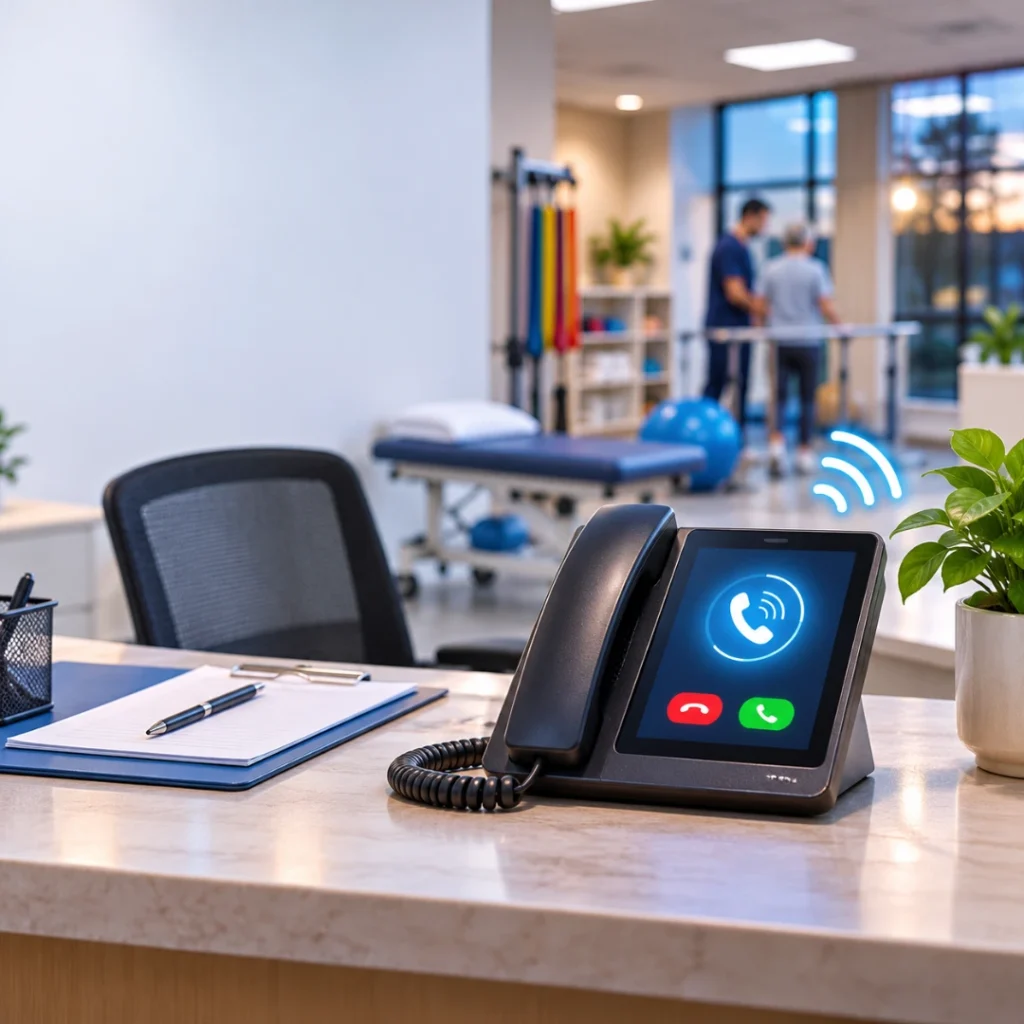
It’s 4:45 on a Thursday. One patient is checking out, another is checking in, and a third is asking about their next authorization. The phone rings, then rings again. By the time someone at the front desk can pick up, the caller has hung up.
Moments like this are why more clinics are looking at an AI receptionist for therapy practices: a tool that answers calls, handles routine questions, and passes clear messages to staff when no one can get to the phone.
Maybe that caller was an existing patient who needed to reschedule. Maybe it was a new patient with a referral in hand, now calling the next clinic on their list. Either way, the call went unanswered, and no one may ever know who it was. It’s one of the most common and least visible problems in outpatient therapy.
In short: an AI receptionist answers your clinic’s phone when your team can’t, handles routine questions from information you provide, and sends staff a clear message for everything else. It supports your front desk. It doesn’t replace your team or give clinical advice.
This article explains how phone coverage usually breaks down in therapy clinics, what an AI receptionist can and can’t do, what to look for in one, and how HelloNote is approaching the problem with its new Virtual Front Desk.
Key Takeaways
- An AI receptionist for therapy practices answers patient calls when staff are busy, unavailable, or after hours.
- It handles routine questions about hours, services, insurance and first-visit preparation, and passes clear messages to staff.
- It supports the front desk. It does not replace staff or give clinical advice, and urgent or clinical calls should go to a licensed clinician or emergency services.
- Callers may share protected health information, so clinics should confirm the vendor’s HIPAA safeguards and whether it signs a BAA.
- HelloNote’s Virtual Front Desk is built for PT, OT, SLP and chiropractic clinics and connects to HelloNote. Clinics can join the beta by booking a demo.
Table of Contents
Why Missed Calls Matter for Therapy Practices
Missed calls matter because the phone is still the main way many patients reach a therapy clinic. A missed call can mean a lost new patient, a delayed visit, or a scheduling gap that could have been filled. For therapy practices, the effects tend to show up in four places.
New patient intake
Patients often call after a physician referral, an injury, or a recommendation from a friend. Many are calling more than one clinic. If no one answers and the voicemail feels like a dead end, the patient may book with whoever picks up first.
Plan-of-care continuity
Therapy outcomes depend on consistent attendance. When an existing patient calls to reschedule and can’t get through, one missed visit can turn into a two-week gap. That gap can slow progress toward goals and make the next visit harder.
Front desk workload
Many calls are the same few questions: What are your hours? Do you take my insurance? What should I bring? What is your cancellation policy? Each call is short, but together they pull staff away from the patients standing in front of them.
After-hours calls
Patients often call when it suits them: before work, at lunch, in the evening, or on weekends. Most clinics aren’t staffed at those times, so those calls go to voicemail and wait until the next business day.
What Is an AI Receptionist for Therapy Practices?
An AI receptionist for therapy practices is a voice-based virtual receptionist that answers clinic calls, handles routine questions, collects caller information, and routes requests to staff.
It’s different from a voicemail box or a phone tree. Instead of asking callers to press 1 or leave a message, it can hold a short conversation: answer a question, ask a follow-up question, and confirm what the caller needs.
It’s also different from a general answering service. A tool built for therapy and rehab practices can be set up around the questions therapy patients actually ask, like what to wear to a first PT visit or whether a referral is needed.
How does an AI receptionist work?
Most AI phone answering tools follow a similar pattern:
- The clinic forwards some or all of its calls to the AI receptionist’s number.
- The AI greets the caller and asks how it can help.
- It answers questions using the information the clinic has set up.
- For requests that need staff, such as scheduling or insurance questions, it collects the details and passes a message along.
- Staff review the messages and follow up.
The quality of the experience depends heavily on step 3. An AI receptionist is only as accurate as the information it’s given, so setup and upkeep matter.
How Therapy Clinics Handle Phones Today
Most clinics rely on a mix of front desk staff, voicemail, and the occasional clinician picking up between patients. Each approach has trade-offs.
- Front desk staff give the best caller experience, but they are also handling check-ins, copays, scheduling and insurance work. When everything happens at once, the phone loses.
- Voicemail catches calls after hours, but many callers don’t leave a message. Those who do often leave incomplete details, which leads to phone tag.
- Clinicians answering phones keeps calls from ringing out, but it interrupts treatment time and documentation.
- Traditional answering services can cover after hours, but they usually take a basic message. They may not know the clinic’s services, policies or insurance details.
The common thread is that someone on staff still has to sort through messages the next morning, call people back, and re-enter details into the practice management system. That is where much of the administrative burden sits.
Benefits of an AI Receptionist for Therapy Clinics
The main benefit is coverage: more callers get a response, and more requests reach staff in a usable form. Other benefits follow from that.
- Fewer unanswered calls. Calls during busy stretches, lunch breaks, evenings and weekends get answered instead of ringing out.
- Fewer repeat questions for staff. Routine questions about hours, location, insurance and first-visit preparation can be handled without pulling someone off the desk.
- Cleaner messages. Instead of a rushed voicemail, staff get the caller’s name, phone number, date of birth and reason for calling.
- Less manual data entry. When the tool is connected to the clinic’s EMR or practice management system, caller details don’t have to be retyped from a sticky note.
- A more consistent caller experience. Every caller hears the same accurate information, in a tone the clinic chooses.
How an AI Receptionist Helps PT, OT, SLP and Chiropractic Clinics
Physical therapy, occupational therapy, speech-language pathology, chiropractic, and other rehab practices can use an AI receptionist when it is configured around their services, policies, and workflows.
Physical therapy clinics
Physical therapy clinics often see high call volume from new patients after injuries, surgeries or physician referrals. A typical after-hours call might come from someone who just had a knee replacement consult and wants to know whether the clinic accepts their insurance and what to wear to the first visit.
An AI receptionist can answer those questions from the clinic’s setup, collect the caller’s details and referral reason, and flag the call for a morning callback. Existing patients working on strength or gait goals can also leave reschedule requests without waiting until the office opens.
Occupational therapy clinics
OT clinics often serve patients with hand injuries, post-stroke needs or pediatric developmental concerns. Callers are frequently family members or caregivers.
For example, a parent might call on a Saturday to ask whether the clinic sees children for fine motor or sensory processing concerns. The AI receptionist can share which services the clinic offers, collect the parent’s contact details and reason for calling, and pass that to the team. A therapist or intake coordinator then handles the clinical conversation.
Speech-language pathology practices
SLP practices may get calls about articulation, language delays, stuttering, voice or swallowing. Many calls come from parents, or from adult children of older patients.
The AI receptionist can cover the logistics: hours, accepted insurance, cancellation policy and what to bring to an evaluation. Questions about whether therapy is appropriate, or about a specific swallowing concern, belong with a licensed SLP. In those cases, the AI’s job is to capture a clear message so the right person can call back.
Chiropractic clinics
Chiropractic offices often hear from people with new back or neck pain, patients coming in after a car accident or sports injury, and regular patients booking their next visit. Many of these callers want to know one thing first: how soon can I get in?
An AI receptionist can share the clinic’s hours, whether it’s taking new patients, which insurance it accepts, and what to expect at a first visit. It can collect the caller’s details and reason for calling so the team can follow up with an appointment. If the clinic sees auto injury cases, the message can note that, so staff know to ask about claim details when they call back. Questions about whether chiropractic care is right for the caller’s symptoms belong with the chiropractor.
Other rehab specialties
Massage therapy and multidisciplinary rehab clinics face many of the same issues. Any practice that relies on phone scheduling and answers the same questions every day can use this kind of coverage, as long as the setup reflects its own services and policies.
What to Know Before Using an AI Receptionist
An AI receptionist supports the front desk. It doesn’t replace clinical judgment or staff oversight, so practices should go in with clear expectations.
- It can’t give clinical advice. Questions about symptoms, pain, whether to come in, or whether therapy is right for someone need a licensed professional. Decide in advance how those calls should be routed.
- Urgent situations need a clear path. Callers describing a medical emergency should be directed to emergency services. Confirm how the tool handles these calls and what your greeting tells callers.
- Accuracy depends on your setup. If your hours, fees or insurance list change, the AI’s information must be updated too.
- Staff still own follow-up. Messages and requests are only useful if someone reviews them and calls patients back promptly.
- Privacy is the practice’s responsibility, too. Callers may share protected health information. Under HIPAA, a vendor that handles that information on your behalf is generally considered a business associate, which usually means a business associate agreement (BAA) is needed. Ask about the vendor’s safeguards and involve your compliance lead.
- Some callers prefer a person. Make it easy for callers to leave a message for staff.
What Should Therapy Practices Look for in an AI Receptionist?
When you compare virtual receptionists, look for:
- A setup built around therapy and rehab workflows, not a generic call script
- Integration with your EMR or practice management system
- The ability to recognize existing patients and avoid duplicate records
- Control over which calls it handles and when
- Clear call reports and callback lists for staff
- A voice and greeting that match your clinic
- A way to keep your existing phone number
- Clear answers about HIPAA safeguards and a business associate agreement
- A low-risk way to start, such as after-hours coverage only
The next section explains how HelloNote is approaching these points with its Virtual Front Desk.
HelloNote Virtual Front Desk: An AI Receptionist Built for Therapy Clinics
HelloNote is an EMR and practice management platform built by a licensed occupational therapist for physical therapy, occupational therapy, speech-language pathology and chiropractic practices. The HelloNote Virtual Front Desk is its new AI receptionist for therapy and rehab clinics, and it’s currently open to practices through a beta program.
It answers your main line in a natural, conversational voice. It works from the hours, services, fees, insurance details and policies your practice provides, and it connects to your HelloNote account.
What the Virtual Front Desk does
- Answers calls from new and existing patients, including after hours, on weekends, and when the front desk is busy or unstaffed.
- Handles common questions about hours, location, services, accepted insurance, cancellation policy and what to bring to a first visit.
- Helps with scheduling and rescheduling requests, so patients aren’t left waiting until the office opens to reach you.
- Collects the details your team needs: name, phone number, date of birth, reason for the visit and insurance information.
- Takes messages when no one is available and emails your team a report of calls and callback requests.
- Sounds like your practice, with a receptionist name, greeting and tone you choose.
How it fits into the HelloNote workflow
The main difference from a standalone answering service is the connection to HelloNote. The Virtual Front Desk can create new patients in HelloNote and recognize existing patients by phone number. That helps avoid duplicate records and saves staff from retyping caller details.
In practice, a morning might look like this: the front desk opens the emailed call report, sees two new patient inquiries and three reschedule requests from the night before, and finds the new patients already in HelloNote. Staff then spend their time calling patients back instead of sorting through voicemails.
How to join the Virtual Front Desk beta
The Virtual Front Desk beta is still open. To take part, book a demo with the HelloNote team. You’ll see how it works and talk through whether it’s a good fit for your practice. Here is how the beta works:
- It’s free during the beta period.
- You start with one location. Multi-location practices choose one site to pilot.
- HelloNote sets it up with you. A short call and a simple setup form cover your hours, services, fees, insurance and policies.
- You keep your current phone number. You receive a Virtual Front Desk number and forward calls to it, either all the time or just on evenings and weekends. HelloNote will help you work out the setup with your phone provider.
- You decide what it handles. Many practices start with after-hours calls and expand once they’re comfortable.
- HelloNote asks for your feedback, including a 10-minute conversation at the end of the beta.
Frequently Asked Questions About AI Receptionists for Therapy Practices
What is an AI receptionist for therapy practices?
An AI receptionist for therapy practices is a voice-based virtual receptionist that answers a clinic's phone calls in a conversational way. It answers routine questions using information the clinic provides, such as hours, services, accepted insurance and policies, and passes caller details and requests to staff.
Can an AI receptionist schedule appointments for my clinic?
An AI receptionist can collect scheduling and rescheduling requests at any hour and pass them to your team. HelloNote's Virtual Front Desk helps with scheduling and rescheduling requests, so patients don't have to wait until the office opens to reach your clinic.
Can an AI receptionist give medical or clinical advice?
No. An AI receptionist should not give clinical advice. Questions about symptoms, pain, or whether therapy is right for someone need a licensed clinician, so the AI’s job is to take a clear message and route it to the right person. Callers describing a medical emergency should be directed to emergency services.
Is an AI receptionist HIPAA compliant?
It depends on the vendor and how the tool is set up. Callers may share protected health information, so ask any vendor how call data is stored and protected and whether it will sign a business associate agreement (BAA), and involve your compliance lead before you go live.
Do I need to change my clinic's phone number to use an AI receptionist?
No. With HelloNote's Virtual Front Desk, you keep your current phone number. You receive a Virtual Front Desk number and forward calls to it, either all the time or only on evenings and weekends.
How do I join the HelloNote Virtual Front Desk beta?
Book a demo with the HelloNote team. The beta is still open, it's free during the beta period, and it starts with one location. HelloNote sets it up with you through a short call and a simple setup form.
Stop Letting Patient Calls Go Unanswered
HelloNote’s Virtual Front Desk helps therapy and rehab practices answer calls, handle routine questions, and capture patient details when your team is busy or after hours.
No credit card required • HIPAA-compliant platform • Built for PT, OT, SLP & Chiropractic

AboutDmitry Shevchenko, OTR/L
Dmitry Shevchenko, OTR/L is a licensed Occupational Therapist
and the COO of HelloNote EMR. With firsthand experience as both
a practicing clinician and a multi-location clinic operator,
Dmitry brings a unique operational perspective to HelloNote's
product development — having navigated the exact payroll,
compliance, and inventory challenges this platform is built
to solve.