

















Black Friday & Cyber Monday Save 15% on Annual Plans Book a Demo Nov 25 to Nov 30. Limited Time Offer

You've found a hidden discount!

HN Unlock Layer 1
HN Unlock Layer 2
HN Unlock Layer 3
HN Unlock Layer 4
HN Unlock Layer 5
  • 00Hours
  • 00Minutes
  • 00Seconds

Category: article

Top 6 Advantages of Using an EMR Software in Your Therapy Practice

EMR software simplifies therapy practice management by streamlining documentation, enhancing patient care, ensuring billing compliance, and providing easy accessibility. With features like personalized care plans, secure cloud storage, and patient portals, EMR software helps physical, occupational, and speech therapists deliver effective care while managing their practices efficiently.

A computer screen displaying EMR software, showcasing patient records and streamlined documentation tools for therapy practices.

Starting a physical, occupational, or speech therapy practice comes with unique challenges, one of which is efficiently managing patient care and administrative tasks. A reliable electronic medical record (EMR) software is an essential tool to help you grow and streamline your practice. Gone are the days of paper records; today, EMR systems provide numerous benefits for both clinics and patients. Here are six key advantages of using EMR software in your therapy practice:

1. Personalized Patient Care

An EMR system allows therapists to access detailed patient records instantly, making it easier to understand medical histories and develop comprehensive treatment plans. This ensures that care is tailored to the individual needs of each patient. By having all relevant information in one place, therapists can provide well-rounded and effective interventions.

For practices with multiple clinicians, EMR software enhances collaboration by allowing seamless information sharing, ensuring continuity of care even when therapists are unavailable.

2. Streamlined Documentation

EMR software centralizes all patient notes and documentation in one secure location, making it easier to maintain accurate records. This feature is especially useful when a therapist is on leave, as other clinicians can continue providing goal-oriented treatments without interruptions.

By simplifying the documentation process, EMR systems help therapists save time while ensuring compliance with industry standards. Accurate and organized records also improve coordination among team members and facilitate better patient outcomes.

3. Insurance Billing Compliance

Billing can be one of the most complex aspects of running a therapy practice, especially when dealing with insurance claims. EMR systems, like HelloNote, simplify the process by automating claim submissions and flagging missing information or incorrect codes.

With built-in features for adding necessary modifiers and ensuring accuracy, an EMR system significantly reduces claim rejections and denials. This not only saves time but also ensures consistent cash flow for your practice.

4. Enhanced Patient Engagement with Portals

EMR systems store patient records securely in the cloud, allowing therapists to access data from virtually any location with an internet connection. Whether you’re working from home, at a clinic, or on the go, you can easily retrieve and update records without disruption.

For instance, if you need to finalize a treatment note while traveling, you can quickly log into the EMR system and complete the task. This flexibility eliminates barriers to productivity and ensures that your practice runs smoothly, no matter where you are.

5. Accessibility Anytime, Anywhere

EMR systems store patient records securely in the cloud, allowing therapists to access data from virtually any location with an internet connection. Whether you’re working from home, at a clinic, or on the go, you can easily retrieve and update records without disruption.

For instance, if you need to finalize a treatment note while traveling, you can quickly log into the EMR system and complete the task. This flexibility eliminates barriers to productivity and ensures that your practice runs smoothly, no matter where you are.

6. Environmentally Friendly and Cost-Effective

Switching to EMR software supports eco-friendly practices by reducing the need for paper documentation. All patient information, including intake forms, care plans, and exercise handouts, can be securely uploaded and stored digitally.

By going green, your clinic not only contributes to sustainability but also saves on expenses like paper, ink, and storage space. Additionally, digital storage reduces the time and effort required for manual filing and retrieval, freeing up staff for more critical tasks.

Why EMR Software Is Essential for Your Practice

EMR software is more than just a tool; it’s a cornerstone for improving patient care and optimizing administrative processes. With features that centralize documentation, simplify billing, and enhance accessibility, EMR systems enable therapists to focus on what matters most—helping their patients achieve their goals.

For physical, occupational, and speech therapy practices, an EMR solution like HelloNote offers a comprehensive platform for managing patient records, scheduling, billing, and more. Whether you’re a new clinic owner or transitioning from paper records, now is the time to invest in an EMR system that supports your practice’s growth and success.


Proven Techniques to Lower Your Clinic’s Cancellation Rate

Struggling with high cancellation rates in your therapy clinic? This article offers actionable tips to help reduce no-shows and cancellations. From patient education and collaborative treatment plans to effective front desk strategies like reminders and clear cancellation policies, you’ll find practical solutions to keep your clinic’s schedule full and your patients engaged in their recovery.

Effective Techniques to Lower Cancellation Rate in Your Therapy Clinic

In the therapy world, cancellations are inevitable, especially in outpatient physical therapy clinics. Cancellations can interrupt a patient’s treatment plan and lead to regression if a patient is canceling too often. There are several techniques that can be utilized, by both the therapist and the front desk, to help decrease the number of cancellations your clinic is experiencing. If your practice is experiencing a high volume of cancellations, here are a few techniques to try:

Lower your cancellation rate with these 7 tips!

  • Educate your Patient on the Importance of Attending Therapy
    First and foremost, patient education on the plan of care and length of treatment should be discussed in depth at the initial visit. In conjunction, therapists should also emphasize the importance of patient attendance to remain on track with their individualized treatment plan and stay on the expected course of recovery at each follow-up session. Explaining each exercise and identifying the patient’s progress at follow-up sessions can also help the patient stay motivated and continue to be invested in their recovery plan.

Additional Insight: According to research, patients who understand the long-term benefits of staying committed to therapy tend to have higher engagement levels. Take the time to explain how consistent attendance directly impacts their progress, recovery speed, and overall health. Use clear language, and provide a visual timeline of the patient’s treatment journey.

  • Collaboration is Key
    Oftentimes, the patients who continue attending their regularly scheduled therapy sessions are the ones who are directly involved in their treatment plan and have collaboratively set goals with their therapist. Allowing the patient to give input into the goals they want to accomplish by the end of therapy provides them the opportunity to be more invested in their individualized care plan. When a patient is invested and buys into their recovery, the likelihood of the patient canceling decreases.

Additional Insight: Consider using a goal-setting framework such as SMART goals (Specific, Measurable, Achievable, Relevant, Time-bound). Encouraging patients to visually track their progress in the clinic can foster ownership of their recovery journey. Let them know their involvement in the process makes a tangible difference.

  • Create a Fun, Welcoming, Encouraging, and Positive Environment
    Give praise, high fives, and celebrate accomplishments, whether a patient progresses with an exercise or achieves one of their goals! Building an interpersonal relationship and getting to know your patients on a more personal level has a much greater impact than you may think! The more invested you are in your patient’s recovery, the more invested the patient is likely to be in showing up to their therapy appointments.

Additional Insight: Clinical research has shown that a positive, supportive environment improves patient outcomes. When patients feel like they are part of a supportive community, they are more likely to be committed to the process. Take a few extra minutes to chat and engage on a personal level, which will build trust and help patients see you as a partner in their recovery.

  • Continually Progress the Patient’s Treatment Plan
    Another good way to keep the patient engaged and invested in their therapy is to continually progress the patient’s treatment plan. As the patient progresses and continues to be able to do more activities and exercises, the therapist should adjust the treatment plan so that the patient is always being challenged. By keeping the treatment session fresh and interesting, the patient is more likely to show up for their session and less likely to attempt to finish up their plan of care at home. If the therapist is not providing cues or does not frequently switch up the patient’s exercises, then what’s to prevent the patient from canceling and just completing their exercises at the gym or at home?

Additional Insight: Progressive challenges are key to keeping patients motivated. Research indicates that patients are more likely to stick with a program that progressively pushes their boundaries while remaining attainable. Use a step-by-step approach to show the patient their improvements. Celebrate each milestone, no matter how small, to keep them engaged.

Techniques for the Front Desk:

  • Create and Enforce a Cancellation Policy
    If you don’t have one already and you are seeing a large number of cancellations, enforcing a cancellation policy may be the way to go. It might help to charge a fee if a patient cancels less than 24 hours prior to their appointment time. Explaining and emphasizing the cancellation policy at the patient’s first appointment is crucial to ensure there is no misunderstanding.

Additional Insight: Be transparent and empathetic when enforcing the cancellation policy. Some clinics have found that automated reminders combined with the cancellation policy can significantly decrease no-shows. Ensure your front desk team is consistently reinforcing the policy and that patients understand the reasoning behind it – namely, to maintain high-quality care and service.

  • Remind Patients by Phone or Email
    Many patients often forget about their appointments, especially if they are only attending therapy once or twice a week. Therefore, sending out an appointment reminder 24-48 hours prior to the patient’s appointment may help reduce cancellation rates. This also provides the patient with an adequate amount of time to cancel and reschedule if an emergency or conflict of interest has occurred. Be sure to check with each patient at the first appointment to determine which communication method works best for them!

Additional Insight: Automated SMS and email reminders have proven to be highly effective in reducing cancellations. Research suggests that patients are more likely to show up when they receive a personalized reminder that includes details such as the therapist’s name, session goals, and any preparation needed for the session.

  • Provide Wallet-Sized Appointment Cards
    While it may seem outdated, providing wallet-sized appointment cards—especially for those patients who are not as tech-savvy—can do wonders. The appointment card should have the date and time along with the clinic’s phone number and address on it, so that should the patient need to reschedule, they can easily contact the clinic.

Additional Insight: For patients who prefer physical reminders, a wallet-sized appointment card can also be a great conversation starter, and can increase engagement. It is essential to align this with a digital confirmation system that provides patients with multiple channels for managing their appointments.

Final Note

Cancellations will always be present in therapy clinics, but by implementing the above techniques and improving the soft skills of not only your front desk workers but your therapists as well, you will likely see a decrease in your clinic’s cancellation rate and overall improved patient outcomes. Just remember, as Dr. Francis Peabody once said, “The secret of the care of the patient is caring for the patient.”

HelloNote would love to help you create, grow, and scale your therapy business! Sign up for a free demonstration to see all the features we have to help you at Hellonote.com.

Reduce Patient Cancellations with Automated Appointment Reminders

Therapist uses automated appointment reminders on phone to help reduce patient cancellations

As healthcare professionals, particularly physical and occupational therapists, we’ve all experienced the frustration of patient cancellations and no-shows. A simple and effective solution to reduce patient cancellations is using appointment reminders. When patients are reminded of their appointments, they are more likely to show up, allowing for continuous care and reducing unnecessary disruptions in your day.

While cancellations are sometimes unavoidable—due to family emergencies or other conflicting events—many patients cancel or miss their appointments simply because they forgot. Did you know that approximately 81% of missed appointments are due to forgetfulness or miscommunication? (Optional: Add source if available) This brings up the important question: how can we reduce patient cancellations and no-shows from happening so frequently? The answer is simple: leverage automated appointment reminders, often via SMS through your EMR system, to communicate effectively with your patients! Implementing these automated appointment reminders can have several positive benefits for your patients and your clinic as a whole.

Here are 3 key ways automated appointment reminders help your therapy practice:

Improved Patient Outcomes with Appointment Reminders

First and foremost, as healthcare providers, our primary goal is to help patients achieve or regain their quality of life. Isn’t that why most physical and occupational therapists go into this field—to help people feel better and get back to doing what they love?

Several studies have shown that usingautomated appointment reminders via SMS can significantly improve patient outcomes. Why? Because when patients are reminded about their upcoming therapy appointments, they are more likely to attend. This ensures consistent care without any disruptions, which directly supports better results as treatment plans are followed more closely.

How Do Appointment Reminders Reduce Cancellation and No-Show Rates?

This might seem intuitive, but sending automated appointment reminders places their therapy appointments at the forefront of their minds. By providing these reminders, you not only remind patients about their upcoming session but also give them time to cancel or reschedule if an emergency has arisen.

Studies show that sending automated appointment reminders one to two days before a scheduled appointment can reduce cancellation and no-show rates by as much as 16% . This proactive communication helps patients prioritize their healthcare and ensures they make it to their appointments on time.

Save Time and Money with Automated Appointment Reminders

In outpatient physical therapy clinics, front desk staff often juggle multiple responsibilities—insurance verifications, patient intake, scheduling, and answering patient inquiries. With so many tasks at hand, having to manually remind patients about their appointments can become overwhelming and may even lead to overtime.

Here’s where automated appointment reminders come in. By setting up automated appointment reminders, your front desk staff can focus on more critical tasks. This system reduces the burden of making reminder calls and eliminates the need for overtime, saving your clinic both time and money. HelloNote’s practice management software includes a fully automated SMS appointment reminder system, simplifying this process. With Hellonote appointment reminders, all you need is the patient’s cell phone number and the time you want the reminder sent, then click schedule, and you’re all set. It’s that simple!

Important Reminder About SMS Appointment Reminders

While appointment reminders via SMS can be incredibly effective, it’s important to remember that standard texting is not inherently (Top HIPAA Compliance Essentials for a Successful Practice) without specific safeguards. Text messages can be stored insecurely, and there’s always a risk of a patient losing their phone or having it stolen. Therefore, never send Protected Health Information (PHI) via standard SMS unless you are certain appropriate safeguards are in place or patient consent is properly managed.

That said, automated appointment reminders, when used appropriately can significantly improve patient outcomes, reduce patient cancellation rates, and lower operational costs, leading to increased revenue for your clinic!

Frequently Asked Questions about Appointment Reminders

Q: When is the best time to send appointment reminders?
A: Sending reminders 1 to 2 days before the scheduled appointment is often cited as most effective, as mentioned in studies showing significant reductions in no-shows. This gives patients adequate notice without being too far in advance that they forget again.

Q: How much do no-shows actually cost a physical therapy practice?
A: Costs vary, but no-shows lead to lost revenue from the missed appointment slot, wasted staff time, and disrupted schedules. Over time, this can add up to thousands of dollars annually, making efforts to reduce patient cancellations financially crucial.

Q: Are SMS appointment reminders HIPAA compliant?
A: Standard SMS messaging is not inherently HIPAA compliant due to security risks. However, appointment reminders can be used compliantly if they only contain basic information and are sent using secure platforms or with proper patient consent. Platforms like HelloNote (How to use the Chat Feature in HelloNote EMR I Tutorial) often have features built to help practices meet compliance needs. Always consult HIPAA guidelines or legal counsel for specifics.

Conclusion

In conclusion, automated appointment reminders are an essential tool for improving patient care and minimizing disruptions in your clinic. By implementing these reminders, you can significantly reduce patient cancellations and no-shows, improve patient satisfaction, and decrease your clinic’s operational costs. Start using automated appointment reminders today to enhance the efficiency of your clinic and ensure your patients receive the care they need.

To learn more about how Hellonote appointment reminders can help reduce patient cancellations and improve your clinic’s efficiency, reach out to our team at HelloNote and schedule a free walkthrough of our system.

Top 5 Metrics in a Successful Physical Therapy Clinic

Managing a physical therapy clinic goes beyond providing quality care—it requires a sharp focus on business metrics that drive success. To ensure growth and sustainability, clinic owners must track and analyze key performance indicators. This article outlines the top five business metrics that are crucial for optimizing operations, improving patient outcomes, and increasing revenue in a physical therapy clinic.

Physical therapy clinic therapist reviewing business metrics to improve performance.

Running a physical therapy clinic requires a lot of hard work, and while you may be an exceptional therapist, unless you’re keeping track of key business metrics and completing monthly, quarterly, and annual reports, your practice may struggle to succeed. Since business reporting isn’t emphasized in many physical therapy programs, here are the critical metrics and reports to track in your clinic:

1. Clinical Productivity

Why It Matters: Clinical productivity is often considered the most important metric measured each week in a physical therapy clinic. By calculating the clinical productivity for each therapist, you can assess their efficiency and pinpoint areas for improvement in time management. Tracking productivity within an EMR system like HelloNote allows you to see each therapist’s performance at the click of a button, ensuring you’re operating as efficiently as possible. If you’re not using an EMR system, productivity is determined by the number of billable activities completed by each therapist divided by the hours worked during that week.

2. Net Revenue Per Month

Why It Matters: Net revenue represents the actual money collected by your physical therapy clinic, not just the amount billed. Tracking this metric enables you to evaluate how effective your billing processes are and predict future revenues. It also provides insight into your clinic’s growth and any unexpected fluctuations that may arise. HelloNote allows you to easily analyze your clinic’s monthly, quarterly, and annual revenue, offering a comprehensive view of your clinic’s financial performance.

3. Cancellation Percentage

Why It Matters: Cancellations and no-shows have a significant impact on the overall productivity of your physical therapy clinic. By tracking your clinic’s cancellation percentage daily, weekly, and monthly, you can identify trends and take action to reduce them. A good cancellation rate to aim for is under 10%, but if it’s higher, it’s essential to dig deeper into the reasons behind the cancellations and take measures to address them.

4. Referral Metrics

Why It Matters: In a private practice physical therapy clinic, referrals are crucial for business growth. Tracking referral metrics can help you determine which marketing efforts are yielding the best results. Start by tracking where your referrals are coming from, and also measure how many of those referrals convert into actual patients. The higher the conversion rate, the better your clinic’s overall financial performance will be.

5. Billing Metrics

Why It Matters: Billing can often be a tedious and complex process in physical therapy clinics due to insurance requirements, which can lead to claim denials. Keeping track of billing metrics such as Days in Receivable Outstanding (DRO) and Denial Rate will help you assess the efficiency of your clinic’s billing practices. A good DRO is under 35 days, and a high denial rate indicates areas where your documentation may need improvement to avoid delays in payment.

Managing a physical therapy clinic involves more than just providing great care; it requires actively tracking and analyzing important business metrics. By leveraging a robust EMR system like HelloNote, you can streamline reporting and ensure that you’re on top of the numbers that matter most.

To learn more about how HelloNote can help streamline your clinic’s business metrics, reach out to our team for a free walkthrough: HelloNote 

Must Have EMR features for an Outpatient Therapy Clinic

Selecting the right EMR features software is crucial for running a successful therapy practice. This article highlights the essential features therapists need in an EMR system, including ease of use, HIPAA compliance, patient reminders, built-in billing functionality, and reporting tools. Learn how the right EMR, like HelloNote, can streamline operations, improve patient care, and enhance productivity in your outpatient clinic.

Therapist holding a tablet displaying digital medical records, symbolizing the efficiency of EMR features software in therapy practices

For those therapists who are considering starting or who have just started their own outpatient practice, one of the most important features of running a successful clinic is having a PT documentation software that stands out from the rest. However, with so many therapist notes software out there right now, how do you decide which one is best for your practice?

Let’s discuss the most important EMR features you should be looking for, specifically as a therapist, when purchasing a PT EMR system to ensure you have a software that works for you.

1. EMR designed specifically for therapists:

To start, the most important feature of a physical therapy electronic medical records system is that it was created specifically for therapists and if it was designed by other therapists, then even better. Why? Simple, because when you purchase an EMR software that was created by a fellow therapist, you are ensuring the physical therapy software will have all of the specific features you need as a therapist, since it was created by a fellow colleague, which will make your job that much easier. Did you know HelloNote was built by a team of therapists, meaning their EMR system has the needs and wants of therapists at the forefront.

2. EMR that is simple yet robust:

Another key feature of selecting an appropriate EMR for your clinic is ease of use and HIPAA compliance. The last thing you want when starting a practice is having to take a bunch of time to learn a complex documentation system, time which could be better spent marketing or treating patients. By selecting a therapist notes software that is simple and easy to use, not only will it be easy to learn, but you can also focus on what matters most during sessions…your patients. HIPAA compliance is another consideration when selecting a physical therapy documentation software because as healthcare providers, HIPAA must be followed at all times to protect the privacy of the patients. If you are not following HIPAA, you are setting your practice up for all kinds of legal issues. HelloNote is not only easy to use and self-explanatory, but it also has templates built-in for different notes, to improve efficiency and efficacy during your work day.

3. EMR with built in patient reminders:

If you have worked in an outpatient therapy setting, then there is a good chance you have encountered patients who fall under the “no call, no show” category with the number one reason being they missed their appointment because they forgot about it. Not only is that a disservice for the patient, but it also decreases your productivity and prevents you from potentially seeing a different patient during that time. The simplest way to reduce the number of “no call, no shows” you experience at your outpatient clinic is to have an EMR system that sends out appointment reminders after a patient has scheduled his/her next appointment. That way, even if the patient forgets, he/she receives a friendly reminder 1-2 days prior to the upcoming appointment and if the patient is unable to make it, he/she can cancel instead of just not showing up.

4. EMR with built in billing functionality:

Depending on the type of outpatient practice you have and whether you accept insurance or plan to be cash-based, another crucial documentation software feature is the billing capabilities. As a physical therapist, you do not want to have to worry about a claim not being submitted or a claim being submitted incorrectly because it is missing a modifier, which will ultimately cause a delay in when your practice is reimbursed. To avoid this, seek out a physical therapy documentation software that has modifiers and insurance coding already built into it. This way, in case you forget to add a –59 modifier to a Medicare claim, your EMR will prompt you to add it or at least re-check what you entered. HelloNote not only has these features already built in to their system, but they also have a one-click billing and claim generation to make billing as easy as possible.

5. EMR with reporting functionality:

Last but not least, you want to ensure your therapist notes software can run reports so you can see how the clinic is doing, productivity-wise. From tracking the number of patients being seen each day or week, to the number of billing units per patient, having the ability to run reports is crucial to identifying areas of weakness and ultimately, being able to run a successful practice. If your EMR does not already have a built-in capability of generating reports, not only will you waste time trying to put your own reports together, but those reports might not be as accurate, due to the possibility of manmade error. EMR software’s, such as HelloNote, have the ability to create custom reports, both numerically and with the use of graphs/charts, so that you can plot data and track productivity with minimal to no effort.

Selecting an appropriate PT documentation software can be difficult and challenging but buying the software that is best for you and fits your needs from the beginning, will save you a lot of time and hassle in the long run. HelloNote is a very robust EMR software made by and for rehabilitation therapists and not only has all of the above features, but so much more which you can learn about on Hellonote.

The Importance of Having a Telehealth Feature in your PT EMR Software

This article highlights the role of telehealth in modern therapy practices and its benefits, including improved patient satisfaction, flexibility, and accessibility. It provides a guide to delivering effective virtual therapy sessions and explains the importance of EMR software with built-in, HIPAA-compliant telehealth features. Tools like HelloNote help streamline operations, enhance patient care, and ensure compliance, keeping therapy clinics competitive in the evolving healthcare environment.

A computer screen displaying the word "Telehealth" with a digital, futuristic design background symbolizing virtual healthcare

In this day and age, the virtual world and online businesses are absolutely booming. Since the pandemic began in early 2020, if people have the option to stay home vs going out, many are choosing to stay home. For therapy practices, this has required a pivot in the way sessions are conducted and held. Telehealth is here to stay and this article will walk you through why you are missing out a huge opportunity within your practice if you have not yet pivoted to add a telehealth treatment service to your therapy business.

When patients started having increased fears of being in-person at clinics, due to increased risk of exposure to COVID and social distancing requirements, many practices saw a drop in their caseload. To combat this decline, several therapy clinics began heavily relying on telehealth for continued patient care and services. Since telehealth was not widely utilized prior to this, unless in very specific instances, many practices scrambled to find a way to provide these services while still abiding by HIPAA. While our country begins to adapt to its new normal, it appears telehealth is a treatment option which will be sticking around for the foreseeable future, especially when it comes to physical therapy.

Several patients might not understand what telehealth therapy is or how it works so patient education will play a crucial role in portraying how effective telehealth therapy can be to ease any concerns the patient may have. Many patients will likely wonder how telehealth therapy appointments, through a computer, are going to help their condition improve, especially since physical therapy has been thought of as a very “hands-on” profession for several years.

One of the best ways to ease the patients’ concerns is to provide them with research as to the benefits of telehealth and how satisfied previous telehealth physical therapy patients have been. Based on a recent research article from The Musculoskeletal Journal of Hospital for Special Surgery, telehealth for outpatient physical therapy clinics has shown to be successful. After data was collected and analyzed, there did not appear to be a statistical difference between in-person and telehealth patient satisfaction, meaning patients have been just as satisfied with their results from telehealth physical therapy appointments, as they have been with in-person care. By providing thorough patient education, re-assurance, and research articles, patients are likely to have decreased apprehension or fears about the effectiveness of telehealth therapy.

Why patients choose tele physical therapy over in patient care:                                                                                                                               There are many reasons why patients may choose telehealth over in-patient care.

  1. One reason is less stress on the patient’s end, as the patient does not have to worry about leaving work at a set time or running late due to being stuck in traffic. 
  2. Another reason is increased flexibility of scheduling appointments as patients can attend their physical therapy session from wherever they are, even if they are just on their lunch break at work. 
  3. A third reason why telehealth is often favored over in-person appointments is the benefit of saving money on transportation costs as patients do not have to worry about paying for gas, parking, etc.
  4. Finally, telehealth appointments decrease the chance of contracting an illness as patients are no longer having to sit in a crowded waiting room for any period of time.

As the popularity of telehealth continues to increase and trend upwards, both at in-person clinics and online therapy businesses, it is important to have a PT EMR system which allows for increased ease and access to telehealth appointments.

Quick checklist of how to provide tele therapy services:

To successfully provide telehealth services to patients, you want to make sure your therapy note software has the capabilities and functionalities to host a telehealth appointment.

  1. HIPAA Compliance Software such as HelloNote: Apart from having telehealth capabilities already integrated into the software, the single most important feature is that telehealth appointments can be completed securely. If you are not hosting your telehealth sessions through a secure EMR system, then you are not in compliance with HIPAA which can result in several legal issues, especially if the patient’s information is leaked or the session is hacked. Before offering telehealth appointments to your patients, be sure you have the correct capabilities and access to host this treatment option within your EMR. One PT documentation software that has an integrated and secure telehealth feature built into its platform, to maintain HIPAA compliance and prevent any worries or concerns on your end, is HelloNote.
  2. You need to have professional lighting and video capture via a webcam.
  3. Make sure you can find a quiet and clean room to perform your tele-therapy session in.

And it’s really as easy as that!

Telehealth therapy appointments are likely to continue increasing in popularity, based off of trends in 2020. If you are just starting or have recently begun a private practice outpatient therapy clinic, then make sure you purchase a PT documentation software with telehealth capabilities built in, otherwise you will miss out on several potential patients.

Medicare Part A and Part B Deductibles for 2021

Medicare Part A and B deductibles discussion for 2021, including coverage details, patient responsibilities, and how out-of-pocket costs affect physical therapy services.

Understanding Medicare Part A and B deductibles for 2021 and their impact on physical therapy services

It seems as if therapy services are an ever-evolving world. Not only is there constantly new research and studies out there proving which exercises you should and should not be having patients perform based on their injury or diagnosis, but it appears as if every time we turn around, there is some new insurance change. This year is no different in that patients who have Medicare insurance, either Part A or Part B, have a new deductible they must meet before their coinsurance will begin.

Before treating your patients, it is extremely important they understand their benefits and why physical, occupational, or speech therapy is important for them, especially as their deductible increases. When a deductible increases, it means the patient is having to pay more out-of-pocket costs until their deductible has been met. Given the current state of the economy and everything going on in the world, paying more out-of-pocket might be a hardship for some patients, so ensuring patients understand what they are responsible for is crucial.

Medicare Part A

Medicare insurance has several different parts to it. The main ones we tend to focus on for therapy services are Part A and Part B. The reason for this is because Part A covers hospital, home health services, hospice, and skilled nursing stays while Part B covers outpatient physical therapy services.

In 2021, the deductible for Part A services is $1,484, which is an increase of $76 from $1,408 in 2020. This amount covers the patients’ share of costs for the first 60 days of a Medicare-covered inpatient hospital stay during a benefit period. In addition to the $1,484 deductible, the patient will also be responsible for coinsurance charges, depending on how long and where the patient is staying.

The nice thing about Medicare Part A is that 100% of the costs are covered for up to 60 days in the hospital and 20 days in a skilled nursing facility. However, when patients require a longer stay, the costs can quickly add up. If a patient stays more than 60 days in the hospital, from day 61 to day 90, the patient will be responsible for paying $371 coinsurance each day. If a patient has to stay longer than 90 days, starting on day 91, the patient is responsible for paying $742 coinsurance per day.

If the patient is transferred to a skilled nursing facility for more long-term care, the patient can stay in the SNF for 20 days before having to pay coinsurance. Beginning on day 21 of the individual’s stay, the patient is responsible for paying $185.50 per day. While there are benefits to having Medicare Part A, hospitals and skilled nursing facilities can be quite expensive.

Medicare Part B

Focusing on Medicare Part B, which covers outpatient physical therapy services, the 2020 deductible was $198, just under the $200 mark. For 2021, the annual deductible for Medicare Part B has increased by $5 and is now $203. Once the $203 deductible is met, patients typically pay 20% of the Medicare-approved amount for most doctor services, including all therapy services.

In more layman’s terms, once a patient has had enough doctor and/or therapy visits in 2021 to where they have paid a total of $203 out-of-pocket, Medicare will cover 80% of the cost of their remaining services for the year. Once the Medicare benefits kick in, the cost of therapy services will reduce significantly, and patients will be paying far less out-of-pocket.

The Threshold for Outpatient Therapy

Another unique change with Medicare is that there is no longer a cap on outpatient therapy, speech therapy, or occupational therapy services. Instead, the cap has been renamed as a “threshold,” and if the therapist can prove that continued care is medically necessary through their documentation, and Medicare approves, then you, as a therapist, can go over the threshold for that patient.

The 2021 thresholds for outpatient physical therapy and speech-language pathology, combined, is $2,080. The threshold for occupational therapy is also $2,080.

Importance of Patient Education

Insurance itself can be a very slippery slope, and many patients do not fully understand their benefits or what they mean, which is why your physical therapy office plays an important role in ensuring each patient understands their specific benefits. As a physical therapist, depending on someone’s insurance, it might come down to you placing a greater emphasis on patient education during the initial evaluation so that your patients will continue to show up, especially if the patient has not met their Medicare Part B deductible for the year.

While insurance tends to not be a highlight of being a physical therapist, it does play a vital role in making sure our patients are receiving the correct amount and level of care they deserve

Here is an update about Medicare Part A and Part B.

Top 4 Christmas Gift Ideas for PT Clinics and Business Owners

This article presents thoughtful Christmas gift ideas tailored for physical therapy clinics. It highlights practical options such as webcams, microphones, EMR software subscriptions, and educational posters/models to help enhance clinic operations and patient care. These suggestions are perfect for anyone seeking meaningful and useful gifts this holiday season.

A physical therapist handing a wrapped gift to a patient in a clinic setting, symbolizing thoughtful Christmas gift ideas for therapy practices.

As Christmas and the end of the year approach, you might know someone who recently opened a physical therapy (PT) business, or you could be a patient searching for the perfect gift for the clinic you attend. Selecting a thoughtful gift for a PT clinic can be challenging, but at HelloNote, we’ve made it easier by compiling four practical and meaningful gift ideas. These items not only show appreciation but also enhance clinic operations and patient care for years to come.

1. A High-Quality Webcam for Telehealth

One of the most practical Christmas gift ideas for a physical therapy clinic is a reliable webcam. Telehealth services have grown exponentially, especially after the events of 2020, and having the right equipment is essential. A high-quality webcam allows therapists to offer clear demonstrations of exercises and provide effective cueing and feedback during virtual sessions.

By gifting a top-tier webcam, you’re not only enhancing the clinic’s telehealth capabilities but also ensuring that patients receive the best care during their online appointments. Look for webcams with HD resolution and good low-light performance for optimal results.

2. A Professional Microphone for Clear Communication

Clear communication is crucial during telehealth appointments and online webinars. That’s why a professional microphone is another excellent Christmas gift idea for physical therapy clinics. Therapists often spend considerable time explaining exercises and providing detailed education to patients during virtual sessions.

A good microphone ensures that every word is heard clearly, enhancing the overall patient experience. It’s also a valuable tool for clinics hosting webinars or live classes on topics like ergonomics or fitness tips for remote workers.

3. EMR Software Subscription

Every physical therapy clinic needs efficient electronic medical record (EMR) software to streamline documentation, scheduling, billing, and telehealth services. If you’re looking for a game-changing Christmas gift, consider contributing to an EMR subscription.

HelloNote, for instance, is an excellent EMR option that offers features like HIPAA-compliant telehealth, patient scheduling, billing solutions, and documentation tools. Gifting an EMR subscription not only supports clinic operations but also simplifies day-to-day management for the business owner.

4. Informational Posters and Models

For visual learners, understanding complex medical diagnoses and treatments is much easier with visual aids. Posters of the human anatomy, joint models, and other educational tools are thoughtful Christmas gift ideas that can be used during patient consultations and treatments.

Consider gifting a detailed spine model, muscle group charts, or nerve structure illustrations. These items are not only practical but also add a professional touch to the clinic’s environment.

Why Practical Gifts Matter for PT Clinics

Choosing thoughtful and useful Christmas gift ideas shows that you understand the unique needs of physical therapy clinics. Functional gifts like webcams, microphones, EMR subscriptions, and educational tools improve patient care and help clinic owners manage their practices efficiently.

Extra Tip: Consider Tax Deductions!

Did you know that business-related expenses, including some Christmas gifts, may qualify as tax deductions? For clinic owners, investing in practical tools like those mentioned above can be a win-win: improving business operations while reducing taxable income.

Final Thoughts

Finding the perfect Christmas gift can be daunting, but thoughtful, practical gifts go a long way in showing appreciation and support. By choosing items like webcams, microphones, EMR software, or educational tools, you’re giving something that will make a lasting impact.

This holiday season, give the gift of functionality and support to the physical therapy clinics and business owners in your life. Not only will these Christmas gift ideas bring joy, but they will also contribute to the clinic’s success in the year ahead.

Physical Therapy Medicare Billing Guidelines

Discover essential the Physical Therapy Medicare billing guidelines, including accurate use of ICD-10 and CPT codes, understanding service-based and time-based codes, and following the 8-minute rule to ensure compliance and maximize reimbursement.

therapist checking the physical therapy Medicare billing guidelines for PT services

As physical therapists, one of the most fulfilling aspects of our job is helping patients regain their quality of life after an injury or health issue. However, not everything we do is as enjoyable. Medicare billing, while a crucial part of our practice, can be complex and tedious. Proper billing ensures that clinics are reimbursed and therapists are paid for their services. Today, we’ll dive into what might be the most challenging part of our profession: Medicare billing. With different standards for acceptable CPT codes, unit limitations, and reimbursement structures, it’s essential to understand Medicare’s unique guidelines. Let’s get started.

ICD-10 Codes: The Starting Point

  1. The billing process begins after the initial evaluation with the selection of ICD-10 codes to open a claim.

    • Typically, ICD-10 codes are provided by the referring physician.
    • In states allowing direct access to PT services, therapists may need to assign the codes based on the evaluation.
    • Always choose the most specific code(s) that accurately describe the patient’s condition or reason for therapy.

CPT Codes: The Core of Medicare Billing

CPT codes are the backbone of billing and must reflect the services rendered during each session. These codes are subject to strict Medicare scrutiny, making accuracy essential.

  • Most PT-related codes fall under the 97000 section, which includes:
    • Initial evaluations (categorized as low, moderate, or high complexity)
    • Therapeutic procedures (e.g., therapeutic exercises, manual therapy)
    • Neuromuscular re-education
    • Group therapy and supervised modalities

For evaluation codes, complexity is determined by factors such as patient history and clinical presentation. Proper classification ensures compliance and appropriate reimbursement.

Service-Based vs. Time-Based CPT Codes

Understanding the difference between service-based and time-based codes is crucial:

  • Service-Based Codes:
    • Examples: Initial evaluation, re-evaluation, unattended electrical stimulation, hot/cold packs.
    • Billed as one unit, regardless of time spent.
  • Time-Based Codes:
    • Examples: Therapeutic exercises, manual therapy, gait training, attended modalities.
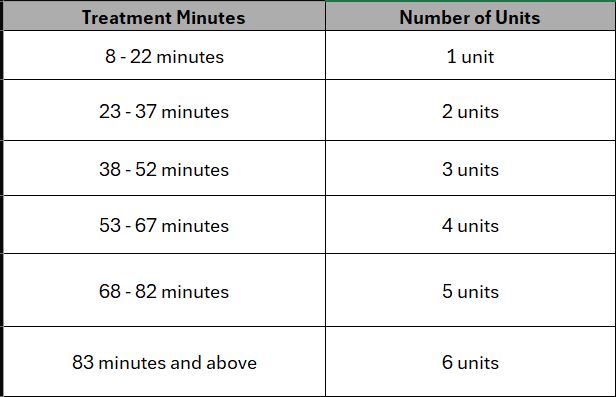
    • Require adherence to the 8-minute rule.

therapy medicare billing guide table

For example, if you spend 18 minutes on therapeutic exercise and 10 minutes on manual therapy, your total treatment time is 28 minutes. You would bill 2 units.

Key Considerations for Medicare Billing

  1. Service-Based Codes Are Not Subject to the 8-Minute Rule:
    These codes can still be billed in addition to time-based codes, provided the service is medically necessary.
  2. Document Total Treatment Time:
    Combine timed and untimed minutes to ensure accurate unit allocation.
  3. Stay Updated on Medicare Policies:
    Guidelines frequently change, making ongoing education essential for compliance and maximizing reimbursements.

Why Accuracy Matters

Navigating Medicare billing is undoubtedly complex, but with a solid understanding of ICD-10 and CPT codes, service classifications, and the 8-minute rule, the process becomes more manageable. Proper billing ensures compliance, reduces the risk of denied claims, and helps secure fair compensation for the valuable services you provide.

By staying informed and organized, you can focus on what you do best—helping your patients regain their health and quality of life.

Here is the updated Physical Therapy Medicare Billing Guidelines 2025.

4 Tips to Reduce Patient No-Shows in Your Physical Therapy Practice

Table of Contents

Reduce patient no-shows in your physical therapy practice with proven strategies. Set clear attendance policies, send automated appointment reminders, offer telehealth options, and build strong patient relationships to increase commitment and decrease no-show rates. Enhance practice efficiency and improve patient retention with these actionable techniques.

Visual representation of physical therapy practice strategies to reduce patient no-shows.

Running a physical therapy practice requires careful planning, especially when it comes to patient attendance. One of the most significant challenges you might face is managing patient no-shows—those individuals who miss appointments without notifying you in advance. No-shows can be frustrating not only because they disrupt your schedule but also because they can directly impact your practice’s profitability and patient outcomes. With the ongoing disruptions caused by various external factors like restrictions and changing patient habits, reducing no-shows has become more crucial than ever. Here are some strategies to help lower your no-show rate:

1. Set Attendance Boundaries During the Initial Evaluation

One of the best ways to ensure that patients take their appointments seriously is to set clear attendance expectations right from the start. During the initial evaluation, discuss the clinic’s attendance policy with the patient in-depth. Have a printed policy that outlines the consequences of a no-show or last-minute cancellation, including a set charge for missed appointments and a policy for how far in advance a patient must cancel to avoid penalties. Be sure to explain the reasoning behind these measures—emphasizing that these policies help ensure that your practice operates smoothly and that you can continue offering quality care.

Additionally, setting a limit on the number of “no-shows” a patient can have before being discharged from physical therapy is also important. This not only encourages accountability but also helps patients understand the impact of their actions on others who are waiting for treatment. For example, you might allow up to two cancellations before implementing a discharge plan. This approach encourages patients to think twice before skipping appointments, knowing there are consequences.

2. Send Automated Appointment Reminders

One common reason for no-shows is simply forgetting about the scheduled appointment. People are busy, and it’s easy for appointments to slip through the cracks, especially for those who might only visit the clinic once or twice a week. To minimize forgetfulness, implement an automated reminder system that sends notifications to patients about their upcoming appointments.

Many Electronic Health Record (EHR) systems, including HelloNote, offer automated reminders that can be customized to send a few days before an appointment and even on the day of the appointment. These reminders should be sent through preferred communication channels—whether it’s via email, SMS, or phone calls. By reminding patients closer to their appointment time, they are more likely to remember their commitment and will have enough time to reschedule if necessary. This proactive step can significantly lower the chance of no-shows.

A study by the Journal of the American Medical Association found that automated reminders can reduce no-show rates by up to 30%, making them a simple yet effective tool to combat this issue. Just remember that using a HIPAA-compliant platform, like HelloNote, ensures that your patient data remains secure while also delivering timely reminders.

3. Offer Telehealth Physical Therapy Appointments

Sometimes life just gets in the way—whether it’s work commitments, family issues, or even weather-related challenges. A patient who would otherwise attend their session may not be able to make it to the clinic. This can lead to missed appointments and, ultimately, delayed recovery. Offering telehealth physical therapy appointments can be a practical solution in these situations.

Telehealth allows patients to attend their sessions virtually, eliminating the barrier of travel or scheduling conflicts. While it might not be ideal for every case, especially when hands-on therapy is required, it can be a useful alternative for follow-ups or certain types of exercises. By providing this option, you not only reduce the risk of no-shows but also offer patients flexibility, increasing their commitment to treatment.

However, it’s important to emphasize that in-person appointments still have unique advantages, particularly for complex treatments. Patients should understand that while telehealth is a great supplement, it cannot replace the full benefits of in-person care.

4. Build a Relationship with the Patient

Building rapport with your patients is one of the most effective ways to ensure they remain committed to their therapy sessions. A strong relationship can encourage patients to prioritize their appointments, as they feel more personally invested in their progress and recovery.

Take the time to understand each patient’s specific goals and expectations. If a patient is struggling with their treatment or not feeling the expected progress, address their concerns directly. When patients feel that their treatment plan is tailored to their needs and when they trust their therapist, they are more likely to attend appointments consistently. Regular check-ins and open communication are key components of this relationship.

Encourage patients to share their thoughts about the plan of care and make adjustments as necessary. Collaboratively setting realistic, achievable goals with patients can give them a greater sense of ownership over their treatment. When they see the connection between their efforts and their progress, they are more motivated to attend every session.

Conclusion

Reducing no-shows in your physical therapy practice requires proactive strategies and consistent communication with your patients. By setting attendance boundaries early, utilizing automated reminders, offering telehealth options, and building strong relationships with patients, you can significantly reduce the frequency of missed appointments. Implementing these strategies not only enhances your schedule’s reliability but also boosts patient commitment to their recovery process.

While no-show patients will always be part of the equation, taking a few proactive steps can help mitigate their impact on your practice. By reducing the number of missed appointments, you can focus more on delivering quality care and improving patient outcomes, ensuring your practice thrives even in the face of external challenges.

Incorporating these steps into your daily operations will help maintain a smooth-running practice and foster stronger patient relationships, ultimately leading to better health outcomes and increased profitability.

You've found a hidden discount!

  • 00Hours
  • 00Minutes
  • 00Seconds