


















You've found a hidden discount!

HN Unlock Layer 1
HN Unlock Layer 2
HN Unlock Layer 3
HN Unlock Layer 4
HN Unlock Layer 5
  • 00Hours
  • 00Minutes
  • 00Seconds

Category: Blogs

Navigating the Shift: A 2026 HIPAA Compliance Guide for Therapy Practices

Table of Contents

February 16, 2026, isn’t just another date on the calendar—it is a regulatory crossroads for your clinic. While you’re balancing patient outcomes with a thinning bottom line, the Office for Civil Rights (OCR) has shifted the goalposts for data privacy.

Between the mandatory overhaul of Notice of Privacy Practices (NPP) and the sudden ubiquity of Generative AI in the clinic, the “wait and see” approach to compliance is now a liability. For PT, OT, and SLP professionals, 2026 is the year where data security must become as clinical and standardized as your SOAP notes.

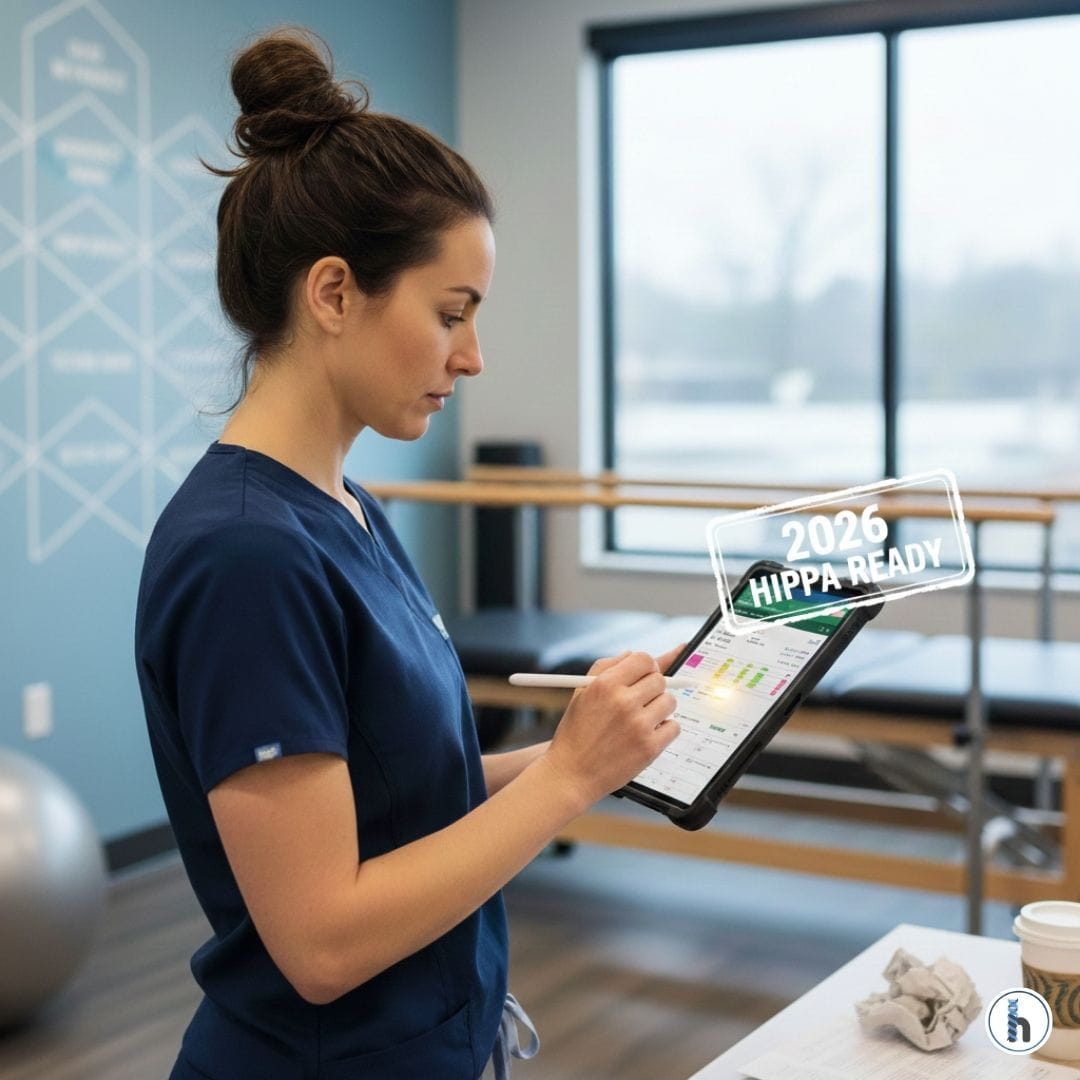
A therapist in navy blue scrubs using a tablet to review digital records in a physical therapy clinic, with a 2026 HIPAA ready status overlay.

The Financial Stakes: 2026 Penalty Tiers

The cost of non-compliance is steeper than ever. Following the January 28, 2026 inflation adjustments, the penalty tiers are strictly enforced to ensure clinics prioritize data integrity:

    • Tier 1 (Unknowing): Up to $73,011 per violation.

    • Tier 2 (Reasonable Cause): Up to $73,011 per violation.

    • Tier 3 (Willful Neglect – Corrected): Up to $73,011 per violation.

    • Tier 4 (Willful Neglect – Not Corrected): Up to $2,190,294 per calendar year cap.

The 3 Pillars of HIPAA Security for Rehab Clinics

To ensure your practice is secure, you must address three specific “safeguards” defined by the HIPAA Security Rule.

1. Administrative Safeguards

These represent the “people and processes” of your clinic.

    • Risk Assessment: You are required to perform a documented risk analysis annually.

    • Business Associate Agreements (BAA): You must have a signed BAA with any vendor that touches patient data, such as your EMR, billing service, or email provider.

    • Staff Training: Every employee, from the front desk to the lead clinician, needs documented HIPAA training.

2. Physical Safeguards

This covers the actual location and physical handling of your data.

    • Workstation Security: Computers should have automatic log-offs and screens positioned so they aren’t visible to the public.

    • Device Management: If you use tablets for documentation, they must be encrypted and capable of being remotely wiped if lost.

3. Technical Safeguards (The HelloNote Advantage)

This is where your software does the heavy lifting. In 2026, the distinction between “addressable” and “required” has vanished—technical safeguards are now mandatory.

    • NIST-Level Encryption: All electronic Protected Health Information (ePHI) must be encrypted both at rest and in transit.

    • Audit Logs: Your EMR must track every time a user views, edits, or deletes a record.

    • Secure Communication: Using standard SMS or Gmail for patient updates is a violation.

Critical 2026 Update: The New Notice of Privacy Practices (NPP)

By February 16, 2026, all therapy practices are required to update their Notice of Privacy Practices to align with 42 CFR Part 2. This is not just for substance use clinics; it applies to any entity that receives or maintains such records. The new rules require clearer language regarding:

    • Patient Right of Access: The turnaround for record requests is effectively shortened from 30 days to 15 days.

    • SUD Records: Updated protections and consent requirements for Substance Use Disorder records.

    • Redisclosure Notices: A mandatory statement notifying patients that their info may be subject to redisclosure once shared.

How HelloNote Streamlines Your Compliance

By choosing an EMR built specifically for rehab therapists, you automate the most difficult technical hurdles. HelloNote provides the encryption, audit trails, and secure messaging you need to stay ahead of the curve:

    • Encrypted Portals: Secure messaging avoids the risks of standard SMS.

    • Automatic BAAs: HelloNote provides a signed BAA to all users instantly.

    • Modern Safeguards: Our platform reflects 2026 NIST-level encryption standards and mandatory Multi-Factor Authentication (MFA).

Frequently Asked Questions

Q1. What is the February 16, 2026 HIPAA deadline?

This is the final deadline for all covered entities to update and post their revised Notice of Privacy Practices (NPP). The update must include new language regarding the handling of Substance Use Disorder (SUD) records and patient rights under 42 CFR Part 2.

Q2. Has the "Right of Access" timeline changed in 2026?

Yes. While the official federal limit remains 30 days, the 2026 guidance strongly pushes for a 15-day turnaround to improve interoperability. Clinics failing to meet this “faster access” expectation are currently a top priority for OCR enforcement.

Q3. Are "addressable" safeguards still optional in 2026?

No. One of the biggest shifts in 2026 is the elimination of the distinction between “required” and “addressable.” All safeguards, including encryption at rest and Multi-Factor Authentication (MFA), are now effectively mandatory for all practices, regardless of size.

Q4. Can I still text my patients about their appointments?

Standard SMS is not secure. To remain compliant, you must use an encrypted messaging platform. HelloNote includes secure messaging within the platform to prevent PHI exposure.

Q5. What is the "Minimum Necessary Rule"?

This rule requires therapists to only disclose the minimum amount of PHI necessary to accomplish a specific task. For example, a billing clearinghouse needs your codes, but they do not need your full clinical SOAP notes.
From SOAP Note to Paid Claim: Automating the Rehab Therapy Revenue Cycle

Table of Contents

Most billing friction in rehab therapy happens in the “dead space” between a finalized note and a submitted claim. HelloNote eliminates this gap with a closed-loop system that automates CPT coding, secure Fiserv payments, and real-time compliance—ensuring your practice is fully reimbursed for every unit of care delivered without the manual grunt work.

The Anatomy of a Modern Revenue Cycle

In a traditional rehab clinic, the revenue cycle is often treated as a series of disconnected events. The therapist documents, the front desk collects, and the biller submits. When these steps happen in silos, “friction” occurs.

HelloNote transforms this into a closed-loop system. The moment you finalize a SOAP note, the clinical data (ICD-10 and CPT codes) flows directly into the billing engine.

The Mechanics of Automation

  • Direct-to-Claim Sync: Your clinical findings automatically populate the claim form, eliminating data re-entry.

  • Real-Time Authorization Tracking: The system monitors visit counts and unit limits in the background, alerting you before you provide unbillable care.

  • Batch Superbill Generation: For pediatric or high-volume clinics, you can generate comprehensive receipts for entire families in two clicks.

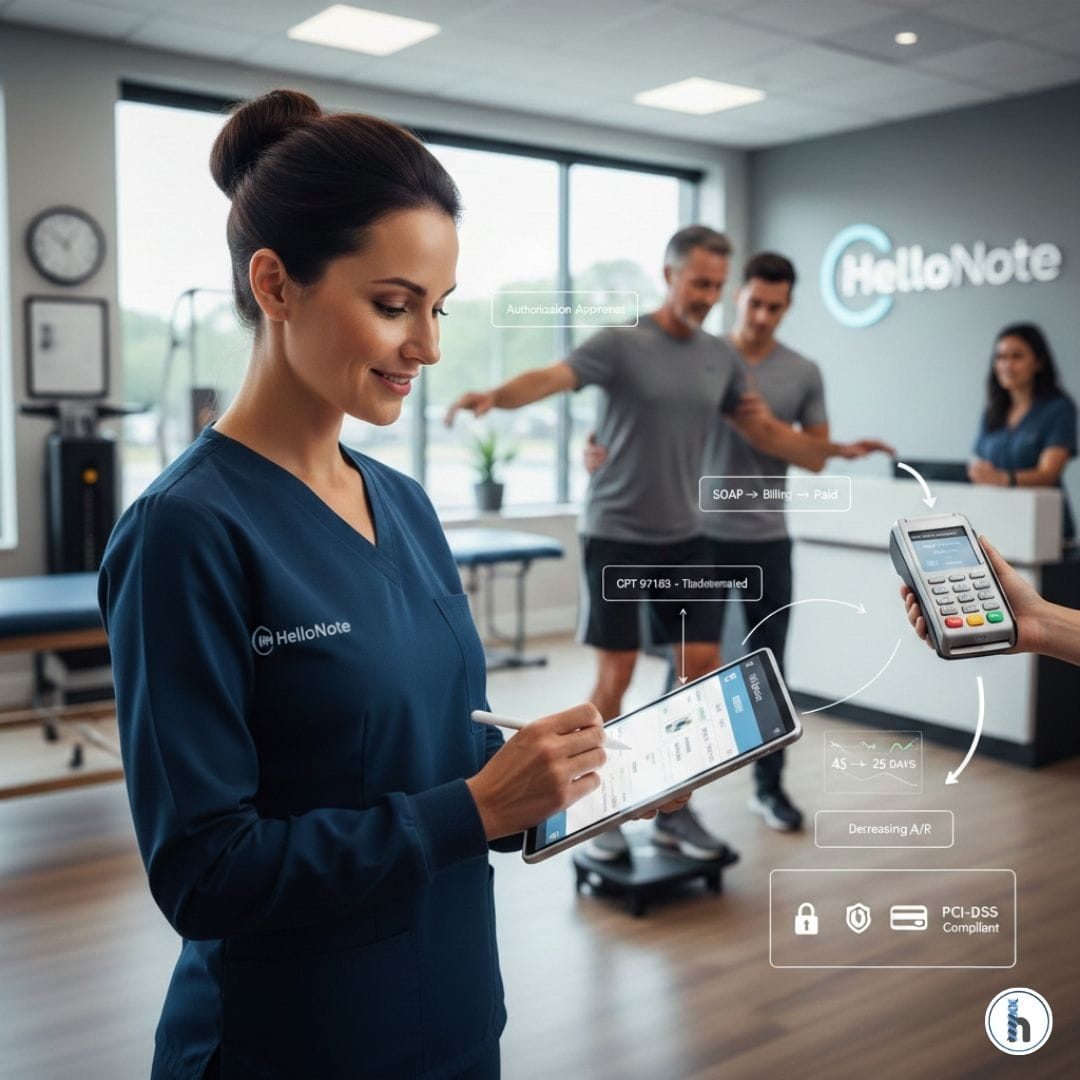
Female physical therapist in blue scrubs using HelloNote tablet to automate SOAP notes and CPT billing in a modern clinic with integrated payment terminals.

Compliance on Autopilot: The 8-Minute Rule

Medicare billing for timed codes is a math-heavy burden. Manually calculating remainders and unit totals is not just slow—it’s an audit risk.

Solving the Calculation Burden

HelloNote’s Automated 8-Minute Rule Calculator does the heavy lifting for you. It sums the total timed minutes across your therapeutic exercises (97110) and manual therapy (97140), then applies the Medicare-standard division to ensure you bill the maximum compliant units.

Why Automated Totals Matter for Audits

Automated calculations provide a standardized “paper trail” that proves medical necessity and billing accuracy, significantly reducing the stress of a CMS audit by removing human calculation error.

Accelerating Cash Flow with HelloNote & Fiserv

The “awkward co-pay conversation” at the front desk can erode the patient-provider relationship. By integrating Fiserv (CardPointe) directly into HelloNote, you move from a “debt collection” model to a “point-of-service” model.

The HelloNote-Fiserv Advantage

  • Secure Card-on-File: Store patient cards with PCI-compliant tokenization so you can run co-pays automatically.

  • Clover Flex Integration: Use portable, “tap-to-pay” hardware for mobile PT or home health visits.

  • Email Payment Links: Send secure links for outstanding balances, allowing patients to pay from their phones.

Comparison: Manual vs. Automated RCM

FeatureManual / Legacy WorkflowHelloNote Automated Workflow
Claim Preparation10–15 min per patient< 30 seconds (Auto-sync)
Authorization CheckManual spreadsheet trackingReal-time automated alerts
8-Minute RuleMental math / Audit riskSystem-enforced compliance
Payment CollectionPaper invoices / Delayed mailInstant Card-on-File / Email Links
Days in A/R45+ days25–30 days

Frequently Asked Questions

Q1. Does RCM automation replace my billing staff?

No. Automation is designed to empower your staff. By handling repetitive tasks like data entry and eligibility checks, your team can focus on high-value work like appealing complex denials and improving patient financial counseling.

Q2. How does HelloNote handle families with multiple children in OT?

Using the Visits and Receipts tab, you can select multiple dates of service across different family members and “Batch Print” a single, comprehensive superbill. This is a massive time-saver for pediatric practices.

Q3. Can I track authorizations by units instead of just visits?

Absolutely. Many payers authorize by total minutes or units. HelloNote allows you to toggle your Patient Authorization Report to track exactly how many units are remaining, preventing you from over-treating or under-billing.

Q4. How secure is the Card-on-File feature?

Extremely. Through our integration with Fiserv, we use P2PE (Point-to-Point Encryption) and tokenization. This means sensitive card data never touches your local servers, significantly reducing your PCI compliance burden.

Q5. Is the credit card hardware portable for mobile therapists?

Yes. With Clover Flex, home health or mobile PT providers can accept chip, swipe, or tap payments at the point of care. All transaction data syncs back to the HelloNote ledger in real-time.

Final Thoughts: Protecting the Clinical Hour

Your revenue cycle shouldn’t distract you from patient care. By automating the “grunt work” of RCM, you protect your time and your clinic’s bottom line.

10 Massage Advertisement Strategies to Fill Your Calendar in 2026

Table of Contents

Introduction

To consistently fill a massage calendar, advertisements must evolve beyond selling “luxury” and instead sell clinical outcomes combined with friction-free booking. When you target specific pain points, use social proof responsibly, and connect ads directly to seamless online scheduling through HelloNote, you convert high-intent searches into confirmed appointments. Marketing should not create administrative chaos; it should create predictable growth. This guide explores how to balance clinical authority with modern digital automation to build a sustainable, scalable practice.

The 2026 Massage Growth Blueprint

  • Symptom-Specific Ads: Campaigns targeting “Tech Neck” or “Chronic Shoulder Tension” convert 3x better than general relaxation ads.
  • AEO Dominance: AI search engines now prioritize “direct answers.” Use the FAQs at the bottom of this guide to capture this traffic.
  • Friction-Free Booking: Every ad must link directly to HelloNote Online Booking to prevent lead drop-off.
  • Retention Focus: Shift from selling visits at the front desk to documenting a Plan of Care in the treatment room.
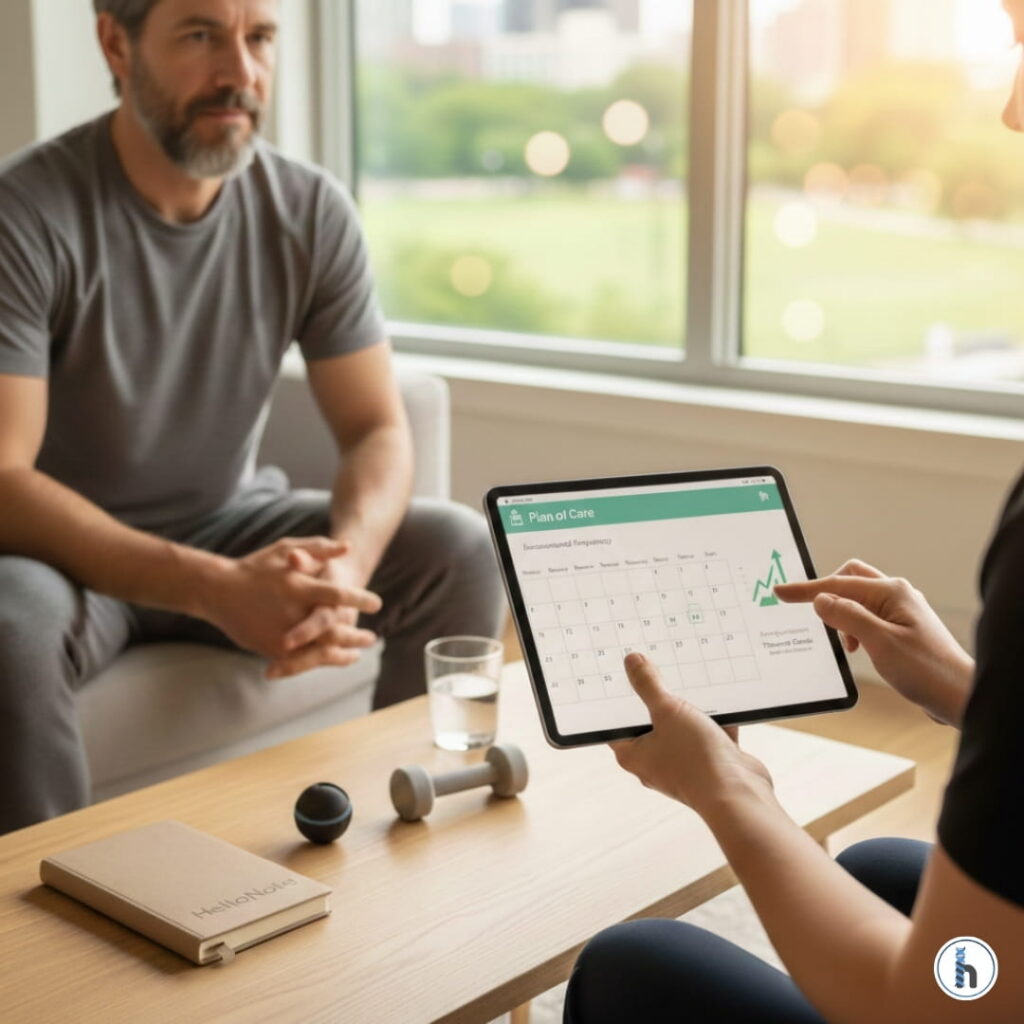
Massage therapist documenting a plan of care for tech neck relief on a tablet in a clinical setting.

Strategy Comparison: Impact vs. Effort

Strategy

Primary Goal

Effort Level

HelloNote Integration

Google Local Search

Capture “Ready-to-Book” clients

High (initial setup)

Direct link to Online Booking

Introductory Offers

Reduce entry barrier

Low

Automated First-Visit Discount Codes

Symptom-Specific Ads

Establish clinical authority

Medium

Custom intake forms for specific pain

Flash Sale (SMS/Email)

Fill last-minute cancellations

Very Low

Integrated Email/SMS marketing

Clinical Marketing and HIPAA Compliance

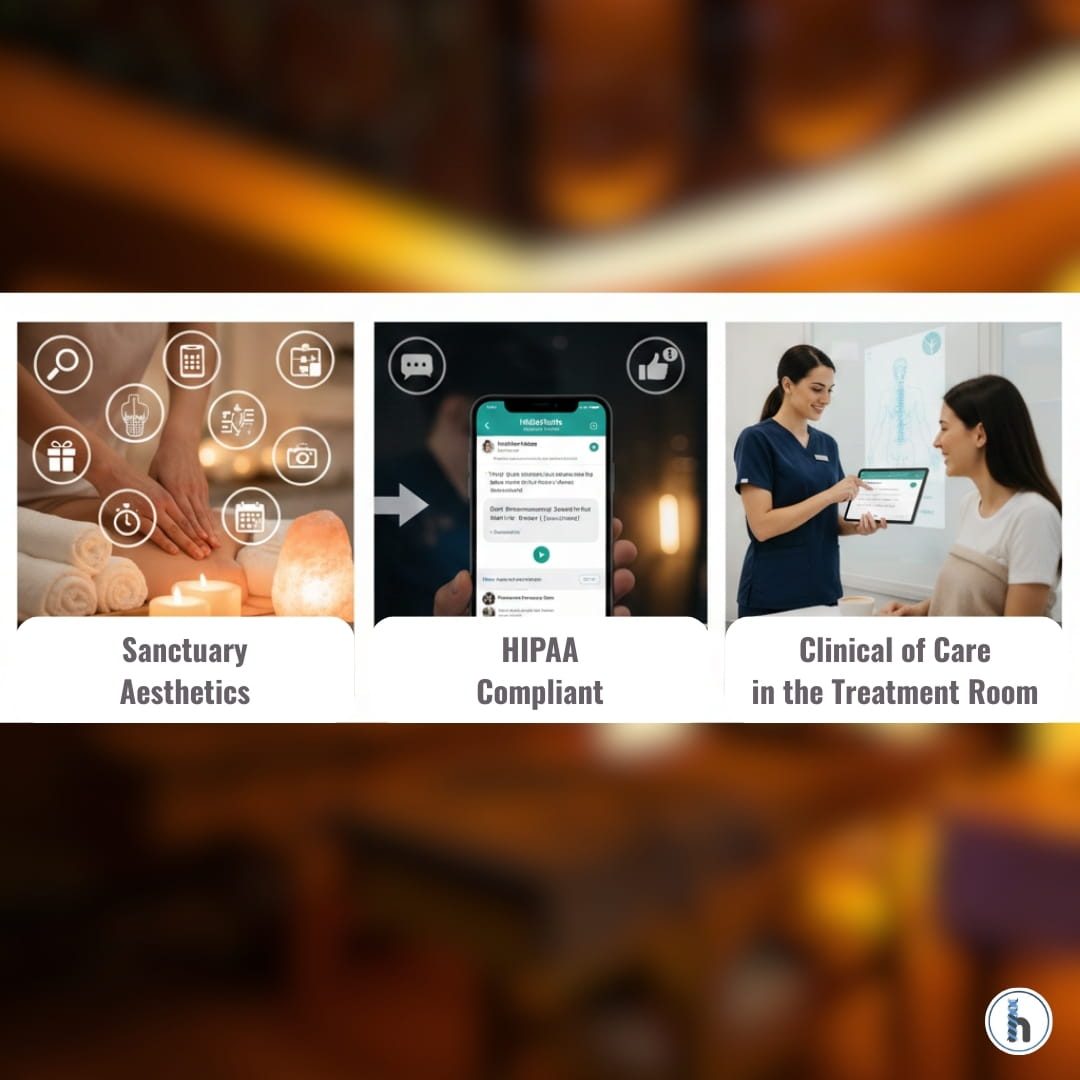
Sanctuary Aesthetics vs. Clinical Authority

Visuals of candlelight and warm towels attract attention, but authority converts. When advertising symptom-specific relief—such as myofascial release for neck tension or manual therapy for postural strain—reference measurable outcomes like:

  • Increased Range of Motion (ROM)
  • Reduced pain scale (e.g., 8/10 to 3/10)
  • Improved functional movement

HIPAA-Compliant Marketing

Growth without compliance creates risk. Testimonials are powerful, but written marketing releases are required before sharing identifiable patient details. Using a centralized system like HelloNote ensures marketing consents are stored alongside clinical records—protecting both your growth and your legal standing

10 Massage Advertisement Strategies That Actually Convert

1. Google Local Search Ads

Target high-intent searches like “massage near me” or “deep tissue massage [City].” These clients are solution-focused and ready to book immediately.

2. Symptom-Specific “Pain Point” Ads

“Dealing with Tech Neck?” targeted ads convert better than general wellness. Create a custom intake form in HelloNote for these specific pain-point clients to streamline their first visit.

3. The Introductory Offer

A first-visit discount lowers resistance. Use HelloNote to automate “First Visit” codes and ensure these new leads are placed into a retention-focused follow-up sequence.

4. The Visual Sanctuary Ad

High-quality images of your treatment space build trust. Clients want reassurance that your environment is clean, professional, and relaxing.

5. Testimonial & Social Proof Ads

Instead of “It was great,” use: “After three sessions, my migraine frequency dropped significantly.” (Always secure written consent first).

6. Seasonal Gift Card Campaigns

Mother’s Day, Valentine’s Day, and the Holidays are prime times for gift cards. Offer digital versions and embed the links into automated email campaigns.

7. Video “Meet the Therapist” Ads

Massage is personal. A 30–60 second introduction video builds a sense of safety and professional connection before the booking is ever made.

8. The “Self-Care as Maintenance” Campaign

Shift the narrative from luxury to necessity. This supports recurring bookings and membership models, which provide more stable revenue.

9. Referral Program Promotion

Track referral sources inside HelloNote to reward your most powerful marketing channel: your current happy clients.

10. Last-Minute Opening Flash Sale

Cancellation at 2:00 PM? Send an SMS blast through HelloNote offering a complimentary upgrade. Scarcity and immediacy fill schedule gaps in minutes.

Close-up of a massage therapist using a tablet to document a clinical plan of care with an older male client in a professional clinic.

The Therapist’s Insight: From Booking to Re-Booking

In my experience running a busy practice, the biggest issue isn’t lead generation—it’s retention. The mistake many make is trying to sell the next visit at the front desk. Instead, sell the Plan of Care in the treatment room. Document “Recommended Frequency” directly in the HelloNote Assessment section while the client is still on the table. This feels clinical and supportive, not sales driven.

Frequently Asked Questions

Q1. How do I reduce no-shows from social media ads?

Require a credit card on file or a deposit during online booking. HelloNote’s Fiserv integration makes this seamless. Clinics requiring deposits typically see a 65% reduction in ghosting and last-minute cancellations.

Q2. What is the most effective keyword for massage advertising?

For 2026, the highest-converting “high-intent” keywords are “massage for back pain [City],” “deep tissue massage near me,” and “sports massage for [Specific Injury].”

Q3. How do I track the ROI of my "Tech Neck" marketing?

Create a custom Referral Source in your HelloNote EMR labeled “Instagram – Tech Neck.” Assign new clients accordingly and run a monthly Referral Report to see exactly how much revenue that campaign generated.

Q4. Can I automate birthday massage promotions?

Yes. Filter your client list by birth month in your EMR and send automated email promotions containing a digital gift card link. This is one of the most effective ways to fill mid-week schedule gaps.

Yes, as long as you have a signed HIPAA-compliant marketing release on file. It is best practice to use first name and last initial only to maintain a high standard of patient privacy.

Simplify Therapy Documentation: How to Streamline SOAP and Daily Notes

Table of Contents

Effective documentation is the clinical foundation of any therapy practice. HelloNote streamlines the process by merging SOAP and daily note workflows into one intuitive system, ensuring compliance,

Why Is Documentation Efficiency Critical for Modern Therapy Clinics?

Documentation is the “source of truth” for your clinical care, but it shouldn’t be the most time-consuming part of your day. For clinic owners, inefficient workflows lead to staff burnout and missed revenue. Effective documentation must satisfy three requirements: it must track patient progress, remain audit-ready for insurance, and be fast enough for a busy, high-volume clinic.

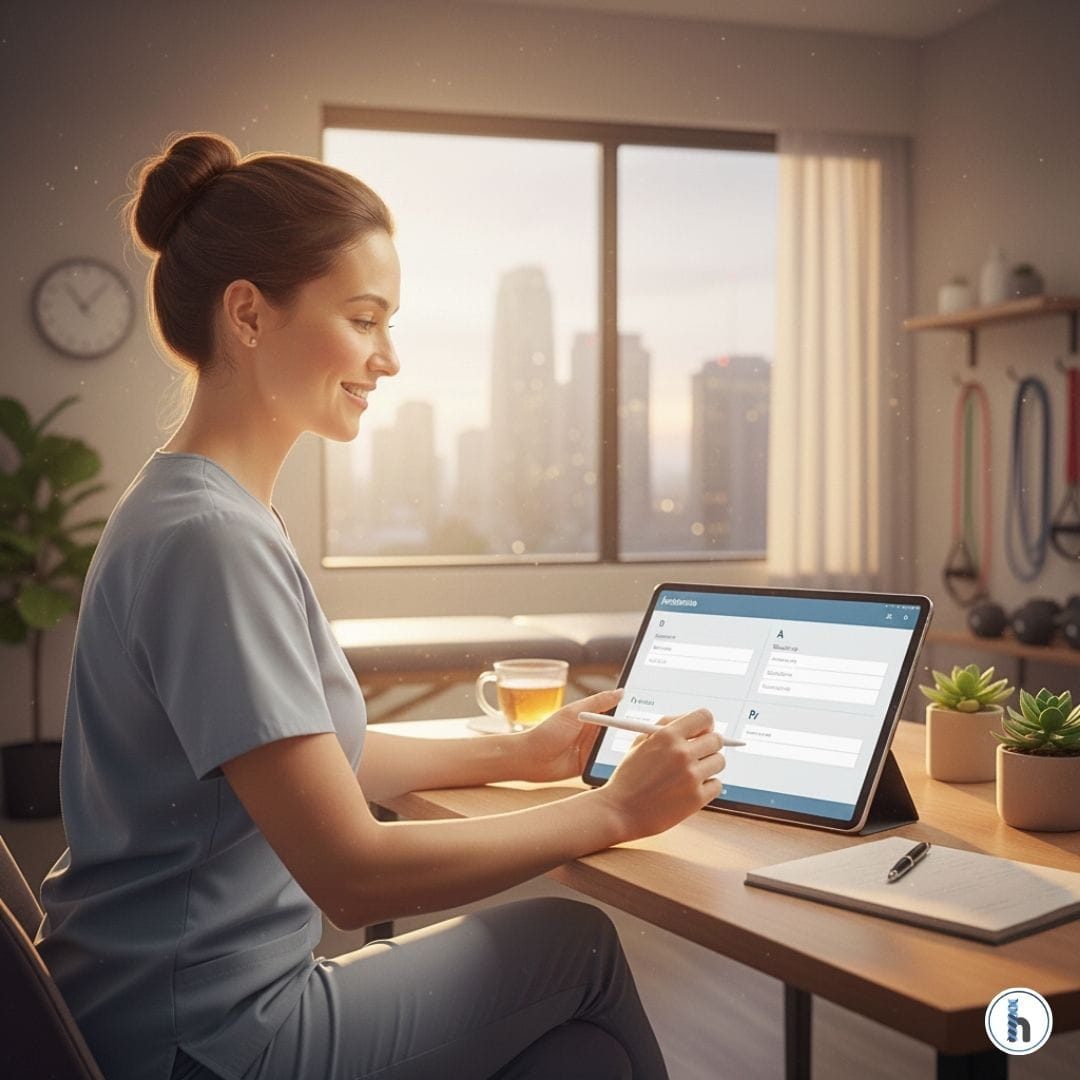
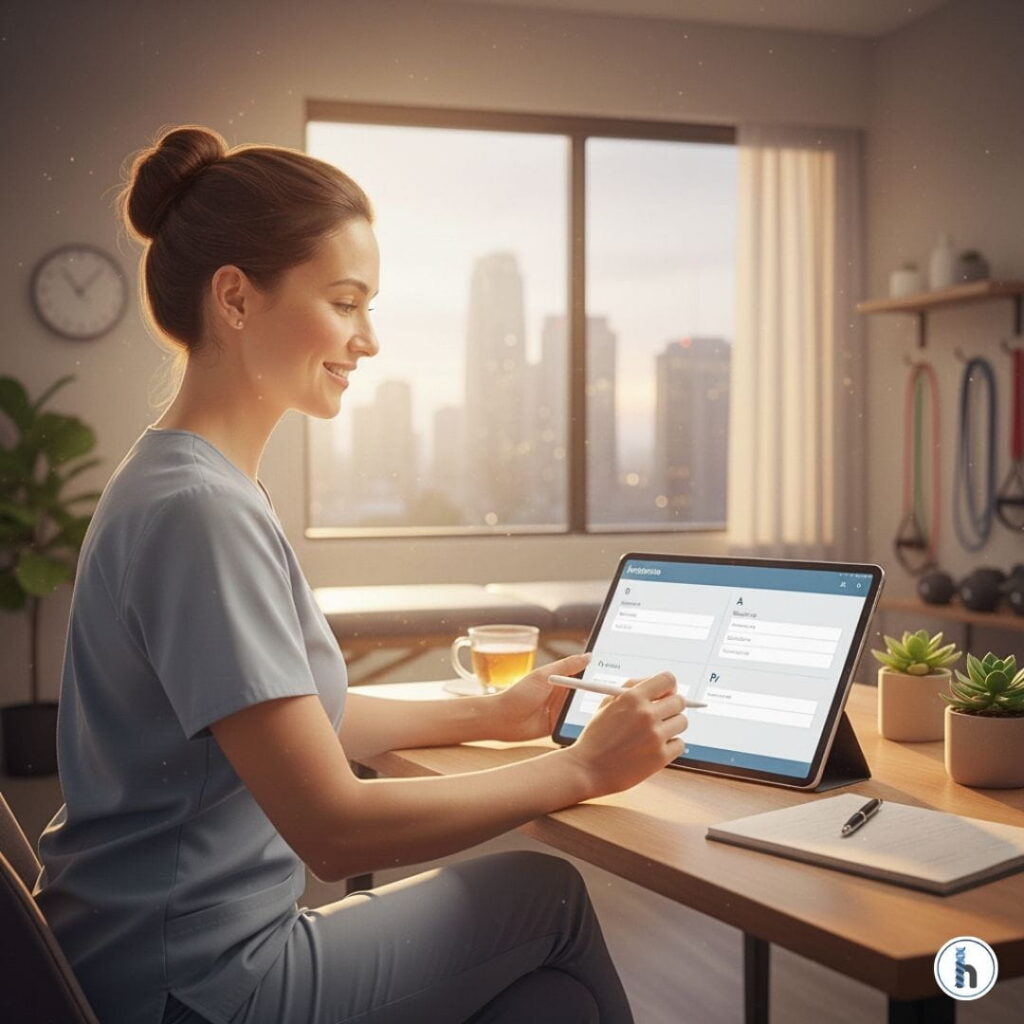
A physical therapist using a tablet to complete a SOAP note in a clinical office during the afternoon.

SOAP Notes vs. Daily Notes: Do You Need Both?

Traditionally, therapists have struggled to find a balance between the depth of SOAP notes and the speed of daily notes.

FeatureSOAP NotesDaily Notes
Primary GoalComprehensive, formal recordingQuick, functional updates
Audit ValueHigh (Critical for reviews)Low (Often insufficient)
Typical UseEvaluations, complex progressRoutine treatment sessions

HelloNote bridges this gap by unifying these formats. You no longer have to choose between clinical rigor and daily efficiency; our system integrates the necessary SOAP structure—Subjective, Objective, Assessment, and Plan—into a streamlined daily workflow.

Breaking Down the HelloNote Unified SOAP Format

How does a unified note structure improve your daily efficiency? By providing a structured, intuitive path for every session entry.

What Is the Subjective (S) Section?

This section captures the patient’s perspective and feedback. By using automated prompts, you can quickly document pain levels, functional changes, or patient goals without having to rewrite common phrases.

What Is the Objective (O) Section?

The Objective section is where measurable data lives. Use this to track range of motion, strength, balance, or speech clarity. HelloNote allows you to import past metrics, so you can see trends immediately.

What Is the Assessment (A) Section?

The Assessment is your clinical interpretation. It synthesizes your S and O findings to identify progress or stagnation. This section is vital for justifying continued care to insurance providers.

What Is the Plan (P) Section?

The Plan outlines your next steps. HelloNote makes it easy to add future exercises or adjust goals, ensuring you have a clear roadmap for the patient’s upcoming sessions.

How HelloNote Reduces Documentation Burnout

Administrative burden is the #1 cause of therapist burnout. HelloNote addresses this by reducing the “click count” and manual input required for every note.

    • Customizable Templates: Choose templates built for specific disciplines (PT, OT, SLP).

    • Automated Data Entry: Automatically import historical goals and patient info to avoid redundancy.

    • Compliance Validation: Real-time prompts flag incomplete or non-compliant sections before you sign off.

    • Seamless CPT Linking: Ensure every note is linked directly to your billing codes, reducing claim denials.

Frequently Asked Questions

Q1. Is HelloNote’s documentation system HIPAA-compliant?

Yes. HelloNote is built from the ground up for healthcare, utilizing NIST-level encryption and automated audit logs to ensure your patient records remain secure and compliant with 2026 HIPAA standards.

Q2. Can I use HelloNote for multidisciplinary practices?

Absolutely. Whether you are a solo practitioner or a large multidisciplinary clinic, HelloNote adapts to the unique documentation needs of physical, occupational, and speech therapists.

Q3. How does this help with insurance audits?

By using our standardized, structured note templates, your records are automatically audit-ready. You won’t have to scramble to find supporting data—it is already organized and linked to the patient’s treatment plan.

Q4. Can I complete my therapy notes during the session?

Yes. With HelloNote’s intuitive design, many therapists use “concurrent documentation”—charting during or immediately after the session to ensure accuracy and reduce after-hours workload.

Q5. How does HelloNote reduce therapist burnout?

HelloNote reduces burnout by automating repetitive data entry, utilizing customizable templates, and linking CPT codes directly to documentation, significantly cutting down on non-billable administrative hours.

The 2026 Medicare Telehealth Extension: A Compliance Guide for PT, OT, and SLP Providers

Table of Contents

As of February 3, 2026, the legislative uncertainty surrounding Medicare telehealth has been resolved. President Trump signed H.R. 7148 (the Consolidated Appropriations Act, 2026) into law, ending a brief technical lapse in coverage. The law officially extends expanded Medicare telehealth flexibilities through December 31, 2027, with full retroactive coverage for services rendered during the lapse.

Current Legislative Status: Reinstated and Extended

The “telehealth cliff” those practitioners and patients faced on January 31, 2026, has been successfully bridged. While the previous waivers briefly expired due to a budget deadlock in the Senate, the final passage of H.R. 7148 restores stability to the virtual care landscape.

Crucially, this legislation was drafted with a retroactive clause. This means that any telehealth services provided during the four-day lapse (January 31 – February 3) will be recognized by Medicare as if the lapse never occurred. Providers who followed the professional recommendation to hold claims can now proceed with billing.

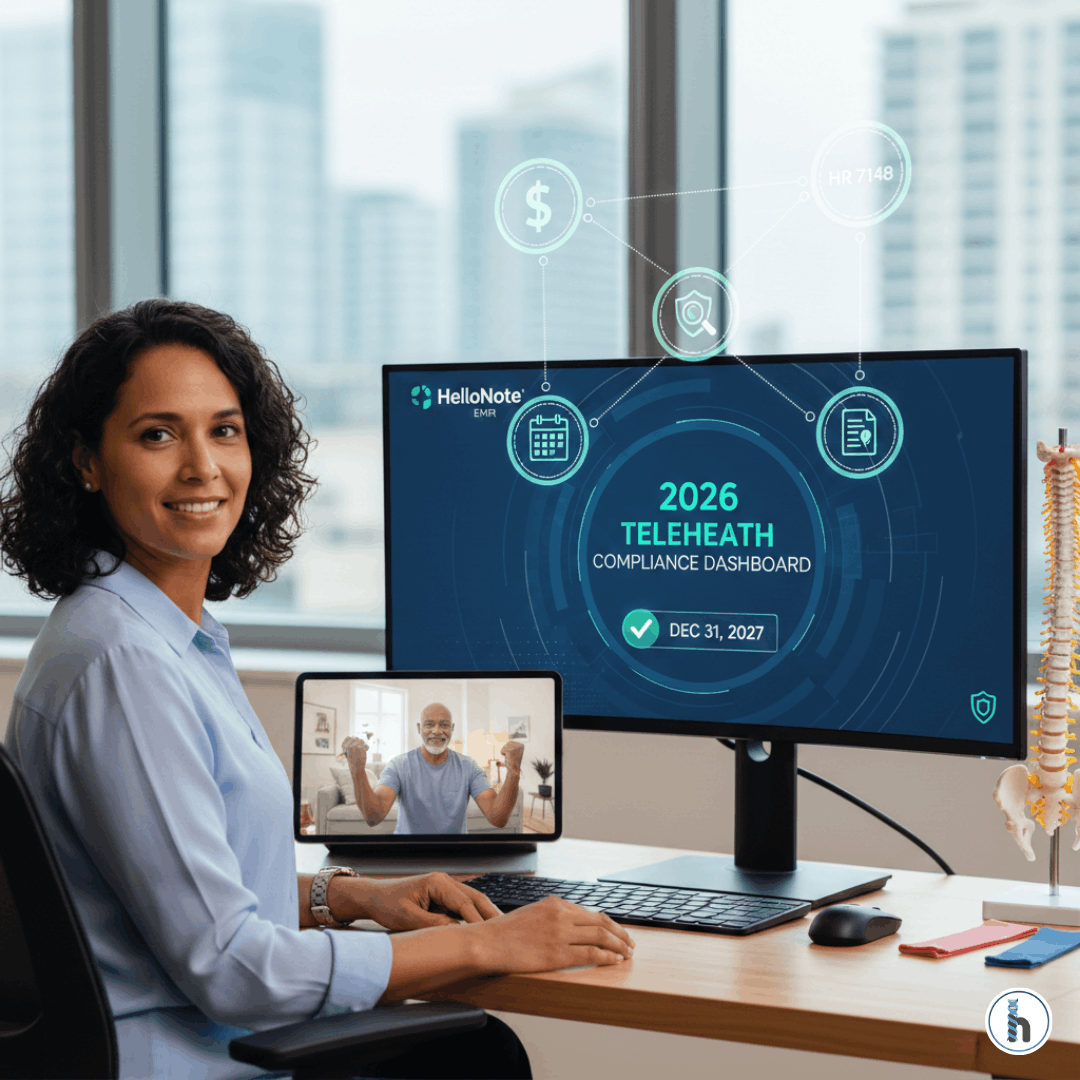
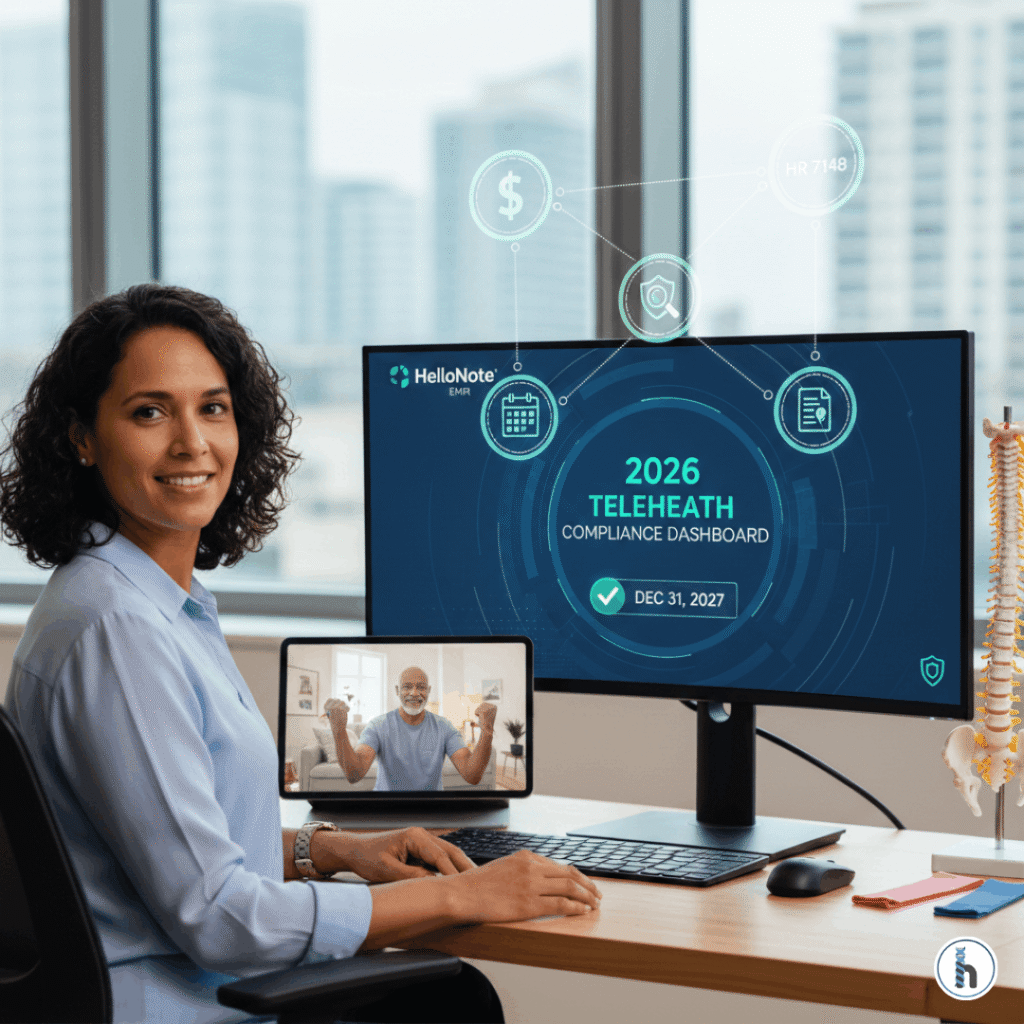
Female therapist using HelloNote EMR dashboard showing 2026 Medicare telehealth compliance updates and H.R. 7148 extension through Dec 31, 2027.

Quick Status: 2026-2027 Compliance Checklist

Feature 

New Status / Action Required 

New Expiration Date 

December 31, 2027 

Medicare Part B Status 

Fully Restored. The “rural-only” and facility-based restrictions remain waived. 

Originating Site Rules 

Patients may continue to receive telehealth services from any location, including their homes. 

Provider Eligibility 

PTs, OTs, SLPs, and Audiologists remain fully eligible to provide and bill for Medicare telehealth. 

Audio-Only Services 

Coverage for audio-only telehealth is extended for both behavioral and non-behavioral health through 2027. 

In-Person Requirements 

The requirement for an in-person visit within six months of a mental health telehealth service remains suspended. 

Strategic Clinical Pivot: The Hybrid Care Anchor

During the brief lapse, many clinics successfully utilized a Hybrid Care Model to maintain revenue. While virtual-only billing was temporarily in legal limbo, in-person care remained the stable “anchor” of the care plan. Moving forward, practitioners should view the hybrid model not just as a backup, but as a clinical best practice for rehabilitation.

Action Item: Re-integrate Manual Therapy

Now that the extension is signed, use this stability to plan your “Clinical Pivot.” If you shifted patients to in-person sessions to address manual therapy needs—such as joint mobilization or addressing tight calf muscles—you can now transition them back to a hybrid schedule. This allows for:

    • Tactile Correction: Use in-person visits for manual techniques that improve movement quality.

    • Virtual Validation: Use telehealth follow-ups to ensure the patient is performing their Home Exercise Program (HEP) correctly in their own environment.

Deep-Dive Compliance: Protecting Your Revenue Cycle

While the law is signed, the administrative machinery of CMS and its MACs may take several days to update systems. To ensure a clean revenue cycle:

1. Releasing Held Claims

Action Item: If you followed previous guidance to HOLD CLAIMS, you should now begin processing and submitting them for the period starting February 1, 2026.

Pro-Tip: Monitor your Remittance Advice (RA) closely. If you see denials for Jan 31–Feb 3, contact your MAC, as they may need to manually re-trigger the retroactive logic.

2. The Advance Beneficiary Notice (ABN) Update

Action Item: You may now stop issuing “Mandatory” ABNs related to the legislative lapse. Keep the signed copies from the lapse window in your records as a legal safety net.

3. Medicare Advantage & Private Payers

This extension is a massive relief for Medicare Part B (Fee-for-Service). For Medicare Advantage (Part C) providers, the landscape is even more stable.

  • Action Item: Verify individual policies, but most Advantage plans have already aligned their 2026-2027 benefits with this federal extension.

Looking Ahead: The Hospital-at-Home Evolution

A significant win in H.R. 7148 is the five-year extension for the Acute Hospital Care at Home waiver program through September 30, 2030. This signals a major policy shift: the federal government is viewing “at-home” acute care as a permanent fixture. For therapists, this means a growing market for high-acuity home health and rehabilitation services over the next five years.

The Push for Permanence

While we celebrate the relief that comes with a deadline of December 31, 2027, the push for permanent reform continues. Advocacy groups like the AOTA, APTA, and ASHA indicate this two-year window will be the “final evaluation period.” Between now and 2027, Congress will look for data on reimbursement parity and quality of outcomes.

Legislative leaders have indicated that this two-year window will be the “final evaluation period.” Between now and 2027, Congress will be looking for data on: 

  1. Reimbursement Parity: Does virtual care cost the system more or less than in-person care? 
  1. Quality of Outcomes: Are OTs and PTs achieving the same functional gains via telehealth? 
  1. Fraud Prevention: Ensuring that the removal of geographic restrictions doesn’t lead to “tele-marketing” abuses of the Medicare system. 

Frequently Asked Questions (FAQs)

Q1: Did the Medicare telehealth extension actually passes?

Yes. The extension was signed into law on February 3, 2026, as part of H.R. 7148. It extends current flexibilities through December 31, 2027.

Q2: Can I bill for telehealth services provided during the shutdown (Jan 31 – Feb 3)?

Yes. The law includes a retroactive clause. Medicare will process and pay for claims during that four-day window as if the lapse never occurred.

Q3: Are Physical Therapists still eligible to provide telehealth?

Yes. Under the new 2026-2027 extension, PTs, OTs, and SLPs remain authorized providers for Medicare telehealth services.

Q4: Does this extension cover audio-only visits?

Yes. Audio-only telehealth coverage for both behavioral and non-behavioral health has been extended through the end of 2027.

Future-Proofing Your Practice

While this extension buys time, the real solution is a system that stays ahead of the rules for you.

Book a Hellonote Demo See how our automated compliance engine and built-in telehealth features handle Medicare modifiers and retroactive billing automatically, so you can focus on your patients, not the legislation.

Legal Disclaimer: This update is for educational purposes only and does not constitute legal, financial, or medical billing advice. Healthcare providers should consult with their compliance officers and Medicare Administrative Contractors (MACs).

Maximizing the 2026 RTM Rule Changes: How EMR Integration Simplifies Your Workflow

Table of Contents

The 2026 Medicare Physician Fee Schedule has officially lowered the barriers to entry for Remote Therapeutic Monitoring (RTM). With reduced data transmission requirements and more flexible time-tracking codes, RTM is no longer just a “value-add”—it is a permanent, high-growth clinical modality for modern practices.

However, new rules bring new documentation requirements. At HelloNote, we’ve partnered with ptMantra to ensure that these favorable changes translate into actual revenue for your clinic without adding hours of paperwork.

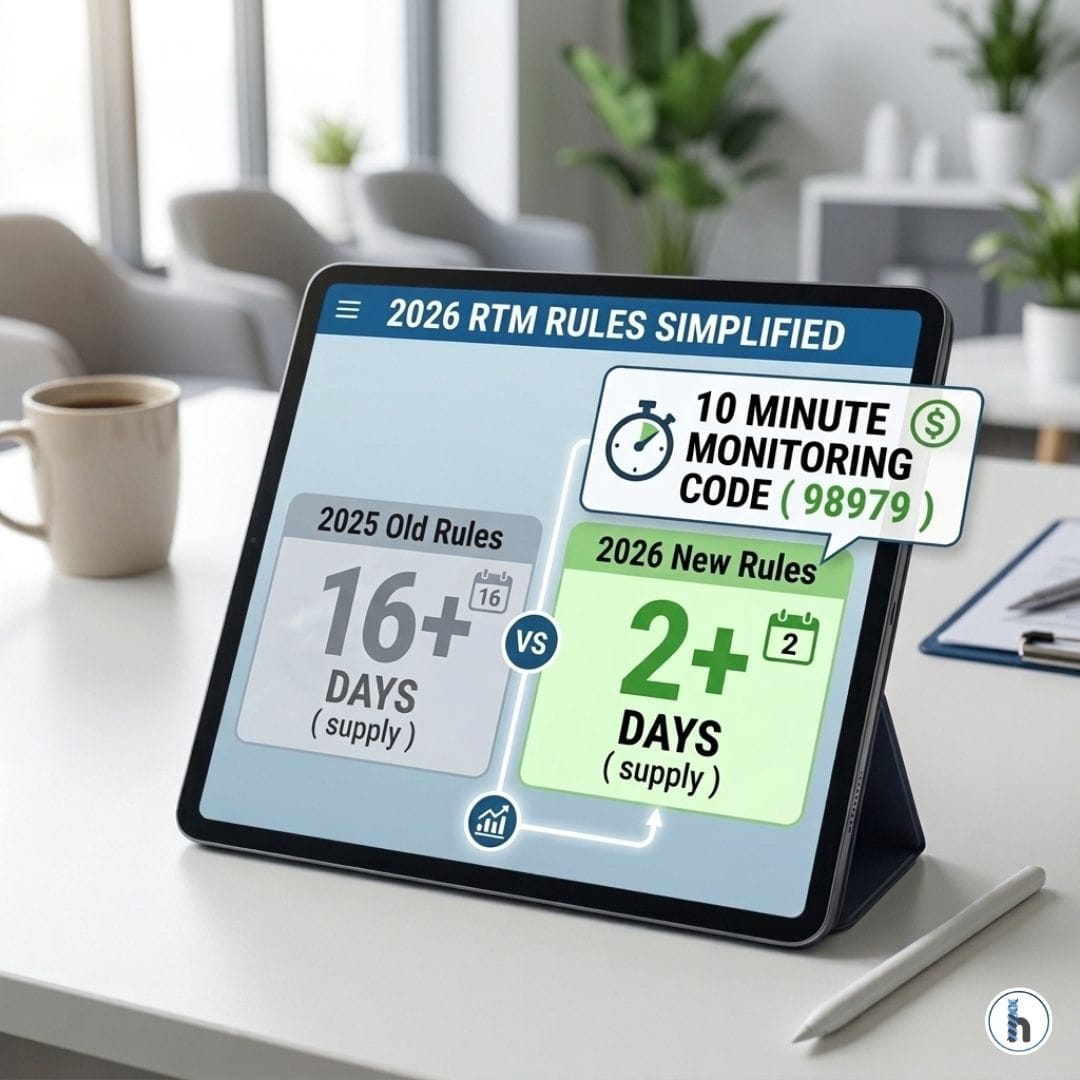
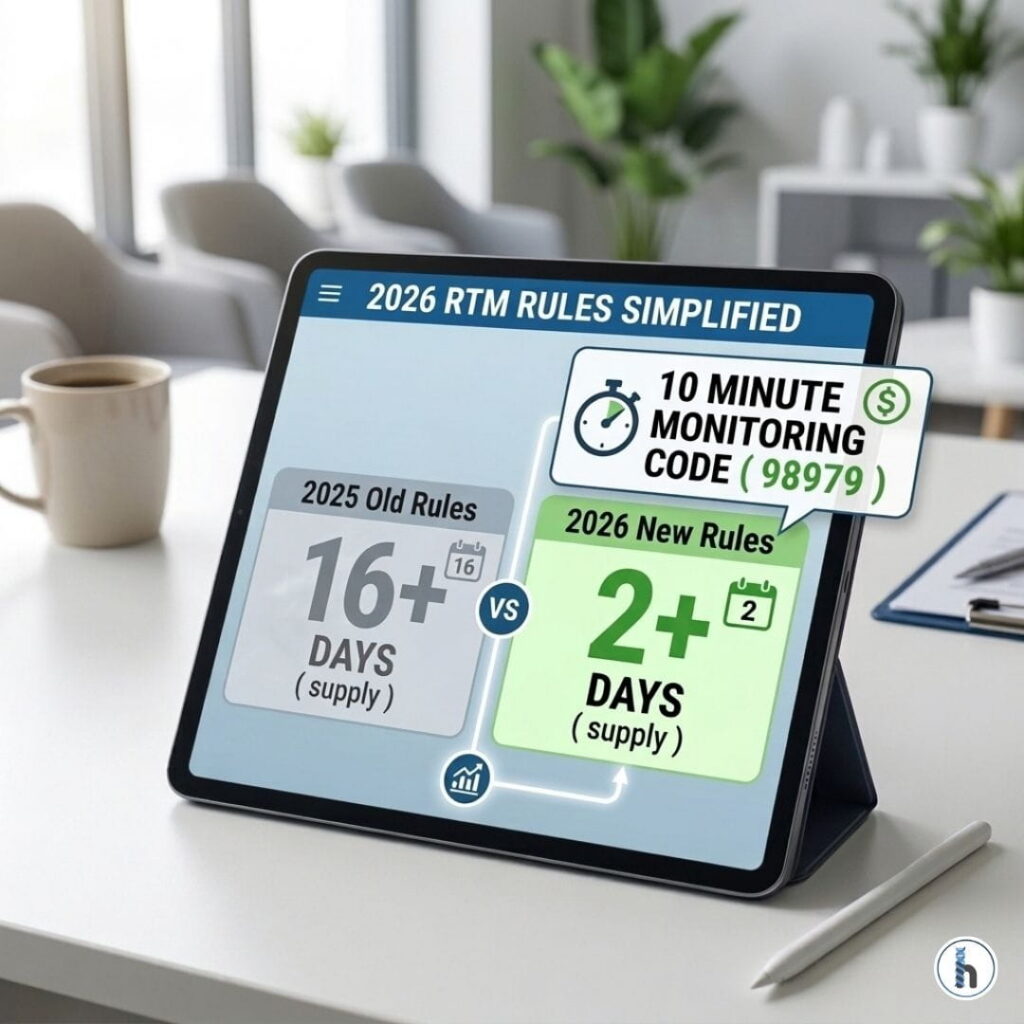
A 2026 RTM comparison chart on a digital dashboard showing simplified data transmission rules (2 days vs. 16 days) and the new 10-minute monitoring code (98979) for Medicare billing.

1. The "Two-Day" Revolution (Codes 98984–98986)

The biggest hurdle to RTM in the past was the 16-day data transmission requirement. Under the new 2026 rules, CMS has introduced codes 98984, 98985, and 98986, which allow providers to claim reimbursement when patients transmit data on just two days in a 30-day period.

The EMR Advantage: Through our FHIR-based API integration, ptMantra automatically notifies HelloNote when these transmission thresholds are met. You don’t have to manually count days; the system tracks the data, so you can focus on the clinical response.

2. Get Paid for Every Minute (Code 98979)

Previously, the initial 20-minute threshold (98980) often left providers with “uncompensated” time if they only reached 15 or 18 minutes. The new 98979 code allows for reimbursement at just 10 minutes of monitoring time.

The EMR Advantage: Every minute of “skilled work”—including updating home exercise programs (HEP) or reviewing clinical notes—counts toward this 10-minute goal. Because ptMantra and HelloNote sync clinical note exchanges, your time spent reviewing patient progress is automatically documented, ensuring no minute of care goes unpaid.

3. In-Person Communication Now Counts

One of the most significant clarifications for 2026 is that “interactive communication” no longer has to be a remote phone call or telehealth visit. A simple in-person conversation about RTM during a standard clinic visit now meets the requirement—provided it is documented in the EMR.

The EMR Advantage: HelloNote makes this “extra step” disappear. By documenting your RTM discussion directly within your daily encounter note, you satisfy the CMS requirement without needing to schedule additional follow-up calls.

4. Eliminating the "Extra Work"

The fear of RTM is often rooted in administrative bloat—manual claims, double-entry of data, and patient registration. Our partnership eliminates these hurdles:

    • Automated Registration: Register patients once in HelloNote; they are automatically synced to ptMantra.

    • Seamless Claims: Integration allows for the automated submission of RTM codes based on the data captured in ptMantra.

    • General Supervision: For PTs and OTs, the rules allow PTAs and OTAs to perform monitoring duties. HelloNote’s workflow ensures these are tracked under the required general supervision of the therapist.

The Bottom Line

The 2026 RTM rules are a clear signal from CMS: they want you to use this modality. By combining the clinical power of ptMantra with the administrative efficiency of HelloNote, your clinic can provide better care, improve patient adherence, and tap into new revenue streams—all while keeping your focus where it belongs: on the patient.

Frequently Asked Questions

Q1. What are the new 2-day RTM codes for 2026?

The 2026 update introduces CPT 98984 (Respiratory), CPT 98985 (Musculoskeletal), and CPT 98986 (Cognitive Behavioral). These codes allow for device supply reimbursement when a patient transmits data for 2 to 15 days in a 30-day period.

Q2. Can I bill CPT 98979 and 98980 in the same month?

No. CPT 98979 (10–19 minutes) and CPT 98980 (20+ minutes) are mutually exclusive. You must bill the single code that accurately reflects the cumulative treatment management time reached by the end of the calendar month.

Q3. Does "Interactive Communication" require a video call?

No. For 2026, CMS clarified that interactive communication can be an audio-only telephone call or even an in-person discussion during a standard clinic visit, provided the RTM management time is documented and not double-counted with other services.

Q4. Can PTAs and OTAs perform the monitoring for these codes?

Yes. RTM codes are billed under General Supervision for 2026. This allows physical therapist assistants (PTAs) and occupational therapy assistants (OTAs) to perform the monitoring and interaction under the overall direction of the therapist.

Q5. How does the HelloNote + ptMantra integration prevent billing errors?

The integration uses a FHIR-based API to sync data. When ptMantra detects that a patient has reached the 2-day or 10-minute threshold, it automatically flags the encounter in HelloNote, ensuring you only submit claims that meet Medicare’s technical requirements.

The Pediatric SLP Efficiency Revolution: Mastering AAC and Feeding Documentation with HelloNote

Table of Contents

Pediatric SLPs can optimize documentation by using specialized EMRs that feature AAC prompt hierarchy trackers and safety-first feeding templates. HelloNote solves the “generic EMR” friction by providing HIPAA-compliant, multidisciplinary charts that track clinical progress from maximum prompting to independence, ensuring medical necessity for insurance re-authorization and improved patient outcomes.

1. Data-Driven AAC Progress: Tracking the Prompt Hierarchy

For a child using Augmentative and Alternative Communication (AAC), progress isn’t just “correct or incorrect.” It is about the fading of cues. In 2026, insurance payers (Medicaid and private) require clear proof of moving toward communicative autonomy.

Beyond Plus/Minus: One-Click Prompt Tracking

Generic systems force you to write long narratives. HelloNote offers specific data points for:

    • Independent (IND)

    • Gestural/Visual Cues

    • Verbal Prompts

    • Physical Assistance (Minimal to Maximal)

Visualizing Autonomy for Re-authorizations

HelloNote automatically transforms this data into Visual Progress Timelines. When you submit for a device or more hours, you aren’t just sending notes—you are sending a professional graph that proves the child is learning to use their “voice.”

2. High-Stakes Pediatric Feeding: Compliance & Safety First

Pediatric feeding and dysphagia are high-risk specialties. Babies surviving the NICU need precise care and even more precise documentation to avoid denials and ensure safety.

Pediatric speech therapist in blue scrubs using a tablet for AAC documentation while a child plays on a swing in a sensory-rich clinic.

Integrated Feeding Safety Modules

Stop using “workarounds.” HelloNote includes dedicated fields for:

    • IDDSI Bolus Levels: Tracking specific textures for liquids and solids.

    • Compensatory Strategies: Documenting chin-tucks, pacing, or side-lying.

    • Medical Necessity Alerts: The system flags missing safety data before you sign, protecting your clinic from liability and claim rejections.

3. The Multidisciplinary Edge: Whole-Child Coordination

Pediatric therapy is a team sport. A child’s ability to use their AAC device is often tied to their sensory regulation (OT) or physical positioning (PT).

Unified Charts for Collaborative Care

In HelloNote, you can instantly see the OT’s sensory strategies from 10 minutes prior. This allows you to adjust your SLP session for “optimal regulation,” leading to better communication outcomes and happier parents.

4. Evidence-Based Pediatric SLP Goal Bank

Burnout happens when you spend hours writing the same articulation or social-emotional goals.

Pre-Loaded Pediatric Library

Access hundreds of customizable goals for:

    • Articulation & Phonology: From “S” blends to phonological processes.

    • Receptive/Expressive Language: Developmentally sequenced.

    • Social Pragmatics: Focusing on reciprocity and intent.

    • IEP & Medical Alignment: Built to satisfy both school-based and medical-billing requirements.

Frequently Asked Questions

Q1. How does HelloNote track AAC prompt fading and device mastery?

HelloNote features a dedicated prompt hierarchy tracker. You can log whether a child required maximal, moderate, or minimal cues, and the system will graph this data to show a clear trend toward independent communication for insurance re-authorization.

Q2. Does HelloNote have specialized templates for pediatric feeding and dysphagia?

Yes. Our feeding modules are built for high-compliance documentation, including specific fields for bolus textures, swallowing safety strategies, and oral-motor assessments to ensure clinical safety and claim approval.

Q3. Can I use HelloNote’s SLP Goal Bank for articulation and pragmatics?

Absolutely. Our system includes a vast library of pediatric-specific goals. You can select a goal and then customize the criteria and mastery levels to fit the child’s specific developmental needs in seconds.

Q4. How does HelloNote automatically handle GN modifiers for speech billing?

HelloNote’s billing engine is “clinician-aware.” It identifies your NPI as an SLP and automatically applies the GN modifier to every claim, eliminating the manual billing errors that lead to revenue delays.

Q5. Why is a unified multidisciplinary chart in HelloNote better for SLPs?

It allows for true co-treatment and coordination. By seeing the OT’s sensory strategies or the PT’s positioning recommendations in the same chart, the SLP can optimize the environment for the best possible communication outcomes.

Conclusion: An EMR That Speaks Your Clinical Language

Pediatric SLPs shouldn’t have to “fit” their complex AAC and feeding data into generic boxes. You deserve a workspace that respects your expertise.

Ready to see the SLP difference? Schedule your Pediatric HelloNote Demo today.

HelloNote–Fiserv Integration: Simplifying Payments for Therapy Practices

Table of Contents

In the evolving world of outpatient care, therapy practices face an ongoing challenge: bridging the gap between clinical delivery and financial management. HelloNote and Fiserv are actively closing that gap.

Through a strategic collaboration that integrates HelloNote’s therapy-specific EMR with Fiserv’s enterprise-grade payment infrastructure (including Clover POS), clinics gain a seamless, end-to-end operational platform designed for PT, OT, SLP, and behavioral health practices.

This isn’t a future concept—it’s already live.

Merging Clinical Precision with Fintech Infrastructure

HelloNote was built by therapists to solve documentation, scheduling, billing, and workflow challenges unique to rehab and behavioral health practices.

Fiserv, a global leader in payment processing and financial services, brings secure, compliant fintech infrastructure trusted across healthcare and enterprise commerce.

Together, they create a unified clinical-financial ecosystem that replaces fragmented systems with a single, connected experience.

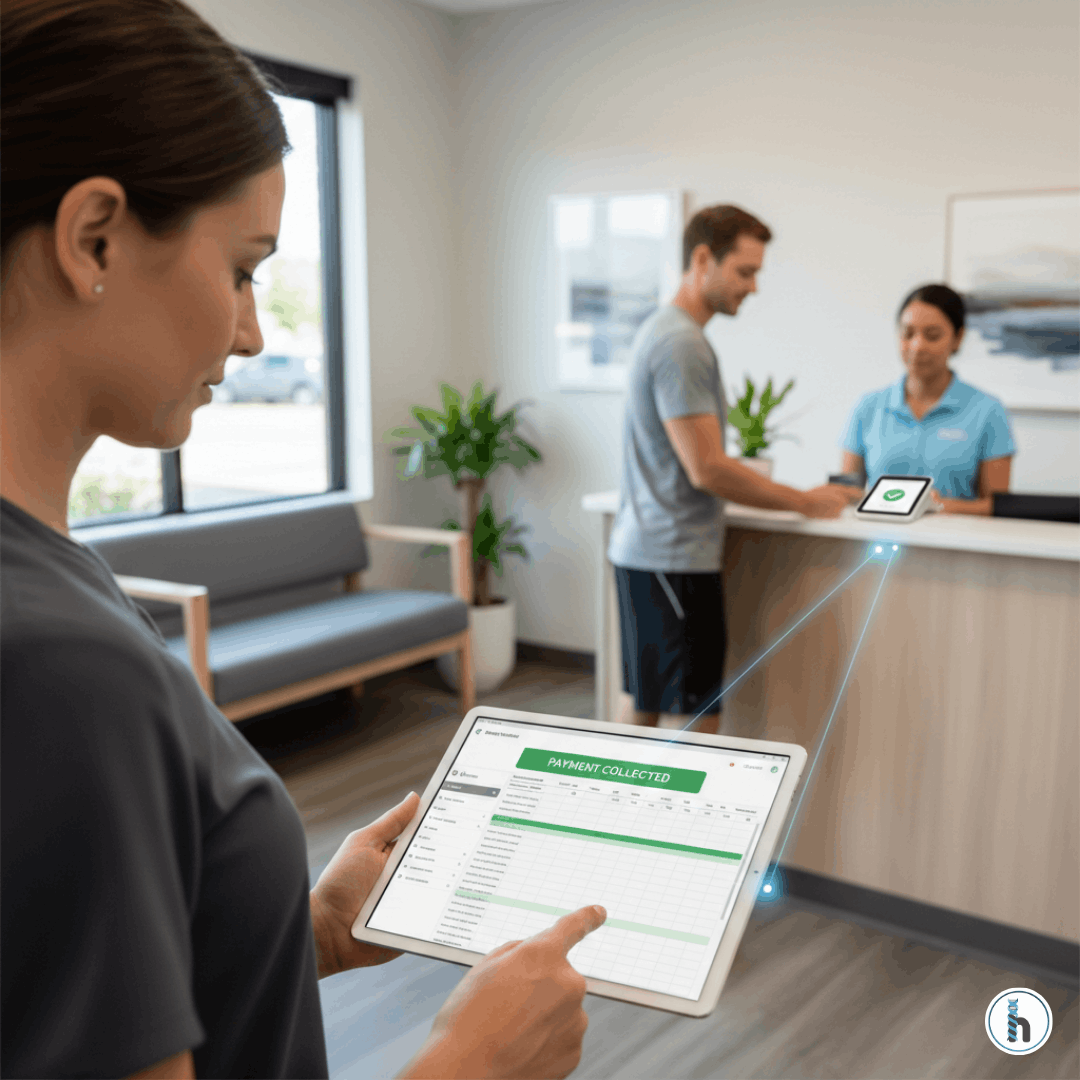
Therapy clinic staff reviewing EMR dashboard while collecting patient payment at the front desk using integrated HelloNote and Fiserv payment processing

Clover Payments Embedded Within Clinical Documentation

One of the most impactful outcomes of the HelloNote–Fiserv collaboration is the direct integration of Clover POS into the HelloNote workflow.

What This Enables for Therapy Clinics

Clinics can now:

    • Trigger copay or balance collection the moment a SOAP note is signed
    • Automatically flag outstanding balances for front-desk follow-up
    • Accept payments in-clinic or via secure email/text links
    • Reduce patient confusion around billing timing
    • Improve point-of-service collection rates

Early use cases show up to a 20% increase in point-of-service collections simply by aligning care delivery with payment collection.

How to Set Up Credit Card Processing in HelloNote

Step 1 – Access the Payments Tab

Step 2 – Open the Credit Card Profile

    • Click Credit Card Profile
    • Securely add, view, and manage stored payment methods

Step 3 – Enrollment & Integration

    • If not enrolled, contact HelloNote Support
    • Complete the Fiserv integration process
    • Receive setup instructions and agreements

Step 4 – Start Collecting Payments

Once activated, clinics can:

    • Store cards securely
    • Run charges at point of care
    • Automate balance collection
    • Support recurring billing where appropriate

All transactions are PCI-compliant and HIPAA-aligned.

Giving Small Practices Big Banking Power

Access to capital is a major growth barrier for many therapy practices. With real-time billing and revenue data flowing through the HelloNote–Fiserv system, clinics unlock new financial opportunities.

Financial Capabilities Enabled by Integration

    • Data-driven credit eligibility
    • Merchant cash advances
    • Financing tied to receivables
    • Revenue-linked financial dashboards

This gives solo and small group practices access to tools traditionally reserved for large healthcare systems.

Disrupting Legacy Systems in Rehab and Behavioral Health

Most EMRs stop at documentation.
Most payment platforms stop at transactions.

HelloNote and Fiserv unify both.

What Makes This Different

    • HIPAA + PCI compliance in one system
    • Unified front desk, clinical, billing, and finance workflows
    • Reduced software sprawl and vendor fatigue
    • Built specifically for PT, OT, SLP, and behavioral health operations

One Dashboard. Total Clarity.

Practice owners can now monitor:

    • Clinical productivity
    • Copay collection rates
    • Billing performance
    • Outstanding balances
    • Therapist-level unit economics

All in one place—without exporting reports or reconciling multiple systems.

The Future Is Already Here

By integrating clinical care delivery with financial infrastructure, HelloNote and Fiserv are empowering the care economy.

Therapy practices gain:

    • Stronger cash flow
    • Better patient experience
    • Reduced operational friction
    • Scalable, future-ready systems

Whether you’re a solo provider or a growing multi-location group, this collaboration is reshaping how modern therapy clinics operate.

Frequently Asked Questions

Q1: What is the HelloNote and Fiserv integration?

It’s a direct integration that embeds Fiserv’s payment processing (including Clover POS) into HelloNote’s EMR, allowing clinics to collect payments inside clinical workflows.

Q2: Is credit card data stored securely in HelloNote?

Yes. All payment data is handled through Fiserv’s PCI-compliant infrastructure and securely integrated into HelloNote.

Q3: Can clinics collect payments at the time of documentation?

Yes. Payments can be triggered when SOAP notes are signed or balances are identified—improving point-of-service collection.

Q4: Who benefits most from this integration?

PT, OT, SLP, and behavioral health clinics—especially small and growing practices that want enterprise-grade financial tools without added complexity.

Q5: Do clinics need additional hardware to use Clover payments?

No. Payments can be collected digitally via email/text links or existing setups, depending on clinic preference.

Ready to Activate Fiserv Payments Inside HelloNote?

Book a HelloNote demo or contact our support team to enable secure, in-session payment collection built for therapists and backed by global fintech infrastructure.

HIPAA Compliance: How to Ensure Your Therapy Practice is HIPAA Compliant

Table of Contents

Editor’s Note: This guide was originally published on August, 2022. It was comprehensively revised and updated on January 2026, to include the latest HHS regulations, the new February 2026 NPP requirements, and modernized encryption standards for rehab clinics.

Making sure you are following all the rules and regulations regarding HIPAA compliance as a new therapy practice owner can be stressful and confusing! In this article, we’ll go over the main policies of HIPAA compliance and the updated tools you can use to maintain regulations within your physical, occupational, or speech therapy practice.

HIPAA compliance for therapy practices

What is HIPAA and Why Is It Important?

The Health Insurance Portability and Accountability Act (HIPAA) was created in 1996 and requires covered entities to protect patient health information.

As therapists and assistants, we are subject to HIPAA requirements. While the core mission of protecting ePHI (electronic Protected Health Information) remains the same as it was in 2022, 2026 updates place a much heavier emphasis on patient data autonomy and cybersecurity transparency.

What penalties could you face in 2026?

The Office for Civil Rights (OCR) has increased enforcement focus. While they still offer a “correction period” for unintentional errors, the fines for willful neglect (such as not having a signed BAA or failing to perform a Risk Assessment) have risen with inflation:

    • Minimum Fine: ~$140 per violation for reasonable compliance.

    • Maximum Fine: Up to $2.1 million annually for systemic neglect.

The takeaway? Government organizations understand HIPAA is complex, but in 2026, they expect you to have a documented digital defense.

Key HIPAA Compliance Steps for 2026

1. The Mandatory Risk Assessment Plan

It is mandatory to create a plan for protecting your patients’ information. You must document:

    • Your Risks: Where is your data vulnerable? (e.g., mobile tablets, old backup drives).

    • Your Procedures: How do you handle a request for records?

    • Your Policies: Are your staff trained annually?

    • 2026 Requirement: You must now explicitly document how you protect sensitive records, including Substance Use Disorder (SUD) data and reproductive health info.

2. Encryption: Moving from "Addressable" to "Required"

In our original 2022 guide, encryption was often seen as an “extra” step. In 2026, it is essentially mandatory.

    • Communication: Standard texting is a violation. HelloNote includes secure, encrypted messaging within its EMR platform to keep your patient chats private.

    • Data at Rest: Any records stored on your computer or cloud must be encrypted using at least 256-bit standards.

3. Secure Record Storage & Password Management

Action Required: By February 16, 2026, all therapy practices must update their NPP. This is a significant change from our 2022 guide. Your updated notice must now:

    • Clearly explain protections for SUD records (42 CFR Part 2 alignment).

    • Inform patients of their right to opt out of certain data uses.

    • Provide a statement regarding the potential for data re-disclosure.

What to do if you discover a breach?

If you have a breach, notification within 60 days is required.

    • Update for 2026: If your Business Associates (like a billing company) experience a breach, they are now often required to notify you within 24 hours.

    • You must provide a description of the breach, the type of PHI involved, and the steps the individual should take to protect themselves.

Frequently Asked Questions

Q1: What is the biggest HIPAA change for my practice in 2026?

The most urgent update is the February 16, 2026, deadline to revise your Notice of Privacy Practices (NPP). You must update your NPP to reflect new protections for sensitive data, specifically alignment with 42 CFR Part 2 regarding Substance Use Disorder (SUD) records and new “Right of Access” timelines.

Q2: Do solo practitioners really need to do a Risk Assessment?

Yes. In 2026, the OCR is strictly enforcing the Security Risk Analysis (SRA). Even if you are a solo provider, you must document your asset inventory (laptop, tablet, EMR) and your plan to mitigate risks like data loss or unauthorized access.

Q3: Is standard SMS texting finally banned for patient communication?

While not explicitly “banned,” using standard unencrypted SMS for clinical communication in 2026 is considered high-risk and non-compliant unless the patient has signed a very specific “unencrypted communication waiver.” It is highly recommended to use the HelloNote Secure Messaging Portal instead.

Q4: How has the "Right of Access" changed for my patients?

Patients now expect faster access to their digital records. While the federal limit is still generally 30 days, 2026 best practices (and proposed rule changes) encourage providers to fulfill digital requests within 15 days whenever possible to avoid “Information Blocking” complaints.

Q5: Can I use AI-powered transcription or "Scribes" for my therapy notes?

Yes, but only if you have a signed Business Associate Agreement (BAA) with the AI vendor. In 2026, you must also ensure the AI tool does not use your patient’s ePHI to train its general models, as this could lead to an impermissible disclosure.

Summary

HIPAA compliance is a journey, not a destination. While the policies change every year, many standards can be met easily with a robust EMR system. HelloNote is happy to help you navigate these 2026 updates so you can focus on what matters most: your patients.

Is your clinic ready for the February 2026 deadline? Schedule a HelloNote Demo to see how our EMR automates your compliance.

How to Become a Massage Therapist: A Step-by-Step Career Guide

Table of Contents

Becoming a massage therapist isn’t just about learning techniques—it’s about building a career rooted in healing, communication, and long-term professional sustainability. Whether you’re exploring massage therapy as a new career or already enrolled in a program, understanding the full path to licensure and practice success can help you avoid early missteps.

This guide walks through the real journey to becoming a licensed massage therapist—and how modern tools like HelloNote can support your growth from training to long-term practice.

Understand the Career and Commit to the Path

Massage therapy offers personal meaning, clinical impact, and scheduling flexibility—but it also requires physical stamina, emotional intelligence, and business awareness.

What Makes Massage Therapy Unique

Licensed massage therapist reviewing client notes on a tablet in a modern treatment room, preparing for a professional massage therapy session.
    • Hands-on healing
      Help reduce pain, improve mobility, and manage stress through direct patient care.
    • Flexible work environments
      Opportunities exist in clinics, spas, hospitals, sports facilities, and private practice.
    • Strong client relationships
      Progress is often tangible and immediately felt, building trust and long-term loyalty.

What to Expect Professionally

    • Income is typically tied to sessions delivered
    • Physical burnout is real without proper body mechanics and pacing
    • Boundary-setting and communication are core professional skills

Massage therapy is rewarding—but success requires intention, not just talent.

Complete a State-Approved Massage Therapy Program

Formal education is a non-negotiable step toward licensure

What to Look For in a Massage Therapy School

Core Curriculum Topics

    • Anatomy, physiology, and kinesiology
    • Massage techniques (Swedish, deep tissue, myofascial, etc.)
    • Pathology for bodywork professionals
    • Ethics, boundaries, and state regulations
    • Business practices and clinical documentation

Tip: If you plan to relocate or practice across states, select a program with broad recognition to simplify future licensing.

Pass the Licensing Exam (Usually the MBLEx)

After completing your program, you’ll need to pass a licensing exam most commonly the MBLEx, administered by the FSMTB.

Gain Experience and Choose a Specialty

Most therapists begin their careers in structured environments before going independent.

Entry-Level Work Settings

    • Chiropractic or physical therapy clinics
    • Sports rehabilitation centers
    • Wellness spas or massage franchises
    • Mobile massage services

Popular Massage Therapy Specializations

    • Medical massage – rehab, injury recovery, chronic pain
    • Sports massage – athletes and performance recovery
    • Prenatal massage – pregnancy-safe therapeutic care
    • Oncology massage – gentle, condition-specific treatment

Specialization helps therapists command higher rates, attract ideal clients, and reduce burnout through focused care

Build a Sustainable Massage Therapy Practice

Clinical skill alone doesn’t build a long-term career. Operations matter.

Operational Skills That Matter Most

    • Client retention – results, rapport, and follow-up
    • Policy management – cancellations, packages, boundaries
    • Documentation – accurate SOAP notes for legal and clinical safety
    • Branding and marketing – clear positioning in a competitive market

The #1 Bottleneck for New Therapists: Documentation

Manual SOAP notes drain time and energy. New therapists often fall behind or under-document, increasing legal and financial risk.

How HelloNote Supports Massage Therapists

HelloNote is built to support massage therapists from day one.

Tools Designed for Real-World Practice

    • Custom SOAP templates that match your treatment style
    • Faster note completion using structured fields and voice-to-text
    • Smart billing support with note-to-code prompts
    • Automated appointment reminders to reduce no-shows
    • Package and membership tracking for prepaid plans

Instead of juggling paperwork, therapists can focus on care—and longevity.

Grow Without Burning Out

A massage therapy career should last decades, not years.

Long-Term Success Tips

    • Protect your body with smart scheduling and rest
    • Enforce boundaries with clear policies
    • Continue learning through CEUs and advanced training
    • Use systems—not memory—to run your business

Modern tools help therapists scale sustainably without sacrificing health or income.

Final Thoughts — More Than a Job, a Calling

Massage therapy blends science, skill, and human connection. With the right foundation—education, licensure, specialization, and modern systems—you can build a career that’s flexible, impactful, and built to last.

HelloNote helps massage therapists stay compliant, organized, and confident at every stage of their journey.

Frequently Asked Questions

Q1: How long does it take to become a massage therapist?

Most programs take 6–12 months to complete, depending on required hours and scheduling.

Q2: Do all states require the MBLEx?

Most states accept the MBLEx, but some have additional or alternative requirements. Always check your state board.

Q3. Can massage therapists run private practices?

Yes. Many therapists eventually transition to solo or group practices, though business systems are critical for success.

Q4: Is documentation required for massage therapists?

Yes. SOAP notes are essential for legal protection, continuity of care, and billing—especially in clinical or insurance-based settings.

Ready to simplify your documentation and grow your massage practice?
Book a HelloNote demo and see how we support therapists at every stage of the journey.

You've found a hidden discount!

  • 00Hours
  • 00Minutes
  • 00Seconds