



















You've found a hidden discount!

HN Unlock Layer 1
HN Unlock Layer 2
HN Unlock Layer 3
HN Unlock Layer 4
HN Unlock Layer 5
  • 00Hours
  • 00Minutes
  • 00Seconds

Category: Blogs

Patient Engagement & Communication Tools for Therapy Clinics

Table of Contents

Strong patient engagement doesn’t come from sending more messages.
It comes from sending the right communication, at the right time, through tools that fit naturally into your clinic’s workflow.

For therapy practices, communication affects everything attendance rates, documentation accuracy, staff workload, and patient trust.

HelloNote’s Patient Engagement & Communication tools are built specifically for how therapy clinics operate. From digital intake and secure internal chat to targeted announcements and automated review requests, everything lives inside your EMR, so nothing gets lost and nothing lives outside compliance.

This article breaks down how HelloNote helps therapy clinics stay connected, organized, and compliant without adding administrative burden.

Front desk staff assisting a therapy patient with digital intake using a tablet in a modern clinic waiting area

Why Patient Engagement Matters in Therapy Clinics

Patient engagement is not a “soft” metric. It directly impacts:

    • Appointment show rates
    • Front desk efficiency
    • Documentation accuracy
    • Patient satisfaction and retention
    • Online reputation and referrals

When communication tools are fragmented emails in one system, forms in another, texts on personal phones clinics lose time, visibility, and control.

HelloNote centralizes patient communication inside the EMR, where clinical context, compliance, and workflows already live.

A Patient Portal That Patients Actually Use

Simple, Secure Access Without Confusion

Patients shouldn’t need instructions just to complete paperwork.

HelloNote’s Patient Portal gives patients a clear, secure place to:

Because the portal connects directly to the patient record, completed forms flow straight into the chart no scanning, uploading, or chasing paperwork.

Why this matters:
Cleaner records, faster check-ins, and fewer front-desk interruptions.

Digital Intake & Consent Forms That Fit Your Workflow

Paper intake slows down clinics and increases errors.

HelloNote replaces paper with customizable digital intake and consent forms that clinics can tailor to their services and compliance needs.

Clinics can:

    • Create their own intake and consent forms
    • Add secure digital signatures
    • Send forms before the first visit
    • Automatically store completed forms in patient documents

Forms are sent directly from the patient record and returned securely without faxing, scanning, or manual uploads.

For patients: Less waiting
For staff: Fewer errors and cleaner documentation

HIPAA-Compliant Internal Chat Built for Real Team Communication

Secure Messaging Where Care Happens

Therapy clinics rely on constant coordination between front desk staff, clinicians, and billing teams.

HelloNote includes HIPAA-compliant internal chat, allowing teams to communicate securely inside the EMR, without personal devices or third-party apps.

Your team can:

    • Ask quick internal questions
    • Coordinate care and scheduling
    • Reduce hallway interruptions
    • Keep communication tied to patient context

No personal phones.
No outside messaging apps.
No compliance guesswork.

Everything stays secure, documented, and accessible to the care team.

Announcement Blasts for Teams, Patients, and Referral Sources

One Tool for All Clinic-Wide Communication

Some messages need to scale, and they need to stay consistent.

HelloNote’s Announcement Blast feature allows clinics to send targeted messages through email, SMS, or eFax—all from inside the EMR.

Internal Announcements

Perfect for:

    • Schedule changes
    • Policy updates
    • Team reminders
    • Operational notices

Patient & Marketing Announcements

Ideal for:

    • Holiday hours
    • Office closures
    • New services or programs
    • General practice updates

Clinics can:

    • Send announcements to all contacts or selected groups
    • Save messages as reusable templates
    • Maintain consistent communication across teams and patients

Why this matters:
Clear communication builds trust—and reduces confusion.

Automated Review Requests That Feel Natural

Encourage Feedback Without the Awkward Ask

Reviews matter but asking manually is inconsistent and often uncomfortable.

HelloNote helps clinics send automated review requests at the right moment in the patient journey, while the experience is still fresh.

This supports:

    • Online reputation growth
    • Patient trust
    • Local visibility in search results

Because it’s built into your workflow, your team doesn’t have to remember when—or how—to ask.

How Centralized Communication Improves Daily Clinic Operations

When communication tools are disconnected, clinics experience:

    • Missed messages
    • Duplicate work
    • Compliance risk
    • Frustrated staff and patients

HelloNote’s patient engagement tools are designed for real therapy clinic workflows, supporting:

    • Multiple staff roles
    • HIPAA compliance requirements
    • High patient volume
    • Limited administrative time

Everything stays centralized.
Everything stays secure.
Everything stays visible.

One Platform. Clear Communication. Better Patient Experience.

When patients know what to expect and staff don’t have to chase information clinics run smoother.

HelloNote’s Patient Engagement & Communication features help clinics:

    • Reduce administrative friction
    • Improve patient responsiveness
    • Maintain HIPAA compliance
    • Keep communication organized and traceable

If your clinic is ready to simplify how you connect with patients without adding more systems HelloNote is built for that.

Explore HelloNote’s patient engagement tools or schedule a demo to see how it fits into your daily workflow.

Frequently Asked Questions (FAQ)

Q1. What is patient engagement in a therapy clinic?

Patient engagement refers to how clinics communicate with patients throughout their care journey—appointments, intake, follow-ups, reminders, and ongoing updates.

Q2. How does an EMR improve patient communication?

An EMR centralizes communication, forms, reminders, and documentation in one system, reducing errors and improving visibility across the care team.

Q3. Is HelloNote’s communication HIPAA compliant?

Yes. HelloNote’s patient portal, internal chat, forms, and announcements are designed to meet HIPAA compliance standards.

Q4. Can patients communicate with clinics without calling the front desk?

Yes. HelloNote supports portal-based communication, digital intake, automated reminders, and announcements—reducing phone volume.

Q5. Do automated reminders actually reduce no-shows?

Yes. Automated email and SMS reminders significantly reduce missed appointments by keeping patients informed and prepared.


Therapy Scheduling Software That Improves Patient Flow

Table of Contents

In a therapy practice, scheduling isn’t just about filling time slots.
It’s about managing patient expectations, reducing no-shows, protecting staff time, and keeping the entire clinic aligned throughout the day.

HelloNote’s Scheduling & Patient Flow tools are built specifically for therapy clinics—supporting real-world workflows for physical therapy, occupational therapy, speech therapy, and multidisciplinary practices.

From the moment an appointment is booked to the moment a patient is discharged, HelloNote helps clinics stay organized, efficient, and patient-centered.

Customize Your Therapy Clinic Calendar to Match Your Workflow

Therapy clinic front desk staff coordinating schedules while patients wait in an organized reception area

No two therapy clinics operate the same way. Some need a tight daily view. Others plan weeks ahead across multiple providers.

HelloNote allows clinics to customize how many days appear in the schedule, making it easier to focus on what matters most—whether that’s today’s patient load or future availability.

Block Time to Protect Staff and Prevent Errors

Clinics can block time directly on the calendar for:

    • Lunch breaks
    • Team meetings
    • Vacation days
    • Administrative or documentation time

Blocked time appears clearly on the schedule, preventing double-booking and last-minute disruptions.

Why this matters:
Clear calendars reduce scheduling mistakes, staff burnout, and workflow interruptions—especially in busy outpatient clinics.

Offer Online Scheduling Through Your Therapy Website

Modern patients expect convenience. HelloNote makes it easy to offer online appointment scheduling through a secure Patient Portal link embedded directly on your clinic website.

Patients can book appointments without calling the front desk, while staff maintain full control over availability and appointment rules.

Why this matters:
Online scheduling reduces phone volume, captures appointments after hours, and improves the patient experience without increasing admin workload.

Automated Appointment Confirmations That Reduce Confusion

Once an appointment is scheduled, HelloNote automatically sends appointment confirmations via email and SMS.

These confirmations clearly communicate:

    • Appointment date and time
    • Location or clinic details
    • Reassurance that the visit is booked

Why this matters:
Clear confirmations reduce cancellations caused by uncertainty and miscommunication.

Appointment Reminders That Reduce No-Shows

Missed appointments cost clinics time, revenue, and care continuity. HelloNote helps reduce no-shows with automated appointment reminders sent by email and SMS.

Clinics can:

    • Enable reminders per patient
    • Choose when reminders are sent (hours or days before visits)
    • Use email, SMS, or both
    • Include confirmation links when needed

If a patient accidentally unsubscribes, resubscribing is simple and quick.

Why this matters:
Consistent, automated reminders significantly reduce no-shows without adding extra work for your staff.

Internal Task and Event Reminders for Therapy Teams

Patient care doesn’t stop when a visit ends. Follow-ups, documentation, and administrative tasks all require coordination.

HelloNote supports internal reminders using two built-in tools:

Patient Alerts

Persistent notes attached directly to a patient’s chart—ideal for ongoing reminders or special instructions.

Event Reminders

Time-based reminders with due dates and notifications for tasks like authorizations, follow-ups, or discharge planning.

Why this matters:
Internal reminders help teams stay organized without relying on memory, sticky notes, or disconnected systems.

Real-Time Patient Status Tracking Across Your Clinic

Knowing where each patient stands—at a glance—improves coordination across front desk and clinical teams.

HelloNote’s Patient Status Tracker allows clinics to view and update patient statuses in real time, including:

    • Active
    • Evaluation
    • Inactive
    • Needs Authorization
    • Needs Eligibility
    • Needs Discharge

Statuses can be updated instantly using drag-and-drop functionality.

Why this matters:
Real-time visibility reduces delays, improves communication, and supports better operational decisions across the clinic.

Scheduling and Patient Flow Built for Real Therapy Clinics

HelloNote’s scheduling features are not isolated tools. They work together as a connected system designed around therapy workflows.

From online scheduling and automated reminders to internal alerts and patient status tracking, HelloNote helps clinics:

    • Reduce administrative burden
    • Improve patient communication
    • Protect clinician and staff time
    • Support consistent, high-quality care

If your clinic needs scheduling that works with your workflow—not against it—HelloNote is built for therapy practices.

Frequently Asked Questions About Therapy Scheduling Software

Q1. What is therapy scheduling software?

Therapy scheduling software helps clinics manage appointments, provider availability, patient communication, and workflow coordination in one system designed specifically for rehab therapy practices.

Q2. How does scheduling software reduce no-shows?

Automated appointment confirmations and reminders via email and SMS keep patients informed and reduce missed visits caused by forgetfulness or confusion.

Q3. Can patients schedule therapy appointments online?

Yes. HelloNote allows clinics to offer online scheduling through a secure Patient Portal link on their website.

Q4. Can staff block time on the schedule?

Yes. Clinics can block time for lunches, meetings, vacations, and administrative tasks directly on the calendar.

Q5. How does patient status tracking help clinic operations?

Real-time patient status tracking improves coordination between front desk and clinical teams, reduces delays, and helps clinics prioritize next steps like authorizations or discharges.

Physical Therapist Assistant vs. Physical Therapy Tech: What Clinic Owners Must Know About Compliance, Billing, and Scope

Table of Contents

For physical therapy clinic owners, understanding the difference between a Physical Therapist Assistant (PTA) and a Physical Therapy Tech (also called an aide) is not just a staffing issue—it’s a compliance, billing, and risk management decision.

Using these roles incorrectly can trigger:

Used correctly, however, PTAs and Techs can dramatically improve clinic efficiency, patient throughput, and profitability.

This guide breaks down the real operational differences between PTAs and PT Techs, explains what each role can and cannot do, and shows how clinics can stay compliant using proper documentation and supervision workflows.

Physical therapist assistant providing supervised therapeutic exercise to a patient while a physical therapy technician prepares equipment in a modern outpatient clinic

Understanding the Core Difference Between a PTA and a PT Tech

At a high level, the distinction comes down to licensure, scope of practice, and billability.

Physical Therapist Assistant (PTA) — A Licensed Clinical Provider

A PTA is a licensed healthcare professional who has:

    • Completed an accredited associate degree program
    • Passed a national licensing exam
    • Obtained state licensure

PTAs provide skilled therapy services under the supervision of a Physical Therapist.

What PTAs are allowed to do:

    • Deliver treatments from the PT’s established plan of care
    • Perform therapeutic exercises and activities
    • Administer modalities such as ultrasound or e-stim
    • Track patient progress and report clinical findings
    • Educate patients on home exercise programs

Key point:
PTAs can deliver billable services when supervision rules are met.

Physical Therapy Tech (Aide) — An Unlicensed Support Role

A Physical Therapy Tech is not licensed and does not provide skilled care.

Techs support clinic operations and patient flow but must work under direct, continuous supervision.

What Techs are allowed to do:

    • Prepare treatment rooms and equipment
    • Clean and organize clinic spaces
    • Transport patients
    • Assist with scheduling and administrative tasks
    • Set up hot/cold packs or equipment (with supervision)

What Techs cannot do:

    • Lead therapeutic exercises
    • Provide skilled interventions
    • Make clinical decisions
    • Document skilled care
    • Bill for services

Key point:
Services performed by Techs are not billable to insurance.

Why the PTA vs. Tech Distinction Matters for Compliance and Billing

Many clinics get into trouble not because of poor care but because of role misuse.

Billing and Reimbursement Rules

    • PTA services = billable (with proper supervision and documentation)
    • Tech services = never billable

If a Tech performs tasks that resemble skilled care—even with good intentions—claims can be denied or clawed back during audits.

Legal and Regulatory Risk

Common compliance violations include:

    • Techs leading exercises
    • Techs documenting patient care
    • PTAs working without required supervision
    • Missing or late co-signatures

These issues can result in:

    • Medicare audits
    • Commercial payer recoupments
    • State board disciplinary action

How Clinics Should Use PTAs and Techs Strategically

When roles are used correctly, both positions add tremendous value.

Maximizing PTA Clinical Value

Best practices for PTAs:

    • Assign PTAs their own treatment schedules
    • Let PTs focus on evaluations, re-evaluations, and complex cases
    • Use PTAs to increase total patient capacity

This model improves access to care without increasing PT burnout.

Leveraging PT Techs for Operational Efficiency

Techs shine when they:

    • Own clinic logistics
    • Handle setup and breakdown between patients
    • Reduce downtime for PTs and PTAs

In some states, Techs may monitor pre-established exercises under direct supervision—but this varies by practice act and payer policy.

Documentation and Supervision Rules You Cannot Ignore

The Documentation Golden Rule

The person who performs the skilled service must document it.

    • PTA provides treatment → PTA documents
    • PT reviews and co-signs PTA notes
    • Techs never document skilled care

Failure to follow this rule is a top audit trigger.

Supervision Requirements (High-Level Overview)

    • PTA supervision: PT must be available and involved (varies by state)
    • Tech supervision: Direct, in-room supervision during patient interaction

Always follow the strictest rule between:

How HelloNote Helps Clinics Stay Compliant Across Roles

Technology plays a critical role in preventing scope-of-practice violations.

Role-Based Access Controls

HelloNote allows clinics to:

    • Grant PTAs access to documentation and scheduling
    • Restrict Techs to non-clinical modules
    • Prevent unauthorized charting automatically

This removes guesswork and reduces human error.

Co-Signature and Supervision Workflows

    • PTA notes are automatically routed to supervising PTs
    • Alerts flag missing co-signatures
    • Managers can audit supervision history at any time

This protects both clinicians and the clinic.

Protecting Clinical Time

With streamlined templates and workflows:

    • PTs and PTAs document faster
    • Techs keep the clinic moving
    • Everyone works at the top of their license

PTA vs. PT Tech — Quick Comparison Table

Role

Licensed

Billable

Primary Function

PTA

Yes

Yes

Deliver skilled therapy under PT plan

PT Tech

No

No

Support clinic flow and operations

Frequently Asked Questions (FAQ)

Q1. Can a Physical Therapy Tech bill insurance?

No. PT Tech services are not billable under Medicare or commercial insurance.

Q2. Can a PTA document patient care?

Yes. PTAs document the services they provide, but those notes typically require PT review and co-signature.

Q3. Can a Tech supervise exercises?

Only in limited circumstances, under direct supervision, and depending on state practice acts. These services are still not billable.

Q4. What happens if a Tech performs skilled care?

Claims may be denied, recouped, or flagged during audits. Repeated violations can lead to payer or board action.

Q5. How can clinics prevent role misuse?

By setting clear protocols, training staff, and using EMR systems with role-based permissions and supervision tracking.

Final Takeaways for Clinic Owners

    • PTAs generate revenue through skilled care
    • Techs increase efficiency by supporting operations
    • Mixing scopes creates serious compliance risk
    • Clear protocols + proper EMR controls are essential

Clinics that understand—and respect—these boundaries are better positioned to scale safely, remain compliant, and protect revenue.

Conclusion

A Physical Therapist Assistant is a clinical extender.
A Physical Therapy Tech is a capacity builder.

Both are valuable but only when used correctly.

With clear role definitions, proper supervision, and the right EMR safeguards in place, clinics can grow confidently without exposing themselves to unnecessary compliance risk.

Want to see how HelloNote protects your clinic while improving efficiency?
Book a demo today and see how role-based workflows make compliance easier for every member of your team.

Avoiding Therapy Claim Denials: Common CPT Code Mistakes and How to Fix Them

Table of Contents

Therapy claim denials are one of the most expensive and time-consuming problems therapy clinics face. Whether you run a physical therapy, occupational therapy, or speech therapy practice, claim denials disrupt cash flow, increase administrative workload, and slow down patient care.

Most therapy claim denials don’t happen because care was inappropriate. They happen because of CPT coding mistakes, documentation gaps, or misalignment between notes and billing. The good news is that many of these issues are preventable with the right workflows and tools.

This guide breaks down the most common CPT code mistakes that lead to therapy claim denials and what clinics can do to reduce denials, protect reimbursement, and stay compliant.

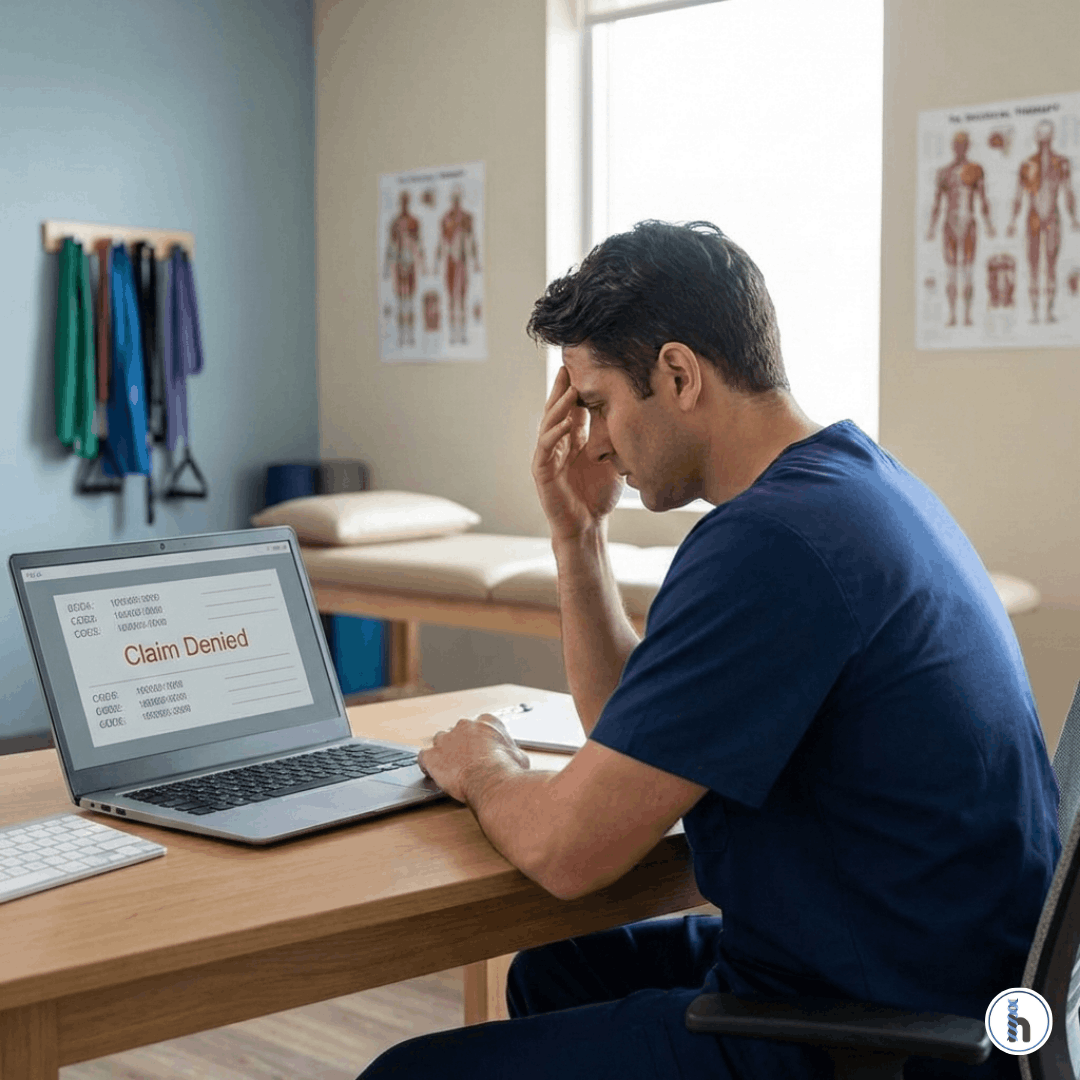
Physical therapist reviewing a denied insurance claim on a laptop in a therapy clinic, highlighting common CPT code mistakes that lead to therapy claim denials.

Why Therapy Claim Denials Are So Costly for Clinics

Every denied claim creates a ripple effect across your practice.

Common consequences include:

    • Delayed or lost reimbursement
    • Increased staff time spent on rework and appeals
    • Higher audit risk
    • Strained relationships with payers and patients

Over time, frequent therapy claim denials can significantly impact clinic profitability and staff morale. Preventing denials at the documentation and coding stage is far more effective than appealing them later.

The Most Common CPT Code Mistakes That Lead to Denials

Medical Necessity Is Not Clearly Supported

Why it happens
Payers often deny claims when documentation does not clearly demonstrate why skilled therapy services are required.

How to fix it

    • Tie every intervention directly to a diagnosis and functional limitation
    • Document why skilled therapy is needed instead of self-directed care
    • Show how the treatment addresses measurable deficits

Example
Instead of:
“Manual therapy performed.”

Document:
“Manual therapy performed to improve joint mobility and reduce pain limiting independent transfers.”

Inadequate or Vague Documentation

Why it happens
Notes may describe what was done, but not why it was done or how it impacts function.

How to fix it

    • Link each CPT code to a functional goal
    • Document measurable progress or lack of progress
    • Show skilled decision-making in every session

Clear documentation is one of the strongest defenses against therapy claim denials.

Duplicate Billing and Overlapping CPT Codes

Why it happens
Some therapy CPT codes overlap in intent, such as:

If the distinction is not clear, payers may deny one or more codes.

How to fix it

    • Clearly differentiate the purpose of each code in documentation
    • Use modifiers appropriately when required
    • Avoid billing multiple codes for the same activity

Exceeding Frequency or Utilization Limits

Why it happens
Re-evaluations, modalities, or specific interventions may be billed too frequently without adequate justification.

How to fix it

    • Understand payer-specific frequency limits
    • Justify additional services with clear clinical rationale
    • Document changes in status that require reassessment

Incorrect Coding for Emerging or Specialized Therapies

Why it happens
Some treatments are considered experimental or have limited coverage depending on the payer.

How to fix it

    • Verify coverage before providing the service
    • Obtain authorization when required
    • Document why standard treatments were insufficient

Failing to do this increases the risk of therapy claim denials and post-payment audits.

How to Appeal Therapy Claim Denials Effectively

Even with strong workflows, some denials still happen. A structured appeal process makes a significant difference.

Step 1 – Identify the Exact Denial Reason

Review the Explanation of Benefits (EOB) carefully to determine whether the issue is coding-related, documentation-related, or authorization-related.

Step 2 – Strengthen the Clinical Narrative

Include:

    • Detailed treatment notes
    • Functional progress data
    • Letters of medical necessity when appropriate

Step 3 – Submit Appeals on Time

Most payers enforce strict deadlines. Late appeals are often automatically denied.

Step 4 – Track Denial Patterns

Recurring denial reasons often point to workflow or documentation issues that need system-level fixes.

How Technology Helps Reduce Therapy Claim Denials

HelloNote is designed specifically for therapy workflows, helping clinics reduce CPT coding mistakes and documentation gaps before claims are submitted.

Key support areas include:

    • CPT-linked documentation templates
    • Modifier prompts based on discipline (PT, OT, SLP)
    • Medical necessity alignment within notes
    • Billing and documentation consistency across visits
    • Audit-ready reporting and compliance support

The result is fewer denials, less rework, and more predictable reimbursement.

Frequently Asked Questions (FAQs)

Q1. What causes most therapy claim denials?

The most common causes are CPT coding errors, lack of documented medical necessity, overlapping codes, missing modifiers, and incomplete progress documentation.

Q2. How can clinics reduce CPT coding mistakes?

By using standardized documentation workflows, understanding payer rules, and leveraging therapy-specific EMR systems that align notes with billing.

Q3. Are therapy claim denials always final?

No. Many denials can be overturned through appeals when supported by strong documentation and medical necessity justification.

Q4. Does better documentation really improve reimbursement?

Yes. Clear, functional, and goal-driven documentation significantly reduces denials and audit risk.

Q5. How does HelloNote help prevent therapy claim denials?

HelloNote supports accurate CPT coding, modifier usage, documentation alignment, and compliance—reducing errors before claims are submitted.

Key Takeaways for Therapy Clinics

    • Most therapy claim denials are preventable
    • CPT coding mistakes are a leading cause of lost revenue
    • Documentation quality directly impacts reimbursement
    • Clear workflows reduce administrative burden
    • A therapy-focused EMR helps protect the revenue you earn

Avoiding therapy claim denials starts long before claims are submitted. It begins with how care is documented, coded, and aligned with payer expectations.

2026 RTM Code Update: What Therapy Clinics Need to Know About 98985 & 98979 

Table of Contents

As of January 1, 2026, Medicare has implemented important updates to Remote Therapeutic Monitoring (RTM) billing that directly affect physical therapy, occupational therapy, and speech-language pathology practices.

These updates introduce new HCPCS codes and revise existing ones, changing how clinics document, bill, and get paid for RTM services. For therapy clinics using digital monitoring tools, home exercise tracking, or hybrid care models, these changes are not optional—they directly impact reimbursement, compliance, and audit risk.

This guide breaks down:

    • What changed in the 2026 RTM code update
    • How codes 98985 and 98979 are used
    • What Medicare expects from therapy documentation
    • Common billing pitfalls to avoid
    • How clinics can operationalize RTM correctly in 2026

What Changed in the 2026 RTM Code Update

In late 2025, CMS released Transmittal 13431, updating the Medicare Therapy Code List and expanding RTM-related billing options.

New and Updated RTM Codes for 2026

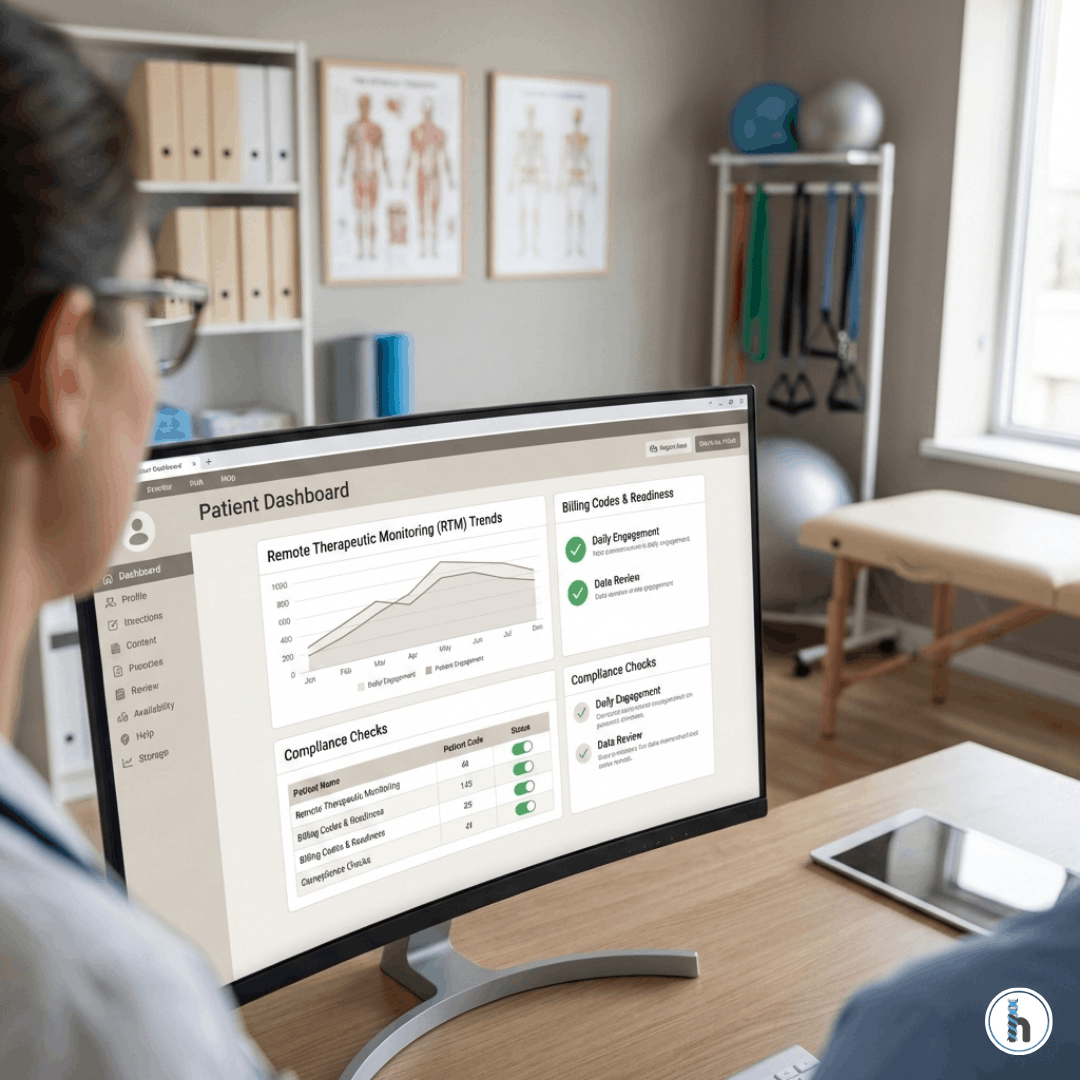
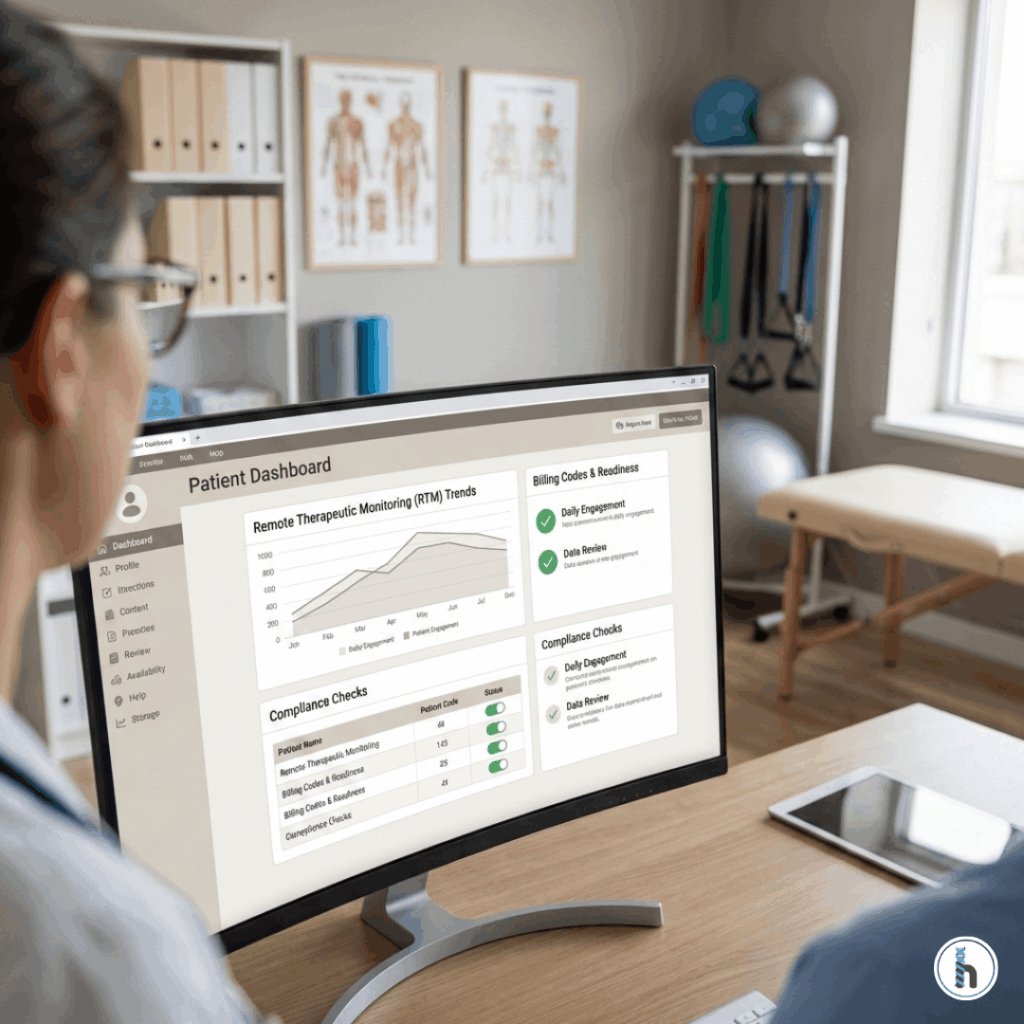
Physical therapist reviewing a therapy EMR dashboard showing remote therapeutic monitoring (RTM) trends, billing readiness, and compliance checks for Medicare RTM codes 98985 and 98979 in a modern clinic setting.

Medicare now recognizes the following RTM-related HCPCS codes as “Sometimes Therapy” services when billed by therapists:

    • 98985 – RTM device supply for musculoskeletal monitoring, 2–15 days in a 30-day period
    • 98984 – RTM device supply for respiratory monitoring, 2–15 days
    • 98979 – RTM treatment management services, first 10 minutes per calendar month

In addition, existing codes were updated:

    • 98976 / 98977 now cover 16–30 days of monitoring instead of shorter periods

Why “Sometimes Therapy” Classification Matters

When therapists bill these RTM codes, Medicare requires:

  • An active therapy plan of care
  • The correct discipline-specific modifier
    • GP for PT
    • GO for OT
    • GN for SLP
    • Documentation that clearly ties RTM services to skilled therapy intervention

Failure to meet these conditions can result in denials or post-payment audits.

Why the 2026 RTM Update Matters for Therapy Clinics

Clinics that fail to adapt to the 2026 update may face:

    • Claim denials due to invalid or outdated codes
    • Lost revenue from uncompensated services
    • Compliance exposure from missing modifiers or unsupported documentation

Medicare is increasingly strict about RTM claims, especially when services overlap with traditional therapy visits.

Documentation Expectations for RTM Billing in 2026

RTM services must be clearly distinguishable from routine therapy care.

What Medicare Expects to See in RTM Documentation

To support codes like 98985 and 98979, documentation should include:

    • Evidence of device-based monitoring
    • Clear linkage to the therapy plan of care
    • Description of data reviewed (adherence, performance, trends)
    • Therapist interpretation and clinical decision-making
    • Time spent on RTM treatment management (for 98979)

RTM documentation should demonstrate skilled oversight, not passive data collection.

Modifier Requirements for RTM Codes

Correct modifier usage is critical.

RTM Modifier Summary for Therapy Clinics

Code

Description

Required Modifier

98985

MSK RTM device supply (2–15 days)

GP / GO / GN

98979

RTM treatment management (first 10 mins)

GP / GO / GN

98976 / 98977

RTM device supply (16–30 days)

GP / GO / GN

CQ / CO

Assistant involvement

Only when applicable

Missing or incorrect modifiers remain one of the top RTM denial triggers.

Operational Steps Clinics Should Take Now

Even with system support, clinics must align workflows.

1. Educate Clinical and Billing Teams

Ensure therapists understand:

    • When RTM services qualify for billing
    • Which codes apply to which scenarios
    • How documentation supports reimbursement

2. Review RTM Workflows

Confirm that:

    • RTM services are triggered intentionally
    • Goals and outcomes are clearly documented
    • Time-based services are tracked accurately

3. Monitor Early 2026 Claims

During the first quarter of 2026:

    • Track RTM claim approval rates
    • Identify denial patterns early
    • Adjust documentation or modifier use if needed

Example RTM Billing Workflow (PT Scenario)

A physical therapist monitors a patient’s home exercise compliance using a digital MSK device:

    • The therapist assigns RTM monitoring for 10 days
    • RTM data is reviewed and interpreted within the therapy plan
    • 98985 (GP modifier) is billed for device monitoring
    • At month’s end, the therapist spends 10 minutes reviewing trends and adjusting care
    • 98979 (GP modifier) is billed for RTM treatment management

When documented and billed correctly, this workflow supports clean claims and compliant reimbursement.

Frequently Asked Questions (FAQ)

Q1. What is RTM in therapy billing?

Remote Therapeutic Monitoring (RTM) allows therapists to bill for monitoring patient data collected via approved devices between visits, when tied to a therapy plan of care.

Q2. What are the new RTM codes for 2026?

The key additions are 98985 (MSK device supply, 2–15 days) and 98979 (RTM treatment management, first 10 minutes).

Q3. Can PTs, OTs, and SLPs bill RTM codes?

Yes, when RTM services are part of an active therapy plan of care and billed with the correct discipline-specific modifier.

Q4. Do RTM services require time tracking?

Yes. Time must be documented for treatment management services like 98979.

Q5. What is the biggest RTM billing mistake clinics make?

The most common issues are missing modifiers, weak documentation linking RTM to skilled therapy, and using outdated codes.

Final Takeaway for 2026

The 2026 RTM update is not a minor coding change—it represents Medicare’s continued shift toward digitally supported therapy care.

Clinics that adapt early will benefit from:

    • Expanded reimbursable services
    • Stronger continuity of care
    • Reduced billing friction

Clinics that delay risk denials, audits, and unnecessary revenue loss.

PT Insurance Reimbursement in New York City: What Clinics Really Get Paid

Table of Contents

Physical therapy practice owners across New York City ask this question constantly:

What does insurance actually pay for PT in NYC?

The honest answer is nuanced but clearer when grounded in real contract data.

New York City does not publish standardized commercial insurance fee schedules for physical therapy. Reimbursement is contract-driven, varies by payer and plan type, and can differ significantly between clinics even within the same borough.

That said, clinics do see consistent patterns. Below is a PT-focused breakdown of real-world insurance reimbursement levels currently seen in New York City, what insurers expect to see in documentation, and why two clinics can be paid very differently for the same care.

Exterior of a physical therapy clinic in New York City, illustrating the real-world setting where PT insurance reimbursement and payer contracts impact clinic operations.

Important Context Before Reviewing PT Reimbursement Numbers

Before looking at any dollar amounts, it’s important to understand what these figures represent:

    • These are observed reimbursement amounts, not guaranteed rates

    • Payment varies by CPT code mix, not just by payer

    • Contracts differ by borough, plan type, and contract age

    • Legacy contracts often reimburse differently than newer agreements

    • Medicaid, commercial, union, and Workers’ Compensation plans behave very differently

There is no true “average” PT reimbursement rate in New York City—only patterns clinics commonly experience.

Note: New York City does not publish standardized commercial PT fee schedules. The figures below reflect real-world contract data shared by NYC physical therapy clinics and should not be interpreted as universal payer rates.

Real-World PT Reimbursement in New York City (Observed Clinic Contracts)

Below is a PT-specific snapshot aligned with what clinics are actively seeing across New York City insurance plans:

Insurance PlanTypical PT Reimbursement (NYC)Notes
HealthFirst~$50Common for Medicaid & community plans
BCBS NY (JLJ Plans)~$65Union plans often reimburse higher
EmblemHealth (GHI)~$35Frequently lower on older contracts
UHC Community Plan~$55Medicaid-based
1199SEIU Funds~$50Varies by fund structure
Fidelis Care~$78Higher-end contracts, wide variation
MetroPlus~$55NYC-focused Medicaid plans
Aetna~$64.50Strong commercial reimbursement
Cigna~$68Often among higher commercial payers
NY Workers’ Compensation~$114*Fee-schedule based

*Workers’ Compensation follows a state fee schedule and varies by CPT code, borough, and billing structure. It should not be treated as a flat “average.”

Why PT Reimbursement Varies So Much in New York City

Lower reimbursement is not always a payer issue. In most cases, five factors drive the difference.

CPT Code Selection and Pairing

Codes such as 97110, 97530, 97140, and 97535 do not reimburse equally. NYC payers closely monitor how these codes are combined, sequenced, and justified.

Documentation Strength

New York City payers aggressively review:

    • Medical necessity

    • Functional deficits tied to goals

    • Skilled intervention justification

    • Measurable progression

Weak documentation frequently leads to downcoding or denials.

Contract Age

Older PT contracts may be locked into outdated rates. Newer contracts may reimburse better but only if renegotiated and properly structured.

Plan Type

Union plans, Medicaid managed care, Medicare Advantage, and commercial PPOs behave very differently even under the same insurer name.

Audit Exposure

Inconsistent documentation increases post-payment audits and recoupments, reducing what clinics actually collect after services are delivered.

What NYC Insurers Expect to See—and Common Denial Triggers

Across physical therapy claims in New York City, the most common denial and audit triggers include:

    • Treatment that appears maintenance-based

    • Repetitive CPT patterns without documented progression

    • Goals not clearly tied to functional improvement

    • Time-based codes without skilled rationale

    • Poor alignment between evaluation, daily notes, and the plan of care

This is where many clinics lose revenue after care has already been delivered.

Why Documentation Systems Matter More in New York City PT Practices

Reimbursement pressure in New York City is tightening—not easing.

PT clinics that protect reimbursement consistently tend to use systems that support:

    • PT-specific documentation workflows

    • CPT-appropriate note structure

    • Plan-of-care alignment across visits

    • Audit-ready documentation without added administrative burden

An EMR does not raise reimbursement rates—but it can protect the rates your clinic has already earned by reducing denials, downcoding, and recoupments.

Key Takeaways for New York City PT Clinics

    • There is no official “average” PT reimbursement rate in NYC

    • Most commercial plans fall roughly between $50–$75, depending on contract

    • Medicaid plans typically land around $45–$60

    • Workers’ Compensation follows fee schedules, not averages

    • Documentation quality directly impacts what clinics actually collect

Understanding reimbursement is only half the battle. Protecting it is where long-term stability comes from.

Frequently Asked Questions: PT Insurance Reimbursement in New York City

Q1. Is there an average PT reimbursement rate in New York City?

Is there an average PT reimbursement rate in New York City?

Q2. How much does insurance typically pay for PT in NYC?

Based on observed clinic contracts:

  • Commercial plans: roughly $50–$75

  • Medicaid plans: roughly $45–$60
    Actual payment depends on CPT mix and documentation quality.

Q3. Why do two NYC PT clinics get paid differently by the same insurer?

Contract timing, CPT utilization patterns, borough location, and audit history all influence reimbursement.

Q4. Are Workers’ Compensation rates higher than commercial insurance in NYC?

Often yes, but billing rules and documentation standards are stricter and CPT-specific.

Q5. How can PT clinics protect reimbursement in New York City?

How can PT clinics protect reimbursement in New York City?

Online Speech Therapy Degree Programs and What They Mean for Modern Practice

Table of Contents

Introduction

The path to becoming a Speech-Language Pathologist has expanded significantly over the past decade. Alongside traditional campus-based programs, online speech therapy degree programs have become an established and legitimate option for entering the profession.

For clinic owners, administrators, and practicing therapists, this shift matters. Hiring decisions, clinical supervision, workforce planning, and long-term practice growth are all influenced by how new clinicians are trained. Understanding how online programs work—and how they prepare graduates for real-world practice—helps clinics make informed decisions while supporting a modern, diverse SLP workforce.

This article explores how online speech therapy degree program’s function, how accreditation and clinical training are handled, and what these programs mean for today’s therapy practices.

The Growth of Online Speech Therapy Degree Programs

Online education in healthcare is no longer experimental. In speech-language pathology, these programs emerged to address real gaps in access and workforce demand.

Geographic Access and Workforce Needs

Online formats allow students in rural or underserved areas to pursue SLP education without relocating, helping address nationwide clinician shortages.

Non-Traditional Career Pathways

Flexible scheduling supports career changers, working professionals, and students with family responsibilities.

Technology-Enabled Learning

What “Online” Actually Means in Speech Therapy Education

Online SLP programs follow the same academic and clinical rigor as traditional degrees.

Didactic Coursework

Foundational and specialty coursework is delivered online through recorded lectures, live sessions, readings, exams, and discussions.

Clinical Practicum Requirements

Clinical education is completed in real-world settings under ASHA-certified supervision and cannot be done fully online.

Hybrid and Campus-Based Components

Some programs require limited on-campus intensives for labs or skills validation.

Accreditation: The Most Critical Factor

Why CAA Accreditation Matters

Graduation from a CAA-accredited program is required for CCC-SLP certification and state licensure.

How Clinics Should Verify Accreditation

Accreditation should always be confirmed through ASHA’s official listings.

How Clinical Training Is Managed

Accredited programs use structured systems to coordinate placements and supervision

Clinical Placement Coordination

Programs assist students in securing approved practicum sites in their local communities.

Supervision and Performance Tracking

Clinical hours are monitored and evaluated through standardized supervision protocols.

Benefits of Online SLP Programs for Clinics and the Profession

Graduates often bring skills well-suited to modern therapy environments.

Technology Fluency

Online graduates are typically comfortable with digital documentation and telehealth tools.

Diverse Clinical Perspectives

Cohorts often include students from varied geographic and professional backgrounds.

Speech therapist working one-on-one with a child during a pediatric speech therapy session, using articulation cards and a mirror in a calm clinic setting.

Challenges Clinics Should Be Aware Of

Understanding limitations helps clinics support new graduates effectively.

Transition to High-Volume Clinical Settings

New clinicians may need mentorship adapting to fast-paced outpatient workflows.

Variability in Clinical Placements

Placement quality can differ by location and supervision environment.

What This Means for Hiring and Practice Management

Clinic owners and administrators should focus on readiness and competency.

Hiring Based on Skills, Not Format

Accreditation ensures baseline preparation regardless of online or in-person education.

Supporting New Graduates

Structured onboarding and EMR training are critical for early success.

Technology’s Role in Modern Speech Therapy Practice

The growth of online education parallels technology’s role in daily clinical operations.

Efficient documentation, billing, and care coordination require therapy-specific systems.

How HelloNote Supports Speech Therapy Clinics

HelloNote is built specifically for rehabilitation professionals.

SLP-Specific Documentation Tools

Custom templates support evaluations, daily notes, progress reports, and discharges.

Goal-Driven Tracking and Billing Alignment

Goals, notes, and CPT codes stay connected for cleaner reimbursement.

Secure, Flexible Access

Cloud-based access supports school-based, mobile, and multi-location therapy.

Frequently Asked Questions

Q1. Are online speech therapy degree programs legitimate?

Yes, when accredited by ASHA’s Council on Academic Accreditation.

Q2. Can graduates of online programs become licensed SLPs?

Yes. Accreditation allows eligibility for CCC-SLP certification and state licensure.

Q3. Do online programs include in-person clinical training?

Yes. Supervised, hands-on clinical hours are required.

Q4. Should clinics treat online graduates differently?

No. Hiring decisions should be based on competency and professionalism.

Q5. How does technology impact modern speech therapy practice?

Technology improves efficiency, compliance, and care coordination when designed for therapy workflows.

Conclusion: Education Is Evolving—Practice Must Evolve Too

Online speech therapy degree programs are a legitimate, accredited pathway into the profession. Clinics that understand these programs and pair clinicians with workflow smart EMRs are best positioned for sustainable growth in 2026 and beyond.

Why Physical Therapy Practice Challenges Are Getting Harder—and How Clinics Are Responding

Table of Contents

Running a physical therapy clinic today involves far more than delivering quality care. Practice owners and rehab leaders are navigating shrinking reimbursement, staffing shortages, rising operational costs, and increasingly complex payer requirements. These physical therapy practice challenges affect everything from patient outcomes to clinician morale and long-term business stability.

Understanding what’s driving these pressures and how successful clinics are responding is essential for practices that want to remain sustainable and competitive in the years ahead.

Declining Reimbursement Rates

Why reimbursement pressure continues to increase

Physical therapist in a clinic reviewing stacks of paperwork, highlighting common physical therapy practice challenges such as documentation burden and administrative stress.

Reimbursement remains one of the most persistent challenges for PT clinics. Medicare cuts over the past several years have set a precedent that commercial payers often follow. At the same time, operating expenses continue to rise, leaving clinics squeezed from both ends.

Practical ways clinics are responding

Many practices are adapting by:

    • Developing specialty programs that support higher-value care
    • Introducing cash-based or hybrid services
    • Tightening documentation to protect earned reimbursement
    • Using EMRs that reduce underbilling and missed charges

Staffing Shortages and Clinician Burnout

Recruitment and retention challenges

Physical therapy practices are facing widespread staffing strain. Burnout, administrative overload, and limited career growth opportunities have made retention increasingly difficult.

Strategies that support long-term staff stability

Clinics that retain staff more successfully often:

    • Offer flexible scheduling models
    • Reduce documentation time through better workflows
    • Create mentorship and advancement pathways
    • Invest in tools that make daily work easier, not harder

Balancing Productivity With Quality Care

The productivity dilemma

Many therapists are expected to manage high patient volumes, which can lead to rushed care and clinician dissatisfaction. This creates ethical and operational tension for practice leaders.

How clinics are restoring balance

Forward-thinking clinics are:

    • Shifting focus toward outcomes-based care
    • Leveraging team-based models with PTAs and aides
    • Using technology to reclaim time spent on documentation
    • Expanding patient education beyond in-clinic visits

Prior Authorization and Payer Complexity

Administrative burden from payer rules

Authorization requirements and payer documentation standards continue to intensify. Many clinics spend significant time managing approvals, appeals, and follow-ups.

Reducing friction in authorization workflows

Successful practices focus on:

    • Consistent documentation of medical necessity
    • Clear goal progression tracking
    • Systems that flag missing elements before submission
    • Proactive communication with payers and referral sources

Technology Overload and Disconnected Systems

Too many tools, not enough integration

Many PT clinics rely on multiple disconnected platforms for scheduling, documentation, billing, and reporting. This fragmentation contributes to inefficiency and staff frustration.

Moving toward unified workflows

Clinics addressing this challenge are:

    • Consolidating systems where possible
    • Reducing duplicate data entry
    • Training staff on optimized workflows
    • Choosing therapy-specific platforms instead of generic medical software

Patient No-Shows and Schedule Instability

The financial impact of missed visits

No-shows and late cancellations disrupt care continuity and revenue. Even modest no-show rates can significantly impact clinic performance.

Improving attendance and engagement

Effective approaches include:

    • Automated reminders via text and email
    • Clear communication around cancellation policies
    • Same-day scheduling flexibility
    • Helping patients understand how consistency affects outcomes

Rising Operational Costs

Where costs are increasing

From equipment and supplies to utilities and rent, operational expenses continue to rise. These increases directly affect margins, especially for smaller clinics.

Managing overhead more effectively

Clinics are responding by:

    • Reviewing vendor contracts regularly
    • Exploring shared spaces or subleasing options
    • Investing in preventive equipment maintenance

Improving operational efficiency to offset cost increases

Gaps in Communication With Referring Providers

Why coordination matters

Incomplete referrals and poor information flow can delay care and create inefficiencies across the care continuum.

Strengthening collaboration

Practices improving referral coordination often:

    • Standardize intake and referral documentation
    • Share progress updates with providers
    • Use secure, cloud-based access for care teams
    • Build stronger local referral relationships

Frequently Asked Questions About Physical Therapy Practice Challenges

Q1. What are the biggest challenges facing physical therapy practices today?

Common challenges include declining reimbursement, staffing shortages, documentation burden, payer complexity, and rising operational costs.

Q2. How does documentation impact PT clinic profitability?

Incomplete or inconsistent documentation can lead to denials, downcoding, and audits, directly affecting revenue.

Q3. Why is staff burnout such a major issue in PT clinics?

Burnout is often driven by high patient volume, excessive administrative work, and inefficient technology.

Q4. Can better technology really reduce PT practice challenges?

Yes. Therapy-specific EMRs can streamline documentation, billing, and workflows, reduce stress and improving efficiency.

Q5. How can PT clinics prepare for future challenges?

By investing in scalable systems, supporting staff development, optimizing workflows, and staying proactive with compliance and payer requirements.

How HelloNote Helps Clinics Address These Challenges

HelloNote was built specifically for therapy practices, with workflows designed to support both clinical and operational needs.

Clinics using HelloNote benefit from:

    • Documentation templates aligned with payer expectations
    • CPT-linked workflows that support accurate billing
    • Reduced documentation time for therapists
    • Unified scheduling, billing, and reporting tools
    • Compliance-ready records without added admin burden

By supporting clarity and consistency, HelloNote helps clinics navigate today’s physical therapy practice challenges more confidently.

Turning Today’s Challenges Into Long-Term Growth

Practices that thrive are not those without challenges—but those that respond strategically. By tracking the right metrics, supporting staff effectively, investing in the right systems, and refining workflows, clinics can turn pressure into progress.

The future of physical therapy belongs to practices that adapt early and operate intentionally.

Choosing the Right EMR for Occupational Therapy Practices

Table of Contents

Occupational therapy clinics rely on documentation more than most healthcare settings. From activity analysis and functional goals to school-based reporting and payer compliance, the EMR you choose directly affects how efficiently your team works—and how reliably your clinic gets paid.

Yet many occupational therapists are still using EMRs that were designed for general medicine or adapted secondhand for therapy. These systems often create more friction than support.

This guide walks through what occupational therapy practices should look for in an EMR, how modern systems are evolving, and how clinics can choose software that supports both clinical care and long-term growth.

Why Occupational Therapy EMR Needs Are Different

A therapist thoughtfully evaluating practice workflows while considering an AI-powered EMR for a modern therapy clinic.

Occupational therapy documentation isn’t just about recording treatment—it’s about capturing function, context, and progress over time.

OTs routinely document:

    • ADLs and IADLs
    • Environmental factors and adaptations
    • Sensory processing and regulation
    • Fine motor and cognitive skills
    • School-based and pediatric goals
    • Longitudinal progress tied to real-world outcomes

Generic EMRs struggle to support this complexity. As a result, therapists spend more time editing templates than treating patients.

What to Look for in an EMR for Occupational Therapy

OT-Specific Documentation Tools

An effective occupational therapy EMR should support how OTs actually think and document.

Look for features such as:

    • ADL / IADL tracking tied to functional goals
    • Sensory integration and regulation templates
    • Fine and gross motor goal libraries
    • Goal Attainment Scaling (GAS) support
    • Pediatric and school-based evaluation formats

When documentation mirrors clinical reasoning, notes become faster, clearer, and easier to defend during audits.

Workflow Efficiency That Reduces Burnout

Documentation time is one of the biggest drivers of clinician fatigue. An OT-friendly EMR should reduce friction—not add steps.

Helpful workflow features include:

    • Customizable evaluations and daily notes

    • Carry-forward goals and objective measures

    • Tablet-friendly interfaces for in-home or school settings

    • Voice-to-text or assisted documentation tools

When therapists finish notes on time, clinics reduce after-hours charting and staff turnover.

Billing and Compliance Built Into the Workflow

Occupational therapy billing requires precise alignment between:

    • Evaluation findings

    • Goals and treatment plans

    • Daily notes

    • CPT codes and modifiers

An EMR should support this alignment automatically—not rely on manual cross-checking.

Key billing features include:

    • CPT suggestions linked to documentation

    • Alerts for missing medical necessity elements

    • Plan-of-care visibility during daily notes

    • Audit-ready records without extra admin steps

Strong documentation doesn’t increase reimbursement—but weak documentation almost always reduces it.

Comparing Common EMR Options for OT Practices

TheraNest OT Pro

Best for: Multi-disciplinary practices 
Highlights: 

    • FlowNotes for rapid documentation 
    • Outcome measure calculators 
    • Inventory tracking and telehealth tools 
      Ideal for: Clinics that need powerful analytics and flexible reporting 

WebPT Occupational Therapy

Best for: Outpatient rehab centers 
Highlights: 

    • Medicare compliance safeguards 
    • Custom home exercise program creator 
    • Real-time alerts during documentation 

HelloNote OT Suite

Best for: Pediatric and family-centered practices 
Highlights: 

    • Visual schedule builders for sensory-based sessions 
    • Comprehensive Pediatric Evaluation Template 
    • Sensory profile integration 
    • Medicare compliances  
    • Automation Features 
    • Secure parent engagement portal 
    • Referral tracking and task management systems 
  • Why clinics choose HelloNote: 
    HelloNote was built by therapists for therapists. The OT Suite is highly customizable and especially effective for pediatric practices needing flexibility, speed, and family-friendly communication.

ClinicSource OT Edition

Best for: Growing solo or group practices 
Highlights: 

    • SOAP note auto-generation 
    • Referral tracking 
    • Equipment lending system 
      Ideal for: Newer clinics seeking scalable workflows with automation tools 

Fusion OT Enterprise

Best for: Large-scale rehab networks 
Highlights: 

    • Enterprise-level multi-site analytics 
    • Advanced scheduling automation 
    • Staff competency dashboards 

Special Considerations for Pediatric and School-Based OT

If your practice works with children or school systems, EMR requirements change significantly.

Look for systems that support:

    • IEP-aligned goal tracking

    • Parent and caregiver communication

    • Progress reports formatted for schools

    • Sensory profiles and developmental milestones

    • Secure document sharing

A one-size-fits-all EMR often breaks down in these environments.

Implementing a New EMR Without Disrupting Care

Best Practices for a Smooth Transition

    • Request OT-specific demos using real patient scenarios
    • Time how long therapists complete sample notes
    • Migrate only what you need—not everything
    • Train “super users” first before full rollout
    • Choose vendors with therapy-focused onboarding
    • Clinics that plan implementation carefully typically regain productivity within weeks—not months.

Future-Proofing Your Occupational Therapy Practice

As OT care evolves, EMRs are expanding to support:

    • Outcome tracking and long-term progress trends

    • AI-assisted documentation support

    • Telehealth and hybrid care models

    • Population-level reporting for school and pediatric programs

Choosing an EMR that continues to invest in therapy-specific innovation protects your clinic long term.

Frequently Asked Questions

Q1. What makes an EMR suitable for occupational therapy?

What makes an EMR suitable for occupational therapy?

Q2. Do OT practices need specialty-specific EMRs?

Yes. Generic EMRs often lack the structure needed for OT documentation, leading to inefficiency and audit risk.

Q3. How does an EMR affect OT reimbursement?

Clear alignment between evaluations, goals, daily notes, and CPT codes reduces denials and downcoding.

Q4. Can one EMR support both pediatric and adult OT?

Some systems can, but only if they offer flexible templates and workflow customization.

Q5. Why do OT clinics choose HelloNote?

HelloNote is designed specifically for therapy practices, with workflows that support occupational therapy documentation, billing, and growth.

Final Thoughts — Choosing the Right EMR for OT

There is no single “best EMR” for every occupational therapy practice. The right choice depends on:

    • Your patient population

    • Your documentation style

    • Your billing complexity

    • Your growth plans

What matters most is alignment. An EMR should support how occupational therapists practice—not force them to adapt to software limitations.

How AI-Powered EMRs Are Shaping the Future of Therapy Practice

Table of Contents

Therapy is evolving faster than at any point in the last decade. As clinics move toward 2026, physical therapists, occupational therapists, speech-language pathologists, and mental health providers are navigating a more complex environment than ever before. Caseloads are growing. Documentation standards are tightening. Payers are increasing scrutiny. And clinicians are being asked to deliver high-quality care with less time and fewer resources.

In this environment, AI-powered EMRs are no longer experimental tools. They are becoming a practical foundation for how modern therapy practices document care, manage billing, support patients, and protect clinician time.

Platforms like HelloNote are redefining what an EMR should do not just store information but actively support therapists in their daily work.

Why Therapy Practices Are Rethinking Their EMRs

For years, most EMR systems functioned as digital filing cabinets. Notes went in. Claims went out. The system itself offered little help beyond basic storage.

Today’s therapy practices need more.

Clinicians face:

    • Increasing documentation demands tied to medical necessity
    • Complex billing rules across payers and disciplines
    • Higher expectations for measurable outcomes
    • Burnout caused by administrative overload

A traditional EMR often adds friction instead of removing it. That’s why many practices are shifting toward AI-powered EMRs that support—not slow down—clinical workflows.

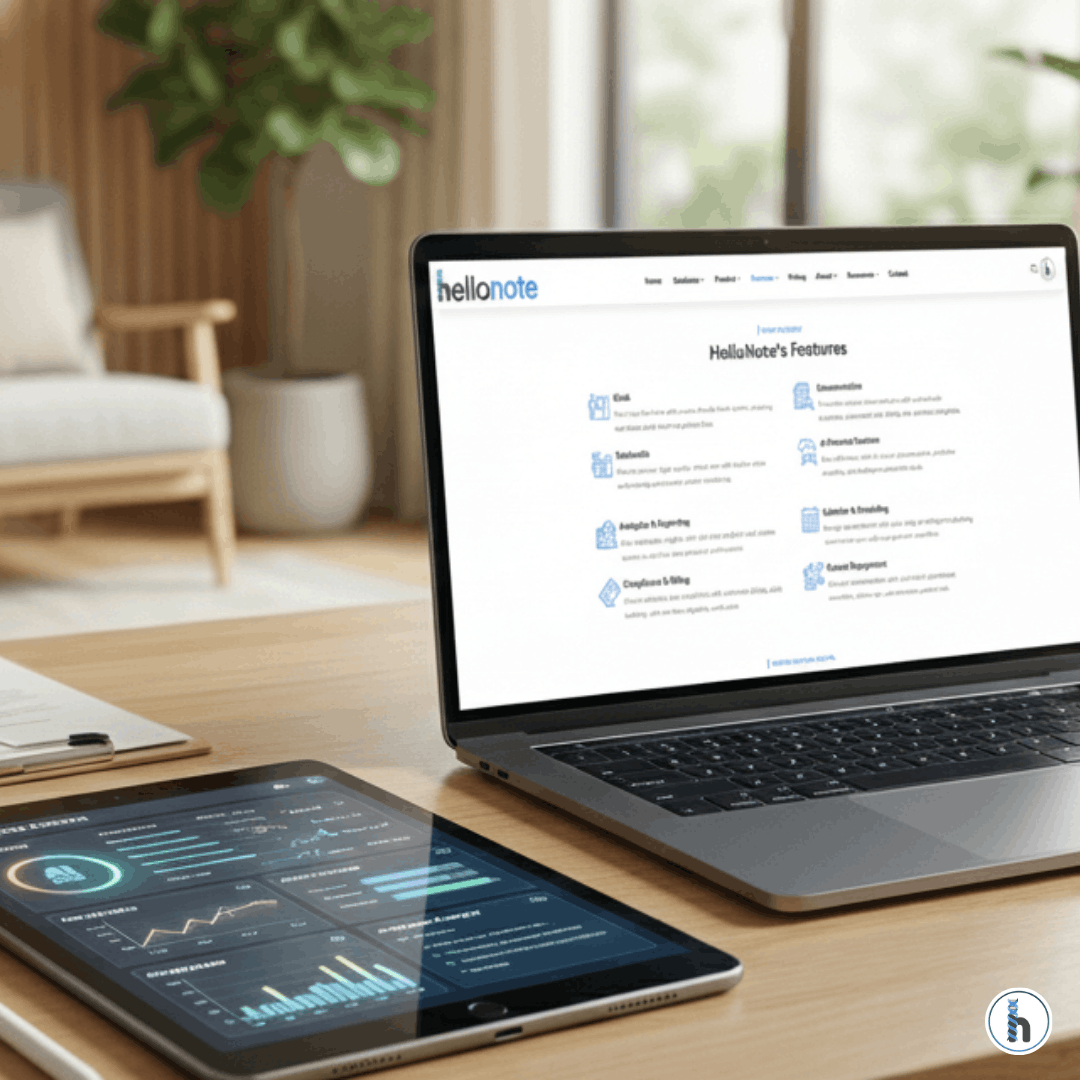
AI-powered EMR dashboard displayed on a laptop and tablet in a modern therapy practice workspace, supporting PT, OT, SLP, and mental health workflows

AI-Driven Documentation That Respects Clinical Judgment

Documentation remains one of the largest sources of therapist burnout. Writing detailed, compliant notes takes time, especially when each discipline has unique requirements.

An AI-powered EMR improves documentation without replacing clinical reasoning.

How AI Supports Documentation

    • Guides structure without changing clinical voice
    • Flags missing elements before notes are finalized
    • Reduces repetitive data entry across sessions
    • Improves consistency between evaluations, daily notes, and progress reports

The result is faster documentation that still reflects the therapist’s expertise and intent.

Smarter Billing Support Without Guesswork

Billing errors often don’t happen because care was incorrect—but because documentation and coding weren’t aligned.

AI-powered EMRs help bridge this gap by supporting:

    • CPT code alignment with documented interventions
    • Modifier awareness based on payer rules
    • Alerts for denial-risk patterns
    • Real-time eligibility and compliance prompts

This reduces rework, minimizes denials, and protects revenue without adding administrative burden.

AI-Powered EMRs and Patient Engagement Between Visits

Better outcomes don’t happen only during sessions. Progress depends on what patients do between visits.

AI-supported systems help clinics:

    • Personalize home programs based on patient progress
    • Automate reminders that improve adherence
    • Identify drop-offs in engagement early

When therapists have visibility into patient participation, care plans become more responsive and effective.

Predictive Insights That Support Earlier Intervention

One of the most meaningful advantages of AI-powered EMRs is their ability to surface trends therapists might not immediately see.

Examples include:

    • Slowed functional progress across visits
    • Missed milestones in speech or ADL performance
    • Reduced participation in prescribed programs
    • Patterns that suggest higher fall or regression risk

These insights help therapists intervene earlier—before small issues become setbacks.

Supporting Hybrid and Virtual Therapy Models

Hybrid care is now part of everyday practice. AI strengthens these workflows by supporting continuity across in-person and virtual visits.

AI-powered EMRs assist with:

    • Documentation support during telehealth sessions
    • Adjusting care plans based on remote observations
    • Monitoring engagement outside the clinic
    • Maintaining consistency across care settings

AI doesn’t replace human connection it supports it.

Workflow Efficiency Beyond Documentation

The value of an AI-powered EMR extends beyond notes and billing.

Modern systems help optimize:

    • Scheduling and visit management
    • Task reminders for clinicians and front-office staff
    • Compliance tracking tied to payer rules
    • Visibility into what’s due, missing, or at risk

These improvements reduce administrative friction and help clinics operate more predictably.

Why AI-Powered EMRs Represent the Future of Therapy Practice

When thoughtfully implemented, AI-powered EMRs support every layer of care delivery:

    • Faster, cleaner documentation
    • Stronger billing accuracy
    • Better clinical decision support
    • Improved patient engagement
    • Reduced clinician burnout
    • Scalable hybrid care models

For PT, OT, SLP, and mental health practices, AI is not about replacing therapists—it’s about amplifying their expertise.

Frequently Asked Questions

Q1. What is an AI-powered EMR for therapists?

An AI-powered EMR uses artificial intelligence to assist with documentation, billing support, workflow efficiency, and patient engagement—while leaving clinical decisions in the hands of therapists.

Q2. Does AI replace therapist judgment?

No. AI supports structure and efficiency but does not replace clinical reasoning, assessment, or decision-making.

Q3. Can AI-powered EMRs improve billing accuracy?

Yes. They help align documentation with CPT codes, identify potential issues early, and reduce denial risk.

Q4. Are AI-powered EMRs useful across PT, OT, SLP, and mental health?

Yes. When designed specifically for therapy, AI-powered EMRs adapt to discipline-specific workflows and documentation needs.

Q5. How does HelloNote approach AI differently?

HelloNote focuses on workflow support, compliance, and therapist efficiency—using AI to reduce friction, not override clinical practice.

Final Thoughts

The future of therapy practice is not technology versus clinicians.
It’s technology supporting clinicians.

AI-powered EMRs allow therapists to spend less time managing systems and more time delivering care. Platforms like HelloNote show how AI can be applied responsibly supporting accuracy, efficiency, and sustainability without changing how therapists practice.

You've found a hidden discount!

  • 00Hours
  • 00Minutes
  • 00Seconds