



















Is CPT 97140 the Same as Manual Therapy?
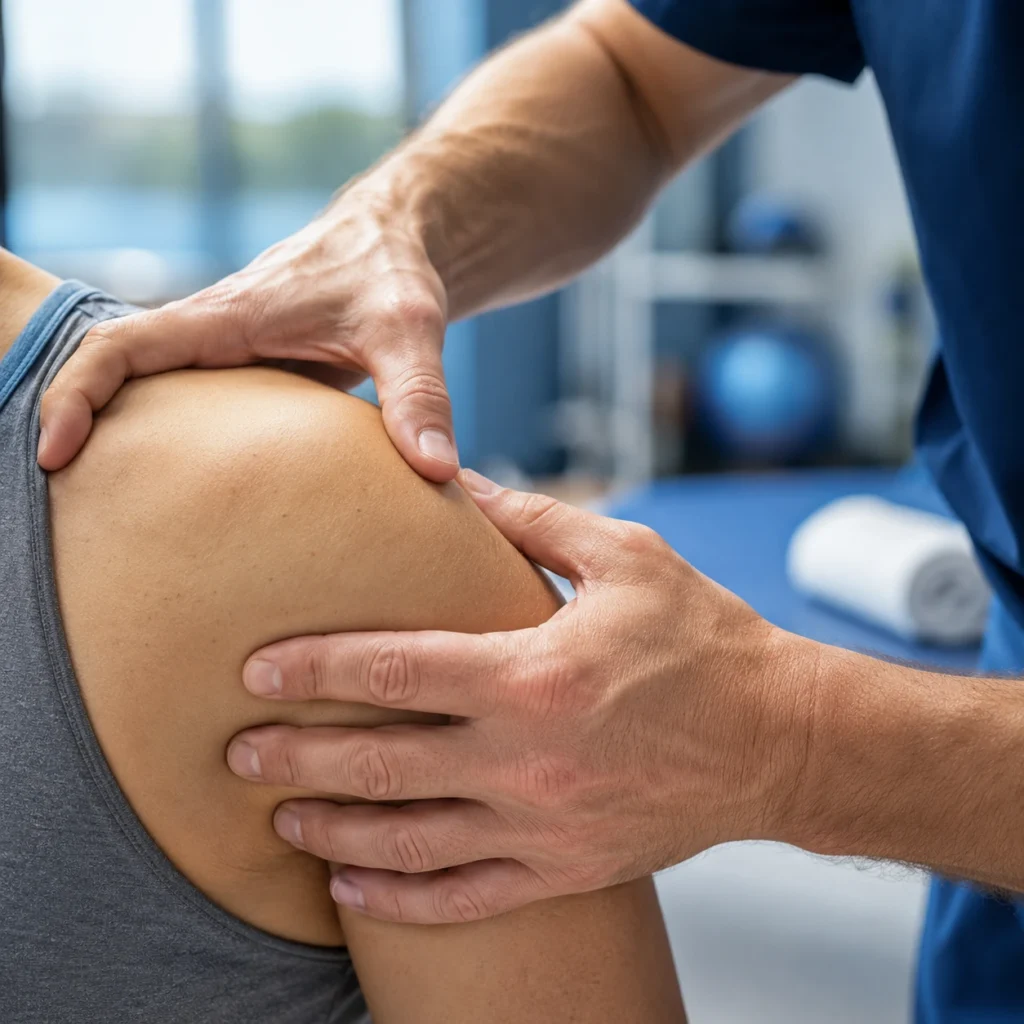
Yes, when the work meets the skilled standard the code requires. CPT 97140 is the billing code for skilled manual therapy: joint mobilization, manipulation, soft tissue mobilization, manual traction, and manual lymphatic drainage performed with real-time clinical assessment. Not all hands-on contact qualifies. General massage, comfort-oriented soft tissue work, and passive movement a support staff member could perform are sometimes described informally as manual therapy, but they do not meet the threshold for 97140.
Table of Contents
Key Takeaways
- The goal is to give patients a clear path from Google to a scheduling request.
- The Google booking link should point to the practice website page where the HelloNote Schedule Widget is embedded.
- HelloNote’s current setup path is Settings > Schedule Widget, not Settings > Patient Portal.
- Current HelloNote guidance says Schedule Widget requests are added to the Waitlist for review.
CPT 97140 documentation is where most manual therapy claims succeed or fail, and it is the part of outpatient practice that gets the least attention relative to how often it is billed. Our clinic learned this the hard way during a commercial payer audit in our third year of practice. We had a strong manual therapy program, an experienced team, and excellent clinical outcomes. We also had 97140 notes that read like treatment logs rather than skilled clinical records. The auditor did not question whether our therapists had skilled hands. She questioned whether our notes demonstrated that those skilled hands were making clinical decisions, not just applying techniques.
The gap between those two things, applying a skilled technique and documenting the skilled clinical decision-making behind it, is where most 97140 denials live. It is not a clinical gap. It is a documentation gap. And because manual therapy is inherently personal and tactile, the tendency to document it briefly and move on is understandable. The problem is that brief, technique-only notes look identical to unskilled massage from a payer’s perspective. Your hands know the difference. Your notes need to show it.
This manual therapy billing guide is built around everything our team learned from that audit experience and the years of documentation refinement that followed. The goal is a 97140 note that accurately represents the skilled clinical work being done, one that survives scrutiny not because it is padded, but because it is complete.
What Is CPT 97140 and When Do You Use It
CPT 97140 manual therapy covers hands-on techniques including joint mobilization and manipulation, soft tissue mobilization, manual lymphatic drainage, and manual traction, billed in 15-minute timed units with direct one-on-one therapist contact required throughout. As a manual therapy CPT code, it applies specifically when the therapist is performing skilled hands-on assessment and intervention that requires ongoing clinical judgment to deliver safely and effectively, not simply whenever hands-on contact occurs.
The word that carries the most clinical weight in the 97140 definition is not the list of techniques. It is the word skilled. 97140 is not a code for any hands-on contact. It is a code for skilled manual assessment and intervention, work that requires a licensed clinician because the clinical decisions being made in real time during the intervention demand professional training to make correctly. Joint mobilization applied by someone assessing tissue quality, end feel, and segmental response simultaneously is 97140. The same motion applied mechanically by a tech without clinical assessment is not.
Techniques That Qualify Under 97140
Joint mobilization: graded passive accessory movement applied to a restricted joint to restore articular mechanics. Manipulation: high-velocity low-amplitude thrust applied to a restricted segment. Soft tissue mobilization billing covers skilled sustained or transverse pressure applied to myofascial restrictions, adhesions, or scar tissue. Manual traction: skilled sustained or intermittent distraction of spinal or peripheral joints. Manual lymphatic drainage CPT code use applies to this specialized manual technique for edema reduction. Each of these requires the therapist to be simultaneously assessing tissue response and adjusting the technique in real time. That is the clinical rationale for the skilled billing level.
What Does Not Qualify Under 97140
General massage performed for relaxation or comfort. Passive range of motion that could be performed by support staff. Stretching that does not involve skilled ongoing assessment of tissue resistance and neural response. Heat or cold application with incidental contact. Techniques performed by support staff and billed as therapist services. The threshold for skilled manual therapy is clinical judgment performed through the hands in real time. If that threshold is not met, 97140 is not the right code regardless of how the technique looks from the outside.
Clinical Presentations That Warrant 97140
Cervical, thoracic, or lumbar joint hypomobility limiting functional range. Post-surgical articular restriction following orthopedic repair or replacement. Myofascial restrictions secondary to immobilization, guarding, or scar tissue formation. Neural tension syndromes responsive to manual traction. Adhesive capsulitis requiring progressive joint mobilization to restore glenohumeral mechanics. Acute and subacute soft tissue injuries with palpable tissue restrictions limiting movement. Edema presentations appropriate for manual lymphatic techniques. In every case the 97140 indication is grounded in a palpated or assessed tissue finding, not a diagnosis alone.
READY TO STREAMLINE YOUR CLINIC?
See How HelloNote Handles All of This in One Platform
Managing staff hours, compliance, inventory, and financial reports — all inside one HIPAA-compliant EMR built for PT, OT, and SLP clinics.
No credit card required · HIPAA Compliant · PT, OT & SLP
How to Document CPT 97140 Correctly
The documentation failure pattern our team has seen most often in 97140 reviews is what we call the technique-without-reason note: the therapist records the manual technique accurately and omits the clinical finding that indicated it, the assessment happening during it, and the response that followed it. That note describes a procedure. 97140 clinical documentation needs to describe a clinical decision process, whether the technique is joint mobilization documentation, soft tissue work, or manual traction. The difference is significant from a payer’s perspective and from a medicolegal one.
Our team rebuilt our 97140 documentation template after the audit experience using a five-element structure. Every element addresses a specific question a payer reviewer will ask when looking at a manual therapy claim.
The Five-Element 97140 Documentation Standard
- The pre-treatment clinical finding
Documented before the first technique. What did assessment reveal that indicated manual therapy? Restricted PA glide at a specific segment with firm end feel. Palpable myofascial restriction with pain reproduction in a specific distribution. Positive neural tension test with reproduction of peripheral symptoms. The finding is the clinical foundation of the 97140 claim. Without it, everything that follows is a technique without a reason.
- The specific technique and targeted structure
Name the technique with enough specificity that another clinician could reproduce it from your note. Not “joint mobilization, lumbar” but “Grade III posterior-anterior mobilization applied at L3-4 in prone, targeting restricted segmental flexion.” Not “soft tissue work, upper trap” but “sustained transverse friction at upper trapezius myofascial restriction, bilateral, with patient in supine.” Specificity is the documentation standard for a skilled service.
- The skilled clinical decision-making during the technique
This is the element that most distinguishes a 97140 note from a procedure log. What was our therapist assessing and responding to during the intervention? Tissue quality changes under sustained pressure. Progressive improvement in joint play across mobilization grades. Patient neurological response requiring technique modification. Real-time clinical decisions should appear in the note because they are what justify the skilled billing level.
- The measurable patient response
What changed as a result of the intervention? PA glide improved from restricted to hypomobile. Pain with cervical rotation decreased from 7/10 to 3/10 immediately post-treatment. Active lumbar flexion increased from 35 to 55 degrees following mobilization and soft tissue work. The response data shows the intervention produced a measurable clinical effect and that the skilled services were medically necessary.
- The functional goal connection
Connect the manual therapy to the patient’s documented functional goals. Cervical mobilization advancing the goal of returning to driving without pain-limited cervical rotation. Lumbar soft tissue work supporting the goal of tolerating 30-minute standing for a patient returning to a retail position. Shoulder mobilization targeting the goal of reaching overhead kitchen shelving. The functional connection establishes CPT 97140 medical necessity and links every session to the clinical justification in the plan of care.
The Reasoning Sentence That Protects the Claim
Every 97140 note our team writes includes what we call the clinical reasoning sentence, a single sentence that captures the finding, the intervention chosen in response, and the functional outcome it advances. It sounds like this: “Restricted right glenohumeral posterior glide with pain reproduction at 110 degrees flexion. Grade III posterior mobilization applied to restore mechanical joint play in support of patient’s goal of returning to overhead shelf stocking without pain.” That sentence answers the three questions every payer reviewer asks: what was the clinical problem, what skilled intervention did the therapist choose, and why was it medically necessary? Twenty seconds to write. Has never produced a medical necessity denial in our clinic.
What Happens If a 97140 Note Is Missing the Clinical Reasoning?
A 97140 note that records the technique but not the clinical finding or response is at high risk of denial on review, even when the treatment itself was appropriate. Payers cannot pay for skill they cannot see documented. The fix is not a longer note. It is one reasoning sentence that ties the finding, the intervention, and the functional outcome together.
CPT 97140 vs 97110 vs 97530: Where the Lines Are
Manual therapy sessions rarely exist in isolation. Most outpatient treatment days combine mobilization work with therapeutic exercise and functional activity practice. That clinical reality creates billing complexity, because three codes (97140, 97110, and 97530) can all appear on the same visit, and payers are looking for documentation that clearly justifies each one separately. Understanding 97140 vs 97110, and CPT 97140 vs 97530, starts with one question: who is doing the work, the therapist or the patient.
97140: The Therapist Works on the Patient
Manual therapy is passive and therapist-driven. The patient’s active participation is not required and often not possible during the intervention. The clinical skill is entirely in the therapist’s hands, assessment, and real-time judgment. This is the defining characteristic that separates 97140 from both 97110 and 97530. If the patient is doing the work, it is not 97140.
97110: The Patient Works on Their Impairment
Therapeutic exercise is active and patient-driven. The patient performs the movement. The therapist directs, progresses, and documents it. The clinical target is a specific measurable impairment: strength, endurance, ROM, or flexibility. 97110 follows 97140 in a logical clinical sequence: mobilize the joint first, then have the patient actively exercise through the restored range to build the capacity to hold it. Both codes can appear on the same visit; each needs its own documented clinical justification.
97530: The Patient Practices Functional Movement
Therapeutic activity is active, functional, and multi-outcome. The patient performs a movement that resembles or replicates an activity from their daily life. The clinical target is functional performance, not tissue-level impairment. 97530 is often the final phase of a treatment session that began with 97140 and 97110: restore mechanics, build capacity, practice function. All three codes together tell the complete story of a skilled outpatient rehabilitation session, but only if each one is separately documented with its own clinical justification and its own time tracking.
Can You Bill 97140 and 97530 on the Same Day?
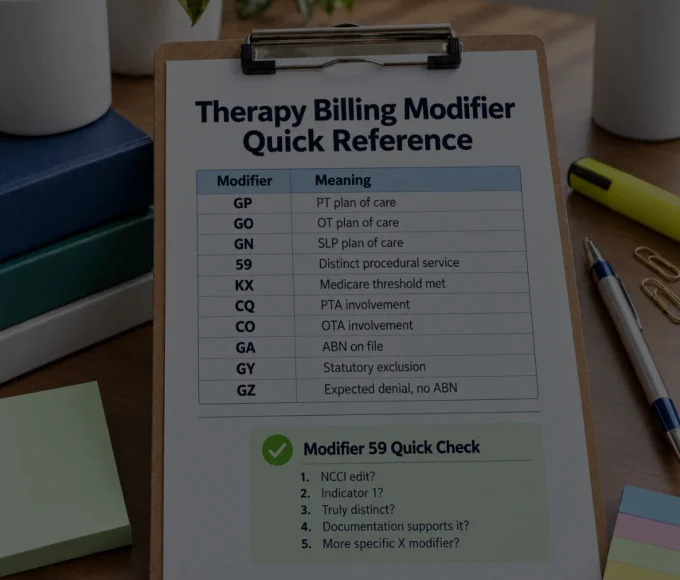
Yes, when each code reflects a genuinely separate and distinct part of the session, and most payers will require Modifier 59 to bill them together on the same date of service. The note needs to support that separation on its own: its own clinical finding, its own time block, and its own functional rationale for each code. Identical or overlapping documentation between the two is what turns a valid same-day claim into a denial.
Common Billing Mistakes and How to Avoid Them
Our team has seen these five errors produce the majority of CPT 97140 denial outcomes and CPT 97140 audit findings across the clinics and billing patterns we have reviewed over the years.
Mistake 1: Documenting Technique Without Clinical Rationale
A 97140 note that lists techniques and body parts without capturing the clinical finding that indicated them is not a defensible skilled claim. It is a procedure log. The pre-treatment finding is not optional documentation. It is the clinical foundation of the entire note. Our team treats it as the first required field in every 97140 record, before any technique can be entered. Without the finding, there is no justification for the code.
Mistake 2: Billing 97140 for Comfort Massage
Soft tissue work applied for patient comfort, relaxation, or general wellness does not meet the threshold for 97140. The distinction between skilled myofascial release and comfort massage is clinical intent and real-time assessment. If our therapist is applying sustained manual pressure to a specific restriction identified on assessment, adjusting technique in response to tissue feedback, and targeting a documented functional limitation, that is 97140. If the technique is applied because the patient’s muscles are tight and they enjoy it, that is not a skilled service and should not be billed as one.
Mistake 3: Imprecise Time Tracking
97140 is a timed code. The 8-minute rule manual therapy calculation determines billable units. Our team found during a billing analysis that therapists estimating manual therapy time to the nearest five minutes were losing a full unit on approximately one in three sessions. The setup time, assessment between techniques, and patient positioning between interventions all add up to time that belongs in the documented total. Accurate manual therapy time tracking means recording actual start and stop time for every 97140 block.
Looking up more cpt codes?
See 97140, 97110, 97530, and 50+ therapy procedure codes. Billing guidance and documentation tips in one place.
Mistake 4: Delegating and Billing as Therapist Services
97140 requires direct licensed therapist contact for the entire duration of the service. If a therapy aide or technician performs any portion of the hands-on work, that portion cannot be billed under 97140 regardless of the supervision level or the quality of the work performed. Our team has strict documentation standards requiring the therapist providing the service to be identified in the note for every 97140 claim. This is one of the most common audit triggers for manual therapy billing and one of the easiest to avoid.
Mistake 5: Not Documenting Tissue Response and Clinical Progress
Payer reviewers looking at multiple 97140 visits expect to see evidence that the skilled intervention is producing measurable clinical change. If the notes show the same technique applied to the same structure with no documented tissue response, no progression in mobilization grade or soft tissue response, and no measurable change in the targeted impairment, the medical necessity of continued skilled services becomes difficult to defend. Our team documents tissue response and measurable clinical outcome at every 97140 visit. Progression is not just good clinical practice. It is a billing record.
Mistake 6: Missing Modifier 59 on Same-Day Claims
97140 modifier 59 is required by most payers when manual therapy is billed alongside 97110 or 97530 on the same date of service, because NCCI edits automatically bundle these code pairs together by default. Practices that skip the modifier on a qualifying same-day claim see the payer pay one code and deny the other, regardless of how well the session was documented. The reverse mistake is just as common and just as costly: applying Modifier 59 as a default whenever two codes appear on the same day, without the note actually establishing that each one reflects a separate clinical finding and a separate time block. Auditors look for that gap specifically, because a modifier without supporting documentation reads as an attempt to bypass the bundling edit rather than a genuinely distinct service. Our team applies Modifier 59 only when the note for 97140 already stands on its own, with its own finding, its own technique, and its own time, before the modifier is ever added to the claim.
CPT 97140 in Practice: What We Actually Do
Our team wants to walk through a real 97140 session the way it actually happens, including the documentation decisions made at each stage, because the code makes more sense as a living clinical record than as a billing definition.
A patient presents for visit five following a cervical fusion at C5-6. Our assessment this session reveals: restricted PA mobility at C4-5 above the fusion level with firm end feel, palpable myofascial restriction at bilateral upper trapezius and levator scapulae, and reported difficulty with left cervical rotation limiting her ability to check mirrors while driving. We document these findings in the objective section before touching the patient.
Our therapist begins with Grade III PA mobilization at C4-5, eight minutes, documenting the progressive improvement in accessory glide across the treatment block and the patient’s report of reduced local tenderness. Transition to sustained myofascial release at bilateral upper trapezius and levator scapulae, seven minutes, documenting bilateral tissue response and patient report of reduced referral pattern intensity. Total manual therapy time: fifteen minutes, one unit.
Our team then writes the clinical reasoning sentence: “Restricted C4-5 PA mobility above fusion level with upper trapezius myofascial guarding contributing to limited left cervical rotation. Grade III PA mobilization and bilateral soft tissue release performed to restore segmental accessory motion and reduce myofascial restriction in support of patient’s goal of returning to driving safely.” Post-treatment: left cervical rotation improved from 40 to 58 degrees active. Patient reports 4/10 pain with rotation compared to 7/10 at session start. That note is complete, defensible, and accurately represents the skilled work that happened.
How HelloNote Handles CPT 97140 Documentation
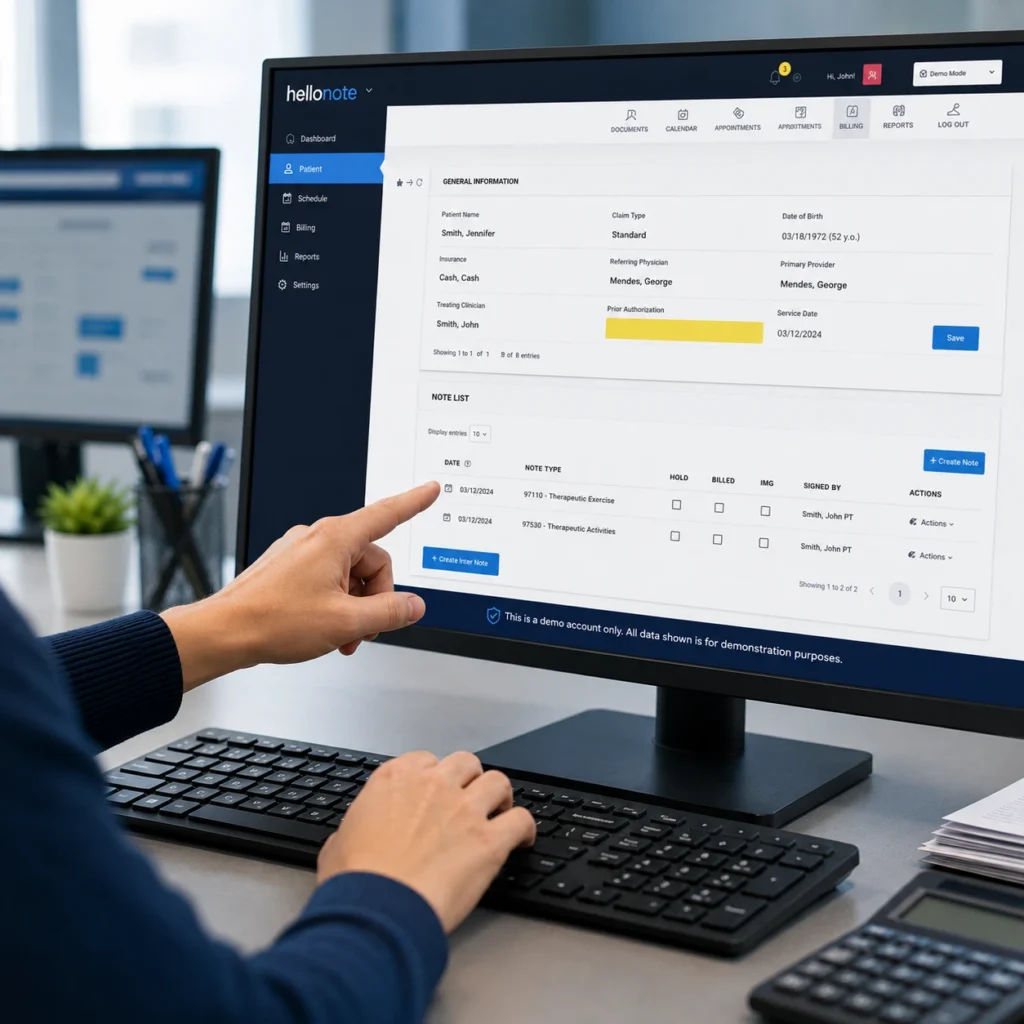
Our team designed the HelloNote 97140 template around the audit experience that reshaped how our clinic documents manual therapy. The central structural principle is that the note must begin with a clinical finding before a technique can be entered. That sequence (finding first, technique second) eliminates the most common denial trigger by making deficit documentation the required first step rather than an optional element.
Here is what the 97140 workflow inside HelloNote does:
- Pre-treatment clinical finding field. Required before the technique section opens. The therapist documents what the assessment revealed: joint restriction, myofascial finding, neural tension sign, before entering any technique. This structural requirement enforces the documentation sequence that protects the claim.
- Technique-specific entry fields. Separate documentation fields for joint mobilization, soft tissue mobilization, manual traction, and manipulation. Each field captures technique name, targeted structure, grade or intensity, and patient position. Structured fields produce consistent, specific notes faster than free text.
- Clinical decision field. A dedicated section for documenting the skilled assessment occurring during the technique: tissue quality changes, joint play progression, patient neurological response, technique modifications made in real time. This is the element that demonstrates the therapist was making clinical decisions, not just performing a procedure.
- Tissue response and outcome entry. Structured fields for documenting measurable change following the intervention. Pre- and post-session ROM, pain levels, tissue quality, and functional test results. Response data populates automatically into the visit-to-visit progress tracking.
- Time entry with 8-minute rule calculation. Actual start and stop times entered at the point of care. HelloNote calculates units automatically. No rounding, no estimation, no unit math to do at the end of the day.
- Functional goal linkage. Required before sign-off. Active plan of care goals are pulled into a selection field so the therapist links the manual therapy session to the relevant goal with one click. The connection that establishes medical necessity cannot be omitted.
The HelloNote 97140 template was built to make the audit-proof note the default note, not the one that requires extra time and discipline at the end of a busy clinical day.
Tired of manual therapy notes that don't hold up to audit?
HelloNote’s 97140 template starts with the clinical finding, not the technique. Start free and see how it works for PT, OT, SLP, and Chiro.
No credit card required • HIPAA Compliant • PT, OT & SLP
Frequently Asked Questions About CPT 97140
What is CPT 97140?
CPT 97140 is a timed therapeutic procedure code for manual therapy techniques including joint mobilization and manipulation, soft tissue mobilization, manual traction, and manual lymphatic drainage. Billed in 15-minute units, it requires direct one-on-one licensed therapist contact throughout and applies when the therapist is making skilled clinical decisions during the hands-on intervention. Manual therapy CPT 97140 PT billing is the most common use case, but CPT 97140 OT billing is equally valid when an occupational therapist is performing the skilled hands-on technique within their scope of practice; chiropractors and physiatrists may also bill it under the same documentation standard.
What techniques qualify under CPT 97140?
Qualifying techniques include joint mobilization applying graded accessory movement to restricted joints, manipulation applying high-velocity thrust to restricted segments, myofascial release and soft tissue mobilization targeting fascial and myofascial restrictions, manual spinal or extremity traction, and manual lymphatic drainage for edema management. General massage for relaxation, passive ROM performable by support staff, and comfort-oriented soft tissue work do not qualify.
How do I document 97140 to avoid denials?
Use the five-element standard: document the pre-treatment clinical finding first, then the specific technique and targeted structure, the skilled clinical decision-making that occurred during the intervention, the measurable patient response, and the connection to a functional goal in the plan of care. Most denials come from notes that record the technique accurately but omit the finding and the response, the elements that establish that skilled therapy was medically necessary.
Can I bill 97140, 97110, and 97530 on the same day?
Yes, and in a complete outpatient rehabilitation session this combination is often clinically appropriate. Manual therapy restores joint mechanics and tissue mobility, therapeutic exercise builds the capacity to maintain those improvements, and functional activity practice applies both to real-life movement tasks. Each code requires separate time tracking and a distinct clinical justification. Payers audit same-day billing of these codes; documentation specificity for each is essential.
How many units of 97140 can I bill per session?
Units are determined by the 8-minute rule: one unit requires at least 8 minutes of direct therapist contact, two units require at least 23 minutes, three units require at least 38 minutes. Multiple qualifying techniques performed in a continuous block of hands-on time can be combined into a single 97140 time total. Document actual start and stop time, not an estimate.
What is the CPT 97140 reimbursement rate?
CPT 97140 reimbursement varies by payer, geographic region, and contract terms, so there is no single national rate that applies to every practice. Medicare publishes a fee schedule rate per unit that updates annually, and commercial payer rates are typically set by individual contract. Confirm current rates directly with your clearinghouse or payer contracts rather than relying on a flat figure, since the documentation standard for medical necessity is the same regardless of which payer is reimbursing the claim.
What triggers an audit or denial for 97140?
Common triggers include: notes that list techniques without pre-treatment clinical findings, documentation that does not demonstrate ongoing skilled assessment during the intervention, billing 97140 for techniques performable by support staff, absence of functional goal connection, and high-frequency 97140 billing without documented tissue response or clinical progression across visits. Missing direct therapist contact documentation and unbundling issues with related codes are secondary triggers.
Do I need Modifier 59 when billing 97140 with 97110 or 97530?
Most payers require 97140 modifier 59 when manual therapy is billed alongside 97110 or 97530 on the same date of service, since NCCI edits bundle these code pairs by default. The modifier indicates the services were separate and distinct. It does not replace documentation; the note still needs its own clinical finding, technique, and time block for 97140 independent of the other code billed that day. Verify payer-specific requirements, since modifier rules can vary and update periodically.
How does HelloNote help with 97140 documentations?
HelloNote’s 97140 template requires a pre-treatment clinical finding before the technique section opens, includes dedicated fields for skilled clinical decision-making and tissue response, calculates 8-minute rule units automatically from actual start and stop times, and requires functional goal linkage before sign-off. The structure makes the five-element documentation standard the default path through every note.
Start Your Journey to Better Manual Therapy Documentation
The work our therapists do with their hands is some of the most sophisticated clinical intervention in outpatient rehabilitation. A note that captures a technique name and a body part is not an accurate record of that work. The clinical findings, the real-time decisions, the tissue responses, the functional outcomes, those belong in the record too. Not because auditors require them. Because the work deserves documentation that reflects its actual complexity, and because your practice deserves billing that accurately captures the value of what your team delivers every day.

AboutDmitry Shevchenko, OTR/L
Dmitry Shevchenko, OTR/L is a licensed Occupational Therapist
and the COO of HelloNote EMR. With firsthand experience as both
a practicing clinician and a multi-location clinic operator,
Dmitry brings a unique operational perspective to HelloNote's
product development — having navigated the exact payroll,
compliance, and inventory challenges this platform is built
to solve.