


















Table of Contents
To prove medical necessity in pediatric OT, therapists must document “Skilled Interventions” using clinical language that links play-based activities to functional outcomes (ADLs). HelloNote simplifies this by providing Sensory Workflows (tracking all 8 sensory systems) and Smart Phrase Engines that translate activities like “messy play” into clinical terms like “desensitization for sensory defensiveness.” This data-driven approach ensures higher reimbursement and audit protection.
1. Master the Sensory Narrative: Beyond Simple Checkboxes
Sensory processing is the heart of pediatric OT, but it’s notoriously difficult to document for reimbursement. Most generic EMRs use simple checkboxes that fail to capture the complexity of the 8 sensory systems, including the often-overlooked Interoception and Proprioception.
Specific Sensory Workflows
Instead of a “one-size-fits-all” form, HelloNote offers templates to document precise responses to:
Vestibular Input (Balance & Movement)
Proprioceptive Input (Body Awareness)
Interoception (Internal Body Signals)
Tracking Self-Regulation Trends
HelloNote allows you to graph a child’s Arousal Levels over time. When you can show a payer that a child’s “Ready to Learn” state has increased from 20% to 80% of the session due to your skilled sensory diet, your medical necessity is indisputable.
2. The "Skilled" Smart Phrase Engine: Eliminating Audit Anxiety
One of the most common reasons for OT claim denials is a lack of “Skilled Language.” Phrases like “Child tolerated activity well” are red flags for auditors because they don’t show the therapist’s expertise.
Clinical Grading Phrases
HelloNote comes pre-loaded with smart phrases that emphasize your role as the therapist. Our system helps you quickly bridge the gap between “play” and “function.”
Example Transformation:
Before: “Child played with putty for 10 minutes.”
HelloNote “Skilled” Version: “Therapist utilized high-resistance putty to facilitate pincer grasp strength required for independent fastener manipulation during dressing tasks.”
3. Linking Fine Motor Precision to ADL Milestones
The ultimate goal of OT is independence in Activities of Daily Living (ADLs). Tracking how a pencil grasp improves a child’s ability to feed themselves or get dressed is a core part of the “Skilled Narrative.”
Integrated Goal Banks & One-Click Tracking
HelloNote’s pediatric OT library links fine motor milestones (like hand arches and pincer grasp) directly to ADL outcomes. When you update a fine motor goal, the system prompts you to link that progress to functional independence, creating a cohesive story of progress for insurance providers.
4. Parent Carryover: The Portal as a Clinical Tool
In pediatrics, success depends on the parents following the “Sensory Diet” or Home Exercise Program (HEP) at home.
Video-Based HEPs & Real-Time Engagement
Stop sending home crumpled pieces of paper. Use the HelloNote Parent Portal to send secure, video-based instructions for sensory techniques. When parents are engaged through a professional portal, children reach their goals an average of 25% faster.
Frequently Asked Questions
Q1. How does HelloNote help OTs document sensory processing for higher reimbursement?
HelloNote provides specialized templates that categorize sensory responses across all 8 systems. By linking these responses to functional outcomes, you provide the “skilled narrative” that insurance adjusters require for approval.
Q2. Can I create custom "Smart Phrases" for pediatric OT in HelloNote?
Yes. You can build a library of phrases that describe your specific grading techniques (e.g., “graduated tactile input,” “vestibular pacing”), allowing you to write high-level clinical notes in seconds.
Q3. Does HelloNote link fine motor precision directly to ADL milestones?
Absolutely. Our goal-tracking system is designed to show the relationship between clinical components (like grip strength) and functional tasks (like handwriting or dressing), proving the value of your interventions.
Q4. How does the HelloNote Parent Portal improve sensory diet carryover?
By providing a secure hub for video-based exercises and sensory strategies, the portal ensures parents have a clear, visual reference for home carryover, which is essential for neuroplasticity and progress.
Q5. . Why do pediatric OTs prefer HelloNote’s interface for play-based therapy?
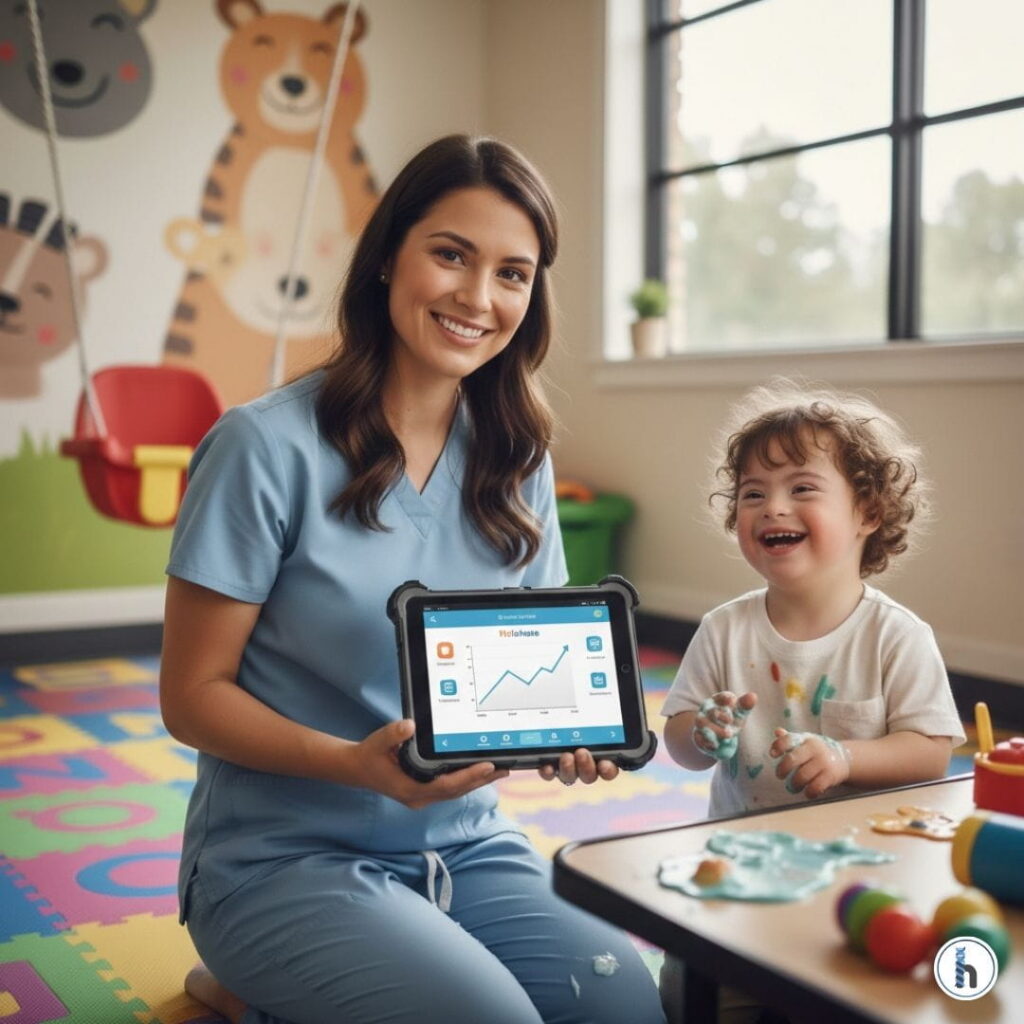
Because of our INP (Interaction to Next Paint) optimization, the software is fast and responsive on tablets. OTs can document while on the floor or at a swing without the lag that plagues bulkier, non-specialized EMRs.
The Verdict: Documentation That Reflects Your Expertise
Your EMR should be more than a digital filing cabinet; it should be a tool that highlights your clinical skill. If you are tired of your documentation being undervalued, it’s time to switch to a platform built specifically for the nuances of Pediatric OT.

AboutHellonote Expert
The HelloNote Expert Research Team publishes educational resources for physical therapy, occupational therapy, speech therapy, and rehabilitation practices. Their content focuses on documentation workflows, Medicare operations, billing processes, clinician efficiency, AI-assisted charting, and therapy practice management. Articles are developed using healthcare industry research, CMS resources, operational workflow analysis, and therapy-focused EMR expertise.