



















You've found a hidden discount!

HN Unlock Layer 1
HN Unlock Layer 2
HN Unlock Layer 3
HN Unlock Layer 4
HN Unlock Layer 5
  • 00Hours
  • 00Minutes
  • 00Seconds

Category: Blogs

What Telehealth Rules Will Actually Look Like for Therapy Clinics in 2026

Table of Contents

Telehealth has gone through more changes in the past few years than most therapy clinics expected. Temporary waivers, pandemic-era flexibilities, and shifting Medicare policies made it possible to deliver care remotely in ways that were once unthinkable.

As we move closer to Telehealth 2026, many therapy practice owners are asking the same questions:
What stays? What goes away? And what do we actually need to prepare for?

This article breaks down the most important telehealth updates affecting physical therapy, occupational therapy, speech-language pathology, and multidisciplinary rehab clinics without legal jargon or unnecessary speculation.

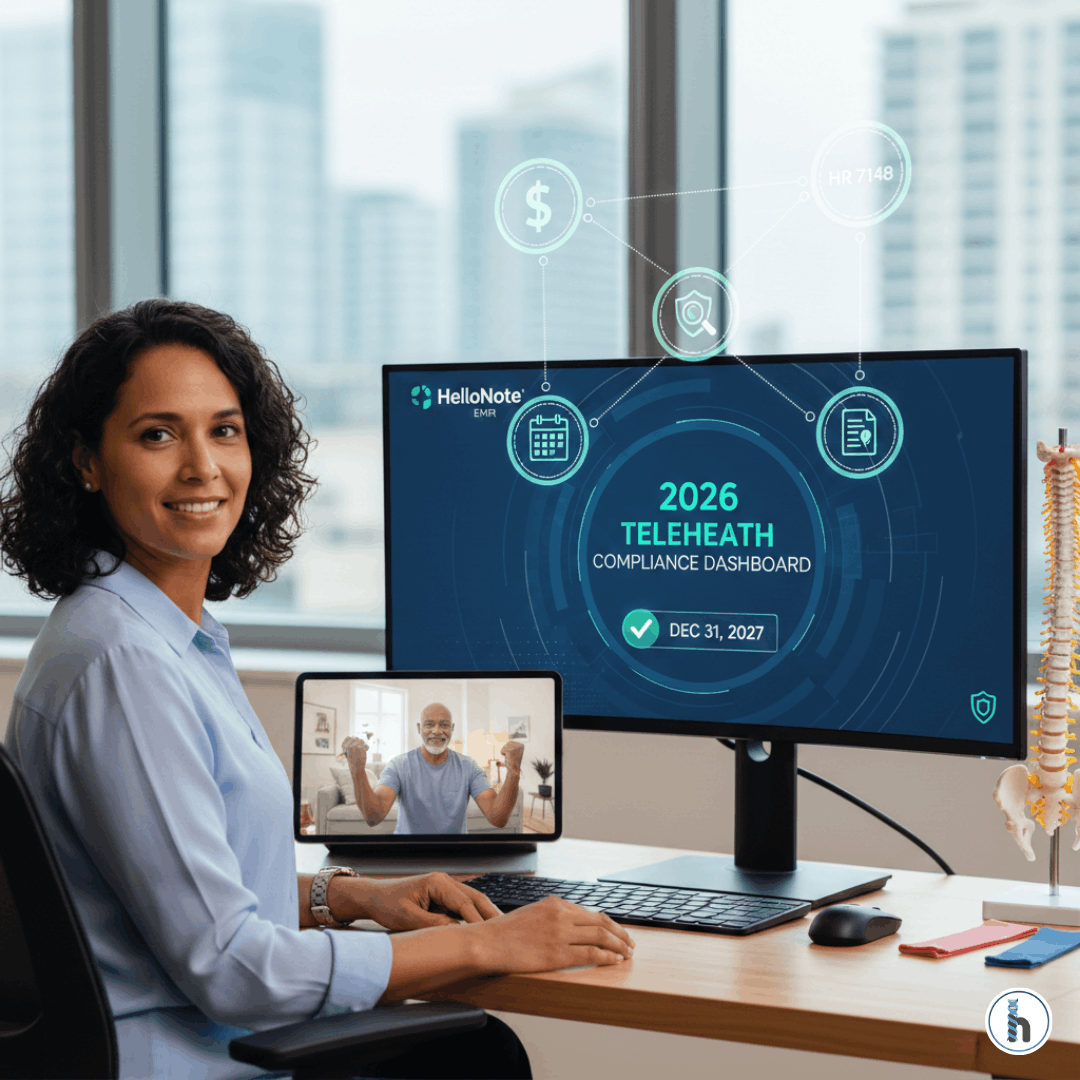
Secure telehealth platform interface illustrating Telehealth 2026 compliance and Medicare virtual care requirements

Why Telehealth Rules Matter More Than Ever

Telehealth is no longer an “extra” service. For many clinics, it’s become a core part of access, continuity of care, and patient engagement.

But the reality is this: telehealth is governed by policy, not preference. Reimbursement, compliance, and documentation rules determine what clinics can safely and sustainably offer.

As regulatory flexibility tightens, clinics that understand the rules early will be in a much stronger position than those reacting after denials or audits appear.

What’s Changing With Telehealth in 2026

Medicare Location Requirements Are Tightening

Through January 30, 2026, Medicare beneficiaries can generally receive telehealth services regardless of geographic location. After that date, most non–behavioral health telehealth services will once again be tied to rural locations and approved medical facilities.

This means:

    • Home-based telehealth will become more limited for certain services

    • Clinics must be precise about where the patient is located

    • Documentation must clearly support eligibility

Behavioral health services remain an important exception, with more flexibility continuing beyond early 2026.

Who Can Furnish Telehealth Services Is Narrowing

During the extended flexibility period, a wide range of providers were allowed to furnish telehealth services under Medicare.

Starting January 31, 2026:

will no longer be able to independently furnish Medicare telehealth services under standard Medicare rules.

This change is significant for therapy clinics that relied heavily on remote sessions and hybrid care models.

What This Means for Therapy Clinics

Telehealth Won’t Disappear But It Will Be More Regulated

Telehealth in 2026 is not about elimination it’s about precision.

Clinics will need to:

    • Clearly identify which services remain eligible

    • Track patient location accurately

    • Distinguish Medicare rules from commercial payer policies

    • Avoid assumptions based on past flexibilities

Documentation Will Matter More Than Ever

When telehealth rules tighten, documentation becomes your first line of defense.

Strong documentation should clearly show:

    • Medical necessity

    • Service type and duration

    • Patient location

    • Provider eligibility

    • Compliance with payer-specific rules

This is where many clinics struggle not clinically, but operationally.

Audio-Only Telehealth: What Still Applies

Audio-only telehealth services may continue for certain behavioral health services, particularly when:

    • The provider is capable of video

    • The patient cannot or does not consent to video

    • Documentation supports the clinical appropriateness

However, audio-only is not a blanket substitute for video-based care and must be used carefully.

Place of Service Codes Clinics Need to Know

Accurate coding remains critical for reimbursement.

    • POS 02 – Telehealth provided other than in the patient’s home

    • POS 10 – Telehealth provided in the patient’s home

Medicare continues to pay non-facility rates for telehealth services provided in the patient’s home, making correct POS selection essential.

How Technology Can Reduce Telehealth Risk

EMRs Must Do More Than Store Notes

As telehealth rules evolve, clinics need systems that actively support compliance not just record visits.

An effective EMR should help clinics:

    • Track patient location automatically

    • Prompt correct place of service selection

    • Align documentation with billing rules

    • Generate audit-ready records

    • Flag eligibility issues before claims are submitted

Without this support, telehealth becomes a financial and compliance liability.

Preparing Your Clinic for Telehealth 2026

Step 1: Audit Your Current Telehealth Usage

Understand which services, payers, and patient populations you’re serving remotely.

Step 2: Separate Medicare From Commercial Payer Rules

Commercial payers may continue telehealth coverage even as Medicare rules change.

Step 3: Strengthen Documentation Standards

Ensure every telehealth visit clearly supports medical necessity and eligibility.

Step 4: Use Systems Built for Therapy Workflows

Generic EMRs often miss therapy-specific nuances. Therapy-focused systems help reduce risk as regulations evolve.

Final Thoughts: Telehealth Requires Strategy, Not Guesswork

Telehealth 2026 represents a shift from emergency flexibility to long-term structure. Clinics that treat telehealth as a regulated service rather than a convenience will be best positioned to adapt.

With the right workflows, documentation practices, and technology in place, therapy clinics can continue using telehealth responsibly, compliantly, and confidently without exposing themselves to unnecessary risk.

Frequently Asked Questions About Telehealth 2026

Q1. Will telehealth still be allowed for therapy clinics in 2026?

Yes, but with more restrictions—especially for Medicare patients and non–behavioral health services.

Q2. Can PTs, OTs, and SLPs bill Medicare for telehealth after January 2026?

Clear documentation, correct coding, accurate patient location tracking, and payer-specific workflows are key.

Q3. Does this affect private insurance telehealth coverage?

Not necessarily. Commercial payer rules may differ and should be reviewed individually.

Q4. Are behavioral health telehealth services still allowed at home?

Yes. Behavioral health continues to have expanded flexibility beyond early 2026.

Clear documentation, correct coding, accurate patient location tracking, and payer-specific workflows are key.

Getting Paid for Massage Therapy: How Insurance Really Works

Table of Contents

Is Massage Therapy Covered by Insurance?

Massage therapy insurance documentation displayed on a tablet alongside insurance claim forms and a massage treatment table in a clinical setting

What Clinics Must Get Right to Bill, Get Paid, and Stay Compliant

Massage therapy plays an important role in rehabilitation, pain management, and functional recovery. As more therapy clinics integrate hands-on soft tissue work into treatment plans, questions around massage therapy insurance come up more often   especially from practice owners trying to balance patient care with clean reimbursement.

So, is massage therapy covered by insurance?
The answer is sometimes and coverage depends far less on the technique itself and far more on how the service is documented, coded, and justified.

This guide explains how massage therapy insurance coverage works, why claims are often denied, and how therapy-focused EMRs like HelloNote help clinics bill correctly and stay compliant.

When Is Massage Therapy Covered by Insurance?

Massage therapy insurance coverage typically applies only when the service meets medical necessity standards. Most payers require all of the following:

    • The service is medically necessary

    • It is part of an established plan of care

    • It is supervised, ordered, or performed by a licensed provider

    • It is billed under appropriate CPT codes with proper documentation

Common reimbursable scenarios include:

    • Soft tissue work during post-surgical rehabilitation

    • Massage techniques used within physical therapy or chiropractic care

    • Neuromuscular re-education involving manual therapy

Massage provided for relaxation, stress relief, or general wellness is not covered under massage therapy insurance policies.

What Insurance Companies Look for in Massage Therapy Claims

Insurance payers evaluate documentation not intent. For massage therapy insurance claims to be approved, records must clearly support skilled care.

1. Medical Necessity

Documentation should establish:

    • A qualifying diagnosis

    • Functional limitations or impairments

    • Clinical reasoning for including massage therapy

2. Goal-Based Treatment Rationale

Each visit must show a direct connection between:

    • Diagnosis

    • Intervention

    • Measurable functional improvement

3. Proper CPT Code Selection

Massage therapy insurance billing usually involves:

    • 97124 – Therapeutic massage

    • 97140 – Manual therapy (when techniques overlap with joint or connective tissue work)

Incorrect code usage is one of the most common reasons for denial.

4. Defensible Documentation

Payers expect:

    • SOAP notes linked to functional goals

    • Accurate time tracking

    • Objective outcome measures

Without this structure, even medically necessary massage therapy may be denied.

Why Massage Therapy Insurance Claims Get Denied

Many clinics deliver excellent care but still face reimbursement issues. Common problems include:

    • No documented link between diagnosis and intervention

    • Vague or repetitive SOAP notes

    • Incorrect CPT codes or modifiers

    • Lack of objective progress tracking

    • Using EMRs not designed for therapy billing workflows

These gaps make massage therapy insurance claims difficult to defend during audits or reviews.

How HelloNote Supports Massage Therapy Insurance Billing

HelloNote is designed for therapy practices that integrate massage into rehabilitative care not cash only wellness models.

Here’s how HelloNote helps clinics bill massage therapy insurance correctly:

    • Structured SOAP templates that reinforce medical necessity

    • Diagnosis-to-CPT alignment to support payer expectations

    • Time-based documentation prompts for accurate unit billing

    • Audit-ready notes tied to the plan of care

By guiding documentation at the point of care, HelloNote reduces billing errors and improves reimbursement consistency.

Who Benefits Most from Insurance-Based Massage Therapy Workflows?

Massage therapy insurance workflows are especially valuable for:

    • PT and OT clinics incorporating soft tissue interventions

    • Chiropractic clinics using manual therapy techniques

    • Multidisciplinary rehab practices

    • Medical massage clinics treating injury or post-surgical patients

If massage therapy is part of skilled treatment not just a cash add-on your EMR needs to support compliant billing.

Bottom Line: Massage Therapy Coverage Depends on Your System

Massage therapy insurance coverage is possible but only when services are:

    • Clinically justified

    • Properly documented

    • Correctly coded

    • Supported by a defensible plan of care

HelloNote helps clinics remove guesswork by aligning documentation, billing, and compliance in one workflow.

Book a demo to see how HelloNote supports insurance-ready massage therapy billing.

Frequently Asked Questions About Massage Therapy and Insurance

Q1. Is massage therapy covered by insurance for pain management?

Massage therapy may be covered when pain management is medically necessary and tied to a diagnosed condition. Coverage depends on the payer and documentation quality.

Q2. Do massage therapists need to work in a PT or chiropractic clinic for coverage?

Coverage is more common when massage therapy is provided within a licensed clinical setting, such as physical therapy or chiropractic practices.

Q3. What documentation supports insurance reimbursement?

Therapists should document diagnosis, functional limitations, treatment rationale, session details, and measurable progress.

Q4. Can Medicaid cover massage therapy services?

In some states, Medicaid may cover massage therapy when delivered under approved therapy services and documented appropriately.

Q5. How can an EMR help reduce massage therapy claim denials?

An EMR helps standardize documentation, track progress, and ensure treatment aligns with billing requirements reducing errors that lead to denials.

What Is an HCPCS Code? A Practical Guide for Therapy Clinics

Table of Contents

Understanding medical billing codes is part of running a compliant and financially healthy therapy practice. For physical therapists, occupational therapists, speech-language pathologists, and chiropractic clinics, knowing how different billing systems work helps prevent denials, delays, and audit risks.

One of the most commonly misunderstood systems is the HCPCS code structure. While many therapists are familiar with CPT codes, HCPCS plays a critical supporting role in Medicare billing, supplies, and certain service classifications.

This guide breaks down what HCPCS means, how it differs from CPT, and how therapy clinics can document and bill correctly using modern EMR tools like HelloNote.

What Does HCPCS Stand For?

HCPCS stands for Healthcare Common Procedure Coding System. It was developed by the Centers for Medicare & Medicaid Services (CMS) to standardize how healthcare services, supplies, and non-physician services are reported for billing purposes.

While CPT codes focus primarily on professional services, HCPCS expands coverage to include items and scenarios that CPT does not fully address.

Physical therapist assisting a patient with shoulder mobility while using EMR software to support clinical documentation and treatment tracking.

How HCPCS Codes Are Structured

HCPCS is divided into two main levels, each serving a different purpose in healthcare billing.

Level I – CPT Codes

Level I HCPCS codes are the Current Procedural Terminology (CPT) codes created and maintained by the American Medical Association.

Therapy clinics use CPT codes to bill for:

    • Evaluations and re-evaluations

    • Timed therapy interventions

    • Group and individual treatment sessions

Most outpatient therapy billing revolves around Level I codes.

Level II – Supplies, Equipment, and Special Services

Level II codes are maintained by CMS and are used to describe:

    • Durable medical equipment (DME)

    • Orthotics and prosthetics

    • Certain non-physician services

    • Special Medicare-covered items

These codes are especially relevant when clinics bill Medicare or coordinate care involving equipment or external services.

HCPCS vs CPT Codes — What Therapists Need to Know

A common source of confusion is the difference between CPT and HCPCS usage.

Here’s the practical distinction for therapy clinics:

    • CPT codes describe what treatment you performed

    • HCPCS Level II codes describe what supplies or special services were involved

Most therapists bill CPT codes daily, but understanding HCPCS helps when:

    • Submitting Medicare claims

    • Generating superbills

    • Supporting equipment-related services

    • Responding to payer documentation requests

Why HCPCS Codes Matter for Therapy Billing

Using the correct code structure directly impacts reimbursement and compliance.

Medicare and Payer Requirements

Medicare relies on HCPCS to:

    • Classify services consistently

    • Apply coverage rules accurately

    • Determine payment eligibility

Incorrect or missing codes can trigger:

    • Claim denials

    • Requests for additional documentation

    • Delayed reimbursements

Audit and Compliance Protection

Clear coding creates a defensible record. When documentation aligns with billing codes, clinics are better prepared for:

    • Post-payment reviews

    • Medicare audits

    • Insurance verification requests

This is especially important for high-volume therapy practices.

How EMRs Like HelloNote Support Accurate Coding

Managing codes manually increases the risk of error. A therapy-specific EMR helps bridge the gap between clinical care and billing accuracy.

HelloNote supports clinics by:

  • Aligning documentation with billing workflows

    • Prompting therapists for required details

    • Supporting Medicare-compliant documentation

    • Reducing missed or incomplete coding elements

Instead of memorizing every rule, therapists can focus on care while the system supports compliance.

Common Mistakes Clinics Make with HCPCS Coding

Even experienced practices encounter issues when workflows are outdated.

Common problems include:

    • Confusing CPT and HCPCS usage

    • Missing required documentation details

    • Using generic codes instead of specific ones

    • Relying on manual billing processes

Modern EMRs reduce these risks by standardizing how data flows from notes to claims.

Best Practices for Therapy Clinics

To maintain clean billing and compliance:

    • Document clearly and consistently

    • Verify payer requirements before submission

    • Use structured templates in your EMR

    • Review billing reports regularly

Small improvements in documentation accuracy can significantly reduce revenue leakage over time.

Final Takeaway for Therapy Practices

Billing accuracy is not just a back-office task it directly affects cash flow, compliance, and operational stability. Understanding how HCPCS fits into the broader billing system helps therapy clinics avoid costly mistakes.

With the right processes and an EMR designed for therapists, clinics can document confidently, bill accurately, and stay focused on patient care.

Frequently Asked Questions About HCPCS Codes

Q1. What is an HCPCS code used for in therapy clinics?

It is used to classify certain services, supplies, and Medicare-related billing scenarios that go beyond standard CPT treatment codes.

Q2. Do therapists bill HCPCS codes daily?

Most daily treatment billing uses CPT codes, but HCPCS becomes important for Medicare claims, equipment, and specific service classifications.

Q3. What is the difference between HCPCS Level I and Level II?

Level I refers to CPT codes, while Level II covers supplies, equipment, and non-physician services defined by CMS.

Q4. Can incorrect coding cause claim denials?

Yes. Inaccurate or incomplete coding is a common reason for Medicare denials and payment delays.

Q5. How does an EMR help with billing accuracy?

A therapy-focused EMR like HelloNote connects documentation and billing workflows, helping clinics submit cleaner, audit-ready claims.

Understanding the Difference Between PT and DPT in Today’s Physical Therapy Practice

Table of Contents

If you’re exploring a career in physical therapy, hiring clinicians for your clinic, or simply trying to understand the credentials behind the profession, you’ve likely come across the terms PT and DPT. While they’re often used interchangeably in conversation, they don’t mean the same thing and the distinction matters more today than it did in the past.

This article breaks down the real differences between PT and DPT, why the profession evolved, and what those changes mean for therapists, clinic owners, and patients in modern practice.

xperienced physical therapist reviewing patient progress on a digital tablet while another clinician provides hands-on treatment in a modern rehab clinic, illustrating PT vs DPT roles in practice.

How Physical Therapy Education Evolved

For decades, physical therapists entered the profession with a bachelor’s or master’s degree. Over time, healthcare became more complex, patient cases more demanding, and expectations around autonomy and clinical reasoning increased.

To meet those demands, the profession transitioned to a doctoral-level entry point. Today, new graduates in the United States complete a Doctor of Physical Therapy (DPT) program before becoming licensed.

This shift wasn’t about replacing existing therapists it was about preparing future clinicians for expanded roles in healthcare.

PT vs DPT: What’s the Actual Difference?

At a high level, both credentials lead to licensure as a physical therapist. The difference lies in education depth, training scope, and professional positioning.

Education Path

    • PT (Bachelor’s or Master’s level)
      Programs focused on foundational physical therapy principles and core clinical skills. These programs are no longer offered in the U.S., but many licensed therapists still practice under these degrees.

    • DPT (Doctoral level)
      Programs include extended clinical rotations, deeper coursework in diagnostics, pharmacology, evidence-based practice, and healthcare systems.

Clinical Training

DPT programs require significantly more hands-on clinical experience, often close to a full year across multiple settings. This prepares graduates to manage more complex cases and collaborate closely with other healthcare providers.

Professional Scope

In many states, doctoral-level training supports greater professional autonomy, including direct access allowing patients to seek physical therapy without a physician referral.

Can PTs Without a DPT Still Practice?

Yes. Therapists who earned their license with a bachelor’s or master’s degree remain fully qualified and legally permitted to practice.

There is no requirement for experienced PTs to return to school unless they personally choose to pursue a transitional doctorate. Many successful clinic owners, educators, and clinicians practice without a DPT.

The transition applies to new entrants, not current professionals.

Career Growth and Specialization Opportunities

While both credentials allow therapists to treat patients, doctoral education can open additional doors.

DPT-trained therapists may pursue advanced roles such as:

    • Clinical specialists (orthopedics, neurology, pediatrics, sports)

    • Leadership or director positions

    • Teaching and academic roles

    • Research or policy involvement

That said, specialization is still accessible through continuing education and certifications regardless of degree type.

Salary and Job Market Considerations

According to national labor data, demand for physical therapists continues to grow faster than average. Doctoral-level education may support higher earning potential over time, particularly in specialized or leadership roles.

However, salary is influenced more by:

    • Experience

    • Practice setting

    • Geographic location

    • Business ownership

Degree alone does not guarantee higher pay.

What This Means for Clinic Owners

For practice owners, understanding the difference between PT and DPT is less about hierarchy and more about staffing strategy.

Clinics often benefit from:

    • Mixed-experience teams

    • Strong mentorship structures

    • Efficient documentation and compliance workflows

Regardless of degree, therapists need systems that support accurate documentation, outcome tracking, and billing compliance especially as expectations increase across payers and audits.

This is where modern EMRs like HelloNote play a critical role, supporting clinicians at every education level with structured workflows and scalable tools.

Education Standards and the Future of the Profession

The move to doctoral-level education reflects the profession’s long-term direction: greater responsibility, clearer outcomes, and stronger integration into healthcare systems.

As therapy continues to evolve, success will depend not only on education, but on:

    • Clinical reasoning

    • Documentation quality

    • Care coordination

    • Technology that supports daily practice

Final Takeaway

The discussion around PT vs DPT isn’t about replacing one group with another it’s about how the profession has adapted to modern healthcare demands.

Whether you’re a student, a practicing clinician, or a clinic owner, understanding these differences helps you make informed decisions about education, hiring, and long-term growth.

And regardless of degree, having the right systems in place documentation, compliance, and workflow support remains essential to delivering quality care and running a successful practice.

Frequently Asked Questions About PT vs DPT

Q1. What is the difference between a PT and a DPT?

A PT refers broadly to a licensed physical therapist, while a DPT indicates completion of a doctoral-level physical therapy program. Both can practice clinically.

Q2. Is a DPT considered a doctor?

Yes. A DPT is a clinical doctorate. DPTs may use the title “Doctor” in clinical settings, though they are not medical doctors.

Q3. Do all physical therapists need a DPT?

Only therapists graduating after the transition are required to earn a DPT. Licensed PTs with older degrees can continue practicing.

Q4. Can a PT with a master’s degree become a DPT later?

Yes. Transitional DPT programs exist for licensed therapists who want to pursue doctoral education.

Q5. Does having a DPT affect salary?

It can, but salary is influenced more by experience, specialization, and practice setting than degree alone.

Pediatric Speech Therapy EMR: Smarter Documentation for Growing SLP Practices

Introduction

For pediatric speech-language pathologists, documentation isn’t just paperwork it’s a constant balancing act. Between tracking individualized goals, communicating with families, and meeting strict insurance standards, notes can easily take over your clinical day.

That’s where the right pediatric speech therapy EMR makes a meaningful difference.

In this article, we’ll explore how HelloNote simplifies documentation for pediatric SLPs by:

    • Providing specialty-specific templates for real-world therapy

    • Streamlining goal tracking and session notes

    • Improving parent communication and care coordination

    • Supporting clean, payer-ready documentation

    • Offering mobile tools for therapists on the move

Pediatric speech therapist using a pediatric speech therapy EMR on a tablet while working with a young child during a therapy session

Why Pediatric SLP Documentation Is So Challenging

Pediatric therapy documentation is uniquely complex. A single session may involve a mix of play-based intervention, AAC strategies, feeding work, and family guidance. Capturing all of that clearly, accurately, and efficiently is no small task.

Why it matters:

    • Insurance payers require detailed justification for services

    • Parents expect consistent updates and clear care plans

    • Therapists juggle clinical care, IEP collaboration, and outcomes tracking

When documentation systems fall short, clinics often experience:

    • Claim denials or delayed payments

    • Hours spent rewriting notes or chasing signatures

    • Therapist burnout from after-hours paperwork

A pediatric-focused EMR is designed to reduce these pressures do not add to them.

How HelloNote EMR Supports Pediatric Speech Therapists

1. Goal Tracking That Actually Works for You

Tracking goal progress should be quick and intuitive. HelloNote makes it easy with:

  • One-click goal updates during treatment

  • Automated percentage tracking for trials

  • Visual indicators, color-coded by domain

  • Custom reminders for reassessments and IEP deadlines

Clinical advantage: Therapists can immediately see which goals are improving, plateauing, or due for updates without digging through past notes.

2. Built-In Parent Communication Tools (That Save Time)

Keeping families informed shouldn’t require extra admin work. HelloNote includes:

    • HIPAA-compliant secure messaging

    • Home exercise program builders with video upload options

    • Automated session summaries sent post-visit

    • Document sharing for IEPs, progress notes, and care plans

Practice benefit: Fewer after-hours calls and clearer expectations for families.

3. Billing-Ready Documentation from the Start

HelloNote is built with pediatric speech therapy billing in mind:

    • Auto-coded CPT interventions

    • Medical necessity prompts within session templates

    • Progress report generators aligned with payer requirements

    • Prior authorization tracking in one place

Bottom-line impact: Clinics using HelloNote often experience faster reimbursement cycles and fewer denials due to incomplete documentation.

A Real-World Pediatric SLP Workflow with HelloNote

Here’s what a typical day might look like using HelloNote as your pediatric speech therapy EMR:

During a session:

    • Tap goal progress directly on a tablet

    • Upload a photo of the child’s worksheet

    • Record a brief note about carryover challenges

After the session:

    • A complete SOAP note is auto-generated

    • Parents receive personalized home activities with video models

    • The system flags upcoming progress reports

At billing:

    • Interventions are already coded

    • Documentation meets payer requirements

    • Notes are audit-ready

Result: Most therapists finish documentation in real time—without late-night catch-up.

The Business and Compliance Advantage

HelloNote supports more than just clinicians it helps practice owners and admins stay ahead.

Key benefits include:

    • Reduced documentation time across the team

    • Cleaner claims and fewer resubmissions

    • Stronger therapist retention due to lower burnout

    • Confidence during audits with time-stamped, defensible notes

Whether you’re running a solo pediatric practice or scaling a multi-therapist clinic, having the right systems in place protects both care quality and revenue.

Getting Started Is Simple (And Custom to Your Practice)

HelloNote offers onboarding designed specifically for pediatric practices:

    • Custom template setup based on therapy style

    • Billing rule configuration for your payer mix

    • Staff training focused on real-world workflows

    • Ongoing support from documentation specialists

As your practice grows, the system adapts without forcing you to change how you deliver care.

Conclusion

Pediatric SLPs are passionate about helping children communicate not spending hours on notes. With HelloNote, clinics gain a pediatric speech therapy EMR that helps them:

    • Streamline documentation

    • Improve parent communication

    • Submit clean, payer-ready claims

    • Protect therapist time and energy

Ready to work smarter, not harder?
Book a HelloNote demo and see how pediatric speech therapists across the country are getting their time back.

Frequently Asked Question

Q1. What is a pediatric speech therapy EMR?

A pediatric speech therapy EMR is a documentation and practice management system designed specifically for speech-language pathologists working with children, supporting goals, progress tracking, billing, and parent communication.

Q2. Why do pediatric SLPs need a specialized EMR?

Generic EMRs often lack tools for goal-based therapy, IEP alignment, and parent collaboration, making documentation slower and less effective.

Q3. How does an EMR help with pediatric speech therapy billing?

A pediatric-focused EMR supports CPT coding, medical necessity documentation, progress reports, and prior authorization tracking reducing denials and delays.

Q4. Can an EMR improve parent communication in pediatric speech therapy?

Yes. Secure messaging, shared home programs, and automated summaries help keep families informed and engaged.

Q5. Is HelloNote designed specifically for pediatric speech therapists?

HelloNote is built for rehab professionals, including pediatric SLPs, with workflows and templates tailored to real-world pediatric therapy needs.

Right Hip Fracture ICD-10: S72.141A Explained

Table of Contents

Right hip fractures are among the most challenging injuries therapists manage not only because of the physical demands of rehabilitation, but also because of the precision required in documentation and coding. With the 2026 ICD-10 updates now in effect, using the correct right hip fracture ICD-10 code is more important than ever. Accurate coding supports clean claims, clear communication across the care team, and fewer reimbursement delays.

One of the most commonly used diagnosis codes in orthopedic and rehabilitation settings is S72.141A, which identifies a displaced intertrochanteric fracture of the right femur during the initial encounter. Understanding when and how to apply this code helps therapists document care confidently while staying compliant with payer requirements.

Understanding ICD-10 Code S72.141A

Physical therapist reviewing right hip fracture ICD-10 documentation with an older adult patient during a rehabilitation session

The ICD-10 code S72.141A describes a very specific injury and encounter type. It refers to a:

    • Displaced fracture

    • Intertrochanteric region

    • Right femur

    • Closed injury

    • Initial encounter (active treatment phase)

This level of specificity is exactly why ICD-10 coding matters. The code communicates not only where the fracture occurred, but also how severe it is and what stage of care the patient is currently in.

Where This Code Fits in the ICD-10 Structure

To understand why accuracy matters, it helps to see how this diagnosis fits within the broader ICD-10 system:

    • Chapter 19: Injury, poisoning, and certain other consequences of external causes

    • S70–S79: Injuries to the hip and thigh

    • S72: Fracture of femur

Within this category, S72.141A provides clarity for payers, providers, and auditors reviewing the patient record.

Why the Seventh Character Matters

The seventh character in ICD-10 coding is one of the most common sources of billing errors. It identifies the encounter type:

    • A – Initial encounter (active treatment)

    • D – Subsequent encounter with routine healing

    • B – Initial encounter for open fracture

Using the wrong seventh character can trigger claim denials, payment delays, or audit scrutiny. For therapists, this makes accurate encounter documentation just as important as the diagnosis itself.

When Therapists Should Use S72.141A

This code should be used when all of the following are true:

    • The fracture is located in the right intertrochanteric region

    • The fracture is displaced

    • The injury is closed

    • Imaging confirms the diagnosis

    • The patient is in the active treatment phase (post-surgical rehab, acute care, or early outpatient therapy)

If the patient has moved into routine healing, the encounter character must be updated accordingly.

Documentation Requirements Therapists Must Capture

Accurate use of the right hip fracture ICD-10 code depends on thorough documentation. Therapy notes should clearly reflect:

    • Laterality (right side)

    • Fracture classification and location

    • Displacement status

    • Closed versus open injury

    • Mechanism of injury (e.g., fall, trauma)

    • Imaging confirmation

    • Phase of care or encounter type

These details support medical necessity and protect against payer requests for additional information.

Exclusions and Coding Rules to Be Aware Of

Certain conditions cannot be coded alongside S72.141A, while others may be appropriate depending on the case.

Excludes1 (never coded together):

    • Traumatic amputation of hip or thigh (S78–)

Excludes2 (may be coded together if applicable):

    • Lower leg fractures (S82–)

    • Foot fractures (S92–)

    • Periprosthetic fractures (M97.0–)

Additional external cause codes or retained foreign body codes should be added when relevant.

Billing and Reimbursement Considerations

ecause S72.141A is both billable and highly specific, it supports:

    • Clean claim submission

    • Proper MS-DRG assignment

    • Reduced denial rates

    • Justification for therapy frequency and intensity

Using unspecified fracture codes increases audit risk and often leads to reimbursement delays. Accurate diagnosis coding protects both patient care and clinic revenue.

Therapist’s Clinical Takeaway

Managing right hip fractures requires coordination across physical therapy, occupational therapy, and interdisciplinary rehab teams. Coding is part of the clinical story, not just an administrative task.

Key reminders for therapists:

    • S72.141A applies only to displaced intertrochanteric fractures of the right femur during active treatment

    • Laterality, fracture detail, and encounter type must always be documented

    • Precise coding supports smoother transitions of care and cleaner reimbursement

Frequently Asked Questions About Right Hip Fracture ICD-10

Q1. What is the correct ICD-10 code for a right hip fracture?

The correct code depends on fracture type and encounter phase. S72.141A is used for a displaced intertrochanteric fracture of the right femur during an initial encounter.

Q2. When should therapists use S72.141A?

This code is appropriate when the patient is in active treatment and imaging confirms a displaced, closed intertrochanteric fracture on the right side.

Q3. What documentation supports accurate ICD-10 coding?

Laterality, fracture classification, displacement status, mechanism of injury, imaging confirmation, and encounter phase are all required.

Q4. Why is the seventh character important in ICD-10 codes?

The seventh character defines the encounter type and directly affects billing accuracy and claim approval.

Q5. How does accurate fracture coding affect reimbursement?

Correct coding reduces denials, supports proper payment, and strengthens audit readiness for therapy practices.

Common EMR Problems Therapy Practices Face and How HelloNote Solves Them

Table of Contents

Choosing an electronic medical record (EMR) system is one of the most important decisions a therapy practice can make. Unfortunately, many clinics discover too late that their system creates more obstacles than solutions. Instead of improving efficiency, EMR problems often slow therapists down, frustrate staff, and disrupt patient care.

Therapist and front desk staff frustrated by EMR problems as an outdated electronic medical record system freezes at a physical therapy clinic.

Physical, occupational, and speech therapy practices face unique workflow demands. When an EMR isn’t designed with those realities in mind, it becomes another source of stress rather than a support system.

Below, we break down the most common EMR problems therapy practices face and how HelloNote was intentionally built to avoid them.

EMR Problem #1: Systems That Are Too Complicated for Therapists

Many EMRs are built for general medicine, not rehab disciplines. Therapists are forced to click through unnecessary fields, navigate confusing layouts, and work around features they never use.

This is one of the most common EMR problems reported by PTs, OTs, and SLPs documentation takes longer than it should, and notes often get finished after hours.

How HelloNote avoids this:

HelloNote is built by therapists, for therapists. Documentation flows are intuitive, discipline-specific, and designed to reduce clicks. Daily notes, evaluations, and progress reports are structured to match how therapists actually think and work.

EMR Problem #2: Rigid Templates That Don’t Match Real Workflows

Some EMRs lock clinics into templates that can’t be customized or require IT support to make small changes. This leads to repetitive typing, workarounds, or incomplete notes.

Inflexible templates are a major EMR problem because they force therapists to adapt to the software instead of the software adapting to the clinic.

How HelloNote avoids this:

HelloNote offers fully customizable templates. Clinics can build evaluations, goals, and intervention libraries that reflect their real workflow. Therapists can reuse favorite phrases, goal banks, and treatment plans without sacrificing documentation quality.

EMR Problem #3: Disconnected Practice Management and Billing

An EMR should support more than just clinical notes. Yet many platforms separate documentation from scheduling, eligibility checks, and billing forcing staff to juggle multiple systems that don’t communicate.

This disconnect is a costly EMR problem that leads to missed charges, delayed claims, and administrative overload.

How HelloNote avoids this:

HelloNote is an all-in-one platform. Scheduling, eligibility verification, documentation, billing, and reporting work together in one system. Clinical and front-office teams stay aligned without duplicating work.

EMR Problem #4: Poor Support for Clean Billing and Compliance

Even strong clinical documentation can result in denied claims if the EMR doesn’t guide correct coding, modifiers, or medical necessity language. Many clinics experience EMR problems that directly impact reimbursement.

How HelloNote avoids this:

HelloNote includes built-in prompts and safeguards that support accurate coding and payer-ready documentation. Therapists are guided to complete compliant notes, reducing denials and speeding up reimbursement.

EMR Problem #5: Lack of Real Human Support

A common frustration with many platforms is slow or impersonal customer support. When issues arise, clinics are left waiting while notes pile up and billing stalls.

This lack of support is an EMR problem that directly affects daily operations.

How HelloNote avoids this:

HelloNote provides responsive, knowledgeable support from people who understand therapy workflows. Onboarding, training, and ongoing assistance are included not treated as add-ons.

EMR Problem #6: Slow, Clunky, or Mobile-Unfriendly Systems

Therapists often work across multiple rooms, schools, or homes. EMRs that are slow or poorly optimized for tablets become daily time drains.

How HelloNote avoids this:

HelloNote is cloud-based and mobile-responsive. Therapists can document efficiently from desktops, tablets, or mobile devices without lag or crashes.

EMR Problem #7: No Visibility Into Workflow or Plan of Care

When an EMR doesn’t show what’s due, what’s missing, or where patients are in their plan of care, clinics rely on spreadsheets or memory introducing risk.

How HelloNote avoids this:

HelloNote provides dashboards and alerts that surface reassessments, missing notes, expiring plans of care, and billing tasks. Nothing gets lost in the system.

Summary: Solving EMR Problems Starts With the Right Platform

EMR problems cost therapy practices time, revenue, and staff satisfaction. The right system should remove friction and not create it.

HelloNote was designed to:

    • Simplify documentation

    • Support clean billing

    • Improve workflow visibility

    • Provide real, responsive support

Frequently Asked Questions About EMR Problems

Q1. What are the most common EMR problems therapy practices face?

The most common EMR problems include complicated documentation workflows, inflexible templates, disconnected billing systems, poor mobile usability, and limited customer support. These issues often lead to longer documentation time and increased staff burnout.

Q2. How do EMR problems affect billing and reimbursement?

EMR problems can cause coding errors, missing modifiers, incomplete medical necessity documentation, and delayed claims. Over time, this leads to higher denial rates and lost revenue for therapy practices.

Q3. Why do many EMRs fail therapy clinics specifically?

Many EMRs are designed for general medical practices, not PT, OT, SLP, or chiropractic workflows. This mismatch creates EMR problems because rehab clinics require goal tracking, plan-of-care visibility, and time-based documentation support.

Q4. Can switching EMRs actually reduce documentation time?

Yes. When clinics move from systems with persistent EMR problems to therapy-specific platforms, documentation time often drops significantly. Modern EMRs like HelloNote streamline note creation and reduce after-hours work.

Q5. How can a clinic avoid EMR problems when choosing a new system?

To avoid EMR problems, clinics should demo platforms using real workflows, confirm customization options, evaluate billing support, and ask about onboarding and ongoing customer support. Choosing a therapist-built EMR is key.

Better Rehab Outcomes Through EMR-Facilitated Care Plans Using Care Plan Software

Table of Contents

Care plans shape every decision therapists make in rehab. They are your roadmap defining goals, guiding interventions, tracking progress, and ensuring payer compliance. But in many clinics, care plans become stagnant documents buried inside the EMR instead of active tools that drive outcomes.

This is where modern care plan software makes the difference.

Physical therapist showing a patient progress charts on a tablet using care plan software during a rehab session.

A strong EMR shouldn’t just store your plan of care. It should activate it bringing goals, progress, and interventions into your daily workflow. That’s exactly how HelloNote is designed: to help therapists build better care plans, document with intention, and support real-time decision-making.

Why the Care Plan Matters in Rehab

Across PT, OT, and SLP settings, the care plan provides the foundation for:

    • Setting measurable, meaningful goals

    • Ensuring each session builds toward functional change

    • Documenting medical necessity for payers

    • Supporting communication with caregivers and providers

    • Improving transparency for families, schools, and case managers

But when care plans aren’t supported by effective care plan software, therapists run into predictable obstacles:

    • Notes become disconnected from goals

    • Progress isn’t consistently tracked

    • Reassessments get missed

    • Documentation becomes reactive instead of strategic

This not only affects workflow it affects patient outcomes.

The Problem EMRs That Don’t Support the Care Plan

Many therapists still work in systems that:

❌ Hide the care plan in a disconnected module
❌ Make goal review time-consuming
❌ Don’t offer real-time progress visibility
❌ Require double documentation for billing

Without supportive care plan software, therapists are left juggling spreadsheets, sticky notes, and duplicated entries just to stay organized

How HelloNote Activates the Care Plan (Not Just Stores It)

Modern clinics need care plan software that integrates into workflow does not add friction. HelloNote was built to solve that problem.

1. Care Plans That Stay Visible and Accessible

In HelloNote, goals never get buried. You can:

    • Pin the most important goals

    • View objectives within daily notes

    • Update progress with one tap

    • Track CPT alignment alongside goals

The care plan becomes a living tool that shapes each session.

2. Templates Designed for Rehab Disciplines

HelloNote’s templates are made specifically for:

    • Physical therapists

    • Occupational therapists

    • Speech therapists

Including:

    • Functional goals

    • GAS scoring

    • Pediatric and developmental milestones

    • IEP-aligned structures

This is caring plan software designed by clinicians, not generic developers.

3. Real-Time Progress Tracking for Better Decisions

Instead of digging through old charts, HelloNote provides:

    • Progress percentages

    • Stagnant-goal indicators

    • Visual charts for parents and payers

    • Alerts for reassessment deadlines

Therapists gain confidence because their data is instantly available.

4. Integrated Billing + Compliance Support

HelloNote connects billing and care planning:

    • Align goals with CPT codes

    • Document medical necessity using built-in prompts

    • Produce audit-ready notes instantly

    • Maintain compliance across funding sources

This is where care plan software helps protect revenue and reduce denials.

5. Better Patient & Family Engagement

Care plans influence more than treatment they guide communication. HelloNote makes this easy:

    • Share updated goals

    • Attach home programs

    • Provide secure updates

    • Coordinate with teachers and case managers

When families understand the “why,” adherence improves and so do outcomes.

Real-World Example: Care Plan Software in Action

An SLP working on expressive language can:

    • Select goals from templates

    • Track trials live

    • View automatic progress bars

    • Generate complete reports with one click

That is efficient care plan software at work faster, clearer, and clinically stronger.

The Business Impact for PT, OT, and SLP Clinics

HelloNote’s care plan features help owners and administrators achieve:

    • 25–40% less documentation time

    • Lower denial rates

    • Higher therapist retention

    • Better team collaboration

    • Cleaner audit trails

Better care plans → Better outcomes → Better business.

Making the Switch to HelloNote

If your EMR hides your care plan or forces double documentation, upgrading to care plan software that actually supports your workflow is the next step.

HelloNote offers:

    • Customized onboarding

    • Discipline-specific templates

    • Smooth data migration

    • Workflow training for all team members

Final Thoughts

Care plans shouldn’t get buried they should guide every treatment decision. HelloNote keeps care plans visible, measurable, and integrated into your daily workflow.

Ready to see these features in action?
Schedule a HelloNote Demo Today.

FAQs About Care Plan Software

Q1. What is care plan software in rehabilitation?

Care plan software helps therapists create, monitor, and document individualized plans of care while integrating goals into their daily workflow.

Q2. How does care plan software improve therapist efficiency?

It eliminates double documentation, keeps goals visible during note writing, and updates progress in real time.

Q3. Can care plan software reduce insurance denials?

Yes. Integrated medical-necessity prompts and goal-to-CPT mapping help ensure cleaner, defensible notes.

Q4. Does HelloNote include care plan software tools?

Yes. HelloNote includes built-in care planning, goal tracking, progress visualization, and billing alignment.

Q5. Who benefits most from care plan software?

PTs, OTs, SLPs, pediatric therapists, mobile clinicians, and multi-location practices all benefit from streamlined care planning.

The True Cost of a Legacy EMR: How Outdated Systems Drain PT Practices

Table of Contents

“We’ve been using this system for years it still works.”
If that sounds familiar, you’re not alone. Many physical therapy clinics stick with outdated EMRs out of habit or fear of change.
But beneath that comfort lies a growing problem: a legacy EMR is quietly draining your practice.

This guide explores:

    • The real-world costs of outdated systems

    • Hidden financial and operational burdens

    • Clinical and business risks

    • How modern PT platforms like HelloNote flip those costs into ROI

Physical therapist comparing a slow, outdated legacy EMR on an old computer with the modern HelloNote EMR displayed on a tablet.

The Obvious Costs of a Legacy EMR: Time, Money, and Daily Frustrations

Documentation Inefficiencies

These EMRs force therapists into slow, outdated workflows:

    • 5–7 extra minutes per note

    • Up to 84 minutes wasted daily per therapist

    • 6.5–9 full weeks per year lost

Billing & Claims Challenges

Outdated systems contribute to:

    • 30% higher denial rates

    • 8–12 hours/month fixing claims

    • Frequent undercoding and missed revenue

High IT Maintenance Costs

Legacy EMRs often require:

    • Servers

    • Manual updates

    • Paid maintenance

Clinics spend $150–$300/month per user just to keep outdated systems usable.

The Hidden Costs PT Owners Rarely Track

Clinician Burnout from Inefficient Tools

More than half of PTs report that poor software increases stress and after-hours work.

Replacing one clinician costs 50–75% of their annual salary.

Declining Patient Experience

Legacy EMRs affect:

    • Wait times

    • Home program access

    • Portal usability

    • Patient compliance

Patients notice when your tech feels outdated.

Compliance & Security Risks

A legacy EMR may have:

    • Outdated HIPAA protocols

    • Missing Medicare rule updates

    • Limited audit tools

This increases risk during payer audits and documentation reviews.

The Opportunity Costs of Keeping a Legacy EMR

Lost Revenue Growth

Legacy systems limit your ability to:

    • Add new services

    • Support telehealth

    • Increase patient volume

    • Use data for business decisions

Barriers to Scaling Your Practice

With outdated software, it’s hard to:

    • Add new locations

    • Onboard providers

    • Maintain consistent workflows

    • Integrate with referring providers

Lower Clinical Quality

A legacy EMR reduces:

    • Outcome tracking

    • Care coordination

    • Data visibility

This affects both patient care and clinic credibility.

The Modern Alternative: How a New EMR Reverses These Costs

Direct Cost Reductions

Modern EMRs like HelloNote provide:

Clinical and Operational Improvements

Benefits include:

    • Faster therapist onboarding

    • Consistent documentation

    • Automated outcomes tracking

Enabling Clinic Growth

A modern EMR helps clinics:

    • Treat 15–20% more patients

    • Add new specialties

    • Improve referrals

    • Offer telehealth

How to Transition Smoothly?

Common Objections—Debunked

“Training will slow us down.”
Modern EMRs cut onboarding time in half.

“We’ll lose our old data.”
Cloud migration preserves historical charts.

“New EMRs cost too much.”
Legacy EMRs typically cost 20–30% more per year in hidden expenses.

A Simple 5-Step Migration Checklist

    • Identify pain points

    • Calculate total cost of ownership

    • Demo PT-focused EMRs

    • Create a 3–6 month migration plan

    • Train internal “super users”

Conclusion: The Real Bottom Line

A legacy EMR may seem familiar and paid off but in reality, PT practices using outdated systems lose 20–30% in hidden costs every year.

Modern solutions like HelloNote help clinics:

  • Reduce documentation time

  • Improve billing accuracy

  • Reduce burnout

  • Enhance patient experience

  • Support data-driven growth

Thinking about upgrading your legacy EMR? Book a HelloNote demo to see the difference.

Frequently Asked Questions

Q1. What is a legacy EMR?

A legacy EMR is an outdated electronic medical record system that lacks modern features, security updates, and automation tools. These systems often require manual workarounds and increase the administrative burden for PT clinics.

Q2. Why is a legacy EMR costly for physical therapy practices?

A legacy EMR increases hidden costs through slow documentation, higher claim denials, IT maintenance expenses, staff burnout, and lost growth opportunities. Clinics typically overspend 20–30% each year due to inefficiencies.

Q3. How does a legacy EMR affect patient care?

Outdated software slows workflows, increases wait times, causes documentation errors, and limits communication with patients. Without modern portals, telehealth, and real-time updates, patient satisfaction and engagement decline.

Q4. What are the signs that my practice is using a legacy EMR?

Common signs include slow interfaces, frequent crashes, limited billing automation, no integrated analytics, costly server maintenance, and missing updates for payer rules or compliance requirements.

Q5. How can switching from a legacy EMR improve my PT clinic?

Modern EMRs reduce documentation time, decrease denials, automate billing, improve team communication, support compliance, and help clinics scale. Many PT practices see 30–50% efficiency gains after upgrading.

Chiropractic Care for Athletes: How Modern EMRs Improve Prevention, Recovery, and Performance

Table of Contents

For chiropractors working with athletes whether sprinters, lifters, or weekend competitors every decision revolves around three goals: injury prevention, efficient recovery, and improved performance. Chiropractic care for athletes has long supported these priorities, but today’s sports-driven clinical environment requires more than hands-on expertise. It requires documentation accuracy, coordinated care, real-time progress tracking, and streamlined billing.

Chiropractor providing spinal treatment to an athlete on a therapy table with performance analytics displayed on a screen, illustrating chiropractic care for athletes and sports performance tracking.

That’s where a modern EMR designed for rehab and musculoskeletal care becomes essential. As more chiropractic clinics support athletes across various performance levels, the combination of clinical skill and efficient technology becomes a competitive advantage.

Why Chiropractic Care for Athletes Matters More Than Ever

For chiropractors working with athletes whether sprinters, lifters, or weekend competitors chiropractic care for athletes revolves around three goals: injury prevention, efficient recovery, and improved performance. Chiropractors address these dysfunctions through manual adjustments, soft tissue work, and neuromuscular re-education.

But clinically, there’s a challenge:

✔ High visit frequencies
✔ Sports-specific documentation requirements
✔ Insurance requests for functional progress
✔ Athletes needing frequent re-evaluations
✔ Coordination with coaches, PTs, and athletic trainers

Chiropractic care for athletes alone is powerful.
Chiropractic care supported by athlete-focused EMR workflows is transformational.

Injury Prevention: The Foundation of Athletic Longevity

Most athletic injuries start with small mechanical faults. A misaligned pelvis may affect knee tracking. A restricted thoracic spine may affect overhead mechanics. Chiropractors help optimize these movement patterns before they cause injury.

Key Clinical Benefits

    • Improved Joint Mobility
      Restores proper motion in the spine and extremities, reducing compensation patterns.

    • Balanced Muscle Activation
      Correcting spinal dysfunction supports more accurate neuromuscular firing.

    • Better Proprioception
      Athletes gain sharper awareness of body positioning, improving agility and safety.

How HelloNote Supports This Phase

    • Quick progress tracking for joint mobility and functional changes

    • Custom sports-specific documentation templates

    • Digital outcome measures for baseline and pre-season screenings

    • Flowsheets for ROM, strength tests, and corrective exercises

Injury prevention becomes easier when every metric is clearly documented and visible across the care team.

Recovery A Coordinated, Documented, Measurable Process

When injuries occur, the focus shifts to restoring function quickly and safely. Chiropractors may use adjustments, soft tissue work, IASTM, neuromuscular techniques, and adjunctive modalities.

A Strong Recovery Plan Includes

    • Manual Adjustments & Mobilization

    • Soft Tissue Therapy

    • Whole-Body Evaluation

Where HelloNote Enhances Athletic Recovery

Sports rehabilitation requires precise documentation and communication, especially for:

✔ Return-to-play decisions
✔ Insurance reviews
✔ Multidisciplinary collaboration

HelloNote strengthens recovery workflows with:

    • SOAP note automation + custom details

    • Integrated outcome measures

    • Photo/video uploads for movement analysis

    • Accurate coding for sports-related CPT

    • Scheduling tools for high-frequency visits

Athletes, coaches, and referral partners benefit from clear progress summaries while clinics maintain defensible, audit-ready documentation.

Performance Enhancement Aligning Biomechanics With Neurological Efficiency

Many athletes seek chiropractic care not because they’re injured, but because they want to perform better.

How Chiropractic Care Supports Performance

    • Increased Power Output

    • Better Flexibility & Movement Quality

    • Faster Reaction Times

    • Reduced Fatigue & Energy Waste

How HelloNote Strengthens Performance Care

Performance-focused clinics use HelloNote to track:

    • Custom performance templates

    • Trend analytics across training cycles

    • Reports for coaches and performance staff

    • Home exercises and mobility plans

Chiropractic care for athletes becomes more impactful when progress is visible, measurable, and shareable.

Integrating Chiropractic Care Into a Complete Sports Medicine Workflow

Athlete success improves when chiropractic care aligns with PT, strength training, and athletic training teams.

How HelloNote Enables Integrated Care

    • Shared notes among providers

    • Centralized evaluations, progress notes, and logs

    • HIPAA-secure faxing and messaging

    • Consistent, organized documentation

Collaboration becomes seamless instead of fragmented.

Conclusion Supporting Athletes Requires Both Skill and Systems

Chiropractic care for athletes plays a vital role in injury prevention, structured recovery, and performance enhancement. But modern sports clinics need workflows that match the fast pace of athletic care.

With HelloNote, chiropractors gain:

✔ Documentation tools built for MSK and sports care
✔ Billing accuracy for complex treatment plans
✔ Real-time outcome tracking
✔ Efficient scheduling for high-volume clinics
✔ A system that keeps the athlete journey organized

Athletes demand excellence. Your documentation and workflows should match that standard.

Frequently Asked Questions (FAQ)

Q1. Is chiropractic care good for athletes?

Yes. Chiropractic care helps athletes improve joint mobility, reduce muscular imbalances, enhance proprioception, and prevent overuse injuries. Regular adjustments and soft-tissue work support optimal biomechanics, which improves performance and reduces injury risk.

Q2. How often should athletes see a chiropractor?

Frequency depends on sport demands and the athlete’s condition. Many athletes benefit from weekly or bi-weekly visits during training seasons, with more frequent sessions during injury recovery. An EMR like HelloNote helps track visit frequency and document progress to guide clinical decisions.

Q3. Can chiropractic care help improve athletic performance?

Yes. Chiropractic care improves neuromuscular efficiency, increases flexibility, enhances reaction time, and optimizes movement patterns. When paired with performance-tracking tools in an EMR, athletes and providers can visualize gains over time.

Q4. What injuries do chiropractors commonly treat in athletes?

Common athletic injuries treated by chiropractors include low back pain, joint restrictions, muscle strains, tendinopathies, shoulder dysfunction, hip rotation issues, ankle mobility limitations, and kinetic-chain imbalances. EMRs help document these conditions clearly for care teams and insurance.

Q5. Why should sports chiropractors use an EMR system?

Sports chiropractors need an EMR to document progress, manage high-frequency visits, track outcome measures, communicate with coaches and trainers, support return-to-play decisions, and ensure accurate sports-related billing. A platform like HelloNote streamlines all these tasks in one system.

You've found a hidden discount!

  • 00Hours
  • 00Minutes
  • 00Seconds