

















Table of Contents
Wearable technology is no longer just a consumer wellness trend. In therapy practices, wearables are becoming clinical tools that support Remote Therapeutic Monitoring (RTM) a care model designed specifically for rehabilitation providers.
For physical, occupational, and speech therapy clinics, RTM-enabled wearables offer a way to monitor functional progress between visits, reinforce adherence to home programs, and document skilled therapeutic oversight without shifting into medical-style monitoring.
This article explores how wearable technology supports RTM, how RTM integrates with modern EMRs, and what therapy clinics should consider as they adopt this model of care.
The Evolution of Wearable Technology in Therapy Care
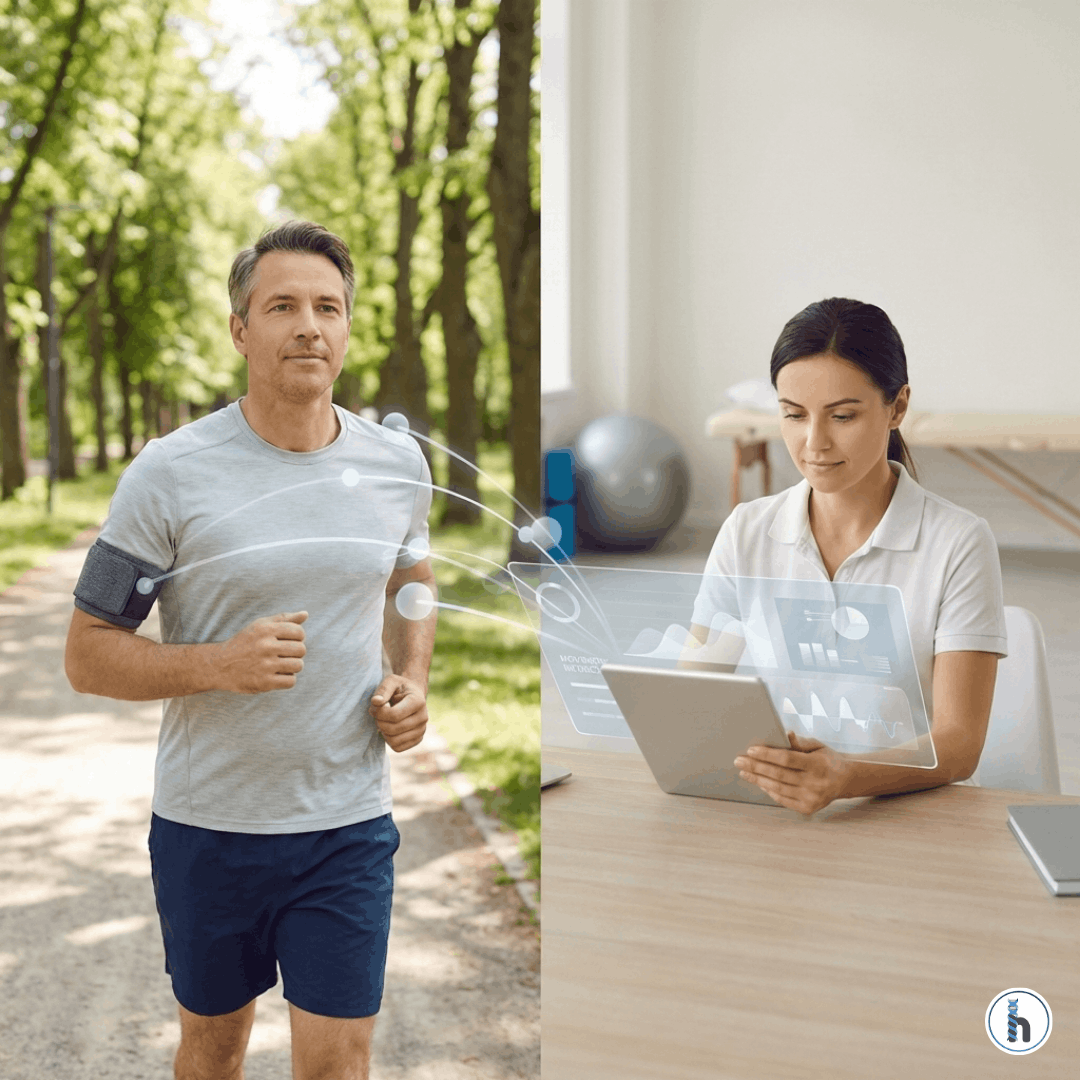
Today’s wearable devices have moved far beyond step counters. In a therapy context, they are used to track function, movement, and participation, not medical vitals or disease states.
Common RTM-relevant data from wearables includes:
- Activity and mobility trends (steps, movement frequency, task completion)
- Range-of-motion or movement quality indicators
- Adherence to home exercise programs
- Functional engagement patterns between visits
- Recovery consistency over time
For therapists, this data provides objective insight into real-world performance, helping bridge the gap between in-clinic treatment and at-home follow-through.
How Wearable Devices Integrate with Modern EMRs
RTM is designed around therapy oversight, not passive data collection. Wearables support RTM by supplying functional data that therapists can review, interpret, and act on as part of an active plan of care.
1. Functional Data to Support Clinical Decision-Making
RTM allows therapists to see how patients are actually moving and engaging outside the clinic not just how they perform during scheduled sessions.
Examples include:
- A post-operative PT monitoring daily mobility trends
- An OT tracking consistency with functional task practice
- An SLP reviewing participation patterns tied to assigned activities
This insight helps therapists adjust programs earlier, reinforce adherence, or identify when progress stalls.
2. Early Identification of Barriers to Progress
Wearable-supported RTM helps therapists identify functional drop-offs, such as:
- Decreased movement consistency
- Missed home program days
- Reduced engagement following a flare-up or schedule change
Rather than reacting weeks later at a progress note, therapists can intervene sooner updating exercises, adjusting frequency, or re-educating patients as needed.
3. RTM as a Skilled Therapy Service
RTM is not automated care. It becomes a skilled service when the therapist:
- Reviews RTM data
- Interprets functional trends
- Documents clinical reasoning
- Adjusts the plan of care
Wearables provide the data—but therapist judgment remains the core of treatment.
The Benefits of RTM-Enabled Wearables for Patient Engagement
One of the biggest challenges in therapy is follow-through between visits. RTM-supported wearables help address this naturally.
Key engagement benefits include:
- Increased accountability through visible progress
- Clear expectations for assigned activities
- Motivation through measurable improvement
- Fewer assumptions about patient adherence
When patients know their therapist is reviewing real activity—not just assigning exercises—engagement improves.
Challenges Clinics Must Address with RTM and Wearables
RTM adoption requires thoughtful implementation.
Data Relevance (Not Data Volume)
RTM data must be therapy-specific, easy to interpret, and tied to functional goals. An EMR should summarize insights not overwhelm clinicians with raw metrics.
Documentation and Compliance
RTM data must be:
- Linked to an active plan of care
- Reflected in clinical documentation
- Used to justify skilled oversight
Without documentation alignment, RTM loses its clinical value.
Security and Privacy
RTM data must move securely from patient devices into the clinical system using HIPAA-compliant handling and access controls.
Frequently Asked Questions About Wearable Technology
Q1: What is Remote Therapeutic Monitoring (RTM)?
RTM allows therapists to monitor functional activity, adherence, and engagement between visits as part of a skilled plan of care.
Q2: How is RTM different from medical monitoring?
RTM focuses on functional performance and therapeutic progress not vital signs or disease management.
Q3: Do wearables replace in-person therapy?
No. Wearables extend therapist insight between visits; they do not replace hands-on care.
Q4: What makes RTM a skilled service?
The therapist’s interpretation, documentation, and treatment decisions not the device.
Q5. Does HelloNote support RTM workflows?
Yes. HelloNote supports RTM documentation, data review, and workflow integration designed for therapy practices.
How HelloNote Supports RTM and Wearable-Driven Care
HelloNote is built specifically for therapy workflows, making it well-suited for RTM adoption.
With HelloNote, clinics can:
- Connect RTM-relevant data to patient treatment plans
- Document therapist review and clinical decisions
- Align RTM insights with functional goals and progress reporting
- Maintain HIPAA-compliant data handling
- Support RTM-related billing workflows when appropriate
RTM is embedded into the workflow not bolted on.
Conclusion: RTM Is the Future of Wearable Use in Therapy
Wearable technology is reshaping therapy care—not through medical-style monitoring, but through Remote Therapeutic Monitoring.
RTM allows therapists to extend care beyond clinic walls while maintaining clinical control, improving engagement, and supporting better outcomes.
By pairing RTM-ready wearables with a therapy-focused EMR like HelloNote, clinics can deliver smarter, more connected care without added complexity.
Want to see how HelloNote supports RTM-driven therapy workflows?
Schedule a demo and explore RTM-ready documentation, monitoring, and care coordination in action.