














Table of Contents
Introduction
The path to becoming a Speech-Language Pathologist has expanded significantly over the past decade. Alongside traditional campus-based programs, online speech therapy degree programs have become an established and legitimate option for entering the profession.
For clinic owners, administrators, and practicing therapists, this shift matters. Hiring decisions, clinical supervision, workforce planning, and long-term practice growth are all influenced by how new clinicians are trained. Understanding how online programs work—and how they prepare graduates for real-world practice—helps clinics make informed decisions while supporting a modern, diverse SLP workforce.
This article explores how online speech therapy degree program’s function, how accreditation and clinical training are handled, and what these programs mean for today’s therapy practices.
The Growth of Online Speech Therapy Degree Programs
Online education in healthcare is no longer experimental. In speech-language pathology, these programs emerged to address real gaps in access and workforce demand.
Geographic Access and Workforce Needs
Online formats allow students in rural or underserved areas to pursue SLP education without relocating, helping address nationwide clinician shortages.
Non-Traditional Career Pathways
Flexible scheduling supports career changers, working professionals, and students with family responsibilities.
Technology-Enabled Learning
What “Online” Actually Means in Speech Therapy Education
Online SLP programs follow the same academic and clinical rigor as traditional degrees.
Didactic Coursework
Foundational and specialty coursework is delivered online through recorded lectures, live sessions, readings, exams, and discussions.
Clinical Practicum Requirements
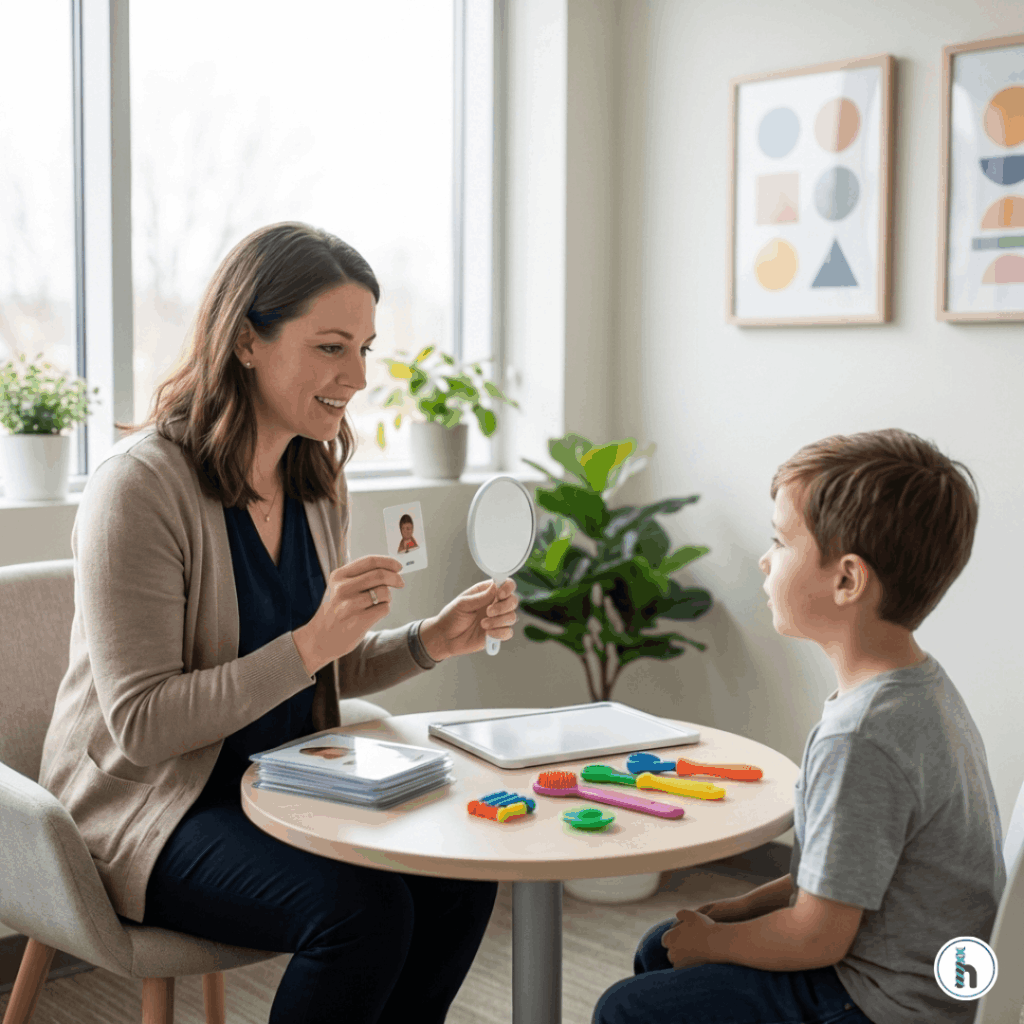
Clinical education is completed in real-world settings under ASHA-certified supervision and cannot be done fully online.
Hybrid and Campus-Based Components
Some programs require limited on-campus intensives for labs or skills validation.
Accreditation: The Most Critical Factor
Why CAA Accreditation Matters
Graduation from a CAA-accredited program is required for CCC-SLP certification and state licensure.
How Clinics Should Verify Accreditation
Accreditation should always be confirmed through ASHA’s official listings.
How Clinical Training Is Managed
Accredited programs use structured systems to coordinate placements and supervision
Clinical Placement Coordination
Programs assist students in securing approved practicum sites in their local communities.
Supervision and Performance Tracking
Clinical hours are monitored and evaluated through standardized supervision protocols.
Benefits of Online SLP Programs for Clinics and the Profession
Graduates often bring skills well-suited to modern therapy environments.
Technology Fluency
Online graduates are typically comfortable with digital documentation and telehealth tools.
Diverse Clinical Perspectives
Cohorts often include students from varied geographic and professional backgrounds.
Challenges Clinics Should Be Aware Of
Understanding limitations helps clinics support new graduates effectively.
Transition to High-Volume Clinical Settings
New clinicians may need mentorship adapting to fast-paced outpatient workflows.
Variability in Clinical Placements
Placement quality can differ by location and supervision environment.
What This Means for Hiring and Practice Management
Clinic owners and administrators should focus on readiness and competency.
Hiring Based on Skills, Not Format
Accreditation ensures baseline preparation regardless of online or in-person education.
Supporting New Graduates
Structured onboarding and EMR training are critical for early success.
Technology’s Role in Modern Speech Therapy Practice
The growth of online education parallels technology’s role in daily clinical operations.
Efficient documentation, billing, and care coordination require therapy-specific systems.
How HelloNote Supports Speech Therapy Clinics
HelloNote is built specifically for rehabilitation professionals.
SLP-Specific Documentation Tools
Custom templates support evaluations, daily notes, progress reports, and discharges.
Goal-Driven Tracking and Billing Alignment
Goals, notes, and CPT codes stay connected for cleaner reimbursement.
Secure, Flexible Access
Cloud-based access supports school-based, mobile, and multi-location therapy.
Frequently Asked Questions
Q1. Are online speech therapy degree programs legitimate?
Yes, when accredited by ASHA’s Council on Academic Accreditation.
Q2. Can graduates of online programs become licensed SLPs?
Yes. Accreditation allows eligibility for CCC-SLP certification and state licensure.
Q3. Do online programs include in-person clinical training?
Yes. Supervised, hands-on clinical hours are required.
Q4. Should clinics treat online graduates differently?
No. Hiring decisions should be based on competency and professionalism.
Q5. How does technology impact modern speech therapy practice?
Technology improves efficiency, compliance, and care coordination when designed for therapy workflows.
Conclusion: Education Is Evolving—Practice Must Evolve Too
Online speech therapy degree programs are a legitimate, accredited pathway into the profession. Clinics that understand these programs and pair clinicians with workflow smart EMRs are best positioned for sustainable growth in 2026 and beyond.