



















Table of Contents
Modern massage therapy rates typically range from $70 to $150 per hour, with a national average of $102–$112. To ensure profitability, clinics are moving away from flat fees toward Hybrid Membership models ($70–$120/mo) and Tiered Pricing (20–30% premiums for specialty modalities) to stabilize recurring revenue and increase average visit value.
Step 1: Analyze Your Current Operating Costs
Before adjusting your rates, you must understand your real overhead structure. In a modern clinic, pricing without data is just guessing.
Studio Overhead and Fixed Costs
Urban clinic overhead currently averages between $18,000 and $50,000 per month. This includes rent, utilities, insurance, and property expenses. If you don’t know your fixed monthly break-even number, you cannot set a sustainable price.
Labor: Your Largest Variable Driver
Therapist labor typically represents 35–50% of total revenue. This includes commission splits, payroll taxes, and benefits. If labor exceeds 50%, your pricing is likely too low, or your booking density is inconsistent.
Technology Stack Investment
To remain competitive, a modern clinic must budget for high-quality infrastructure:
EMR Systems: Integrated platforms like HelloNote.
Online Booking: Engines that support secure payment processing.
Cybersecurity: HIPAA-compliant data storage and encryption.
Step 2: Choose a Strategic Pricing Model
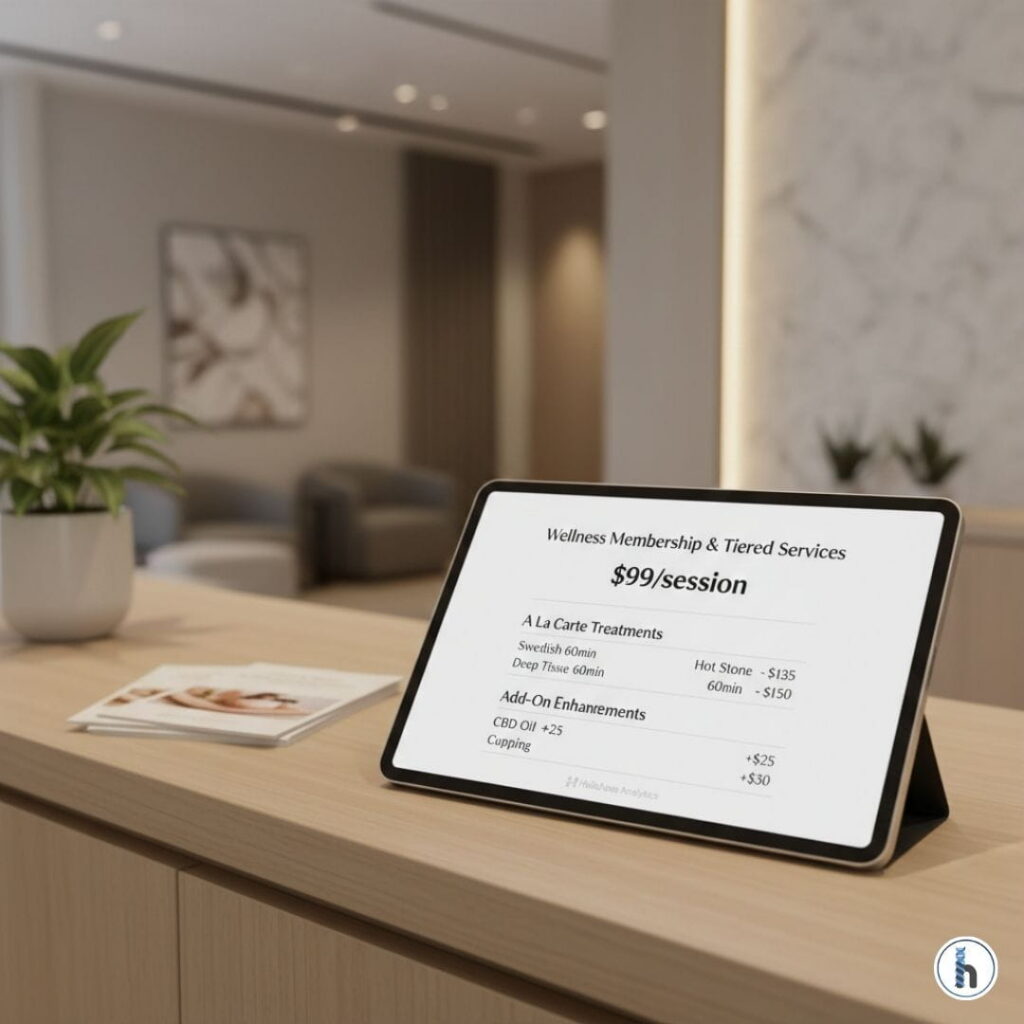
The “flat fee” model is outdated. Successful clinics now implement structured tiers to reflect the varying skill levels required for different modalities.
| Pricing Model | Description | Best For |
| Duration-Based | $1/minute rule (e.g., 60m = $100) | Relaxation-focused practices |
| Tiered Modality | 20–30% premium for advanced skills | Sports, Deep Tissue, Clinical |
| Membership Model | Recurring monthly fee (e.g., $89/mo) | Retention-driven clinics |
| Dynamic Pricing | Premium rates for peak hours | High-traffic urban studios |
Why Tiered Pricing is the Modern Standard
Clinical modalities like deep tissue or sports massage require greater physical effort and advanced training. Charging a $10–$20 premium reflects this expertise and protects against therapist burnout.
Step 3: Increase Average Visit Value (AVV)
A successful massage clinic should aim for an Average Visit Value (AVV) of approximately $164. This is achieved through strategic enhancements rather than base rate hikes alone.
Strategic Add-On Enhancements
Increase revenue without extending appointment time by offering:
Hot Stones: $15–$30
Cupping: $20+
CBD Oil Enhancement: $20+
Retail Integration
Retail should represent 8–15% of total sales. Positioning yourself as a wellness authority by selling foam rollers, therapeutic oils, or postural supports increases both revenue and client retention.
Strategic Revenue Optimization with HelloNote
Pricing isn’t just about the number on the menu—it’s about scheduling efficiency. HelloNote provides the analytics needed to move from guessing to growing.
Identify Underbooked Time Slots
Use HelloNote’s revenue analytics to spot gaps in your schedule. Instead of a blanket price increase, you can implement a “Prime Time” premium for Saturdays while maintaining lower weekday morning rates to fill gaps.
Tracking Performance and Margins
HelloNote allows you to track AVV by service type and provider. This data tells you exactly which services are your “profit engines” and which may need a price adjustment.
Frequently Asked Questions
Q1. How much more should I charge for Mobile Massage?
Mobile services are typically 20–30% higher than in-clinic rates to cover fuel, travel time, and equipment transport.
Q2. What is “Charm Pricing” vs. “Prestige Pricing”?
Charm Pricing ($99) uses a psychological discount effect, while Prestige Pricing ($150) signals authority and expertise. Modern clinical practices increasingly use Prestige Pricing to simplify their messaging.
Q3. Can I charge more for Deep Tissue?
Yes. Most practitioners charge a $10–$20 premium due to the increased physical strain and the advanced training required for the modality.
Q4. How often should I review my clinic's pricing?
You should conduct a formal cost analysis every 12 months. However, with HelloNote’s real-time analytics, you can monitor your margins monthly to stay ahead of inflation.
Q5. How do I communicate a price increase to clients?
Provide at least 60 days’ notice and frame the change around value. Mention investments in therapist training or new recovery technology to build trust.
Conclusion: Pricing is a Strategy, Not a Guess
The clinics thriving in today’s market are not the cheapest—they are the most structured. By combining membership stability with the data-driven insights of HelloNote, you can ensure your clinic remains both profitable and sustainable.
Ready to see how HelloNote’s analytics can optimize your revenue? Schedule your demo today.