


















You've found a hidden discount!

HN Unlock Layer 1
HN Unlock Layer 2
HN Unlock Layer 3
HN Unlock Layer 4
HN Unlock Layer 5
  • 00Hours
  • 00Minutes
  • 00Seconds

Category: technology

Discover 6 Unmatched Benefits of EMRs for Your Therapy Practice

Explore the top benefits of EMR for your therapy practice! See how electronic medical records improve efficiency, streamline tasks, and enhance patient care.
therapists 6 unmatched benefits of getting an emr system

Starting a therapy business—whether in Physical Therapy, Occupational Therapy, or Speech Therapy—comes with its fair share of challenges. From juggling administrative tasks to maintaining patient confidentiality, ensuring seamless communication, and providing the best care, it’s no easy feat.

That’s where Electronic Medical Records (EMRs) come in. EMRs are more than just a digital way to manage records—they are tools that can transform your practice by improving efficiency, accuracy, and collaboration.

If you’re still navigating whether EMRs are worth it for your therapy practice, here are the top six benefits to consider:

You may want to check out “Top 6 Advantages Of Using An EMR Software In Your Therapy Practice“. Now, let’s explore how EMRs can improve your therapy practice and patient care.

Key Benefits of EMRs for Your Therapy Practice:

1. Protecting Patient Privacy:

How does EMR keep patient information safe?

As a healthcare professional, maintaining patient confidentiality is one of your top priorities. EMRs take this responsibility seriously, using encryption, secure messaging, and access controls to protect sensitive information.

Imagine a Speech Therapist working with children whose parents value discretion. With EMRs, you can securely communicate progress updates while complying with strict privacy laws like HIPAA. These systems not only protect your practice legally but also foster trust with your clients.

2. Simplifying Tasks and Saving Time:

How can EMR make my job easier?

One of the most immediate benefits of EMRs is their ability to automate routine tasks like documentation, appointment scheduling, and reminders. These tools streamline your workflow, reducing the time spent on administrative duties.

For example, Physical Therapists can use pre-designed templates to quickly document session details, while Occupational Therapists can rely on automated reminders to ensure patients never miss follow-ups. EMRs free up your time so you can focus on delivering personalized care.

3. Enhancing Communication and Collaboration:

How does EMR improve communication?

In therapy, teamwork often extends beyond your practice. You might need to collaborate with other healthcare providers, share reports with patients, or coordinate treatment plans with specialists. EMRs make these interactions seamless.

For instance, if you’re treating a child with developmental delays, EMRs can enable you to share progress updates with pediatricians, teachers, and other therapists in real-time. This integrated approach ensures that everyone is on the same page, leading to better outcomes.

4. Using Data for Informed Decisions:

How does EMR help me make better decisions?

Data is one of the most valuable assets in modern healthcare. EMRs help you gather and analyze patient information, providing insights that can guide treatment decisions.

Let’s say you’re working with a group of patients recovering from knee surgery. With EMRs, you can track recovery times, identify common challenges, and adjust treatment plans to address specific needs. This data-driven approach improves the quality of care and helps you achieve measurable results.

5. Improving Accuracy and Efficiency:

How does EMR make sure my records are right?

Errors in documentation or billing can disrupt your practice and harm your professional reputation. EMRs eliminate many of these issues by ensuring that records are accurate, complete, and easy to access.

6. Integrating with Healthcare Systems and Payment Solutions:

How does integrating EMRs with healthcare systems and payment solutions benefit your therapy practice?

Managing payments, insurance claims, and patient records can be a headache. EMRs simplify this process by integrating seamlessly with billing software and other healthcare systems.

Picture this: Instead of juggling multiple platforms, an Occupational Therapist can handle everything—from scheduling to billing—in one centralized system. This not only saves time but also ensures that all aspects of the practice are aligned and efficient.

Why EMRs Are Worth the Switch

Switching to EMRs may seem overwhelming at first, especially if you’re used to paper records. However, the long-term benefits far outweigh the initial learning curve. Imagine a system that not only saves you hours every week but also improves your ability to provide excellent care.

Whether you’re working with a child with developmental challenges, a patient recovering from an injury, or a group of clients with shared needs, EMRs offer tools to streamline your workflow and track results effectively.


Take the Next Step
If you’re ready to simplify your therapy practice and improve patient care, start exploring EMR options tailored for therapy professionals. Platforms like HelloNote offer user-friendly solutions that are designed with your needs in mind.

Want to learn more? Book a demo with our Client Support Manager today and take the first step toward a more efficient, client-centered practice.

EMR vs. EHR: Key Differences in Healthcare Technology

Discover the key differences between EMR and EHR and how they empower therapists to provide better care. Learn how these technologies streamline therapy workflows and enhance patient outcomes.

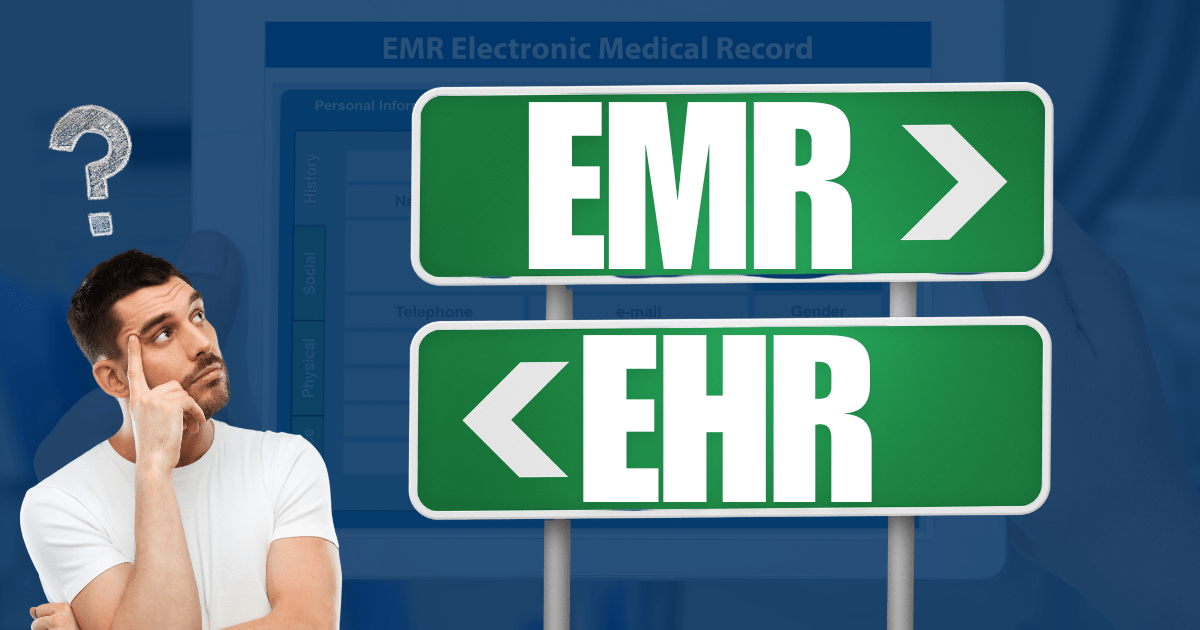
Man thinking about EMR vs EHR with digital health record icons.

In the ever-evolving world of healthcare technology, the terms EMR (Electronic Medical Records) and EHR (Electronic Health Records) are often used interchangeably, but they actually refer to two distinct systems. Understanding the differences between EMR and EHR is crucial for healthcare providers, as each serves different functions in managing patient information. In this article, we’ll explore the key differences between these two technologies, how they impact healthcare practices, and why choosing the right system is vital for both patient care and operational efficiency. Let’s dive in!

Understanding EMRs: What They Do

EMRs are like digital versions of your health history maintained by a single practice, such as a therapist’s clinic. These records hold information about your diagnoses, medications, progress notes, and treatment plans. For therapists, this means having quick access to patient histories, enabling precise treatment adjustments.

EMR Benefits: Making Things Better

EMRs simplify operations for therapists by:

    • Streamlining documentation: Progress notes, billing codes, and patient details are all in one place.
    • Reducing errors: Automated alerts help avoid documentation mistakes, ensuring compliance and accuracy.
    • Saving time: Tasks like scheduling and insurance verification are handled more efficiently.

For example, a physical therapist can quickly pull up a patient’s exercise plan during a session, ensuring consistency and personalized care.

Spotting the Difference: EMR vs. EHR

While EMRs are focused on individual practices, EHRs take a broader view.

    • EMRs: Records kept by a single doctor’s office or clinic.
    • EHRs: A collection of health information shared across multiple providers, including hospitals, specialists, and labs.

EHRs provide therapists with a complete view of a patient’s health, including test results, medication history, and treatments prescribed by other providers. This holistic approach enables better-coordinated care, especially for patients undergoing multidisciplinary therapy.

Why Knowing Matters: Understanding the Tech

Knowing the difference between EMRs and EHRs is essential for therapists. While EMRs offer focused data for day-to-day practice, EHRs enable collaboration and continuity of care across healthcare teams.

Want to learn more about the nuances? Check out our detailed article, ‘What’s the Difference Between EMR and EHR Software?, to dive deeper into this vital distinction.

EMRs: Changing the Game in Healthcare

For therapists, integrating EMRs is like upgrading to a more organized and efficient system of care. EMRs empower therapists to:

    • Track patient progress over time.
    • Automate repetitive tasks like appointment reminders.
    • Provide personalized care plans based on accurate and up-to-date records.

Shaping the Future of Healthcare: EMRs and EHRs Together

When combined, EMRs and EHRs bridge the gap between individual patient care and coordinated healthcare systems. This integration helps therapists:

    • Improve communication with other providers.
    • Avoid redundant treatments or conflicting therapies.
    • Provide data-driven insights to improve patient outcomes.

Overcoming Challenges with EMRs and EHRs

While these systems are transformative, they come with challenges.

    • Learning curve: Therapists may need training to use EMRs/EHRs effectively.
    • Cost considerations: Investing in quality software can be expensive.
    • Interoperability: Ensuring different systems communicate effectively can be tricky.

To overcome these hurdles, therapists can:

    • Choose user-friendly software tailored to their specialty.
    • Work with vendors offering robust customer support.
    • Advocate for standards like HL7 and FHIR to ensure data compatibility.

The Role of Security and Compliance

Patient confidentiality is critical. Both EMRs and EHRs are designed to comply with HIPAA regulations, ensuring data security. This protects patient information while enabling therapists to use advanced tools for better care.

Practical Example for Therapists

Imagine a speech therapist using an EHR to review a patient’s recent neurological tests ordered by a neurologist. This insight allows the therapist to tailor therapy sessions, improving the patient’s recovery journey.

Conclusion: Bridging the Gap in Healthcare Technology

EMRs and EHRs are revolutionizing therapy practices by offering therapists the tools to provide efficient, personalized, and coordinated care. By understanding their differences and leveraging their strengths, therapists can enhance patient outcomes while streamlining their workflows.

Curious about how the right EMR/EHR system can transform your practice? Contact us today to explore solutions designed specifically for therapy professionals. Empower your practice with technology that bridges the gap in healthcare.

EMR vs EHR: The Critical Choice That Could Transform Your Practice’s Efficiency and Patient Care

This article compares EMR (Electronic Medical Records) and EHR (Electronic Health Records) systems, explaining their differences, benefits, and uses for healthcare practices. It provides insights into how each system supports patient care, data sharing, and operational efficiency, helping practices make informed decisions about their record-keeping needs.

A road splitting into two directions, symbolizing the decision between EMR and EHR systems for healthcare practices.

In today’s rapidly evolving healthcare landscape, choosing the right system for managing patient records is more crucial than ever. Whether you’re a small private practice or a larger healthcare facility, the decision between EMR (Electronic Medical Records) and EHR (Electronic Health Records) can make a significant difference. Let’s explore the differences and benefits of these systems to determine which one is best suited for your practice.

EMR: Electronic Medical Records

EMR systems are tailored to a specific practice and allow for efficient management of individual patient care within a single medical entity. By digitizing the traditional paper charts, EMR enhances security and efficiency. However, EMRs are limited to a single practice and require the patient’s active participation when sharing data with other facilities. This can delay care and disrupt the smooth exchange of information.

EHR: Electronic Health Records

Unlike EMRs, EHRs offer a broader scope, consolidating patient data from multiple healthcare providers. This allows medical teams to see a complete treatment history, even if a patient visits various hospitals or clinics. EHR systems facilitate seamless data sharing across multiple platforms and provide patients with portals to manage their own health, further improving patient engagement and care coordination.

Choosing Between EMR and EHR

So, which system should you choose? The answer depends on your practice’s needs. If you run a smaller clinic or are just getting started, an EMR might be more than sufficient. However, for practices that need to share information across multiple locations or coordinate with different specialists, an EHR could be the better choice. Evaluating the size of your practice, the volume of patient data you manage, and your need for data sharing will help you make an informed decision.

Should Your Practice Use EMR or EHR?
Consider these factors when deciding:

    • Does your practice need a system that facilitates data exchange with other providers?
    • Would patient portals enhance engagement and communication with your clients?
    • Are you seeking a more comprehensive view of each patient’s medical history?
      Both EMRs and EHRs are valuable tools, but understanding their specific roles and functionalities will allow you to make the right choice for your practice.

Conclusion:

Whether you choose EMR or EHR, both systems have the potential to streamline your practice’s operations and improve patient care. By understanding their differences and aligning your choice with your practice’s goals, you can ensure that your electronic medical record-keeping is both efficient and effective.

Interested in HelloNote’s Comprehensive EMR Software?
HelloNote simplifies your practice’s charting, billing, and compliance needs with its user-friendly, customizable EMR solution. Designed specifically for therapy practices, HelloNote improves efficiency, reduces administrative burdens, and enhances patient care. Contact us to learn more about how we can help your practice.

7 Key EMR Features for Speech-Language Pathologists

Designed for speech-language pathologists (SLPs), this EMR software addresses the specific needs of therapy practices. It offers secure documentation, scheduling, billing, and data tracking tools that support your daily workflow. With features like teletherapy, patient portals, and cloud-based access, the software ensures efficiency while maintaining compliance with HIPAA standards. Whether in a clinic, school, or home setting, it empowers SLPs to manage their practice effectively and focus on delivering exceptional care.”

EMR system interface designed for speech-language pathologists (SLPs) with tools for documentation, scheduling, and billing

As a speech-language pathologist (SLP), your days are often filled with word-free communication. Initial therapy visits usually begin with simple cues, like smiling, pointing, and nodding.

The hope is that your patient will progress to saying simple one-word responses. After months of therapy, the patient’s vocabulary may increase to hundreds of words. These positive changes enrich lives and reinforce professional fulfillment.

However, administrative and documentation demands distract from that joy. As a modern speech-language pathologist, you need EMR tools that allow you to focus on adding one more word to your patient’s vocabulary. Here are some things to consider when purchasing a comprehensive therapy practice management and EMR solution.

Online Appointment Scheduling for Speech-Language Pathologists

Electronic appointment scheduling is a necessary tool for SLPs. Missed appointments contribute to a significant loss of progress. With an appointment scheduling tool, therapists can improve time management and reduce missed appointments.

One of the benefits of hiring more than one SLP is that your patients never have to miss a therapy session, even if someone is on maternity leave or out sick. Therapy practices that employ multiple SLPs find that sharing calendars promotes cohesive scheduling.

Web-based scheduling apps are crucial for speech-language pathologists because therapy is often not in a clinic but at a school, retirement facility, or home.

The Importance of Electronic Billing for SLPs

Medical billing software simplifies billing and payments. Therapists can access patient records, process claims, submit bills, and track payments. With easy-to-use electronic billing, many tasks are automated, which saves time and money.

SLPs report that billing and recording are the most frustrating parts of the job. Inadequate documentation often equates to insufficient reimbursements. EMR billing software helps speech therapists provide the specific, detailed information the payor requires.

Electronic billing will give you data insights that help determine your practice’s financial health. An integrated billing software saves time, improves efficiency, and increases revenue.

Data Tracking for SLPs in EMR Software

KPIs, or key performance indicators, are measurements of quantifiable activity and the success of initiatives. As an SLP, measurable objectives are foundational to the success of your patient care. Why wouldn’t we also make data tracking part of our business care plan?

With data tracking, speech-language pathologists can track patient progress, and businesses can track practice improvement. SLPs receive prompt feedback, and clinics can see how they compare to industry standards. This consistent evaluation ensures that your patients receive the best care.

EMR Patient Portal for Speech-Language Pathologists

With patient portal availability, users can fill out forms and submit paperwork from the comfort of their homes. They don’t have to spend endless time in the waiting room filling out forms. The patient portal tool makes their visit easier while streamlining your intake process.

After a medical or therapy visit, patients frequently feel like they drank from an informational fire hydrant, and information overload is real! With patient portal access, users can review notes, which helps them take ownership of their schedule and health.

EMR Software and Teletherapy for SLPs

In 2020, COVID-19 forced the medical world to think outside the box and lean into innovative technology. Though not everyone welcomed the changes, health care is forever altered. Some of these changes have proven to be beneficial.

Easier access: Telehealth software provides you with easier access to patients, especially home-bound or those in rural communities.

Additional patients: Telehealth differentiates your practice from others. With the busyness of family life, many people are looking for therapy practices that offer teletherapy.

Patient compliance: Telemedicine improves patient compliance. The added level of accountability helps motivate patients to do their “homework.” Sometimes, families can’t come to the clinic due to sickness or circumstances. Virtual appointments decrease the number of missed visits.

Increased revenue: With remote availability, additional patients, and reduced missed sessions, therapy practices observe an increase in revenue with telehealth.

Remote work: More and more SLPs are working from the comfort of their homes. Teletherapy maximizes your efforts and decreases commute times.

With new remote therapeutic monitoring (RTM) coding, speech therapists can charge for digital services appropriately. Many therapy practices charge the same for virtual visits as in-clinic visits. Virtual software has proven to be a beneficial innovation in technology.

Secure Documentation Software for Speech-Language Pathology

Over the years, healthcare has become increasingly specialized. Sharing patient information among the different specialties is vital for comprehensive care. However, protecting patient data remains a challenge and concern for medical practices.

The Health Insurance Portability and Accountability Act (HIPAA) was established in 1996 to protect patient information while collaborating for improved outcomes. Maintaining secure documentation protects your practice from privacy-related fines and poor publicity.

When purchasing a comprehensive EMR solution, look for secure documentation software that does the following:

    1. Encrypts emails and texts
    2. Securely store patient records
    3. Creates secure passwords
    4. Provides data backup encryption
    5. Gives privacy notifications

Integrated, Cloud-Based Platform is Important Speech-Language Pathology

Integrated, cloud-based software provides easy access to patient information. Wherever you are practicing — at home, clinic, school, or retirement facility — it has never been easier to access pertinent information.

A cloud-based platform ensures that notes aren’t lost, and files are securely saved. Collaboration, efficiency, and workflow are enhanced with web-based EMR tools.

SLPs don’t want to waste time with duplicate documentation and disjointed tools. An all-in-one EMR, therapy practice management, and billing software streamlines your administrative duties.

Recap: Important Tools for Speech Language Pathologists for Their EMR Software

Modern speech-language pathologists need tools that deliver efficient, easy-to-use EMR software. Are you weary of wasted time on inefficient documentation and data tracking? HelloNote is here to help.

We are a team of therapists who understand your daily dilemmas and difficulties. We created innovative and intuitive EMR software that allows you to focus on patient care rather than repetitive, menial tasks. If you are looking for practice management software designed for therapists, contact HelloNote today.

10 Key EMR Features Every Therapy Practice Should Have

Discover the 10 must-have EMR features for therapy practices. From user-friendly interfaces to secure data storage, these features help streamline operations, reduce administrative work, and enhance patient care. Find out which EMR features are essential for a more efficient and effective therapy practice.

Computer showing EMR features for therapy practice.

Therapists require tools that improve efficiency and allow them to focus on what matters most—delivering quality patient care. Whether it’s reducing the administrative burden or enhancing documentation accuracy, selecting the right EMR system can transform a therapy practice. Here’s a comprehensive guide on the must-have features every therapist should look for when choosing an EMR system.

1. User-Friendly Interface: Streamlining Daily Tasks

A user-friendly EMR system ensures therapists spend more time with patients and less time navigating complex software. Features like intuitive dashboards and familiar design layouts, akin to Microsoft Office, reduce frustration and boost productivity.

Tip: Look for EMRs designed by therapists. They often align with your workflow better than generic software.
Example: SimplePractice offers an intuitive platform specifically tailored for therapy practices.

2. Comprehensive Patient Records: The Backbone of Your Practice

Integrated patient records allow seamless access to vital information, including progress notes, billing details, and scheduling history. Avoid disjointed systems that require you to manage multiple platforms.

Key Components:

Automated appointment logs
Unified billing and treatment histories
Built-in data analytics for progress tracking
Stat: Clinics using comprehensive EMRs report a 25% reduction in administrative workload.

3. Secure Data Storage: Protecting Patient Confidentiality

Therapy practices are required to comply with HIPAA standards, making secure data storage a priority. Features like end-to-end encryption, password protection, and secure messaging ensure your clinic remains compliant and your patients’ data stays protected.

Pro Tip: Consider EMRs that offer automatic backups and eFax capabilities, which add an extra layer of security.

4. Integration with Existing Systems

An EMR that integrates seamlessly with your current tools can enhance your practice without requiring a complete overhaul. Look for compatibility with billing systems, teletherapy platforms, and scheduling tools.

Example: Therabill integrates easily with QuickBooks, streamlining financial management for therapy clinics.

5. Customizable Templates for Therapists’ Needs

Therapists in different fields—PT, OT, ST—require documentation templates that cater to their unique needs. Customizable templates ensure you save time without sacrificing accuracy.

Tip: Templates should suggest appropriate ICD and CPT codes to simplify the coding process.
Example: WebPT offers industry-specific templates that reduce the time spent on documentation.

6. Scheduling and Appointment Reminders: Reducing No-Shows

Missed appointments cost clinics time and money. Scheduling tools with automated reminders improve attendance rates and keep both therapists and patients on track.

Stat: Practices using automated reminders see up to a 30% decrease in no-show rates.

7. Teletherapy Features: The Future of Care Delivery

Teletherapy isn’t just a convenience; it’s essential for reaching underserved populations and improving access to care.

Benefits for Clinics:

Expanded patient base
Improved work-life balance for therapists
Benefits for Patients:

Increased accountability
Access to therapy from remote areas
Example: Zoom for Healthcare offers HIPAA-compliant teletherapy features.

8. Reporting and Analytics: Turning Data into Insights

Real-time data analytics allow therapists to track patient progress effectively. This helps in tailoring future treatment plans and identifying areas for improvement.

Pro Tip: Look for EMRs that offer customizable reporting options to focus on metrics that matter most to your clinic.

9. Billing and Insurance Management: Reducing Administrative Burdensding Text Here

Efficient billing systems automate claims processing, track reimbursements, and reduce the chances of errors. Whether you operate a cash-based or insurance-based model, billing software should streamline operations and adapt to future changes.

Example: TherapyNotes provides robust billing features with one-click claim submission.

10. Ongoing Support and Training

A great EMR system is only as good as the support behind it. Ensure your vendor offers training sessions, accessible customer support, and a comprehensive knowledge base.

Tip: Ask if the vendor provides live support during peak business hours.

Final Thoughts: Choosing the Right EMR

The right EMR system simplifies your operations, improves patient care, and saves you time. To ensure success, consider systems like HelloNote, which combine all the essential features in one comprehensive platform.

With tools like teletherapy, scheduling, billing, and analytics, HelloNote empowers therapists to focus on their patients while maximizing their clinic’s efficiency.

Ready to simplify your practice and focus more on patient care? Schedule your free demo with HelloNote now and experience the difference today!”

Case Study: Using HelloNote To Scale To 150 Visits Per Week With GeriHab Physical Therapy and Wellness

Discover how GeriHab Physical Therapy and Wellness leveraged HelloNote to scale its operations to 150 visits per week. This case study explores the role of efficient documentation, streamlined scheduling, and billing integration in driving growth for a geriatric-focused therapy practice. Learn how HelloNote empowered GeriHab to optimize workflows, improve patient care, and achieve scalable success. Perfect for therapy providers looking to enhance their practice’s efficiency and patient outcomes.

Mike Chua's family posing for a group photo, showcasing the personal side of GeriHab Physical Therapy.

GeriHab Physical Therapy and Wellness has grown to provide between 100-150 therapy visits per week within the span of just a few years. How did this small company become a dominant presence in Tennessee for delivering geraitric outpatient and home health?  The answer is simple: hustle, technology and systems.

How HelloNote Changed Mike’s Clinic In 2020:
One of the key systems in GeriHab’s workflow is it’s EMR system, powered by HelloNote.  When you first start your therapy practice, you may be able to get away with using something simple like Google Docs, but to become a scalable and profitable clinic, you need to hire staff and create systems. Systems which include having a fast, simple to use, comprehensive and affordable EMR.

Mike Chua is the CEO and owner of GeriHab Physical Therapy and transitioned his business to use HelloNote in 2020 as he needed an EMR that could perform HIPPA compliant documentation, help him with his billing, perform faxing, and most importantly that he could affordably use for his 30 staff and contractors.

Prior to 2020, he wasn’t using anything!

He was prompted to use HelloNote because “I just didn’t want to hand write notes any more and submit it manually.”

Note only was he more stressed trying to do all these roles manually, but it was taking time away from seeing patients – which was costing him valuable income. In addition, it was taking away from the patients his staff could see as well.

Patients at GeriHab Physical Therapy participating in therapy sessions to improve their mobility and wellness.

Why did GeriHab Physical Therapy and Wellness choose HelloNote as its EMR of choice? 

There are a lot of EMR choices for rehabilitation clinics and so it can easily be overwhelming. But when asked Dr. Mike Chua why he chose HelloNote, his answer was:

“It’s very affordable! I have 30 staff and contractors, but HelloNote includes nonclinical staff for free – enabling me to share my account with my virtual assistant”.  Many times one of our first hires is to hire a VA or virtual assistant to help with communication, scheduling, calling, reminders, and other tasks. HelloNote only charges for clinical staff, and so worry free Mike was already early on able to scale without that additional cost burden.

Mike also reported that another key factor in his decision was “the customer support, which was great!”. HelloNote has phone, chat, email support and they even walk you through your first patient for free so that you feel confident with their software.

What are key tips from a thriving practice like GeriHab Physical Therapy and Wellness to help grow your practice? 

Dr. Mike Chua’s top tip are to “Learn and delegate.  Especially the things you don’t like! I don’t enjoy billing and authorizations so they were the first I delegated.” Hellonote makes this very easy as they have integrated billing providers so you can offload your billing from your long CEO to-do list.

Would Dr. Mike Chua recommend HelloNote to other clinicians? 

Mike’ practice is steadily and growing and he largely thanks this to his hustle, hard work, ability to delegate but also to the systems he has put in place. When you are dealing with 30 staff and contractors and 100-150 visits per week, you need a reliable EMR system as this is the cornerstone to any therapy practice. “I 100% recommend HelloNote” says Dr. Mike Chua, “they are constantly improving, are helpful, and affordable.”

Hellonote is so proud of Dr. Mike Chua and GeriHab! We are a company that loves to share our customers success and so feel free to contact us if you want us to share your success too at [email protected]. And if you are interested in using HelloNote, come set up a free demonstration here: https://hellonote.com/scheduledemo/.

How Does a Medical Billing Software Work?

Streamline your practice with advanced medical billing software. Simplify billing, reduce errors, and optimize revenue with the best tools for healthcare providers.

Therapist using medical billing software on a computer for efficient billing

When it comes to the medical industry, there are a lot of moving parts. From doctors and nurses to insurance companies and patients, it can be difficult to keep track of everything. That’s where medical billing software comes in. This medical billing solution helps make the process of billing and payments easier for everyone involved.

Medical billing software is designed to simplify medical billing and payments with a systemized medical billing system. This software allows medical providers to manage patient records, process medical claims, submit electronic medical bills, electronic health records, track payments, and more. It simplifies the entire medical billing process by automating many of the tasks that would normally take a lot of time and effort. By using medical billing software, healthcare providers can save time and money while improving their overall billing efficiency.

A medical billing software program is also capable of providing valuable insights that help medical providers better understand the financial health of their practice. This includes analyzing medical claims, tracking payments, tracking patient data, and identifying trends in medical billing behavior. By using medical billing software, medical providers can identify areas where they can reduce medical costs or increase their profits. In this blog post, we will discuss how medical billing software works and some of its benefits!

What is Therapy Billing Software?

Therapy billing software is medical billing software that is specially designed to be used in the therapy industry. This specialized medical billing software can handle medical claims, process medical bills, track payments, and more in an efficient and cost-effective way. Therapy billing software also provides medical professionals with valuable insights regarding trends in medical behavior and areas where they can reduce medical costs or increase their profits.

Therapy billing software can help medical providers manage patient records, submit medical bills electronically, and track payments. It also simplifies the entire medical billing process by automating many of the tasks that would normally take a lot of time and effort. With therapy billing software, medical providers can save time and money while improving their overall billing efficiency.

Overall, therapy billing software can be a great way to reduce costs and improve the efficiency of therapy practices. It simplifies the entire medical billing process and provides valuable insights that can help therapy providers make informed decisions regarding their financial health. With therapy billing software, therapy providers can save time and money while improving their overall billing efficiency.

How Physical Therapy Billing Works?

In physical therapy billing, medical providers submit medical claims electronically to private insurance companies or government insurance programs such as Medicare and Medicaid. Once these medical claims are submitted, medical providers receive payments for the services they have provided.

Medical providers must also track payments from private insurance companies or government programs, adjust medical bills based on patient’s medical coverage, and submit medical claims electronically. In order to do this efficiently and cost-effectively, medical providers often use medical billing software such as therapy billing software.

How Much Does Therapy Practice Management Software Cost?

The cost of therapy practice management software varies depending on the features, support, and services that are included. Generally speaking, medical billing software can range in price from a few hundred to several thousand dollars. Medical billing software vendors may present you with different kinds of medical billing solutions or medical billing software programs which may vary in price, depending on the medical services and healthcare services it can offer.

It is important to keep in mind that medical providers should not simply purchase the cheapest medical billing software they can find—it is essential to choose medical billing software that is tailored to the specific needs of their practice. Medical providers should also consider factors such as customer service, ease of use, and scalability when selecting medical billing software. By choosing medical billing software that meets their medical practice’s needs and budget, medical providers can save time and money while improving their overall billing efficiency.

What is EMR Physical Therapy?

If want to see more of this you can go to Hellonote Channel in youtube.

https://www.youtube.com/watch?v=-3rmM19kT5A

EMR Physical Therapy is medical billing software that is specially designed for physical therapy practices. This medical billing software can handle medical claims, process medical bills, track payments, and more in an efficient and cost-effective way.

In addition to providing medical providers with valuable insights into trends in medical behavior and areas where they can reduce medical costs or increase their profits, EMR Physical Therapy also simplifies the medical billing process by automating many of the tasks that would normally take a lot of time and effort.

Ultimately, medical providers can save time and money while improving their overall billing efficiency by using medical billing software such as EMR Physical Therapy. With medical billing software, medical providers can ensure that medical bills are paid quickly and accurately and that medical practices remain financially healthy.

What Software Do Physical Therapists Use?

Physical therapists can use medical billing software such as EMR Physical Therapy to simplify the medical billing process and achieve greater financial efficiency. This medical billing software enables physical therapists to submit medical claims electronically, track payments from private insurance companies or government programs, adjust medical bills based on patient’s medical coverage, and more.

In essence, medical billing software such as EMR Physical Therapy can be an invaluable tool for physical therapists, enabling them to save time and money while improving their medical billing efficiency.

What is the Best Speech Therapy Software?

The best speech therapy software is medical billing software that is tailored to the specific needs of medical practices in the field of speech therapy. This medical billing software should be easy to use, provide medical providers with detailed insights into medical trends, and automate many of the tasks related to medical billing. Some of the top medical billing software is used by the largest hospitals and clinics in the world that are using or implementing medical billing software.

Medical providers should also consider factors such as customer service, scalability, and cost when selecting medical billing software. Ultimately, medical providers can save time and money while improving their overall medical billing efficiency by choosing medical billing software that meets the specific needs of their practice, like making faster billing processes.

How to Find an Occupational Therapy Software?

Finding medical billing software for occupational therapy can be a daunting task. It is important to choose medical billing software that is tailored to the specific needs of medical practices in the field of occupational therapy and that automates many of the tasks related to medical billing.

Medical providers should also consider factors such as customer service, scalability, medical billing services, and cost when selecting medical software. By taking these considerations into account, medical providers can find medical billing software that will simplify the medical billing process or payment processing and enable them to achieve greater financial efficiency.

How to Choose the Best EMR Software?

The best EMR Software for medical providers will be tailored to the specific needs of their practice, provide medical providers with detailed insights into medical trends, and automate many of the tasks related to medical billing.

By doing their research and choosing medical billing software designed for medical providers, medical providers can simplify the medical billing process and improve their overall medical billing efficiency. Ultimately, medical providers can save time and money while ensuring that medical bills are paid quickly and accurately by selecting

Additionally, medical providers must ensure that they are in compliance with medical regulations and laws when selecting medical billing software. By taking all of these considerations into account, medical providers can find medical billing software that will simplify the medical billing process and enable them to achieve greater financial efficiency.

Thoughts

In conclusion, medical providers can benefit from medical billing software such as therapy billing software. By taking the time to choose medical billing software that meets their medical practice’s needs and budget, medical providers can save time and money while improving their overall billing efficiency.

Overall, medical billing software is an effective way for medical providers to reduce medical costs, increase their profits, and improve their medical billing process. With medical billing software such as EMR Physical Therapy, medical providers can save time and money while improving the overall efficiency of their medical practice.

How to Select a Practice Management Software?

If you are a healthcare professional, then you know that finding the right medical practice management software is essential to your success. There are many different options available, and it can be difficult to decide which one is right for you. In this blog post, we will discuss the key factors you should consider when selecting a medical practice management software. We will also provide tips for choosing the right software for your business. Let’s get started!

Healthcare professional using practice management software for efficient clinic operations

What is Practice Management in Healthcare?

Practice management in healthcare is the practice of managing healthcare medical services and administrative tasks related to the practice. This includes billing, scheduling appointments, patient records, financial reporting, and more. In order to be successful, practice managers must select medical practice management software that meets their needs and ensures efficiency.

When selecting medical practice management software, there are a few key factors that you should consider. First, the medical practice management software should be easy to use and have features that make your practice operations more efficient. Additionally, it should have features that allow for effective communication with more patients and staff members. Furthermore, it is important to ensure that the medical practice management software is secure and can accommodate data backups. Finally, you should look for medical practice management software that allows for integration with other systems, such as electronic health record EHR and practice management.

How Does a Practice Management System Work?

A medical practice management system is a computer program used to manage healthcare practice operations. The medical practice management software stores information about patients, appointments, billing, and staff members. It can also aid in insurance and billing processes, automated medical billing, document management, customized patient scheduling and improved record management. It also allows practice managers to create reports and access data quickly and easily. The medical practice management software automates many of the tasks associated with running a practice in an advanced medical facility, allowing practice managers to focus on providing high-quality patient care.

In addition to online practice management software, practice managers may also use other types of software and technology to for inventory management. For example, practice managers can use electronic health records (EHRs) to store health information and documents related to patient care. Additionally, practice managers can use telemedicine software to provide remote healthcare services to patients.

What Type of Medical Practice Management Software is Best?

The type of practice management software that is best for your practice depends on several factors. First, you should assess the needs of your practice and determine which features are most important to you. Additionally, you should consider cost and scalability when selecting practice management software. Finally, you should look for practice management software that provides security and integrates with other medical practice management systems.

By taking the time to consider all of these factors, practice managers can ensure that they select the practice management software that is best for their practice and meets their needs. With the right practice management software in place, practice managers can focus on providing quality care and improving patient outcomes.

Here are some of the best medical practice management software:

    • Luma Health
    • Splose
    • WebPT
    • NextGen Healthcare EHR
    • Kareo, a Tebra Company
    • eClinicalWorks
    • Cerner
    • Practice Fusion
    • HelloNote

How Can Patient Scheduling Software Help Your Medical Practice Run More Efficiently?

Patient scheduling software can help practice managers run their practice more efficiently by streamlining the appointment booking process. This type of software provides practice managers with an easier way to view patient availability and book appointments or reschedule visits. Additionally, practice managers can provide automated appointment confirmations and reminder notifications to patients via text message or email. This helps practice managers to ensure that patients show up for their appointments on time.

Patient scheduling software also enables practice managers to access real-time data about patient visits and appointment scheduling trends. This allows practice managers to forecast staffing needs better and understand how their practice performs. By having an easy-to-use, comprehensive view of practice operations, practice managers can make more informed decisions and run their practice more efficiently.

What is Patient Portal Software?

Patient portal software is a secure, web-based platform that allows patients to access and manage their health care information easily. This type of practice management software provides patients with an easier way to view their medical records, refill prescriptions, pay bills, and schedule appointments. In addition, patient portal software offers practice managers a streamlined practice management system for communicating with patients. For example, practice managers can send automated messages to patients regarding appointment reminders or health updates.

Patient portal software also helps practice managers maintain HIPAA compliance by providing a secure platform for patient data storage and communication. Additionally, practice managers can use patient portal software to collect valuable patient feedback about their experience with the practice. This feedback can then be used to improve practice operations and better serve patients.

By utilizing patient portal software, practice managers can provide an improved patient experience, increase practice efficiency, and ensure HIPAA compliance. This type of practice management software is essential for modern medical practices for medical professionals that want to stay competitive in today’s healthcare landscape.

How Does Patient Appointment Scheduling Software Help Patients?

Patient appointment scheduling software helps patients by providing them with an easier way to access and manage their medical information. With this type of practice management software, patients can view upcoming appointments and schedule new ones quickly and easily. Additionally, they can receive automated reminders so that they don’t forget about an upcoming appointment.

By having an efficient practice management system in place, practice managers can ensure that their practice is running smoothly and meeting the needs of their patients. This type of software helps practice managers provide quality care and improve patient outcomes. In addition, patients benefit from more accurate appointment information, improved communication with practice staff, and a better overall experience when accessing medical care.

What Are Medical EMR Systems?

Medical EMR systems (Electronic Medical Records) are practice management software programs that provide practice managers with a comprehensive view of patient information. This type of practice management system helps practice managers store, access, and manage patient data securely. Additionally, medical EMR systems provide practice managers with an easier way to generate reports, track trends in patient visits, and monitor practice performance.

Medical EMR systems also help practice managers improve patient care by providing them with detailed patient histories, medication profiles, health alerts, and more. This type of practice management software allows practice managers to stay on top of their patients’ health conditions and keep track of treatment progress.

How Do You Determine Which Practice Management Solution is Right for Your Business?

When it comes to practice management solutions, there is no ‘one size fits all’ solution. The practice management software that works for one practice may not be the best fit for another practice. Depending on your practice’s specific needs and goals, you may need to choose a combination of practice management solutions in order to get the best results.

When deciding on practice management software, it is important to consider the type of practice you are running and the specific needs of your practice. You should also evaluate which practice management solutions will provide the most value for your practice. Additionally, look for practice management solutions that offer features that can help you increase efficiency, reduce errors, and provide a better patient experience.

By carefully evaluating practice management solutions, practice managers can choose the right software for their practice and help ensure success. With the right practice management solution in place, practice managers can improve practice operations, increase revenue, and maximize patient satisfaction.

Conclusion

Selecting practice management software or telehealth software like Hellonote is an important decision for practice managers. When selecting practice management software, it is important to consider factors such as usability, features, security, and integrations. Additionally, practice managers may want to use other types of technology and software, such as EHRs and telemedicine software. By following these tips, practice managers can find the practice management software that meets their needs and ensures efficient practice operations.

Ultimately, practice management software is essential for practice managers who want to reduce costs, improve patient experiences, and stay competitive with today’s healthcare providers. By utilizing practice management software, practice managers can ensure that their practice runs smoothly and provides quality care to their patients.

Remote Therapeutic Monitoring (RTM): A Practical Guide for PT, OT, and SLP Practices

Table of Contents

Remote Therapeutic Monitoring (RTM) is quickly becoming a core tool for physical therapists (PT), occupational therapists (OT), and speech-language pathologists (SLP) who want to improve patient outcomes and unlock new, compliant revenue streams.

When implemented correctly, RTM allows therapy clinics to stay connected with patients between visits, track progress outside the clinic, and make timely treatment adjustments while billing appropriately for that work.

This guide breaks down what RTM is, how it works, how billing actually functions, and how therapy practices can implement RTM without disrupting workflows.

What Is Remote Therapeutic Monitoring (RTM)?

Remote Therapeutic Monitoring (RTM) allows therapists to monitor therapy-related patient data remotely using digital tools and connected technology.

Unlike traditional in-clinic visits, RTM focuses on what happens between appointments, helping therapists understand whether patients are following their care plans and progressing as expected.

RTM typically tracks non-physiological data, such as:

    • Exercise adherence
    • Functional movement patterns
    • Therapy participation
    • Activity completion
    • Speech or motor task engagement

This data is collected outside the clinic and reviewed by the therapist, who can then adjust treatment plans, provide feedback, and document progress.

How RTM Works in Therapy Practices

Physical therapist reviewing remote therapeutic monitoring (RTM) data on a tablet inside a therapy clinic, tracking patient exercise adherence and functional progress between visits.

RTM follows a structured, repeatable process that fits naturally into therapy workflows.

Device or Tool Setup

Patients use approved digital tools such as mobile apps, wearable motion sensors, or therapy-specific platforms that capture therapy-related activity.

Data Collection

The system records activity data over time, such as:

    • Completion of home exercise programs
    • Range of motion trends
    • Repetition counts
    • Engagement with therapy tasks

Data Review

Therapists review collected data within a defined monitoring period and evaluate whether patients are progressing, plateauing, or falling behind.

Therapist Interaction

The therapist engages with the patient or caregiver through documented communication, coaching, or treatment adjustments based on RTM data.

Why RTM Is a Game-Changer for PT, OT, and SLP

RTM offers tangible benefits across clinical care, patient engagement, and practice sustainability.

Increased Patient Engagement

Patients stay connected to their care plans even outside scheduled visits. This improves consistency and accountability.

Improved Therapy Outcomes

Continuous monitoring allows therapists to identify issues earlier and intervene before progress stalls.

Expanded Revenue Opportunities

RTM introduces reimbursable services that do not require in-person visits, helping clinics grow without adding treatment hours.

Flexible Care Delivery

RTM works well for:

    • Post-surgical rehab
    • Chronic conditions
    • Neurological care
    • Speech and cognitive therapy
    • Patients with transportation or scheduling barriers

RTM vs Other Remote Care Models (Clarifying the Scope)

RTM is designed specifically for therapy-related monitoring and differs from other remote care models that focus on medical or physiological data.

RTM is appropriate when:

    • The primary goal is improving functional performance
    • Progress depends on adherence to therapy activities
    • Monitoring supports skilled therapeutic decision-making

For PTs, OTs, and SLPs, RTM aligns directly with therapy goals—not general medical management

RTM is designed specifically for therapy-related monitoring and differs from other remote care models that focus on medical or physiological data.

RTM is appropriate when:

    • The primary goal is improving functional performance
    • Progress depends on adherence to therapy activities
    • Monitoring supports skilled therapeutic decision-making

For PTs, OTs, and SLPs, RTM aligns directly with therapy goals—not general medical management.

RTM Billing Codes Therapists Need to Know

Understanding RTM billing is essential to using it effectively and compliantly.

Common RTM Codes

    • CPT 98975 – Initial setup and patient education
    • CPT 98977 – Ongoing monitoring over a 30-day period
    • CPT 98980 – First 20 minutes of interactive treatment management

These codes require:

    • A minimum number of monitoring days
    • Documented therapist involvement
    • Patient or caregiver interaction

How RTM Can Increase Practice Revenue

RTM allows clinics to bill for work they are already doing monitoring progress, following up with patients, and adjusting care plans.

Example Revenue Scenario

    • Initiate RTM for multiple Medicare patients
    • Monitor therapy activity over required days
    • Document interactive management time
    • Bill eligible RTM codes monthly

For clinics managing multiple patients, RTM can create meaningful recurring revenue without increasing in-clinic volume.

Step-by-Step: Implementing RTM in Your Therapy Practice

Step 1 – Identify Appropriate Patients

RTM works best for patients who:

    • Require consistent follow-through
    • Are progressing outside the clinic
    • Benefit from frequent check-ins

Step 2 – Choose Therapy-Appropriate Tools

Select tools that track therapy-specific activities not just generic health data.

Step 3 – Educate Patients

Explain:

    • What data is being tracked
    • Why it matters
    • How it supports their recovery

Step 4 – Integrate RTM Into Documentation

RTM should flow directly into treatment notes and care plans, not exist as a separate system.

Step 5 – Monitor, Adjust, and Document

Use RTM data to:

    • Modify interventions
    • Reinforce adherence
    • Justify skilled therapy decisions

Common RTM Challenges (and How Clinics Avoid Them)

Technology Adoption

Some patients need guidance. Clear onboarding reduces friction.

Documentation Gaps

RTM billing requires clear documentation of monitoring and interaction—not just data collection.

Compliance Risks

Using an EMR that supports RTM documentation and billing reduces audit exposure.

How HelloNote Supports RTM for Therapy Clinics

HelloNote is built specifically for therapy practices and supports RTM workflows without adding administrative complexity.

With HelloNote, clinics can:

    • Track therapy-related monitoring data
    • Document RTM interactions clearly
    • Align RTM activity with plans of care
    • Support compliant billing workflows
    • Keep RTM documentation audit-ready

RTM becomes part of the clinical workflow not a separate system to manage.

Frequently Asked Questions About RTM

Q1. What types of patients benefit most from RTM?

Patients who require ongoing monitoring between visits, including those with musculoskeletal, neurological, or functional therapy needs.

Q2. Can PTs, OTs, and SLPs bill RTM directly?

Yes, when RTM services meet billing requirements and are documented appropriately within a therapy plan of care.

Q3. Does RTM replace in-person visits?

No. RTM supplements in-clinic care by improving continuity and insight between appointments.

Final Thoughts

Remote Therapeutic Monitoring is not a trend—it’s a practical extension of modern therapy care.

For PT, OT, and SLP practices, RTM:

    • Strengthens patient engagement
    • Improves clinical decision-making
    • Expands reimbursable services
    • Supports sustainable growth

With the right workflows and an EMR designed for therapy, RTM becomes a natural, valuable part of practice operations.

If your clinic is exploring RTM, having the right system in place makes all the difference.

Top 6 Advantages of Using an EMR Software in Your Therapy Practice

EMR software simplifies therapy practice management by streamlining documentation, enhancing patient care, ensuring billing compliance, and providing easy accessibility. With features like personalized care plans, secure cloud storage, and patient portals, EMR software helps physical, occupational, and speech therapists deliver effective care while managing their practices efficiently.

A computer screen displaying EMR software, showcasing patient records and streamlined documentation tools for therapy practices.

Starting a physical, occupational, or speech therapy practice comes with unique challenges, one of which is efficiently managing patient care and administrative tasks. A reliable electronic medical record (EMR) software is an essential tool to help you grow and streamline your practice. Gone are the days of paper records; today, EMR systems provide numerous benefits for both clinics and patients. Here are six key advantages of using EMR software in your therapy practice:

1. Personalized Patient Care

An EMR system allows therapists to access detailed patient records instantly, making it easier to understand medical histories and develop comprehensive treatment plans. This ensures that care is tailored to the individual needs of each patient. By having all relevant information in one place, therapists can provide well-rounded and effective interventions.

For practices with multiple clinicians, EMR software enhances collaboration by allowing seamless information sharing, ensuring continuity of care even when therapists are unavailable.

2. Streamlined Documentation

EMR software centralizes all patient notes and documentation in one secure location, making it easier to maintain accurate records. This feature is especially useful when a therapist is on leave, as other clinicians can continue providing goal-oriented treatments without interruptions.

By simplifying the documentation process, EMR systems help therapists save time while ensuring compliance with industry standards. Accurate and organized records also improve coordination among team members and facilitate better patient outcomes.

3. Insurance Billing Compliance

Billing can be one of the most complex aspects of running a therapy practice, especially when dealing with insurance claims. EMR systems, like HelloNote, simplify the process by automating claim submissions and flagging missing information or incorrect codes.

With built-in features for adding necessary modifiers and ensuring accuracy, an EMR system significantly reduces claim rejections and denials. This not only saves time but also ensures consistent cash flow for your practice.

4. Enhanced Patient Engagement with Portals

EMR systems store patient records securely in the cloud, allowing therapists to access data from virtually any location with an internet connection. Whether you’re working from home, at a clinic, or on the go, you can easily retrieve and update records without disruption.

For instance, if you need to finalize a treatment note while traveling, you can quickly log into the EMR system and complete the task. This flexibility eliminates barriers to productivity and ensures that your practice runs smoothly, no matter where you are.

5. Accessibility Anytime, Anywhere

EMR systems store patient records securely in the cloud, allowing therapists to access data from virtually any location with an internet connection. Whether you’re working from home, at a clinic, or on the go, you can easily retrieve and update records without disruption.

For instance, if you need to finalize a treatment note while traveling, you can quickly log into the EMR system and complete the task. This flexibility eliminates barriers to productivity and ensures that your practice runs smoothly, no matter where you are.

6. Environmentally Friendly and Cost-Effective

Switching to EMR software supports eco-friendly practices by reducing the need for paper documentation. All patient information, including intake forms, care plans, and exercise handouts, can be securely uploaded and stored digitally.

By going green, your clinic not only contributes to sustainability but also saves on expenses like paper, ink, and storage space. Additionally, digital storage reduces the time and effort required for manual filing and retrieval, freeing up staff for more critical tasks.

Why EMR Software Is Essential for Your Practice

EMR software is more than just a tool; it’s a cornerstone for improving patient care and optimizing administrative processes. With features that centralize documentation, simplify billing, and enhance accessibility, EMR systems enable therapists to focus on what matters most—helping their patients achieve their goals.

For physical, occupational, and speech therapy practices, an EMR solution like HelloNote offers a comprehensive platform for managing patient records, scheduling, billing, and more. Whether you’re a new clinic owner or transitioning from paper records, now is the time to invest in an EMR system that supports your practice’s growth and success.

You've found a hidden discount!

  • 00Hours
  • 00Minutes
  • 00Seconds