



















You've found a hidden discount!

HN Unlock Layer 1
HN Unlock Layer 2
HN Unlock Layer 3
HN Unlock Layer 4
HN Unlock Layer 5
  • 00Hours
  • 00Minutes
  • 00Seconds

Category: practice management

Utah Recognizes Physical Therapists as Primary Care Providers

Utah has officially made history by becoming the first state in the U.S. to formally recognize physical therapists as primary care providers for neuromusculoskeletal conditions. With the passage of this groundbreaking legislation, physical therapists in Utah are now empowered to provide care as the first point of contact for patients suffering from conditions affecting the muscles, bones, and nervous system. This policy shift is a result of persistent advocacy efforts led by APTA Utah and marks a transformative moment in healthcare delivery.

What the New Law Means

Traditionally, patients needed a referral from a physician to receive physical therapy services under insurance. While direct access laws have existed in various forms across all 50 states, Utah’s legislation goes further by giving PTs official designation as primary care providers”within their defined scope of practice. Specifically, this applies to the evaluation, diagnosis, and management of neuromusculoskeletal disorders.

This policy change removes barriers to care, allowing physical therapists to function more autonomously, triage patients effectively, and deliver timely interventions without administrative delays. For patients, this translates into faster recovery, reduced costs, and streamlined care. It also carries significant implications for physical therapy reimbursement under various insurance plans.

Utah State Capitol building, associated with APTA Utah's advocacy for the physical therapist primary care provider law.

A Win for Patients and Providers

One of the most immediate impacts of this change is improved access to care. Musculoskeletal disorders such as low back pain, neck pain, and joint dysfunctions are among the most common reasons individuals seek medical attention. Empowering PTs to act as the initial point of contact for these conditions helps alleviate pressure on primary care physicians and emergency departments.

Patients will benefit from:

    • Utilize their full training and licensure
    • Manage patients more efficiently
    • Increase their value within interdisciplinary care teams

Why Utah?

Utah has long been a state that prioritizes innovation in healthcare. With a robust population of physical therapists and a legislative environment open to scope of practice reform, Utah was well-positioned to become the first state to enact such a policy.

APTA Utah played a pivotal role in securing this legislative win. The organization engaged in sustained lobbying efforts, met with lawmakers, and provided educational materials demonstrating the clinical and economic value of direct PT access. This collaboration between the profession and policymakers exemplifies what’s possible when advocacy is rooted in evidence and public need.

The Scope of Primary Care for PTs

It is important to note that this primary care designation does not mean PTs are now responsible for general medical care. Instead, they are recognized as primary care providers specifically for patients with neuromusculoskeletal issues.

This includes:

    • Conducting comprehensive evaluations
    • Ordering and interpreting appropriate diagnostic imaging (where allowed)
    • Developing and implementing treatment plans
    • Referring patients to other providers when conditions fall outside their scope

This model mirrors how primary care physicians manage care, with the key distinction that PTs focus specifically on the neuromusculoskeletal system.

Safeguards and Collaboration

As with any scope expansion, ensuring patient safety remains paramount. The legislation includes safeguards requiring PTs to refer patients to appropriate medical providers when symptoms indicate a non-musculoskeletal cause or if red flags arise during examination.

Furthermore, the policy encourages collaborative care. Physical therapists will continue to work closely with physicians, nurse practitioners, and specialists to ensure patients receive comprehensive care.

Comparisons with Other States

While Utah is the first state to take this step, the trend is likely to spread. Many states already allow direct access to PT services for a certain number of visits or days without a referral. However, these laws often come with limitations, such as requiring prior physician evaluation for complex cases or restricting billing rights.

Utah’s legislation goes a step further by explicitly defining PTs as primary care providers within a specific clinical domain. This provides clarity for insurers, licensing boards, and patients, and it may serve as a blueprint for similar laws in other jurisdictions.

Reimbursement and Billing Implications

A crucial question for many therapy professionals is: How does Utah PT primary care affect reimbursement? One of the most significant implications of designating PTs as primary care providers is the potential impact on physical therapy reimbursement structures.

Insurers will now need to adapt their policies to recognize PTs as primary care providers for eligible conditions. Navigating changes in physical therapy reimbursement will be vital for clinics.

This change may influence:

The onus will be on both providers and payers to navigate this transition in a way that maintains compliance while ensuring patient care remains uninterrupted and fair physical therapy reimbursement is achieved.

Happy physical therapists embracing their expanded roles as primary care providers.

Implications for Education and Training

As PTs take on more autonomous roles, academic programs and continuing education providers will need to evolve accordingly. Training must increasingly focus on differential diagnosis, clinical reasoning, and primary care principles.

This shift may include:

    • Expanded coursework in medical screening and pharmacology
    • Increased clinical residencies focused on first-contact care
    • Training on interprofessional communication and care coordination

By investing in these areas, the profession can ensure that PTs are fully prepared for their expanding roles as primary care providers in their specific domain.

A Role for Technology and EMR Integration

Managing increased autonomy also means managing more clinical data and ensuring compliance with state and federal guidelines, including those related to physical therapy reimbursement. Here is where advanced EMR platforms like HelloNote play a critical role.

HelloNote provides physical therapy clinics with a comprehensive platform that supports the entire care continuum, from initial intake through discharge. As PTs in Utah and potentially other states step into primary care roles, HelloNote can facilitate:

This level of integration not only supports regulatory compliance but also enhances patient outcomes by ensuring continuity and accuracy in care.

What Comes Next

Utah’s legislation is a watershed moment for physical therapy, but the journey is far from over. Implementation will require coordination between regulatory bodies, payers, providers, and educational institutions. Ongoing research and data collection will be necessary to measure the impact of this policy on access, costs, outcomes, and physical therapy reimbursement models.

Physical therapists across the country should view this development as an invitation to engage more deeply in advocacy (following the example set by APTA Utah), professional development, and interprofessional collaboration

Conclusion

Utah’s recognition of physical therapists as primary care providers for neuromusculoskeletal conditions sets a new standard for the profession. This bold step affirms the critical role of PTs in managing musculoskeletal health, increases access to care, and lays the groundwork for similar reforms nationwide. Successfully navigating the changes, particularly around physical therapy reimbursement, will be key.

With the right tools, training, and collaboration, physical therapists are well-positioned to meet the evolving needs of the healthcare system, and platforms like HelloNote will be essential partners in supporting this expanded scope of care.
Practice Management System vs. EMR: Key Differences and Why They Matter

As therapy practices, including many physical therapy practice clinics, continue to digitize operations, many clinic owners and healthcare professionals face a familiar challenge: understanding the difference between PMS and EMR, and more importantly, determining which system best fits their clinical and administrative needs.  

Though often used interchangeably, a practice management system (PMS) and an electronic medical record (EMR) system serve distinct purposes. One primarily supports the business side of a practice, while the other focuses on clinical documentation and patient care. It’s also worth noting a related, though separate, point of confusion often arises regarding the difference between EMR and EHR for therapists, with EHRs typically offering broader interoperability – however, our focus here is squarely on PMS versus EMR.  

In this article, we’ll define both systems, explore their core functions, compare their strengths and limitations, and help guide therapy professionals in making informed decisions about adoption or integration by clearly outlining the difference between PMS and EMR.  

What Is a Practice Management System?

A practice management system (PMS) is designed to handle the day-to-day operations of a healthcare practice. Its primary purpose is administrative and financial management. 

Key functions of a practice management system include: 

    • Appointment scheduling and calendar management 
    • Insurance verification and eligibility checking 
    • Patient registration and demographic tracking 
    • Financial reporting and revenue cycle management 

In therapy settings, like a busy physical therapy practice, a PMS ensures that appointments are managed efficiently, billing is accurate, and clinic operations stay organized.

What Is an EMR?

An electronic medical record system is a digital version of a patient’s paper chart. It is focused on clinical documentation and patient care. 

Key EMR functions include:  

    • Documenting evaluations, treatment plans, and daily notes 
    • Tracking patient progress and outcomes 
    • Storing health histories, diagnoses, and test results 
    • Generating reports for audits or case reviews 

In therapy practice, an EMR ensures that clinicians can accurately document treatment, monitor goals, and support continuity of care. 

Graphic comparing PMS and EMR concepts relevant to understanding the difference between PMS and EMR systems, shown with text labels and gear icons.

Practice Management System vs. EMR: Why the Confusion?

Healthcare professionals often confuse the two systems because many software platforms offer overlapping features or market themselves as all-in-one solutions. However, the difference between PMS and EMR comes down to one key distinction:  

    • A PMS handles the business of running a clinic. 
    • An EMR manages the clinical side of patient care. 

Understanding this difference is critical when selecting the right technology for your practice. 

Pain Points in Selecting the Right System

Choosing between a practice management system vs. EMR—or deciding to integrate both—can be overwhelming. Common challenges include: 

  1. Overlapping Features and Terminology 
  2. Integration Difficulties 
  3. Workflow Disruption 
  4. Cost and Complexity

Comparing Key Features: Practice Management System vs. EMR

Feature 

Practice Management System 

EMR System 

Primary Focus 

Administrative and financial ops 

Clinical documentation and patient care 

Scheduling 

Yes 

Sometimes (not always robust) 

Billing and Claims 

Yes 

Limited (usually requires integration) 

Clinical Documentation 

No 

Yes 

Compliance Management healthcare 

Limited/Indirect 

Yes (Core function) 

Patient Charting 

No 

Yes 

Insurance Verification 

Yes 

No 

Reporting and Analytics 

Operational and financial 

Clinical outcomes and quality metrics 

Core EMR functions supported 

No 

Yes 

Best For 

Front office staff, billing teams 

Clinicians and providers 

Benefits and Drawbacks of Each System

Practice Management System

    • Benefits: Streamlines front desk tasks, Improves billing and collections, Enhances appointment tracking and reporting 
    • Drawbacks: Lacks clinical depth, Doesn’t handle core EMR functions, Requires integration with EMR for full functionality 

EMR

    • Benefits: Centralizes patient care documentation, Supports clinical workflows and compliance management healthcare standards, Enhances accuracy and accessibility of records  
    • Drawbacks: May lack administrative tools like billing or scheduling, Can be difficult to integrate with a standalone PMS 

Do You Need One or Both?

For therapy practices evaluating the difference between PMS and EMR, the decision depends on the size of your clinic, your staffing structure (perhaps within a growing physical therapy practice), and the level of automation you require. 

Here’s a simple guide: 

Choose a Practice Management System if you:

Already use a separate EMR, Need better billing/scheduling, Want to streamline front-office.

Choose an EMR if you:

Need better documentation tools (core EMR functions), Face compliance management healthcare risks, Want improved clinical reporting.  

Choose an Integrated System if you:

Want to eliminate the gap, Need an all-in-one solution, Want maximum efficiency. 

What to Look for in an Integrated Solution

If your clinic is considering an all-in-one platform that combines both PMS and EMR features, look for: 

    • Automated billing workflows linked to clinical documentation 
    • Scheduling tools with reminders and progress tracking 
    • Compliance management healthcare checks built into documentation
    • Customizable reports for both clinical and operational metrics 
    • Cloud-based accessibility and secure data storage 

HelloNote EMR, for example, integrates clinical documentation (key EMR functions) with scheduling, billing, and compliance management—all in one system designed specifically for therapy providers.

Final Thoughts

Understanding the difference between PMS and EMR is crucial for therapy professionals, especially within demanding environments like a physical therapy practice, aiming to improve both patient care and clinic operations. While each system serves a unique role, the best outcomes are often achieved when both are aligned—either through seamless integration or a unified platform. 

Chiropractic vs. Massage Therapy: Which Is Best for Pain Relief and Recovery?

Wondering which treatment is best for pain relief and recovery? Explore the differences between chiropractic vs. massage therapy, their benefits, and how to choose the right option for your needs. Learn how spinal adjustments and muscle therapy can help alleviate pain and improve mobility.

chiropractor and a massage therapist standing side by side, comparing their roles in pain relief and recovery. The text highlights "Chiropractic vs. Massage Therapy: Which is Best for Pain Relief and Recovery?

When seeking relief from pain and aiming for optimal recovery, individuals often consider various therapeutic options. Among the most popular are chiropractic care and massage therapy. Both modalities offer distinct approaches to addressing pain and promoting healing. This article delves into the differences, benefits, and considerations of each to help you make an informed decision. 

Understanding Chiropractic Care

Chiropractic care focuses on diagnosing and treating musculoskeletal disorders, particularly those related to the spine. Chiropractors employ manual manipulation techniques to adjust the spine and other joints, aiming to restore proper alignment and function. 

Key Aspects of Chiropractic Care: 

    • Spinal Adjustments – Manual manipulations intended to correct misalignments, alleviate pain, and improve mobility. 
    • Holistic Approach – Emphasis on the relationship between the spine and the nervous system, with the belief that proper alignment can enhance overall health. 
    • Conditions Treated – Commonly addresses back pain, neck pain, headaches, and joint issues. 

Educational Requirements for Chiropractors: 

    • Chiropractors must earn a Doctor of Chiropractic (D.C.) degree, which typically takes four years of graduate-level study after completing undergraduate prerequisites. 
    • They are required to pass the National Board of Chiropractic Examiners (NBCE) exams and obtain a state license to practice. Accurate documentation of patient progress is also essential for maintaining compliance and streamlining treatment plans

Studies have shown that chiropractic care can be effective for certain conditions. For instance, a clinical trial indicated that combining chiropractic care with usual medical care for low back pain resulted in greater pain relief and improved function compared to medical care alone. (Source: waldronchiropractic.com) 

Exploring Massage Therapy

Massage therapy involves manipulating the body’s soft tissues, including muscles, tendons, and ligaments, to promote relaxation, reduce tension, and alleviate pain. Many healthcare professionals use digital tools to efficiently manage patient information and track session progress.

Key Aspects of Massage Therapy: 

    • Techniques Used – Various methods such as Swedish massage, deep tissue massage, and sports massage, each tailored to specific needs. 
    • Benefits – Enhances blood circulation, reduces muscle tension, promotes relaxation, and can improve mood and overall well-being. 
    • Conditions Treated – Effective for muscle soreness, stress-related tension, and certain types of chronic pain. 

Educational Requirements for Massage Therapists: 

    • Massage therapists typically complete a certificate or associate degree program, which can range from 500 to 1,000 hours of training in anatomy, physiology, and massage techniques. 
    • They must pass the Massage and Bodywork Licensing Examination (MBLEx) or other state-approved certification exams, depending on location. 

Research indicates that massage therapy may offer short-term relief for certain pain conditions. A systematic review found that massage therapy effectively treats pain compared to no treatment, with benefits observed in reducing anxiety and improving health-related quality of life. (Source: pmc.ncbi.nlm.nih.gov) 

Comparative Effectiveness

When deciding between chiropractic care and massage therapy, it’s essential to consider the nature of your pain and specific health goals.

Chiropractic Care: 

    • Structural Focus – Addresses misalignments in the spine and joints, which may be causing pain or functional issues. 
    • Evidence-Based – Some studies suggest chiropractic adjustments can provide relief for conditions like low back pain. 
    • Considerations – While many individuals find relief through chiropractic care, it’s crucial to ensure treatments are performed by licensed professionals to minimize risks. 

Massage Therapy: 

    • Muscular Focus – Targets muscle tension and stress, promoting relaxation and improved circulation. 
    • Short-Term Relief – Effective in providing temporary alleviation of certain types of pain and discomfort. 
    • Complementary Use – Often used alongside other treatments to enhance overall well-being. 

It’s worth noting that combining both therapies can be beneficial. Relaxed muscles from massage therapy can enhance the effectiveness of chiropractic adjustments, leading to comprehensive pain management and faster recovery. (Source: docsawyerchiropractic.com

Safety and Considerations

Both therapies are generally considered safe when administered by qualified professionals. However, it’s essential to be aware of potential risks: 

    • Chiropractic Care: Spinal manipulations, especially involving the neck, can carry risks if not performed correctly. There have been rare instances of severe complications, such as arterial dissection leading to stroke. Ensuring that your chiropractor is licensed and informed about your medical history can mitigate these risks.  
    • Massage Therapy: Generally involves minimal risks, but it’s important to communicate any health conditions or concerns to your therapist. Some techniques may not be suitable for individuals with certain medical conditions. 

Making an Informed Choice

When choosing between chiropractic care and massage therapy, consider the following: 

    • Nature of Your Pain – Structural issues like joint misalignments may benefit more from chiropractic care, while muscle tension and stress-related discomfort might be better addressed through massage therapy. 
    • Personal Preferences – Some individuals prefer the hands-on adjustment approach of chiropractic care, while others favor the soothing touch of massage. 
    • Consultation – Discuss your symptoms and health goals with healthcare professionals to determine the most suitable therapy for your needs. Keeping accurate clinical notes ensures that therapists and chiropractors can monitor patient progress and adjust treatment accordingly

In some cases, integrating both therapies can offer a holistic approach to pain relief and recovery. Combining chiropractic adjustments with massage therapy may address both structural and muscular aspects of pain, leading to more comprehensive and lasting relief. 

Conclusion

Both chiropractic care and massage therapy offer valuable approaches to pain relief and recovery, each with its unique focus and benefits. Understanding the distinctions between the two can help you make an informed decision tailored to your specific needs. Always consult with qualified professionals to ensure safe and effective treatment. 

Value-Based Care EMRs: Enhancing Patient Outcomes & Quality Measurement 

Value-based care is transforming healthcare by focusing on patient outcomes, quality of care, and cost efficiency rather than service volume. Modern Electronic Medical Records (EMRs) play a crucial role in supporting this shift by enabling quality measurement, predictive analytics, interoperability, and patient engagement. This article explores how EMRs help providers comply with MACRA & MIPS, track outcomes, enhance care coordination, and optimize value-based reimbursement models.

A healthcare provider in blue scrubs assists an elderly patient in a wheelchair using a tablet, while an EMR (Electronic Medical Record) system on another screen displays patient health data. This represents how Value-Based Care EMRs enhance patient engagement, streamline documentation, and improve care outcomes.

1. Introduction: The Shift to Value-Based Care (VBC) & EMRs

Healthcare is transitioning from the traditional fee-for-service model, which focuses on the volume of services provided, to value-based care (VBC), which emphasizes patient outcomes, cost efficiency, and quality of care. 

In this new landscape, Electronic Medical Records (EMRs) play a crucial role, not just as data storage systems but as decision-support tools that help healthcare providers track performance, improve coordination, and optimize patient care. 

This article explores the role of EMRs in value-based care, key features that drive better patient outcomes, and how technology is shaping the future of healthcare. 

2. Understanding Value-Based Care & Its Impact on EMRs

Value-Based Care (VBC) is a healthcare model where providers are reimbursed based on quality metrics and patient health improvements, rather than the number of services performed. 

Key Goals of VBC: 

    • Preventive care to avoid costly interventions later. 
    • Patient engagement through better communication and remote monitoring. 
    • Reduction in hospital readmissions and unnecessary procedures. 
    • Care coordination across multiple providers for seamless treatment. 
    • Data-driven decision-making to improve long-term health outcomes. 

Government programs like MACRA, MIPS, and ACOs support value-based care by incentivizing high-quality, cost-effective treatment. 

3. Key EMR Features That Support Value-Based Care

Traditional EMRs were primarily used for documentation and billing, but modern value-based EMRs must integrate advanced features to optimize care quality.

Quality Measurement & Reporting

    • Tracks patient satisfaction, preventive care compliance, and chronic disease management. 
    • Automates data collection for real-time performance tracking. 
    • Ensures regulatory compliance with MACRA & MIPS. 

Example: A primary care clinic uses EMR-based analytics to track diabetic patient outcomes, improving adherence to A1C monitoring and reducing hospitalizations.

Advanced Care Coordination & Interoperability

    • Facilitates secure data exchange between hospitals, specialists, and rehab centers. 
    • Improves referral and treatment coordination with real-time updates. 

Example: A rehab patient’s progress notes are shared automatically between their surgeon, physical therapist, and primary care doctor, ensuring seamless treatment.

Predictive Analytics for Preventive Care

    • Identifies high-risk patients (e.g., those prone to heart disease or diabetes). 
    • Automates patient reminders for screenings and check-ups. 

Example: A cardiology practice flags patients with elevated blood pressure trends, prompting early lifestyle interventions to prevent heart attacks.

Enhancing Patient Engagement

    • Patient portals for self-service access to records, prescriptions, and scheduling. 
    • Telehealth features for remote consultations and chronic disease management. 

Example: A diabetic patient tracks blood sugar levels via an EMR-integrated app, allowing real-time monitoring by their healthcare provider.

Value-Based Billing & Reimbursement Support

    • Bundled payment models for complete care episodes. 
    • Performance-based reimbursement adjustments based on quality scores. 
    • Automated claims tracking to streamline compliance and efficiency. 

Example: A hospital in the Medicare Shared Savings Program (MSSP) uses EMR analytics to optimize resource use and minimize unnecessary readmissions. 

4. EMR Selection Criteria for Value-Based Care Success

When choosing an EMR for value-based healthcare, consider: 

    • Interoperability: Seamless integration with healthcare networks. 
    • Customization: Ability to adapt to different specialties (PT, OT, SLP, etc.). 
    • Compliance: Alignment with MIPS, MACRA, and other regulations. 

5. Real-World Examples: How EMRs Improve Value-Based Care

    • Diabetes Care: EMRs help track A1C levels, ensuring regular check-ups and reducing complications. 
    • Cardiology Prevention: Predictive analytics in EMRs flag early signs of heart disease, enabling lifestyle interventions. 

6. The Future of EMRs in Value-Based Care

The next generation of EMRs will focus on: 

    • AI-powered diagnostics to predict patient outcomes. 
    • Blockchain for secure data-sharing between healthcare providers. 
    • Population health analytics to provide community-based health insights. 

7. Why Choose HelloNote for Value-Based Care?

For physical, occupational, and speech therapists, HelloNote provides: 

    • Automated outcome tracking for therapy-based quality measures. 
    • Seamless care coordination between therapists, physicians, and specialists. 
    • Integration with telehealth & patient engagement tools. 
    • Compliance with value-based billing models to maximize reimbursement. 
    • Real-time analytics to monitor patient progress and adjust treatment plans. 

8. Call to Action: Experience HelloNote’s Value-Based EMR

Are you ready to enhance patient care and streamline your workflow? 

Book a Free Demo Today! 

Best Affordable EMR for Small Therapy Practices: Cost-Effective Solutions for Efficient Patient Care 

Looking for the best affordable EMR for small therapy practices? Discover cost-effective solutions that streamline documentation, improve patient care, and maximize your clinic’s ROI. Learn how HelloNote’s cloud-based, all-in-one system offers transparent pricing, easy adoption, and features tailored specifically for physical, occupational, and speech-language therapy practices. Make the smart choice for your clinic today!

A smiling female therapist in navy blue scrubs stands in a well-lit therapy clinic, representing the best affordable EMR for small therapy practices. The bold purple and yellow text highlights cost-effective solutions for efficient patient care. Two circular images showcase physical therapy sessions, emphasizing the EMR's role in improving therapy workflows.

Implementing an Electronic Medical Record (EMR) system is a critical step for healthcare organizations looking to improve efficiency, streamline documentation, and enhance patient care. However, the cost of EMR implementation and maintenance can be a major concern, especially for small and mid-sized practices operating on tight budgets. 

From software and hardware expenses to training and ongoing support, managing the financial impact of an EMR system requires careful planning and strategic decision-making. In this article, we’ll explore the key costs associated with EMR implementation, discuss cost-saving strategies, and highlight how practices can maximize their return on investment (ROI) while ensuring a smooth and successful transition. 

Understanding the Costs of EMR Implementation

EMR costs extend beyond just the initial purchase price. A comprehensive budget should include: 

1. Upfront Costs (Initial Investment) 

    • Hardware Costs: May include computers, tablets, servers, and networking infrastructure for clinics that require on-site hosting. 
    • Implementation & Setup: Covers system configuration, data migration from previous records, and integration with existing systems (billing, scheduling, or telehealth platforms). 

2. Training and Onboarding Costs 

    • Staff Training Sessions: Providers and administrative staff must learn how to use the system efficiently. 
    • Product Support During Transition: Some vendors offer free support, while others charge for ongoing implementation assistance. 
    • Time Investment: Initial product adoption may slow down clinic operations temporarily, affecting patient volume and revenue. 

3. Ongoing Costs (Maintenance & Support) 

    • Subscription Fees for Cloud-Based EMRs: Monthly or annual costs that include software updates, security patches, and support. 
    • IT Support & Maintenance: Practices using on-premise EMRs must budget for IT professionals to manage servers and security protocols. 

4. Hidden Costs to Consider 

    • Customization Fees: Some EMRs charge extra for specialized templates or custom reporting features. 
    • Data Storage & Backup Costs: Especially for image-heavy practices like radiology or therapy clinics using video-based documentation. 

Cost-Saving Strategies for EMR Implementation

While EMR adoption can be costly, small and mid-sized practices can implement smart cost-management strategies to minimize expenses without compromising quality. 

1. Choosing the Right EMR for Your Practice Size 

    • Cloud-Based EMRs Reduce Upfront Costs: Unlike on-premise solutions, cloud-based EMRs eliminate the need for costly hardware installations and IT maintenance. 
    • Scalable Pricing Plans: Many vendors offer tiered pricing based on practice size, allowing small clinics to pay for only what they need. 

2. Taking Advantage of Government Incentives 

    • Tax Deductions for Software & IT Upgrades: Many practices can write off EMR-related expenses under business technology deductions. 

3. Optimizing Training & Staff Adoption 

    • Vendor-Supported Training: Look for EMRs that offer free training sessions, live demos, or online resources to minimize additional costs. 
    • Gradual Implementation: Rolling out the EMR in phases rather than all at once can help staff adjust without overwhelming workflows. 

4. Reducing Ongoing Maintenance Expenses 

    • Opt for All-in-One Solutions: Choosing an integrated EMR with built-in billing, scheduling, and telehealth eliminates the need for multiple software subscriptions. 
    • Ensure Vendor Support Is Included: Some EMRs charge extra for technical support, so practices should confirm upfront if customer service is included in the cost. 
    • Regular System Audits: Reviewing billing reports, claim rejections, and documentation efficiency helps prevent costly errors and revenue loss. 

Maximizing ROI: Ensuring Long-Term Value from Your EMR

Instead of focusing solely on cost-cutting, clinics should evaluate EMRs based on long-term value. A well-implemented EMR can: 

    • Improve Revenue Cycle Management: Built-in billing tools and claims tracking ensure faster reimbursements and fewer denials. 
    • Enhance Patient Retention: Features like patient portals, telehealth, and automated appointment reminders improve engagement and retention. 
    • Strengthen Compliance & Reduce Risk: Ensuring HIPAA compliance, accurate documentation, and proper coding prevents penalties and audits. 

How HelloNote Helps Small & Mid-Sized Practices Manage EMR Costs

At HelloNote, we understand that small and mid-sized therapy clinics require affordable, feature-rich EMRs without hidden costs. That’s why we offer a solution designed to optimize your clinic’s budget while meeting the unique needs of physical, occupational, and speech-language pathologists. 

Here’s how HelloNote supports cost-effective EMR management: 

  • All-in-One EMR with Built-In Billing & Scheduling: Streamline your clinic operations with an integrated system that combines billing, scheduling, and documentation. Avoid additional costs for third-party software integrations that other platforms may require. 
  • Cloud-Based Platform with No Hardware Expenses: Secure, HIPAA-compliant cloud storage means you don’t have to worry about expensive IT infrastructure or ongoing maintenance. Scalable to your needs, so you only pay for what you use and can expand as your practice grows. 
  • Free Live Training & Customer Support: Onboarding made simple with free live training sessions, so your staff can get up to speed quickly. Ongoing support at no additional cost, ensuring that you always have assistance when needed. 
  • Customizable Features for Therapy Workflows: Prebuilt templates designed for PT, OT, and SLP practices, making documentation efficient and compliant. Outcome tracking and compliance tools that simplify reporting and ensure you stay on top of regulatory requirements. 
  • Easy-to-Use Platform with Integrated Tutorials: HelloNote is designed with therapists in mind, offering an intuitive interface that minimizes the learning curve. Integrated video tutorials walk you through every step, from creating patient records to completing detailed therapy notes, ensuring you don’t need extra training resources. Step-by-step guides within the platform help your team navigate the system smoothly, so your practice can hit the ground running with minimal disruption. 

Why Choose HelloNote?

Looking for an EMR system that combines affordability, functionality, and ease of use? HelloNote is the solution for your practice. With our all-in-one system, transparent pricing, and integrated tutorials, we provide everything you need to run your clinic efficiently and cost-effectively. 

Smart Cost Management for EMR Success

Implementing an EMR doesn’t have to break the bank—with the right planning, strategic choices, and vendor support, clinics can reduce costs while maximizing efficiency and compliance. 

Key Takeaways: 

    • Understanding the full cost of EMR implementation helps avoid unexpected expenses. 
    • Choosing the right EMR based on practice size ensures cost efficiency. 
    • Leveraging government incentives and training resources reduces upfront and ongoing costs. 
    • Investing in an EMR that improves billing, scheduling, and compliance leads to long-term financial success. 

By selecting an EMR that aligns with your practice’s needs, you can improve patient care, boost profitability, and future-proof your clinic—without the financial strain. 

The Best Alternative EMR for Therapy Practice

Discover the best alternative EMR for your therapy practice with HelloNote. Designed specifically for physical, occupational, and speech therapists, HelloNote simplifies scheduling, documentation, and billing all in one platform. Say goodbye to complicated, generic systems and switch to a streamlined, user-friendly solution that improves efficiency and enhances patient care. Optimize your practice today with HelloNote – the EMR built with your clinic’s needs in mind.

Best alternative EMR for your therapy practice showcasing HelloNote’s intuitive login interface

Switching your clinic’s Electronic Medical Record (EMR) system is a big decision that comes with its challenges. While new features and improved workflow are enticing, the process can be complicated with disruptions, data transfer delays, and system outages.

These issues can add up, especially when dealing with contract obligations, integration problems, and the learning curve for staff. Without careful planning, switching EMRs can impact your clinic’s operations, slow down your workflow, and strain resources.

Choosing the wrong EMR could lead to long-term consequences, affecting your clinic’s success. That’s why it’s essential to select a platform that seamlessly integrates into your workflow and meets the specific needs of your therapy practice.

This guide is designed to help you make an informed decision when choosing an EMR, so you don’t end up locked into a restrictive contract that doesn’t meet your needs.

wpDataTable with provided ID not found!

Why Choose HelloNote over WebPT, SimplePractice, Prompt, JaneApp, System4PT, PTEverywhere, Spry, Heno, Raintree Inc, Theraplatfor.

Designed for Therapists: Specialization Matters

HelloNote is for Therapy Professionals

We understand the unique challenges that physical therapists, occupational therapists, and speech-language pathologists face because we’ve been in your shoes. Our platform isn’t a generic EMR trying to fit all healthcare providers — it’s designed specifically for therapy professionals, ensuring that every feature supports the way you work.

This isn’t just a marketing claim; it’s embedded in everything we do. From customized documentation templates to streamlined workflow management, our system is built to enhance efficiency, simplify compliance, and improve patient outcomes. We know what therapists need, and we’ve designed HelloNote to deliver exactly that.

Client Testimonials: Real Therapists, Real Benefits

One of the standout features of HelloNote is its user-friendly dashboard, which allows therapy professionals to access key information quickly and efficiently. A client recently shared their experience:

“I love the dashboard feature because it summarizes everything I need to know. There’s probably even more that I haven’t explored, but the basics are right there. For example, I can easily track when we need to recertify patients, especially since we see many patients with neurologic conditions for longer durations. The dashboard helps me stay on top of when plans of care need updates and whether the doctor has signed off. It also shows me if we’ve received necessary documents, making everything very streamlined and easy to manage. The system is easy to navigate, and the team has been amazing with support. Since switching to HelloNote, the billing process has been a lot easier. It’s been light years easier for me, and I now handle billing for our whole team. It’s fast, efficient, and truly made my life easier!” DR. Chloe Diordano PT, DPT Founder and Owner of Neuro Nation Physical Therapy and Wellness.

This testimonial highlights how HelloNote’s intuitive dashboard and billing features can simplify daily operations for therapy practices, particularly those managing long-term care or dealing with complex documentation needs. The ease of use and quick navigation save valuable time, allowing therapists to focus on patient care instead of administrative tasks.

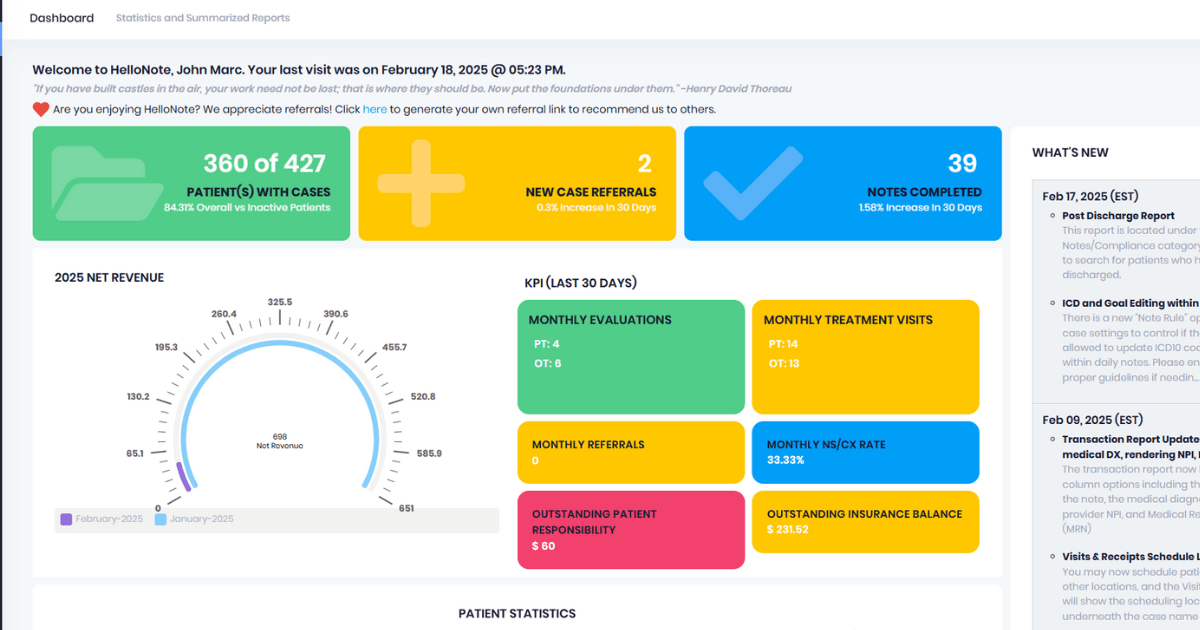
HelloNote dashboard showing key performance indicators (KPI) for therapy clinics, including patient statistics, new case referrals, net revenue, treatment visits, and outstanding balances for therapy clinic management.

Integration and Streamlining

At HelloNote, we know that therapists don’t have time to juggle multiple systems for scheduling, documentation, and billing. That’s why we built an all-in-one EMR that seamlessly integrates these essential functions into a single, streamlined platform. By eliminating the need for third-party add-ons, we help reduce inefficiencies, minimize errors, and keep your workflow as smooth as possible. Our goal is to provide a solution that lets you focus on patient care, not software workarounds.

Billing Transparency & Pricing Comparison

How HelloNote Simplifies Billing for Therapists

We know that billing shouldn’t be a guessing game. As therapists ourselves, we’ve seen how complicated and frustrating insurance claims and payments can be, especially for small to mid-sized practices. That’s why we built a billing system that prioritizes transparency, affordability, and ease of use.

HelloNote’s pricing structure is designed to keep things straightforward, without hidden fees or surprise charges. We don’t believe in adding extraneous features that would increase your monthly bill without providing meaningful value to your practice. Our focus is on providing you with the tools and functions that directly support your day-to-day operations. By avoiding unnecessary complexities, we ensure that you only pay for the features that truly benefit your practice.

With one-click claims generation, seamless insurance processing, and a pricing model that fits the needs of therapy clinics, we make it easy to manage your finances efficiently. No more paying for features you don’t need, just the solutions that work for you.

 100%. I would say again, I don’t know how those scaling works. However, if it works for one person, it’s going to work for everybody. Right? It’s simple. I’ve used every single, uh, documentation system known to man working in hospitals with Epic, working in practices with everything from, uh, prompt to, you know, WebPT, but again.

Everything has different features, but hello note is by far the most simple and easy to use and direct. And that’s what I want as a practitioner. And again, from a price point, you guys were the only people that would let me come on as a sole practitioner. So I’m super grateful for that. And again, regardless, like the cost is honestly very, very, very affordable.

And it essentially, I mean, if, again, it makes me money essentially, because I’m able to, yeah. Have more clients, build more with confidence, get those things. You guys have great support. So yeah, I’m super grateful. That’s why I chose to, you know, kind of do the interview. I was like, you know what, they’ve been really good to me.

And even at, I was at PPS and I saw you guys at a booth and then I talked to, I can’t remember her name, but she was a really sweet lady from New York. And I was like, Oh yeah, you guys are great. I love you guys so much. And I, you know, and I said, Hey, you know, I paid a year in full. Can you guys give me like, you guys want, she was like, yeah, I’ll take care of you.

Don’t worry. And she like emailed me, you know, the next week. So just having that like relationship of just trusting the real people it’s, it’s fantastic. So I appreciate your all’s work. And like I said, that’s part of the reason why I wanted to come on here today. Cause I’m a huge advocate for hello note and I grateful for the kind of opportunity it’s given me, because like I said, I’m very happy and I don’t need to change a thing right now.

So, and even if I expanded, I would know I’d be able to do that confidently with you guys.”

Daniel C Brown, DPT, COMT, OCS owner of DCB Physical Therapy.

Telehealth & Patient Engagement

How HelloNote Elevates Telehealth and Patient Engagement

Virtual therapy isn’t just a convenience but a necessity. Whether you’re working with remote patients, managing home health visits, or offering hybrid care, having a seamless, HIPAA-compliant telehealth solution is essential. That’s why we’ve built integrated telehealth directly into our platform, along with a secure patient portal that enhances engagement and accessibility.

Scheduling & Documentation: Reducing Admin Burden

How HelloNote Simplifies Scheduling and Documentation for Therapists

At HelloNote, we know that efficient scheduling and documentation are essential for a smooth workflow. As therapists ourselves, we’ve seen how frustrating it can be when scheduling tools don’t align with real-world therapy needs or when documentation feels like a time-consuming chore instead of a helpful tool.

HelloNote therapy clinic calendar view for February 2025, showing appointments, day off schedules for providers, and pending appointments with detailed filters

Customer Support & Community Feedback

HelloNote: Responsive Support & Continuous Updates

We know that having a reliable support team isn’t just a nice-to-have but essential. Therapists don’t have time to wait on hold for hours or deal with unanswered support tickets when they need immediate assistance. That’s why we’ve built a responsive, knowledgeable support team that is readily available to help whenever you need it.

Another client shared their experience with HelloNote’s support and commitment to improvement:

You guys have been pivotal to us. I’ve really enjoyed the communication and collaboration on building reports that we need and changing things within the EMR. For example, the new map feature where we can see where our clinicians are seeing patients is going to be a game-changer for us. You’ve been incredibly open to feedback, and we can’t thank you enough!” Dr. Derek Smith – PT, DPT, GCS of Roaming Rehab

This feedback illustrates HelloNote’s commitment to continuous improvement and the platform’s flexibility to adapt to the unique needs of each therapy practice.

HelloNote's built-in support and knowledgebase for therapy clinics, highlighting Evaluation Notes assistance and providing access to helpful resources for practitioners.

Addressing Security and Compliance

HIPAA Compliance and Data Security in HelloNote

We understand how critical patient data security is, and we take it seriously. HelloNote is fully HIPAA-compliant, ensuring that your practice and your patients’ sensitive information are protected with the highest security standards.

7 Common Mistakes to Avoid When Choosing an EMR for Your Therapy Practice

  1. Choosing a Generic EMR Instead of One Tailored for Therapy
    Many EMR systems are designed for general healthcare practices and don’t offer the specialized features that therapy clinics require. Always choose an EMR that is built specifically for physical, occupational, and speech therapy practices. Look for features like customizable documentation templates, therapy-specific progress tracking, and the ability to manage long-term treatment plans.
  2. Neglecting Integration Capabilities
    An EMR that doesn’t integrate smoothly with your other software systems can create inefficiencies and lead to errors. Ensure the EMR you choose integrates with scheduling, billing, and patient management systems to streamline operations and improve productivity.
  3. Overlooking Data Security and HIPAA Compliance
    Patient data security is essential. Choose an EMR that guarantees compliance with HIPAA standards, provides encrypted storage, and offers secure data exchange protocols to protect patient confidentiality and ensure compliance with privacy regulations.
  4. Forgetting About Training and Ongoing Support
    No matter how powerful the EMR, it will be ineffective without proper training and reliable customer support. Ensure the system you choose offers comprehensive training materials and accessible, responsive support teams to help you and your staff effectively use the software.
  5. Opting for an Overly Complex System
    Some EMR systems are overly complex, making them difficult to learn and use. Avoid systems that are packed with features your clinic doesn’t need. Select an EMR that strikes the right balance between ease of use and necessary functionality.
  6. Ignoring the Total Cost of Ownership
    The initial cost of the EMR is just one part of the equation. Consider the total cost of ownership, which includes recurring fees for updates, support, and training. Choose a system with clear and transparent pricing to avoid unexpected costs in the future.
  7. Underestimating the Need for Streamlined Billing, Documentation, and Scheduling
    Many therapists struggle with managing patient documentation, scheduling, and billing in separate systems that don’t communicate with each other. This leads to inefficiencies, errors, and extra administrative work. HelloNote offers an integrated solution that combines billing, documentation, and scheduling into one easy-to-use platform, saving time and reducing the likelihood of errors, so you can focus on patient care instead of administrative burdens.

By avoiding these common mistakes, you’ll be better equipped to select an EMR system that fits your clinic’s unique needs, helping you streamline operations, reduce administrative burdens, and ensure long-term success.

Final Verdict: Choosing the Right EMR for Your Therapy Practice

The decision between HelloNote and other platforms hinges on your unique needs and priorities. It isn’t just about features but also about finding a system that fits your workflow without unnecessary complexity or extra costs. With HelloNote, you’ll get a platform that was built by therapists, for therapists, and one that keeps your practice running smoothly while saving you time, money, and energy.

Make the switch to HelloNote today and experience the difference it can make for your therapy practice.

The Shocking Medicare Changes for Therapists…

Stay informed about the latest healthcare coverage updates for 2025. This article explores the changes in deductibles, premiums, and coinsurance for Part B and their impact on therapy services. Learn how therapists can help patients navigate these updates, manage out-of-pocket costs, and maintain access to care. With rising healthcare expenses, this guide offers actionable strategies for 2025 to ensure smooth patient management and continued therapy services.

Man stressed over Medicare updates, highlighting concerns about Medicare Part A and Part B deductibles and premiums for 2025.

As Medicare continues to evolve, understanding the 2025 updates to Part A and Part B is crucial for therapists and their patients. The changes in deductibles, premiums, and coinsurance can significantly impact clinic operations, patient access to care, and the cost of therapy services. In this article, we’ll examine these updates and provide therapists with actionable strategies to help their patients navigate these changes effectively. 

Part A Updates for 2025

Medicare Part A covers a range of inpatient care services, including hospital stays, skilled nursing facility (SNF) care, hospice care, and home health services. The deductible for Part A services has increased to $1,676 for 2025, up from previous years. This deductible is the amount that patients must pay out-of-pocket before health insurance will begin covering the costs of hospital stays and other inpatient services. 

    • Inpatient Hospital Stays: For inpatient care, Part A covers the first 60 days of hospitalization without coinsurance. However, for stays between 61 and 90 days, patients will be responsible for a coinsurance of $419 per day. Beyond 90 days, the daily coinsurance increases to $838 per day. Patients should be prepared for these higher out-of-pocket costs if their hospital stay extends beyond 60 days. 

These increases in deductibles and coinsurance mean that patients will need to budget for higher out-of-pocket costs, particularly for extended hospital stays and skilled nursing care. 

Part B Updates for 2025

Medicare Part B covers outpatient care, including physician services, outpatient therapy services, home health services, and durable medical equipment. The deductible for Part B has increased to $257 for 2025, up from $240. Once the deductible is met, health insurance covers 80% of approved services, leaving the patient responsible for the remaining 20%. 

In addition to the deductible increase, the monthly premium for Part B has risen to $185, a significant jump from $174.70 in the previous year. This increase in premiums can result in higher monthly healthcare expenses for beneficiaries, which may lead some patients to reconsider or delay seeking care. 

Income-Related Adjustments (IRMAA) 

For higher-income beneficiaries, the monthly Part B premiums are adjusted based on income. This means that individuals with higher earnings will pay more for their Medicare coverage. These adjustments vary depending on the beneficiary’s income level and can be as much as $500 or more per month for high-income individuals. 

For therapists, these changes could have implications for patient access to therapy services. Patients with limited financial resources may be more reluctant to start or continue therapy due to these increased premiums and out-of-pocket costs. 

Impact on Therapy Practices in 2025

The updated Part A and Part B deductibles, coinsurance, and premiums are likely to affect therapy practices in several ways: 

    • Increased Patient Costs: With the higher deductibles and coinsurance, many patients may face higher out-of-pocket costs, especially those requiring long-term therapy or outpatient services. As a result, therapists may notice a decline in patient visits or an increase in cancellations due to financial barriers. 
    • Delayed or Reduced Access to Care: Patients who cannot afford to pay the higher premiums or out-of-pocket costs may delay or reduce the frequency of their therapy sessions. This could lead to poorer health outcomes, especially for patients with chronic conditions who require ongoing therapy services. 
    • Challenges for Therapists in Collecting Payments: Therapists may face challenges in collecting payments from patients who struggle to meet the higher out-of-pocket costs. This could impact cash flow for clinics, requiring therapists to have clear communication with patients about payment plans, insurance, and other financial options. 

How Therapists Can Adapt to Medicare Changes

Given the financial impact of these updates, therapists need to adapt their practice strategies to help patients manage these changes effectively: 

Educate Patients on Medicare Costs 

It is essential for therapists to educate patients on how Medicare deductibles, coinsurance, and premiums will affect their care. Therapists should: 

    • Discuss costs upfront during the initial evaluation or consultation. 
    • Explain the financial burden patients might face and how they can mitigate it through Medicare Supplement policies or other insurance options. 

Offer Flexible Payment Plans 

For patients struggling with the increased costs, offering flexible payment plans or discounts for upfront payments can help reduce the financial burden. Therapists should work with patients to create manageable payment options that allow them to continue therapy without interruption. 

Emphasize Preventive Care 

Encourage patients to take advantage of Medicare-covered preventive services that come at no additional cost. Preventive care such as wellness visits, screenings, and early interventions can help reduce the need for more expensive treatments later, ultimately saving both patients and the healthcare system money. 

Promote Medicare Supplement (Medigap) Policies 

Patients who are eligible for Part A and Part B should consider purchasing a Medicare Supplement (Medigap) policy to help cover additional out-of-pocket expenses. Medigap plans can reduce the financial burden on patients by covering the coinsurance, deductibles, and other costs not covered by Original Medicare. 

Plan for Increased Financial Transparency 

With rising out-of-pocket costs, it’s more important than ever for therapists to be transparent about costs and billing. This can include: 

    • Providing clear and detailed estimates of therapy costs upfront. 
    • Keeping patients informed about their Medicare benefits, including any out-of-pocket expenses they may incur during their treatment. 

Conclusion

The 2025 Medicare changes present new challenges for both patients and therapists, particularly with higher deductibles, increased premiums, and rising out-of-pocket costs. However, by staying informed and proactive, therapists can ensure that their patients are equipped to navigate these changes. Educating patients, offering flexible payment options, and promoting preventive care and Medicare Supplement plans will be key strategies in helping patients maintain access to therapy services despite the rising costs. 

By understanding the financial challenges brought on by the 2025 Medicare updates, therapists can continue to provide high-quality care while ensuring that patients are not financially burdened by the changes. 


Dr. Chloe Giordano: Transforming Neurologic Rehabilitation with NeuroNation PT 

Discover how Dr. Chloe Giordano is revolutionizing neurologic rehabilitation with her innovative approach at NeuroNation PT. By combining high-intensity therapy, home-based care, and cutting-edge technology, Dr. Giordano is transforming patient outcomes for those with neurological conditions like stroke, brain injuries, and spinal cord injuries

Dr. Chloe Giordano, PT, DPT, leading neurologic rehabilitation and physical therapy.

When Dr. Chloe Giordano, PT, DPT, founded NeuroNation Physical Therapy and Wellness, she wasn’t just opening a clinic instead she was redefining the way neurologic rehabilitation is delivered.  

Rather than following the traditional outpatient model, she envisioned a hybrid approach that brings high-intensity, research-backed therapy directly to patients’ homes, ensuring that individuals with stroke, brain injuries, and spinal cord conditions receive the personalized, progressive, and functional care they truly need. 

With a background in intensive inpatient rehab and home health, Dr. Giordano identified a crucial gap in the system: many neurologic patients were undertrained and underdosed, limiting their recovery potential. Her goal was clear which is bring the rigor of sports rehab and high-intensity training into neurologic therapy while making treatment more accessible through mobile services and wellness programs. 

Since launching NeuroNation PT in 2022, Dr. Giordano has successfully grown her practice, expanded her team, and implemented strategies that blend clinical expertise, community engagement, and technology to optimize patient outcomes. Through her journey, she has leveraged HelloNote’s EMR system to streamline operations, improve financial efficiency, and scale her services while maintaining the highest quality of care. 

This is the story of how she built a thriving therapy practice, overcame challenges, and created a patient-centered model that is changing lives. 

Building a Patient-Centered Therapy Practice

Dr. Giordano’s passion for neurologic rehabilitation stems from her hands-on experience working with neurologic clinical specialists and treating complex cases in stroke-certified rehabilitation hospitals. Her specialized expertise allows her to design highly individualized therapy plans that address the unique needs of patients recovering from: 

    • Stroke & Traumatic Brain Injuries – Helping patients regain motor function, balance, and coordination. 
    • Spinal Cord Injuries – Developing targeted rehabilitation plans to improve mobility and independence. 
    • Neurodegenerative Conditions – Supporting individuals with Parkinson’s disease, multiple sclerosis, and other progressive disorders through strength, balance, and movement training.  
    • Pain Management & Functional Mobility – Enhancing quality of life by reducing pain and optimizing movement patterns. 

Her approach is rooted in neuroplasticity principles, ensuring high-intensity, repetition-based therapy to maximize recovery. Unlike traditional therapy that focuses on basic exercises, she believes in pushing patients like athletes recovering from ACL injuries, emphasizing functional movement, walking, and strength training. 

NeuroNation PT: More Than Just a Clinic

What sets NeuroNation PT apart is its comprehensive approach to therapy. Rather than operating as a traditional outpatient clinic, Dr. Giordano has developed a hybrid model that integrates in-home therapy, private fitness programs, group education, and wellness services. This model allows her team to: 

    • Meet patients where they are – Offering in-home therapy for those with mobility challenges. 
    • Provide ongoing wellness support – Encouraging long-term progress through private fitness programs and online exercise programs. 
    • Educate caregivers and patients – Hosting group education sessions to teach essential strategies for managing neurologic conditions at home.  
    • Offer long-term wellness programs – Transitioning patients from therapy to wellness for continued progress and prevention of decline. 

Overcoming Growth Challenges with HelloNote

As NeuroNation PT expanded, Dr. Giordano recognized the need for an efficient, user-friendly EMR system to support the clinic’s growth, financial health, and operational workflow. That’s when she turned to HelloNote, a platform designed to simplify documentation, billing, and practice management for therapy professionals. 

Key Milestones Since Implementing HelloNote 

With HelloNote’s support, NeuroNation PT has experienced significant growth and success: 

    • Expanding the Team – Hired one full-time therapist and two PRN therapists to meet increasing patient demand.  
    • Financial Growth – Achieved a 48% increase in gross profit and a 57% increase in net income from 2023 to 2024.  
    • Billing Optimization – Successfully transitioned to in-house billing, eliminating the need for a third-party billing company and gaining greater financial control.  
    • Diversifying Revenue Streams – Launched two private-pay online exercise programs, expanding accessibility for patients beyond the clinic setting 
    • Building an Online Presence – Started a YouTube channel to educate, inspire, and engage with a broader audience. 

How HelloNote Supports NeuroNation PT’s Success

HelloNote has played a pivotal role in streamlining operations and allowing Dr. Giordano to focus on patient care rather than administrative tasks. With HelloNote, NeuroNation PT has been able to: 

    • Improve documentation efficiency – Faster, more accurate note-taking ensures compliance and saves time.  
    • Gain financial control – Switching to in-house billing with HelloNote’s integrated billing system improved cash flow and reduced errors.  
    • Scale the practice while maintaining high-quality care – As the team grows, HelloNote ensures consistency in treatment documentation, scheduling, and reporting.  
    • Explore new business opportunities – Online programs and digital content creation have expanded NeuroNation PT’s impact beyond its physical location. 

Why HelloNote Was the Right Choice

Reflecting on her decision to integrate HelloNote into her practice, Dr. Giordano noted how the platform has simplified operations, especially regarding billing and compliance.  

HelloNote really had the systems in place so I could see everything really quickly and easily to navigate, and for me, it seemed to be a lot easier to bill through HelloNote.”” 

By eliminating inefficiencies and offering real-time access to patient information, HelloNote allows her and her team to spend more time treating patients and less time on administrative burdens. 

Looking Ahead: The Future of NeuroNation PT

With a strong foundation, a dedicated team, and a commitment to patient-centered care, Dr. Giordano is looking forward to even greater expansion in the coming years. 

    • Expanding services to reach more patients in underserved areas.  
    • Developing specialized wellness programs for patients with chronic neurological conditions.  
    • Growing the digital side of NeuroNation PT through virtual education and online exercise programs. 

Her vision remains the same: to provide innovative and effective neurologic rehabilitation that empowers patients to take control of their health and live fuller, more independent lives. 

How HelloNote’s Planned Features Support NeuroNation PT

Dr. Chloe Giordano’s NeuroNation PT specializes in neurologic rehabilitation and mobile therapy, requiring seamless communication, efficient documentation, and streamlined operations. HelloNote’s planned features can enhance patient care and optimize practice workflows: 

Customizable Notes & Sharing – Enables detailed neurologic rehab documentation and easy sharing with referring providers for better care coordination. 

ROM/MMT/Pain/Edema Chart – Helps track patient progress with visual data, improving treatment planning and insurance justification

Referring Provider POC Portal – Speeds up e-signing of Plans of Care, preventing delays in treatment due to pending physician approvals. 

AI Billing & Documentation – Automates compliance checks, reducing denials and ensuring Medicare coverage for extended therapy needs

Mobile App (Coming Soon) – Supports on-the-go documentation, perfect for in-home therapy sessions

Automated Phone Call Reminders – Reduces missed visits by notifying patients and caregivers of upcoming appointments. 

Customizable Dashboard Reports – Provides real-time insights on patient trends, referrals, and financial performance, supporting growth. 

As NeuroNation PT expands, HelloNote’s technology-driven solutions ensure efficiency, compliance, and better patient outcomes while allowing Dr. Giordano’s team to focus on high-quality care

Final Thoughts

Dr. Chloe Giordano’s journey with NeuroNation Physical Therapy and Wellness is a testament to the power of specialized care, smart business strategies, and the right technology. Her clinic has grown, evolved, and thrived, and HelloNote has been a key partner in making that success possible. 

As she continues to expand her reach and transform patient care, NeuroNation PT stands as an example of how a dedicated therapist, a patient-first mindset, and the right practice management tools can create a lasting impact in the field of neurologic rehabilitation. 

For therapists looking to optimize their practice operations, streamline billing, and improve efficiency, Dr. Giordano’s success with HelloNote serves as a powerful case study. 

Interested in how HelloNote can streamline your therapy practice? Let’s talk! 

Key Metrics for Therapy Practice Success: Strategies for Growth

Track key metrics in your therapy practice to enhance patient satisfaction, improve operational efficiency, and achieve sustainable business growth in 2025. By focusing on metrics like patient retention, revenue trends, and operational efficiency, you can identify opportunities for improvement, foster long-term success, and deliver exceptional care tailored to your practice’s goals and patient needs.

A happy therapist in a bright, welcoming clinic, symbolizing success in tracking key metrics for an efficient therapy practice

Providing quality care is at the heart of every therapy practice, but to continue making a meaningful impact, clinics must also be operationally efficient and financially sustainable. Success in a therapy practice isn’t just about the number of patients seen but also about ensuring patient satisfaction, steady business growth, and a well-managed workflow. 

Tracking the right performance metrics allows therapists and clinic owners to identify what’s working, what needs improvement, and how to create a long-term strategy for success. Whether your practice operates on an insurance-based, cash-based, or hybrid model, understanding these key indicators can help you make informed decisions that enhance patient outcomes while maintaining a thriving business. 

Why Tracking Metrics Matters in Therapy Practices

Many therapists hesitate to focus on numbers, believing that quality patient care should be the priority. However, you can’t improve what you don’t measure. Without tracking performance indicators, clinics may struggle with low retention rates, unpredictable revenue, or operational inefficiencies. 

A well-run clinic that measures key performance indicators can: 

    • Identify gaps in patient engagement and satisfaction  
    • Optimize scheduling and reduce cancellations  
    • Improve cash flow and financial planning  
    • Enhance clinic efficiency and streamline workflows 

Let’s break down the most important clinic metrics therapists should track. 

Patient-Centric Metrics: Measuring Trust and Retention

These metrics reflect the patient experience, ensuring that your practice meets their needs while also fostering long-term relationships. 

Net Promoter Score (NPS): 

How likely are your patients to recommend your clinic to others? This is one of the most reliable indicators of patient satisfaction. Patients who score your clinic highly (9-10 on a scale of 1-10) are more likely to refer others. If your NPS is low, it’s a sign that improvements are needed in communication, wait times, or treatment effectiveness. 

Referral Rate from Past Patients:

How many of your new patients come from word-of-mouth referrals? A high referral rate means patients trust you and are satisfied with your care. If your practice is mostly dependent on paid marketing or insurance referrals, consider strategies to increase patient engagement, such as: 

    • Encouraging satisfied patients to leave reviews 
    • Creating a referral incentive program
    • Strengthening follow-ups and communication 

Cancellation and No-Show Rates:

How often are appointments canceled or missed? Frequent cancellations lead to lost revenue and disrupted treatment plans. A high no-show rate may indicate scheduling conflicts, lack of patient commitment, or a need for better reminders. 

Ways to reduce no-shows:  

    • Use automated appointment reminders  
    • Offer flexible rescheduling  
    • Educate patients on the importance of attending each session 

Online Reviews and Reputation Management 

What are patients saying about your clinic on Google and social media? Your online presence matters. Positive Google reviews increase trust, attract new patients, and boost local SEO rankings. Addressing negative reviews professionally and promptly can also enhance credibility. 

    •  Regularly request patient reviews  
    •  Engage with comments on social media 
    •  Address patient concerns publicly and privately 

Financial Metrics: Ensuring Long-Term Stability

Tracking financial performance helps clinics stay profitable, scale operations, and plan for growth. 

Revenue Growth (Year-over-Year Increase):

Is your clinic growing financially each year? A stable, increasing revenue trend ensures that your practice can cover expenses, invest in new equipment, and expand services. Declining revenue may signal issues such as high attrition rates, poor marketing, or inefficient billing processes. 

Profit Margin:

How much of your revenue is actual profit?  

Even if your revenue is high, a low profit margin means that operational costs are too high. Evaluating billing processes, overhead expenses, and pricing strategies can help maximize profit without compromising patient care. 

Revenue Per Patient: 

How much revenue does each patient bring to the clinic? Tracking this metric can help you evaluate if your pricing structure aligns with your costs. A hybrid model combining insurance-based and cash-based services can help balance financial sustainability while keeping therapy accessible to more patients. 

Understanding Your Break-Even Formula: 

Knowing your break-even point is essential for financial planning. This formula helps determine the minimum revenue required to cover your clinic’s expenses. It includes factors such as rent, salaries, utilities, and equipment costs. Understanding your break-even point allows you to set realistic revenue goals and pricing structures while identifying opportunities for growth. 

Operational Metrics: Scaling and Efficiency

Operational metrics measure how well your clinic functions on a daily, monthly, and yearly basis. 

Monthly and Yearly Visit Trends:

Are patient visits increasing, staying stable, or declining? A steady increase in visits indicates a growing, healthy practice. A drop in visits may mean patients are not returning, requiring strategies to improve retention and patient engagement. 

Increase in New Referrals:

Is your referral network expanding? Growing referral numbers mean that more physicians, case managers, and healthcare providers trust your clinic. If referral numbers are stagnant, consider networking more with local providers, hospitals, and community organizations. 

Evaluations Performed:

How many new evaluations are conducted each month? New evaluations indicate clinic growth and demand for services. If numbers are dropping, analyze marketing efforts, referral partnerships, and patient outreach strategies. 

Bringing It All Together: Key Takeaways for Therapists: 

A thriving therapy practice balances patient satisfaction, financial health, and operational efficiency. No single metric alone defines success, but tracking these together creates a clearer picture of overall performance and allows for data-driven decisions that enhance patient care and clinic growth. 

To stay ahead: 

    • Regularly analyze patient satisfaction scores, referrals, and online reviews to track patient experience and retention.  
    • Adjust financial strategies based on profit margins, revenue per patient, and year-over-year growth to ensure sustainability. 
    • Monitor operational efficiency by tracking visit trends, referral numbers, and evaluations performed to scale effectively.  
    • Understand your break-even point to maintain financial stability and make informed business decisions. 

By keeping an eye on these key performance indicators, therapy practice owners can stay ahead of industry challenges, improve patient care, and build a strong, sustainable clinic. 

Discussing These Metrics at The Clinic Talk

We recently started The Clinic Talk, a platform where therapy professionals discuss real-life challenges, success strategies, and best practices in running a thriving clinic. 

Our goal is to share insights from industry experts who have built sustainable practices, helping therapists navigate financial planning, patient retention, and business expansion while staying focused on delivering high-quality care. 

If you want to hear how other therapists track success, optimize workflows, and grow their therapy practices, stay tuned for upcoming discussions! 

GeriHab Physical Therapy’s Ongoing Journey with HelloNote EMR

GeriHab Physical Therapy has grown from a single clinic to seven thriving locations across Tennessee, providing exceptional care for older adults. With the help of HelloNote EMR, GeriHab has streamlined its operations, managed multi-location challenges, and maintained high standards of service. Learn how GeriHab Physical Therapy continues to make a difference in patient care while embracing innovative solutions for growth and efficiency.

Michael Chua standing proudly in front of a GeriHab Physical Therapy clinic, representing dedication to patient care and innovative therapy services

In 2020, GeriHab Physical Therapy, led by Michael Chua, shared its journey of adopting HelloNote EMR to streamline operations and improve patient care. At that time, GeriHab was a single-location practice focused on in-home therapy for older adults. HelloNote provided the tools needed to simplify workflows and manage an increasing caseload effectively. 

Fast forward to today, GeriHab has grown to seven thriving locations across Tennessee, serving more patients than ever. This expansion has introduced both exciting opportunities and significant challenges. Here, we’ll explore how GeriHab continues to evolve, the hurdles faced during growth, and how HelloNote remains a valuable tool in supporting its operations. 

Progress Since 2020

GeriHab has achieved remarkable growth over the past few years, expanding its reach and enhancing its services to meet the needs of older adults in Tennessee. 

Expanding to Seven Locations 

Since 2020, GeriHab has grown from one clinic to seven locations, significantly increasing access to therapy services in underserved areas. 

Introducing New Services 

The practice has expanded beyond physical therapy to include programs tailored for older adults, such as balance training, chronic condition management, and recovery support after surgeries like joint replacements. 

Building a Stronger Team 

With the addition of more skilled therapists and administrative staff, GeriHab ensures every patient receives the care they need while maintaining its high standards of service. 

Michael reflects, “Growth is always a challenge, but it’s been incredibly rewarding to see the impact we’ve been able to make in so many communities.” 

Challenges of Expansion

While growth brings opportunity, it also introduces complexities that require strategic planning and efficient systems. 

Managing Multiple Clinics 

Operating seven clinics means coordinating schedules, staffing, and patient care across different locations. The logistics of ensuring seamless operations can be daunting. 

Maintaining Consistency Across Teams 

With a larger team, ensuring every therapist adheres to standardized practices is critical for providing consistent, high-quality care. 

Scaling Administrative Work 

The increase in patients and services has resulted in more administrative tasks, from scheduling and documentation to billing and compliance. 

How HelloNote Supports GeriHab

HelloNote EMR has played a significant role in helping GeriHab navigate the challenges of growth. Its features have provided the tools needed to stay organized, efficient, and patient-focused. 

Streamlining Multi-Location Operations 

HelloNote’s centralized platform allows GeriHab to coordinate operations across all locations. Therapists and administrators can access real-time patient information, making it easier to manage scheduling and documentation. 

Ensuring Consistent Documentation 

With built-in templates, HelloNote has helped GeriHab maintain consistency in patient records, reducing errors and ensuring compliance with Medicare and other regulations. 

Simplifying Billing 

The system’s billing tools have streamlined processes, allowing GeriHab to handle increased patient volume while maintaining accuracy in claims and reimbursement. 

Building Community Connections

For Michael and his team, GeriHab’s growth is about more than just opening new clinics—it’s about becoming a trusted partner in the communities they serve. 

Tailored Programs for Older Adults 

GeriHab has developed services to meet the unique needs of older adults, including: 

  • Balance and fall prevention programs. 
  • Chronic condition management for arthritis, neuropathy, and more. 
  • Rehabilitation support after surgery. 

Engaging Patients in Their Care 

By involving patients in their care plans and using tools to track progress, GeriHab fosters trust and collaboration. Showing measurable improvements keeps patients motivated and engaged. 

Looking Ahead

GeriHab’s success has positioned it for continued growth, and Michael is focused on expanding services, supporting his team, and exploring new technologies. 

Expanding Accessibility 

Michael aims to introduce telehealth options to provide therapy for patients unable to visit clinics, further extending GeriHab’s reach. 

Investing in the Team 

With a growing staff, Michael emphasizes the importance of training and mentorship to maintain the practice’s high standards. 

Innovating with Technology 

Michael is exploring additional ways technology can enhance patient care and streamline operations, building on the success of HelloNote’s tools. 

Final Reflections

Reflecting on GeriHab’s growth, Michael shares, “The journey hasn’t always been easy, but it’s been worth it to see the positive changes we’ve made in so many lives.” 

While challenges remain, GeriHab continues to thrive by staying committed to its mission of improving care for older adults. HelloNote’s role in simplifying operations has supported the practice’s ability to grow while maintaining its focus on quality care. 

Conclusion

GeriHab’s evolution from a single clinic to seven thriving locations demonstrates the power of dedication, innovation, and the right tools. With HelloNote EMR supporting its operations, the practice is well-positioned for future success. 

If you’re ready to see how HelloNote can support your practice’s growth, click here to learn more. 

You've found a hidden discount!

  • 00Hours
  • 00Minutes
  • 00Seconds