



















You've found a hidden discount!

HN Unlock Layer 1
HN Unlock Layer 2
HN Unlock Layer 3
HN Unlock Layer 4
HN Unlock Layer 5
  • 00Hours
  • 00Minutes
  • 00Seconds

Category: Blogs

Massage Therapy Insurance: What Therapists Need to Know for Coverage, Billing, and Compliance

Table of Contents

Massage therapy plays a valuable role in pain management, injury recovery, and overall rehabilitation. Yet for many clinics and massage therapists, navigating massage therapy insurance requirements can feel overwhelming. Coverage rules vary widely by payer, documentation standards are strict, and billing errors often lead to delayed or denied claims.

Understanding how insurance reimbursement works and how to document massage therapy correctly is essential for practices that want to get paid consistently while staying compliant.

This guide breaks down how massage therapy insurance works, when services may be covered, and how the right EMR system can make the entire process easier.

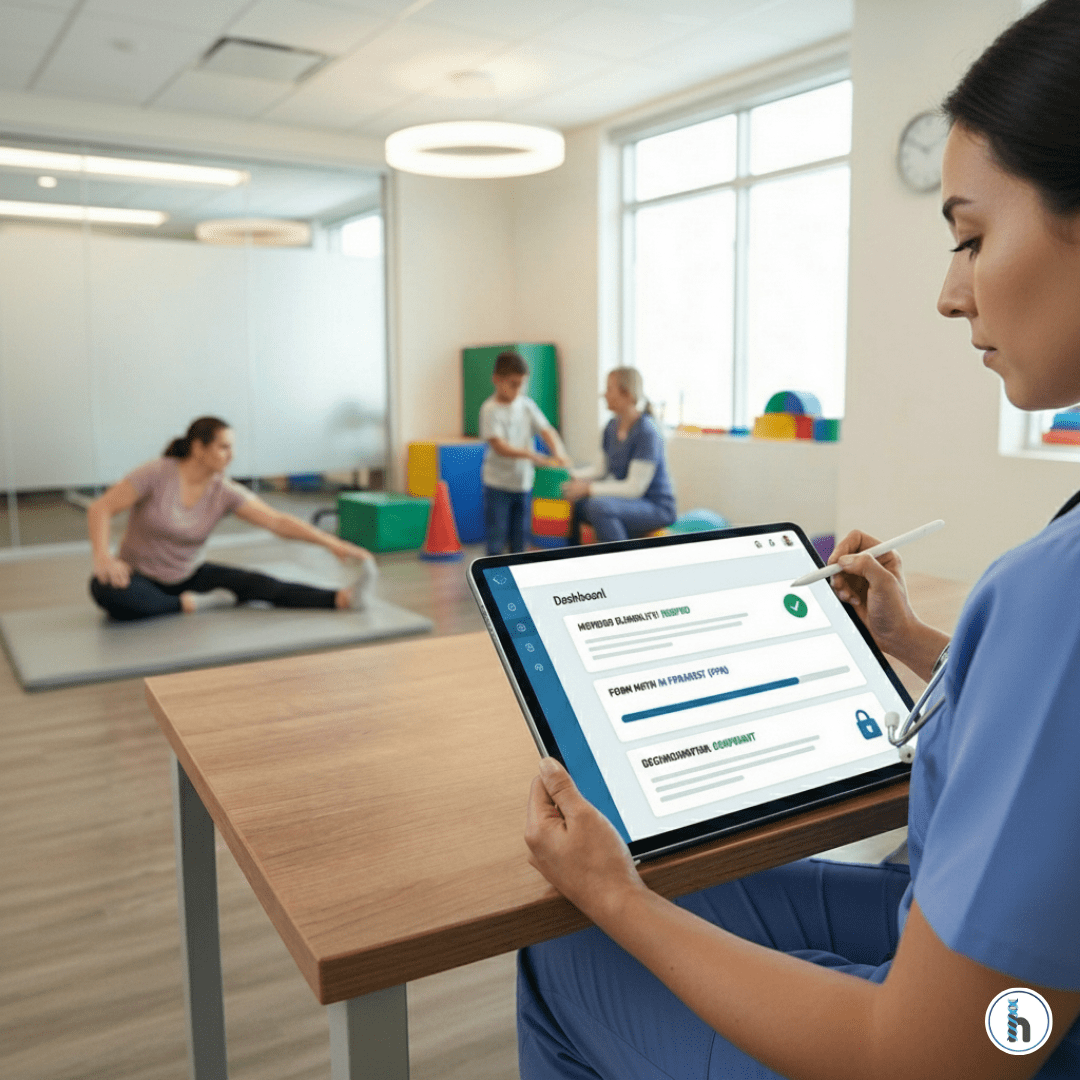
Massage therapist providing treatment while using tablet-based documentation to support massage therapy insurance billing and clinical records.

What Is Massage Therapy Insurance?

Massage therapy insurance refers to insurance plans that reimburse massage therapy services when they are deemed medically necessary and properly documented. Coverage is most common when massage therapy is part of a broader rehabilitation or treatment plan, often tied to physical therapy, occupational therapy, or injury recovery.

Insurance for massage therapy coverage is typically seen in:

Direct coverage under Medicare is rare, but massage therapy is often reimbursed when billed under supervised or integrated care models.

When Massage Therapy Is Covered by Insurance

Massage therapy is not automatically covered by insurance. In most cases, coverage depends on medical necessity and how the service is positioned within a broader plan of care.

Insurance providers are more likely to reimburse massage therapy when it is:

  • Part of a documented rehabilitation or treatment plan

  • Prescribed or delegated by a licensed provider (such as a PT, OT, or physician)

  • Used to treat a specific diagnosis, not for general wellness

  • Properly documented with functional goals and progress notes

Massage therapy insurance reimbursement is commonly tied to conditions such as post-surgical recovery, musculoskeletal injuries, chronic pain, or neurological impairments especially when massage is integrated with skilled therapy services.

Common Limitations and Restrictions

Even when massage therapy is allowed, insurance plans often impose restrictions. These may include:

    • Visit caps or annual limits

    • Coverage only when billed incident-to another provider

    • Denial of standalone massage codes

    • Requirement that massage supports a skilled intervention

Because massage therapy insurance policies vary by payer and state, clinics must verify benefits carefully before treatment begins.

Coding and Documentation Requirements

Accurate documentation is one of the most critical factors in successful reimbursement.

Insurance reviewers expect therapy notes to clearly show:

    • Why massage therapy was necessary

    • How it supports functional improvement

    • How it integrates into the overall plan of care

Massage therapy insurance claims are frequently denied due to vague notes, missing goals, or unclear links between the intervention and patient outcomes.

Strong documentation should include:

    • The patient’s diagnosis and functional deficits

    • Measurable goals tied to treatment

    • Time spent and techniques used

    • Ongoing progress toward outcomes

Why Massage Therapy Claims Get Denied

Denials are common when documentation or workflows fall short. The most frequent issues include:

    • Billing massage as a standalone service

    • Using incorrect or unsupported CPT codes

    • Lack of medical necessity language

    • Missing progress reports or reassessments

    • Inconsistent documentation across visits

Practices that rely on manual workflows or disconnected systems are especially vulnerable to these issues when managing massage therapy insurance claims.

How an EMR Helps Manage Massage Therapy Insurance

An EMR designed for rehab and therapy practices plays a major role in reducing billing friction.

With the right system, clinics can:

    • Align documentation with payer expectations

    • Link massage therapy to functional goals

    • Track visit limits and authorizations

    • Maintain audit-ready notes

HelloNote helps therapy practices manage massage therapy insurance by integrating documentation, billing, and compliance into a single workflow. Instead of juggling spreadsheets, paper notes, and external billing tools, everything stays connected and consistent.

Supporting Massage Therapists Within Multidisciplinary Clinics

Many massage therapists work alongside physical therapists, occupational therapists, and chiropractors. In these settings, insurance coverage is more likely when massage therapy supports skilled care.

HelloNote allows clinics to:

    • Coordinate massage therapy with PT or OT plans of care

    • Maintain consistent documentation across disciplines

    • Clearly demonstrate medical necessity to payers

    • Reduce administrative back-and-forth

This structured approach makes massage therapy insurance billing more predictable and defensible.

Final Takeaway for Clinics and Massage Therapists

Insurance billing doesn’t have to be a barrier to offering massage therapy services. With proper documentation, clear workflows, and the right technology, clinics can reduce denials and protect revenue.

Massage therapy insurance works best when:

    • Services are goal-driven and medically justified

    • Documentation is consistent and audit-ready

    • Billing workflows support payer rules

    • Therapists and admins work from one system

If your practice struggles with insurance billing, documentation consistency, or denied claims, it may be time to rethink your EMR.

Ready to Simplify Insurance-Based Massage Therapy?

HelloNote helps therapy clinics manage documentation, billing, and compliance so massage therapy insurance fits smoothly into insurance-based care.

Book a HelloNote demo to see how we support massage therapists, rehab clinics, and multidisciplinary practices with smarter workflows and cleaner claims.

Frequently Asked Questions About Massage Therapy Insurance

Q1. Is massage therapy covered by insurance?

Coverage depends on medical necessity, payer rules, and proper documentation. Massage therapy insurance is often approved when services are part of a rehabilitation plan.

Q2. Can massage therapists bill insurance directly?

In many cases, massage therapy must be billed under a supervising provider or as part of a skilled therapy plan, depending on payer and state regulations.

Q3. Why do massage therapy insurance claims get denied?

Common reasons include lack of medical necessity, incorrect coding, missing documentation, or billing massage as a standalone service.

Q4. What documentation is required for insurance reimbursement?

Payers typically require diagnosis linkage, functional goals, treatment details, and progress notes that justify continued care.

Q5. How can an EMR help with massage therapy insurance billing?

A therapy-focused EMR like HelloNote keeps documentation, billing, and compliance aligned reducing errors and improving reimbursement outcomes.

How Auto ERA Transforms Payment Posting for Therapy Clinics 

Table of Contents

Payment posting is one of the most time-consuming and error-prone steps in the billing cycle for therapy practices. Between deciphering payer remittance advice, matching payments to claims, and correcting small discrepancies, billing teams often spend hours on work that adds no clinical value.

This is where Auto ERA makes a real difference.

Instead of manually reviewing electronic remittance advice and entering payments line by line, Auto ERA allows eligible payments to post automatically inside your EMR improving speed, accuracy, and financial visibility without increasing staff workload.

For PT, OT, SLP, and chiropractic clinics managing high claim volume, this automation is no longer a “nice to have.” It’s a practical safeguard against billing backlogs and revenue leakage.

What Is Auto ERA?

Modern EMR billing dashboard showing automated insurance payments, claims confirmation, and payment posting across desktop and tablet screens in a therapy clinic workspace.

Auto ERA refers to the automated posting of Electronic Remittance Advice (ERA) directly into your EMR system.

When insurance payments are received electronically, the ERA contains detailed information about:

    • Allowed amounts

    • Adjustments

    • Patient responsibility

    • Denials or partial payments

With Auto ERA enabled, the EMR reads this data and applies payments to the correct claims automatically without manual entry.

Why Manual ERA Posting Creates Problems for Therapy Clinics

Many clinics still rely on manual processes for payment posting, even when ERAs are already available electronically. This approach introduces several risks:

    • Increased posting errors from manual data entry

    • Delayed reconciliation, especially during high-volume weeks

    • Missed underpayments that go unnoticed

    • Billing staff burnout from repetitive, low-value work

Over time, these issues impact cash flow, reporting accuracy, and compliance readiness.

The Operational Benefits for Therapy Practices

When Auto ERA is built into an EMR workflow, clinics typically see improvements across multiple areas:

Faster Payment Posting

Payments are reflected in the system sooner, improving real-time financial visibility.

Cleaner Reporting

Accurate posting leads to more reliable A/R, write-off, and revenue reports.

Better Use of Staff Time

Billing teams spend less time on repetitive tasks and more time resolving denials or following up on unpaid claims

Reduced Backlogs

ERA files are processed as they arrive, preventing week-long posting delays.

How Auto ERA Fits Into a Modern EMR Workflow

Auto ERA works best when it is fully integrated into the EMR not layered on as a separate billing tool.

In a well-designed system like HelloNote:

    • ERA files are imported automatically

    • Eligible payments post without manual review

    • Exceptions are clearly flagged for staff attention

    • Payment history remains fully auditable

This creates a billing workflow that is faster, cleaner, and easier to manage as a clinic grows.

Compliance and Audit Considerations

Accurate payment posting is not just about speed it also supports compliance.

Automated ERA posting helps clinics:

    • Maintain consistent adjustment logic

    • Preserve clear audit trails

    • Reduce discrepancies between claims, payments, and reports

For practices working with Medicare, Medicaid, and commercial payers, this consistency reduces audit risk and documentation stress.

Is Auto ERA Right for Every Clinic?

Auto ERA is most valuable for clinics that:

    • Process a steady volume of insurance claims

    • Work with multiple payers

    • Have limited billing staff capacity

    • Want clearer financial reporting without adding headcount

Even smaller practices benefit as soon as claim volume increases beyond what manual posting can reasonably support.

Q1. What does Auto ERA mean in medical billing?

Auto ERA refers to the automated posting of electronic remittance advice into an EMR, allowing insurance payments and adjustments to apply without manual entry.

Q2. Does Auto ERA replace billing staff?

No. It reduces repetitive data entry while allowing billing staff to focus on exceptions, denials, and follow-ups that require human judgment.

Q3. Is Auto ERA safe for insurance compliance?

Yes, when implemented correctly. Automated posting maintains audit trails and consistency, which can improve compliance accuracy.

Q4. Can Auto ERA handle partial payments or denials?

Most systems flag exceptions rather than auto-posting them, ensuring staff review is still required where needed.

Q5. Do small therapy practices benefit from Auto ERA?

Yes. Even small clinics save time and reduce errors as claim volume increases, especially when working with multiple payers.

Final Thoughts

Billing efficiency directly impacts a clinic’s financial health. While documentation and scheduling often get the most attention, payment posting is where small inefficiencies quietly add up.

Auto ERA helps therapy clinics reduce billing friction, improve accuracy, and gain clearer control over revenue without sacrificing oversight or compliance.

When paired with an EMR designed for therapy workflows, automation becomes a practical advantage rather than a risky shortcut.

Wearable Technology and Remote Therapeutic Monitoring (RTM) in Therapy Care

Table of Contents

Wearable technology is no longer just a consumer wellness trend. In therapy practices, wearables are becoming clinical tools that support Remote Therapeutic Monitoring (RTM) a care model designed specifically for rehabilitation providers.

For physical, occupational, and speech therapy clinics, RTM-enabled wearables offer a way to monitor functional progress between visits, reinforce adherence to home programs, and document skilled therapeutic oversight without shifting into medical-style monitoring.

This article explores how wearable technology supports RTM, how RTM integrates with modern EMRs, and what therapy clinics should consider as they adopt this model of care.

Physical therapist reviewing remote therapeutic monitoring data while a patient performs outdoor activity using a wearable device

The Evolution of Wearable Technology in Therapy Care

Today’s wearable devices have moved far beyond step counters. In a therapy context, they are used to track function, movement, and participation, not medical vitals or disease states.

Common RTM-relevant data from wearables includes:

    • Activity and mobility trends (steps, movement frequency, task completion)
    • Range-of-motion or movement quality indicators
    • Adherence to home exercise programs
    • Functional engagement patterns between visits
    • Recovery consistency over time

For therapists, this data provides objective insight into real-world performance, helping bridge the gap between in-clinic treatment and at-home follow-through.

How Wearable Devices Integrate with Modern EMRs

RTM is designed around therapy oversight, not passive data collection. Wearables support RTM by supplying functional data that therapists can review, interpret, and act on as part of an active plan of care.

1. Functional Data to Support Clinical Decision-Making

RTM allows therapists to see how patients are actually moving and engaging outside the clinic not just how they perform during scheduled sessions.

Examples include:

    • A post-operative PT monitoring daily mobility trends
    • An OT tracking consistency with functional task practice
    • An SLP reviewing participation patterns tied to assigned activities

This insight helps therapists adjust programs earlier, reinforce adherence, or identify when progress stalls.

2. Early Identification of Barriers to Progress

Wearable-supported RTM helps therapists identify functional drop-offs, such as:

    • Decreased movement consistency
    • Missed home program days
    • Reduced engagement following a flare-up or schedule change

Rather than reacting weeks later at a progress note, therapists can intervene sooner updating exercises, adjusting frequency, or re-educating patients as needed.

3. RTM as a Skilled Therapy Service

RTM is not automated care. It becomes a skilled service when the therapist:

    • Reviews RTM data
    • Interprets functional trends
    • Documents clinical reasoning
    • Adjusts the plan of care

Wearables provide the data—but therapist judgment remains the core of treatment.

The Benefits of RTM-Enabled Wearables for Patient Engagement

One of the biggest challenges in therapy is follow-through between visits. RTM-supported wearables help address this naturally.

Key engagement benefits include:

    • Increased accountability through visible progress
    • Clear expectations for assigned activities
    • Motivation through measurable improvement
    • Fewer assumptions about patient adherence

When patients know their therapist is reviewing real activity—not just assigning exercises—engagement improves.

Challenges Clinics Must Address with RTM and Wearables

RTM adoption requires thoughtful implementation.

Data Relevance (Not Data Volume)

RTM data must be therapy-specific, easy to interpret, and tied to functional goals. An EMR should summarize insights not overwhelm clinicians with raw metrics.

Documentation and Compliance

RTM data must be:

    • Linked to an active plan of care
    • Reflected in clinical documentation
    • Used to justify skilled oversight

Without documentation alignment, RTM loses its clinical value.

Security and Privacy

RTM data must move securely from patient devices into the clinical system using HIPAA-compliant handling and access controls.

Frequently Asked Questions About Wearable Technology

Q1: What is Remote Therapeutic Monitoring (RTM)?

RTM allows therapists to monitor functional activity, adherence, and engagement between visits as part of a skilled plan of care.

Q2: How is RTM different from medical monitoring?

RTM focuses on functional performance and therapeutic progress not vital signs or disease management.

Q3: Do wearables replace in-person therapy?

No. Wearables extend therapist insight between visits; they do not replace hands-on care.

Q4: What makes RTM a skilled service?

The therapist’s interpretation, documentation, and treatment decisions not the device.

Q5. Does HelloNote support RTM workflows?

Yes. HelloNote supports RTM documentation, data review, and workflow integration designed for therapy practices.

How HelloNote Supports RTM and Wearable-Driven Care

HelloNote is built specifically for therapy workflows, making it well-suited for RTM adoption.

With HelloNote, clinics can:

    • Connect RTM-relevant data to patient treatment plans
    • Document therapist review and clinical decisions
    • Align RTM insights with functional goals and progress reporting
    • Maintain HIPAA-compliant data handling
    • Support RTM-related billing workflows when appropriate

RTM is embedded into the workflow not bolted on.

Conclusion: RTM Is the Future of Wearable Use in Therapy

Wearable technology is reshaping therapy care—not through medical-style monitoring, but through Remote Therapeutic Monitoring.

RTM allows therapists to extend care beyond clinic walls while maintaining clinical control, improving engagement, and supporting better outcomes.

By pairing RTM-ready wearables with a therapy-focused EMR like HelloNote, clinics can deliver smarter, more connected care without added complexity.

Want to see how HelloNote supports RTM-driven therapy workflows?
Schedule a demo and explore RTM-ready documentation, monitoring, and care coordination in action.

Pediatric Occupational Therapy CPT Codes: What to Use, How to Document, and How to Get Paid

Table of Contents

Billing for pediatric occupational therapy is rarely straightforward. Sessions often involve play-based interventions, caregiver education, sensory regulation, and developmental activities that don’t always fit neatly into a single box. Yet accurate coding remains critical not just for reimbursement, but for compliance, audit readiness, and long-term practice sustainability.

Understanding pediatric occupational therapy CPT codes helps ensure that the care you provide is clearly reflected in your documentation and supported during billing review. This guide breaks down the most used codes, how they apply in pediatric settings, and how proper documentation supported by the right EMR can reduce denials and administrative stress.

Pediatric occupational therapist using a pediatric occupational therapy EMR while guiding a child through fine motor skill activities in a bright therapy clinic

Why CPT Coding Matters in Pediatric OT

In pediatric occupational therapy, documentation must tell a clear clinical story. Payers want to understand:

    • What service was provided
    • Why it was medically necessary
    • How the intervention addressed functional goals
    • How time was spent during the session

Using the correct CPT code helps translate your clinical work into language insurers recognize. When coding and documentation are misaligned, even well-delivered care can result in delayed or denied claims.

Common Pediatric Occupational Therapy CPT Codes

While every child and plan of care is different, several CPT codes appear frequently in pediatric OT settings.

97165–97167: Occupational Therapy Evaluation

These codes are used for initial evaluations and are selected based on complexity:

    • 97165 – Low complexity
    • 97166 – Moderate complexity
    • 97167 – High complexity

Selection depends on factors such as performance deficits, assessment tools used, clinical decision-making, and comorbidities. Accurate evaluation documentation is essential, as this code often sets the foundation for authorization and future billing.

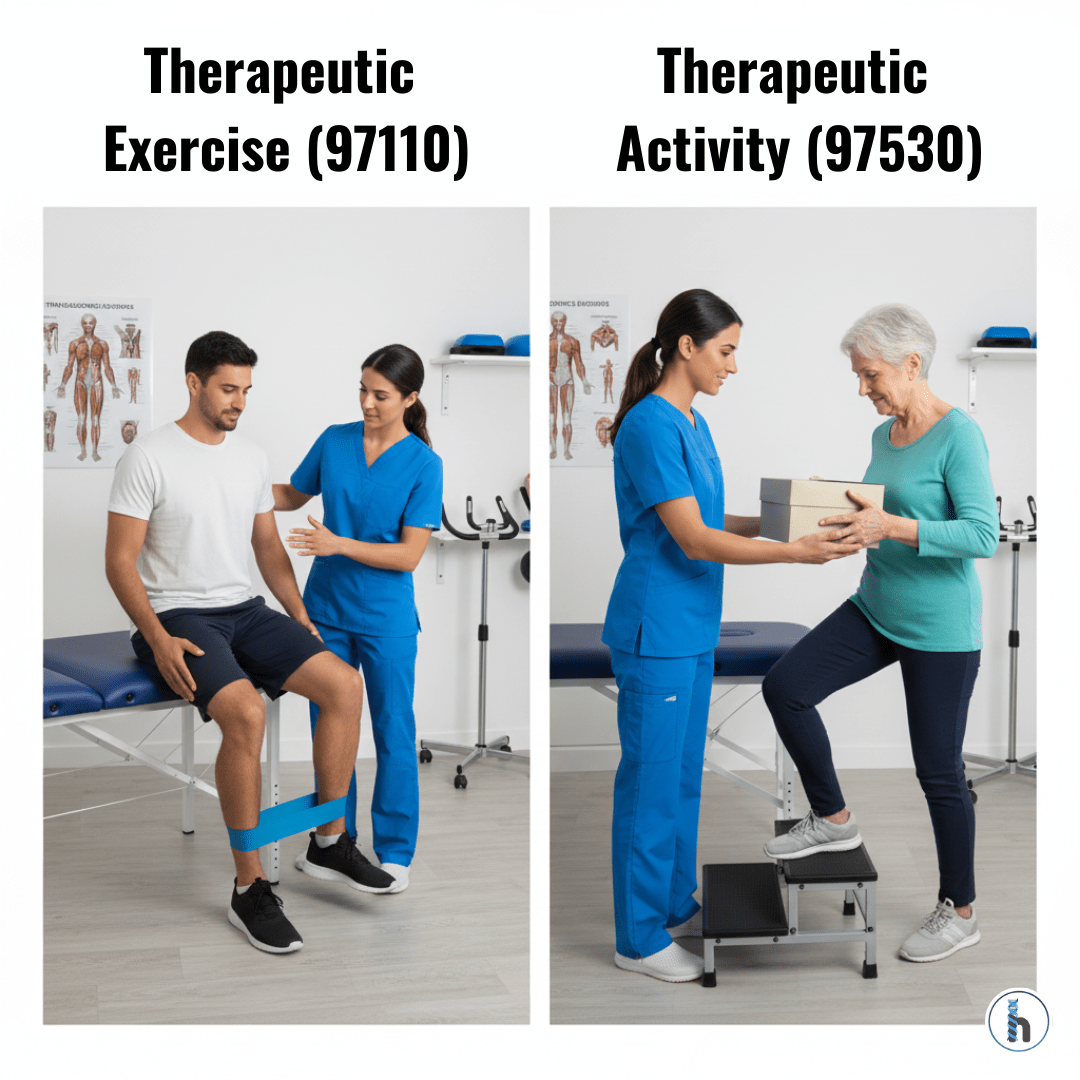
97110: Therapeutic Exercise

Used when interventions focus on strength, coordination, or motor control with measurable physical outcomes. In pediatrics, this may apply when exercises are structured and goal-directed rather than purely play-based.

97530: Therapeutic Activities

This is one of the most commonly used pediatric OT codes. It applies to dynamic activities that improve functional performance, such as:

    • Fine motor tasks
    • Play-based skill building
    • Task sequencing and problem-solving

Clear documentation should connect the activity directly to functional goals.

97112: Neuromuscular Reeducation

Appropriate when sessions target balance, coordination, postural control, or sensory-motor integration. This code is often used in children with neurological or developmental conditions.

97535: Self-Care / Home Management Training

Used when addressing activities of daily living such as dressing, feeding, grooming, or caregiver education related to these tasks.

Time-Based Coding Considerations

Many pediatric occupational therapy CPT codes are time-based and billed in 15-minute units. Accurate time tracking is critical.

Your documentation should clearly show:

    • Total treatment time
    • How time was divided across interventions
    • Which activities were billed under each code

Incomplete or inconsistent time documentation is a common trigger for payer denials.

Documentation Tips That Support Clean Billing

To support compliant use of pediatric occupational therapy CPT codes, your notes should consistently include:

    • Functional goals tied to the plan of care
    • A brief description of skilled intervention
    • The child’s response to treatment
    • Progress toward measurable outcomes
    • Time spent per intervention

This level of clarity helps payers understand not just what you did, but why it required skilled occupational therapy services.

Common Coding Mistakes to Avoid

Even experienced therapists can run into issues when:

    • Using generic language that doesn’t match the billed code
    • Repeating the same CPT code without documenting skilled progression
    • Failing to link session activities to functional goals
    • Mixing evaluation and treatment services without clarity

Avoiding these pitfalls starts with structured documentation and clear visibility into goals and services provided.

How the Right EMR Supports Pediatric OT Coding

An EMR built for therapy practices can significantly reduce coding errors. With pediatric-focused workflows, therapists can:

    • Select CPT codes directly within daily notes
    • Track time automatically per intervention
    • Link goals to billed services
    • Maintain consistency across evaluations, progress notes, and treatment sessions

When documentation and billing workflows live in the same system, it becomes easier to defend claims and respond to payer requests.

Supporting Long-Term Practice Health

Accurate use of pediatric occupational therapy CPT codes isn’t just about reimbursement—it’s about protecting your practice. Clean billing leads to:

    • Fewer claim denials
    • Faster payments
    • Lower audit risk
    • Less administrative rework

Over time, these efficiencies translate into better cash flow, reduced staff burnout, and more time spent with patients instead of paperwork.

Frequently Asked Questions

Q1. What are the most common pediatric occupational therapy CPT codes?

Evaluation codes (97165–97167), therapeutic activities (97530), neuromuscular reeducation (97112), and self-care training (97535) are among the most frequently used.

Q2. How do I choose the correct evaluation code?

The correct code is based on complexity, including the number of performance deficits, assessment tools, and clinical decision-making required.

Q3. Can I bill multiple CPT codes in one session?

Yes, as long as each service is distinct, time is documented accurately, and interventions are tied to functional goals.

Q4. Why do pediatric OT claims get denied?

Common reasons include insufficient documentation, time discrepancies, vague descriptions, or mismatch between the CPT code and the intervention provided.

Q5. How can an EMR help with pediatric OT billing?

A therapy-specific EMR helps align documentation with billing, track time automatically, and ensure consistency across notes reducing errors and denials.

Final Takeaway

Pediatric occupational therapy is complex, skilled work. Your documentation and coding should reflect that complexity clearly and confidently. By understanding how CPT codes apply in pediatric settings and using systems that support accurate workflows you can focus more on patient care and less on billing headaches.

Remote Therapeutic Monitoring (RTM): A Practical Guide for PT, OT, and SLP Practices

Table of Contents

Remote Therapeutic Monitoring (RTM) is quickly becoming a core tool for physical therapists (PT), occupational therapists (OT), and speech-language pathologists (SLP) who want to improve patient outcomes and unlock new, compliant revenue streams.

When implemented correctly, RTM allows therapy clinics to stay connected with patients between visits, track progress outside the clinic, and make timely treatment adjustments while billing appropriately for that work.

This guide breaks down what RTM is, how it works, how billing actually functions, and how therapy practices can implement RTM without disrupting workflows.

What Is Remote Therapeutic Monitoring (RTM)?

Remote Therapeutic Monitoring (RTM) allows therapists to monitor therapy-related patient data remotely using digital tools and connected technology.

Unlike traditional in-clinic visits, RTM focuses on what happens between appointments, helping therapists understand whether patients are following their care plans and progressing as expected.

RTM typically tracks non-physiological data, such as:

    • Exercise adherence
    • Functional movement patterns
    • Therapy participation
    • Activity completion
    • Speech or motor task engagement

This data is collected outside the clinic and reviewed by the therapist, who can then adjust treatment plans, provide feedback, and document progress.

How RTM Works in Therapy Practices

Physical therapist reviewing remote therapeutic monitoring (RTM) data on a tablet inside a therapy clinic, tracking patient exercise adherence and functional progress between visits.

RTM follows a structured, repeatable process that fits naturally into therapy workflows.

Device or Tool Setup

Patients use approved digital tools such as mobile apps, wearable motion sensors, or therapy-specific platforms that capture therapy-related activity.

Data Collection

The system records activity data over time, such as:

    • Completion of home exercise programs
    • Range of motion trends
    • Repetition counts
    • Engagement with therapy tasks

Data Review

Therapists review collected data within a defined monitoring period and evaluate whether patients are progressing, plateauing, or falling behind.

Therapist Interaction

The therapist engages with the patient or caregiver through documented communication, coaching, or treatment adjustments based on RTM data.

Why RTM Is a Game-Changer for PT, OT, and SLP

RTM offers tangible benefits across clinical care, patient engagement, and practice sustainability.

Increased Patient Engagement

Patients stay connected to their care plans even outside scheduled visits. This improves consistency and accountability.

Improved Therapy Outcomes

Continuous monitoring allows therapists to identify issues earlier and intervene before progress stalls.

Expanded Revenue Opportunities

RTM introduces reimbursable services that do not require in-person visits, helping clinics grow without adding treatment hours.

Flexible Care Delivery

RTM works well for:

    • Post-surgical rehab
    • Chronic conditions
    • Neurological care
    • Speech and cognitive therapy
    • Patients with transportation or scheduling barriers

RTM vs Other Remote Care Models (Clarifying the Scope)

RTM is designed specifically for therapy-related monitoring and differs from other remote care models that focus on medical or physiological data.

RTM is appropriate when:

    • The primary goal is improving functional performance
    • Progress depends on adherence to therapy activities
    • Monitoring supports skilled therapeutic decision-making

For PTs, OTs, and SLPs, RTM aligns directly with therapy goals—not general medical management

RTM is designed specifically for therapy-related monitoring and differs from other remote care models that focus on medical or physiological data.

RTM is appropriate when:

    • The primary goal is improving functional performance
    • Progress depends on adherence to therapy activities
    • Monitoring supports skilled therapeutic decision-making

For PTs, OTs, and SLPs, RTM aligns directly with therapy goals—not general medical management.

RTM Billing Codes Therapists Need to Know

Understanding RTM billing is essential to using it effectively and compliantly.

Common RTM Codes

    • CPT 98975 – Initial setup and patient education
    • CPT 98977 – Ongoing monitoring over a 30-day period
    • CPT 98980 – First 20 minutes of interactive treatment management

These codes require:

    • A minimum number of monitoring days
    • Documented therapist involvement
    • Patient or caregiver interaction

How RTM Can Increase Practice Revenue

RTM allows clinics to bill for work they are already doing monitoring progress, following up with patients, and adjusting care plans.

Example Revenue Scenario

    • Initiate RTM for multiple Medicare patients
    • Monitor therapy activity over required days
    • Document interactive management time
    • Bill eligible RTM codes monthly

For clinics managing multiple patients, RTM can create meaningful recurring revenue without increasing in-clinic volume.

Step-by-Step: Implementing RTM in Your Therapy Practice

Step 1 – Identify Appropriate Patients

RTM works best for patients who:

    • Require consistent follow-through
    • Are progressing outside the clinic
    • Benefit from frequent check-ins

Step 2 – Choose Therapy-Appropriate Tools

Select tools that track therapy-specific activities not just generic health data.

Step 3 – Educate Patients

Explain:

    • What data is being tracked
    • Why it matters
    • How it supports their recovery

Step 4 – Integrate RTM Into Documentation

RTM should flow directly into treatment notes and care plans, not exist as a separate system.

Step 5 – Monitor, Adjust, and Document

Use RTM data to:

    • Modify interventions
    • Reinforce adherence
    • Justify skilled therapy decisions

Common RTM Challenges (and How Clinics Avoid Them)

Technology Adoption

Some patients need guidance. Clear onboarding reduces friction.

Documentation Gaps

RTM billing requires clear documentation of monitoring and interaction—not just data collection.

Compliance Risks

Using an EMR that supports RTM documentation and billing reduces audit exposure.

How HelloNote Supports RTM for Therapy Clinics

HelloNote is built specifically for therapy practices and supports RTM workflows without adding administrative complexity.

With HelloNote, clinics can:

    • Track therapy-related monitoring data
    • Document RTM interactions clearly
    • Align RTM activity with plans of care
    • Support compliant billing workflows
    • Keep RTM documentation audit-ready

RTM becomes part of the clinical workflow not a separate system to manage.

Frequently Asked Questions About RTM

Q1. What types of patients benefit most from RTM?

Patients who require ongoing monitoring between visits, including those with musculoskeletal, neurological, or functional therapy needs.

Q2. Can PTs, OTs, and SLPs bill RTM directly?

Yes, when RTM services meet billing requirements and are documented appropriately within a therapy plan of care.

Q3. Does RTM replace in-person visits?

No. RTM supplements in-clinic care by improving continuity and insight between appointments.

Final Thoughts

Remote Therapeutic Monitoring is not a trend—it’s a practical extension of modern therapy care.

For PT, OT, and SLP practices, RTM:

    • Strengthens patient engagement
    • Improves clinical decision-making
    • Expands reimbursable services
    • Supports sustainable growth

With the right workflows and an EMR designed for therapy, RTM becomes a natural, valuable part of practice operations.

If your clinic is exploring RTM, having the right system in place makes all the difference.

You've found a hidden discount!

  • 00Hours
  • 00Minutes
  • 00Seconds