



















Table of Contents
Is Massage Therapy Covered by Insurance?

What Clinics Must Get Right to Bill, Get Paid, and Stay Compliant
Massage therapy plays an important role in rehabilitation, pain management, and functional recovery. As more therapy clinics integrate hands-on soft tissue work into treatment plans, questions around massage therapy insurance come up more often especially from practice owners trying to balance patient care with clean reimbursement.
So, is massage therapy covered by insurance?
The answer is sometimes and coverage depends far less on the technique itself and far more on how the service is documented, coded, and justified.
This guide explains how massage therapy insurance coverage works, why claims are often denied, and how therapy-focused EMRs like HelloNote help clinics bill correctly and stay compliant.
When Is Massage Therapy Covered by Insurance?
Massage therapy insurance coverage typically applies only when the service meets medical necessity standards. Most payers require all of the following:
The service is medically necessary
It is part of an established plan of care
It is supervised, ordered, or performed by a licensed provider
It is billed under appropriate CPT codes with proper documentation
Common reimbursable scenarios include:
Soft tissue work during post-surgical rehabilitation
Massage techniques used within physical therapy or chiropractic care
Neuromuscular re-education involving manual therapy
Massage provided for relaxation, stress relief, or general wellness is not covered under massage therapy insurance policies.
What Insurance Companies Look for in Massage Therapy Claims
Insurance payers evaluate documentation not intent. For massage therapy insurance claims to be approved, records must clearly support skilled care.
1. Medical Necessity
Documentation should establish:
A qualifying diagnosis
Functional limitations or impairments
Clinical reasoning for including massage therapy
2. Goal-Based Treatment Rationale
Each visit must show a direct connection between:
Diagnosis
Intervention
Measurable functional improvement
3. Proper CPT Code Selection
4. Defensible Documentation
Payers expect:
SOAP notes linked to functional goals
Accurate time tracking
Objective outcome measures
Without this structure, even medically necessary massage therapy may be denied.
Why Massage Therapy Insurance Claims Get Denied
Many clinics deliver excellent care but still face reimbursement issues. Common problems include:
No documented link between diagnosis and intervention
Vague or repetitive SOAP notes
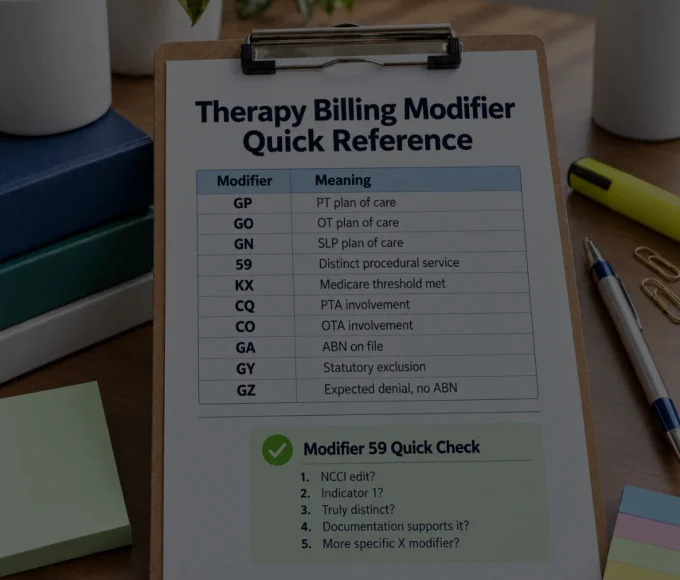
Incorrect CPT codes or modifiers
Lack of objective progress tracking
Using EMRs not designed for therapy billing workflows
These gaps make massage therapy insurance claims difficult to defend during audits or reviews.
How HelloNote Supports Massage Therapy Insurance Billing
HelloNote is designed for therapy practices that integrate massage into rehabilitative care not cash only wellness models.
Here’s how HelloNote helps clinics bill massage therapy insurance correctly:
Structured SOAP templates that reinforce medical necessity
Diagnosis-to-CPT alignment to support payer expectations
Time-based documentation prompts for accurate unit billing
Audit-ready notes tied to the plan of care
By guiding documentation at the point of care, HelloNote reduces billing errors and improves reimbursement consistency.
Who Benefits Most from Insurance-Based Massage Therapy Workflows?
Massage therapy insurance workflows are especially valuable for:
PT and OT clinics incorporating soft tissue interventions
Chiropractic clinics using manual therapy techniques
Multidisciplinary rehab practices
Medical massage clinics treating injury or post-surgical patients
If massage therapy is part of skilled treatment not just a cash add-on your EMR needs to support compliant billing.
Bottom Line: Massage Therapy Coverage Depends on Your System
Massage therapy insurance coverage is possible but only when services are:
Clinically justified
Properly documented
Correctly coded
Supported by a defensible plan of care
HelloNote helps clinics remove guesswork by aligning documentation, billing, and compliance in one workflow.
Book a demo to see how HelloNote supports insurance-ready massage therapy billing.
Frequently Asked Questions About Massage Therapy and Insurance
Q1. Is massage therapy covered by insurance for pain management?
Massage therapy may be covered when pain management is medically necessary and tied to a diagnosed condition. Coverage depends on the payer and documentation quality.
Q2. Do massage therapists need to work in a PT or chiropractic clinic for coverage?
Coverage is more common when massage therapy is provided within a licensed clinical setting, such as physical therapy or chiropractic practices.
Q3. What documentation supports insurance reimbursement?
Therapists should document diagnosis, functional limitations, treatment rationale, session details, and measurable progress.
Q4. Can Medicaid cover massage therapy services?
In some states, Medicaid may cover massage therapy when delivered under approved therapy services and documented appropriately.
Q5. How can an EMR help reduce massage therapy claim denials?
An EMR helps standardize documentation, track progress, and ensure treatment aligns with billing requirements reducing errors that lead to denials.

AboutHellonote Expert
The HelloNote Expert Research Team publishes educational resources for physical therapy, occupational therapy, speech therapy, and rehabilitation practices. Their content focuses on documentation workflows, Medicare operations, billing processes, clinician efficiency, AI-assisted charting, and therapy practice management. Articles are developed using healthcare industry research, CMS resources, operational workflow analysis, and therapy-focused EMR expertise.