

















Table of Contents
Choosing an electronic medical record (EMR) system is one of the most important decisions a therapy practice can make. Unfortunately, many clinics discover too late that their system creates more obstacles than solutions. Instead of improving efficiency, EMR problems often slow therapists down, frustrate staff, and disrupt patient care.
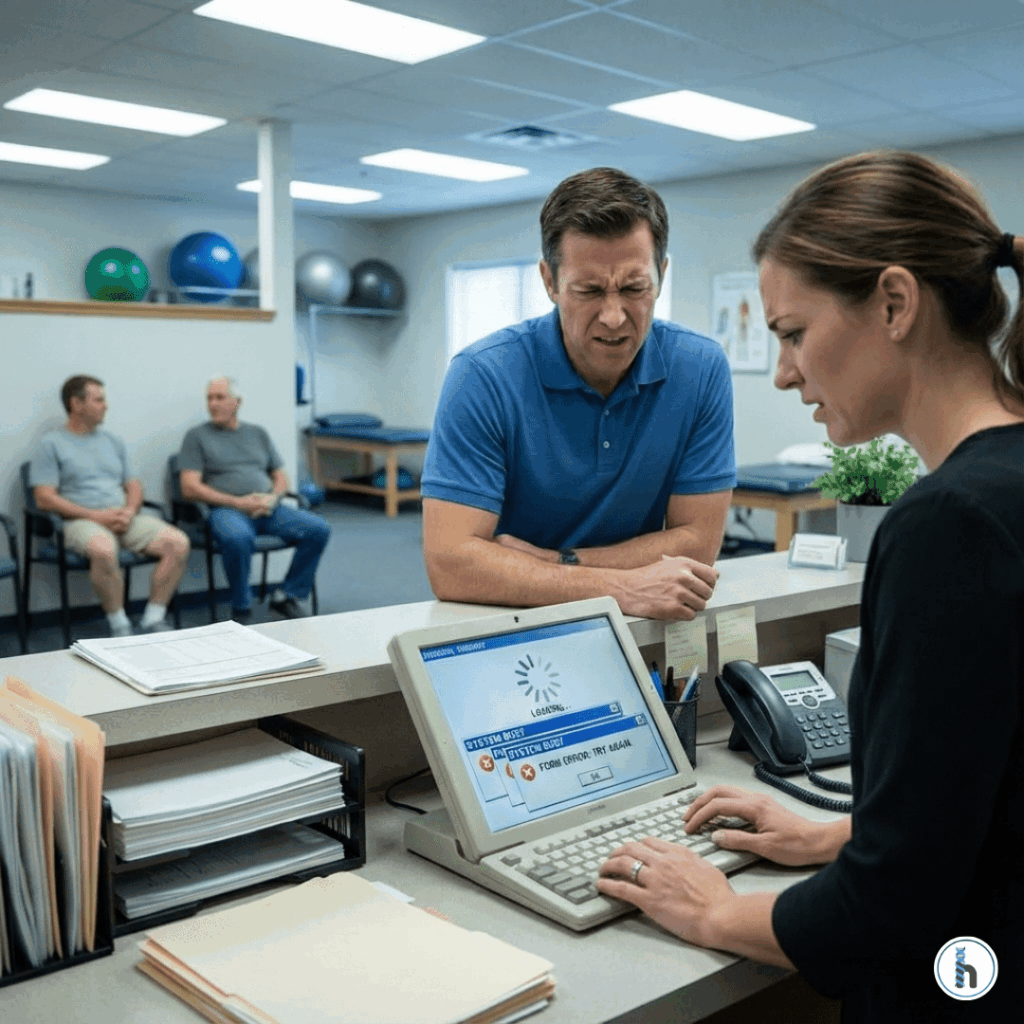
Physical, occupational, and speech therapy practices face unique workflow demands. When an EMR isn’t designed with those realities in mind, it becomes another source of stress rather than a support system.
Below, we break down the most common EMR problems therapy practices face and how HelloNote was intentionally built to avoid them.
EMR Problem #1: Systems That Are Too Complicated for Therapists
Many EMRs are built for general medicine, not rehab disciplines. Therapists are forced to click through unnecessary fields, navigate confusing layouts, and work around features they never use.
This is one of the most common EMR problems reported by PTs, OTs, and SLPs documentation takes longer than it should, and notes often get finished after hours.
How HelloNote avoids this:
HelloNote is built by therapists, for therapists. Documentation flows are intuitive, discipline-specific, and designed to reduce clicks. Daily notes, evaluations, and progress reports are structured to match how therapists actually think and work.
EMR Problem #2: Rigid Templates That Don’t Match Real Workflows
Some EMRs lock clinics into templates that can’t be customized or require IT support to make small changes. This leads to repetitive typing, workarounds, or incomplete notes.
Inflexible templates are a major EMR problem because they force therapists to adapt to the software instead of the software adapting to the clinic.
How HelloNote avoids this:
HelloNote offers fully customizable templates. Clinics can build evaluations, goals, and intervention libraries that reflect their real workflow. Therapists can reuse favorite phrases, goal banks, and treatment plans without sacrificing documentation quality.
EMR Problem #3: Disconnected Practice Management and Billing
An EMR should support more than just clinical notes. Yet many platforms separate documentation from scheduling, eligibility checks, and billing forcing staff to juggle multiple systems that don’t communicate.
This disconnect is a costly EMR problem that leads to missed charges, delayed claims, and administrative overload.
How HelloNote avoids this:
HelloNote is an all-in-one platform. Scheduling, eligibility verification, documentation, billing, and reporting work together in one system. Clinical and front-office teams stay aligned without duplicating work.
EMR Problem #4: Poor Support for Clean Billing and Compliance
Even strong clinical documentation can result in denied claims if the EMR doesn’t guide correct coding, modifiers, or medical necessity language. Many clinics experience EMR problems that directly impact reimbursement.
How HelloNote avoids this:
HelloNote includes built-in prompts and safeguards that support accurate coding and payer-ready documentation. Therapists are guided to complete compliant notes, reducing denials and speeding up reimbursement.
EMR Problem #5: Lack of Real Human Support
A common frustration with many platforms is slow or impersonal customer support. When issues arise, clinics are left waiting while notes pile up and billing stalls.
This lack of support is an EMR problem that directly affects daily operations.
How HelloNote avoids this:
HelloNote provides responsive, knowledgeable support from people who understand therapy workflows. Onboarding, training, and ongoing assistance are included not treated as add-ons.
EMR Problem #6: Slow, Clunky, or Mobile-Unfriendly Systems
Therapists often work across multiple rooms, schools, or homes. EMRs that are slow or poorly optimized for tablets become daily time drains.
How HelloNote avoids this:
HelloNote is cloud-based and mobile-responsive. Therapists can document efficiently from desktops, tablets, or mobile devices without lag or crashes.
EMR Problem #7: No Visibility Into Workflow or Plan of Care
When an EMR doesn’t show what’s due, what’s missing, or where patients are in their plan of care, clinics rely on spreadsheets or memory introducing risk.
How HelloNote avoids this:
HelloNote provides dashboards and alerts that surface reassessments, missing notes, expiring plans of care, and billing tasks. Nothing gets lost in the system.
Summary: Solving EMR Problems Starts With the Right Platform
EMR problems cost therapy practices time, revenue, and staff satisfaction. The right system should remove friction and not create it.
HelloNote was designed to:
Simplify documentation
Support clean billing
Improve workflow visibility
Provide real, responsive support
Frequently Asked Questions About EMR Problems
Q1. What are the most common EMR problems therapy practices face?
The most common EMR problems include complicated documentation workflows, inflexible templates, disconnected billing systems, poor mobile usability, and limited customer support. These issues often lead to longer documentation time and increased staff burnout.
Q2. How do EMR problems affect billing and reimbursement?
EMR problems can cause coding errors, missing modifiers, incomplete medical necessity documentation, and delayed claims. Over time, this leads to higher denial rates and lost revenue for therapy practices.
Q3. Why do many EMRs fail therapy clinics specifically?
Many EMRs are designed for general medical practices, not PT, OT, SLP, or chiropractic workflows. This mismatch creates EMR problems because rehab clinics require goal tracking, plan-of-care visibility, and time-based documentation support.
Q4. Can switching EMRs actually reduce documentation time?
Yes. When clinics move from systems with persistent EMR problems to therapy-specific platforms, documentation time often drops significantly. Modern EMRs like HelloNote streamline note creation and reduce after-hours work.
Q5. How can a clinic avoid EMR problems when choosing a new system?
To avoid EMR problems, clinics should demo platforms using real workflows, confirm customization options, evaluate billing support, and ask about onboarding and ongoing customer support. Choosing a therapist-built EMR is key.

AboutHellonote Expert
The HelloNote Expert Research Team publishes educational resources for physical therapy, occupational therapy, speech therapy, and rehabilitation practices. Their content focuses on documentation workflows, Medicare operations, billing processes, clinician efficiency, AI-assisted charting, and therapy practice management. Articles are developed using healthcare industry research, CMS resources, operational workflow analysis, and therapy-focused EMR expertise.