



















Table of Contents
For physical and occupational therapists, sports massage for athletes is a powerful, hands-on tool to accelerate recovery, prevent re-injury, and achieve superior performance. While therapeutic exercise is foundational, integrating targeted massage techniques elevates a standard rehabilitation plan. This guide explores the key clinical benefits of sports massage and how to apply it in your practice.
What is Sports Massage (and How Is It Different)?
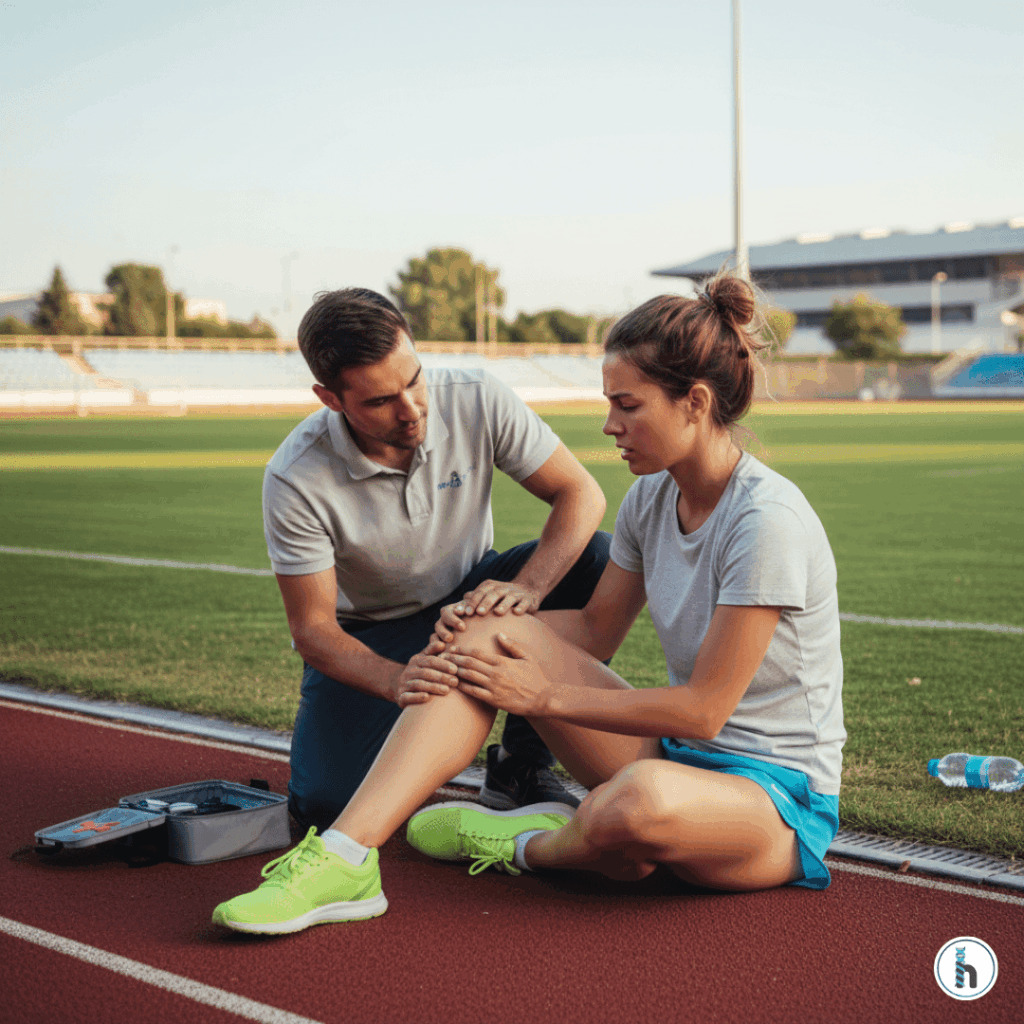
Unlike a relaxing Swedish massage or a generalized deep tissue massage, sports massage is a targeted therapy designed for the specific needs of an athlete. It uses a combination of techniques, including stroking, kneading, trigger point therapy, and stretching, to address the muscles and connective tissues stressed during athletic activity. The primary goal is not just relaxation, but functional restoration and performance enhancement.
The Top 5 Clinical Benefits of Sports Massage
Integrating sports massage delivers measurable outcomes that directly support physical and occupational therapy goals.
1. Accelerates Muscle Recovery and Reduces Soreness
Intense training leads to microscopic muscle tears and inflammation, causing delayed onset muscle soreness (DOMS). Studies show that sports massage significantly improves blood flow, which helps flush out metabolic byproducts (like lactic acid) and deliver oxygen-rich blood to tissues, speeding up the repair process.
2. Improves Flexibility and Range of Motion
Repetitive movements can create adhesions and stiffness in muscles and fascia. Techniques like myofascial release break down these restrictions. For an athlete recovering from ACL reconstruction, targeted soft tissue work on the quadriceps and hamstrings can be critical for restoring full knee extension and flexion.
3. Reduces the Risk of Future Injuries
By keeping muscles pliable and elastic, sports massage helps prevent the strains and tears that often occur when tight muscles are pushed too hard. Regular massage allows therapists to identify and treat potential problem areas, like trigger points or excessive tension, before they lead to a major injury.
4. Corrects Muscular Imbalances and Poor Patterns
Athletes often develop compensatory patterns to work around a weak or injured area. Massage helps release tension in these overworking muscles, allowing therapists to retrain proper movement. For a runner with chronic IT band syndrome, releasing tightness in the hip and gluteal muscles is key to restoring a balanced, symmetrical gait.
5. Enhances Proprioception and Body Awareness
Muscle tightness can dull the nerve signals that contribute to proprioception (your sense of body position), increasing the risk of missteps and sprains. By releasing this tension, massage enhances the body’s neuromuscular feedback loop, improving balance and coordination—an invaluable benefit for any athlete.
When to Use Sports Massage: Pre-Event vs. Post-Event
The application of sports massage varies depending on the timing relative to competition.
Pre-Event Massage: A shorter, more stimulating massage performed 15-45 minutes before an event. It focuses on increasing circulation and warming up key muscle groups without causing excessive relaxation.
Post-Event Massage: Performed within a few hours after competition, this massage is slower and more restorative. The goal is to calm the nervous system, reduce inflammation, and begin the recovery process.
Documenting Sports Massage to Prove Outcomes
To truly demonstrate the value of sports massage, precise documentation is crucial. Tracking interventions and their results validates the treatment’s effectiveness and informs future sessions. This is where a specialized EMR becomes essential.
HelloNote allows therapists to seamlessly document massage interventions in their SOAP notes, quantitatively track range-of-motion improvements with built-in goniometry tools, and generate clear progress reports. This ensures that you can prove the functional gains your athletes are making with every session.
Elevate Your Practice with Sports Massage
Sports massage is not a luxury it’s an evidence-based therapeutic tool that produces significant clinical outcomes. By incorporating these techniques into your PT/OT practice, you help athletes recover faster, move better, and return to sport stronger and more resilient.
Frequently Asked Questions About Sports Massage for Athletes
Q1. Is sports massage good for athletes?
Yes. It is designed to address athletic strain, accelerate recovery, prevent injuries, and improve flexibility and muscle function.
Q2. What is the difference between a sports massage and a deep tissue massage?
Sports massage is targeted toward sport-specific muscle groups and may include stretching.
Deep tissue massage broadly addresses chronic tension throughout the body.
Q3. How often should an athlete get a sports massage?
Serious athletes benefit from sessions every 1–2 weeks.
Recreational athletes may do well with once per month.
Q4. What is a therapist for athletes called?
Titles include Sports Physical Therapist (DPT), Certified Athletic Trainer (ATC), or Sports Massage Therapist (LMT).
Q5. What is the difference between a sports massage and a deep tissue massage?
A deep tissue massage focuses broadly on relieving chronic muscle tension throughout the body. A sports massage is more targeted; it uses a variety of techniques to address the specific muscles used in an athlete’s sport to improve performance, prevent injury, and speed up recovery.
Q6. What is physical therapy for athletes?
Physical therapy for athletes, also known as sports physical therapy, is a specialized branch of healthcare focused on preventing, evaluating, and treating sports-related injuries. It aims to restore an athlete’s function, strength, mobility, and sport-specific skills to facilitate a safe return to play.
Q7. How does therapy help athletes?
Therapy helps athletes by accelerating recovery from injury, reducing pain and inflammation, improving flexibility and range of motion, correcting movement dysfunctions, preventing future injuries through corrective exercise, and ultimately enhancing overall athletic performance.

AboutHellonote Expert
The HelloNote Expert Research Team publishes educational resources for physical therapy, occupational therapy, speech therapy, and rehabilitation practices. Their content focuses on documentation workflows, Medicare operations, billing processes, clinician efficiency, AI-assisted charting, and therapy practice management. Articles are developed using healthcare industry research, CMS resources, operational workflow analysis, and therapy-focused EMR expertise.