




















You've found a hidden discount!

HN Unlock Layer 1
HN Unlock Layer 2
HN Unlock Layer 3
HN Unlock Layer 4
HN Unlock Layer 5
  • 00Hours
  • 00Minutes
  • 00Seconds

Category: practice management

The Best Alternative EMR for Therapy Practice

Discover the best alternative EMR for your therapy practice with HelloNote. Designed specifically for physical, occupational, and speech therapists, HelloNote simplifies scheduling, documentation, and billing all in one platform. Say goodbye to complicated, generic systems and switch to a streamlined, user-friendly solution that improves efficiency and enhances patient care. Optimize your practice today with HelloNote – the EMR built with your clinic’s needs in mind.

Best alternative EMR for your therapy practice showcasing HelloNote’s intuitive login interface

Switching your clinic’s Electronic Medical Record (EMR) system is a big decision that comes with its challenges. While new features and improved workflow are enticing, the process can be complicated with disruptions, data transfer delays, and system outages.

These issues can add up, especially when dealing with contract obligations, integration problems, and the learning curve for staff. Without careful planning, switching EMRs can impact your clinic’s operations, slow down your workflow, and strain resources.

Choosing the wrong EMR could lead to long-term consequences, affecting your clinic’s success. That’s why it’s essential to select a platform that seamlessly integrates into your workflow and meets the specific needs of your therapy practice.

This guide is designed to help you make an informed decision when choosing an EMR, so you don’t end up locked into a restrictive contract that doesn’t meet your needs.

wpDataTable with provided ID not found!

Why Choose HelloNote over WebPT, SimplePractice, Prompt, JaneApp, System4PT, PTEverywhere, Spry, Heno, Raintree Inc, Theraplatfor.

Designed for Therapists: Specialization Matters

HelloNote is for Therapy Professionals

We understand the unique challenges that physical therapists, occupational therapists, and speech-language pathologists face because we’ve been in your shoes. Our platform isn’t a generic EMR trying to fit all healthcare providers — it’s designed specifically for therapy professionals, ensuring that every feature supports the way you work.

This isn’t just a marketing claim; it’s embedded in everything we do. From customized documentation templates to streamlined workflow management, our system is built to enhance efficiency, simplify compliance, and improve patient outcomes. We know what therapists need, and we’ve designed HelloNote to deliver exactly that.

Client Testimonials: Real Therapists, Real Benefits

One of the standout features of HelloNote is its user-friendly dashboard, which allows therapy professionals to access key information quickly and efficiently. A client recently shared their experience:

“I love the dashboard feature because it summarizes everything I need to know. There’s probably even more that I haven’t explored, but the basics are right there. For example, I can easily track when we need to recertify patients, especially since we see many patients with neurologic conditions for longer durations. The dashboard helps me stay on top of when plans of care need updates and whether the doctor has signed off. It also shows me if we’ve received necessary documents, making everything very streamlined and easy to manage. The system is easy to navigate, and the team has been amazing with support. Since switching to HelloNote, the billing process has been a lot easier. It’s been light years easier for me, and I now handle billing for our whole team. It’s fast, efficient, and truly made my life easier!” DR. Chloe Diordano PT, DPT Founder and Owner of Neuro Nation Physical Therapy and Wellness.

This testimonial highlights how HelloNote’s intuitive dashboard and billing features can simplify daily operations for therapy practices, particularly those managing long-term care or dealing with complex documentation needs. The ease of use and quick navigation save valuable time, allowing therapists to focus on patient care instead of administrative tasks.
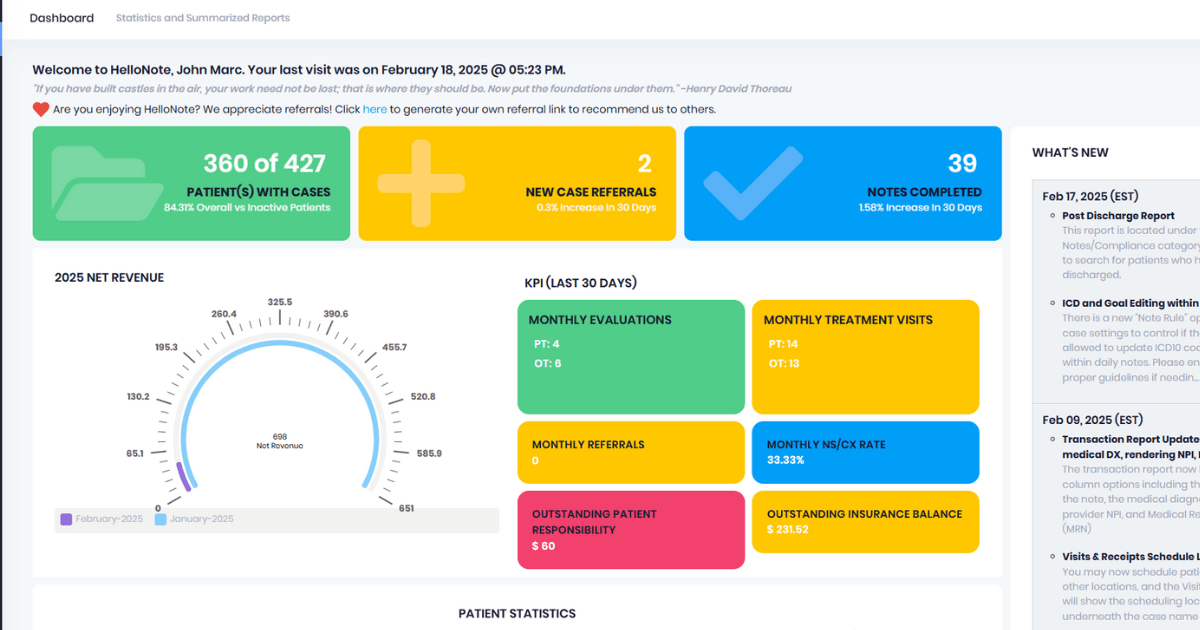
HelloNote dashboard showing key performance indicators (KPI) for therapy clinics, including patient statistics, new case referrals, net revenue, treatment visits, and outstanding balances for therapy clinic management.

Integration and Streamlining

At HelloNote, we know that therapists don’t have time to juggle multiple systems for scheduling, documentation, and billing. That’s why we built an all-in-one EMR that seamlessly integrates these essential functions into a single, streamlined platform. By eliminating the need for third-party add-ons, we help reduce inefficiencies, minimize errors, and keep your workflow as smooth as possible. Our goal is to provide a solution that lets you focus on patient care, not software workarounds.

Billing Transparency & Pricing Comparison

How HelloNote Simplifies Billing for Therapists

We know that billing shouldn’t be a guessing game. As therapists ourselves, we’ve seen how complicated and frustrating insurance claims and payments can be, especially for small to mid-sized practices. That’s why we built a billing system that prioritizes transparency, affordability, and ease of use.

HelloNote’s pricing structure is designed to keep things straightforward, without hidden fees or surprise charges. We don’t believe in adding extraneous features that would increase your monthly bill without providing meaningful value to your practice. Our focus is on providing you with the tools and functions that directly support your day-to-day operations. By avoiding unnecessary complexities, we ensure that you only pay for the features that truly benefit your practice.

With one-click claims generation, seamless insurance processing, and a pricing model that fits the needs of therapy clinics, we make it easy to manage your finances efficiently. No more paying for features you don’t need, just the solutions that work for you.

 100%. I would say again, I don’t know how those scaling works. However, if it works for one person, it’s going to work for everybody. Right? It’s simple. I’ve used every single, uh, documentation system known to man working in hospitals with Epic, working in practices with everything from, uh, prompt to, you know, WebPT, but again.

Everything has different features, but hello note is by far the most simple and easy to use and direct. And that’s what I want as a practitioner. And again, from a price point, you guys were the only people that would let me come on as a sole practitioner. So I’m super grateful for that. And again, regardless, like the cost is honestly very, very, very affordable.

And it essentially, I mean, if, again, it makes me money essentially, because I’m able to, yeah. Have more clients, build more with confidence, get those things. You guys have great support. So yeah, I’m super grateful. That’s why I chose to, you know, kind of do the interview. I was like, you know what, they’ve been really good to me.

And even at, I was at PPS and I saw you guys at a booth and then I talked to, I can’t remember her name, but she was a really sweet lady from New York. And I was like, Oh yeah, you guys are great. I love you guys so much. And I, you know, and I said, Hey, you know, I paid a year in full. Can you guys give me like, you guys want, she was like, yeah, I’ll take care of you.

Don’t worry. And she like emailed me, you know, the next week. So just having that like relationship of just trusting the real people it’s, it’s fantastic. So I appreciate your all’s work. And like I said, that’s part of the reason why I wanted to come on here today. Cause I’m a huge advocate for hello note and I grateful for the kind of opportunity it’s given me, because like I said, I’m very happy and I don’t need to change a thing right now.

So, and even if I expanded, I would know I’d be able to do that confidently with you guys.”

Daniel C Brown, DPT, COMT, OCS owner of DCB Physical Therapy.

Telehealth & Patient Engagement

How HelloNote Elevates Telehealth and Patient Engagement

Virtual therapy isn’t just a convenience but a necessity. Whether you’re working with remote patients, managing home health visits, or offering hybrid care, having a seamless, HIPAA-compliant telehealth solution is essential. That’s why we’ve built integrated telehealth directly into our platform, along with a secure patient portal that enhances engagement and accessibility.

Scheduling & Documentation: Reducing Admin Burden

How HelloNote Simplifies Scheduling and Documentation for Therapists

At HelloNote, we know that efficient scheduling and documentation are essential for a smooth workflow. As therapists ourselves, we’ve seen how frustrating it can be when scheduling tools don’t align with real-world therapy needs or when documentation feels like a time-consuming chore instead of a helpful tool.
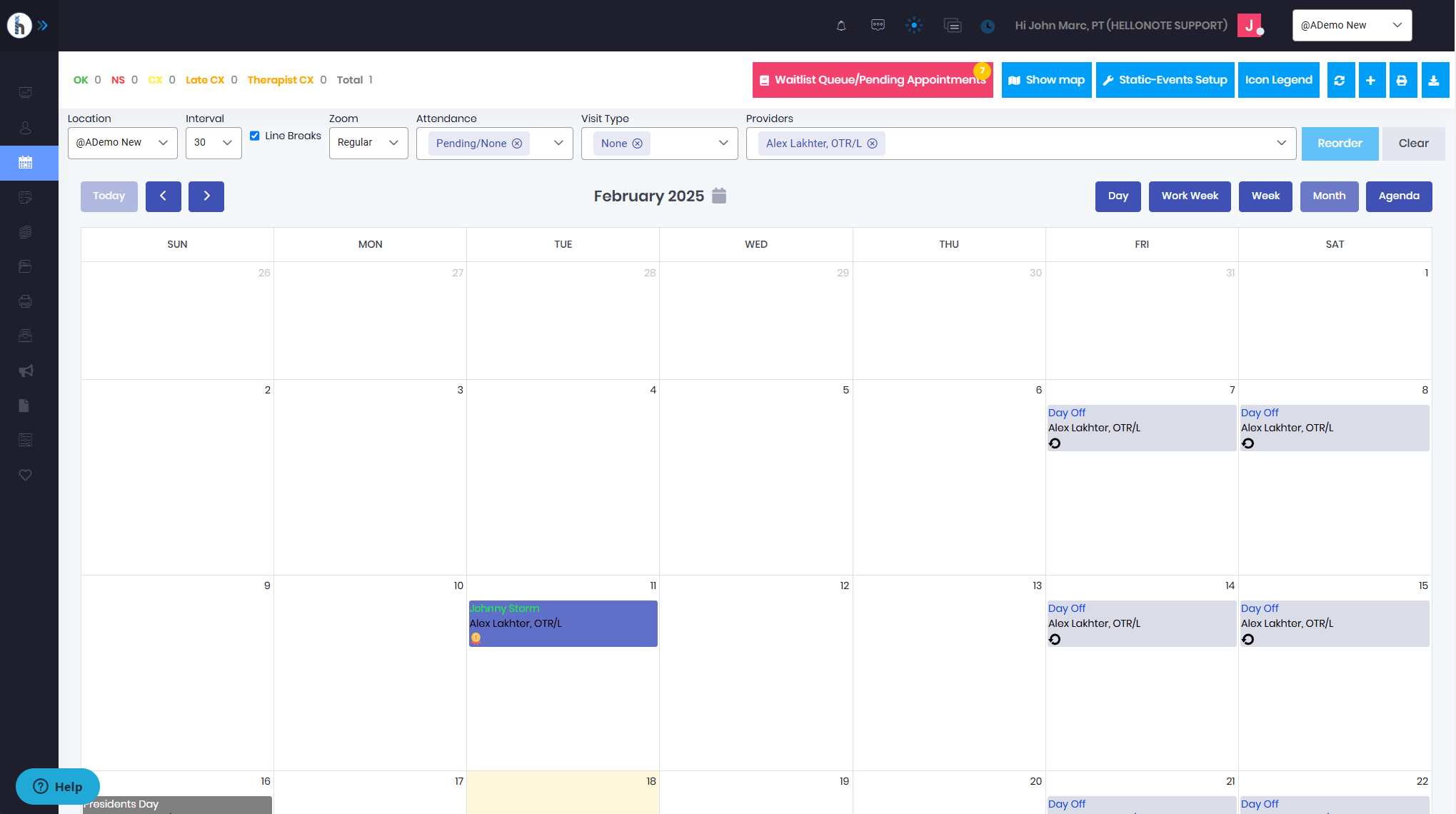
HelloNote therapy clinic calendar view for February 2025, showing appointments, day off schedules for providers, and pending appointments with detailed filters

Customer Support & Community Feedback

HelloNote: Responsive Support & Continuous Updates

We know that having a reliable support team isn’t just a nice-to-have but essential. Therapists don’t have time to wait on hold for hours or deal with unanswered support tickets when they need immediate assistance. That’s why we’ve built a responsive, knowledgeable support team that is readily available to help whenever you need it.

Another client shared their experience with HelloNote’s support and commitment to improvement:

You guys have been pivotal to us. I’ve really enjoyed the communication and collaboration on building reports that we need and changing things within the EMR. For example, the new map feature where we can see where our clinicians are seeing patients is going to be a game-changer for us. You’ve been incredibly open to feedback, and we can’t thank you enough!” Dr. Derek Smith – PT, DPT, GCS of Roaming Rehab

This feedback illustrates HelloNote’s commitment to continuous improvement and the platform’s flexibility to adapt to the unique needs of each therapy practice.

HelloNote's built-in support and knowledgebase for therapy clinics, highlighting Evaluation Notes assistance and providing access to helpful resources for practitioners.

Addressing Security and Compliance

HIPAA Compliance and Data Security in HelloNote

We understand how critical patient data security is, and we take it seriously. HelloNote is fully HIPAA-compliant, ensuring that your practice and your patients’ sensitive information are protected with the highest security standards.

7 Common Mistakes to Avoid When Choosing an EMR for Your Therapy Practice

  1. Choosing a Generic EMR Instead of One Tailored for Therapy
    Many EMR systems are designed for general healthcare practices and don’t offer the specialized features that therapy clinics require. Always choose an EMR that is built specifically for physical, occupational, and speech therapy practices. Look for features like customizable documentation templates, therapy-specific progress tracking, and the ability to manage long-term treatment plans.
  2. Neglecting Integration Capabilities
    An EMR that doesn’t integrate smoothly with your other software systems can create inefficiencies and lead to errors. Ensure the EMR you choose integrates with scheduling, billing, and patient management systems to streamline operations and improve productivity.
  3. Overlooking Data Security and HIPAA Compliance
    Patient data security is essential. Choose an EMR that guarantees compliance with HIPAA standards, provides encrypted storage, and offers secure data exchange protocols to protect patient confidentiality and ensure compliance with privacy regulations.
  4. Forgetting About Training and Ongoing Support
    No matter how powerful the EMR, it will be ineffective without proper training and reliable customer support. Ensure the system you choose offers comprehensive training materials and accessible, responsive support teams to help you and your staff effectively use the software.
  5. Opting for an Overly Complex System
    Some EMR systems are overly complex, making them difficult to learn and use. Avoid systems that are packed with features your clinic doesn’t need. Select an EMR that strikes the right balance between ease of use and necessary functionality.
  6. Ignoring the Total Cost of Ownership
    The initial cost of the EMR is just one part of the equation. Consider the total cost of ownership, which includes recurring fees for updates, support, and training. Choose a system with clear and transparent pricing to avoid unexpected costs in the future.
  7. Underestimating the Need for Streamlined Billing, Documentation, and Scheduling
    Many therapists struggle with managing patient documentation, scheduling, and billing in separate systems that don’t communicate with each other. This leads to inefficiencies, errors, and extra administrative work. HelloNote offers an integrated solution that combines billing, documentation, and scheduling into one easy-to-use platform, saving time and reducing the likelihood of errors, so you can focus on patient care instead of administrative burdens.

By avoiding these common mistakes, you’ll be better equipped to select an EMR system that fits your clinic’s unique needs, helping you streamline operations, reduce administrative burdens, and ensure long-term success.

Final Verdict: Choosing the Right EMR for Your Therapy Practice

The decision between HelloNote and other platforms hinges on your unique needs and priorities. It isn’t just about features but also about finding a system that fits your workflow without unnecessary complexity or extra costs. With HelloNote, you’ll get a platform that was built by therapists, for therapists, and one that keeps your practice running smoothly while saving you time, money, and energy.


Make the switch to HelloNote today and experience the difference it can make for your therapy practice.

The Shocking Medicare Changes for Therapists…

Stay informed about the latest healthcare coverage updates for 2025. This article explores the changes in deductibles, premiums, and coinsurance for Part B and their impact on therapy services. Learn how therapists can help patients navigate these updates, manage out-of-pocket costs, and maintain access to care. With rising healthcare expenses, this guide offers actionable strategies for 2025 to ensure smooth patient management and continued therapy services.

Man stressed over Medicare updates, highlighting concerns about Medicare Part A and Part B deductibles and premiums for 2025.

As Medicare continues to evolve, understanding the 2025 updates to Part A and Part B is crucial for therapists and their patients. The changes in deductibles, premiums, and coinsurance can significantly impact clinic operations, patient access to care, and the cost of therapy services. In this article, we’ll examine these updates and provide therapists with actionable strategies to help their patients navigate these changes effectively. 

Part A Updates for 2025

Medicare Part A covers a range of inpatient care services, including hospital stays, skilled nursing facility (SNF) care, hospice care, and home health services. The deductible for Part A services has increased to $1,676 for 2025, up from previous years. This deductible is the amount that patients must pay out-of-pocket before health insurance will begin covering the costs of hospital stays and other inpatient services. 

    • Inpatient Hospital Stays: For inpatient care, Part A covers the first 60 days of hospitalization without coinsurance. However, for stays between 61 and 90 days, patients will be responsible for a coinsurance of $419 per day. Beyond 90 days, the daily coinsurance increases to $838 per day. Patients should be prepared for these higher out-of-pocket costs if their hospital stay extends beyond 60 days. 

These increases in deductibles and coinsurance mean that patients will need to budget for higher out-of-pocket costs, particularly for extended hospital stays and skilled nursing care. 

Part B Updates for 2025

Medicare Part B covers outpatient care, including physician services, outpatient therapy services, home health services, and durable medical equipment. The deductible for Part B has increased to $257 for 2025, up from $240. Once the deductible is met, health insurance covers 80% of approved services, leaving the patient responsible for the remaining 20%. 

In addition to the deductible increase, the monthly premium for Part B has risen to $185, a significant jump from $174.70 in the previous year. This increase in premiums can result in higher monthly healthcare expenses for beneficiaries, which may lead some patients to reconsider or delay seeking care. 

Income-Related Adjustments (IRMAA) 

For higher-income beneficiaries, the monthly Part B premiums are adjusted based on income. This means that individuals with higher earnings will pay more for their Medicare coverage. These adjustments vary depending on the beneficiary’s income level and can be as much as $500 or more per month for high-income individuals. 

For therapists, these changes could have implications for patient access to therapy services. Patients with limited financial resources may be more reluctant to start or continue therapy due to these increased premiums and out-of-pocket costs. 

Impact on Therapy Practices in 2025

The updated Part A and Part B deductibles, coinsurance, and premiums are likely to affect therapy practices in several ways: 

    • Increased Patient Costs: With the higher deductibles and coinsurance, many patients may face higher out-of-pocket costs, especially those requiring long-term therapy or outpatient services. As a result, therapists may notice a decline in patient visits or an increase in cancellations due to financial barriers. 
    • Delayed or Reduced Access to Care: Patients who cannot afford to pay the higher premiums or out-of-pocket costs may delay or reduce the frequency of their therapy sessions. This could lead to poorer health outcomes, especially for patients with chronic conditions who require ongoing therapy services. 
    • Challenges for Therapists in Collecting Payments: Therapists may face challenges in collecting payments from patients who struggle to meet the higher out-of-pocket costs. This could impact cash flow for clinics, requiring therapists to have clear communication with patients about payment plans, insurance, and other financial options. 

How Therapists Can Adapt to Medicare Changes

Given the financial impact of these updates, therapists need to adapt their practice strategies to help patients manage these changes effectively: 

Educate Patients on Medicare Costs 

It is essential for therapists to educate patients on how Medicare deductibles, coinsurance, and premiums will affect their care. Therapists should: 

    • Discuss costs upfront during the initial evaluation or consultation. 
    • Explain the financial burden patients might face and how they can mitigate it through Medicare Supplement policies or other insurance options. 

Offer Flexible Payment Plans 

For patients struggling with the increased costs, offering flexible payment plans or discounts for upfront payments can help reduce the financial burden. Therapists should work with patients to create manageable payment options that allow them to continue therapy without interruption. 

Emphasize Preventive Care 

Encourage patients to take advantage of Medicare-covered preventive services that come at no additional cost. Preventive care such as wellness visits, screenings, and early interventions can help reduce the need for more expensive treatments later, ultimately saving both patients and the healthcare system money. 

Promote Medicare Supplement (Medigap) Policies 

Patients who are eligible for Part A and Part B should consider purchasing a Medicare Supplement (Medigap) policy to help cover additional out-of-pocket expenses. Medigap plans can reduce the financial burden on patients by covering the coinsurance, deductibles, and other costs not covered by Original Medicare. 

Plan for Increased Financial Transparency 

With rising out-of-pocket costs, it’s more important than ever for therapists to be transparent about costs and billing. This can include: 

    • Providing clear and detailed estimates of therapy costs upfront. 
    • Keeping patients informed about their Medicare benefits, including any out-of-pocket expenses they may incur during their treatment. 

Conclusion

The 2025 Medicare changes present new challenges for both patients and therapists, particularly with higher deductibles, increased premiums, and rising out-of-pocket costs. However, by staying informed and proactive, therapists can ensure that their patients are equipped to navigate these changes. Educating patients, offering flexible payment options, and promoting preventive care and Medicare Supplement plans will be key strategies in helping patients maintain access to therapy services despite the rising costs. 

By understanding the financial challenges brought on by the 2025 Medicare updates, therapists can continue to provide high-quality care while ensuring that patients are not financially burdened by the changes. 


Dr. Chloe Giordano: Transforming Neurologic Rehabilitation with NeuroNation PT 

Discover how Dr. Chloe Giordano is revolutionizing neurologic rehabilitation with her innovative approach at NeuroNation PT. By combining high-intensity therapy, home-based care, and cutting-edge technology, Dr. Giordano is transforming patient outcomes for those with neurological conditions like stroke, brain injuries, and spinal cord injuries

Dr. Chloe Giordano, PT, DPT, leading neurologic rehabilitation and physical therapy.

When Dr. Chloe Giordano, PT, DPT, founded NeuroNation Physical Therapy and Wellness, she wasn’t just opening a clinic instead she was redefining the way neurologic rehabilitation is delivered.  

Rather than following the traditional outpatient model, she envisioned a hybrid approach that brings high-intensity, research-backed therapy directly to patients’ homes, ensuring that individuals with stroke, brain injuries, and spinal cord conditions receive the personalized, progressive, and functional care they truly need. 

With a background in intensive inpatient rehab and home health, Dr. Giordano identified a crucial gap in the system: many neurologic patients were undertrained and underdosed, limiting their recovery potential. Her goal was clear which is bring the rigor of sports rehab and high-intensity training into neurologic therapy while making treatment more accessible through mobile services and wellness programs. 

Since launching NeuroNation PT in 2022, Dr. Giordano has successfully grown her practice, expanded her team, and implemented strategies that blend clinical expertise, community engagement, and technology to optimize patient outcomes. Through her journey, she has leveraged HelloNote’s EMR system to streamline operations, improve financial efficiency, and scale her services while maintaining the highest quality of care. 

This is the story of how she built a thriving therapy practice, overcame challenges, and created a patient-centered model that is changing lives. 

Building a Patient-Centered Therapy Practice

Dr. Giordano’s passion for neurologic rehabilitation stems from her hands-on experience working with neurologic clinical specialists and treating complex cases in stroke-certified rehabilitation hospitals. Her specialized expertise allows her to design highly individualized therapy plans that address the unique needs of patients recovering from: 

    • Stroke & Traumatic Brain Injuries – Helping patients regain motor function, balance, and coordination. 
    • Spinal Cord Injuries – Developing targeted rehabilitation plans to improve mobility and independence. 
    • Neurodegenerative Conditions – Supporting individuals with Parkinson’s disease, multiple sclerosis, and other progressive disorders through strength, balance, and movement training.  
    • Pain Management & Functional Mobility – Enhancing quality of life by reducing pain and optimizing movement patterns. 

Her approach is rooted in neuroplasticity principles, ensuring high-intensity, repetition-based therapy to maximize recovery. Unlike traditional therapy that focuses on basic exercises, she believes in pushing patients like athletes recovering from ACL injuries, emphasizing functional movement, walking, and strength training. 

NeuroNation PT: More Than Just a Clinic

What sets NeuroNation PT apart is its comprehensive approach to therapy. Rather than operating as a traditional outpatient clinic, Dr. Giordano has developed a hybrid model that integrates in-home therapy, private fitness programs, group education, and wellness services. This model allows her team to: 

    • Meet patients where they are – Offering in-home therapy for those with mobility challenges. 
    • Provide ongoing wellness support – Encouraging long-term progress through private fitness programs and online exercise programs. 
    • Educate caregivers and patients – Hosting group education sessions to teach essential strategies for managing neurologic conditions at home.  
    • Offer long-term wellness programs – Transitioning patients from therapy to wellness for continued progress and prevention of decline. 

Overcoming Growth Challenges with HelloNote

As NeuroNation PT expanded, Dr. Giordano recognized the need for an efficient, user-friendly EMR system to support the clinic’s growth, financial health, and operational workflow. That’s when she turned to HelloNote, a platform designed to simplify documentation, billing, and practice management for therapy professionals. 

Key Milestones Since Implementing HelloNote 

With HelloNote’s support, NeuroNation PT has experienced significant growth and success: 

    • Expanding the Team – Hired one full-time therapist and two PRN therapists to meet increasing patient demand.  
    • Financial Growth – Achieved a 48% increase in gross profit and a 57% increase in net income from 2023 to 2024.  
    • Billing Optimization – Successfully transitioned to in-house billing, eliminating the need for a third-party billing company and gaining greater financial control.  
    • Diversifying Revenue Streams – Launched two private-pay online exercise programs, expanding accessibility for patients beyond the clinic setting 
    • Building an Online Presence – Started a YouTube channel to educate, inspire, and engage with a broader audience. 

How HelloNote Supports NeuroNation PT’s Success

HelloNote has played a pivotal role in streamlining operations and allowing Dr. Giordano to focus on patient care rather than administrative tasks. With HelloNote, NeuroNation PT has been able to: 

    • Improve documentation efficiency – Faster, more accurate note-taking ensures compliance and saves time.  
    • Gain financial control – Switching to in-house billing with HelloNote’s integrated billing system improved cash flow and reduced errors.  
    • Scale the practice while maintaining high-quality care – As the team grows, HelloNote ensures consistency in treatment documentation, scheduling, and reporting.  
    • Explore new business opportunities – Online programs and digital content creation have expanded NeuroNation PT’s impact beyond its physical location. 

Why HelloNote Was the Right Choice

Reflecting on her decision to integrate HelloNote into her practice, Dr. Giordano noted how the platform has simplified operations, especially regarding billing and compliance.  

HelloNote really had the systems in place so I could see everything really quickly and easily to navigate, and for me, it seemed to be a lot easier to bill through HelloNote.”” 

By eliminating inefficiencies and offering real-time access to patient information, HelloNote allows her and her team to spend more time treating patients and less time on administrative burdens. 

Looking Ahead: The Future of NeuroNation PT

With a strong foundation, a dedicated team, and a commitment to patient-centered care, Dr. Giordano is looking forward to even greater expansion in the coming years. 

    • Expanding services to reach more patients in underserved areas.  
    • Developing specialized wellness programs for patients with chronic neurological conditions.  
    • Growing the digital side of NeuroNation PT through virtual education and online exercise programs. 

Her vision remains the same: to provide innovative and effective neurologic rehabilitation that empowers patients to take control of their health and live fuller, more independent lives. 

How HelloNote’s Planned Features Support NeuroNation PT

Dr. Chloe Giordano’s NeuroNation PT specializes in neurologic rehabilitation and mobile therapy, requiring seamless communication, efficient documentation, and streamlined operations. HelloNote’s planned features can enhance patient care and optimize practice workflows: 

Customizable Notes & Sharing – Enables detailed neurologic rehab documentation and easy sharing with referring providers for better care coordination. 

ROM/MMT/Pain/Edema Chart – Helps track patient progress with visual data, improving treatment planning and insurance justification

Referring Provider POC Portal – Speeds up e-signing of Plans of Care, preventing delays in treatment due to pending physician approvals. 

AI Billing & Documentation – Automates compliance checks, reducing denials and ensuring Medicare coverage for extended therapy needs

Mobile App (Coming Soon) – Supports on-the-go documentation, perfect for in-home therapy sessions

Automated Phone Call Reminders – Reduces missed visits by notifying patients and caregivers of upcoming appointments. 

Customizable Dashboard Reports – Provides real-time insights on patient trends, referrals, and financial performance, supporting growth. 

As NeuroNation PT expands, HelloNote’s technology-driven solutions ensure efficiency, compliance, and better patient outcomes while allowing Dr. Giordano’s team to focus on high-quality care

Final Thoughts

Dr. Chloe Giordano’s journey with NeuroNation Physical Therapy and Wellness is a testament to the power of specialized care, smart business strategies, and the right technology. Her clinic has grown, evolved, and thrived, and HelloNote has been a key partner in making that success possible. 

As she continues to expand her reach and transform patient care, NeuroNation PT stands as an example of how a dedicated therapist, a patient-first mindset, and the right practice management tools can create a lasting impact in the field of neurologic rehabilitation. 

For therapists looking to optimize their practice operations, streamline billing, and improve efficiency, Dr. Giordano’s success with HelloNote serves as a powerful case study. 

Interested in how HelloNote can streamline your therapy practice? Let’s talk! 

Key Metrics for Therapy Practice Success: Strategies for Growth

Track key metrics in your therapy practice to enhance patient satisfaction, improve operational efficiency, and achieve sustainable business growth in 2025. By focusing on metrics like patient retention, revenue trends, and operational efficiency, you can identify opportunities for improvement, foster long-term success, and deliver exceptional care tailored to your practice’s goals and patient needs.

A happy therapist in a bright, welcoming clinic, symbolizing success in tracking key metrics for an efficient therapy practice

Providing quality care is at the heart of every therapy practice, but to continue making a meaningful impact, clinics must also be operationally efficient and financially sustainable. Success in a therapy practice isn’t just about the number of patients seen but also about ensuring patient satisfaction, steady business growth, and a well-managed workflow. 

Tracking the right performance metrics allows therapists and clinic owners to identify what’s working, what needs improvement, and how to create a long-term strategy for success. Whether your practice operates on an insurance-based, cash-based, or hybrid model, understanding these key indicators can help you make informed decisions that enhance patient outcomes while maintaining a thriving business. 

Why Tracking Metrics Matters in Therapy Practices

Many therapists hesitate to focus on numbers, believing that quality patient care should be the priority. However, you can’t improve what you don’t measure. Without tracking performance indicators, clinics may struggle with low retention rates, unpredictable revenue, or operational inefficiencies. 

A well-run clinic that measures key performance indicators can: 

    • Identify gaps in patient engagement and satisfaction  
    • Optimize scheduling and reduce cancellations  
    • Improve cash flow and financial planning  
    • Enhance clinic efficiency and streamline workflows 

Let’s break down the most important clinic metrics therapists should track. 

Patient-Centric Metrics: Measuring Trust and Retention

These metrics reflect the patient experience, ensuring that your practice meets their needs while also fostering long-term relationships. 

Net Promoter Score (NPS): 

How likely are your patients to recommend your clinic to others? This is one of the most reliable indicators of patient satisfaction. Patients who score your clinic highly (9-10 on a scale of 1-10) are more likely to refer others. If your NPS is low, it’s a sign that improvements are needed in communication, wait times, or treatment effectiveness. 

Referral Rate from Past Patients:

How many of your new patients come from word-of-mouth referrals? A high referral rate means patients trust you and are satisfied with your care. If your practice is mostly dependent on paid marketing or insurance referrals, consider strategies to increase patient engagement, such as: 

    • Encouraging satisfied patients to leave reviews 
    • Creating a referral incentive program
    • Strengthening follow-ups and communication 

Cancellation and No-Show Rates:

How often are appointments canceled or missed? Frequent cancellations lead to lost revenue and disrupted treatment plans. A high no-show rate may indicate scheduling conflicts, lack of patient commitment, or a need for better reminders. 

Ways to reduce no-shows:  

    • Use automated appointment reminders  
    • Offer flexible rescheduling  
    • Educate patients on the importance of attending each session 

Online Reviews and Reputation Management 

What are patients saying about your clinic on Google and social media? Your online presence matters. Positive Google reviews increase trust, attract new patients, and boost local SEO rankings. Addressing negative reviews professionally and promptly can also enhance credibility. 

    •  Regularly request patient reviews  
    •  Engage with comments on social media 
    •  Address patient concerns publicly and privately 

Financial Metrics: Ensuring Long-Term Stability

Tracking financial performance helps clinics stay profitable, scale operations, and plan for growth. 

Revenue Growth (Year-over-Year Increase):

Is your clinic growing financially each year? A stable, increasing revenue trend ensures that your practice can cover expenses, invest in new equipment, and expand services. Declining revenue may signal issues such as high attrition rates, poor marketing, or inefficient billing processes. 

Profit Margin:

How much of your revenue is actual profit?  

Even if your revenue is high, a low profit margin means that operational costs are too high. Evaluating billing processes, overhead expenses, and pricing strategies can help maximize profit without compromising patient care. 

Revenue Per Patient: 

How much revenue does each patient bring to the clinic? Tracking this metric can help you evaluate if your pricing structure aligns with your costs. A hybrid model combining insurance-based and cash-based services can help balance financial sustainability while keeping therapy accessible to more patients. 

Understanding Your Break-Even Formula: 

Knowing your break-even point is essential for financial planning. This formula helps determine the minimum revenue required to cover your clinic’s expenses. It includes factors such as rent, salaries, utilities, and equipment costs. Understanding your break-even point allows you to set realistic revenue goals and pricing structures while identifying opportunities for growth. 

Operational Metrics: Scaling and Efficiency

Operational metrics measure how well your clinic functions on a daily, monthly, and yearly basis. 

Monthly and Yearly Visit Trends:

Are patient visits increasing, staying stable, or declining? A steady increase in visits indicates a growing, healthy practice. A drop in visits may mean patients are not returning, requiring strategies to improve retention and patient engagement. 

Increase in New Referrals:

Is your referral network expanding? Growing referral numbers mean that more physicians, case managers, and healthcare providers trust your clinic. If referral numbers are stagnant, consider networking more with local providers, hospitals, and community organizations. 

Evaluations Performed:

How many new evaluations are conducted each month? New evaluations indicate clinic growth and demand for services. If numbers are dropping, analyze marketing efforts, referral partnerships, and patient outreach strategies. 

Bringing It All Together: Key Takeaways for Therapists: 

A thriving therapy practice balances patient satisfaction, financial health, and operational efficiency. No single metric alone defines success, but tracking these together creates a clearer picture of overall performance and allows for data-driven decisions that enhance patient care and clinic growth. 

To stay ahead: 

    • Regularly analyze patient satisfaction scores, referrals, and online reviews to track patient experience and retention.  
    • Adjust financial strategies based on profit margins, revenue per patient, and year-over-year growth to ensure sustainability. 
    • Monitor operational efficiency by tracking visit trends, referral numbers, and evaluations performed to scale effectively.  
    • Understand your break-even point to maintain financial stability and make informed business decisions. 

By keeping an eye on these key performance indicators, therapy practice owners can stay ahead of industry challenges, improve patient care, and build a strong, sustainable clinic. 

Discussing These Metrics at The Clinic Talk

We recently started The Clinic Talk, a platform where therapy professionals discuss real-life challenges, success strategies, and best practices in running a thriving clinic. 

Our goal is to share insights from industry experts who have built sustainable practices, helping therapists navigate financial planning, patient retention, and business expansion while staying focused on delivering high-quality care. 

If you want to hear how other therapists track success, optimize workflows, and grow their therapy practices, stay tuned for upcoming discussions! 

GeriHab Physical Therapy’s Ongoing Journey with HelloNote EMR

GeriHab Physical Therapy has grown from a single clinic to seven thriving locations across Tennessee, providing exceptional care for older adults. With the help of HelloNote EMR, GeriHab has streamlined its operations, managed multi-location challenges, and maintained high standards of service. Learn how GeriHab Physical Therapy continues to make a difference in patient care while embracing innovative solutions for growth and efficiency.

Michael Chua standing proudly in front of a GeriHab Physical Therapy clinic, representing dedication to patient care and innovative therapy services

In 2020, GeriHab Physical Therapy, led by Michael Chua, shared its journey of adopting HelloNote EMR to streamline operations and improve patient care. At that time, GeriHab was a single-location practice focused on in-home therapy for older adults. HelloNote provided the tools needed to simplify workflows and manage an increasing caseload effectively. 

Fast forward to today, GeriHab has grown to seven thriving locations across Tennessee, serving more patients than ever. This expansion has introduced both exciting opportunities and significant challenges. Here, we’ll explore how GeriHab continues to evolve, the hurdles faced during growth, and how HelloNote remains a valuable tool in supporting its operations. 

Progress Since 2020

GeriHab has achieved remarkable growth over the past few years, expanding its reach and enhancing its services to meet the needs of older adults in Tennessee. 

Expanding to Seven Locations 

Since 2020, GeriHab has grown from one clinic to seven locations, significantly increasing access to therapy services in underserved areas. 

Introducing New Services 

The practice has expanded beyond physical therapy to include programs tailored for older adults, such as balance training, chronic condition management, and recovery support after surgeries like joint replacements. 

Building a Stronger Team 

With the addition of more skilled therapists and administrative staff, GeriHab ensures every patient receives the care they need while maintaining its high standards of service. 

Michael reflects, “Growth is always a challenge, but it’s been incredibly rewarding to see the impact we’ve been able to make in so many communities.” 

Challenges of Expansion

While growth brings opportunity, it also introduces complexities that require strategic planning and efficient systems. 

Managing Multiple Clinics 

Operating seven clinics means coordinating schedules, staffing, and patient care across different locations. The logistics of ensuring seamless operations can be daunting. 

Maintaining Consistency Across Teams 

With a larger team, ensuring every therapist adheres to standardized practices is critical for providing consistent, high-quality care. 

Scaling Administrative Work 

The increase in patients and services has resulted in more administrative tasks, from scheduling and documentation to billing and compliance. 

How HelloNote Supports GeriHab

HelloNote EMR has played a significant role in helping GeriHab navigate the challenges of growth. Its features have provided the tools needed to stay organized, efficient, and patient-focused. 

Streamlining Multi-Location Operations 

HelloNote’s centralized platform allows GeriHab to coordinate operations across all locations. Therapists and administrators can access real-time patient information, making it easier to manage scheduling and documentation. 

Ensuring Consistent Documentation 

With built-in templates, HelloNote has helped GeriHab maintain consistency in patient records, reducing errors and ensuring compliance with Medicare and other regulations. 

Simplifying Billing 

The system’s billing tools have streamlined processes, allowing GeriHab to handle increased patient volume while maintaining accuracy in claims and reimbursement. 

Building Community Connections

For Michael and his team, GeriHab’s growth is about more than just opening new clinics—it’s about becoming a trusted partner in the communities they serve. 

Tailored Programs for Older Adults 

GeriHab has developed services to meet the unique needs of older adults, including: 

  • Balance and fall prevention programs. 
  • Chronic condition management for arthritis, neuropathy, and more. 
  • Rehabilitation support after surgery. 

Engaging Patients in Their Care 

By involving patients in their care plans and using tools to track progress, GeriHab fosters trust and collaboration. Showing measurable improvements keeps patients motivated and engaged. 

Looking Ahead

GeriHab’s success has positioned it for continued growth, and Michael is focused on expanding services, supporting his team, and exploring new technologies. 

Expanding Accessibility 

Michael aims to introduce telehealth options to provide therapy for patients unable to visit clinics, further extending GeriHab’s reach. 

Investing in the Team 

With a growing staff, Michael emphasizes the importance of training and mentorship to maintain the practice’s high standards. 

Innovating with Technology 

Michael is exploring additional ways technology can enhance patient care and streamline operations, building on the success of HelloNote’s tools. 

Final Reflections

Reflecting on GeriHab’s growth, Michael shares, “The journey hasn’t always been easy, but it’s been worth it to see the positive changes we’ve made in so many lives.” 

While challenges remain, GeriHab continues to thrive by staying committed to its mission of improving care for older adults. HelloNote’s role in simplifying operations has supported the practice’s ability to grow while maintaining its focus on quality care. 

Conclusion

GeriHab’s evolution from a single clinic to seven thriving locations demonstrates the power of dedication, innovation, and the right tools. With HelloNote EMR supporting its operations, the practice is well-positioned for future success. 

If you’re ready to see how HelloNote can support your practice’s growth, click here to learn more. 

KX Modifier 2025 Explained: Optimize Therapy Billing and Compliance

Simplify therapy billing with this comprehensive guide to the KX Modifier. Learn how it ensures compliance, supports medical necessity, and streamlines reimbursements.

Understanding the KX Modifier for therapy billing and Medicare compliance.

January marks the beginning of a new year and a fresh opportunity to optimize your therapy practice’s billing and compliance processes. Therapy modifiers, including Medicare’s KX modifier and state-imposed limits, are essential tools for ensuring accurate billing and securing reimbursement. While some modifiers, like the KX modifier, may not be immediately relevant at the start of the year, preparing for their eventual use can help avoid disruptions and ensure a smooth workflow as the year progresses. 

This article explores why therapy modifiers matter, the challenges they present, and how you can set your practice up for success in 2025. 

Why Modifiers Matter in Therapy Billing

Modifiers provide additional context for therapy billing, helping payers understand the specifics of the services being provided. Proper use of these codes ensures accurate claim processing, minimizes the risk of denials, and keeps your practice compliant. 

Common Therapy Modifiers 

  • KX Modifier: Indicates therapy services exceeding Medicare’s annual threshold are medically necessary. 
  • GA Modifier: Signifies that an Advance Beneficiary Notice (ABN) was issued to notify the patient of potential non-coverage. 
  • 59 Modifier: Prevents claim bundling by identifying distinct services provided on the same day. 
  • CQ Modifier: Identifies physical therapy services delivered by a physical therapist assistant (PTA). 
  • GP Modifier: Specifies services delivered under a physical therapy plan of care. 
  • CO Modifier: Applies to occupational therapy services provided by an occupational therapy assistant (OTA). 
  • GN Modifier: Reflects speech-language pathology services under a therapy plan of care. 

Accurate application of these modifiers is critical for compliance and securing timely reimbursement. 

State-Imposed Therapy Limits: Staying Ahead

State-imposed limits on therapy services add another layer of complexity for providers. These restrictions, such as session limits or coverage criteria, vary widely and require close monitoring to avoid issues. 

Common Challenges with State-Imposed Limits 

  • Variable Rules: Different states and payers have varying therapy limits, making it challenging to stay updated. 
  • Patient Disruptions: Exceeding limits can lead to denied claims, forcing patients to pay out-of-pocket or delay care. 
  • Administrative Burden: Tracking usage against limits while managing a busy caseload adds complexity. 

How to Stay Ahead 

  • Verify Benefits Early: At the start of the year, confirm patient benefits and therapy limits to plan treatment effectively. 
  • Monitor Usage: Use EMR tools to track therapy sessions and ensure they remain within allowable limits. 
  • Proactive Communication: Keep patients informed about their coverage and discuss alternative options if their benefits may run out. 

The KX Modifier: Preparing for Its Use Later in the Year

The KX modifier is a crucial tool for Medicare billing, allowing services to continue beyond Medicare’s annual therapy thresholds. However, it’s typically applied later in the year when patients begin to exceed these thresholds. For 2025, the Medicare therapy thresholds are: 

  • $2,230 for combined physical therapy and speech-language pathology services. 
  • $2,230 for occupational therapy services. 

Why the KX Modifier Isn’t Relevant in January 

At the beginning of the year, therapy services rarely exceed the annual thresholds, so the KX modifier is not immediately required. Instead, January is an ideal time to focus on: 

  • Understanding Thresholds: Familiarize yourself with Medicare’s limits and ensure your documentation supports claims that may require the KX modifier later in the year. 
  • Setting Up Tracking Systems: Establish systems to monitor cumulative therapy costs and identify when patients are approaching their thresholds. 

Using the KX Modifier Effectively 

When thresholds are reached later in the year: 

Document Thoroughly: Justify the medical necessity of continued therapy with clear and comprehensive notes. 

Monitor Progress: Ensure that ongoing therapy aligns with patient goals and Medicare’s guidelines for medical necessity. 

Automate Compliance: Use an EMR system to apply the KX modifier accurately and eliminate manual tracking. 

A Time for Preparation and Process Optimization

Now is the time to prepare for its eventual use and ensure your practice is ready for the year ahead. 

Steps to Take in January 

Review 2024 Trends: Analyze last year’s claim denials and modifier-related issues to identify areas for improvement. 

Train Your Team: Ensure that everyone on your staff understands how and when to use modifiers, including the KX modifier. 

Implement Monitoring Tools: Use tools like HelloNote EMR to track therapy thresholds and modifier usage seamlessly. 

How HelloNote EMR Simplifies Modifier Management

Navigating therapy modifiers like the KX modifier can feel overwhelming, but HelloNote EMR makes the process manageable and efficient. 

Key Features of HelloNote EMR 

Automatic Alerts: Receive notifications when patients approach Medicare thresholds, allowing you to prepare for KX modifier application. 

Integrated Modifier Tools: Apply modifiers like KX, GA, and 59 with ease using guided prompts that reduce errors. 

Comprehensive Reporting: Track therapy sessions, modifier usage, and compliance, making audits and appeals straightforward. 

Team Collaboration: Share updates with your team to ensure everyone is aligned on patient progress and compliance requirements. 

With HelloNote, you can eliminate unnecessary steps and focus on what matters most: providing exceptional care to your patients. 

Set the Tone for Success in 2025

While the KX modifier won’t be needed early in the year, understanding its purpose and preparing your processes will save you time and stress as thresholds are reached later on. By leveraging tools like HelloNote EMR, you can streamline billing, maintain compliance, and focus on delivering quality care. 

Ready to simplify modifier management and improve your practice’s efficiency? 
Schedule a demo with HelloNote today to learn how our platform can help you stay ahead of billing challenges and achieve your goals in 2025. Let’s make this your best year yet! 

A Workflow for Therapy Practice Management when Starting your own Therapy Practice

Optimize therapy practice management tools that reduce administrative workload. Simplify scheduling, documentation, and billing to dedicate more time to patient care.

Therapists juggle numerous responsibilities daily, from delivering quality care to managing administrative tasks. Navigating these demands efficiently can significantly impact patient outcomes. This guide aims to assist therapists in optimizing their practice management processes, allowing them to dedicate more time to patient care. 

Exploring Efficient Management Tools 

Workflow for starting your own Therapy Practice

Efficiency in therapy practice management starts with the right tools. From streamlined scheduling to intuitive documentation and billing processes, having the right software can revolutionize a therapist’s workflow. These systems help in organizing appointments, documenting patient progress seamlessly, and simplifying billing procedures. 

Prioritizing Patient Care

https://www.youtube.com/watch?v=vGzr6-iEJIY

With the right management tools in place, therapists can shift their focus back to what they do best: caring for patients. Spending less time on administrative duties means more time providing personalized, quality care to those who need it. 

Unveiling the Benefits of Streamlined Processes 

https://www.youtube.com/watch?v=JqI7IDV_nTw

Simplified administrative tasks mean more than just time saved. They contribute to improved patient experiences. A smoother scheduling process ensures patients receive timely care, while streamlined documentation reduces errors and allows therapists to concentrate on tailored treatment plans. 

Empowering Therapists with Efficient Tools 

https://www.youtube.com/watch?v=R1TjuakokT8

One such tool, HelloNote, offers an intuitive platform designed to streamline therapy practice management. While we won’t delve into specific product details, tools like HelloNote exemplify the possibilities of user-friendly interfaces and simplified workflows for therapists. 

Enhancing Therapeutic Focus 

https://www.youtube.com/watch?v=GCuCON2YHBU

By implementing these practical strategies and utilizing user-friendly systems, therapists can significantly streamline their practice management. Remember, the aim is always to enhance patient care while minimizing administrative burdens. Embracing these efficient approaches not only optimizes time and effort but also enriches the overall therapy experience for both therapists and patients.

Transform your practice management with HelloNote EMR – an easy-to-use, all-in-one platform that simplifies scheduling, documentation, and billing for therapy professionals.

Building a Strong Front Office Team for Your Practice

Building an efficient front office team is vital for the success of your clinic. From scheduling appointments to managing billing and insurance verification, the front office plays a key role in creating a positive patient experience and keeping operations smooth. This guide provides essential tips on hiring the best front office staff, determining roles, and structuring your team for success. Discover how to attract top talent, set clear expectations, and create an inviting and professional face for your clinic.

A front office staff member at a clinic assisting a patient with a welcoming smile.

When hiring for your front office team, it’s simple…you want the best. The individuals in your front office can make or break how successful your clinic is. After all, they are responsible for leaving a great first impression with patient’s, making sure your schedule is full, starting the billing cycle and handling insurance verification, if applicable. Your front office sets the tone and is the face of your clinic, so you want to make sure you’re hiring professionals who best align with you and your business.

First, how do you determine how to properly staff your front office? That’s a great question and will vary based on the stage of business you are in. To start, you need to consider all of the tasks that the front office will be responsible for. These tasks may include, but are not limited to:

  • Scheduling and confirming patient appointments
  • Checking patients in and out of the clinic
  • Verifying insurance benefits
  • Accepting and processing copays at time of session
  • Submitting insurance claims
  • Responding to emails and voicemails
  • Answering phone calls
  • Processing new patient paperwork
  • Maintaining and pulling patient files
  • Compiling and explaining new patient paperwork at patient’s initial visit
  • Managing practice marketing (if you do not have a separate marketing team)
  • Accepting and processing feedback and satisfaction surveys
  • Filling out superbill templates (specifically for cash-based clinics)

Next, you will have to sit down and consider how much time these tasks are likely to take. If you are a new practice and this is something you, as the therapist, has been doing up until this point, you can approximate the time these tasks will take, based on your own experience.

Once you have figured out how many hours it will take, you can then use that to determine how many staff members you will need. Remember to add in additional time (i.e. 15-25%) to your final number to allow for breaks, emergencies and anything else that may arise unexpectedly. Then divide the daily hours you determine by 8 (for a full time employee) or 4 (for a part time employee) and that will tell you the number of front desk staff you need on a daily basis!

The number of front office staff will vary from practice to practice, depending on what stage of business growth you are in, but a lot of times roles are broken down into receptionist, billing clerk, and office manager. If you are a newer practice and you are not making a lot of profit yet, then you can hire one person to perform all three roles, but it is imperative that you make sure they have the appropriate experience, in order for them and your clinic to be successful.

If you can afford to hire more than one person for your front office, then you absolutely should because as we said before, the front office staff are quite literally the face of your clinic. When hiring more than one person, you have some flexibility with the necessary experience each person should have, as the roles of the receptionist, billing clerk, and office manager, while sometimes may overlap, in general are vastly different.

Once you’ve figured out exactly how you want your front office structured, you are ready to post an ad for the job(s) and see who applies! Below are a couple of tips for how to ensure you are attracting the best talent for the position:

  • Make your job descriptions interesting: No one likes a boring or cliche job description. Instead your job description should be clear and contain something that sets your office apart, such as your clinic’s personality or culture. This will also help weed out candidates who won’t be a good fit, before they even have an interview.
  • Be upfront and clear about who you are looking for: Being honest and transparent from the beginning will save you so much time and potential headaches when it comes to interviewing your candidates. Be honest about the kind of front office member you want on your team, include the day-to-day expectations of the role, and your plan for measuring performance. As long as these are clearly communicated, there should be no misunderstanding about what you are looking for in your practice.
  • Make an offer they can’t refuse: Be sure you make an offer that communicates the value you know this person is going to bring to your clinic. The best way to do this is to do research on the market value in your area and consider other benefits (health insurance, 401k, etc.) to improve your offer. Most importantly, make sure your offer is within your price range and aligns with where you see your clinic going!

Hiring front office staff can be nerve wracking and scary, but there’s no reason to fear as now you have all the tips and tricks for building your own front office staff without all of the added stress.

For added efficiency in managing your front office, consider using HelloNote. This practice management software streamlines scheduling, insurance verification, billing, and patient intake, helping your front office run smoothly while reducing administrative workload. It’s an ideal tool for supporting your team as they handle essential tasks, allowing you to focus more on patient care.

Resources:

How to Hire the Best Front Office Staff for Your Practice

How many office staff does my healthcare practice need?

How to Hire a Medical Receptionist

Super 7 KPI’s You Should Be Tracking in Your Therapy Practice

Unlock your KPI’s full potential for your physical therapy clinic with actionable strategies that will supercharge its growth and success. This guide covers top key performance indicators (KPIs) and proven methods to optimize patient care, increase revenue, and streamline operations. Whether you’re just starting out or looking to scale, these insights will help elevate your clinic’s performance to new heights

Superhero with KPI on chest representing KPIs in physical therapy clinics, highlighting the importance of data-driven performance and EMR systems.

Starting and running a successful physical therapy clinic involves much more than providing quality care; it’s also about tracking the right metrics to measure your progress. KPIs, or Key Performance Indicators, are secret weapons that can elevate your clinic’s efficiency, patient care, and profitability. Whether you’ve just launched your clinic or are looking to enhance its operations, knowing and using the right KPIs can give you a competitive edge.

In this guide, we reveal the top 7 KPIs every physical therapy clinic needs to track in order to thrive. From managing patient visits to understanding financial health, these secret insights will help you optimize operations and keep your clinic on the path to long-term success.

  1. Visits per New Patient: The Power of Patient Retention and Care

One of the first KPIs you need to track in your physical therapy clinic is the number of visits per new patient. This metric gives you a clear picture of how much care each new patient requires. For outpatient clinics, aiming for 10-12 visits per patient is a general goal. For specialty clinics like those treating chronic pain or sports medicine, the number might be higher.

This KPI helps you evaluate the effectiveness of your treatment plans and identify if your clinic’s EMR system is supporting patient care properly. The right EMR can streamline your documentation, allowing you to monitor patient progress and adjust treatment plans as needed to improve outcomes.

  1. Arrival Rate: Tracking Patient Attendance for Better Productivity

The arrival rate, calculated as the percentage of patients who show up for their scheduled appointments, is a critical KPI. Missed appointments can disrupt your clinic’s schedule, affect your therapist’s productivity, and decrease overall revenue. To improve this KPI, invest in systems like automated reminders through your EMR system, ensuring that patients know when their appointments are and reducing the chance of cancellations.

Tracking your arrival rate regularly gives you the data to make informed decisions, such as introducing new patient policies or enhancing communication with your patients.

  1. Visits per Full-Time Equivalent (FTE): Maximizing Therapist Productivity

This KPI is calculated by dividing the total number of visits by the number of full-time equivalent (FTE) employees. It helps you gauge whether your clinic is operating at full capacity or if you need to hire more staff. With this metric, you can analyze therapist performance and determine if additional hires are needed to meet patient demand.

For clinics utilizing EMR, this KPI can be even more impactful, as an efficient EMR system can streamline scheduling, documentation, and data analysis, ultimately improving therapist productivity.

  1. Cost per Visit: Understanding the Financial Health of Your Clinic

Understanding the cost per visit is crucial for managing your clinic’s finances. This metric calculates the average cost to treat a patient, including overhead like payroll, equipment, insurance, and utilities. Tracking this KPI ensures that you’re not overspending and that your clinic is operating efficiently.

Your EMR system plays a key role here by simplifying billing processes, which can reduce errors and administrative costs, ultimately lowering your cost per visit. The better your EMR, the easier it will be to track and optimize your clinic’s expenses.

  1. Revenue per Visit: A Direct Link to Profitability

Revenue per visit is a vital KPI to determine how much income your clinic generates for each patient treated. This metric not only provides insight into your clinic’s financial health but also helps to assess if your therapists are maximizing the time and resources available during patient sessions.

A high revenue per visit indicates that your clinic is operating profitably. Using an advanced EMR system can help track billing, appointments, and payments more accurately, ensuring that you’re maximizing revenue potential without the risk of missed charges or coding errors.

  1. Net Income: Assessing Overall Profitability

Net income is perhaps the most telling KPI of your clinic’s financial health. By subtracting your expenses from your total income, net income shows whether your clinic is making a profit or running at a loss. This is crucial for long-term planning and financial forecasting.

Tracking net income helps you assess whether your clinic is on the path to success or if adjustments need to be made. EMR systems can be used here too, providing financial insights through integrated billing tools and helping streamline the financial management of your clinic.

  1. Patient Satisfaction: Keeping Your Clients Happy and Loyal

Although not a traditional KPI from the American Physical Therapy Association (APTA), patient satisfaction is one of the most important metrics to track in your physical therapy clinic. Satisfied patients are more likely to return and refer others, which directly impacts your clinic’s growth and profitability.

Patient satisfaction can be easily measured through surveys and feedback forms. With your EMR system, you can collect and analyze patient feedback directly, ensuring that your clinic provides the highest level of care and patient service possible.

Why Tracking KPIs is Essential for Your Physical Therapy Clinic’s Success

Incorporating these KPIs into your clinic’s routine management is not just about improving patient care—it’s also about streamlining operations and boosting profitability. By closely monitoring each of these metrics, you can make informed decisions on how to optimize your clinic’s operations and ensure that you’re meeting both patient needs and business goals.

Utilizing an efficient EMR system will significantly aid in tracking and managing these KPIs. From improving patient data management to streamlining billing and documentation, an EMR can be the backbone of a successful physical therapy clinic. By adopting these KPIs and making data-driven decisions, your clinic will be well-positioned to succeed in an increasingly competitive market.

Conclusion

Running a successful physical therapy clinic requires more than just excellent care—it requires measuring success through clear, actionable data. By keeping track of the top 7 KPIs, your clinic can remain financially healthy, provide excellent patient outcomes, and grow effectively. Whether you are a new clinic or have been in business for years, incorporating these KPIs into your management strategy will help you stay on top of your clinic’s health and performance.

Reports You Should Be Running to Have a Successful Physical Therapy Clinic

Tracking key metrics is crucial to ensure your physical therapy clinic thrives. From monitoring cancellations and revenue to gaining referral insights, leveraging an EMR system can simplify processes, improve efficiency, and enhance patient care. By adopting data-driven strategies, you can optimize operations and achieve long-term success for your clinic.

Physical therapy clinic staff reviewing key reports using an EMR system to track performance.

Running a thriving physical therapy clinic requires more than delivering excellent care to patients—it also involves continuously evaluating performance and identifying areas for growth. With the right data at your fingertips, you can make informed decisions to maintain and enhance your clinic’s operations. Monitoring key metrics is essential to help you understand what’s working and where adjustments are needed. Incorporating an Electronic Medical Records (EMR) system simplifies this process, enabling your clinic to operate more efficiently while providing outstanding patient experiences.

Key Metrics Every Physical Therapy Clinic Should Monitor

  1. Cancellation Percentage

Monitoring cancellation percentages allows you to address missed appointments and maintain consistency in patient care. A cancellation rate below 10% is generally considered optimal for a successful physical therapy clinic. High cancellation rates may indicate issues with scheduling, communication, or patient engagement. Using an EMR system, you can automate appointment reminders via email, text, or phone, significantly reducing no-show rates and improving your overall arrival rate.

  1. Average Billed Units Per Visit

The average billed units per visit reflects the efficiency of your clinic’s billing process. Proper billing ensures therapists accurately document the care provided without underbilling, which can lead to lost revenue, or overbilling, which may trigger denied insurance claims. With an EMR system, you can gain insights into each therapist’s billing patterns, identify discrepancies, and ensure that billing aligns with patient services provided.

  1. Referrals and Total New Patients

Referrals are essential for growing your patient base. By tracking referral sources, you can identify which marketing strategies are effective and which ones need improvement. Additionally, keeping tabs on the number of new patients coming in for evaluations provides insights into the success of your outreach efforts. An EMR system simplifies referral tracking and generates reports that help you understand how patients are finding your clinic, enabling you to focus on strategies that yield the best results.

  1. Net Revenue Per Month

Net revenue is one of the most critical financial metrics for a physical therapy clinic. While many clinics focus on the amount billed, tracking collected revenue gives a more accurate picture of financial health. An EMR system automates this process, consolidating financial data into easy-to-read reports. These insights help you identify payment delays, discrepancies, or opportunities to increase profitability.

  1. Revenue Per Therapist

Understanding the revenue each therapist contributes to the clinic’s success is another important metric. This data not only measures productivity but also helps assess how effectively therapists are utilizing their time and resources. With an EMR system, you can correlate therapist revenue with patient outcomes, ensuring both business and patient care goals are met.

  1. Billing Metrics
    • Days in Receivable Outstanding (DRO): DRO measures how quickly you’re collecting payments, whether from patients or insurance providers. A DRO of less than 35 days is ideal for maintaining financial stability. An EMR system provides real-time tracking of outstanding receivables, helping you identify and resolve delayed payments efficiently.
    • Profit/Loss Reports: Regular profit/loss reports are vital for understanding your clinic’s financial sustainability. These reports calculate your net profit by subtracting expenses from revenue, offering a comprehensive view of your clinic’s financial health. An EMR system simplifies this process by automating the consolidation of financial data, allowing you to make informed decisions.

How EMR Systems Empower Physical Therapy Clinics

Manually tracking and managing metrics can be time-consuming, error-prone, and overwhelming. This is where EMR systems shine. These systems not only streamline the documentation process but also offer robust tools to improve clinic efficiency, including:

    • Automated billing and coding features: Reduce errors in claim submissions and ensure timely reimbursements.
    • Integrated appointment scheduling and reminders: Minimize cancellations and no-shows by keeping patients informed.
    • Real-time reporting: Track key metrics like revenue, cancellations, and patient outcomes at the click of a button.
    • Centralized data management: Consolidate financial, operational, and patient information into one secure platform.

By adopting an EMR system, your physical therapy clinic can eliminate unnecessary administrative burdens, allowing therapists to focus on delivering exceptional care.

Conclusion

Running a successful physical therapy clinic requires a combination of exceptional patient care and data-driven decision-making. Metrics such as cancellation percentages, revenue tracking, and referral reports are essential for understanding clinic performance and identifying areas for growth. Monitoring these metrics ensures that your clinic remains financially healthy, operationally efficient, and patient-focused.

Incorporating an EMR system like HelloNote can simplify the tracking process, providing automated reporting and actionable insights. These systems help reduce administrative workload, minimize errors, and enhance overall clinic operations.

By staying informed about your clinic’s performance, you can implement strategies that foster growth and ensure long-term success. Combine quality care with smart business practices, and your physical therapy clinic will continue to thrive.

You've found a hidden discount!

  • 00Hours
  • 00Minutes
  • 00Seconds