



















You've found a hidden discount!

HN Unlock Layer 1
HN Unlock Layer 2
HN Unlock Layer 3
HN Unlock Layer 4
HN Unlock Layer 5
  • 00Hours
  • 00Minutes
  • 00Seconds

Category: healthcare Compliance

Staying Ahead of CPT Code Changes in Pediatric Therapy

Table of Contents

As a pediatric therapist, your focus is on your clients—helping children reach their full potential. With a busy practice and families relying on your expertise, your documentation must remain airtight and compliant, especially when annual coding updates occur.

At HelloNote, we want you to have the knowledge needed to make the best EMR choices for your practice while staying ahead of the curve. This guide provides an in-depth review of how pediatric therapeutic services are coded and how you can ensure your billing remains seamless and proactive.

What are Pediatric CPT Codes?

CPT (Current Procedural Terminology) codes are the universal alphanumeric codes used by pediatric therapists to identify, bill, and document clinical services. They provide a standardized language that ensures insurance companies and other healthcare providers accurately understand the complexity, duration, and type of intervention provided.

These codes correspond with the specific interventions you provide. This ensures that other providers and healthcare insurers understand the type of therapy, duration, and complexity of the services your client receives. Ultimately, accurate coding makes your charting fast, efficient, and universally accessible to your team.

A hyper-realistic photograph of a clean wooden desk with a grey tablet displaying pediatric CMR and billing software, next to a notebook with CPT code checklists for OT and physical therapy.

Why Do Pediatric CPT Codes Change Annually?

While updates typically occur on a regular annual cycle, the reasons behind these shifts are rooted in the evolving nature of healthcare:

    • Clinical Feedback: Adjustments are often based on input from therapists and healthcare organizations.

    • Updated Diagnostic Criteria: Changes in how pediatric conditions are identified may require updated billing codes to reflect the service types provided.

    • Streamlining Procedures: Coding updates often aim to increase clarity for providers, insurance companies, and clients.

    • Evidence-Based Research: As research leads to new treatment protocols, billing codes must change to stay compliant with new regulations.

    • Technological Advancement: The rise of Remote Therapeutic Monitoring (RTM) and digital health tools has led to new codes that allow therapists to monitor progress and adherence outside of traditional clinic hours.

Proactive Strategies for Practice Compliance

To avoid billing holds and ensure your documentation remains high-quality, consider these evergreen strategies for your practice:

    • Review Payer Contracts: Regularly clarify any code changes with insurance companies to understand how they affect your reimbursement rates.

    • Finalize End-of-Year Documentation: Getting caught up on charting ensures you are using the correct codes for the correct service period.

    • Maintain Professional Development: Stay current on the latest trends and evidence-based practices to adjust your billing habits as clinical standards evolve.

    • Collaborate with Your Team: Educate your clinical and billing staff to ensure everyone understands the most current codes and their specific uses, such as the nuances between Therapeutic Activity and Neuromuscular Re-education.

HelloNote: Specialized EMR for Pediatric Therapy

HelloNote makes coding easy without breaking the bank. You are vital to a pediatric patient’s rehabilitation, helping improve their independence and quality of life. You shouldn’t have to fight with complicated, outdated, or overpriced systems that mess up your billing.

We are the leading EMR provider for physical, occupational, and speech therapy because we are therapists. We understand your daily stressors and are dedicated to helping you decrease administrative burdens and improve efficiency. HelloNote combines billing, charting, and scheduling in one place so you can stay focused on your clients, not on open tabs.

Frequently Asked Questions

Q1. How often are pediatric CPT codes updated?

CPT codes are typically updated annually at the start of the year. While mid-year changes are rare for occupational and physical therapy, practices should review the updated code set every January to maintain billing compliance and prevent claim denials.

Q2. Can I bill for Caregiver Training without the child present?

Yes. Current coding standards include specific codes for Caregiver Training Services (CTS). These allow therapists to bill for time spent training parents or guardians on home exercise programs and functional techniques even when the child is not in the room, recognizing the importance of family-centered care.

Q3. What is the difference between Therapeutic Activity (97530) and Therapeutic Exercise (97110)?

CPT 97110 focuses on individual parameters like strength and range of motion. CPT 97530 involves “dynamic activities” designed to improve overall functional performance, such as reaching, lifting, or swinging—activities that are foundational to pediatric developmental play.

Q4. How do I bill for Remote Therapeutic Monitoring (RTM) in pediatrics?

RTM codes allow you to bill for monitoring non-physiological data, such as therapy adherence or response to a musculoskeletal program. This is commonly used in pediatrics to track progress with home sensory diets or physical therapy equipment between in-person clinic visits.

Q5. Does HelloNote automatically update new CPT codes?

Yes. HelloNote is designed to integrate annual CPT and ICD-10 code updates automatically. This ensures that your documentation remains compliant with the most current standards without requiring manual data entry or technical workarounds by your clinic staff.


Top 3 Essential Cpt Codes Physical Occupational Therapy

Discover the top 3 essential CPT codes every physical and occupational therapist needs to know for accurate billing and improved patient care. Learn how these codes impact your practice’s efficiency, reduce errors, and ensure proper reimbursement. Avoid common mistakes and stay up to date with the latest CPT code changes to streamline your documentation process. Explore how HelloNote’s EMR system helps simplify coding for therapy practices.

A therapist working on a computer, focusing on managing patient data and utilizing CPT codes for effective documentation and billing."

Introduction: For physical and occupational therapists, navigating the world of CPT (Current Procedural Terminology) codes is a vital part of practice management. Understanding these codes not only ensures accurate billing but also contributes to the overall success of your therapy practice. In this guide, we’ll break down the top CPT codes commonly used in physical and occupational therapy and provide tips on avoiding common pitfalls to keep your billing process smooth and compliant.

Navigating the maze of medical codes can be a complex challenge for anyone in the healthcare industry, but for physical and occupational therapists, it’s a critical aspect of practice management. Understanding the appropriate Current Procedural Terminology (CPT) codes is crucial for accurate billing and ensuring the sustainability of your practice.

Whether you’re a seasoned therapist or new to the field, this guide aims to streamline your documentation process, allowing you to focus on what matters most—providing quality care to your patients.

Why Accurate CPT Coding Matters

Accurate coding is not just about getting reimbursed; it’s an essential part of maintaining legal compliance and improving patient care. Correctly using CPT codes ensures that you receive the right compensation for the services you provide while also allowing for better communication between healthcare providers. Additionally, improper coding can lead to delayed payments, audits, and even legal issues, making it a crucial aspect of running a successful practice.

Top 3 CPT Codes for Physical Therapy

For physical therapists, certain CPT codes come up frequently. Understanding these codes will ensure that you’re documenting treatments accurately and optimizing reimbursement. Here are the top three CPT codes to know:

    • 97110: Therapeutic Exercises
      This code is used for exercises designed to improve strength, range of motion, and endurance. It’s a fundamental part of physical therapy and can be applied to a range of exercises, whether they are passive or active.
    • 97112: Neuromuscular Reeducation
      Used for treatments that focus on restoring movement, balance, and coordination, this code covers various techniques, such as proprioceptive neuromuscular facilitation (PNF) and other forms of reeducation therapy.
    • 97116: Gait Training
      This code is utilized when working with patients who need therapy for walking or stair-climbing following surgery or injury. It’s essential for patients who have suffered mobility issues that affect their everyday activities.

Top 3 CPT Codes for Occupational Therapy

Occupational therapy codes differ slightly from physical therapy, but the core goal remains the same—helping patients regain functionality and independence. Here are the three most common CPT codes for occupational therapy:

    • 97165: Occupational Therapy Evaluation
      This code is used for initial evaluations, which assess various factors such as motor skills, sensory processing, and functional performance.
    • 97535: Self-Care/Home Management Training
      This code covers training for patients on activities like meal preparation, hygiene, and other life skills, ensuring that patients can return to their daily routines.
    • 97110: Therapeutic Exercise
      Although also common in physical therapy, this code is used in occupational therapy for exercises that focus on improving strength, flexibility, and range of motion.

Common CPT Code Mistakes to Avoid

Even small mistakes with CPT coding can result in big issues for your practice. Here are some of the most common coding errors to watch out for:

Using Outdated Codes
CPT codes are updated annually. Always ensure you’re using the latest codes, as outdated codes can lead to claim denials.

Code Mismatch
Ensure the code you select accurately reflects the treatment provided. Mismatched codes can trigger audits, fines, and delays.

Overcoding or Undercoding
Overcoding (selecting a more complex code than necessary) can be seen as fraudulent, while undercoding can result in lost revenue.

How to Stay Updated on CPT Code Changes

To ensure you’re using the correct CPT codes, it’s essential to stay up to date. Here are some effective methods:

Subscribe to Industry Newsletters
Organizations like the American Medical Association (AMA) provide regular updates on CPT code changes.

Join Professional Forums and Social Media Groups
Networking with other professionals on LinkedIn or specialized forums is an excellent way to stay informed.

Invest in Continuing Education
Many courses, both online and in-person, offer training on CPT coding and include information on the latest updates.

Conclusion

Keeping your CPT codes updated is key to ensuring your practice remains compliant, efficient, and financially sound. With the right codes, you not only enhance billing accuracy but also improve patient care.

At HelloNote, our EMR system is designed to keep you updated with the latest CPT codes, making your documentation process seamless and hassle-free. If you want to simplify your practice’s billing and coding processes, get in touch with us today to see how HelloNote can help your practice thrive.

Pediatric Occupational Therapy CPT Codes: What to Use, How to Document, and How to Get Paid

Table of Contents

Billing for pediatric occupational therapy is rarely straightforward. Sessions often involve play-based interventions, caregiver education, sensory regulation, and developmental activities that don’t always fit neatly into a single box. Yet accurate coding remains critical not just for reimbursement, but for compliance, audit readiness, and long-term practice sustainability.

Understanding pediatric occupational therapy CPT codes helps ensure that the care you provide is clearly reflected in your documentation and supported during billing review. This guide breaks down the most used codes, how they apply in pediatric settings, and how proper documentation supported by the right EMR can reduce denials and administrative stress.

Pediatric occupational therapist using a pediatric occupational therapy EMR while guiding a child through fine motor skill activities in a bright therapy clinic

Why CPT Coding Matters in Pediatric OT

In pediatric occupational therapy, documentation must tell a clear clinical story. Payers want to understand:

    • What service was provided
    • Why it was medically necessary
    • How the intervention addressed functional goals
    • How time was spent during the session

Using the correct CPT code helps translate your clinical work into language insurers recognize. When coding and documentation are misaligned, even well-delivered care can result in delayed or denied claims.

Common Pediatric Occupational Therapy CPT Codes

While every child and plan of care is different, several CPT codes appear frequently in pediatric OT settings.

97165–97167: Occupational Therapy Evaluation

These codes are used for initial evaluations and are selected based on complexity:

    • 97165 – Low complexity
    • 97166 – Moderate complexity
    • 97167 – High complexity

Selection depends on factors such as performance deficits, assessment tools used, clinical decision-making, and comorbidities. Accurate evaluation documentation is essential, as this code often sets the foundation for authorization and future billing.

97110: Therapeutic Exercise

Used when interventions focus on strength, coordination, or motor control with measurable physical outcomes. In pediatrics, this may apply when exercises are structured and goal-directed rather than purely play-based.

97530: Therapeutic Activities

This is one of the most commonly used pediatric OT codes. It applies to dynamic activities that improve functional performance, such as:

    • Fine motor tasks
    • Play-based skill building
    • Task sequencing and problem-solving

Clear documentation should connect the activity directly to functional goals.

97112: Neuromuscular Reeducation

Appropriate when sessions target balance, coordination, postural control, or sensory-motor integration. This code is often used in children with neurological or developmental conditions.

97535: Self-Care / Home Management Training

Used when addressing activities of daily living such as dressing, feeding, grooming, or caregiver education related to these tasks.

Time-Based Coding Considerations

Many pediatric occupational therapy CPT codes are time-based and billed in 15-minute units. Accurate time tracking is critical.

Your documentation should clearly show:

    • Total treatment time
    • How time was divided across interventions
    • Which activities were billed under each code

Incomplete or inconsistent time documentation is a common trigger for payer denials.

Documentation Tips That Support Clean Billing

To support compliant use of pediatric occupational therapy CPT codes, your notes should consistently include:

    • Functional goals tied to the plan of care
    • A brief description of skilled intervention
    • The child’s response to treatment
    • Progress toward measurable outcomes
    • Time spent per intervention

This level of clarity helps payers understand not just what you did, but why it required skilled occupational therapy services.

Common Coding Mistakes to Avoid

Even experienced therapists can run into issues when:

    • Using generic language that doesn’t match the billed code
    • Repeating the same CPT code without documenting skilled progression
    • Failing to link session activities to functional goals
    • Mixing evaluation and treatment services without clarity

Avoiding these pitfalls starts with structured documentation and clear visibility into goals and services provided.

How the Right EMR Supports Pediatric OT Coding

An EMR built for therapy practices can significantly reduce coding errors. With pediatric-focused workflows, therapists can:

    • Select CPT codes directly within daily notes
    • Track time automatically per intervention
    • Link goals to billed services
    • Maintain consistency across evaluations, progress notes, and treatment sessions

When documentation and billing workflows live in the same system, it becomes easier to defend claims and respond to payer requests.

Supporting Long-Term Practice Health

Accurate use of pediatric occupational therapy CPT codes isn’t just about reimbursement—it’s about protecting your practice. Clean billing leads to:

    • Fewer claim denials
    • Faster payments
    • Lower audit risk
    • Less administrative rework

Over time, these efficiencies translate into better cash flow, reduced staff burnout, and more time spent with patients instead of paperwork.

Frequently Asked Questions

Q1. What are the most common pediatric occupational therapy CPT codes?

Evaluation codes (97165–97167), therapeutic activities (97530), neuromuscular reeducation (97112), and self-care training (97535) are among the most frequently used.

Q2. How do I choose the correct evaluation code?

The correct code is based on complexity, including the number of performance deficits, assessment tools, and clinical decision-making required.

Q3. Can I bill multiple CPT codes in one session?

Yes, as long as each service is distinct, time is documented accurately, and interventions are tied to functional goals.

Q4. Why do pediatric OT claims get denied?

Common reasons include insufficient documentation, time discrepancies, vague descriptions, or mismatch between the CPT code and the intervention provided.

Q5. How can an EMR help with pediatric OT billing?

A therapy-specific EMR helps align documentation with billing, track time automatically, and ensure consistency across notes reducing errors and denials.

Final Takeaway

Pediatric occupational therapy is complex, skilled work. Your documentation and coding should reflect that complexity clearly and confidently. By understanding how CPT codes apply in pediatric settings and using systems that support accurate workflows you can focus more on patient care and less on billing headaches.

No Surprises Act –  How does It Affect Your Therapy Practice

The No Surprises Act protects patients from unexpected medical bills. Therapy practices need to understand its key provisions, including rules on balance billing, good faith estimates, and patient disclosures. Stay compliant and avoid surprises in billing for emergency and non-emergency services in your clinic.

Medical bill with No Surprises Act text, highlighting patient protections from unexpected charges in healthcare.

As a therapy clinic owner, navigating the ever-changing rules and regulations of CMS can be daunting. With HelloNote’s comprehensive practice management tools, you can stay on top of compliance requirements, including the new No Surprises Act, and focus on running your therapy practice with confidence.

What is the No Surprises Act?

Ironically called the No Surprises Act, these rulings were one of the biggest surprises to therapists and assistants in 2021. In July 2021, “The Requirements Related to Surprise Billing Part 1” and then on September 30, 2021, “The Requirements Related to Surprise Billing: Part II” were released by the Department of Health and Human Services (HHS), the Department of Labor, and the Department of the Treasury (collectively, the Departments), along with the Office of Personnel Management (OPM).

  • Part I was created to “restrict surprise billing for patients in job-based and individual health plans who get emergency care, non-emergency care from out-of-network providers at in-network facilities, and air ambulance services from out-of-network providers,” according to CMS. The purpose of this rule is to help patients understand the costs of medical care upfront.
  • Part II provided additional rules and protections to prevent surprise medical billing, including:
    • A dispute resolution process for out-of-network payment amounts
    • The requirement for good faith estimates of medical services and items
    • A way to appeal certain decisions

On November 17, 2021, a third rule was issued, called the “Prescription Drug and Health Care Spending” rule, which implements new requirements for group health plans and issuers to submit certain information about prescription drug and health care spending.

It is important to note that you have until January 1, 2022, to comply with these new rulings, so if you are reading this, it’s crucial to digest and take action to stay in compliance.

Key Exemptions

The No Surprises Act does not apply to federal programs such as Medicare, Medicaid, Indian Health Services, Veterans Affairs Health Care, or TRICARE as these programs have other protections against high medical bills.

What Do You Need to Know as a Therapy Clinic Owner?

As a therapy clinic owner, it’s important to understand the key provisions of the No Surprises Act that directly affect your practice. While rules on emergency medicine and air ambulances are excluded, here’s what is most relevant to physical, occupational, or speech therapy practices:

  1. No balance billing for out-of-network emergency services:
    • You cannot bill patients who received emergency services at a hospital or an independent freestanding emergency department for amounts greater than the in-network cost-sharing requirement.
  2. No balance billing for non-emergency services by nonparticipating providers:
    • You cannot bill patients for non-emergency services at participating healthcare facilities by nonparticipating providers for amounts greater than the in-network cost-sharing requirement unless proper notice and consent requirements are met.
  3. Disclose patient protections against balance billing:
    • Providers must disclose the balance billing protections to patients and explain how to report violations. This must be done on your website, within your facility, and in a timely manner.
  4. Provide a good faith estimate of expected charges:
    • If a patient is uninsured or self-paying, you must provide a good faith estimate of the expected charges in advance of scheduled services or upon request. This estimate should include charges for services expected to be provided alongside the primary service.
  5. Ensure continuity of care when a provider’s network status changes:
    • If a provider’s network status changes, you must inform the patient, provide them with a good faith estimate of expected charges, and include details like expected services and diagnostic codes.

How to Stay Compliant

It’s essential for therapy clinic owners to stay on top of compliance requirements. Below are a few resources from CMS and HelloNote to further understand the impact of the No Surprises Act on your practice:

ICD-10 M54.5 Phased Out as of October 1, 2021

This article discusses the upcoming updates to the ICD-10 manual, particularly focusing on the changes to the M54.5 code for low back pain (LBP). Effective October 1st, therapists who continue using M54.5 in their documentation and billing risk facing denials for reimbursement. The article explains the replacement of the M54.5 code with more specific options, such as M54.50, M54.51, and M54.59. It highlights the importance of updating patient records to ensure compliance and avoid claim rejections from Medicare, Medicaid, and private insurance providers. Additionally, the article offers advice on handling potential delays from insurance payers during the transition

Therapist helping patient with low back pain (ICD-10 M54.5) through treatment

According to the Centers for Medicare & Medicaid Services (CMS), there will be an update to the ICD-10 manual, likely affecting many therapists.

Every October, there are changes made to the ICD-10 manual, which include replacement, removal, and addition of codes. The change this October 1st will affect a common code used by many rehab professionals – low back pain (M54.5). This means that if you are using M54.5 on your documentation and billing on or after October 1, you risk getting denied reimbursement.

How HelloNote Helps You Stay Compliant
To maintain compliance with the updated codes, HelloNote’s built-in ICD-10 management system ensures that any existing or new patients have the correct and updated version of this code. HelloNote automatically updates codes such as M54.50 (Low back pain, unspecified), M54.51 (Vertebrogenic low back pain), and M54.59 (Other low back pain), preventing coding errors that could lead to claim denials.

Impact of ICD-10 Code Changes
Beginning October 1, stop using the outdated ICD-10 code for low back pain (M54.5). It will be replaced with more specific codes that reflect different types of low back pain. For some payers, it may take time to update their databases, so even though you bill with the new codes, you might still face denials or delays in claims processing.

M54.50 (Low back pain, unspecified)
M54.51 (Vertebrogenic low back pain)
M54.59 (Other low back pain)

How HelloNote Supports Billing and Reimbursement
With HelloNote’s integrated ICD-10 code tracking and validation system, you can easily revise codes to ensure your documentation aligns with medical necessity. The system automatically updates patient records with the latest codes, reducing the risk of denials. If an issue arises, HelloNote helps you quickly make corrections, and the re-submission process is streamlined.

What to Do to Avoid Denials
Please review your documentation to ensure the updated ICD-10 codes are applied as necessary. HelloNote’s automatic code updates will help you stay ahead, but it’s always a good idea to double-check your billing entries. If there is any delay in your payer’s database updates, HelloNote supports the resubmission process, making appeals and corrections as easy as possible.

Stay Updated with HelloNote
For a full list of ICD-10 code changes, you can visit the CMS website: https://www.cms.gov/medicare/icd-10/2022-icd-10-cm. HelloNote also ensures that your practice stays up-to-date with ongoing ICD-10 revisions, so you don’t miss any important updates.


Is Maintenance Therapy Reimbursable?

Maintenance therapy focuses on preserving a patient’s functional abilities and preventing decline through skilled physical, occupational, and speech therapy services. It supports individuals with chronic conditions, ensuring safety and maintaining independence while meeting Medicare coverage requirements. Proper documentation and effective care plans are essential for achieving successful outcomes.

A therapist discussing a maintenance therapy plan with a patient during a follow-up visit to ensure continued functional independence and safety.

For many, many years, there has been this long standing myth in the therapy world that in order for Medicare to reimburse for skilled therapy services, you must show patient improvement. Essentially, it has been thought that maintenance therapy is not reimbursable because as a therapist, you cannot show improvement for certain conditions, but rather you are focusing your treatment on maintaining a patient’s current level of function, which for a long time was seen as a no-no by insurance companies.

However, thanks to the Jimmo vs Sebelius case back in 2011 – 2013, this myth was disproven. According to The Center for Medicare Advocacy,Jimmo v. Sebelius, was a nationwide class-action lawsuit brought against the Centers for Medicare & Medicaid Services (CMS) on behalf of individuals with chronic conditions who had been denied Medicare coverage on the basis that they were not improving or did not demonstrate a potential for improvement.” In 2013, an agreement was made that Medicare coverage is solely determined by a patient’s need for skilled care, not on a patient’s potential for improvement. This was a significant win for not only patients with Medicare insurance coverage, but therapy providers as well.

Based on the outcome of this lawsuit, maintenance therapy is reimbursable by Medicare if the skilled therapy services are justified for the following disciplines: physical therapy, occupational therapy, and speech therapy. Another key thing to note is that the outcome of this settlement only applies to home health, skilled nursing facilities, outpatient therapy clinics, and inpatient rehabilitation hospitals/facilities.

Since maintenance therapy is reimbursable as long as it is justified, let’s discuss what exactly maintenance therapy is. Typically, skilled maintenance therapy is justifiable and covered in two specific circumstances:

  • If the skill and judgment of a physical/occupational/speech therapist is needed to design and educate a maintenance program to be carried out by non-skilled personnel (such as  a personal trainer) or a caregiver. In this situation, Medicare will cover periodic re-evaluations of the patient to determine the efficacy of the plan of care and allow the therapist to make any necessary modifications, if applicable.
  • The skills and judgment of the physical/occupational/speech therapist are required to provide skilled maintenance therapy due to the complexity of the services needed to maintain or prevent decline in a patient, or for safety reasons.

Maintenance therapy is often extremely beneficial for patients with neuromuscular disorders, such as ALS, Parkinson’s, Muscular Dystrophies, etc. which result in chronic impairments that impact their mobility and ability to function independently. In these particular cases, patients may likely benefit from ongoing therapy services to slow the decline of their condition, prevent exacerbations, manage pain and maintain their current level of functional independence.

While individuals with neuromuscular disorders will often benefit from maintenance therapy, a patient is not required to have a chronic and/or progressive disease in order for Medicare to cover maintenance therapy services. Medicare also does not require a patient to functionally decline before covering medically necessary skilled therapy. This means that if you are treating a patient with Medicare insurance, who is no longer making improvements but continues to require skilled therapy services, you can reassess the patient and develop a new plan of care which reflects the new maintenance therapy goals.

Below are some documentation tips you should consider to correctly document and show justification for skilled maintenance therapy:

  • The patient’s medical condition and/or complexity of the therapeutic treatment requires the skills of a physical/occupational/speech therapist.
  • Treatment cannot be safely and effectively carried out by the patient individually, or by a non-skilled person, such as the caregiver.
  • The patient has the potential to functionally decline without skilled therapy services.
  • The therapeutic treatment itself is reasonable and necessary, in relation to the patient’s condition, to maintain, prevent or slow down further functional decline.
  • Frequency and duration of services are appropriate and match that patient’s goals.
  • Make sure you are updating the status of that patient’s goals, especially as they are being achieved. Documentation should support and show the treatment’s effectiveness of achieving the maintenance therapy goals.
  • Continue to utilize objective tests and measures for assessments and goals, such as BERG, 10 meter walk test, TUG, etc.
  • Make sure your goals are appropriate for maintenance therapy. These goals should emphasize preventing unnecessary and avoidable complications, such as: deconditioning, muscle weakness, reducing fatigue, muscle contractures, promoting safety, and maintaining strength and/or flexibility.

Oftentimes, maintenance therapy is forgotten about, especially in outpatient clinics, resulting in patients being discharged and experiencing a functional decline, either rapidly or over time. Thanks to Jimmo v Sebelius, patients who would benefit from maintenance therapy now no longer have to worry about their therapy services being taken away or having to pay out-of-pocket for potentially life saving therapy. Remember to always consider whether or not the patient is appropriate for maintenance therapy before you discharge them so that there is no discontinuity in their plan of care! Whether you are providing documentation for progressive therapy services or maintenance therapy services, HelloNote is a therapy EMR software that will provide you with all of your documentation and billing needs.

Most Commonly Used Modifiers for PT, OT and SLP Services

This article provides a detailed overview of commonly used modifiers in physical, occupational, and speech therapy billing. It explores essential modifiers such as the 59, GP/GO/GN, KX, and GA, with a focus on their application in Medicare and commercial insurance claims. Understand how these modifiers affect reimbursement and ensure accurate billing. Additionally, it discusses how EMR software like HelloNote can simplify billing processes and support proper documentation for compliance.

Commonly used modifiers for therapy billing, including 59, GP/GO/GN, KX, and GA modifiers in physical, occupational, and speech therapy.

We have officially arrived into 2021…woohoo, we made it! While a new year may have arrived, some things in the therapy world continue to remain the same. Most, if not all, therapists, whether physical, occupational, or even speech, have entered this career path to improve patients’ lives and make a difference in the lives of those around them. However, it becomes increasingly difficult to continue improving patients’ lives, if you are not billing insurance correctly, resulting in decreased reimbursement and overall profit.

In our last blog post, we discussed the 8-minute billing rule for Medicare, and this time we are going to touch on therapy modifiers for physical, occupational and speech therapy services. What exactly is a modifier? I am glad you asked. A modifier is a code which is added to your billing and provides additional information to the insurance company when diagnosis and procedure codes are not enough for reimbursement. There are two different categories of therapy billing modifiers:

  1. Therapy modifiers– two-digit codes applied to CPT codes and are typically included when billing both Medicare and commercial insurances
  2. Level II HCPCS (Healthcare Common Procedure Coding System) Modifiers– two letter codes which are included when billing Medicare, Medicaid and only some commercial plans (such as United Healthcare)

Let’s start by discussing CPT modifiers as there is really only one commonly used modifier for therapy services, which is the 59 modifier. This modifier is used to differentiate between two common or similar services that were provided during the same session. When using the 59 modifier, you are indicating to the insurance company that each service was medically necessary and performed independently of the other. One typical example of when to use this modifier is if you bill for manual therapy (97140) and therapeutic activities (97530), in the same session. As long as you performed each service during separate 15-minute increments, then you would add the 59 modifier on CPT code- 97530 to ensure you receive reimbursement for both codes.

As for level II HCPCS
modifiers, there are three frequently used modifiers, especially for
specific insurances, such as Medicare/Medicaid and more recently, United
Healthcare. Let’s take an individual look at each modifier:

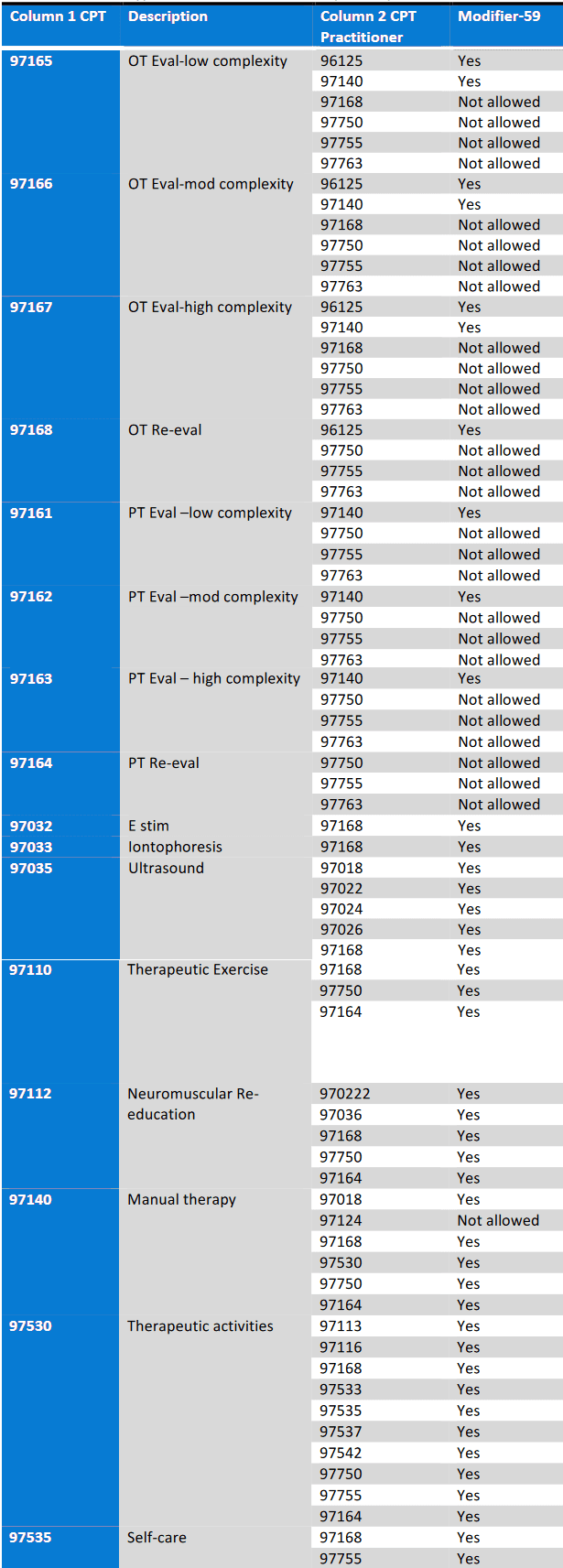
Reference chart below (some common CPT codes if 59 Modifier is allowed. For a full list, please go to National Correct Coding Initiative (NCCI) or consult the official CMS guidelines.

If column 2 shows “Not allowed”, then the CPT code cannot be billed with the code in column 1. If column 2 shows “Yes”, then the 59 modifier can be used to bypass the code edit:
therapy 59 modifiers

  1. GP/GO/GN Modifier- This modifier is often used in an interdisciplinary setting where there may be confusion about who provided the services, such as a hospital or outpatient clinic in a physician’s office. When billing for therapy services, be sure to include this modifier so that insurance companies are able to accurately reimburse, based on the type of therapy and in accordance with that member’s group benefits. For physical therapists, use -GP, occupational therapists, use -GO, and speech language pathologists, use -GN.
  2. KX Modifier- Patients with Medicare insurance have a threshold for therapy services, and once the patient exceeds that threshold, Medicare does not usually reimburse for provided services. In 2021, for PT and SLP services, the combined cap is $2,110 and for OT services, the cap is $2,110. If a patient who is receiving therapy services exceeds this cap, then you would add the KX modifier. Adding this modifier indicates continued treatment is medically necessary and that necessity has been sufficiently justified in your documentation. If using the KX modifier, you do not want to use it before the patient has reached their therapy cap, as that could cause a red flag and lead to a decreased likelihood of approval or reimbursement from Medicare.
  3. GA Modifier- Last, but not least, is a modifier which is often used once patients have reached a functional plateau, but still wish to receive therapy services. As you know, maintenance therapy is not considered medically necessary so this modifier allows you to bill secondary insurances or bill the patient directly, for non-Medicare covered services. If you end up in a situation where you have to use this modifier, make sure you have communicated with the patient that should they not have any secondary insurance, they will be responsible for paying out-of-pocket for therapy services. By communicating this upfront with your patients, it decreases the likelihood of any confusion or miscommunication.

**One last quick tip, for therapy businesses who have PTAs or OTAs, Medicare now requires that you use an assistant modifier, CQ for PTAs and CO for OTAs, for services performed.

Sometimes insurance is confusing, time consuming or flat out disheartening, but it is important to remember that billing correctly is essential. Modifiers are used to ensure therapists are receiving the appropriate reimbursement from insurance companies so that they can continue to put the patient and their needs first. While modifiers and insurance, in general, can be tricky, consider buying an EMR software that will assist you with your billing, such as HelloNote. As always, remember to support your billing with your documentation, if your notes are not supporting what you are billing insurance for, then you should not be billing for it!

Medicare Part A and Part B Deductibles for 2021

Medicare Part A and B deductibles discussion for 2021, including coverage details, patient responsibilities, and how out-of-pocket costs affect physical therapy services.

Understanding Medicare Part A and B deductibles for 2021 and their impact on physical therapy services

It seems as if therapy services are an ever-evolving world. Not only is there constantly new research and studies out there proving which exercises you should and should not be having patients perform based on their injury or diagnosis, but it appears as if every time we turn around, there is some new insurance change. This year is no different in that patients who have Medicare insurance, either Part A or Part B, have a new deductible they must meet before their coinsurance will begin.

Before treating your patients, it is extremely important they understand their benefits and why physical, occupational, or speech therapy is important for them, especially as their deductible increases. When a deductible increases, it means the patient is having to pay more out-of-pocket costs until their deductible has been met. Given the current state of the economy and everything going on in the world, paying more out-of-pocket might be a hardship for some patients, so ensuring patients understand what they are responsible for is crucial.

Medicare Part A

Medicare insurance has several different parts to it. The main ones we tend to focus on for therapy services are Part A and Part B. The reason for this is because Part A covers hospital, home health services, hospice, and skilled nursing stays while Part B covers outpatient physical therapy services.

In 2021, the deductible for Part A services is $1,484, which is an increase of $76 from $1,408 in 2020. This amount covers the patients’ share of costs for the first 60 days of a Medicare-covered inpatient hospital stay during a benefit period. In addition to the $1,484 deductible, the patient will also be responsible for coinsurance charges, depending on how long and where the patient is staying.

The nice thing about Medicare Part A is that 100% of the costs are covered for up to 60 days in the hospital and 20 days in a skilled nursing facility. However, when patients require a longer stay, the costs can quickly add up. If a patient stays more than 60 days in the hospital, from day 61 to day 90, the patient will be responsible for paying $371 coinsurance each day. If a patient has to stay longer than 90 days, starting on day 91, the patient is responsible for paying $742 coinsurance per day.

If the patient is transferred to a skilled nursing facility for more long-term care, the patient can stay in the SNF for 20 days before having to pay coinsurance. Beginning on day 21 of the individual’s stay, the patient is responsible for paying $185.50 per day. While there are benefits to having Medicare Part A, hospitals and skilled nursing facilities can be quite expensive.

Medicare Part B

Focusing on Medicare Part B, which covers outpatient physical therapy services, the 2020 deductible was $198, just under the $200 mark. For 2021, the annual deductible for Medicare Part B has increased by $5 and is now $203. Once the $203 deductible is met, patients typically pay 20% of the Medicare-approved amount for most doctor services, including all therapy services.

In more layman’s terms, once a patient has had enough doctor and/or therapy visits in 2021 to where they have paid a total of $203 out-of-pocket, Medicare will cover 80% of the cost of their remaining services for the year. Once the Medicare benefits kick in, the cost of therapy services will reduce significantly, and patients will be paying far less out-of-pocket.

The Threshold for Outpatient Therapy

Another unique change with Medicare is that there is no longer a cap on outpatient therapy, speech therapy, or occupational therapy services. Instead, the cap has been renamed as a “threshold,” and if the therapist can prove that continued care is medically necessary through their documentation, and Medicare approves, then you, as a therapist, can go over the threshold for that patient.

The 2021 thresholds for outpatient physical therapy and speech-language pathology, combined, is $2,080. The threshold for occupational therapy is also $2,080.

Importance of Patient Education

Insurance itself can be a very slippery slope, and many patients do not fully understand their benefits or what they mean, which is why your physical therapy office plays an important role in ensuring each patient understands their specific benefits. As a physical therapist, depending on someone’s insurance, it might come down to you placing a greater emphasis on patient education during the initial evaluation so that your patients will continue to show up, especially if the patient has not met their Medicare Part B deductible for the year.

While insurance tends to not be a highlight of being a physical therapist, it does play a vital role in making sure our patients are receiving the correct amount and level of care they deserve

Here is an update about Medicare Part A and Part B.

Physical Therapy Medicare Billing Guidelines

Discover essential the Physical Therapy Medicare billing guidelines, including accurate use of ICD-10 and CPT codes, understanding service-based and time-based codes, and following the 8-minute rule to ensure compliance and maximize reimbursement.

therapist checking the physical therapy Medicare billing guidelines for PT services

As physical therapists, one of the most fulfilling aspects of our job is helping patients regain their quality of life after an injury or health issue. However, not everything we do is as enjoyable. Medicare billing, while a crucial part of our practice, can be complex and tedious. Proper billing ensures that clinics are reimbursed and therapists are paid for their services. Today, we’ll dive into what might be the most challenging part of our profession: Medicare billing. With different standards for acceptable CPT codes, unit limitations, and reimbursement structures, it’s essential to understand Medicare’s unique guidelines. Let’s get started.

ICD-10 Codes: The Starting Point

  1. The billing process begins after the initial evaluation with the selection of ICD-10 codes to open a claim.

    • Typically, ICD-10 codes are provided by the referring physician.
    • In states allowing direct access to PT services, therapists may need to assign the codes based on the evaluation.
    • Always choose the most specific code(s) that accurately describe the patient’s condition or reason for therapy.

CPT Codes: The Core of Medicare Billing

CPT codes are the backbone of billing and must reflect the services rendered during each session. These codes are subject to strict Medicare scrutiny, making accuracy essential.

  • Most PT-related codes fall under the 97000 section, which includes:
    • Initial evaluations (categorized as low, moderate, or high complexity)
    • Therapeutic procedures (e.g., therapeutic exercises, manual therapy)
    • Neuromuscular re-education
    • Group therapy and supervised modalities

For evaluation codes, complexity is determined by factors such as patient history and clinical presentation. Proper classification ensures compliance and appropriate reimbursement.

Service-Based vs. Time-Based CPT Codes

Understanding the difference between service-based and time-based codes is crucial:

  • Service-Based Codes:
    • Examples: Initial evaluation, re-evaluation, unattended electrical stimulation, hot/cold packs.
    • Billed as one unit, regardless of time spent.
  • Time-Based Codes:
    • Examples: Therapeutic exercises, manual therapy, gait training, attended modalities.
    • Require adherence to the 8-minute rule.

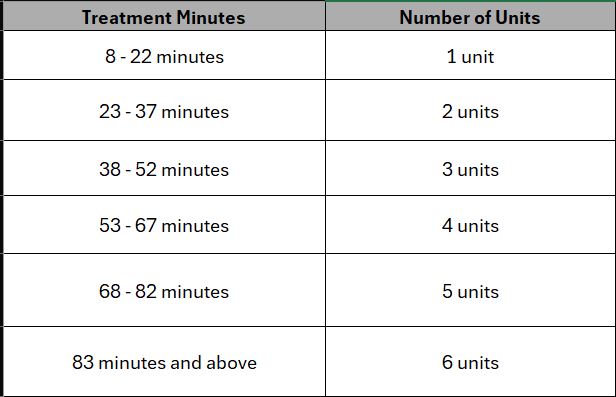
therapy medicare billing guide table

For example, if you spend 18 minutes on therapeutic exercise and 10 minutes on manual therapy, your total treatment time is 28 minutes. You would bill 2 units.

Key Considerations for Medicare Billing

  1. Service-Based Codes Are Not Subject to the 8-Minute Rule:
    These codes can still be billed in addition to time-based codes, provided the service is medically necessary.
  2. Document Total Treatment Time:
    Combine timed and untimed minutes to ensure accurate unit allocation.
  3. Stay Updated on Medicare Policies:
    Guidelines frequently change, making ongoing education essential for compliance and maximizing reimbursements.

Why Accuracy Matters

Navigating Medicare billing is undoubtedly complex, but with a solid understanding of ICD-10 and CPT codes, service classifications, and the 8-minute rule, the process becomes more manageable. Proper billing ensures compliance, reduces the risk of denied claims, and helps secure fair compensation for the valuable services you provide.

By staying informed and organized, you can focus on what you do best—helping your patients regain their health and quality of life.

Here is the updated Physical Therapy Medicare Billing Guidelines 2025.

You've found a hidden discount!

  • 00Hours
  • 00Minutes
  • 00Seconds