


















What is the HETS Enrollment Requirement for Medicare Eligibility Verification?
Beginning May 11, 2026, CMS requires providers and suppliers to maintain active HETS EDI enrollment when Medicare eligibility verification requests are submitted through vendors, clearinghouses, or EMR platforms. Providers without active enrollment may experience rejected Medicare eligibility checks, failed 270/271 eligibility transactions, or AAA Error Code 41. Each NPI submitted through HETS by a vendor or clearinghouse must have its own active enrollment linked to the correct submitter ID. Definition sourced from the Centers for Medicare and Medicaid Services HETS Companion Guide.
Key Takeaways
- CMS transitioned to a new HETS trading partner management system on May 11, 2026
- Providers using third-party vendors must link those vendors to their NPI for HETS access
- AAA Error Code ‘41’ may indicate there is no current valid relationship between the NPI and the third-party vendor
- Vendors and clearinghouses can support the process, but providers are responsible for completing the required enrollment or attestation
- Therapy practices may see delays in scheduling, intake, benefits verification, and billing workflows if Medicare eligibility checks fail
- HelloNote users should verify their clearinghouse relationship, vendor UID, and HETS enrollment status as soon as possible
Table of Contents
For many healthcare providers, Medicare eligibility verification failures appeared suddenly.
Front desk teams could not verify Medicare benefits. Billing teams began seeing rejected eligibility responses. Therapists preparing for evaluations discovered that coverage checks were failing inside their EMR or practice management software.
In many cases, the issue was not caused by an EMR outage. It was tied to CMS enforcement of the new HETS EDI enrollment requirement that became mandatory on May 11, 2026. CMS had previously warned that providers and suppliers without completed EDI enrollment could lose access to HETS data by spring 2026.
This guide explains what changed, why Medicare eligibility checks may be
Why Medicare Eligibility Verification Suddenly Failed
CMS moved to a new HETS trading partner management system on May 11, 2026. As part of that transition, providers must maintain active HETS EDI enrollment tied to their NPI and approved vendor or clearinghouse relationships.
Previously, many providers relied on EMR vendors, billing software platforms, clearinghouses, and revenue cycle vendors to submit Medicare eligibility verification requests behind the scenes. Because the process often worked without direct provider action, many organizations assumed no separate enrollment was needed. Now, if the provider NPI is not actively linked to the correct vendor or clearinghouse, Medicare eligibility requests may be rejected.
For PT, OT, SLP, chiropractic, and other outpatient practices, this can quickly affect scheduling, intake, benefits verification, authorizations, and reimbursement timelines.
What Is HETS?
HETS stands for the HIPAA Eligibility Transaction System. CMS uses HETS to allow providers, suppliers, vendors, and clearinghouses to verify Medicare beneficiary eligibility electronically through HIPAA 270/271 eligibility transactions. The CMS HETS Companion Guide explains that HETS operates through a real-time request and response model, where a valid 270 request can return Medicare beneficiary eligibility data in a 271 response.
Healthcare organizations use HETS to help verify active Medicare coverage, beneficiary eligibility, deductible and coinsurance information, Medicare coverage details, eligibility before patient appointments, and information needed to reduce eligibility-related claim issues.
For therapy practices, HETS often works in the background through the EMR or clearinghouse. Front desk teams may not realize HETS is involved until eligibility checks stop working.
Why CMS Changed the Enrollment Rules
CMS has framed the HETS EDI enrollment requirement around stronger oversight of Medicare eligibility data access. The CMS HETS Companion Guide notes that Medicare beneficiary eligibility data is restricted under the Privacy Act and HIPAA, and that providers using healthcare vendors or clearinghouses must complete a valid HETS EDI enrollment or attestation.
The practical goal is to make sure that when a third-party vendor or clearinghouse checks Medicare eligibility, CMS can validate that the vendor is authorized to do so for that provider NPI. That means the provider-vendor relationship must be active, current, and properly linked.
What Changed on May 11, 2026
Beginning May 11, 2026, providers must maintain active HETS EDI enrollment. Each NPI submitted through HETS by a vendor or clearinghouse must have active enrollment. Vendors and clearinghouses must be linked to the provider NPI using the correct unique ID. Eligibility requests without an active enrollment may be rejected.
In practical terms, some practices are discovering that their software vendor or clearinghouse historically handled Medicare eligibility checks, but the provider organization itself still needed to complete HETS enrollment or attestation.
Important: CMS states that without active enrollment, HETS will reject the eligibility request. Multi-location therapy organizations may see inconsistent results if some NPIs were enrolled and others were not. |
What does AAA Error Code 41 mean in Medicare eligibility verification?
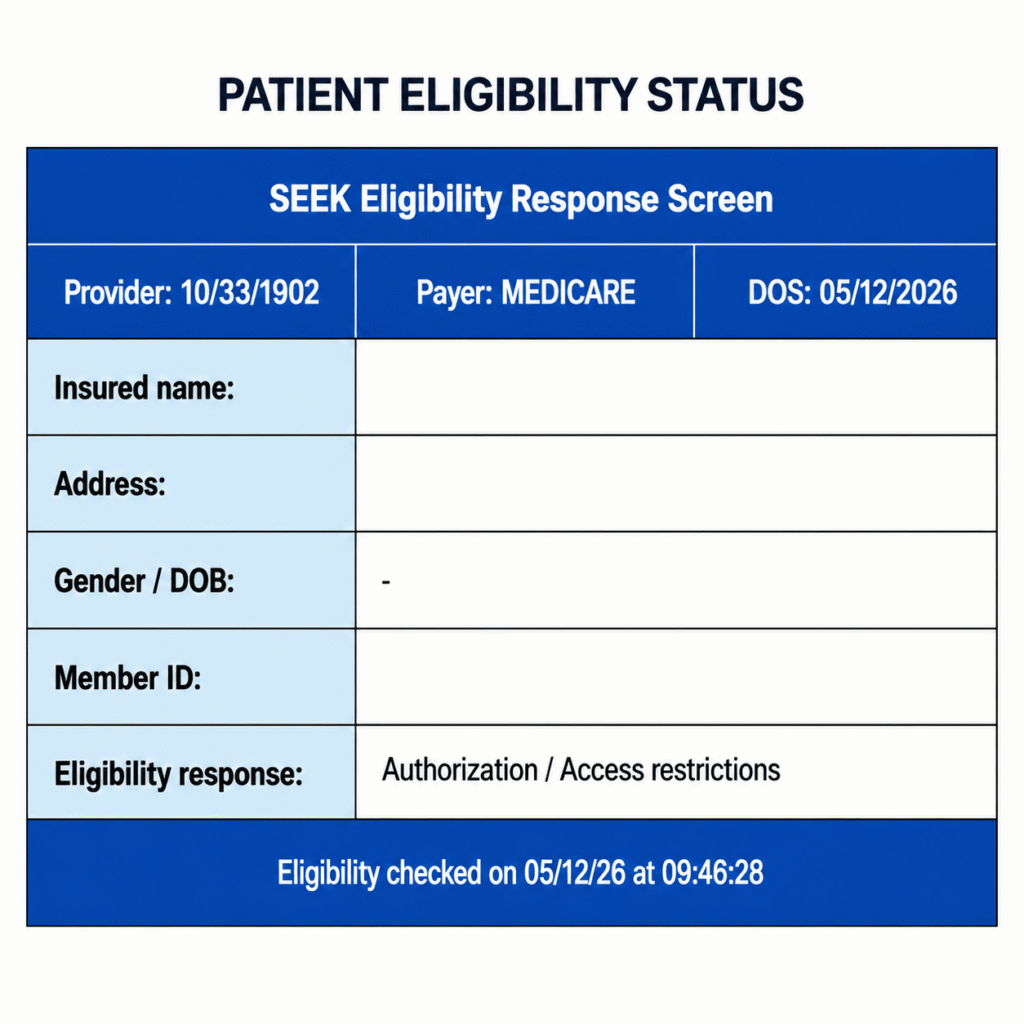
AAA Error Code 41 is a Medicare HETS eligibility rejection that occurs when CMS cannot validate an active relationship between the provider NPI and the HETS Submitter ID used by the vendor or clearinghouse. It means the NPI may be valid, the vendor may be valid, but CMS does not see a valid active connection between them. That missing connection stops Medicare eligibility verification from working. |
In plain language: the NPI may be valid, the vendor may be valid, but CMS does not see a valid active connection between them. That missing connection can stop Medicare eligibility verification from working.
Common Signs Your HETS Enrollment May Be Missing
Your organization may need to verify HETS enrollment if:
- Medicare eligibility checks suddenly stopped working
- Eligibility requests return AAA Error Code 41
- Your clearinghouse requested provider attestation
- Your vendor sent notices about HETS enrollment
- Eligibility works for some NPIs but not others
- You recently changed vendors, clearinghouses, or billing systems
- Front desk staff can no longer verify Medicare coverage in real time
READY TO STREAMLINE YOUR CLINIC?
See How HelloNote Handles All of This in One Platform
Managing staff hours, compliance, inventory, and financial reports — all inside one HIPAA-compliant EMR built for PT, OT, and SLP clinics.
No credit card required · HIPAA Compliant · PT, OT & SLP
What Therapy Practices Should Do Right Now
If Medicare eligibility verification suddenly stopped working, start with the steps below.
Step 1 — Contact Your Software Vendor or EMR Support Team
Ask your vendor: Was HETS enrollment completed for our organization? Which clearinghouse is submitting Medicare eligibility transactions? What HETS Submitter Unique ID should we use? Which NPIs are currently linked? Are any NPIs missing enrollment or attestation?
CMS instructs providers to work with vendors or clearinghouses to identify the relationships supporting their beneficiary eligibility EDI transactions and obtain the vendor or clearinghouse unique ID.
Step 2 — Verify the Clearinghouse Relationship
Many therapy EMRs and billing platforms use clearinghouses to submit Medicare eligibility requests. Confirm: the correct NPI is being used, the clearinghouse relationship is active, the enrollment references the correct vendor or clearinghouse unique ID, the relationship effective date is correct, and any terminated vendor relationships are updated.
CMS allows more than one vendor or clearinghouse ID to be linked, and additional IDs can be added when needed.
Step 3 — Contact the Correct Medicare Administrative Contractor
CMS explains that providers request HETS access through the same EDI enrollment process used by Medicare Administrative Contractors and CEDI. Providers must create a HETS EDI enrollment with one MAC for which they have an electronic claims EDI enrollment.
Examples of MAC/CEDI organizations include: CEDI, National Government Services, Noridian, Novitas, First Coast Service Options, Palmetto GBA, and WPS. The exact MAC depends on your jurisdiction and Medicare enrollment setup.
Step 4 — Complete Enrollment or Attestation
When enrolling, CMS states that providers may need information such as: authorized signer name, email address, PTAN, individual or group NPI used to bill Medicare claims electronically, vendor or clearinghouse relationship effective date, and termination date if applicable.
CMS also notes that if a provider signed up for electronic claims submission using a group provider number, the same group number must be used for HETS EDI enrollment.
Step 5 — Prepare Front Desk and Billing Teams
Eligibility disruptions can slow scheduling, patient intake, benefits verification, financial responsibility estimates, same-day evaluations, and claim preparation.
Temporary internal adjustments may include manual Medicare portal lookups, additional time for appointment confirmation, a front desk verification checklist, secondary eligibility review before treatment, and clear communication with patients when eligibility cannot be confirmed immediately.
Temporary Medicare Eligibility Workarounds
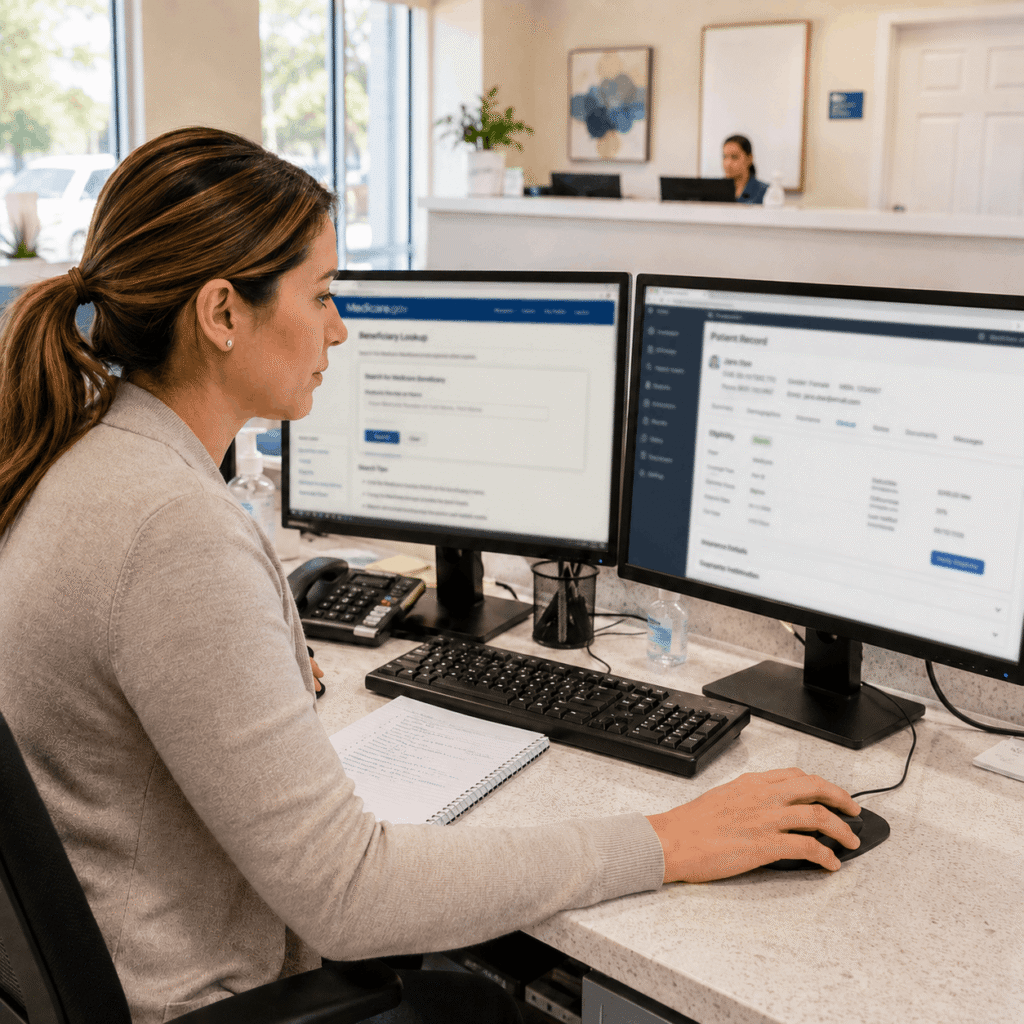
While enrollment is pending, practices may need to verify Medicare eligibility manually through their Medicare Administrative Contractor’s secure internet portal. CMS states that providers who opt not to enroll may still check eligibility through their MAC’s secure internet portal.
Manual verification is slower because staff may need to search each patient individually, confirm Medicare details manually, document deductible or coverage information separately, re-enter information into the EMR or billing system, and perform secondary checks before submitting claims. For high-volume therapy clinics, this can create scheduling delays and billing bottlenecks.
How This Affects Therapy Practices
Therapy practices depend heavily on eligibility verification because treatment often begins quickly after referral, evaluation, or patient inquiry. When Medicare eligibility verification fails, the impact is not limited to billing. It can affect the entire front-office workflow.
Common operational problems include: delayed evaluations, unclear patient responsibility estimates, more phone calls between front desk and billing teams, manual checks before treatment, higher risk of claim delays, staff frustration from duplicate work, and slower onboarding for Medicare patients.
For PT, OT, and SLP clinics, the front desk is often the first point of failure when eligibility tools stop working. If staff cannot confirm Medicare eligibility quickly, the clinic may delay scheduling decisions, intake completion, or billing preparation.
How HelloNote Helps Therapy Practices Reduce Eligibility Delays
HelloNote helps therapy practices organize the operational workflows around scheduling, documentation, billing, and patient intake. While HETS enrollment itself must be handled through the proper CMS/MAC process, a structured EMR can help clinics respond more effectively when eligibility disruptions happen.
HelloNote supports therapy practices by helping teams:
- Keep scheduling, intake, and documentation connected in one platform
- Reduce manual handoffs between front desk and billing staff
- Maintain organized patient records with eligibility status visible at intake
- Support cleaner documentation before billing to reduce downstream delays
- Centralize clinic workflows so eligibility issues do not cascade into documentation errors
- Improve visibility across administrative and clinical teams during disruptions
For Medicare-based therapy clinics, eligibility verification is only one part of the revenue cycle. The larger goal is to reduce avoidable delays from intake through documentation and billing. HelloNote’s eligibility checker helps practices verify patient coverage before appointments — reducing the manual front desk work that HETS disruptions create. See hellonote.com/eligibility-checker/
Frequently Asked Questions
Why did Medicare eligibility verification suddenly stop working?
Medicare eligibility verification may stop working if a provider does not have active HETS EDI enrollment linked to the vendor or clearinghouse submitting eligibility requests. CMS began requiring active enrollment for each NPI submitted through HETS by vendors or clearinghouses on May 11, 2026.
What is HETS enrollment?
HETS enrollment is the process CMS uses to authorize providers, vendors, and clearinghouses to electronically access Medicare beneficiary eligibility information through HETS EDI transactions.
What does AAA Error Code 41 mean?
AAA Error Code 41 means there is no valid, active HETS EDI enrollment between the provider NPI and the HETS Submitter ID used by the vendor or clearinghouse. CMS states that the Original Medicare provider or supplier must create the attestation.
Can providers still complete HETS enrollment?
Yes. Providers should follow the CMS HETS EDI enrollment process and work with their vendor, clearinghouse, and MAC to complete enrollment and link the correct vendor or clearinghouse ID.
Does this affect physical therapy clinics?
Yes. Physical therapy, occupational therapy, speech therapy, chiropractic, behavioral health, and other outpatient healthcare organizations may be affected if they use Medicare eligibility verification through vendors, clearinghouses, or EMR systems.
Are commercial insurance eligibility checks affected?
This specific HETS enrollment requirement applies to Medicare eligibility transactions submitted through CMS HETS. Commercial insurance eligibility checks are handled through different payer and clearinghouse processes.
Who must complete the HETS attestation?
The provider or supplier must complete the required HETS EDI enrollment or attestation. Vendors and clearinghouses can provide the unique ID and support the process, but the provider relationship must be properly enrolled and validated.
Can providers manually verify Medicare eligibility temporarily?
Yes. CMS states that providers may still check eligibility through their Medicare Administrative Contractor's secure internet portal if they do not enroll or while resolving access issues.
Can providers manually verify Medicare eligibility temporarily?
Yes. CMS states that providers may still check eligibility through their Medicare Administrative Contractor's secure internet portal if they do not enroll or while resolving access issues.
Final Thoughts
The sudden increase in Medicare eligibility verification failures is not necessarily caused by EMR downtime or clearinghouse outages. For many providers, the issue is tied to CMS enforcement of the HETS EDI enrollment requirement that became mandatory on May 11, 2026.
The most important step is to confirm whether each Medicare billing NPI is actively enrolled and properly linked to the correct vendor or clearinghouse ID. For therapy practices, this is also a reminder that billing workflows depend on more than claim submission. Eligibility, intake, documentation, and front desk communication all need to work together.
HelloNote helps PT, OT, and SLP practices keep those workflows organized so teams can spend less time chasing disconnected information and more time running a clear, efficient clinic.
Looking up for cpt & Icd codes guide?
See 97110, 97530, and 50+ therapy procedure codes – with billing guidance and documentation tips in one place.

AboutHellonote Expert
The HelloNote Expert Research Team publishes educational resources for physical therapy, occupational therapy, speech therapy, and rehabilitation practices. Their content focuses on documentation workflows, Medicare operations, billing processes, clinician efficiency, AI-assisted charting, and therapy practice management. Articles are developed using healthcare industry research, CMS resources, operational workflow analysis, and therapy-focused EMR expertise.